Normal view

In Brazil, a project paying farmers for forests is looking to scale up

Landowner Carlos Roberto Simonetti gets three harvests per year from the corn, soy and cotton plantations on his 17,000-hectare (about 42,000 acres) farm called Fazenda Natureza Feliz, or Happy Nature, in the Brazilian state of Mato Grosso. Over the course of four years, he would also get what he calls a fourth harvest, this time from the forested areas of his property, located where the Cerrado savanna meets the Amazon Rainforest. That’s because Simonetti would receive regular payments for protecting native vegetation beyond what the law requires, as part of a pilot project for payment for ecosystem services (PES) run by the Amazon Environmental Research Institute (IPAM), an NGO, in the states of Mato Grosso and Pará. The program, called CONSERV, gives landowners financial incentives to keep the forest standing even in areas which they are legally allowed to clear. The pilot project, which initially ran between 2020 and 2024 on 23 different properties, protected 20,707 hectares (about 51,170 acres) of land in the Cerrado and Amazon biomes with funding from the governments of Norway and The Netherlands. Ongoing contracts funded by Soft Commodities Forum members – agribusiness companies committed to preserving the Cerrado – are protecting a further 7,000 hectares (about 17,300 acres) in the states of Mato Grosso and Maranhão. IPAM is now seeking to scale up the program without relying on donations. The risk of legal deforestation The idea for CONSERV goes back to 2016, when an internal IPAM report calculated that around 1.5 million hectares (3.7…This article was originally published on Mongabay

BHP defies its own climate strategy to spend hundreds of millions on polluting diesel trucks in Pilbara

Exclusive: Mining giant says technology is not yet advanced enough to run a fully electrified fleet but experts say it is hooked on federal fuel tax credits

BHP has continued to spend hundreds of millions of dollars buying diesel trucks in the Pilbara despite internal documents suggesting it would increase emissions and be “misaligned” with its decarbonisation goals.

The mining giant is Australia’s biggest consumer of diesel and trucks are its biggest single source of diesel emissions. Replacing the fleet with battery-electric trucks is considered a critical step in the multinational’s efforts to decarbonise.

Continue reading...

© Composite: Guardian

© Composite: Guardian

© Composite: Guardian

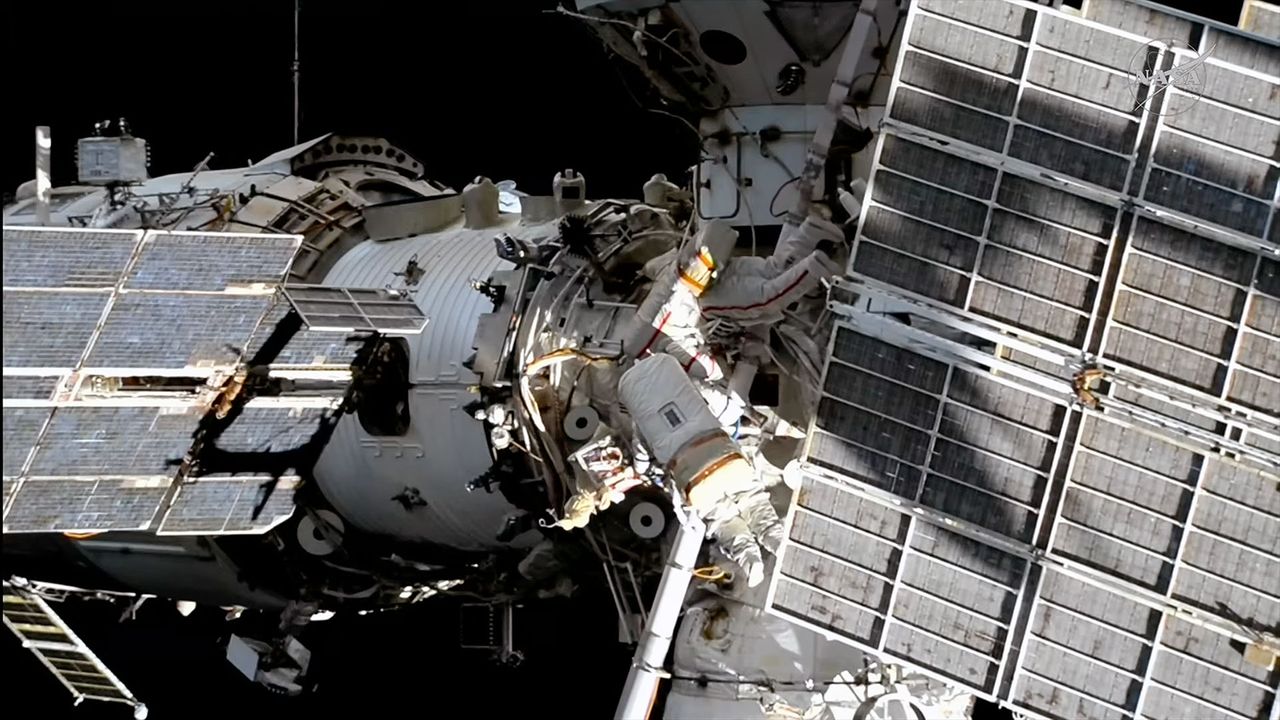
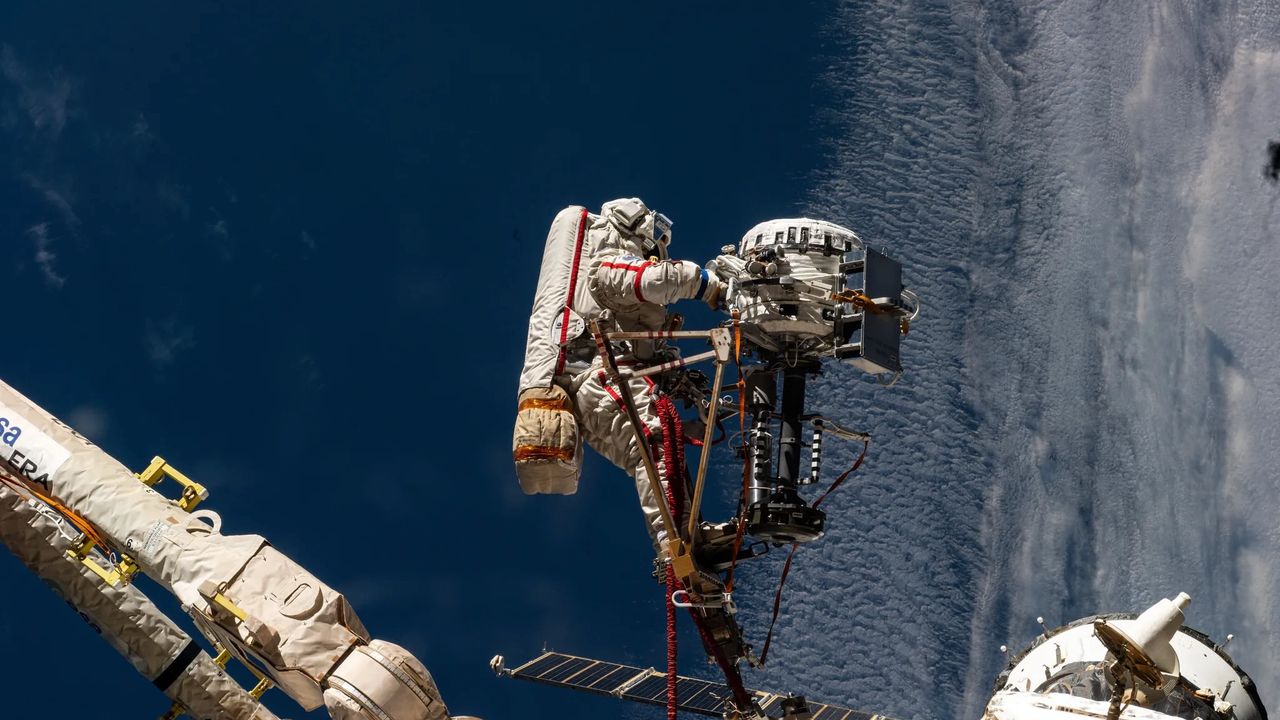
Russian cosmonauts install sun-watching telescope on ISS during 6-hour spacewalk

Russian cosmonauts Sergey Kud-Sverchkov and Sergei Mikaev worked to install and retrieve science experiments while on a spacewalk outside the International Space Station on Wednesday, May 27, 2026.

Russian cosmonauts install sun-watching telescope on ISS during 6-hour spacewalk

Russian cosmonauts Sergey Kud-Sverchkov and Sergei Mikaev worked to install and retrieve science experiments while on a spacewalk outside the International Space Station on Wednesday, May 27, 2026.

Scientists Ditched a Scary Climate Scenario. What Now?

While global warming is still a threat, the decision to back away from a worst-case outlook raises questions about whether some risks have been overstated.

© Apu Gomes/Agence France-Presse — Getty Images

A wildfire burning in the Simi Valley of California this month.

BHP ‘laughing’ at Australia’s key climate policy while pocketing hundreds of millions in tax breaks, Pocock says

Outrage as leaked documents reveal mining giant’s backsliding on commitments to slash emissions

The independent senator David Pocock says leaked BHP documents show that the mining giant is “laughing” at Australia’s key climate policy while pocketing hundreds of millions of dollars through a generous diesel tax break.

An exclusive investigation based on documents leaked to by the Guardian and the ABC show BHP has scrapped a project to significantly reduce global emissions, delayed vast renewables projects in the Pilbara and war-gamed options to push the electrification of its polluting diesel truck and train fleets into the next two decades.

Continue reading...

© Photograph: Lukas Coch/AAP

© Photograph: Lukas Coch/AAP

© Photograph: Lukas Coch/AAP

The BHP files: World’s biggest miner BHP backtracks on climate action with key projects put on ice, leaked documents reveal

Exclusive: Cache of internal documents leaked to the Guardian and the ABC’s Four Corners show multinational has war-gamed ways to massively delay decarbonisation

The world’s biggest miner has halted or delayed projects to cut vast amounts of emissions and has quietly war-gamed options to push major climate investments in its Western Australian iron ore operations into the next two decades, internal documents show.

An exclusive investigation based on documents leaked to the Guardian and the ABC’s Four Corners can reveal that BHP, one of Australia’s biggest historic emitters, has dumped plans for a facility that could have significantly reduced emissions and has put on ice renewable projects designed to power its iron ore operations in the vast, resource-rich Pilbara region.

Continue reading...

© Illustration: Guardian Design

© Illustration: Guardian Design

© Illustration: Guardian Design

Building a better laser on the Moon

21 May 2026 at 16:15

There are craters on the Moon where the Sun never shines – and researchers in the US and Germany have shown that these shady locations would be ideal for housing lasers that are more stable than similar devices operated on Earth.

Writing in the Proceedings of the National Academy of Science, Jun Ye at NIST and the University of Colorado and colleagues explain the benefits of installing a silicon optical cavity in a permanently shaded crater. Such a cavity is a block of silicon with internally facing mirrors at opposing ends. Light from a commercial laser is shone into the cavity where it bounces back and forth, growing in intensity and coherence. The length of the cavity defines the frequency of the trapped light. So if the cavity is machined to a very high precision, then the cavity light has a very narrow frequency range.

Some of this light is extracted from the cavity, creating a source of high-quality laser light. To ensure the stability of the laser, the cavity can be cooled to cryogenic temperatures to minimize thermal fluctuations. Now, Ye and colleagues have shown that this stability can be improved significantly if a cavity is operated in a shady nook on the Moon.

Cold vacuum

There are more than 300 regions of the Moon that are in permanent shadow. As well as being enveloped in darkness, these regions tend to maintain a steady temperature of about 50 K. While the Moon has no real atmosphere, it is not surrounded by a perfect vacuum. Radioactive decay and bombardment by meteorites, the solar wind and sunlight liberates molecules from the surface and these will linger briefly before escaping into space. Because dark craters are not subject to bombardment, there should be fewer gas molecules in these regions – and therefore a better vacuum than on the surface. Indeed, the team calculates that pressures of less than 10−10 Pa should exist in these craters, which is well within the ultrahigh vacuum regime.

As a result, dark craters should be a perfect environment for operating a silicon optical cavity. There it would experience a small number of collisions with gas molecules, boosting its stability. What is more, by radiating heat out of the crater and into space, Ye and colleagues reckon that an optical cavity could be further cooled to a chilly 16 K. At this temperature, silicon will neither expand nor contract in response to tiny temperature fluctuations – further stabilizing the output of the cavity.

According to the researchers’ modelling, such a cavity would have a very low thermal noise-limited stability of 10−18 and a coherence time exceeding 1 min. This performance, they say, is ten times better than that achieved by the best cavities operated on Earth.

Testing Einstein

The team proposes several different uses for light emitted by the cavity. Because it would have a very stable frequency, it could be used as a very precise lunar time signal. This would be very useful for the navigation on, or near to, the Moon as well as for scientific experiments – including those that test Einstein’s general theory of relatively.

Ultrastable lasers would also allow scientists to create long-baseline interferometers for astronomical observations, including the detection of gravitational waves. Furthermore, the cavities themselves could also be used as detectors. Gravitational waves at certain frequencies would affect the output of a cavity – as could hypothetical interactions between silicon atoms and dark matter.

Using a high-powered relay laser, the cavity signal could be transmitted to lunar satellites that contain atomic clocks – creating a timing network similar to Earth’s global navigation satellite systems such as GPS. Furthermore, light from the cavity could be used to create a quantum network that stretches from the Moon to the Earth.

Team member Yiqi Ni works for the US-based company Lunetronic, which is developing technologies for use in permanently shadowed craters. Ni says that a silicon optical cavity could be operated in low-Earth orbit within two years – and be installed on the Moon within three to five years.

The team also includes researchers from the US National Institute for Standards and Technology (NIST) and PTB, which is Germany’s national metrology and standards institute.

The post Building a better laser on the Moon appeared first on Physics World.

❌