Normal view

We talk about anxiety as if it starts in the mind — but for some people, the eyes may be the first place it shows up

1 June 2026 at 21:00

The first sign was never a thought.

It was visual. Something in the way the room looked. The walls would seem slightly farther away than they had been a moment before. Colours stayed, shapes stayed, the furniture stayed in exactly the right places — and yet something about the scene lost a quality I can only describe as immediacy. The world was still there. It just stopped feeling available.

This would happen before I felt afraid. Before I could name what was coming. Before any thought had formed that I could call anxious. Something changed in the way I was receiving the world through my eyes, and only later — sometimes much later — would the rest of the experience catch up.

I spent years not knowing what to call this.

I tried “dizzy,” which wasn’t right. I tried “tired,” which was too soft. I tried “dissociating,” which felt too clinical for something that happened in quiet moments, not only in crises. What I was looking for was a word for the way the world could go slightly flat. Not dark. Not frightening in any obvious way. Just — less textured. Less arrived. As if someone had turned the resolution of reality down just slightly, and I was the only one in the room who noticed.

The world went flat before I had words for it

What I was experiencing had a name. Derealization — the sense that the external world has become unreal, distant, or visually altered — is a well-documented symptom that occurs frequently in anxiety and panic, and in the broader condition known as depersonalization-derealization disorder. It affects a surprising number of people, though most, like me, spend a long time describing it badly before they discover it has a name at all.

What I did not expect, once I found the name, was to realize how early in the anxiety sequence it was arriving for me.

Most descriptions of anxiety lead with thought. The worry, the spiral, the catastrophizing. The racing mind. And for many people that may be accurate — the cognitive element comes first, and the body follows. But for me, the sequence ran differently. The visual alteration came before the worry. My eyes created distance before my mind could explain why. By the time I was consciously afraid, I had already been looking at the world through a kind of filter for several minutes. Sometimes longer.

The world went flat before I had words for what was happening.

Once I recognized this, I started paying attention to it differently. Not as a malfunction, but as a signal. Something my system was doing before it had time to speak.

Before anxiety had language, it had a way of altering sight

The neuroscience here is not fully settled, but the broad shape of it makes sense.

The brain does not passively receive visual information and then decide what it means. It actively constructs perception, using prior experience, expectation, and internal state to shape what we experience as seeing. When the nervous system is in a state of hyperarousal — even before that state is consciously registered — the way the brain builds the visual world can shift. Attention narrows. Certain details flatten. The sense of depth and richness that makes the world feel real can diminish, because the system is already doing something else with its resources.

The amygdala, which processes emotional and threat-relevant stimuli, is thought to receive threat-relevant signals very rapidly — in some models, before the slower analytical pathways that give us conscious perception have fully resolved what we’re seeing. This means the body’s threat response can activate before the thinking mind has noticed anything. The alarm goes off, the nervous system reorganizes, and the first sign you have — if you are paying attention to your body rather than your thoughts — might be something as subtle as the way the room looks.

That was my experience. I didn’t first think anxiety. I saw it.

The first thing anxiety stole, reliably, was the texture of the world.

Learning to read the signal

For years, the visual shift frightened me in its own right. The unreality was unsettling before any worry arrived to explain it. There were moments when I genuinely questioned whether I was losing something — my grip on reality, my trust in my own perception, something I couldn’t name. The derealization felt like a symptom without a cause, which is one of the lonelier things you can experience.

It is also disorienting in a specific way: when perception itself becomes the thing you can’t trust, you lose the ground you’d normally stand on to figure out what is wrong. You can’t think your way out of a problem that is currently happening in your thinking. You can’t look clearly at something when it is your looking that has shifted.

What changed was noticing the pattern.

Not during the episode, but afterward. Tracing the sequence: where had I been, what had I been carrying before I noticed the flatness, what came before the flatness itself. And what I found, slowly, was that the visual shift was not random. It was a leading indicator. Something had already been building in my nervous system — a stress response, a low-grade overwhelm I hadn’t consciously registered — and my eyes were the first thing that showed it. Before my thoughts caught up. Before my chest tightened. Before I would have said, if anyone had asked, that anything was wrong.

My eyes were filtering the world before I knew I needed a filter.

Maybe it was never malfunction

I am careful about what I claim here. I am not saying anxiety lives in the eyes, or that this is how it works for everyone. What I am saying is something smaller and, to me, more useful: for some people, the first felt experience of anxiety may be visual. Perceptual. Something that shows up in how the world looks before it shows up in what the mind thinks.

And if that is true — even sometimes, even for some people — then it changes where you learn to look for the early signs.

I used to search for the anxious thought. The belief I could challenge, the worry I could reframe, the cognitive distortion I could name and dispute. These have their place. But I kept arriving at them too late, after the nervous system had already been organizing itself around something I hadn’t consciously noticed. I was looking for the fire after the smoke had already been there for a while.

Now I know to check in with what I’m seeing. Whether the room feels arrived. Whether the world has its texture. Whether reality is still emotionally available, or whether it has quietly started to step back — a little flatter, a little more distant, a little less like itself — without explanation.

Those were never signs that something was wrong with my eyes.

They were signs that something in me was trying to protect itself before I understood what from. The nervous system, doing what nervous systems do — adjusting the aperture, reducing the input, creating a small buffer between me and a world it had decided, for some reason, was temporarily too much.

That is not a disorder. That is a system trying to survive.

It just took me a long time to recognize the signal for what it was, instead of fearing it as one more thing that was wrong.

This article reflects personal experience and is for informational purposes only. It is not a substitute for professional mental health advice. If you are experiencing symptoms of derealization or anxiety, consider speaking with a qualified professional.

The post We talk about anxiety as if it starts in the mind — but for some people, the eyes may be the first place it shows up appeared first on Space Daily.

Thought of the day from Stoic philosopher Marcus Aurelius: “Each of us lives only now, this brief instant. The rest has been lived already, or is impossible to see.”

1 June 2026 at 19:36

The kettle is doing its thing. Light is coming in sideways across the kichen table, the way it does early, catching the steam coming off the cup. Outside there’s a motorbike, then another, then the muffled start of the street waking up.

And I am not in any of it.

I am three emails ahead, rehearsing a sentence I’ll say later, or mulling over something that happened last week and cannot be changed. The coffee goes cold. The light moves on. I drink it lukewarm and barely taste it. This is the scene most mornings, if I am being honest.

A quick note before I go further: I’m not a psychologist or a therapist, and this is a piece of reading and reflection, not advice. The one study I lean on below is observational, which means it describes a pattern across a lot of people, not a rule about you or any single morning of your life.

The line that keeps pulling me back to that cold cup is from Marcus Aurelius, the Roman emperor who wrote a private notebook to himself that we now call Meditations. In Gregory Hays’s translation, Book 3.10, he writes: “Each of us lives only now, this brief instant. The rest has been lived already, or is impossible to see.” Just before it, he tells himself: “Forget everything else. Keep hold of this alone and remember it.”

Read it slowly and it’s almost a piece of accounting. The past is spent, gone, unrecoverable. The future is not yet here and most of it you’ll never see anyway. The only thing you actually have, the only ground you can stand on, is this instant. He isn’t being mystical about it. 

This is a philosophical claim about how to hold your attention, not a settled scientific fact about how consciousness works but as a way to frame a morning, I find it hard to argue with. The cold coffee was real. The email I was rehearsing wasn’t, not yet. I traded the thing that was happening for two things that weren’t.

I read Meditations properly a few years ago, during a stretch of failure and confusion when I was rooting around for something solid to hold. What struck me most wasn’t the advice. It was the continuity. Here is a man who ran an empire, and his private worries are my not unlike my worries. Reputation. Mortality. What other people think. Whether the work matters. Two thousand years, and the furniture of the human head has barely been rearranged.

Knowing the present is all you have, and actually living there, are two completely different skills. The mind has its own gravity, pulling backward and forward, almost never down into the now.

There’s one study I keep coming back to on this. In 2010, the Harvard psychologists Matthew Killingsworth and Daniel Gilbert built an iPhone app that pinged 2,250 volunteers at random moments and asked what they were doing, how they felt, and whether their minds were on the task in front of them. The volunteers reported their minds wandering 46.9 percent of the time. Nearly half of waking life, somewhere other than here. Killingsworth’s summary was that “our mental lives are pervaded, to a remarkable degree, by the nonpresent.”

This is one study, not settled consensus, and the effect it found was modest rather than enormous. What made it stick with me is what it suggested about mood. Killingsworth has said that how often our minds leave the present, and where they go, predicted happiness better than the activity people were actually doing. Drifting seems to drag mood down. The phrase the researchers used, which is a little too neat for a single study but lodges anyway, was “a wandering mind is an unhappy mind.”

I am bad at this. I have not solved anything. But a few small things have nudged me, on good days, closer to enjoying the cup of coffee and further from the imaginary email.

The first is novelty, and I learned it by accident. My first year living in Vietnam felt enormous. The city, the noise on the streets, food I’d never eaten, a language I couldn’t read, the person I was slowly turning into. In retrospect that year is longer and richer than most years since. Nothing was automatic, so nothing got skipped. The brain can’t autopilot through what it doesn’t recognize yet. I can’t move to a new country every year, but I can walk a route I don’t know, and it pulls me back into the present the way a comfortable routine never does.

The second is duller and more reliable: noticing one physical thing on purpose. The heat of the cup. The actual taste of the first mouthful. It sounds almost too small to count, and it isn’t a cure for a wandering mind. It’s just a handle. A way to land for a second before the gravity takes over again.

The third is lowering the bar. Marcus wasn’t writing a finished man’s manual. He was talking himself into it, the same exhortation over and over, because he kept failing at it too. That’s the part I find oddly comforting. The point was never to live perfectly in the present. It’s to come back, again, when you notice you’ve drifted.

If any of this is landing closer to home than it is interesting, and the pull away from the present feels less like a habit and more like something heavier, a qualified counsellor or therapist is worth talking to.

Now read this next: Psychology suggests people who browse social media but never post or comment aren’t passive — they’ve simply opted out of the performance while retaining access to the information, which is a sign of quiet self-awareness

The post Thought of the day from Stoic philosopher Marcus Aurelius: “Each of us lives only now, this brief instant. The rest has been lived already, or is impossible to see.” appeared first on Space Daily.

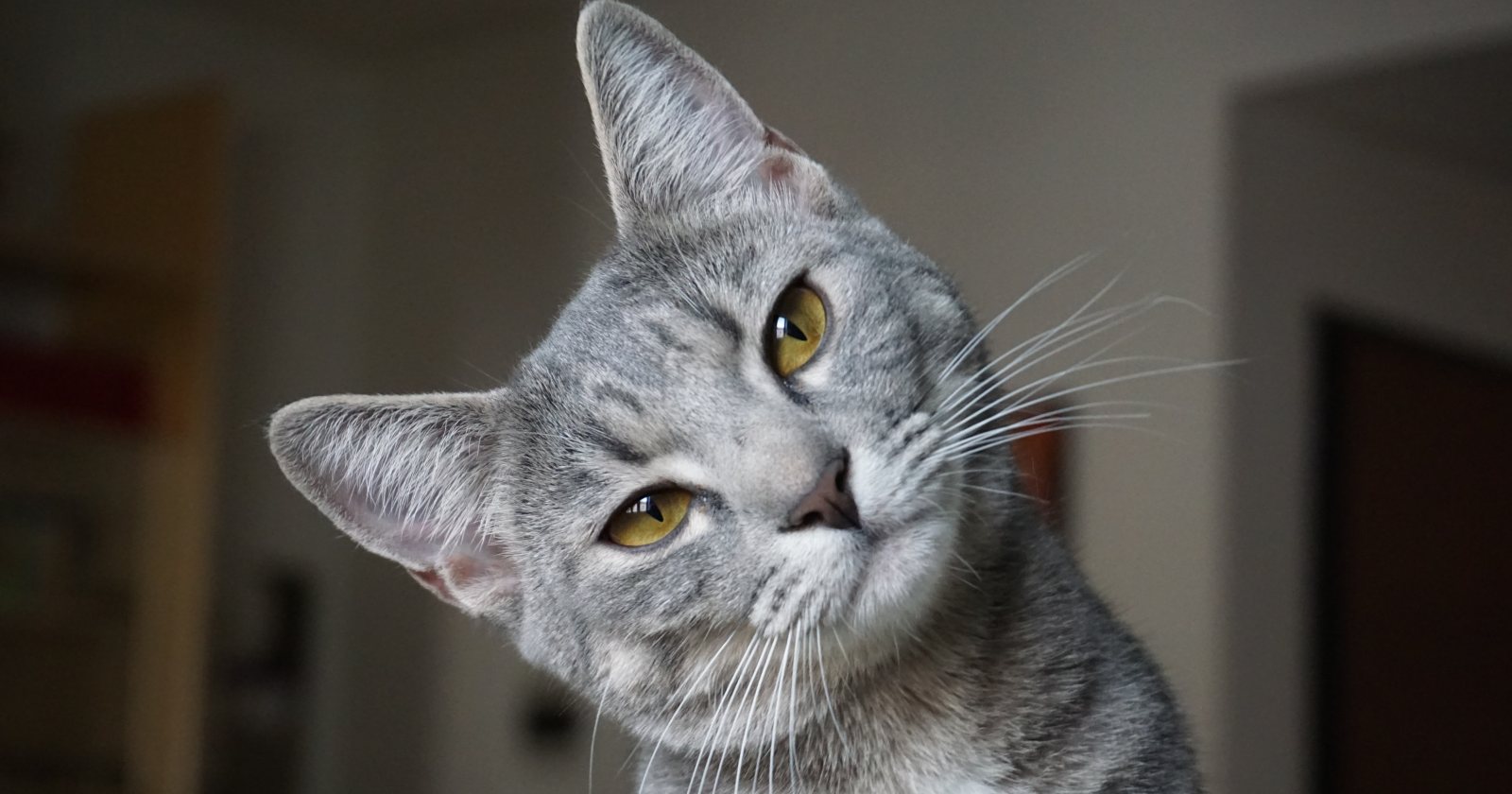
Cats can’t taste sweetness — evolution turned off the relevant gene in their distant ancestors when they became obligate carnivores, and without working sweet receptors, a cat is as indifferent to sugar as a person is to ultraviolet light

Cats are notoriously indifferent to sweet things. Pour syrup near a dog and the dog will investigate. Pour syrup near a cat and the cat will ignore it. Veterinarians and cat-food companies have long noted that cats show no preference for sugar in feeding tests, no matter how much sugar is presented. The reason is not a behavioural quirk or a learned aversion. It is genetic, and it traces back tens of millions of years to the point at which the ancestors of modern cats became obligate carnivores, eating only meat. The gene that produces a working sweet receptor on the tongue, called Tas1r2, has been broken in cats for so long that it no longer functions at all. A cat looking at a sugar cube is in the same sensory position as a human looking at an ultraviolet light source: the signal exists, but the receptor that would detect it does not.

What the genetic evidence shows

The molecular discovery came in 2005 from a team led by Xia Li and Joseph Brand at the Monell Chemical Senses Center in Philadelphia, in collaboration with colleagues at the Waltham Centre for Pet Nutrition in the United Kingdom. Their paper in PLOS Genetics, titled “Pseudogenization of a Sweet-Receptor Gene Accounts for Cats’ Indifference toward Sugar,” established that the cat sweet receptor is not just inefficient. It is, at the genetic level, non-functional.

The mammalian sweet receptor is formed by two protein subunits, called T1R2 and T1R3, encoded by the genes Tas1r2 and Tas1r3. Both have to be present and functional for the receptor to assemble correctly on the taste cell membrane. The Monell team sequenced both genes in domestic cats, tigers, and cheetahs, comparing them with the equivalent sequences in dogs, mice, rats, and humans. Tas1r3 was intact in cats. Tas1r2 was not. The cat version of the gene carried a 247-base-pair deletion in one of its critical exons, plus additional disabling mutations, all of which prevented the gene from being translated into a working protein. The researchers further found no detectable Tas1r2 messenger RNA in cat taste tissue, no Tas1r2 protein in cat taste buds, and no evidence that the gene was being expressed at all. In every cat species tested, the gene was the same kind of broken in roughly the same place. It had become a “pseudogene”: a relic of an ancestral working gene, accumulating mutations because it no longer faced selective pressure to remain intact.

Why this happened

The evolutionary logic is straightforward. Sweet receptors exist in most mammals because their ancestors ate sugar-rich plant material at some point in their evolutionary history. Detecting sweetness was useful because sweetness in nature is a reliable proxy for accessible carbohydrate, an important food source for animals that eat plants or mixed diets. For an obligate carnivore that consumes only animal tissue, sweetness is irrelevant. Meat contains very little carbohydrate. A receptor that detected sweetness in such an animal would be metabolically expensive to maintain without conferring any survival advantage. Mutations that disabled the receptor would not be selected against, and over enough generations, random mutations would accumulate until the gene was non-functional.

This is precisely what appears to have happened in the felid lineage. The pseudogenization of Tas1r2 in cats is estimated to have occurred some tens of millions of years ago, well before the divergence of the modern cat species. Every member of the cat family Felidae, from the smallest domestic tabby to the largest Siberian tiger, shares the same broken gene.

Not unique to cats

The cat finding turned out to be the first identified case of what is now understood to be a widespread phenomenon across obligate carnivores. In 2012, the Monell-led group, working with colleagues at the University of Zurich, published a follow-up paper in PNAS titled “Major taste loss in carnivorous mammals.” The team sequenced Tas1r2 in 12 species from the order Carnivora, looking for the same kind of pseudogenization. Seven of those species, all exclusive meat eaters, had also independently lost functional Tas1r2.

The animals affected included the California sea lion, the southern fur seal, the Pacific harbor seal, the Asian small-clawed otter, the spotted hyena, the fossa (Madagascar’s largest carnivore), and the banded linsang. Crucially, the disabling mutations in each of these species occurred in different places within the Tas1r2 gene, indicating that the losses happened independently in each lineage, not via inheritance from a common ancestor. The same evolutionary pressure that turned off the gene in cats turned it off, separately, in at least seven other carnivorous lineages over the same broad timeframe. Behavioural testing of two of the genotyped species — the Asian small-clawed otter (broken Tas1r2) and the spectacled bear (intact Tas1r2, and predominantly herbivorous despite its order) — confirmed the pattern. The otter showed no preference for sweet compounds. The bear preferred sugars and even some non-caloric sweeteners.

The pattern across these species, summarised in a 2015 review in the journal Flavour co-authored by some of the same researchers, suggests that the loss of sweet taste is a general feature of mammalian carnivory rather than a quirk of cats specifically. Wherever a lineage of mammals has committed strictly to meat eating for long enough, the sweet receptor has tended to disappear.

What cats can still taste

Cats are not generally taste-impaired. They retain functional receptors for bitter, sour, salty, and umami tastes, and a 2015 PLOS One study identified at least seven functional bitter-taste receptor genes in domestic cats, with response profiles that overlap considerably with those of humans. The umami receptor, which detects the amino acids characteristic of protein-rich foods, is particularly relevant to cat behaviour: it is the receptor that allows a cat to distinguish meat from non-meat, and it is presumed to be doing a lot of the heavy lifting in a cat’s sensory evaluation of food. What cats lack is specifically the modality that would allow them to perceive sugar.

The implications for cat feeding are practical. Sweet ingredients in cat food, such as the high-fructose corn syrup or sucrose sometimes added to commercial products, are not adding palatability from the cat’s perspective. Cats select food based on protein content, fat content, amino acid profile, and texture, not on sweetness. Owners who notice their cat licking ice cream or showing interest in a bowl of cereal are usually witnessing a response to the fat or protein content, not the sugar. The sugar is, to the cat, sensory noise. The signal it carries to a human tongue is, for a feline, simply absent.

The post Cats can’t taste sweetness — evolution turned off the relevant gene in their distant ancestors when they became obligate carnivores, and without working sweet receptors, a cat is as indifferent to sugar as a person is to ultraviolet light appeared first on Space Daily.

In a 1999 experiment, people were asked to watch a short video and count how many times a basketball was passed. Around half of them completely failed to notice a person in a gorilla suit stroll into the middle of the scene 

1 June 2026 at 15:30

In 1999, psychologists showed people a short video of a basketball being passed around, asked them to count the passes, and then watched as about half of them failed to see a person in a gorilla suit walk straight into the middle of the scene. 

Not a subtle gorilla. Not a gorilla tucked away in a corner. A person in a full gorilla suit, dead center. And roughly one in two viewers, eyes open and pointed at the screen, simply did not see it.

Before going further, a small note. I am not a psychologist or a neuroscientist, and this is one person reading the research and reflecting on it, not advice about your attention or your mind. The studies here are findings from particular groups of people, not laws about how every individual works.

What Simons and Chabris found

The experiment belongs to Daniel Simons and Christopher Chabris, who published it under the title “Gorillas in our midst.” Two teams (mostly students), one in white shirts and one in black, pass basketballs around. You are told to count the passes made by the white team. While you are busy counting, the gorilla strolls in.

The detail that has always stuck with me is not just the missing. It is the certainty. People are sure they would have caught it. As Simons has put it, “What’s interesting is not just that people miss things, but that people are convinced that they would see it.” Tell someone about the experiment and they nod along, quietly confident they are in the half that notices. Most of us are not as immune as we feel.

The name for this is inattentional blindness, the failure to perceive something fully visible because your attention is committed elsewhere. The gorilla is right there. The photons are hitting your retina. But seeing, it turns out, is not the same as looking. Simons argues the harder conclusion is the one worth sitting with. He told LiveScience: “Although people do still try to rationalize why they missed the gorilla, it’s hard to explain such a failure of awareness without confronting the possibility that we are aware of far less of our world than we think.”

That last phrase is his interpretation, not a settled fact. But it lands.

Why a working brain misses a gorilla

The reflex is to call this a failure. A glitch. Something a sharper, more present person would not do. I do not think that is right. The brain is not broken when it misses the gorilla. It is doing exactly what attention is built to do, which is to choose.

You cannot take in everything. The world offers far more than any mind can hold at once, so attention works by selection, which means it works by exclusion. Counting passes is the task you were given, and your brain quietly drops everything that does not serve it. The gorilla is not the task. So the gorilla is gone.

What makes this hard to dismiss as a quirk of bored undergraduates is that it holds up in people whose entire job is looking carefully. In 2013, the attention researcher Trafton Drew and his colleagues inserted a small image of a gorilla into lung CT scans and asked radiologists to search for nodules. Most missed the gorilla, even though eye-tracking showed they had looked right at it. As the researchers   put it, “When engaged in a demanding task, attention can act like a set of blinders, making it possible for salient stimuli to pass unnoticed right in front of our eyes.”

This is one study with a small sample, not the final word on expertise. But Drew’s explanation of the mechanism is the part I keep returning to. The radiologists, he told NPR, “look right at it, but because they’re not looking for a gorilla, they don’t see that it’s a gorilla.” Expertise did not protect them. In a way, it made the blinders narrower.

The gorillas in an ordinary week

I went looking for the milk last week and could not find it. Opened the fridge, looked for about four seconds, concluded we had run out, and closed the door. My wife found it thirty seconds later, sitting on the second shelf, exactly where it always lives. I had looked directly at it. I had not seen it because we usually get a carton, and what was in front of me was a bottle. The bottle was not in my search pattern, so my brain filed it under absent.

It is such a small and stupid example that I almost did not include it in this piece but I think the small examples are the ones worth paying attention to, because they catch you without your defences up. You cannot tell yourself you were stressed or overloaded. You were just a person looking for milk, and you missed it.

The bigger version of this is what happens outside. I walk a lot, between cafes mostly, or just to clear my head between things. And I have noticed, over a long time of walking, that what I see on any given day is very heavily shaped by what I am already carrying. On the days I am working through a problem I walk through the world like a person watching television with the sound off. There are streets and buildings and other people, and they register at some level, but they do not really arrive. I have walked past things I later could not describe at all.

The days I am not carrying anything in particular are different. A tree I must have passed four hundred times suddenly has a detail I have never clocked. The light on a wet footpath does something I cannot explain. A bird is doing something faintly ridiculous on a bin. None of this is revelation. But it is there, continuously there, and it only shows up when I am not already looking for something else.

I think this is the version of inattentional blindness that costs the most and gets talked about the least: the ordinary, ambient failure to see the things that are not in your task stack. Not a gorilla in a lab video. Just the day, going past.

Someone you speak to every week is struggling, and you do not see it. Not because you are callous, and not because they are hiding it especially well, but because you are looking at them through whatever frame you already have. You have a model of this person — fine, capable, the one who sorts things out — and so when you look at them you see the model and not quite the person. The gorilla is there. Your eyes are open. The frame is doing the work.

I have been on both sides of this, missed and misser, and I am not sure which one leaves the stranger feeling. Missing someone feels, in retrospect, like something that happened behind your back. You were not ignoring them. You were simply not looking for what was actually there.

Attention is a trade, not a flaw

It would be easy to read all this as a story about how oblivious we are, and to leave a little ashamed of our own narrow eyes. I do not think that is the useful reading. The gorilla experiment is not proof that we are stupid. It is proof that attention costs something, and that the cost is always paid in everything you are not attending to.

Every time you lock onto one thing, you are quietly agreeing not to see a hundred others. That is not a malfunction. That is the deal. The only conclusion I can find, after sitting with this for a while, is a small and slightly humbling one. Since I cannot see everything, it is worth occasionally asking what I have decided not to look at, and whether I picked the right thing to count.

The gorilla is almost always somewhere in the frame. The question is never whether you are missing something. You are. The question is whether the thing you chose to watch was worth the things you didn’t.

The post In a 1999 experiment, people were asked to watch a short video and count how many times a basketball was passed. Around half of them completely failed to notice a person in a gorilla suit stroll into the middle of the scene  appeared first on Space Daily.

❌