Noise is the enemy of many computing paradigms. Conventional computers are power hungry because they must operate at energy levels well above those of electronic fluctuations in silicon. The problem is much more acute in quantum computing, where noise is a significant barrier to creating practical processors.
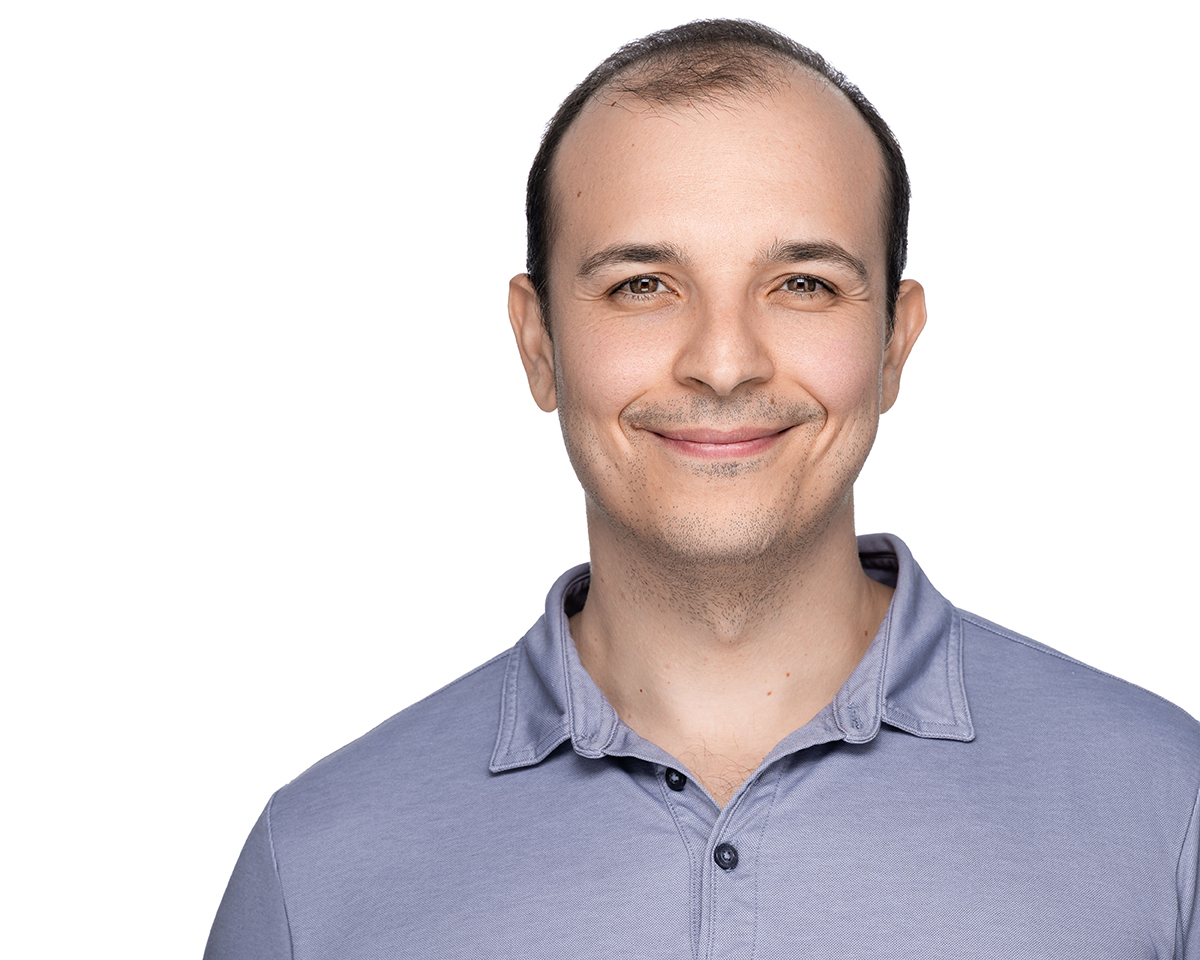
But what if we could use noise as a computational resource? That is the idea behind thermodynamic computing – which is the focus of this episode of the Physics World Weekly podcast. My guest is the theoretical physicist Stephen Whitelam – who joins me down the line from Lawrence Berkeley National Laboratory in the US.
Quantitative trading plays an ever-increasing role in the global financial markets. Automated algorithms analyse millions of financial instruments simultaneously, while mathematical models anticipate price movements on nanosecond timescales.
Susquehanna is a proprietary trading firm, meaning it invests its own capital in the markets. Susquehanna’s quantitative researchers – or “quants” – collaborate with traders and technologists to drive the company’s success. Quants design and implement the complex models and algorithms the firm needs to make rapid, well-informed pricing and trading decisions.
The quant advantage
(Courtesy: Susquehanna)
Lyubo Panchev, a quant at Susquehanna with seven years at the firm, describes how quants collaborate across a wide range of instruments and problem types. “Our quants are all trying to mathematically understand the world and the financial markets,” he says, “and then we use that information to determine whether we want to make a trade or not.” While the challenges vary considerably across the firm’s different trading desks, that shared mathematical mission is what unites them.
The details of this work can differ from quant to quant, from devising new pricing approaches for financial instruments, to finding patterns in data to turn into trading signals, to developing specialized software to implement new trading strategies.
However, specialist knowledge in specific fields is not what Susquehanna is primarily interested in when hiring a new quant. Instead, the firm is looking for the types of transferrable skills that PhD students in STEM fields often possess. “We want to hire people who can reason through first principles and feel comfortable working in an uncertain environment with open-ended questions to which answers sometimes might not even exist,” says Panchev. “So that’s why we like to hire PhDs.”
A physicist, for instance, brings the skills and intuition for modelling systems with incomplete information – whether that’s modelling interactions in a complex system or inferring signal from noise in a vast dataset. The mental frameworks used by a theorist studying quantum field theory or an experimentalist analysing data translate surprisingly well to pricing derivatives or spotting anomalies in market behaviour.
Life outside academia
Panchev – a three-time International Mathematical Olympiad medallist with a PhD in pure mathematics from MIT – says that the most satisfying part of working at Susquehanna for him is that it preserves what he loved about academia, while at the same time addressing some of the shortcomings.
“The freedom to work on what you want is a unique advantage in academia, over pretty much any industry,” says Panchev. “But what quant researchers do at Susquehanna is close to that spirit.”
Though he enjoyed focusing on challenging questions surrounded by like-minded people, he found working on hyper-specialized academic problems during his PhD a slow, lonely slog. At Susquehanna, quants work on challenging problems, but never in isolation. Quantitative trading problems are invariably interconnected, requiring close collaboration between researchers, traders, technologists and many other experts, to connect all the pieces together.
What’s more, the environment is highly dynamic. “The impact is much more immediate, sometimes instantaneous,” he adds. “You can be looking at the data and then decide to make a change to your algorithm, tweak a few things, and five minutes later, you’re already getting data that’s from the change you just made – it’s a very fast feedback loop.”
When you add a highly desirable salary, benefits package, career development opportunities, and a company culture that values strategy games like poker to hone decision-making skills and apply them to complex financial markets, it is clear to see why a STEM PhD student might choose Susquehanna over a career in academia.
From toy problems to market mastery
To earn a seat at this table, applicants are put through their paces. The first and perhaps greatest challenge they face is getting through the interview process. Quant skills – like original thinking, intuition, and problem-solving – are not easily described in a CV or interview, they need to be demonstrated. But how can an applicant demonstrate those skills in an interview?
“We build interesting toy problems that are representative of what we do,” explains Panchev. “And then we give them time to think and work on it on their own, before reconvening to see how they approached the problem, and what they found out.”
The internship builds solid foundations in finance domain knowledge, machine learning, programming and data analysis
Successful applicants who are hired on immediately participate in a comprehensive 10-week internship – the first step in an intensive front-loaded education program at the company. This internship builds solid foundations in finance domain knowledge, machine learning, programming, data analysis, as well as what Susquehanna’s different quant groups do and how their work all fits together.
Panchev says that a typical direct full-time hire requires five months or more of very structured education, over time, however, the quant will be faced with more open-ended problems and need to chart their own way, free to explore their own ideas and methods.
“There’s a long, steep learning curve but at the end you become an expert,” he adds. “In a way, it’s very similar to how a PhD is structured.” This means that, while the barrier to entry is fairly high, the support system is robust, with a well-organized education program that ensures that everyone is equipped with the tools that they need to succeed.
For the successful STEM PhD student assessing their career options, Susquehanna offers a compelling proposition – the chance to remain a scientist, but on a stage where the stakes are higher, the collaborations deeper and more dynamic, and the results play out in real-time and have real-world impact.
Concepts from gauge theory could lead to a more efficient way to perform fault-tolerant quantum computation by reducing the number of qubits required for key operations – according to work done by Dominic Williamson and Theodore Yoder at IBM Quantum in the US.
By adapting ideas from gauge theory, the researchers show how quantum information spread-out across a machine can be measured using only local checks, significantly lowering computing overhead. Their approach works for a wide class of quantum error-correction codes and could help accelerate the development of practical quantum computers.
One importance difference between quantum computers and ordinary computers is how information is stored. Instead of bits, which can be either 0 or 1, quantum computers use qubits, which can exist in a combination of both states at once. Qubits can also be entangled and it is these and other quantum effects that can be harnessed to solve some problems much fast than conventional computers.
However, this power comes with a major drawback. Qubits are extremely sensitive to disturbances from their environment, which can easily introduce errors. This fragility is one of the main reasons why building large-scale quantum computers is so difficult.
To overcome this, researchers are developing fault-tolerant strategies that allow a quantum computer to continue working correctly even when some of its components fail. Williamson, who is now at Australia’s University of Sydney, describes this as using “carefully designed methods with built-in checks so that, when those checks pass, the final result has not been corrupted”.
Such methods typically store information held in one “logical qubit” across many “physical qubits” so that errors can be detected and corrected. But this protection comes at a cost, often requiring a large numbers qubits to perform even simple operations.
Measuring quantum information
In their new work, Williamson and Yoder tackle one of the central challenges in fault-tolerant quantum computing: how to measure information that is spread across many qubits without introducing too many extra resources.
The researchers draw on gauge theory, a concept from mathematical physics. “Gauge theories describe how local interactions can connect distant parts of a system,” Williamson explains. “In our work, we use this idea to measure information that is spread out across many qubits by adding extra helper qubits and performing only local checks.”
In practice, this means breaking down a complicated, global measurement into many small, local ones. By combining the outcomes of these local checks, the overall result can be reconstructed. This avoids the need for large, complex operations that would otherwise require many additional qubits.
According to the study, the number of extra qubits required grows only slightly faster than the size of the measurement itself. This is a substantial improvement over earlier methods, where the overhead could increase much more rapidly.
The approach is also flexible and can be applied to a wide range of quantum error-correcting codes. Barbara Terhal at the Technical University of Delft in the Netherlands highlights this point, noting that “the advance in this [work] is that it shows how to do this measurement in a reliable way for any of these codes, and also makes clear how many extra qubits are needed.”
She adds that such measurements are essential because they enable the key steps of quantum computation. “By measuring these operators, you can perform all the key steps needed for a full quantum computation.”
The method is particularly effective when implemented on highly connected structures that allow information to spread efficiently. Williamson notes that, “using this kind of highly connected structure reduces the number of extra qubits needed for fault-tolerant computation.”
Future directions
Despite its advantages, the new method does not remove all obstacles. One important trade-off involves time. Reducing the number of qubits can make computations take longer.
Terhal explains, “There is an inevitable extra time cost when you try to reduce the number of qubits”. In some cases, a system with fewer qubits may need more time to complete a calculation, while one with more qubits could run faster. Finding the right balance remains an open problem.
Another limitation is that the current study is largely theoretical. As Terhal points out, “[This work] focuses on the mathematical side and does not yet study how well the method performs in realistic simulations, which are very important for practice”. Further work will be needed to understand how the approach performs in real devices.
Williamson says, “We are working on ways to reduce the cost even more,” including lowering both the number of qubits required and the time needed to perform computations. He also notes that the method “has already been used in several follow-up studies” and is expected to appear in early fault-tolerant quantum computers in the coming years.
As quantum computing continues to advance, reducing the resources required for error correction will be crucial. By showing how to perform key operations with fewer qubits, the new work offers a promising step toward scalable and practical quantum machines.

 Login
Login