Normal view

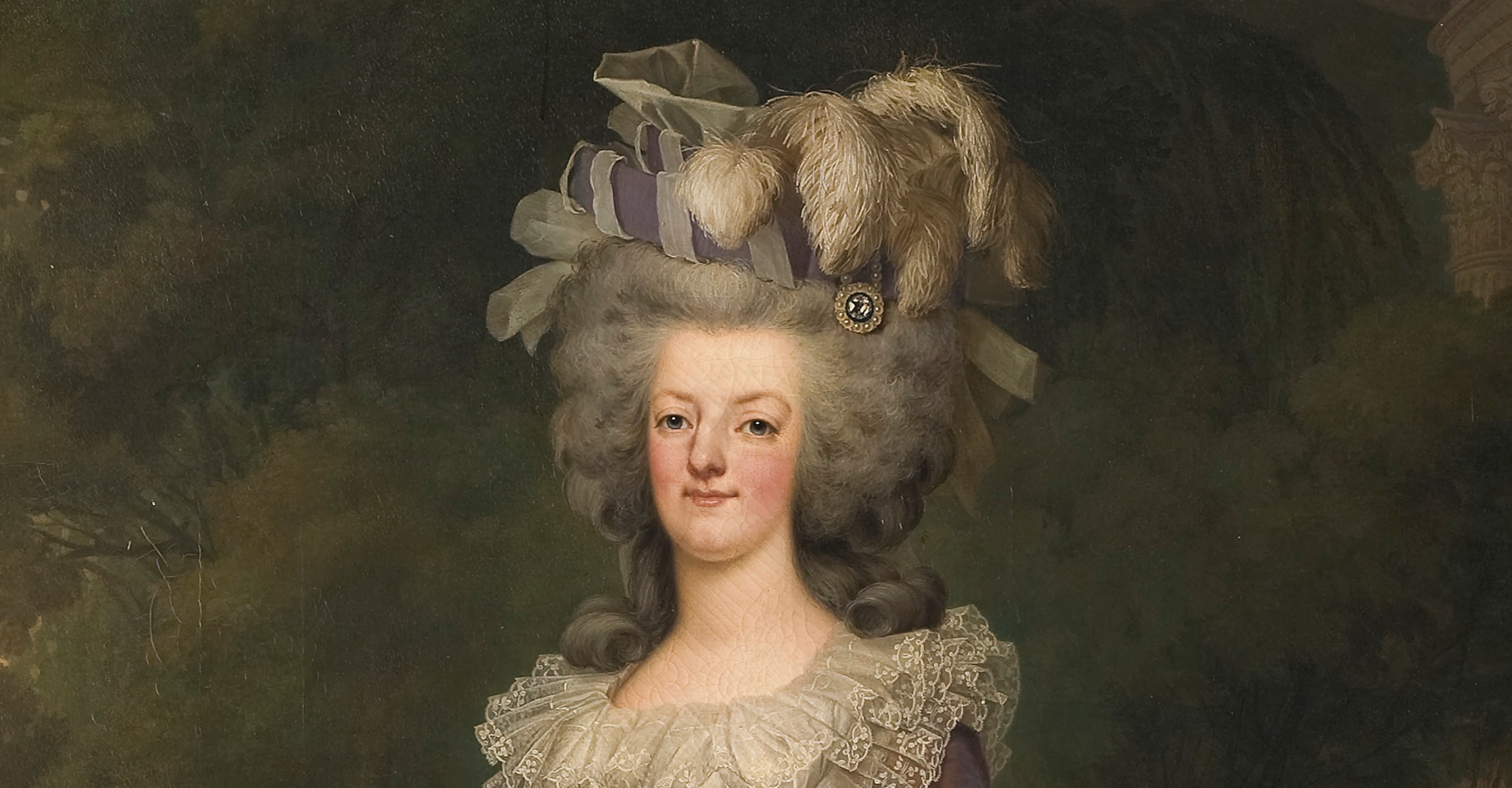
Marie Antoinette probably got braces to straighten her teeth

3 June 2026 at 18:05

What’s the weirdest thing you learned this week? Well, whatever it is, we promise you’ll have an even weirder answer if you listen to Popular Science’s hit podcast. The Weirdest Thing I Learned This Week hits Apple, Spotify, YouTube, and everywhere else you listen to podcasts every-other Wednesday morning. It’s your new favorite source for the strangest science-adjacent facts, figures, and Wikipedia spirals the editors of Popular Science can muster. If you like the stories in this post, we guarantee you’ll love the show.

FACT: Marie Antoinette probably had braces

By Rachel Feltman

The idea of Marie Antoinette in orthodontic braces probably sounds like something out of my favorite Sofia Coppola film, but it’s not as anachronistic as it sounds. While I couldn’t find a definitive primary source on the subject, there are historical mentions of Marie Antoinette undergoing orthodontic treatment. And in some ways, it would be more surprising if she didn’t do a stint in braces: modern dentistry as we know it was essentially invented in France in the early 1700s, and by the time Marie and Louis got hitched, French people were practically known for having straight, pretty teeth. We know that Marie Antoinette was given an intense French makeover in all things before being shipped off to Versailles, so it’s plausible that she had a bit of dental work done, too. 

If the idea of 18th century orthodontia makes you want to put your head between your knees, you’re not wrong. The hardware designed by Pierre Fauchard, called a bandolet or bandeau, used a horseshoe-shaped piece of metal that pressed against the inside or outside of the dental arch. Dentists would manually tie individual teeth to the appliance using either silk threads or thin metal wires. That is, admittedly, pretty identical to how braces work today—they exert constant pressure on teeth to help move them into new positions, then hold them there while everything settles into place. But modern braces are designed to move teeth more effectively and with as little pain as possible, and the bandeau was much more of a blunt instrument. 

For a fun French dental bonus fact, I dug into the weird social history of smiling on the eve of the Revolution. Check out this week’s episode to learn more! 

FACT: One woman’s cells have fueled most medical research for decades 

Featuring Hari Kondabolu and Dr. Priyanka Wali

Today’s special guests are comedian Hari Kondabolu and physician-slash-comedian Priyanka Wali. Together they host the podcast Health Stuff, where they dive into everything from earwax to sleep hygiene.

On this week’s episode of Weirdest Thing, Hari and Priyanka share the story of Henrietta Lacks. While being treated for cervical cancer at Johns Hopkins in the 1950s, this African American mother of five unknowingly—and involuntarily—changed the course of medical history. Cancer cells from one of her biopsies were sent off for research without her knowledge or consent. Unlike other cancer cells in the lab, hers kept doubling instead of dying off. They were the first human cells that were discovered to multiply easily in a lab setting, making them perfect for studying the impact of various drugs, hormones, viruses, and toxins. While the cell line that originates from Henrietta Lacks’ tissues—called the HeLa line—has been used in research that’s saved countless lives over the decades, they also serve as a reminder of the entrenched racism of our medical system.

Listen to this week’s episode to learn more about Henrietta’s story. And for a deeper dive, check out “The Immortal Life of Henrietta Lacks.” 

FACT: It’s possible that neanderthals knew how to treat cavities 

By Rachel Feltman

Surprise, more teeth! Scientists recently reported that a 59,000-year-old tooth—a neanderthal molar, to be precise—could conceivably have been drilled to treat a cavity. They came to that conclusion by tinkering with three modern teeth, AKA subjecting them to the horrors of prehistoric dental treatment, to show that the ancient chomper showed signs of the same. 

Unsurprisingly, not everyone is 100 percent convinced by the experimental evidence. But even if hominids weren’t drilling cavities that long ago, there’s good reason to believe we’ve been at it for longer than you might guess. A couple of teeth from the Stone Age (about 13,000 years ago) show less ambiguous signs of dental drilling, and dentistry has been a flourishing (if often misguided) practice for thousands of years. Many of our ancient ancestors even wore dental bridges made out of gold and other precious metals—so grills have a long, proud history. 

The post Marie Antoinette probably got braces to straighten her teeth appeared first on Popular Science.

Bald eagle Jackie shoos away Fiona the squirrel

1 June 2026 at 18:20

Internet-famous eagles Jackie, Shadow, Sandy, and Luna are not the only residents of their beautiful pine tree overlooking big bear lake. And sometimes, the watchful parents will let their presence be known. 

According to Friends of Big Bear Valley (FOBBV), one of the tree’s most famous residents came close to the eagle family over the weekend. Fiona the squirrel made several appearances overnight between May 30 and 31. During one visit, Jackie decided to send a message to the bushy-tailed rodent.

“Jackie responded with a dramatic slap and some backtalk that reminded us she is not tolerating Fiona while trying to sleep,” FOBBV writes.

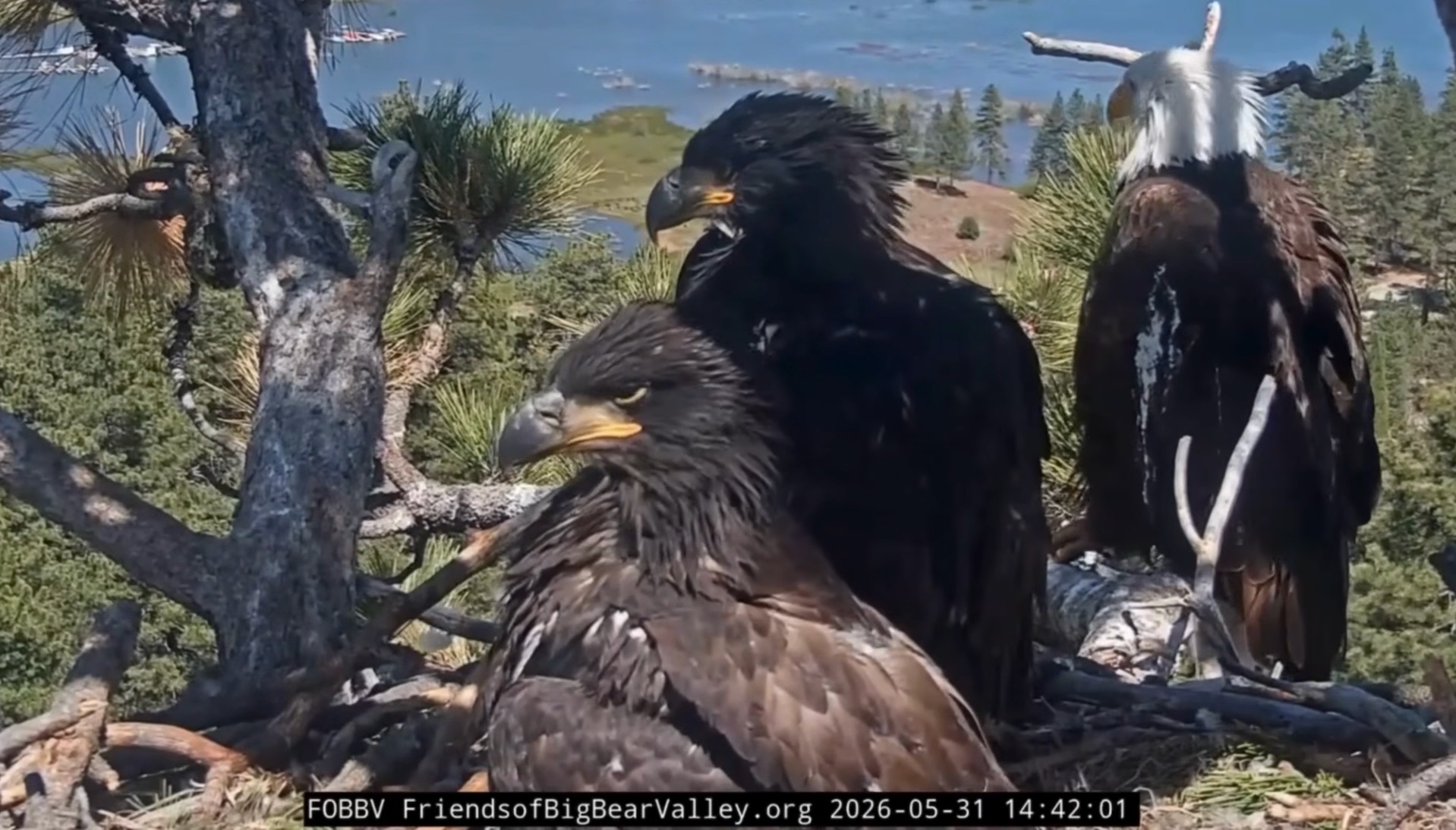
The not-so-little-anymore eaglets Sandy and Luna also practiced their squirrel-shooing skills and wing flaps later in the day. 

Fiona is one of the catchall names of the flying squirrels that live near Jackie and Shadow. FOBBV is not sure how many of the rodents are in the area, but Fiona and Fast Freddie (another nickname) have had cameo appearances on the livestream for years. The squirrels will visit the nest from time to time, primarily searching for food scraps. 

According to the United States Fish and Wildlife Service, the nocturnal creatures are San Bernardino flying squirrels, (Glaucomys sabrinus californicus) a subspecies of the Humboldt’s flying squirrel. They can glide for as far as 300 feet in the air and primarily eat truffles, conifer seeds, and lichens. FOBBV volunteers have noted that the squirrels are “very fond of Shadow’s fish tails, coot feathers, egg shells and even crunchy beetles!”

So far, Jackie and Shadow’s eggs and eaglets have not been in any serious danger from the squirrels. The same can’t be said for the tree’s ravens, who destroyed the pair’s first two eggs this breeding season. 

All of the action can be found 24/7 on the eagle nest livestream.


Jackie and Shadow’s 2026 babies: Everything you need to know

It’s been another roller coaster nesting season for Jackie and Shadow, a pair of internet-famous bald eagle parents living in San Bernardino National Forest in Southern California. After two of their eggs were destroyed by ravens in January, Jackie and Shadow laid two new eggs that have successfully hatched.

Chick 1 hatched on April 4 at 9:33 p.m. PDT, while Chick 2 followed on April 5 at 8:30 a.m. Their large nest in Big Bear Valley east of Los Angeles is livestreamed 24 hours a day by nonprofit Friends of Big Bear Valley (FOBBV) and has captivated millions. 

On May 1, FOBBV announced the chicks’ names: Sandy and Luna.

How long will the chicks stay in the nest? 

Chicks usually stay in the nest until 10 to 14 weeks of age.

What challenges do the eaglets face?

Before leaving the nest, the chicks face threats from other birds of prey, including hawks, ravens, other eagles, and owls. Inclement weather can also present challenges for the chicks. In 2025, a March snowstorm resulted in the death of one of Jackie and Shadow’s three chicks.

During fledging, only 70 percent of eaglets survive. One of the greatest threats is from cars that can injure or kill the birds while they scavenge for food on roadkill. 

Who are Jackie and Shadow? 

The pair first got together in 2018 and successfully raised chicks in 2019 and 2022. However, their eggs failed to hatch in 2023 and 2024. Only 50 percent of eagle eggs successfully hatch, so this pair has already beaten the odds.

What happened to Jackie and Shadow’s 2025 eaglets?

In 2025, Jackie laid three eggs that all hatched in early March. On March 13, a strong snowstorm dumped up to two feet of snow and battered the nest with strong winds. Only two of the chicks were visible on the live cam when the storm passed by the next morning. FOBBV later confirmed the passing of one of the chicks. The two surviving chicks were later named Sunny and Gizmo after 54,000 names were submitted by fans.

What happens after chicks fledge? 

Young eagles usually fledge–or leave the nest and fly–when they can flatten their wings and have feathers capable of flight. This typically occurs when the birds hit 10 to 14 weeks of age. Males also tend to take their first flight a little sooner than females. 

According to FOBBV, fledglings from Southern California have been spotted as far south as Baja California, as far north as British Columbia, and as far east as Yellowstone National Park.

About 70 percent of bald eagles survive the fledgling stage. FOBBV does not tag their eagles, so it’s not possible to follow the chicks’ journeys after they flee the nest.

Can I help Jackie and Shadow?

Yes. Environmental groups are currently fundraising $10 million to protect Jackie and Shadow’s foraging area from development. Learn more at SaveMoonCamp.org.

The post Bald eagle Jackie shoos away Fiona the squirrel appeared first on Popular Science.

Jackie and Shadow’s chicks no longer sleep with mom in the nest bowl

26 May 2026 at 21:44

If you’ve ever shared a bed with your child, you know the pain of flailing limbs at 3am. Bald eagle parents can relate.

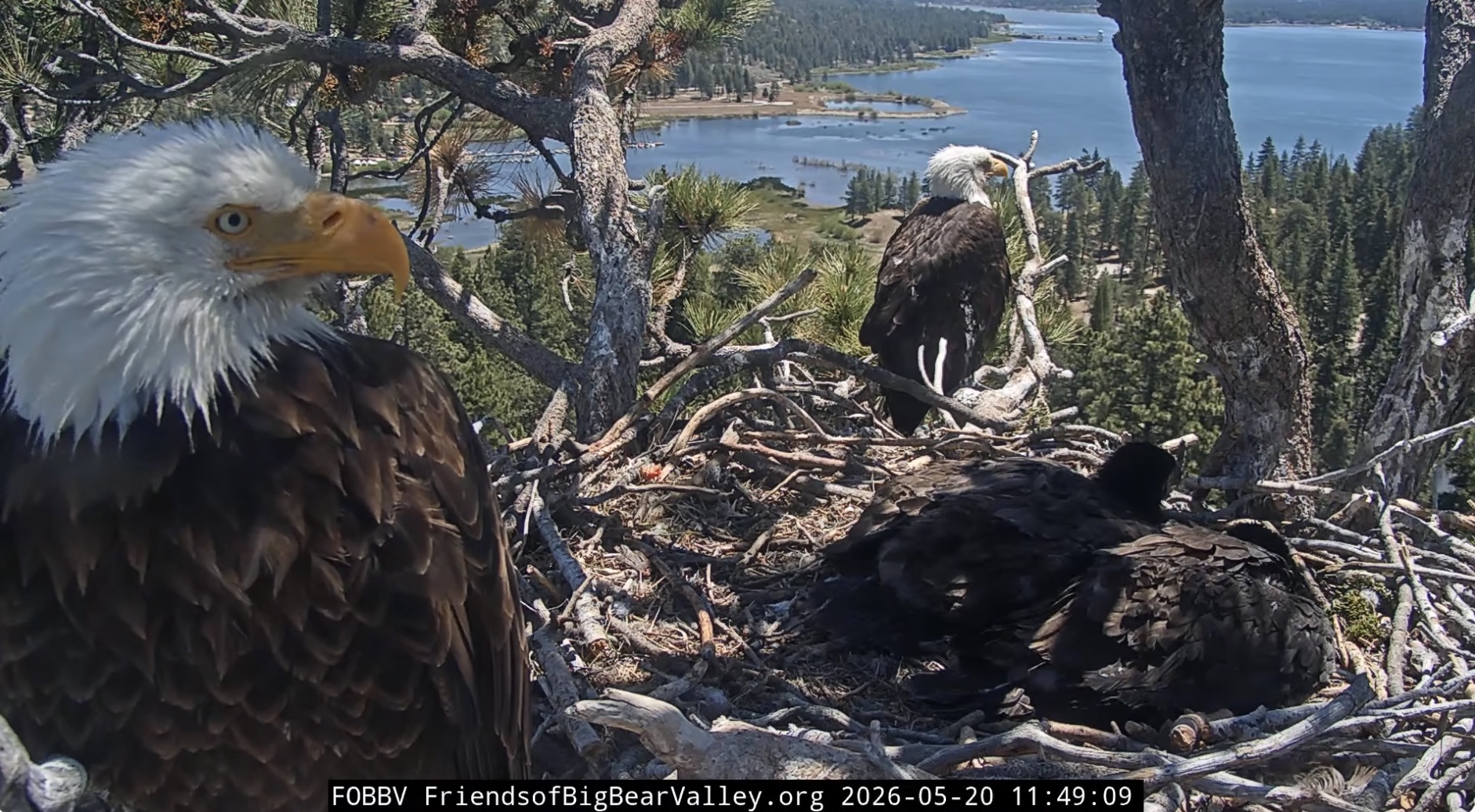
Jackie and Shadow‘s 2026 eaglets, Sandy and Luna, have reach near-adult size, which has made sharing the nest bowl at night a difficult task. Viewers of the eagles’ 24/7 livestream have noticed that the parents no longer sleep right next to the young pair, instead resting on a nearby branch while the chicks doze at night.

“While it looks like she just needs a break from the kids, one of the most practical reasons is space management,” Friends of Big Bear Valley (FOBBV), the non-profit behind the livecam, explains. “By the time the chicks are 6 to 7 weeks old, they are nearly adult-sized. If you’ve ever tried to share a bed with someone who flails, kicks, and unexpectedly opens a 6-foot wingspan in the middle of the night, you would know exactly why Mama moves out!”

chicks in nest at night
Just this morning, Jackie could be seen perched on the nest’s “front porch” as Sandy and Luna slept in the nest bowl. Image: FOBBV

To us humans, sleeping in a cozy nest likely seems more comfortable than catching zzzzzs while standing, but we don’t have bird legs. Bald eagles roost on branches thanks to a natural adaptation called a tendon locking mechanism. This mechanism allows the majestic birds to clamp onto a branch or prey without needing to constantly flex their muscles. By doing so, the birds conserve energy and reduce fatigue—think about how weak your puny human legs would feel after standing all night.

Mama Jackie still remains close to Sandy and Luna to watch for predators, but also far enough away to avoid random talon jabs.


Jackie and Shadow’s 2026 babies: Everything you need to know

It’s been another roller coaster nesting season for Jackie and Shadow, a pair of internet-famous bald eagle parents living in San Bernardino National Forest in Southern California. After two of their eggs were destroyed by ravens in January, Jackie and Shadow laid two new eggs that have successfully hatched.

Chick 1 hatched on April 4 at 9:33 p.m. PDT, while Chick 2 followed on April 5 at 8:30 a.m. Their large nest in Big Bear Valley east of Los Angeles is livestreamed 24 hours a day by nonprofit Friends of Big Bear Valley (FOBBV) and has captivated millions. 

On May 1, FOBBV announced the chicks’ names: Sandy and Luna.

How long will the chicks stay in the nest? 

Chicks usually stay in the nest until 10 to 14 weeks of age. This year’s chicks will likely fledge sometime between mid-June and mid-July.

What challenges do the eaglets face?

Before leaving the nest, the chicks face threats from other birds of prey, including hawks, ravens, other eagles, and owls. Inclement weather can also present challenges for the chicks. In 2025, a March snowstorm resulted in the death of one of Jackie and Shadow’s three chicks.

During fledging, only 70 percent of eaglets survive. One of the greatest threats is from cars that can injure or kill the birds while they scavenge for food on roadkill. 

Who are Jackie and Shadow? 

The pair first got together in 2018 and successfully raised chicks in 2019 and 2022. However, their eggs failed to hatch in 2023 and 2024. Only 50 percent of eagle eggs successfully hatch, so this pair has already beaten the odds.

What happened to Jackie and Shadow’s 2025 eaglets?

In 2025, Jackie laid three eggs that all hatched in early March. On March 13, a strong snowstorm dumped up to two feet of snow and battered the nest with strong winds. Only two of the chicks were visible on the live cam when the storm passed by the next morning. FOBBV later confirmed the passing of one of the chicks. The two surviving chicks were later named Sunny and Gizmo after 54,000 names were submitted by fans.

What happens after chicks fledge? 

Young eagles usually fledge–or leave the nest and fly–when they can flatten their wings and have feathers capable of flight. This typically occurs when the birds hit 10 to 14 weeks of age. Males also tend to take their first flight a little sooner than females. 

According to FOBBV, fledglings from Southern California have been spotted as far south as Baja California, as far north as British Columbia, and as far east as Yellowstone National Park.

About 70 percent of bald eagles survive the fledgling stage. FOBBV does not tag their eagles, so it’s not possible to follow the chicks’ journeys after they flee the nest.

Can I help Jackie and Shadow?

Yes. Environmental groups are currently fundraising $10 million to protect Jackie and Shadow’s foraging area from development. Learn more at SaveMoonCamp.org.

The post Jackie and Shadow’s chicks no longer sleep with mom in the nest bowl appeared first on Popular Science.

10 images of Iceland’s changing landscape

23 May 2026 at 14:00

What happens when your homeland begins to melt? Icelandic poet and author Andri Snær Magnason explores this in Time and Water, a new documentary from National Geographic. Directed by Sara Dosa, archival and family photographs and folktales weave personal history with the story of the land in the face of climate change.

“In a time when the violence of the climate crisis ravages the earth, we need stories that can act as maps for our shifting world,” Dosa says in her director’s statement. “Time and Water is a gesture toward such a map, one that traces the ice of Iceland through the human story of one family, anchored by the first-person perspective and expansive archives of celebrated writer Andri Snaer Magnason.”

Images from the documentary are in the gallery below. (Click to expand images to full screen.)

A silhouetted person stands beneath the vaulted ceiling of a glacial cave in Iceland. Image: Archival Materials Courtesy of Andri Snær Magnason.
Icelandic Glaciological Society member, Árni Kjartansson, sits overlooking a glacier in Iceland. Image: Archival Materials Courtesy of Andri Snær Magnason.
Women walk in skis on glacier. Image: Archival Materials Courtesy of Andri Snær Magnason.
An ice cave in Iceland. Image: National Geographic.

The story of Andri’s grandparents is woven together with the glaciers and oceans that has sustained generations of Icelanders.

“As Andri’s grandfather Arni’s memory recedes, so too does Iceland’s ice. A story of the earth, which has been frozen for millennia inside glaciers, is rapidly melting away,” says Dosa. “But, through the framing of our film as a time capsule, which is also a nod to Andri’s work as a poet and sci-fi author, we illustrate how the transmission of stories and memories into the future can be an act of not just holding onto our beloved present world, but a way of dreaming up possibilities for a habitable future.”

A glacial tongue behind a waterfall. Image: National Geographic.
Glacial tongue descends into glacial lagoon. Image: National Geographic.
Melting arc made of glacial ice. Image: National Geographic.
Glacial ice formations. Image: National Geographic.
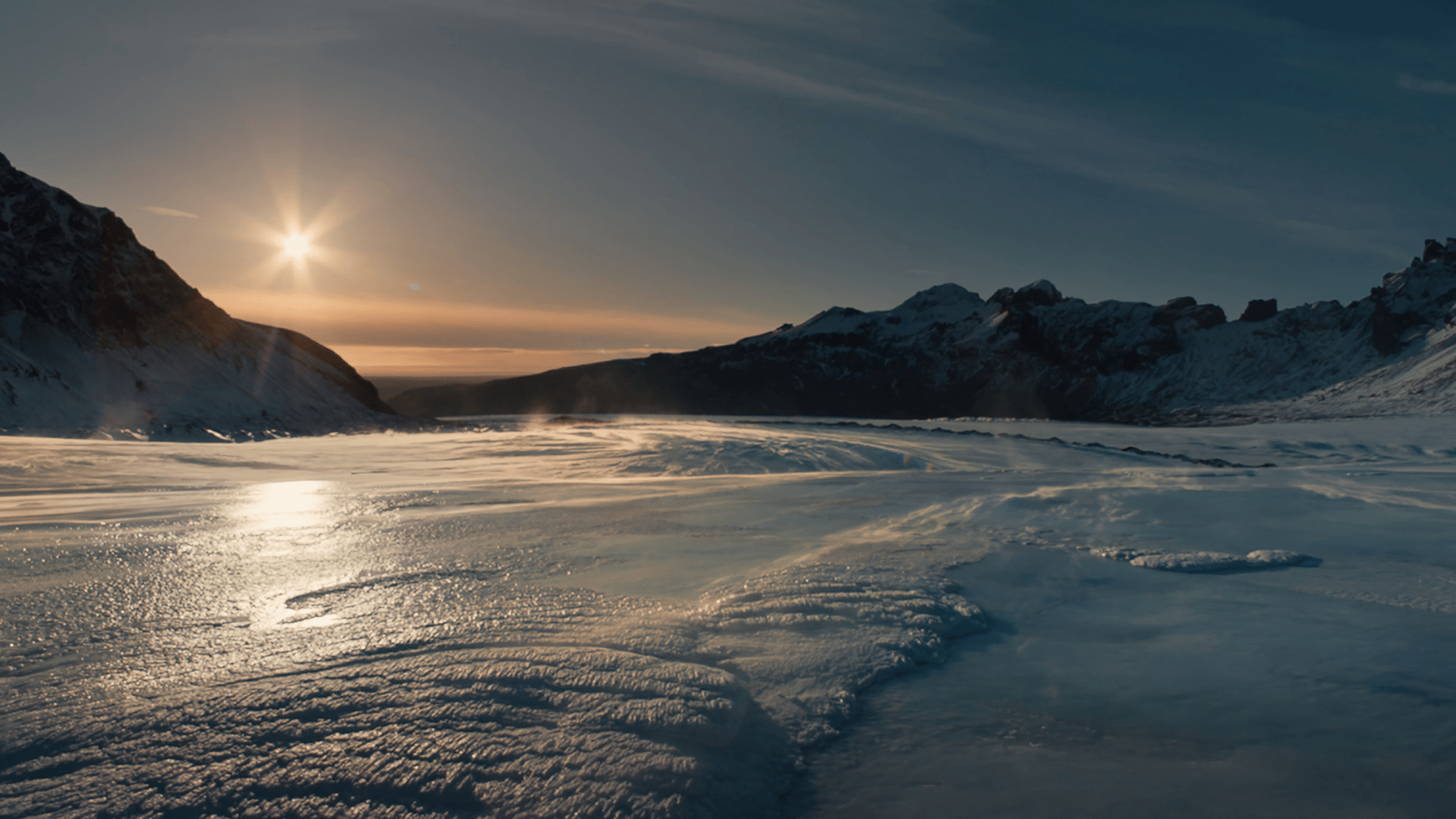
Strong winds lift snow off a glacial cap on a sunny day. Image: National Geographic.
Birdcliff in western Iceland. Image: National Geographic.

Time and Water opens in select theaters May 29 and later this year on National Geographic & Disney+.

The post 10 images of Iceland’s changing landscape appeared first on Popular Science.

❌