Normal view

Golf ball-sized octopus discovered near the Galápagos Islands

25 May 2026 at 02:01

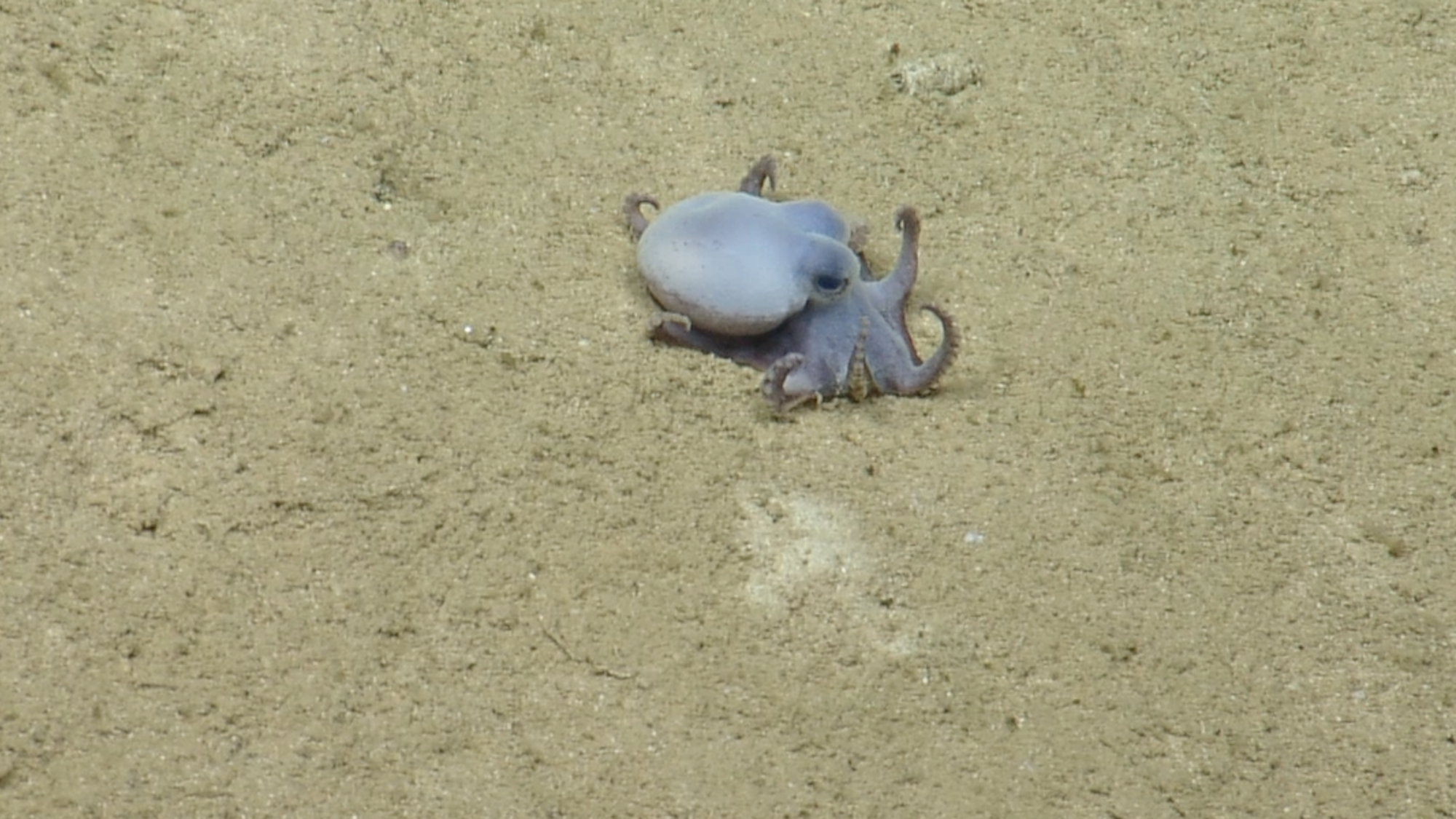
A tiny, bright blue octopus Microeledone galapagensis is small enough to fit inside the palm of your hand, but good luck trying to meet one. According to marine biologists, you’ll likely have to settle with admiring it from afar for now unless you have access to a deep sea submersible—and a ticket to the Galápagos Islands.

M. galapagensis is described for the first time in a study published today in the journal Zootaxa, but scientists actually first encountered the octopus in 2015. While conducting a deep sea expedition aboard the research vessel E/V Nautilus, biologists spotted the diminutive invertebrate as they piloted a remotely operated vehicle (ROV) along the ocean floor near Darwin Island. Its vibrantly blue coloration stood out from the underwater mountainslope at a depth of about 5,800 feet, prompting a closer inspection.

“Is that a cute little guy, or what?” one researcher can be heard saying over the audio feed of an ROV recording.

The team successfully soon scooped up the specimen and eventually recorded footage of two others during their expedition. A closer lab inspection stumped the experts, however, which prompted them to send a photo along to Field Museum octopus expert Janet Voight.

“Right away, I knew it was something really special. I’d never seen anything like it,” the study co-author recalled in a statement.

There was a big problem, however. Determining if a specimen is a never-before-seen species usually requires a full autopsy that inevitably destroys the sample. Since this was the only M. galapagensis ever collected, Voight didn’t want to lose such a valuable example.

The solution eventually came in the form of micro-computer tomography (CT) scanning technology. With the help of Field Museum X-ray CT laboratory manager Stephanie Smith, the team could finall get a highly detailed look at M. galapagensis’ anatomy by compiling thousands of thin X-ray images into a 3D model.

“Because CT imaging is non-destructive, it’s especially important for type specimens like this one. And that’s great for me because people are often bringing me these incredibly rare and stunningly beautiful specimens that I get the privilege of virtually opening up,” explained Smith, also a study co-author. 

After years of work, Voight and colleagues could finally confirm the octopus belonged to a novel species that deserved its own name. What’s more, M. galapagensis represents the first octopus species officially described by Voight in her over 40-year career.

“These are little octopuses that live in the deep sea, and hardly anybody on Earth has ever gotten to see them. I just feel lucky that I got to work with them,” she said.

“Getting the specimen to Janet was a long process, but one I would gladly repeat if it means getting to know the most precious parts of our ocean just a little bit better,” added study co-author and University of California Los Angeles marine scientist Salome Buglass.

The post Golf ball-sized octopus discovered near the Galápagos Islands appeared first on Popular Science.

New box jellyfish name warns of ‘death from behind’

23 May 2026 at 16:22

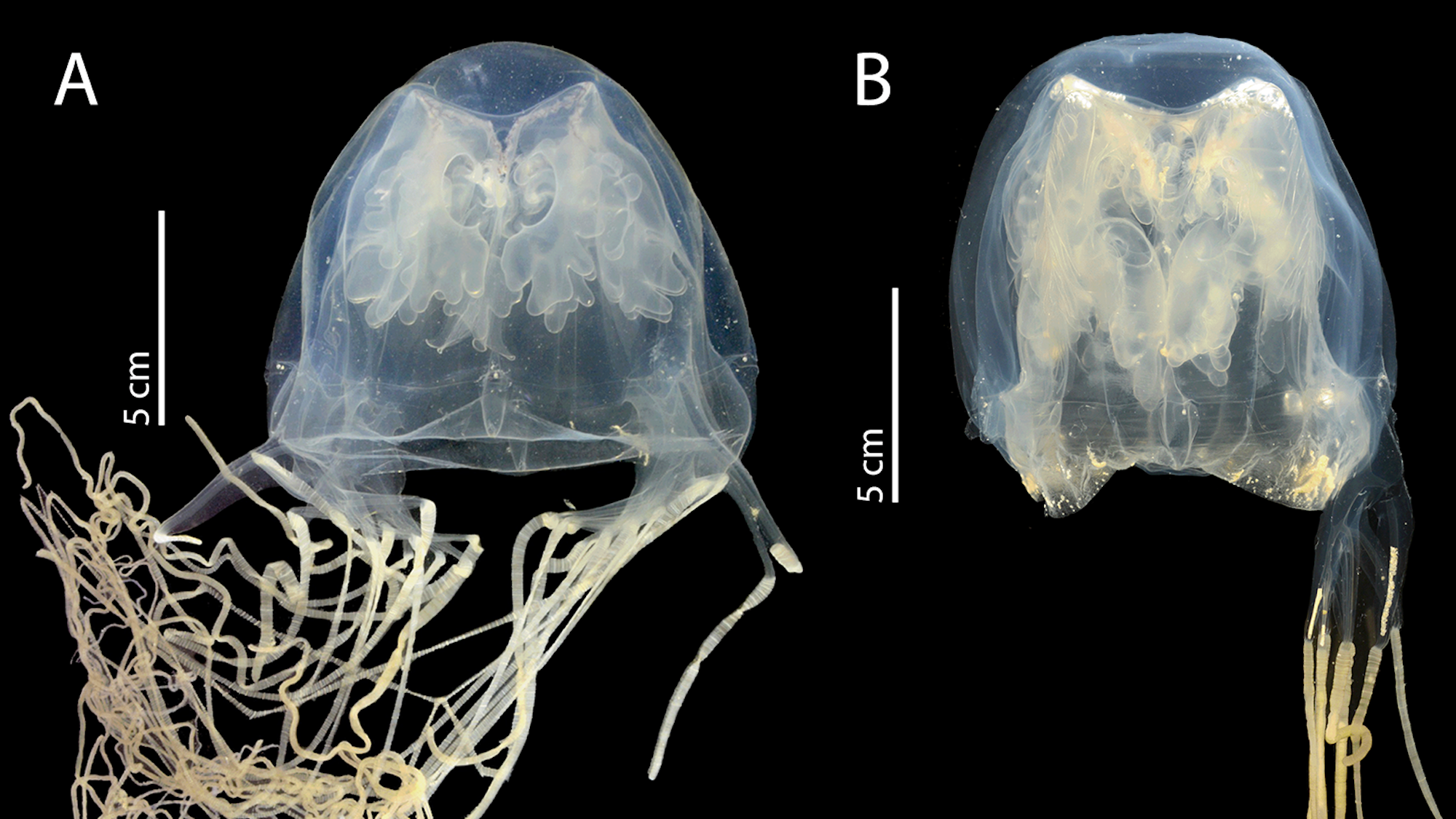
A recently discovered box jellyfish species living in near Singapore looks nearly identical to another jellyfish previously discovered by the same scientist. But regardless of whether or not you can tell Chironex blakangmati and Chironex yamaguchii apart, you’ll want to steer clear of both of them. Box jellyfish didn’t earn their “sea-wasp” nickname for yellow-and-black stripes.

Cheryl Ames, a marine biologist at Japan’s Tohoku University, collected C. blakangmati during an expedition near the coast of Singapore’s Sentosa Island. The team initially assumed the invertebrate was an example of C. yamaguchii, but later genomic testing revealed something else entirely.

“We realized they were completely distinct,” Ames explained in a statement. “I actually went back to dust off an old sample of C. yamaguchii I still had in storage in Okinawa to help with the comparisons.”

Apart from genetics, the key difference setting C. blakangmati apart from its three known Chironex relatives is its perradial lappets. This anatomical feature on the bottom of the box jellyfish’s bell-shaped body strengthens the pulsating musculature that propels it through the water. Other Chironex species include pointy canals at the tips of their perradial lappets, but C. blakangmati notably does not.

Canals or not, they are remarkable creatures. The vast majority of jellyfish don’t rely on vision and passively float in ocean currents, but members of the Chironex genus do not. Instead, they have evolved complex eye organs that help them locate prey. They then use that same musculature supported by the perradial lappets to actively swim through the water towards its target.

In this sense, C. blakangmati certainly lives up to its scientific name. Sentosa may be Malay for “peace and tranquility,” but the island once called something very different. Historically, it is also known as Pulau Klakang Mati, which translates to the “Island of Death from Behind.”

The post New box jellyfish name warns of ‘death from behind’ appeared first on Popular Science.

Handyman adapts Barbie Dream Camper to handle soaring gas prices

21 May 2026 at 22:15

There are over 283 million cars cruising the United States, and over 90 percent of them are still guzzling gas. Apart from the obvious environmental problems, fuel prices also continue to skyrocket thanks to the ongoing war in Iran. The average price for gas is currently around 33 percent higher than it was before the crisis, and there is little sign that those numbers are going down anytime soon.

The strain is forcing many drives to reconsider how they get around—and they’re getting creative with it. In Georgia, a 30-year-old handyman is showing everyone how to properly adapt to uncertain times. According to a recent Reuters profile, Mali Hightower has retrofitted a discarded, bright pink Power Wheels Barbie Dream Camper with a two-gallon, one-piston engine for his shorter commuting needs.

“I drive this when I can,” Hightower said on May 19. 

To get it going, a driver simply pulls the rip cord that’s attached to the former power washer engine. At less than four-feet-tall, the Dream Camper may not be the most comfortable ride for a full-grown adult,but it’s definitely cheaper. Hightower likely still prefers driving his 1996 Mercedes-Benz convertible, but with a full tank costing him around $90 right now, he’s more than willing to use his Power Wheels alternative for errands like grocery runs.

While somewhat surreal to see at a gas pump, the DIY solution underscores a more important issue: the need for more people to divest from fossil fuel rides in favor of public transportation and electric vehicles (EVs). Unfortunately, that’s easier said than done for many people. The U.S. is dramatically underfunded when it comes to options like commuter bus routes and trains, while EVs are still out of many people’s price ranges. The Dream Barbie Camper may be one-of-a-kind right now, but there’s a good chance that similar, intentionally constructed alternatives are on the way. At least those will be able to comfortably fit the driver.

The post Handyman adapts Barbie Dream Camper to handle soaring gas prices appeared first on Popular Science.

❌