Normal view

Scientists Warn the Global Population Could Halve by 2064—a Hidden Pattern Reveals the Worst-Case ‘Crisis’ Scenario

3 June 2026 at 12:56


For thousands of years, human population growth occurred so slowly that there wasn’t even a noticeable curvature in the graph of humanity’s civilization. Villages became towns. A harvest fed another generation. Empires grew and collapsed while the total number of people on Earth crept upward by degrees.

This has changed dramatically with the onset of the modern age, as industry, medicine, energy production, agriculture, and technology drove our population curve into one of the most spectacular population explosions in human history. This growth, however, has also defied mathematical explanations, challenging some of the best models used to explain life on our planet.

Now, a new mathematical model suggests that hidden within that rise is a deeper pattern, one that may also point to how quickly things could change if humanity abruptly runs into the planet’s limits.

A Worst-Case ‘Crisis’ Scenario

Published in Chaos, Solitons and Fractals, the study was authored by University of Milan physicist Dr. Alessio Zaccone and the late Dr. Kostya Trachenko of Queen Mary University of London. Their work used more commonly used mathematical methods to describe disordered materials, where scientists study how complex systems evolve, relax, and respond over time.

By applying this new model to our population growth, Dr. Zaccone and Dr. Trachenko have discovered that their simple equation appears to embrace a wide range of growth regimes observed over the last 12,000 years, from long periods of relative stability to rapid acceleration of our growth after the onset of the industrial age.

They also demonstrated just how rapidly our growth curve could shift if we lost the underlying assumptions for rapid human growth.

In a deliberately conservative worst-case scenario in which carrying-capacity constraints became abruptly active today, the researchers found that the global population could be cut in half as early as 2064.

Instead of trying to predict the future by looking at factors such as migration, fertility rates, technological development, economic changes, climate policy, and others, Dr. Zaccone and Dr. Trachenko sought to address a simpler, much more profound issue. Namely, can a general nonlinear model be used to describe the population growth curve in the history of humanity?

The answer is yes, though with important caveats.

“We show that a simple nonlinear differential equation (originally studied in the physics of disordered systems) mathematically describes key regimes of global population growth over the past 12000 years,” researchers write. “The proposed framework provides a compact analytical setting to explore future scenarios, including a deliberately conservative, worst-case illustration in which the global population could halve as early as 2064 if carrying-capacity constraints became abruptly active today.”

Why Population Models Are Hard to Build

Historically, modeling of population growth has been a controversial issue. As far back as 1798, English cleric Thomas Malthus proposed a simple exponential growth curve. According to his framework, the growth rate is determined by the difference between birth and death rates. If birth exceeds deaths, the population grows exponentially. If the opposite happens, it declines.

The problem with that approach is that the population of any species, including humans, doesn’t grow indefinitely. The carrying capacity, i.e., how many individuals of the species can be sustained, is limited.

It was Dr. Pierre François Verhulst who, in the 19th century, added this factor to our population growth models. He showed that population growth occurs, though it is progressively slowed by resource limitations and eventually comes to a stop.

Later, in 1960, Dr. Heinz von Foerster and colleagues famously proposed a hyperbolic model suggesting that human population growth was accelerating toward a mathematical “doomsday” singularity in 2026.

Obviously, Dr. von Foerster’s prediction did not come to fruition. However, his model raised a further crucial issue in population dynamics—namely, that any mathematical population framework can be fitted to describe certain historical events. The problem is that when applied to a much wider timeframe, they can completely break down.

According to Dr. Zaccone and Dr. Trachenko, the problem isn’t that those models were useless per se. On the contrary, most of them are very useful and supply valuable information about various aspects of population dynamics. However, none of them can be universally used, as they are typically local estimates valid for a specific timeframe.

A Single Mathematical Model To Capture It All

In their new study, Dr. Zaccone and Dr. Trachenko developed a nonlinear differential “rate-feedback” equation. In essence, it implies that the population growth rate depends on the population size, and a single parameter K determines whether the dependence is positive or negative.

If K = 0, the model yields a simple exponential growth curve. For negative values of K, the behavior approaches logistic dynamics, with population growth being increasingly slowed by resource restrictions. If K is positive, the model shows a rapidly accelerating growth curve.

Importantly, according to researchers, the classic models aren’t equivalent to theirs. Rather, these behaviors appear as local approximations within the proposed framework. It means the researchers do not claim to have developed a magical equation that will solve all problems. Instead, what they propose is a mathematical tool to bring a few key models under a single umbrella.

“Different growth regimes since the early Neolithic until the present can be interpreted within a single nonlinear rate-feedback equation in appropriate limits,” researchers write. “These include the well-known Malthus (exponential) and Verhulst (logistic) growth laws, as well as von Foerster-type hyperbolic growth as a controlled low-order truncation.”

Humanity’s Population Growth Regimes Keep Changing

Based on empirical estimates of the global population over the last 12,000 years, researchers discovered that our species has experienced multiple regimes throughout its history. While some of these periods were defined by relative population stability, others featured exponential growth, and others featured compression or stretching of the growth curve.

While there were shorter periods of population decline, for instance, during the Black Death in Europe, researchers focused on broader trends in population growth. These regimes, they say, were clearly distinct from each other.

The era of early agricultural societies was relatively stable. Later periods featured increasing acceleration in our population growth. Since the 1970s, the authors argue, our population dynamics can be best approximated by a stretched exponential regime, suggesting that population growth has slowed significantly compared to earlier stages.

Within this mathematical model, the current stretched-exponential regime implies K < 0. In other words, humanity’s growth doesn’t approach a critical threshold, and the possibility of catastrophic runaway growth can be ruled out.

However, the paper’s most attention-grabbing scenario explores what could happen if that trend were disrupted by a major crisis. Researchers say that in a sudden global catastrophe, carrying capacity constraints could suddenly become active.

When the mathematical Model Runs Into Earth’s Limits

Researchers suggest that if there were a serious shock to our planet, such as a global war, rapid climate change, or a massive pandemic, we could potentially see a collapse of our growth regime due to a drastic reduction in the exploitation efficiency of available resources.

To illustrate this, researchers introduced an additional term in their equation. Specifically, they accounted for the carrying capacity of our planet. Using an extremely conservative estimate of the carrying capacity of 2 billion individuals, they found that under these assumptions, our population would halve by 2064.

However, it’s important to note that this estimate is highly speculative. It cannot be viewed as an exact prediction of our future for several reasons. First, researchers explicitly state that their model is purely illustrative and not intended for prediction.

Secondly, the choice of a carrying capacity of 2 billion is highly debatable. The carrying capacity of Earth itself, rather than per person, depends on many parameters and is not a constant. Technological progress, energy efficiency, agricultural productivity, climatic stability, and international cooperation determine, to a great extent, how many people our planet can sustain at any given time.

Still, the study’s warning is clear. Mathematical population trends can look stable until the assumptions behind them suddenly change. A world that continues along its current stretched-exponential trajectory may avoid doomsday-style runaway growth. But a world that abruptly runs into hard limits could experience a very different future.

The Real Warning Is in the Curve, Not the Date

The researchers acknowledge that the model’s empirical fits vary in strength. The 1970–2023 regime shows a stronger fit than the earlier compressed-exponential periods analyzed in the study, as indicated by the goodness-of-fit metrics reported for each historical window.

However, the significance of their analysis lies not in the exact numbers but in what they imply. According to researchers, their results show that human population growth is not governed by a single law throughout its entire history.

Ultimately, the model’s value may lie less in its specific dates than in its wider message. Human population growth is not governed by a single permanent law. It is formed by feedback, constraints, and changing historical conditions.

The future, in this mathematical model, depends not only on how many people exist, but also on whether the systems supporting them continue to function efficiently enough to avoid sudden encounters with carrying-capacity limits.

“While the current global population growth trend corresponds to 𝐾 < 0 and does not lead to a doomsday criticality, reverting to an effectively 𝐾 > 0 regime would reintroduce a finite-time divergence in the uncontrolled dynamics,” researchers conclude. “In a separate conservative scenario where carrying-capacity constraints become abruptly active, [it] predicts a rapid population decline.”

Tim McMillan is a retired law enforcement executive, investigative reporter and co-founder of The Debrief. His writing typically focuses on defense, national security, the Intelligence Community and topics related to psychology. You can follow Tim on Twitter: @LtTimMcMillan.  Tim can be reached by email: tim@thedebrief.org or through encrypted email: LtTimMcMillan@protonmail.com 

Key Factors Influencing Activity and Balance in Institutionalized Elderly

3 June 2026 at 06:32

As the global population ages, increasing attention is being paid to the quality of life experienced by older adults residing in institutional care settings. Among the many factors that influence well-being in these environments, engagement in meaningful activities and the achievement of occupational balance have emerged as critical components. A recent prospective observational cohort study delves deeply into the variables that influence the participation of institutionalized older adults in purposeful activities, providing new insights that could revolutionize elder care practices worldwide.

Understanding the nuanced concept of “meaningful activity” in the context of elder care is vital. Meaningful activities are those that foster a sense of purpose, satisfaction, and identity, enabling individuals to maintain their cognitive, emotional, and physical capacities. For institutionalized elders, such engagement is often compromised by environmental limitations, health challenges, and social isolation. This study methodically evaluates how interconnected factors, ranging from psychological to environmental, correlate with an individual’s ability to engage and sustain meaningful occupational patterns.

Occupational balance, a concept rooted in occupational therapy, refers to the harmonious distribution of activities across various domains including work, leisure, self-care, and rest. It is an essential determinant of holistic health, promoting psychological stability and physical wellness. The research team approached this multifaceted construct through rigorous prospective monitoring, meticulously detailing how shifts in activity engagement influence overall occupational equilibrium in older adults facing institutionalization.

Methodologically, the study stands out for its longitudinal design, tracking participants over an extended period to observe changes and causations rather than mere correlations. Participants included a diverse cohort of elderly residents in various long-term care facilities, ensuring a comprehensive understanding of demographic and clinical influences. Employing validated questionnaires alongside qualitative interviews, the investigation intertwines objective data with subjective experiences, painting a full portrait of occupational engagement dynamics.

Among the paramount findings is the notable impact of individualized care plans tailored to residents’ interests and capabilities. The data underscore that when care environments are adapted to foster personal hobbies, social interaction, and skill development, older adults are significantly more likely to maintain active participation in meaningful tasks. This, in turn, leads to heightened life satisfaction and improved mental health markers, confirming theories long posited in gerontological research.

Another fascinating aspect revealed is the role of communal spaces and social opportunities within institutional settings. Facilities that encouraged social connectivity through group activities, shared responsibilities, or communal leisure areas observed a pronounced improvement in occupational balance. These spaces acted as catalysts for voluntary engagement, mitigating feelings of loneliness and enhancing motivation. The study emphasizes the need for architectural and programmatic adaptations, advocating for environments that promote social facilitation.

Psychological well-being emerged as a core determinant of engagement levels. Participants exhibiting symptoms of depression or anxiety were less likely to initiate or sustain meaningful activities. The intricate interplay between mental health and occupational participation highlights the necessity for integrated care models, where psychological support and activity facilitation operate synergistically. The authors advocate for enhanced screening and early intervention to combat the downward spiral that lack of engagement can trigger.

Physical capacity and limitations also played a substantial role. Mobility restrictions, chronic pain, and sensory impairments were consistently associated with reduced engagement, yet the study challenges the fatalistic view that physical decline inevitably precludes meaningful activity. Through adaptive interventions, assistive technologies, and personalized support, many participants overcame barriers, suggesting that physical disabilities can be mediated to preserve occupational balance.

Cognitive function, particularly memory and executive functioning, was another pivotal factor influencing activity participation. Cognitive impairments, commonly prevalent in institutionalized elderly populations, complicate the ability to initiate, plan, and complete activities. The research presents compelling evidence that cognitively stimulating environments and supportive routines can buffer against cognitive decline and facilitate sustained engagement, thereby promoting a positive feedback loop for mental and functional health.

The impact of institutional policies and staff attitudes cannot be overstated. Facilities with empowering cultures that recognized residents’ autonomy and agency reported superior engagement metrics. Training staff to encourage choice, respect preferences, and foster independence made a decisive difference in residents’ willingness to engage meaningfully. This finding urges a philosophical shift in elder care, from task-oriented provision to person-centered facilitation.

Nutrition and general health status were often overlooked domains that the study recalibrated as influential elements. Proper nutrition and proactive health management supported energy levels and cognitive resilience, enabling older adults to participate more fully in their daily routines and recreational activities. The authors highlight the interconnectedness of physical health and occupational engagement, recommending holistic care strategies that encompass diet, exercise, and medical monitoring.

Technology integration was identified as an emerging facilitator for activity engagement. Use of digital platforms, virtual reality, and assistive devices opened new avenues for residents to access personalized activities, maintain social connections, and stimulate cognitive function. While acknowledging technological disparities, the study posits that thoughtfully implemented digital solutions can significantly augment individualized care and occupational balance in institutional settings.

Socioeconomic factors, including education and prior occupational history, influenced residents’ preferences and willingness to engage in specific activities. The researchers found that those with richer occupational backgrounds often sought activities that mirrored previous roles or interests, underscoring the importance of personalized activity programming. This personalized approach ensures the relevance of activities and leverages the retained skills and identity of older adults.

The cultural and linguistic diversity within institutionalized populations presents additional challenges and opportunities. The study’s multicultural cohort revealed that catering to culturally appropriate activities and communication styles enhanced engagement and satisfaction. Institutions are encouraged to adopt culturally sensitive frameworks, fostering inclusivity and respect, thereby boosting motivation and occupational balance among diverse residents.

From a policy perspective, the findings advocate for increased funding and resources devoted to occupational therapy and recreational programming in elder care institutions. The demonstrated benefits of meaningful activity on mental and physical health argue for prioritizing such interventions within health care budgets and quality standards. Policymakers are urged to recognize engagement as a fundamental human right in elder care.

In conclusion, this comprehensive research illuminates the multifactorial influences on engagement in meaningful activity and occupational balance among institutionalized older adults. By integrating physical, psychological, social, and environmental domains, it sets a new benchmark for understanding and enhancing quality of life in elder care. The study’s implications resonate across clinical practice, facility design, policy formulation, and technological innovation, promising a future where aging with dignity and purpose is achievable for all.

Subject of Research: Factors influencing engagement in meaningful activity and occupational balance in institutionalized older adults.

Article Title: Factors associated with the engagement in meaningful activity and occupational balance in institutionalised older adults: a prospective observational cohort study.

Article References: Prieto-Moreno, R., Martín-Franco, E., Mora-Traverso, M. et al. Factors associated with the engagement in meaningful activity and occupational balance in institutionalised older adults: a prospective observational cohort study. BMC Geriatr (2026). https://doi.org/10.1186/s12877-026-07753-8

Image Credits: AI Generated

World Population from Creation to the Flood to the Present and Beyond

9 March 2026 at 03:22
An historical investigation of global population growth, from Creation to the present, using secular and biblical texts. Significant changes in growth rates occurred after the global Flood, the Tower of Babel and pivotal developments from 1600 onward. A future population collapse may be seen again as resulting from God's judgments on the wicked.

The WEF’s Endgame | Total Control of Your Life

17 November 2025 at 21:50
The World Economic Forum is accused of promoting a totalitarian agenda disguised as sustainability, controlling lifestyles through carbon tracking and resource regulation. A senior Archbishop, Viganò, condemns global elites for seeking dominance via Agenda 2030, labeling it a 'global coup.' He urges resistance against these oppressive measures and defends truth-tellers like Rainer Füllmich.

New World Order | The Final Empire

12 June 2025 at 03:28
The emergence of a global government driven by technocracy, through UN Agenda 2030 with digital currencies and IDs is coming quickly. I highlight the role of the Satanic oligarchs from the synagogue of Satan. However only faith in Jesus Christ can repel the darkness.

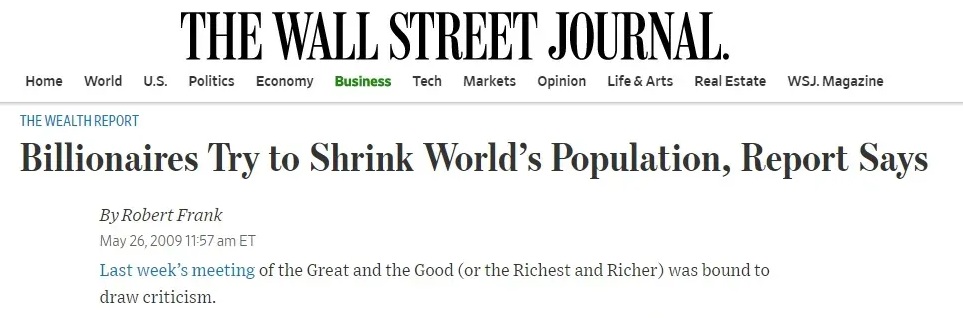
“Billionaires Try to Shrink World’s Population” at Secret Gathering Sponsored by Bill Gates

14 April 2025 at 21:38
For more than ten years, meetings have been held by billionaires described as philanthropists to Reduce the Size of the World’s Population culminating with the 2020-2024 Covid crisis. Recent developments suggest that “Depopulation” is an integral part of the so-called Covid mandates including the lockdown policies and the mRNA “vaccine”.

COVID Vaccines | Impulse Response Seen in Bible Science Forum Monthly Stats

1 April 2025 at 04:29
I has been writing about creation science and biblical issues for over 20 years, with a blog launched in 2013. Its content shifted towards COVID-related topics in 2020, leading to a massive spike in viewership and after that an exponential waning. What caused that spike? Are we now back to normal?

Vaccines: A Dangerous Tool for Population Control

4 March 2025 at 09:20
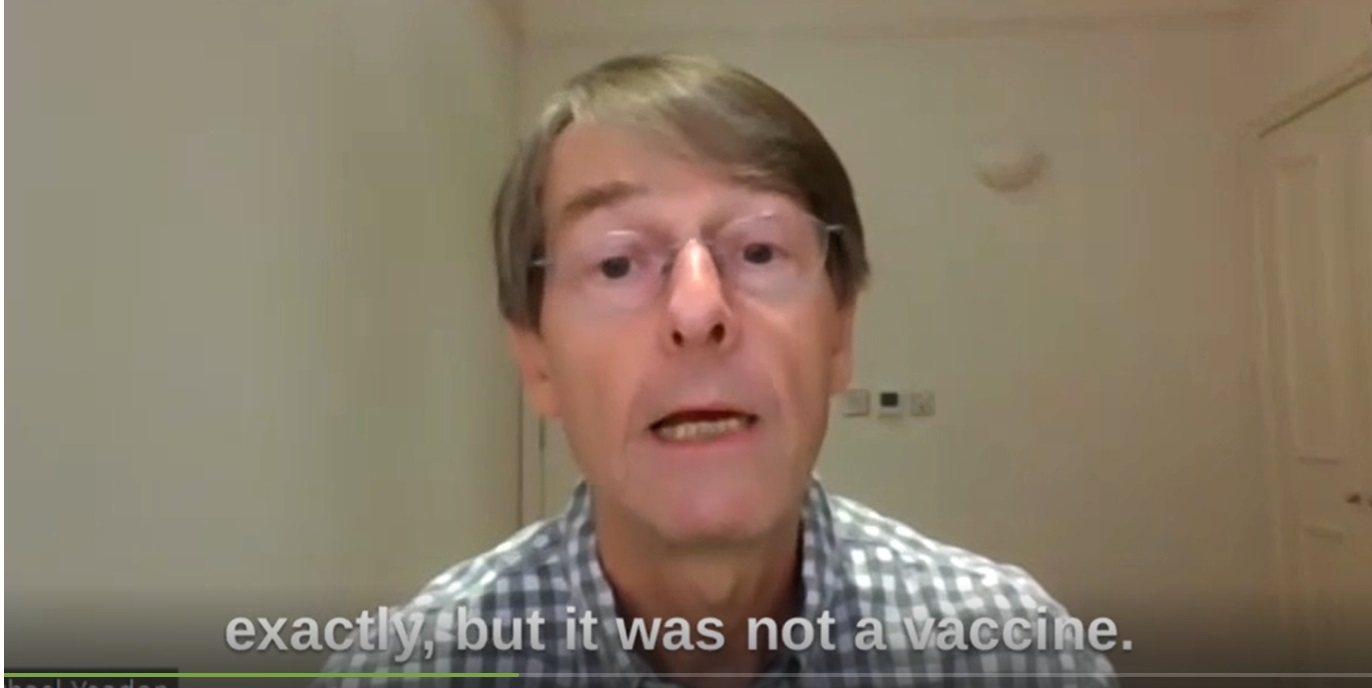
Pandemics such as COVID-19 and the Spanish Flu were fabrications used for population control. All vaccines are bioweapons causing harm, and have been linked to increasing illnesses like autism. Dr Mike Yeadon warns of a planned global tyranny through vaccination and future pandemics.

Understanding Chemtrails and Geoengineering

17 February 2025 at 05:43
Chemtrails are real enough. Government agencies have been spraying the atmosphere with aerosols for decades. Solar Radiation Modification techniques, particularly Stratospheric Aerosol Injection, are intended to combat global warming but the potential agricultural and ecological damage is very concerning. I relate these developments to biblical prophecies about apocalyptic events.

Cow Farts, Methane and Meat

6 December 2024 at 05:35
Public concern has surged over the food additive 3-nitrooxypropanol (3-NOP), used in cattle feed to reduce methane emissions. Critics claim this approach could lead to widespread cattle culling and a shift towards synthetic food production. Allegations link it to health risks, corporate interests, and a broader agenda against traditional agriculture.

COVID Bioweapon Shots: Deliberately Designed Destruction of the Human Genome

10 September 2024 at 23:29
Deliberately designed destruction of the human genome has been implemented though toxic sorcery. The recent COVID bioweapon injections massively increased the deleterious gene mutation rate, with a disruptive stepwise increase, leading to catastrophic irreparable damage and massive global depopulation within a few years.

Silencing Free Speech | Global Depopulation Plan in Plain Sight

27 August 2024 at 01:41
Kamala Harris said 220 million dead in the USA which is uncannily close to the Deagel estimate. Is it because the globalists are just following their plan? And now they are silencing free speech that tells the world about it.

WEF Document Confirms 6 Billion Humans To Be Killed Off by 2025

23 August 2024 at 03:29
The World Economic Forum (WEF), run by psychopath Klaus Schwab and his international bankster and mega-corporation mates, has been exposed again with their plans to depopulate the world. They want 6 billion culled and now it has been revealed that it is not by 2030, but by next year, 2025.

Breathing Will Soon Be Banned, To Save the Planet, Of Course

27 July 2024 at 23:22
A global depopulation conspiracy is underway to reduce the global population by 95%. Every breath you take will be taxed for the good of the planet. Suicide pods have been developed as a means of population reduction.

Psychological, Functional Factors Shape Elderly Care Quality

2 June 2026 at 05:17

In a groundbreaking multicenter observational cohort study published recently in BMC Geriatrics, researchers have unveiled critical insights into the intricate interplay between psychological and functional factors influencing the quality of life among elderly patients receiving comprehensive geriatric care. This study marks a significant advancement in gerontology by meticulously analyzing how mental health and physical functionality converge to impact well-being in a vulnerable population, shedding light on nuanced domains that healthcare professionals can target to optimize elderly care.

The research team, led by Mendorf, Schönenberg, and Heimrich, employed robust methodological approaches to dissect the multifaceted dimensions of quality of life in geriatric patients. Utilizing a wide-ranging cohort sampled from multiple healthcare centers, the study provides empirical evidence that transcends localized findings, offering a panorama of aging-related determinants that collectively shape patient experiences in geriatric care environments across diverse settings.

Central to the study is the recognition that quality of life in older adults is not merely a reflection of physical health metrics, but a composite construct that integrates psychological resilience, cognitive functionality, social engagement, and emotional well-being. The data underscore that psychological factors — such as depression, anxiety, and morale — interact dynamically with functional capabilities including mobility, self-care capacity, and cognitive processes. This multifactorial relationship forms the crux of the holistic approach advocated by the researchers.

One of the study’s pivotal technical revelations highlights the role of comprehensive geriatric assessment (CGA) tools in delineating these psychological and functional domains with precision. CGA encompasses standardized instruments that assess cognitive function, mood disorders, activities of daily living (ADLs), and instrumental activities of daily living (IADLs). Through systematic application of CGA in multiple centers, the research delineates key predictors of quality of life decline, effectively guiding clinical interventions.

Of particular note is the identification of depression as a significant psychological variable that exacerbates physical limitations and diminishes self-perceived quality of life. The research quantifies this relationship through validated psychometric scales, revealing a bidirectional impact where deteriorating functional status can potentiate depressive symptoms, which in turn hinder rehabilitation outcomes. This cyclical interaction calls for integrated therapeutic modalities addressing both mental health and functional restoration conjointly.

Functionally, the study emphasizes the critical importance of mobility and independence in activities of daily living as fundamental contributors to life satisfaction in elderly individuals. Advanced metrics assessing gait speed, balance, and manual dexterity provide objective insights correlating physical autonomy with enhanced psychological well-being. These findings highlight the necessity of tailored physical therapy programs within comprehensive geriatric care frameworks to sustain and improve mobility.

Moreover, cognitive function emerges as a vital determinant, with mild cognitive impairment and early dementia stages linked with sharply reduced quality of life scores. By incorporating neuropsychological screening into the geriatric evaluation process, healthcare providers can identify at-risk individuals and implement cognitive stimulation therapies alongside traditional medical care to mitigate decline and preserve autonomy.

The study further explores the influence of social support networks and communal engagement on quality of life metrics. Elderly patients embedded in robust social environments demonstrate superior psychological health and resilience, corroborating prior sociological research. Consequently, multidimensional intervention strategies promoting social connectivity are advocated to reinforce the psychosocial fabric vital to elderly wellness.

A particularly innovative aspect of the research lies in its longitudinal monitoring of patients across different care settings, capturing the variability and progression of psychological and functional statuses over time. This dynamic analysis allows for mapping trajectories of decline or improvement, providing clinicians with predictive insights and enabling preemptive adjustments in care plans to forestall deterioration.

Technically, the analytical framework integrates multivariate regression models and structural equation modeling to parse out direct and indirect effects of various factors on quality of life outcomes. These sophisticated statistical methods furnish a granular understanding of causal pathways, identifying modifiable risk variables that can be targeted through personalized intervention regimes.

Importantly, the multicenter design confers enhanced generalizability to the findings, accommodating demographic diversity, comorbid conditions, and varying healthcare delivery models. This breadth of sampling ensures that recommendations arising from the study have wide applicability, underscoring the relevance of a universally adaptable geriatric care paradigm that holistically addresses psychological and functional aspects.

From a clinical perspective, the implications of the study advocate for integrated care models wherein mental health professionals collaborate seamlessly with rehabilitation specialists, geriatricians, and social workers. By establishing multidisciplinary teams that concurrently address mood, cognition, physical function, and social engagement, healthcare systems can substantially elevate the quality of life for aging populations.

The research also critiques existing care protocols that disproportionately emphasize medical management of chronic diseases, often at the expense of psychological and functional assessment. It calls for systematic policy reforms to embed comprehensive assessments and personalized interventions as standard practice within geriatric care institutions, aligning care objectives with patient-centered quality of life goals rather than disease-centric outcomes.

In synthesis, this extensive observational study elucidates a complex but actionable matrix of factors influencing elder patients’ experiences of life quality within comprehensive care settings. By providing evidence-based recommendations underpinned by rigorous data analysis, the study paves the way for transformative improvements in geriatric healthcare, fostering environments that promote not only longevity but enriched living during advanced age.

As population demographics continue to trend toward older age groups globally, the insights from this research resonate far beyond the immediate clinical milieu, touching upon broader societal challenges in addressing aging with dignity and efficacy. The study’s emphasis on psychological and functional dimensions invites a paradigm shift that prioritizes holistic care approaches fundamental to healthy aging.

In conclusion, the pioneering findings by Mendorf and colleagues offer a critical scientific beacon guiding the future of geriatric medicine. By illuminating the intertwined psychological and functional determinants of quality of life, this study equips clinicians and policymakers alike with the knowledge to reshape care trajectories, ultimately enabling elderly individuals to thrive within comprehensive care systems tailored to their multifaceted needs.


Subject of Research: Psychological and functional factors influencing the quality of life in elderly patients within comprehensive geriatric care.

Article Title: Psychological and functional factors associated with quality of life in comprehensive geriatric care: evidence from a multicenter observational cohort study.

Article References:
Mendorf, S., Schönenberg, A., Heimrich, K.G. et al. Psychological and functional factors associated with quality of life in comprehensive geriatric care: evidence from a multicenter observational cohort study. BMC Geriatr 26, 770 (2026). https://doi.org/10.1186/s12877-026-07728-9

Image Credits: AI Generated

DOI: https://doi.org/10.1186/s12877-026-07728-9

❌