Normal view

Georgia is battling invasive, 4-foot-long lizards

3 June 2026 at 18:31

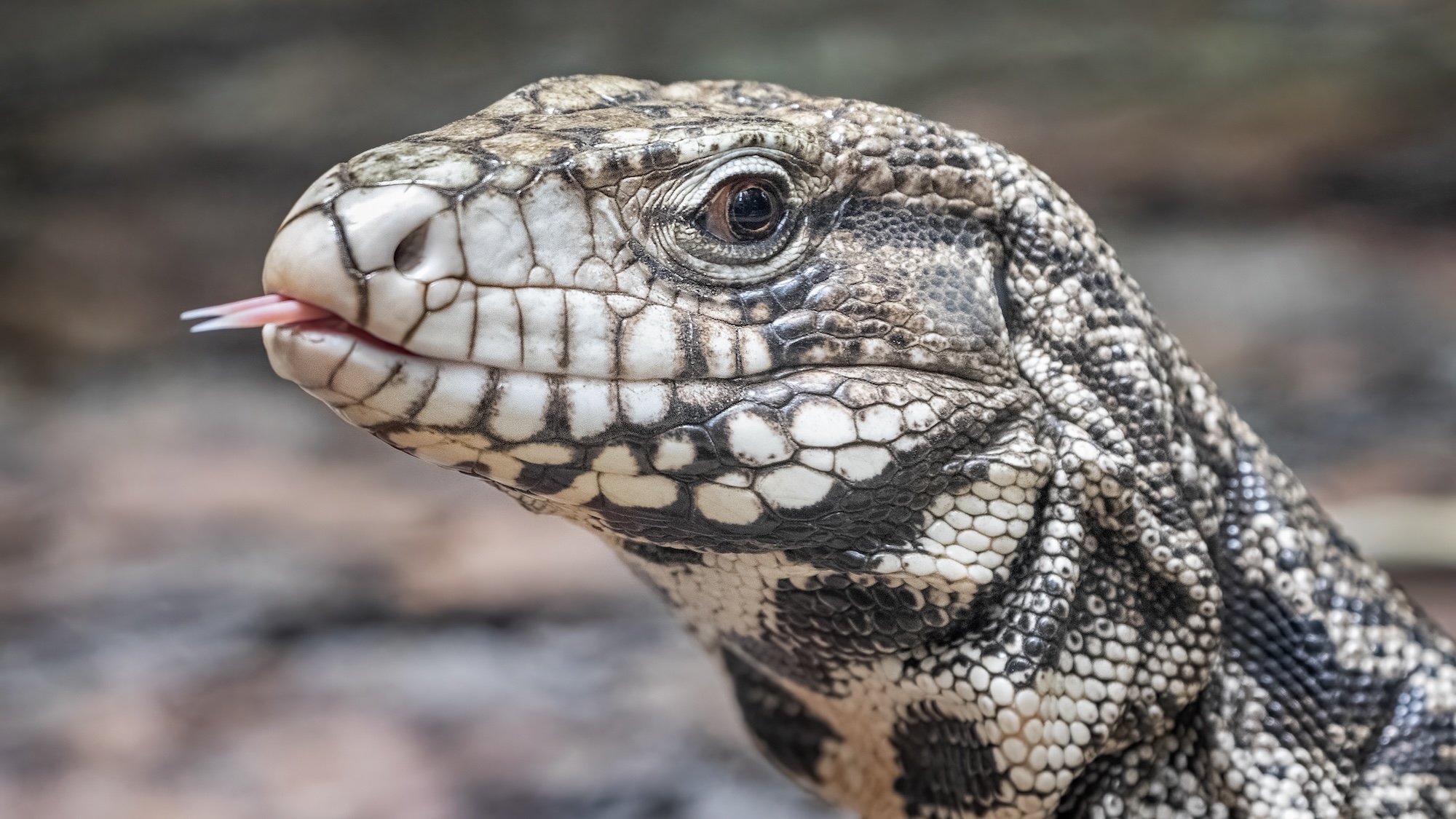
Wildlife experts in Georgia are urging locals to keep on the lookout for any four-foot-long lizards wandering around the Peach State. As its name implies, the Argentine black and white tegu (Salvator merianae) isn’t native to the United States, and it’s quickly becoming a nuisance.

Although the black and white tegu resembles many monitor lizard species, they are actually only distantly related to the reptiles. The speckled omnivores can weigh upwards of 10 pounds, largely thanks to a diet that regularly includes eggs, small animals, fruits, and vegetables. They are also extremely prolific animals, with a single female capable of producing around 35 eggs every year. These typically hatch during the summer between June and July, meaning many in Georgia have a decent chance of spotting a tegu in the near future.

It’s still unclear how the tegus were first introduced into the state, although illegal releases by exotic pet owners are the most likely explanation. Georgia’s Department of Natural Resources (DNR) first responded to reports of the rogue reptiles in 2018, with sightings spreading ever since. Tegus are currently particularly concentrated in southeastern Georgia’s Toombs and Tattnall counties, but experts fear a lack of predators means the lizard population could soon explode without concerted conservation efforts. As non-native “wild” species, trapping and hunting tegus is legal in Georgia throughout the year.

That said, the DNR still cautions hunters against coming into direct contact with the reptiles. Although not particularly aggressive or dangerous, tegus may carry exotic parasites as well as harmful bacteria including salmonella. Experts encourage people to instead contact the DNR if they see one of the lizards, either by emailing gainvasives@dnr.ga.gov or calling (478) 994-1438.

Unfortunately, Georgia isn’t the only state contending with an unwanted tegu problem. According to an ongoing mapping project from the U.S. Geological Survey and Georgia Southern University, residents across Florida, Alabama, South Carolina, and Texas have also reported sightings in recent years.

The post Georgia is battling invasive, 4-foot-long lizards appeared first on Popular Science.

In first, California city overwhelmingly votes to permanently ban datacenters

3 June 2026 at 20:40

While many US city councils have passed moratoriums, Monterey Park is first where residents have voted on a ban

Residents in Monterey Park, California, became the first in the US to vote on a permanent ban on datacenters on Tuesday, and early results indicate a resounding victory for the prohibition.

While many cities and counties have already passed temporary or indefinite moratoriums via their local governments, Monterey Park would be the first to do so through a ballot initiative.

Continue reading...

© Photograph: Steven Kung

© Photograph: Steven Kung

© Photograph: Steven Kung

In first, California city overwhelmingly votes to permanently ban datacenters

3 June 2026 at 20:40

While many US city councils have passed moratoriums, Monterey Park is first where residents have voted on a ban

Residents in Monterey Park, California, became the first in the US to vote on a permanent ban on datacenters on Tuesday, and early results indicate a resounding victory for the prohibition.

While many cities and counties have already passed temporary or indefinite moratoriums via their local governments, Monterey Park would be the first to do so through a ballot initiative.

Continue reading...

© Photograph: Steven Kung

© Photograph: Steven Kung

© Photograph: Steven Kung

Unusual Greenpeace Lawsuit May Proceed, Dutch Court Says

3 June 2026 at 20:34
Greenpeace International is arguing under Dutch law that an American pipeline company, Energy Transfer, sought to silence it with a costly lawsuit in North Dakota.

© Alyssa Schukar for The New York Times

Demonstrators against the Dakota Access Pipeline in North Dakota in 2016. The lawsuits are centered on Greenpeace’s involvement in the protests.

The True Way Honeybees Crown Their Queens

3 June 2026 at 17:55

For decades, the developmental fate of a honeybee larva seemed to follow a straightforward narrative: the diet alone dictated destiny, where ample feeding of royal jelly transformed a regular larva into a queen. However, recent groundbreaking research has unveiled a far more intricate mechanism underpinning queen development, painting a richer picture of the elaborate social engineering within the hive. This new understanding transcends the simplistic view of nutrition and introduces an elaborate interplay between environmental construction, physiological specialization, and social cooperation.

At the heart of this emerging paradigm are specialized “queen cells,” sometimes referred to as “royal cribs,” whose unique architecture and materials science are pivotal in shaping the development of a future queen bee. These cells are distinct peanut-shaped chambers, markedly different from the hexagonal cells typical for worker bee larvae. Constructed meticulously by a particular subset of young worker bees, these environments are designed to optimize thermal and humidity regulation, preserving conditions vital for the optimal growth and maturation of larvae destined for royalty.

Heat management within these nurseries is critical. Using advanced thermal imaging techniques, researchers observed that the wax constituting queen cells exhibits uniquely tailored physical and chemical properties. Unlike the denser, more rigid wax used elsewhere in the hive, this wax is more pliable and porous, enabling it to function as an effective insulator. The microenvironment it creates maintains elevated temperatures and humidity levels, conditions shown through behavioral studies to accelerate development and increase larval survival rates.

Complementing wax specialization is the revelation of a new behavioral caste within the hive: the queen cell builders. These workers, typically younger than their counterparts, exhibit altered physiological states marked by elevated body temperature and modified metabolic pathways. Their heightened internal heat contributes actively to the microclimate maintenance within queen cells, ensuring the rapid transformation of larvae into queens. The differentiation of these workers underlines the hive’s complex social stratification, where individual roles are precisely aligned with developmental outcomes.

To dissect the relative contributions of diet versus environment, experimental setups employed materials science and chemical tracing methodologies. Raising larvae in cells fabricated from ordinary worker wax led to significantly decreased survival and reduced queen phenotypes, even when the diet — specifically royal jelly — remained constant. This crucial finding disrupts the long-held assumption that nutrition alone governs caste destiny, emphasizing the indispensable role of the built environment curated by the colony.

Chemical analyses of the queen wax composition revealed fascinating insights. The wax contains specific fatty acids and signaling molecules absent in worker wax, suggesting an evolved biochemical toolkit designed to orchestrate larval development through environmental cues. These chemical signals likely modulate larval gene expression and physiological pathways, interfacing with the nutritional inputs to guide phenotypic differentiation into fertile queens.

The hive’s material ecology extends beyond wax manipulation alone. Through ingenious isotope tracing experiments involving graphite marker particles, the study demonstrated that workers selectively gather, process, and repurpose materials from disparate hive locations to enrich queen cell structures. This highly coordinated engineering effort evokes analogies with human architectural practices, where not only construction but also sourcing and modification of materials are integral to the function of specialized buildings.

The consequences of these added layers of complexity are profound. Queen bees emerge larger, develop faster—approximately 16 days from egg to adult compared to 21 days for workers—and acquire enhanced longevity and reproductive capacity. This speed confers evolutionary advantages, enabling the colony to rapidly replace queens in times of crisis, preserving genetic continuity and colony stability.

Researchers propose that this intricate interplay of physiology, behavior, and materials science reflects a broader principle in biology: organisms are not solely subjects of genetic and nutritional factors, but active engineers of their developmental environments. Honeybee colonies exemplify a superorganism, where collective behavior modulates individual phenotypes through multi-dimensional environmental modification.

The universality of this strategy was confirmed by observing both European and Asian honeybee species, indicating deep evolutionary conservation. Such parallels suggest that environmental engineering as a means to regulate caste differentiation is a fundamental facet of honeybee social biology, shaped over millions of years of eusocial evolution.

This interdisciplinary effort, spanning entomology, genomics, materials science, and behavioral ecology, underscores the power of collaborative science in unraveling complex biological systems. The research, led by former postdoctoral scholars Yu Fang and Yahya Al Naggar at the University of California, Riverside’s Center for Integrative Bee Research, offers not only insights into honeybee society but also broader implications for developmental biology and bioengineering.

Moving forward, the findings pave the way for deeper exploration of how external environmental factors—both biotic and abiotic—influence developmental outcomes across species. It challenges researchers to reconsider developmental plasticity within the context of social and environmental matrices, with potential applications spanning conservation, agriculture, and biomimetic design.

In sum, the transformation from larva to queen in honeybees is not a mere function of royal jelly consumption but rather a sophisticated, society-wide construction project that leverages specialized architecture, material composition, and worker physiology. Honeybee colonies stand as masterful architects of development, embodying complexity that rivals human engineering, and in doing so, provide a captivating model of biological integration and innovation.


Subject of Research: Honeybee Queen Development and Environmental Influence on Caste Determination

Article Title: Queen cell architecture shapes honey bee queen development

News Publication Date: 3-Jun-2026

Web References: https://www.nature.com/articles/s41586-026-10534-3

Image Credits: More than Honey/Markus Imhoof

Keywords: Bees, Honeybee development, Queen cells, Royal jelly, Hive architecture, Materials science, Caste differentiation, Entomology, Insect physiology, Social behavior, Environmental engineering, Superorganism

UN calculates nation-sized environmental footprints for AI and data centers

The environmental footprint of data centers already rivals some of the world's largest countries, according to a United Nations University report, which also predicts their water and energy use and pollution will double in just four years as use of artificial intelligence grows.

Climate change may shift hailstorms toward Earth's poles—new study

Everyone has a storm story—whether it's that time you just escaped a downpour, or the hailstorm that wrote off your car. Even though hailstorms are relatively rare, they cause significant damage. Two new studies shed light on how hail might change as the world warms.

Hail conditions on the move as winter crops face rising risk

A hailstorm can undo a season's work in minutes. It can strike quickly and unevenly, shredding wheat, bruising fruit, flattening crops—while also leaving neighboring paddocks untouched. In a new Nature Climate Change study, scientists from UNSW Sydney say the geography and seasonality of that risk is changing.

A lot of 'recycled' plastic is being burned overseas—and causing widespread pollution linked to health problems

Picture a pile of trash the size of Manhattan and taller than one and a half Empire State Buildings. That's how much plastic waste the world is predicted to be generating every year by 2050 if nothing is done to change course.

One of America’s Rarest Species Just Narrowly Survived a Historic Wildfire—NASA Satellite Images Reveal the Stunning Damage

3 June 2026 at 16:10

Newly released NASA satellite images reveal the extent of recent wildfire damage on Santa Rosa Island in vivid detail, showcasing the impact of the largest Channel Islands fire on record.

The images, obtained with NASA satellite observation platforms that include the Fire Information for Resource Management System (FIRMS) and the Fire Event Explorer, reveal fire damage to nearly half of the island’s southeastern side.

The fire was initially spotted on May 15, 2026, and containment efforts began as the blaze spread across the island over the following days.

Now, the new NASA imagery is revealing the extent of the damage caused by the historic fire, which officials say came close to endangering one of our nation’s rarest species.

Channel Islands
California’s Channel Islands, with Santa Rosa Island visible in the center. Fire damage is visible on the island’s southeastern portion (Image Credit: NASA Earth Observatory/Lauren Dauphin, using Landsat data from the U.S. Geological Survey).

18,000 Acres Scorched on Santa Rosa Island

Current damage estimates indicate that close to one-third of the island was impacted, constituting more than 18,300 acres on the island, which is part of California’s Channel Islands National Park.

Comparisons with past NASA imagery of Santa Rosa Island, made possible with Landsat satellite images, reveal a sharp contrast between once verdant regions of the island, which are now scorched by fire, shown in reddish brown in the more recent images (see below).

Santa Rosa Island fire
Santa Rosa Island is shown in a side-by-side comparison, featuring the wildfire near its outset on May 16, 2026, and subsequent imagery from May 24, 2026, as the fire spread across approximately 1/3 of the island (Image Credit: NASA Earth Observatory/Lauren Dauphin, using Landsat data from the U.S. Geological Survey).

Fortunately, Channel Islands National Park officials reported that the fire had been 97 percent contained by May 26, after burning its way through chaparral and grassland covering large portions of the island.

Endangering One of America’s Rarest Species

The Channel Islands serve as a unique and extremely diverse habitat for a range of species of both plants and animals. Among the species threatened during the recent fires were Torrey pines (Pinus torreyana), recognized as our nation’s rarest pine tree, which only grows on Santa Rosa Island and in a preserve in urban San Diego.

Torrey pines
A wild grove of Torrey pines on Santa Rosa Island (Image Credit: Wikimedia Commons/CC BY 2.5).

Fortunately, most of the island’s Torrey pine forest remains intact, although some damage was reportedly discernible in surveys by firefighters on the island and in drone imagery of the scorched areas.

According to island officials, the fire appears to have burned its way inland at lower intensity, making its way through pine areas that burned ground-dwelling vegetation while leaving the overlying canopy largely unaffected.

Damage from the Largest Channel Island Fire

Park officials say that some smaller areas of forest did sustain significant damage, as conditions in those pockets allowed a greater burn intensity.

Closer to the fire’s northern boundary, Santa Rosa’s cloud forests—the wooded areas comprised mostly of oak and pine growth surrounded by chaparral, whose name is derived from the island fog that sustains them—were successfully preserved by firefighting crews who worked ahead of the fire to cool areas where combustible vegetation grows.

Based on recent local reports, the fire that consumed large portions of Santa Rosa Island’s vegetation is the largest known to have impacted any of the Channel Islands. Fortunately, many of the island’s indigenous trees and other vegetation are resilient enough to withstand fire, since they do not rely on it as part of their growth cycles like many mainland plant species.

Additional information about the fires can be found here, and more imagery of the recent damage has been made available at NASA’s Earth Observatory page.

Micah Hanks is the Editor-in-Chief and Co-Founder of The Debrief. A longtime reporter on science, defense, and technology with a focus on space and astronomy, he can be reached at micah@thedebrief.org. Follow him on X @MicahHanks, and at micahhanks.com.

A ‘mystery beetle’ is devouring North Carolina’s precious blueberries

3 June 2026 at 16:14

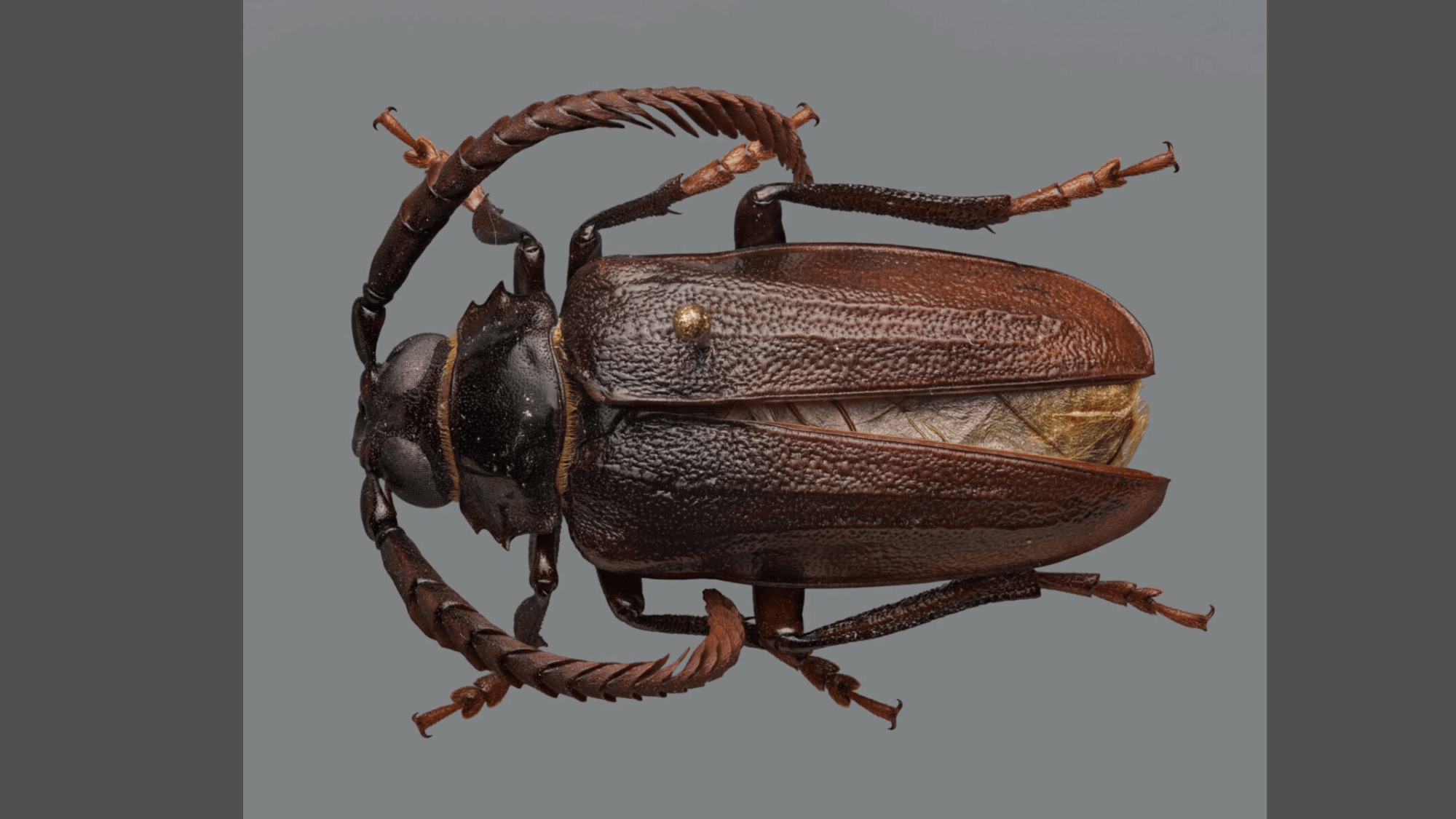
North Carolina’s blueberries may have a beetle problem. For the first time, scientists in the Tarheel State have documented the presence of Prionus imbricornus eating blueberry bushes. This longhorn beetle and its larvae can chomp their way through the state’s valuable blueberry fields. The findings are described in a study published this week in the Journal of Integrated Pest Management

Blueberries are native to North Carolina, but were not cultivated until 1935. The state is the sixth largest blueberry producer in the United States, and the blueberry industry is valued at roughly $70 million. Protecting the plants from pests is crucial, as blueberries are considered one of North Carolina’s most valuable and desirable crops. 

Several species including the blueberry maggot (Rhagoletis mendax), plum curculio (Conotrachelus nenuphar), and cranberry fruitworm (Acrobasis vaccinii Riley) can threaten blueberry crops. The long-horned beetle P. imbricornus may now join their ranks. P. imbricornus is known for their long antennae and are considered wood-boring beetles. The adult females typically lay their eggs in the soil near the roots of hardwood trees. The larvae then eat and destroy the roots. These larvae can grow up to five inches long and potentially kill trees, since the adults don’t feed. 

a long yellow beetle larvae
P. Imbricornis larva. The larva, which can grow up to five inches long, feed on the roots of blueberry bushes. Image: Matt Bertone/NC State.

North Carolina is the first state to report that P. imbricornus is actively feeding on blueberry bushes. However, reports of unidentified larvae from the Prionus beetle genus feeding on and damaging blueberry bush roots go back to 2010. In the 16 years since, identifying the specific species responsible has been difficult since the larvae live near the roots of the plants. Different types of longhorn beetle larvae also look very similar, and not identifying a species can harm efforts to combat harmful bugs. 

“Before now, researchers often just assumed the species of Prionus on their commodities based on adult identification,” Kenneth Geisert, a study co-author and NC State graduate student, said in a statement. “If that guess was incorrect, it could mean using a treatment strategy that did not line up with the problem and incorrectly associating species and their hosts.”

For example, P. imbricornus attacks roots, but another longhorn beetle species may go after a tree’s dead branches or trunk. 

“Without knowing which species of beetle you’re dealing with and their ecology, incorrect management can cause adverse effects on non-target insects,” Geisert added.

For this study, the team used a series of black panel traps scented with sex pheromones to attract and gather adult beetles. The traps were placed at six farms across Pender, Sampson, Bladen, and New Hanover counties. The team then used a technique called genetic barcoding on the larvae to analyze small, standardized segments of their DNA to identify the species. They then compared the unknown larval sequences with the same genetic segments from known Prionus adults.

They matched the P. imbricornus with 98 to 99 percent accuracy. According to the team, this result is both good and bad news for farmers.

“On one hand, it’s very important that we know which species we’re dealing with,” said Lorena Lopez, a study co-author and entomologist at NC State. “On the other, North Carolina was the first state to ever report Prionus infestation in blueberries, and there are no insecticides currently labeled against this pest in blueberries.”

To address this shortfall, Lopez has begun insecticide trials. Pinpointing effective insecticides and timing during P. imbricornis reproductive cycles can potentially limit larval development. Fewer larvae could help prevent major root damage and provide blueberry farmers with an effective management tool to protect their crops. 

The post A ‘mystery beetle’ is devouring North Carolina’s precious blueberries appeared first on Popular Science.

Rising emissions, depleting water and vanishing land: AI is threatening natural resources for billions, say scientists

By 2030, the global data centers powering artificial intelligence are projected to consume 945 terawatt-hours of electricity. This is nearly triple the combined annual electricity use of Pakistan, Bangladesh, and Nigeria—countries collectively home to more than 650 million people. Their associated water footprint will equal the basic annual domestic water needs of all 1.3 billion people in Sub-Saharan Africa, and their land footprint will exceed 14,500 square kilometers, roughly twice the Jakarta metropolitan area, home to more than 32 million people.

Algal blooms explained: How scientists are helping spot them sooner

Algal blooms can seem to appear overnight. A stretch of ocean that looked clear days earlier can suddenly appear discolored and sometimes pose risks to ecosystems and human health. But scientists say blooms are rarely sudden—understanding what happens before they appear is key to managing them.

Big wings and sweet songs: The mating lives of Panama’s katydids

3 June 2026 at 01:05

When it comes to reproduction, animals will pull out all the stops to attract a mate. Sending out noisy mating calls, showing off colorful wings, inflating a throat pouch, and shaking a literal tailfeather all ensure that the next generation of a species happens. Some insects will go as far as making themselves look like an entirely different living thing—leaves. 

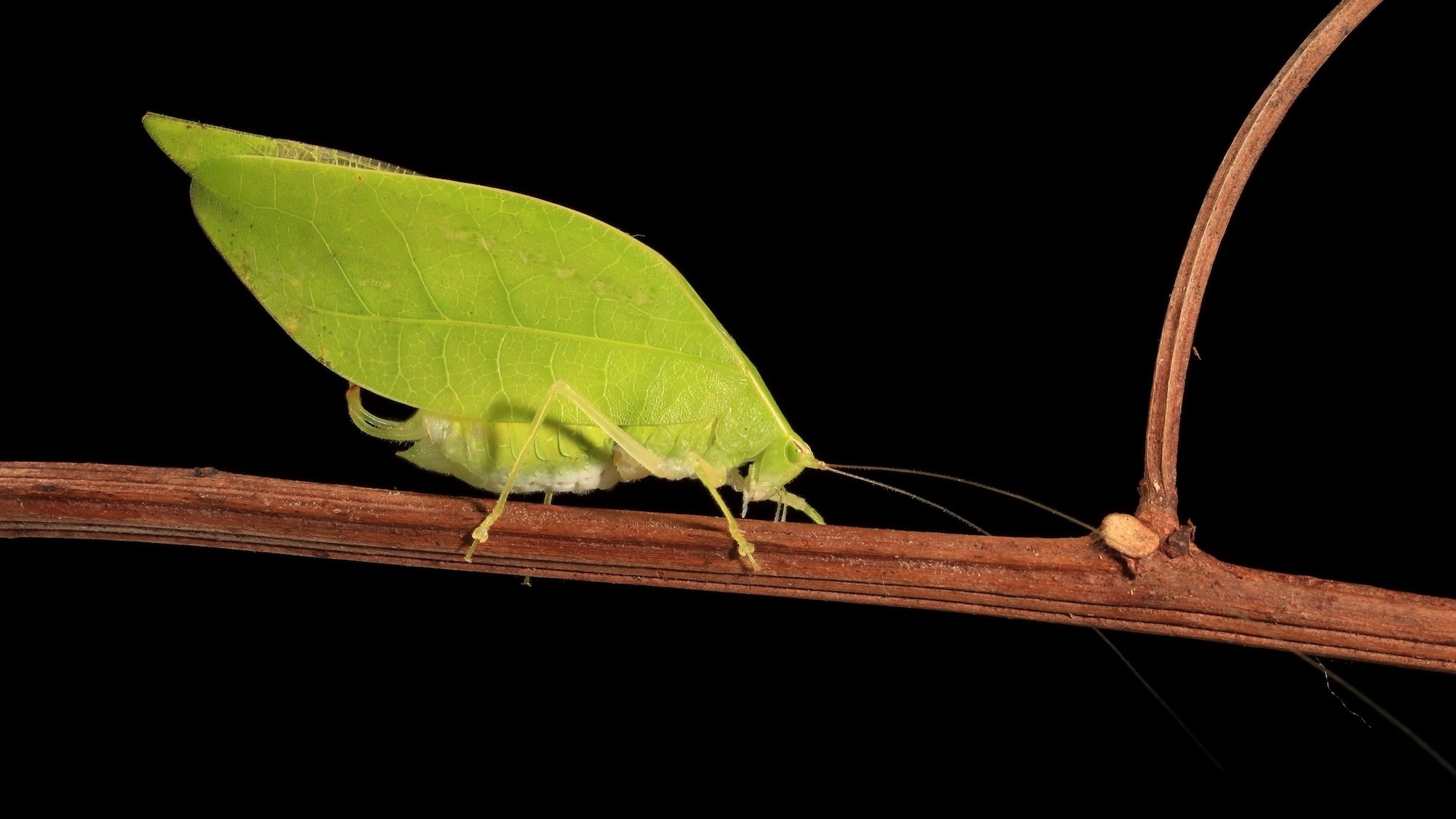
Usually used as a means of camouflage, male katydids appear to use their leafy disguise to amplify mating calls and make themselves more attractive to the opposite sex. The findings are detailed in a study published today in the journal Proceedings of the Royal Society B, and offer one of the first demonstrations of how leaf mimicry enhances a male katydids’ sexual signals. 

To shield themselves from predators, various species of katydids have evolved wings with structures that look like leaves. Panama’s leaf-masquerading katydids (Arota festae) will even change from green to hot pink in order to better mimic leaves. What’s been less clear to entomologists is whether or not these leaf-mimicking structures play a role in katydid mating. 

This new study looked at a species called Viadana brunneri from Barro Colorado Island, Panama. To attract mates, katydids create songs by rubbing together specialized structures on their wings. In many tropical species like V. brunneri, the portion that mimics leaves makes up the majority of their wing’s surface area.  

a green insect with a large, green wing that looks like a leaf hands upside down on a stick
Most of the wing structure is devoted to helping male katydids look more like a leaf. Image: Christian Ziegler.

Previously, scientists believed physical adaptations for survival and for attracting mates can function in conflict with one another, particularly if they are physically connected. A male peacock’s flashy tail feathers may help it attract a female, but it also makes it easier for predators to find them. Male katydids, on the other hand, are able to use the acoustic properties of the structures that they use for defense to their reproductive advantage. They are a rare example of how an adaptation for self-defence and reproduction can work together without necessarily putting the animal in jeopardy. 

The team performed a series of bioacoustic, behavioral, and biophysical experiments, showing that these leafy structures on their wings make them more attractive to females, while also helping conceal them. After removing the leafy portions of a male V. brunneri’s wings, the pitch became higher and the volume of their songs also changed. The team then played these calls for females who preferred the lower pitch calls from males with their leafy wing sections still intact. 

While male katydids do all the singing, females indicate their interest by replying to the song with clicks. The insects produce short, sporadic and infrequent calls, possibly for only two seconds in a single night. They perform these calls in ultrasounds, which our ears can’t pick up. They also found that the leafy portions of the male katydid wing will vibrate to amplify their songs, making them more detectable to females. 

“Our study provides a rare example of natural and sexual selection acting in harmony, producing traits that simultaneously improve survival and mating success,” Dr. Benito Wainwright, a study co-author and evolutionary biologist at the University of St Andrews, said in a statement. “We are now extremely excited to start exploring how such an interesting interaction evolved in katydids.” 

The post Big wings and sweet songs: The mating lives of Panama’s katydids appeared first on Popular Science.

❌