Normal view

Caterpillar BEPU makes going electric as easy as swapping an engine

3 June 2026 at 13:47

The new Battery Electric Power Unit (BEPU) from Caterpillar is a plug-and-play solution that can directly replace a diesel CAT engine in existing machines – occupying the same space, and even using the same motor mounts to make the conversion from diesel to electric (almost) as easy as swapping an engine.

more…

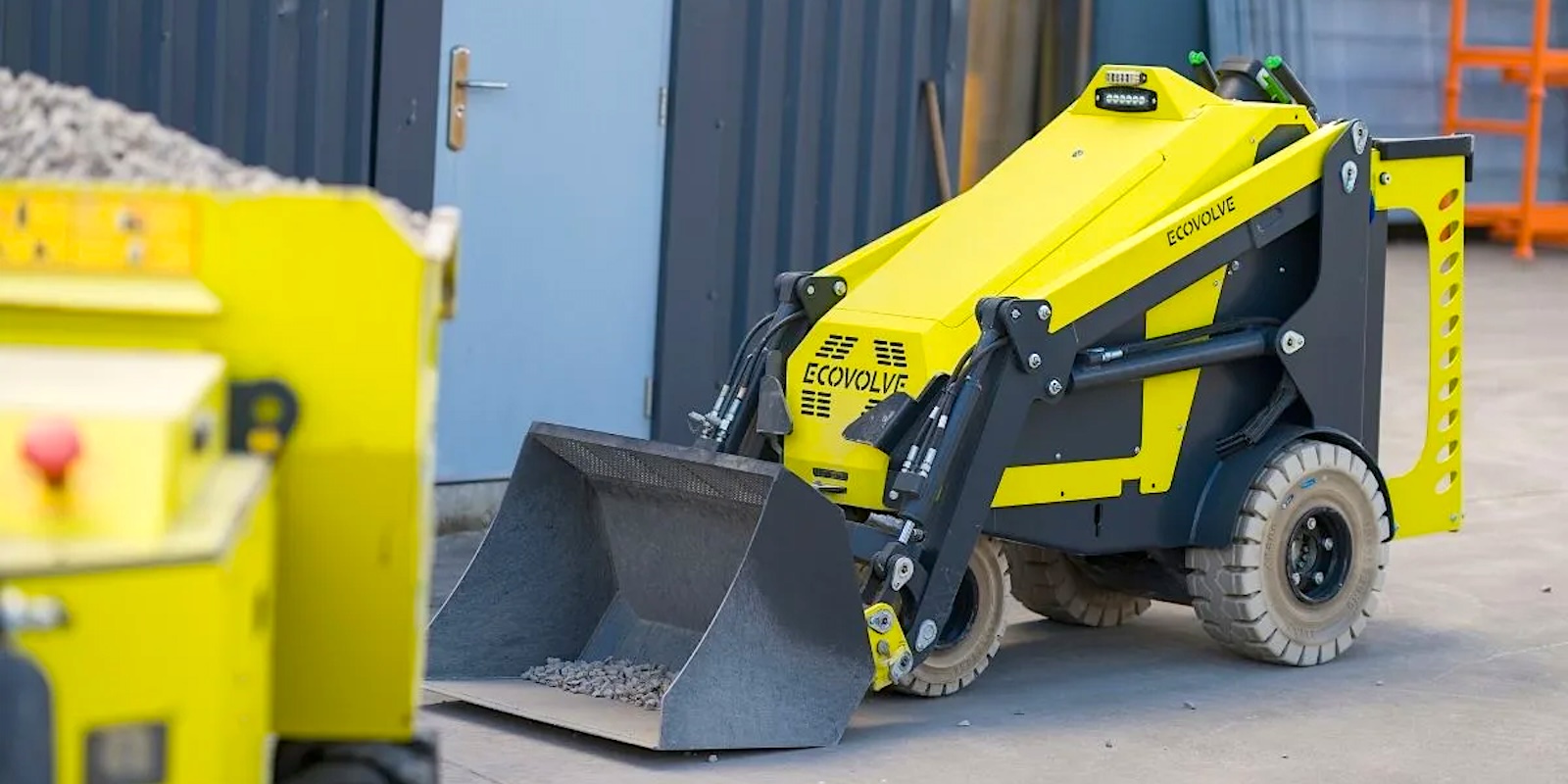
Brokk brings Ecovolve EL500 electric mini loader to the US

2 June 2026 at 13:11

Designed to work in tight, noise-sensitive environments while carrying up to 500 kg (~1,100 lbs.) for a full shift, the Ecovolve EL500 is a uniquely competent and capable electric equipment option that can make it through a conventional man door – and Brokk is bringing it to America.

more…

Volvo CE, Hitachi Energy set to partner on zero emission job sites

1 June 2026 at 23:41

Volvo CE and Hitachi Energy have signed an MOU to support and accelerate the deployment of battery electric construction equipment powered by a clean, renewable energy supply that’s backed by intelligent energy storage and management.

more…

Fortescue Nabrawind deploy first crane-less wind turbine in Africa

30 May 2026 at 14:42

Fortescue‘s recently-acquired turbine subsidiary Nabrawind has done something that was believed to be impossible: they’ve installed a full-scale, energy producing wind turbine in harsh Namibian conditions using a new, crane-less deployment process.

more…

Yeast-Born Architecture: From Print to Premiere – The Future of Bio-Constructed Design

3 June 2026 at 06:35

In an innovative leap for sustainable architecture, researchers at Chalmers University of Technology in Sweden have engineered a groundbreaking, entirely bio-based material derived from an unconventional source: yeast. This novel material possesses the unique capability to be 3D printed and customized, opening new avenues for ecological design in construction and interior applications. Traditionally, many architectural elements such as plaster, plastics, and synthetic textiles have been heavily reliant on fossil-based resources, which contribute substantially to environmental degradation. The Chalmers team’s yeast-based hydrogel challenges this paradigm by offering a renewable alternative tailored for elements like daylight modulating screens, room partitions, and other interior architectural components.

The construction industry is notoriously resource-intensive and a significant contributor to global greenhouse gas emissions. This demands urgent development of renewable and resource-efficient materials that reduce both the carbon footprint and waste generated in building processes. In response to this challenge, the Chalmers research group investigated the use of industrial residues and natural polymers to create material systems that promote circularity within architecture. Their resulting composite blends baker’s yeast, cellulose fibers extracted from wood, alginate obtained from brown seaweed, glycerol sourced from plants, and water into a cohesive hydrogel matrix suitable for additive manufacturing technologies.

The material is fundamentally a soft, jelly-like substance that maintains malleability and can undergo precise shaping via pressure-based 3D printing at ambient temperature. Unlike conventional manufacturing processes requiring high temperatures or supports, this innovative method allows for energy-saving fabrication and complex geometries without material waste. The researchers have likened the initial phase of preparation to a baker’s process in reverse: the yeast is first heat-deactivated to stabilize it, then blended with other constituents to form a smooth print-ready hydrogel. This technique enables unparalleled design freedom and control over key properties such as texture, shape, and material distribution.

One of the remarkable aspects of this yeast-based system is its tunability. Small modifications in formulation can vary transparency, color, and surface finish, making the material highly adaptable for specific interior environments. The natural hues span from gentle yellows to rich browns, which can be further diversified through the addition of natural pigments or genetically pigmented yeast strains. This versatility promises broad usability, ranging from sunlight-filtering architectural screens to customizable wall panels and partitions. Such attributes position the yeast hydrogel as a potent green substitute for plastics and synthetic textiles in the built environment.

The choice of yeast as a primary biomass component is particularly visionary. Yeast cells proliferate rapidly under non-stringent conditions and are less susceptible to contamination, making production scalable and consistent. Rather than using yeast for its conventional role in fermentation, the research capitalizes on its role as a structural and volumetric agent within the composite. By deactivating the yeast before printing, the material attains physical robustness essential for architectural applications. Additionally, the team highlights the prospect of utilizing by-products from brewing and agricultural industries, which currently often become waste, to strengthen sustainable material cycles.

This research redefines sustainability by embracing the finite lifespan of materials within built systems. Contrary to traditional materials engineered primarily for long-term durability, the yeast-based hydrogel embraces biodegradability and cyclic use. This conceptual shift allows architects and designers to contemplate materials not only in terms of longevity but also their capacity for natural degradation, integrating the aging process as a conscious design element. Such a philosophy aligns closely with principles of circular economy and ecological stewardship.

The fabrication technology employed—3D printing—plays a critical role in actualizing zero-waste production. The additive process enables creation of highly intricate forms at room temperature without generating offcuts or requiring support scaffolds, significantly reducing raw material consumption. Finer control over structural parameters also suggests potential for optimizing thermal properties, light transmission, and mechanical performance. This integration of biomaterials with digital manufacturing marks a significant milestone towards truly sustainable and bespoke architectural solutions.

Despite its promise, the research team acknowledges that additional investigations are necessary before commercial-scale deployment. Future work will explore critical performance metrics including mechanical strength, fire resistance, moisture behavior, and scaling manufacturing techniques. The aspiration is to engineer the yeast composite into a fully certified building material that can withstand practical environmental demands while maintaining its ecological benefits. Addressing these challenges will be pivotal for broader acceptance and utilization of bio-based architectural materials.

Looking forward, the researchers envision a future where Engineered Living Materials (ELMs) transcend current capabilities by incorporating multifunctional properties such as self-healing or air-purifying functions. Such advancements could transform how buildings interact dynamically with their environment, enhancing indoor air quality and reducing maintenance through active material responses. The current yeast-based hydrogel thus represents not just a material innovation but a foundational step towards smart, sustainable architecture.

The multidisciplinary approach behind this innovation combines expertise in biomaterials, architecture, and manufacturing science. The synergy between biology-inspired components and digital fabrication technologies opens new dimensions for creativity and ecological responsibility in design. As awareness about material impact grows globally, solutions like the Chalmers yeast hydrogel position bio-based composites as strategic alternatives within future circular building economies.

This pioneering work underscores an emerging paradigm in which sustainability, functionality, and aesthetics coalesce. It challenges the material conventions of architecture by demonstrating novel pathways to reduce reliance on fossil and synthetic inputs while enhancing design versatility and material lifecycle thinking. As the built environment moves towards more resilient and adaptive frameworks, bio-innovations like those from Chalmers University signal a vibrant direction for future material science in architecture.


Subject of Research: Development of a novel 3D-printable yeast-based architectural material

Article Title: Novel 3D printable yeast-based materials for architectural applications

Web References:
https://doi.org/10.1016/j.foar.2026.01.003

Image Credits: Chalmers University of Technology | Henrik Sandsjö

Keywords

Sustainable Architecture, Bio-based Materials, 3D Printing, Yeast Hydrogel, Circular Design, Engineered Living Materials, Renewable Construction Materials, Biomaterials, Digital Manufacturing, Interior Design, Biodegradability, Environmental Innovation

Innovative 4D-Printed Custom Implants Pave the Way for Less Painful Tissue Reconstruction

2 June 2026 at 00:01

In a groundbreaking advancement poised to reshape reconstructive surgery, researchers at Mass General Brigham have unveiled a new class of 4D-printed adaptive hydrogel tissue expanders designed for complex reconstructions of the ear and breast. This innovative technology harnesses the transformative potential of 4D printing — a cutting-edge process that creates materials capable of changing shape and properties over time once implanted. The team, led by Dr. Di Wang and senior author Dr. Y. Shrike Zhang from the Division of Engineering, has successfully addressed long-standing challenges associated with conventional tissue expanders that have plagued patients and surgeons alike for decades.

Tissue expansion remains a cornerstone technique in reconstructive procedures, wherein healthy skin adjacent to a defect site is gradually stretched to generate additional tissue required for restoration. The current gold standard employs silicone balloons incrementally inflated with saline injections over an extended period. While effective for many, this process demands repeated clinic visits, inflicts considerable patient discomfort through frequent needle punctures, and poses risks related to device migration, port malfunction, and hematoma formation. Furthermore, the requirement for secondary surgeries to excise surplus expanded skin often extends recovery and escalates medical costs.

Over the years, alternatives involving self-inflating materials have been explored to circumvent these limitations. However, prior iterations failed to gain clinical traction due to rapid uncontrolled expansion, insufficient mechanical strength, and a restricted ability to mimic complex anatomical forms. The shape fidelity of the expander is a critical factor since it directly sculpts the newly generated tissue, influencing both functional and aesthetic outcomes. Traditional approaches have been stymied by this inability to customize the device to patient-specific geometries, leading to suboptimal reconstructive results.

The central inquiry driving this study was to ascertain whether an advanced 4D-printed hydrogel device could seamlessly integrate controlled, gradual expansion without requiring external inflation, maintain integrity under biomechanical stress in situ, and be precisely tailored to replicate diverse anatomical contours. These objectives aimed to surpass traditional silicone expanders in performance, safety, and patient-centered convenience. The researchers posited that a smart biomaterial system with tunable swelling kinetics coupled with high-resolution 3D fabrication could fulfill these ambitious benchmarks.

To actualize this vision, the team synthesized a novel hydrogel formulation characterized by adjustable expansion rates and final achievable volume. Using sophisticated light-based 3D printing technology, they produced prototypes molded from patient-derived imaging data to replicate the intricate shapes of human ears and breasts. These devices exhibited remarkable swelling capacities, achieving up to 30-fold volumetric increases while preserving robust mechanical properties essential for reliable function under skin tension.

To validate in vivo efficacy, the researchers conducted rigorous trials in a rabbit model simulating clinical ear reconstruction surgery. The expanders were surgically implanted, allowed to autonomously swell over time, subsequently removed, and replaced with prosthetic implants. During these experiments, the hydrogel devices demonstrated steady, predictable expansion profiles that facilitated natural skin remodeling processes, including increased surface area, controlled epidermal thinning, and neovascularization. Importantly, the devices remained firmly anchored without undesired displacement.

When juxtaposed with conventional silicone balloon expanders requiring frequent saline injections, the 4D-printed hydrogels conferred multiple clinical advantages. The elimination of repetitive needle injections considerably reduced patient discomfort and diminished healthcare resource utilization by decreasing the number of required follow-up visits. Moreover, the inherently adaptive nature of the hydrogel circumvented the need for secondary excisions of excess skin, thereby streamlining treatment pathways and accelerating recovery. Surgical procedures were also expedited due to reduced incision sizes and enhanced device stability.

Among the most remarkable and unforeseen discoveries was the device’s intrinsic capacity to absorb minor amounts of postoperative bleeding. Hematoma formation is a critical complication in tissue expansion surgeries, as accumulated blood elevates pressure, jeopardizing blood flow and tissue viability. Current management strategies often involve drainage systems that can inadvertently elevate infection risks. The hydrogel’s ability to autonomously sequester blood while continuing phased expansion presents a potentially transformative feature that may obviate the need for invasive drainage tools, thereby improving surgical safety profiles.

Beyond the immediate clinical applications in ear and breast reconstruction, this breakthrough heralds broader implications for personalized medicine in regenerative therapies. The modularity of the 4D printing platform enables facile customization tailored to innumerable anatomical regions, offering the tantalizing prospect of bespoke implants engineered to harmonize perfectly with individual patient morphology. Furthermore, this work exemplifies a tangible leap toward integrating smart biomaterials into everyday medical practice, moving beyond proof-of-concept to scalable, practical solutions.

The ability to fabricate bio-responsive devices with programmable shape changes addresses fundamental limitations in medical device design. By controlling kinetics of swelling and mechanical resilience, the system balances expansive force sufficient to stretch skin against the need to maintain structural integrity and biocompatibility. This synergy ensures a gradual, gentle tissue expansion that mimics physiological growth, mitigating risks of skin necrosis or discomfort commonly encountered with traditional methods.

As this innovative technology moves closer to clinical translation, the promise of improved patient experiences with fewer invasive procedures and enhanced surgical outcomes becomes increasingly tangible. Reductions in clinic visits mean lowered burdens on healthcare systems and diminished patient time costs, while self-regulating devices fortify safety. Beyond reconstructive surgery, such materials could find exciting applications in cosmetic enhancements and other fields demanding on-demand, adaptive implants.

The research team acknowledges the multidisciplinary collaboration required to achieve this breakthrough, combining expertise in materials science, biomedical engineering, surgical techniques, and computational modeling. In silico predictions of device expansion aided in pre-fabrication tuning, optimizing in vivo performance. This integration of modeling with advanced manufacturing reflects the vanguard of precision medicine, transforming theoretical concepts into clinically meaningful tools.

Funding support from the Brigham Research Institute underpinned this work’s success, while transparent disclosure of potential conflicts maintains rigorous ethical standards. The implications of this study extend beyond the immediate community, inviting further exploration into 4D-printed biomaterials as a versatile platform for next-generation medical devices. The future of reconstructive surgery appears poised to be revolutionized by this seamless blend of technology and biology, offering patients compassionate, efficacious, and personalized care.

Subject of Research: Adaptive hydrogel-based tissue expanders employing 4D printing technology for reconstructive surgery.

Article Title: 4D-printed adaptive hydrogel tissue expanders for ear and breast reconstruction

News Publication Date: 1-Jun-2026

Web References: http://dx.doi.org/10.1038/s41551-026-01681-z

References: Wang, D, et al. “4D-printed adaptive hydrogel tissue expanders for ear and breast reconstruction,” Nature Biomedical Engineering, DOI: 10.1038/s41551-026-01681-z

Keywords: 4D printing, hydrogel, tissue expansion, reconstructive surgery, personalized medicine, biomaterials, ear reconstruction, breast reconstruction, adaptive implants, regenerative engineering, biomedical engineering, surgical innovation

❌