Tanzania's iconic heritage sites face damage from state-backed tourism

In a remarkable archaeological breakthrough near Regensburg in Bavaria, Germany, a nearly 2.5-meter-long spirally twisted tusk belonging to a woolly mammoth (Mammuthus primigenius) was unearthed during routine construction work in Taimering. This discovery, made six years ago by the Bavarian State Office for the Preservation of Historical Monuments (BLfD), reverberates profoundly through the scientific community, offering an unparalleled window into the Ice Age fauna of Central Europe. Alongside the tusk, researchers uncovered over seventy additional bones and bone fragments predominantly from the mammoth’s ribcage, as well as hand and foot bones, though the long bones remain conspicuously absent. Experts attribute the exceptional preservation of these remains to millennia of conservation within the wet sedimentary environment, which staved off the deleterious effects typically inflicted by exposure and predation.
Subsequent paleontological analyses meticulously confirmed that all the bones and the tusk belong to a single, remarkably large but juvenile individual. The mammoth is estimated to have stood approximately three meters tall at the shoulder—indicative of the species’ impressive stature even before reaching full maturity. The spatial arrangement and pristine condition of the bones strongly imply that the animal perished in close proximity to the excavation site. Detailed surface examinations revealed the absence of evidence for transport by water or predation-induced disarticulation, suggesting rapid burial in the sediments of an ancient pond or a slow-moving tributary of the Danube River during the Last Glacial Maximum. Radiocarbon dating places this event between 27,000 and 25,000 years ago, embedding the specimen firmly within a critical temporal context.
One of the most striking revelations from the site involved the identification of anthropogenic modifications on the bones. Researchers discerned clear cut marks—most notably on the ribs—attesting to human butchering activities. Intriguingly, one of the broad rib bones appears to have served as a makeshift cutting board, further underscoring the direct interaction between Palaeolithic humans and this megafaunal giant. However, it remains unresolved whether humans hunted the mammoth or scavenged its carcass after natural death. The osteoarchaeological analyses led by Kerstin Pasda from the Friedrich-Alexander-University Erlangen-Nürnberg provide compelling evidence of deliberate exploitation but stop short of clarifying the exact nature of the encounter.
Pollen analysis by Dr. Philipp Stojakowits from the University of Augsburg provided vital environmental context, revealing a tundra-like steppe populated by herbaceous plants and scattered dwarf shrubs. This biome, commonly known as the Mammoth Steppe, was a complex and nutrient-rich ecosystem that stretched expansively across Eurasia during the peak of the last glaciation from 30,000 to 20,000 years ago. It represented a vast treeless habitat nestled between the retreating Scandinavian ice sheet and the southern Alpine glaciers, capable of sustaining diverse megafauna including woolly mammoths. The palaeoecological insights gleaned from these studies place the Taimering mammoth within an ecosystem marked by climatic extremes yet surprisingly rich biodiversity.
This discovery is of exceptional significance not only because mammoth remains are exceedingly rare in this part of Europe but also due to the scarce evidence of human presence in the region during this notoriously harsh glacial period. PD Dr. Gertrud Rößner, a leading paleontologist at the Bavarian State Collections of Natural History, highlighted the rarity of such finds in Central Europe, contrasting with more common discoveries in eastern Eurasia. Additionally, archaeologists Andreas Maier of the University of Cologne and Thorsten Uthmeier of the Friedrich-Alexander-University Erlangen-Nürnberg emphasized that prevailing climatic conditions likely forced Palaeolithic hunter-gatherers to seek refuge in more hospitable southern and eastern zones, rendering direct evidence of their activities exceedingly rare in Bavaria.
The collaborative scientific endeavor involved 14 specialists from a panoply of institutions including the Bavarian State Collections of Natural History, Friedrich-Alexander University Erlangen-Nürnberg, the Bavarian State Office for the Preservation of Historical Monuments, the Reiss-Engelhorn Museums, the Curt Engelhorn Center for Archaeometry in Mannheim, and several major universities across Germany. This interdisciplinary approach ensured comprehensive analyses employing advanced archaeological, palaeontological, and geological techniques, culminating in a robust reconstruction of the mammoth’s life and death against the backdrop of Ice Age Europe.
Such integrated research has immense implications. Beyond expanding the paleobiogeographical distribution of woolly mammoths, the site furnishes rare evidence of human predation or scavenging behavior in an environmental context generally considered hostile to sustained human occupation during the Last Glacial Maximum. The cut marks on the bones, coupled with contextual geological data, provide a rare snapshot into hominin subsistence strategies and adaptability under extreme climatic stress, critical for understanding human evolution and migration patterns during this epoch.
Moreover, the preservation of the mammoth’s tusk alongside the skeletal remains offers valuable material for ongoing studies related to the species’ growth patterns, physiology, and ecological niche. The tusk’s spiral curvature—a characteristic feature in Mammuthus primigenius—provides insights into the age and health status of the individual, while microscopic analyses of growth increments may yield data on environmental fluctuations and dietary intake. The care taken in meticulously extracting and preparing these finds at the Bavarian State Collections of Natural History underscores the scientific potential locked within these ancient relics.
Attention to the depositional environment has also yielded critical stratigraphic information. The wet-soil conditions responsible for the near-perfect conservation of the bones also hint at palaeo-hydrological dynamics of the region during the Ice Age. These insights are invaluable for reconstructing the geomorphology of prehistoric landscapes and understanding how megafaunal species interacted with their habitats, maneuvered across glacial terrains, and responded to rapidly changing environmental parameters.
In summary, the Taimering mammoth discovery challenges and enriches prevailing narratives about Ice Age Europeans and their megafauna. It bridges gaps between palaeontology, archaeology, and palaeoecology, providing a multidimensional view of an ancient world teetering on the edge of monumental climatic upheaval. This research not only celebrates a spectacular scientific find but also sets a new standard for interdisciplinary collaboration in Quaternary science, offering promising avenues for further revelations about the complex interplay between humans and their environment tens of millennia ago.
Subject of Research: Animals
Article Title: A cold case from the last Glacial Maximum: A partial mammoth skeleton from southern Germany (Danube Valley, Germany) – Part 1: Traces of human activity and archaeological context
News Publication Date: 3-Jun-2026
Web References:
http://dx.doi.org/10.1016/j.jasrep.2026.105839
Image Credits: Credit: BLfD
Keywords: Woolly mammoth, Mammuthus primigenius, Ice Age, Last Glacial Maximum, archaeology, palaeontology, human activity, butchering marks, Mammoth Steppe, palaeoecology, radiocarbon dating, Bavaria, Central Europe.

A massive discovery in northeastern Romania has revealed links to a curious ancient culture from ancient Eastern Europe’s Neolithic and Chalcolithic periods.
Archaeologists say the very large prehistoric structure is associated with the Cucuteni-Trypillia culture, a group recognized as one of the earliest European cultures to construct large dwelling spaces and settlements.
Estimated to be close to 6,000 years old and covering an area of approximately 350 square meters, the discovery of the ancient “mega-structure,” reported in the journal Plos One, occurred at Romania’s Stăuceni-Holm site.
Thousands of years ago, during Europe’s Neolithic and Chalcolithic periods, the Cucuteni-Trypillia culture was among the first to build large settlements, the remains of which have been found in Romania, Moldova, Ukraine, and other parts of Eastern Europe.
Many of the settlements associated with this ancient culture date to as recently as 3500 BCE, although some are thousands of years older. However, crucial context for the lifestyles of those who inhabited these ancient communities is often lacking, as past excavations have revealed little in the way of any graves associated with rulers or other individuals who might have had power or influence in society.
Additionally, most dwellings in even the largest communities associated with the Cucuteni-Trypillia were relatively small, leaving few signs of how their local law and government were organized.
During fieldwork between 2023 and 2024 at the Stăuceni-Holm site, Romanian and German researchers conducted work over consecutive excavation seasons following initial surveys of the area, which uncovered the existence of massive structures buried beneath the settlement site.

In particular, the team noticed a very large feature located near a foundation ditch that surrounded the archaeological site, as well as areas where the presence of a thick floor of clay was evident. Significantly, unlike most of the small dwellings associated with Cucuteni-Trypillia sites, there was little sign that this structure had been used for daily activities like cooking.
One likely interpretation for the unusual site had been that it was some kind of communal structure, which might have been used for community engagements or other group activities.
Another clue involves the fact that at other Cucuteni-Trypillia settlement sites in Eastern Europe, the remains of similar megastructures, which were seemingly designed as large public buildings, have been found. However, few of these discoveries have undergone significant excavation in the past.
As the research team notes in their study, “at the actual state of the research, it seems unrealistic to consider the function of the building as a storage building or a communal place for consumption of food.”

“Also, there are no clear indications for cult purposes,” the researchers note. However, it is possible that the site could represent something as simple as a house that was built in proportion to the size of a larger family who may have used it, if not “a communal building for decision making or a meeting place for special high-ranking inhabitants reflecting a change towards a more hierarchized organization of the community.”
Whatever the case, it seems obvious that these very large structures had some kind of community purpose, which may have been an outgrowth of steadily growing populations at the time. Given their frequent appearances at Cucuteni-Trypillia settlements, it is also obvious that such constructions were important to this culture, whatever their exact purpose had been.
With the discoveries at Stăuceni-Holm, archaeologists have a unique opportunity to add to the existing knowledge about these massive features and new interpretations about their possible uses.
The study, “The mega-structure at Stăuceni-‘Holm’, Botoşani county, Romania and the debate about the governing of Cucuteni-Trypillia-settlements,” appeared in the journal Plos One.
Micah Hanks is the Editor-in-Chief and Co-Founder of The Debrief. A longtime reporter on science, defense, and technology with a focus on space and astronomy, he can be reached at micah@thedebrief.org. Follow him on X @MicahHanks, and at micahhanks.com.
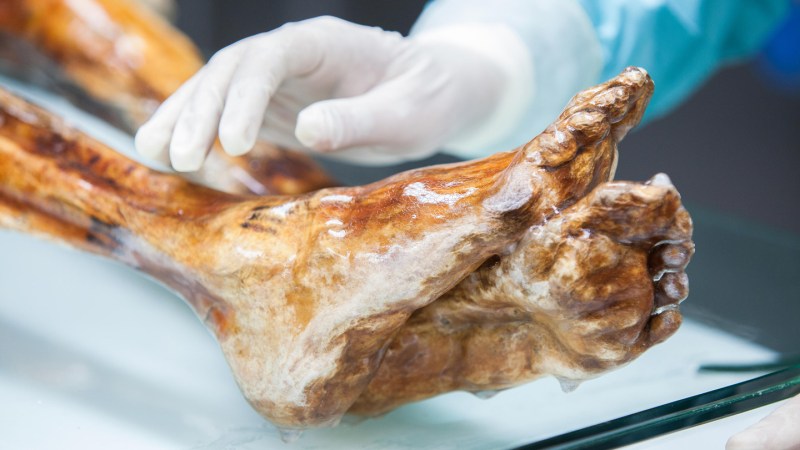
In the heart of the Alpine glaciers lies an extraordinary archive of prehistoric biology—Ötzi the Iceman. Preserved for over 5,000 years at a steady -6°C and nearly 99% relative humidity, Ötzi’s remarkably intact body has long fascinated scientists exploring ancient human life. Recently, a team of researchers unveiled groundbreaking discoveries about the diverse microorganisms that have endured within and around this ancient mummy, shedding light on microbial evolution, preservation, and potential biotechnological applications.
Through a sophisticated combination of genetic sampling and microbiological analysis, the researchers succeeded in distinguishing microbial species that existed within Ötzi during his lifetime from those that colonized him after death. Samples were meticulously collected from both the mummy’s external environment—ice and meltwater inside his refrigeration chamber—and internal tissues, including preserved samples of intestinal tissue and stomach contents. Swab samples augmented these data to create a comprehensive microbial profile, tracing both ancient and modern microbial communities.
The study revealed genetic material from bacteria consistent with Ötzi’s original gut flora, tightly linking his microbiome to those of early human populations. This microbiota composition diverges markedly from that seen in modern industrialized societies, where such bacteria are rare or absent. This remarkable preservation offers an unprecedented glimpse into the microbial ecosystems inhabited by humans during the Copper Age, highlighting evolutionary trajectories and host-microbe relationships dating back millennia.
A particularly surprising discovery emerged from the analysis of yeasts inhabiting Ötzi’s skin, stomach contents, and internal meltwater. These yeasts are highly specialized and extant cold-adapted species, genetically related to strains found in the extreme environments of Antarctica. This affiliation strongly suggests that these microorganisms originated from the glacial setting surrounding Ötzi and have survived, likely in a dormant state, throughout his frozen journey across thousands of years.
What is equally fascinating is the presence of both heavily degraded, ancient DNA and well-preserved modern DNA within these yeasts. This duality indicates that the microbial environment surrounding Ötzi is not static but dynamic—continuously shaped by conditions within the preservation chamber. Frank Maixner, director of the Institute for Mummy Studies at Eurac Research, underscores this by describing Ötzi as more than a lifeless relic; instead, it is a living biological system wherein these yeasts persist and evolve under current conservation parameters.
Furthermore, the study casts new light on how past conservation efforts have inadvertently influenced microbial ecology on the mummy’s surface. For example, phenol, an antifungal agent applied to Ötzi after his discovery in 1991, appears to have selected for yeasts genetically equipped to metabolize phenol. This adaptation suggests that human interventions, even those aimed at preservation, can lead to ecological shifts favoring resilient microbial populations capable of exploiting introduced chemical compounds.
Mohamed S. Sarhan, the study’s lead microbiologist, affirms the unique nature of Ötzi’s microbiome, emphasizing its composition of ancient and newly introduced microbes. Such a complex microbiome challenges traditional notions that ancient microbial life inevitably succumbs to decomposition or becomes fully replaced over time. Instead, Ötzi provides a living laboratory where microbial continuity and evolution can be observed under stable preservation conditions.
Elisabeth Vallazza, director of the South Tyrol Museum of Archaeology, whose institution oversees the Iceman’s conservation, emphasizes the critical role of ongoing microbiological monitoring to safeguard against damage. Although conditions in the refrigeration chamber are currently stable, the researchers highlight that sustained efforts and further studies remain essential to ensure this invaluable specimen lasts for future generations to study and marvel at.
Marco Samadelli, an expert in conservation and a co-author of the research, notes that glacial mummies represent complex biological systems preserved in environments that are not yet fully understood. This investigation enriches existing knowledge about glacial preservation by identifying microbial processes and interactions that affect long-term biological conservation. Understanding these factors is crucial for improving preservation protocols globally.
Beyond its historical and archaeological importance, the discovery of cold-adapted yeasts associated with Ötzi opens promising new avenues for biotechnology. Microorganisms that can perform metabolic functions at low temperatures are highly desirable for energy-efficient industrial processes, such as low-temperature fermentation, which save resources and reduce environmental impact. These extremophile yeasts could serve as models or sources for developing novel bio-catalytic processes.
This detailed microbiome study of the Iceman also contributes to broader microbiological science by juxtaposing ancient human microbiomes with those resulting from modern interventions and environmental changes. The intermingling of age-old microbes with contemporary species paints a complex picture of microbial persistence and adaptability that extends far beyond the mummy itself, informing research into ancient diseases, human evolution, and microbiome-environment interactions.
In essence, Ötzi’s frozen microbiome is a testament to persistence and change, a biological time capsule that simultaneously preserves a microbial community from 5,000 years ago while reflecting thousands of years of environmental influence and recent conservation efforts. This unique interplay offers an unparalleled opportunity to deepen our understanding of life at the microscopic level over archaeological time scales.
The research was published in the esteemed journal Microbiome on June 3, 2026. By integrating multidisciplinary approaches involving molecular biology, archaeology, microbiology, and conservation science, this study underscores the potential hidden within ancient remains to revolutionize biotechnology and biological conservation strategies going forward.
Subject of Research: Human tissue samples
Article Title: The Iceman’s microbiome: unveiling millennia of microbial diversity and continuity
News Publication Date: 3-Jun-2026
Web References: 10.1186/s40168-026-02417-6
Image Credits: South Tyrol Museum of Archaeology/Eurac Research/Marion Lafogler
Keywords: Human microbiota, Human remains, Yeast strains, Human gut microbiota



One way archaeologists learn how ancient people, including Neanderthals, did things is to attempt to do those things themselves, a process called experimental archaeology. Normally, that involves making stone tools, butchering deer, or distilling birch tar. But in a new study, it meant doing very destructive things to teeth from one of the world’s most carefully protected animals.
That's because the archeologists suspected that Neanderthals once used rhino teeth as tools. By using the teeth to make stone tools, the researchers demonstrated that Neanderthals probably did the same thing, adding to what we know about the wide range of items in their toolkits.
Some Neanderthal archaeological sites in Europe and Asia seem to have many more rhinoceros teeth lying around than you’d expect. We know Neanderthals hunted a now-extinct species of rhinoceros in Europe and eastern Asia, but the people who had inhabited these sites looked like they had been collecting rhino teeth for some reason.


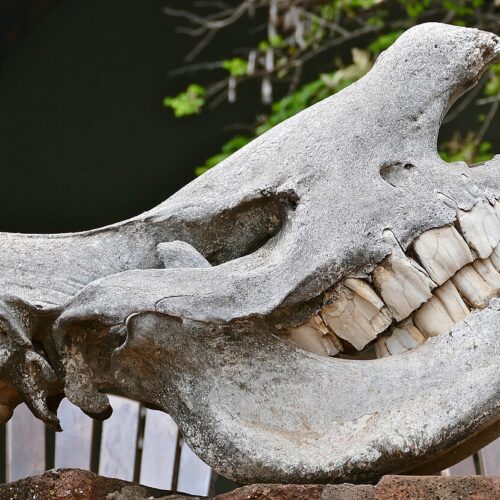
© By Bernard DUPONT from FRANCE - White Rhino Skull, CC BY-SA 2.0, https://commons.wikimedia.org/w/index.php?curid=55453022
One way archaeologists learn how ancient people, including Neanderthals, did things is to attempt to do those things themselves, a process called experimental archaeology. Normally, that involves making stone tools, butchering deer, or distilling birch tar. But in a new study, it meant doing very destructive things to teeth from one of the world’s most carefully protected animals.
That's because the archeologists suspected that Neanderthals once used rhino teeth as tools. By using the teeth to make stone tools, the researchers demonstrated that Neanderthals probably did the same thing, adding to what we know about the wide range of items in their toolkits.
Some Neanderthal archaeological sites in Europe and Asia seem to have many more rhinoceros teeth lying around than you’d expect. We know Neanderthals hunted a now-extinct species of rhinoceros in Europe and eastern Asia, but the people who had inhabited these sites looked like they had been collecting rhino teeth for some reason.


© By Bernard DUPONT from FRANCE - White Rhino Skull, CC BY-SA 2.0, https://commons.wikimedia.org/w/index.php?curid=55453022
One way archaeologists learn how ancient people, including Neanderthals, did things is to attempt to do those things themselves, a process called experimental archaeology. Normally, that involves making stone tools, butchering deer, or distilling birch tar. But in a new study, it meant doing very destructive things to teeth from one of the world’s most carefully protected animals.
That's because the archeologists suspected that Neanderthals once used rhino teeth as tools. By using the teeth to make stone tools, the researchers demonstrated that Neanderthals probably did the same thing, adding to what we know about the wide range of items in their toolkits.
Some Neanderthal archaeological sites in Europe and Asia seem to have many more rhinoceros teeth lying around than you’d expect. We know Neanderthals hunted a now-extinct species of rhinoceros in Europe and eastern Asia, but the people who had inhabited these sites looked like they had been collecting rhino teeth for some reason.


© By Bernard DUPONT from FRANCE - White Rhino Skull, CC BY-SA 2.0, https://commons.wikimedia.org/w/index.php?curid=55453022
One way archaeologists learn how ancient people, including Neanderthals, did things is to attempt to do those things themselves, a process called experimental archaeology. Normally, that involves making stone tools, butchering deer, or distilling birch tar. But in a new study, it meant doing very destructive things to teeth from one of the world’s most carefully protected animals.
That's because the archeologists suspected that Neanderthals once used rhino teeth as tools. By using the teeth to make stone tools, the researchers demonstrated that Neanderthals probably did the same thing, adding to what we know about the wide range of items in their toolkits.
Some Neanderthal archaeological sites in Europe and Asia seem to have many more rhinoceros teeth lying around than you’d expect. We know Neanderthals hunted a now-extinct species of rhinoceros in Europe and eastern Asia, but the people who had inhabited these sites looked like they had been collecting rhino teeth for some reason.


© By Bernard DUPONT from FRANCE - White Rhino Skull, CC BY-SA 2.0, https://commons.wikimedia.org/w/index.php?curid=55453022
The wreck of an American submarine from World War II has been found off the coast of Matsua Island, Japan. The USS Herring (SS-233) currently rests over 300 feet down in the Pacific Ocean, where it is sitting upright and “maintains a high degree of integrity,” according to United States Naval History and Heritage Command (NHHC). The discovery was announced exactly 82 years after the vessel sank, based on evidence collected from an international team of researchers.
The Herring was first launched from Portsmouth Naval Shipyard in Maine on January 15, 1942, and officially commissioned on May 4, 1942. The vessel completed eight war patrols in both the Atlantic and Pacific Oceans during the war. Herring sank seven enemy ships, including four Japanese cargo ships during what would be the submarine’s final patrol.
Herring was last seen by the crew of the USS Barb during the evening of May 31, 1944. The submarines met to determine who would patrol areas off the Kurile Islands, an archipelago east of Japan. Early on June 1, 1944, Barb’s crew recorded hearing the sound of weapons designed to attack a submarine from a ship or aircraft called depth charges exploding in the distance.
Japanese historical records also confirm that Herring was struck in two direct hits during a counterattack by a shore battery. The strikes ultimately sank Herring and the vessel was presumed lost when Herring failed to report to Midway on July 13, 1944. The sinking killed all 83 crewmembers.

In 2017, a joint expedition between Russian Geographic Society (RGS) and the Russian Military reported a submarine wreck in the area. Based on its location and appearance, the RGS reported that the wreckage was Herring. A subsequent joint expedition returned to the wreck in 2022 to document its status and honor the lost crew. The expedition team also placed a plaque on site. The data collected and shared by the RGS was analyzed by two U.S. volunteer researchers and one researcher in Japan. NHCC confirmed the wreckage on June 1, 2026–82 years to the day after Herring is believed to have sunk.
Importantly, the wreckage shows battle damage around the submarine’s conning tower. This tower is a raised platform from which an officer can conn (conduct or control) a vessel. This damage, along with evidence of grounding at the submarine’s bow, correlates with the historical record of the Herring’s sinking.
The wreckage is currently protected by U.S. law and under the jurisdiction of the Department of the Navy. The Navy allows some non-intrusive activities on sunken military craft, but any activity that may disturb the sunken vessel must be coordinated with NHHC.
“Most importantly, the wreck represents the final resting place of Sailors who gave their lives in defense of the nation and should be respected by all parties as a war grave,” the NHHC wrote in a press release.”
The post Lost WWII submarine discovered off the coast of Japan appeared first on Popular Science.