Login
Login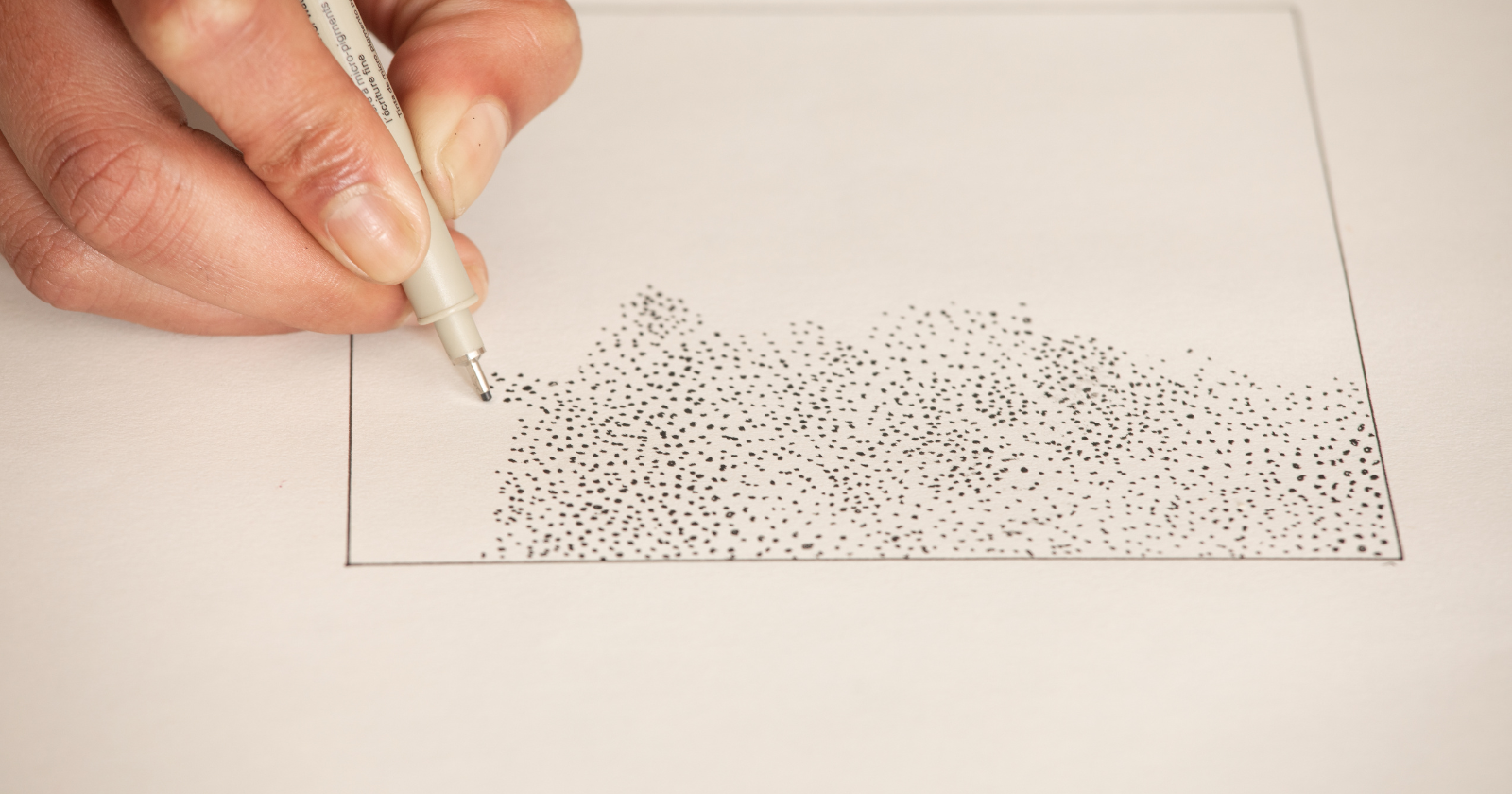

A study of adults aged 62 to 92 found that basic motor control — drawing lines, placing dots — remains almost identical between people with and without cognitive impairment, meaning the hands stay capable long after the processes that organise thought have started to change

There is something quietly striking in the image. An older adult — perhaps 86, perhaps older — sits before a digitizing tablet and draws horizontal lines. The pen moves steadily across the surface. The lines come out clean and even. The hand does not falter. The hand, it turns out, does not know.
A new study published in Frontiers in Human Neuroscience has examined what happens to handwriting and motor control in older adults with and without cognitive impairment, and one of its most arresting findings is precisely this: when it comes to basic pen-motor tasks — placing dots on a surface, drawing horizontal lines — the two groups are effectively indistinguishable. The degradation of cognitive function that researchers can detect through standardized assessments leaves no measurable trace in the elementary mechanics of holding and moving a pen.
The basic motor infrastructure holds. What begins to separate the groups is something more demanding: the cognitive work that handwriting also requires.
What the study measured, and how
The research, led by Ana Rita Matias and colleagues at the Universidade de Évora and collaborating Portuguese institutions and published in May 2026, recruited 58 institutionalised older adults ranging in age from 62 to 99. Thirty-eight participants had been classified as cognitively impaired, with a mean age of 86.05 years. Twenty were cognitively healthy, with a mean age of 84.35 years. Cognitive status was established using two standard clinical instruments: the Mini-Mental State Examination and the Clock Drawing Test.
Each participant completed a series of tasks on a Wacom digitizing tablet fitted with an inking pen — a device that captures not just what is written but the kinematics of how it is written: pen velocity, pressure, the duration of strokes, the number of discrete movements, the pauses between them. This is the critical advantage of digital capture over conventional paper-based assessment. What the eye cannot see, the tablet records.
The tasks fell into two categories. The first were simple motor tasks: a dots task, in which participants were asked to place at least ten dots on the tablet surface within twenty seconds, and a lines task, in which they were asked to draw at least ten horizontal lines in the same time. These tasks required control of the pen but little else. No language processing. No memory retrieval. No composing of meaning.
The second category was more demanding: four handwriting-speed tasks involving the copying and dictation of sentences. Copying a sentence allows the writer to keep the source text in view. Dictation does not. The words arrive as sound, must be held in working memory, parsed for meaning, translated into motor sequences, and then committed to the page — all while the auditory trace is already fading.
Where the difference appears — and where it does not
The dots and lines tasks did not significantly discriminate between the two groups. This is the finding worth pausing on. Cognitive impairment, at the level where it is detectable by standard clinical tools, has not yet disrupted the peripheral motor system. The hand moves. The pen responds. The basic loop between intention and execution remains functionally intact.
The dictation tasks told a different story. Here the researchers found statistically significant differences between the cognitively impaired and cognitively healthy groups. One task in particular — referred to in the paper as WS3, a dictated sentence — produced the strongest discriminatory signal. Two features of the kinematic data were especially predictive: Duration, the total time taken to complete the task, and Number of Strokes, the count of discrete pen movements. Both variables significantly predicted cognitive group membership.
Participants with cognitive impairment took longer and produced more fragmented output — more individual pen movements to accomplish the same written result. The hand was still moving. But the coordination between the cognitive processes that organise language and the motor processes that execute it had become less fluent, more effortful, more interrupted.
As the authors write in their conclusion: “Handwriting kinematics, especially temporal and stroke-related features, are sensitive indicators of cognitive impairment when assessed under high cognitive–motor load.”
Why handwriting carries cognitive signal
Handwriting has attracted sustained interest from researchers studying cognitive decline precisely because it occupies a peculiar position: it is both a motor act and a cognitive one, and the two are difficult to disentangle by observation alone. The digitizing tablet changes that. By capturing kinematics in real time, it makes visible the hesitations, the micro-pauses, the multiplying strokes that a simple reading of the finished text would never reveal.
What the tablet captures, in effect, is cognitive load expressed through movement. When a task places high demands on working memory — as dictation does — the motor system has fewer resources available to it. The result is not necessarily illegible handwriting. The result is handwriting that takes longer, that requires more individual pen lifts, that shows the seams of the effort it took to produce.
The distinction between copying and dictation is not incidental to this research — it is the mechanism. Copying a sentence is primarily a perceptual-motor task. The writer looks at words and reproduces them. Dictation requires the writer to be, briefly, a language processor: receiving, holding, decoding, and transcribing without the safety net of visible text. That additional cognitive burden is where the between-group difference becomes measurable.
Earlier research in this area has identified kinematic features — pen velocity, in-air time, the ratio of time spent writing to time spent pausing — as markers that correlate with cognitive status in conditions including mild cognitive impairment and Alzheimer’s disease. What the Matias study adds is a careful separation between tasks that load the motor system alone and tasks that load the cognitive-motor system together. The separation clarifies which element of handwriting carries the diagnostic signal.
The case for handwriting-based screening
The researchers position their findings as support for digitally mediated handwriting tasks as screening tools for cognitive decline. The argument has practical force. A digitizing tablet is low-cost relative to neuroimaging and requires no specialist clinical infrastructure. Handwriting is, for most older adults, a deeply familiar act — ecologically valid in the language of assessment research, meaning it does not require participants to learn a new task or adapt to an unfamiliar paradigm. It is something people have done for decades, and the act of doing it again in a clinical or care context carries little of the anxiety or performance pressure that some formal cognitive assessments introduce.
For populations in institutional care — the population this study recruited — such considerations are not trivial. Fatigue, unfamiliarity, and distress can all contaminate cognitive assessment data. A brief handwriting task, completed at a table with a pen in hand, is a different kind of ask than a sustained battery of memory and attention tests.
The study also raises the possibility of longitudinal monitoring: repeated handwriting assessments over time could track subtle kinematic changes before they manifest as detectable impairment on conventional screening tools. The tablet captures what the eye misses. Over months or years, the data might record the earliest drift in the coordination between thought and hand.
What the hand does not know
The human detail at the centre of this research is the one that stays. An older adult draws horizontal lines on a tablet. The hand moves cleanly. The pen does not hesitate. By the measure of the task — ten lines in twenty seconds — the performance is equivalent to that of someone whose cognition, by clinical assessment, remains fully intact.
The hand, performing that task, is not reporting on what is happening elsewhere. The motor infrastructure is preserved. The elementary act of guiding a pen across a surface — the muscle coordination, the proprioceptive feedback, the fine motor loop that learned to hold a pen in childhood and has held one ever since — continues to operate as it has always operated.
What changes, and what the digitizing tablet can detect, is the integration. The moment handwriting becomes more than a motor act — the moment it requires the writer to hold language in mind, to compose and convert and commit — the kinematic signature of cognitive change begins to appear in the data. Not as tremor. Not as a loss of motor control. As duration. As the number of strokes it takes to get the words down.
The hands stay capable. The research is careful to say so. What shifts is the coordination between capability and the cognitive processes that direct it. That coordination, it turns out, is where cognitive impairment first makes itself legible to a machine that is paying close enough attention.
The post A study of adults aged 62 to 92 found that basic motor control — drawing lines, placing dots — remains almost identical between people with and without cognitive impairment, meaning the hands stay capable long after the processes that organise thought have started to change appeared first on Space Daily.