Normal view

Une découverte en Chine bouscule l’histoire d’étranges animaux vieux de 520 millions d’années

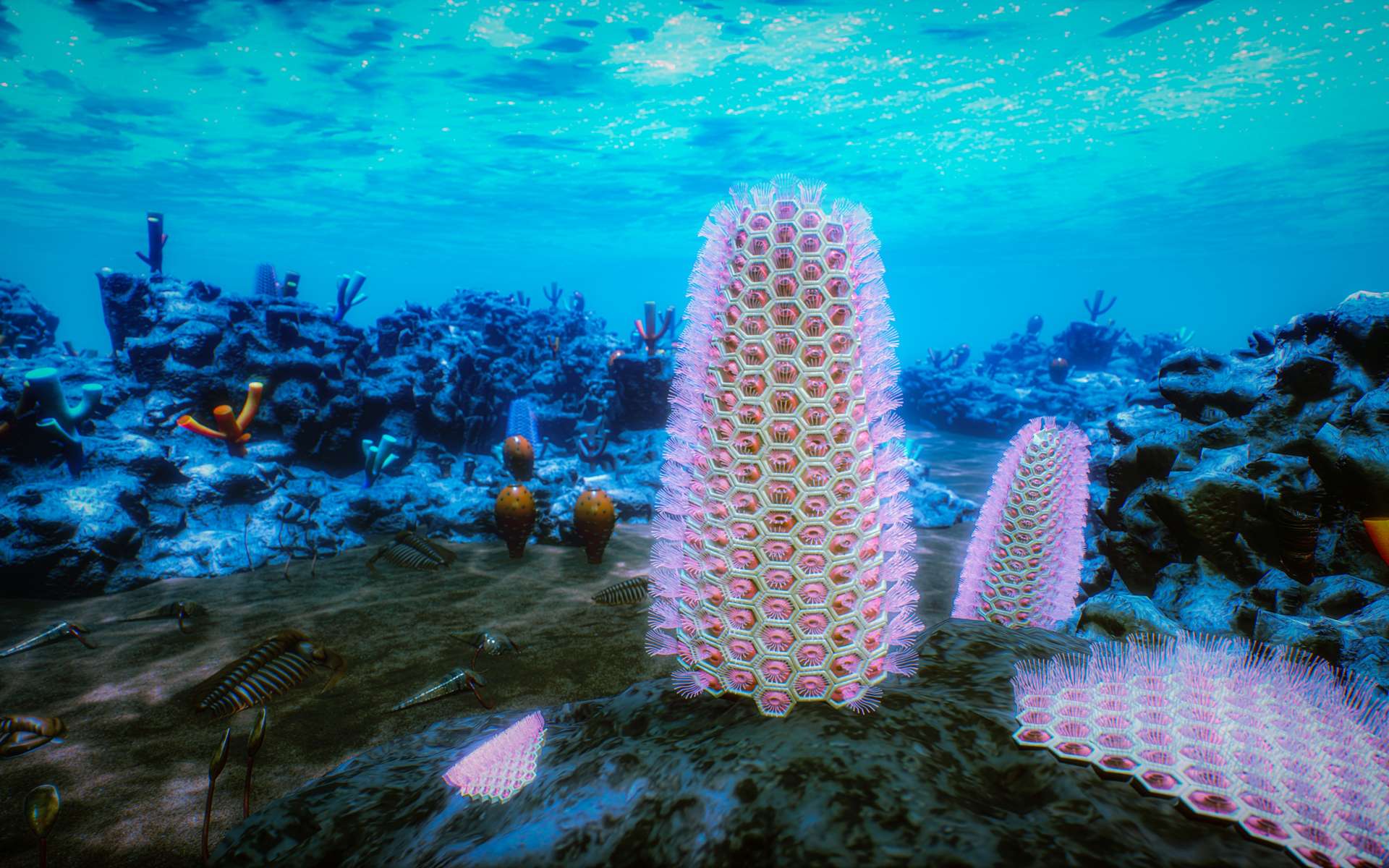
Discrets mais omniprésents dans les océans actuels, les bryozoaires cachent une histoire bien plus ancienne qu’on ne le pensait. Des fossiles exceptionnels découverts en Chine montrent qu’il y a 520 millions d’années, ces animaux coloniaux étaient déjà des structures complexes, pleinement...

Half-ton early bovines roamed 4-million-year-old grasslands in Europe

The first large-sized bovines grew to up to half a ton 4 million years ago in the European Early Pliocene, an early step toward our modern diversity of large-bodied buffalo and cattle, according to a study published June 3, 2026, in the open access journal PLOS One by Leonardo Sorbelli of the Leibniz Institute for Evolution and Biodiversity Science, Germany, and colleagues.

Egypt fossils show modern ocean fish rose rapidly after dinosaur extinction

The extinction that ended the Age of Dinosaurs is best known for clearing the way for the Age of Mammals on land. Scientists have long suspected that the same catastrophe also transformed life in the seas, opening ecological space for the rise of modern marine fish faunas. Yet the timing and geography of that transition have remained uncertain because of the sparse fossil record.

Genetic and Cell-State Evolution in IDH Gliomas

3 June 2026 at 18:21

In a groundbreaking new study published in Nature, researchers have unveiled the intricate cellular landscape remodeling that underlies the progression of IDH-mutant gliomas, a prevalent form of brain cancer. By employing advanced single-cell RNA sequencing technologies and integrative computational analyses, the team dissected malignant cell states across different tumor grades and types, revealing a dynamic choreography dictated by genetic alterations and tumor microenvironmental interactions. This work not only enriches our understanding of glioma biology but also charts new avenues for targeted therapies aimed at halting tumor evolution.

The research delved into the abundance of malignant states by tumor type and grade, uncovering nuanced patterns that challenge previous assumptions. While most cell state distributions were similar across tumor types, oligodendrogliomas exhibited a notable increase in a neural progenitor-like (NPC-like) cell state, hinting at divergent differentiation pathways associated with tumor lineage. This observation was statistically robust, suggesting that lineage-specific programs might pre-condition these tumors to distinct malignant trajectories.

Tumor grade emerged as a powerful determinant of cellular state composition. Higher-grade tumors demonstrated a consistent decline in the differentiated astrocyte-like (AC-like) cell population coupled with an increase in mesenchymal-like (MES-like), undifferentiated, and proliferative cycling cells. This gradation vividly illustrates the stepwise dedifferentiation and heightened proliferative capacity that accompany malignancy intensification. Through rigorous validation using both bulk RNA deconvolution from TCGA and Glioma Longitudinal Analysis (GLASS) consortium data and external single-cell sequencing cohorts, these grade-associated shifts were confirmed as robust and reproducible across diverse datasets.

Spatial heterogeneity, often cited as a confounding factor in tumor biology, was scrutinized using spatially mapped single-cell data. Interestingly, malignant-state composition remained comparatively stable across distinct tumor regions within the same patient, indicating that cell state architecture is more profoundly influenced by temporal progression and genetic evolution than by spatial variation alone. This insight refines our understanding of intratumoral complexity and suggests that therapeutic strategies targeting specific states may achieve uniform efficacy within heterogeneous tumor masses.

Longitudinal analysis across treatment timelines brought to light profound cell-state dynamics associated with tumor recurrence. The investigators documented significant increases in MES-like, undifferentiated, and cycling states at recurrence, alongside a pronounced reduction in AC-like cells. This shift towards a less differentiated and more proliferative state mirrors the progression observed with increasing tumor grade, underscoring the parallelism between disease advancement and cell-state evolution. Intriguingly, these trends were observed across tumor types and persisted when restricted to primary astrocytoma diagnoses, highlighting their broad relevance.

A pivotal revelation emerged when correlating these cellular state changes with acquired genetic alterations associated with recurrence. Tumors harboring new genetic events such as hypermutation, enhanced somatic copy number variations, small deletions, and cell cycle disruptions exhibited greater increases in undifferentiated and cycling cell populations. This genetic crescendo was linked to an elevated stemness signature, emphasizing the coalescence of genetic instability with a more aggressive cellular phenotype. Conversely, MES-like state expansion appeared independent of these genetic changes, suggesting multiple pathways driving tumor plasticity.

Molecular distance metrics further corroborated the tight coupling between genetic alterations and transcriptional remodeling. Positive correlations between longitudinal mutational burden and transcriptional divergence encapsulate a model wherein genomic evolution fuels phenotypic heterogeneity. This co-evolution is substantiated by the finding that gliomas acquiring genetic aberrations concurrently display altered chromatin accessibility patterns, implicating coordinated genome-epigenome remodeling during tumor progression.

Validations within the GLASS cohort reinforced these inferences by demonstrating that recurrence-associated genetic shifts coincide with decreased differentiation and heightened proliferation signatures inferred from bulk RNA data. This multi-modal validation not only affirms the robustness of the observed trends but also exemplifies the power of integrative genomics in decoding tumor evolution.

Altogether, the study posits that IDH-mutant gliomas traverse a defined evolutionary trajectory marked by cellular dedifferentiation and increased proliferative vigor, tightly linked to the accumulation of genetic alterations. These findings bear critical implications for clinical practice, as they identify malignant cellular states as both markers and drivers of tumor progression, offering potential targets for therapeutic intervention aimed at intercepting the path to recurrence.

Beyond their immediate clinical impact, these revelations prompt a broader reevaluation of brain tumor biology. The stable spatial distribution of malignant states within tumors juxtaposed with temporal and genetic variation suggests that therapeutic timing and genomic context are paramount considerations in designing effective treatment regimens. Interventions targeting early evolutionary branches or restricting stem-like and cycling populations could substantially alter the course of disease.

Furthermore, the delineation of MES-like cells as a genetically independent population expanding in recurrence opens questions about the environmental or microenvironmental cues fostering this state. Disentangling intrinsic genetic drivers from extrinsic modulators could illuminate novel vulnerabilities exploitable by combination therapies.

The methodology underscoring this work leverages cutting-edge single-cell sequencing techniques, computational deconvolution methodologies such as CIBERSORTx, and gene set enrichment analyses, highlighting the synergy between technological advancements and biological inquiry. These tools enable a granular depiction of tumor ecosystems, revolutionizing our ability to track tumor evolution at unprecedented resolution.

Looking ahead, these insights pave the way for longitudinal monitoring of glioma patients through minimally invasive sampling coupled with single-cell profiling. Such approaches could inform adaptive treatment strategies tailored to real-time tumor state dynamics, ultimately improving prognosis and patient survival.

In essence, this study elegantly captures the complex, intertwined genetic and cellular transformations that sculpt IDH-mutant glioma progression. By elucidating the molecular underpinnings of malignant cell states and their evolution, it sets the stage for innovative therapeutic paradigms tailored to intercept the relentless advancement of these formidable brain tumors.


Subject of Research:
IDH-mutant glioma progression, malignant cell states, tumor grade, genetic alterations, and cell-state evolution.

Article Title:
Acquired genetic and cell-state changes in IDH-mutant glioma progression.

Article References:
Johnson, K.C., Spitzer, A., Varn, F.S. et al. Acquired genetic and cell-state changes in IDH-mutant glioma progression. Nature (2026). https://doi.org/10.1038/s41586-026-10612-6

Image Credits:
AI Generated

DOI:
https://doi.org/10.1038/s41586-026-10612-6

Extraordinary fossils solve a 500-million-year mystery: Bryozoans were there at the dawn of animal life

Bryozoans are tiny, filter-feeding colonial invertebrates that thrive in the world's oceans today, yet for decades their origins presented a puzzling gap in the fossil record. While nearly every other major animal group made its first appearance during the Cambrian explosion roughly 530 million years ago, the bryozoan fossil record remained stubbornly silent until the Ordovician period, some 50 million years later.

Ancient DNA offers hope for California's critically endangered black abalone

Black abalone once carpeted the rocky shores of California by the millions. The large, long-lived sea snails sustained Indigenous peoples along the coast for thousands of years, anchored a thriving 20th-century commercial fishery and inspired generations of California cooks, divers, and artists.

The perks of polyandry: Mating with multiple males leads to home improvement for African tree frogs

The question of why females mate with multiple males has long puzzled evolutionary biologists. A new study of African foam-nest tree frogs, led by University of Wollongong (UOW) researchers, reveals polyandry could be the key to reproductive success and a safer home for offspring. The findings shed light on how amphibians have evolved to protect their young in challenging environments, presenting a new hypothesis for the evolution of polyandry that ties mating behavior to the quality of nest construction.

Big wings and sweet songs: The mating lives of Panama’s katydids

3 June 2026 at 01:05

When it comes to reproduction, animals will pull out all the stops to attract a mate. Sending out noisy mating calls, showing off colorful wings, inflating a throat pouch, and shaking a literal tailfeather all ensure that the next generation of a species happens. Some insects will go as far as making themselves look like an entirely different living thing—leaves. 

Usually used as a means of camouflage, male katydids appear to use their leafy disguise to amplify mating calls and make themselves more attractive to the opposite sex. The findings are detailed in a study published today in the journal Proceedings of the Royal Society B, and offer one of the first demonstrations of how leaf mimicry enhances a male katydids’ sexual signals. 

To shield themselves from predators, various species of katydids have evolved wings with structures that look like leaves. Panama’s leaf-masquerading katydids (Arota festae) will even change from green to hot pink in order to better mimic leaves. What’s been less clear to entomologists is whether or not these leaf-mimicking structures play a role in katydid mating. 

This new study looked at a species called Viadana brunneri from Barro Colorado Island, Panama. To attract mates, katydids create songs by rubbing together specialized structures on their wings. In many tropical species like V. brunneri, the portion that mimics leaves makes up the majority of their wing’s surface area.  

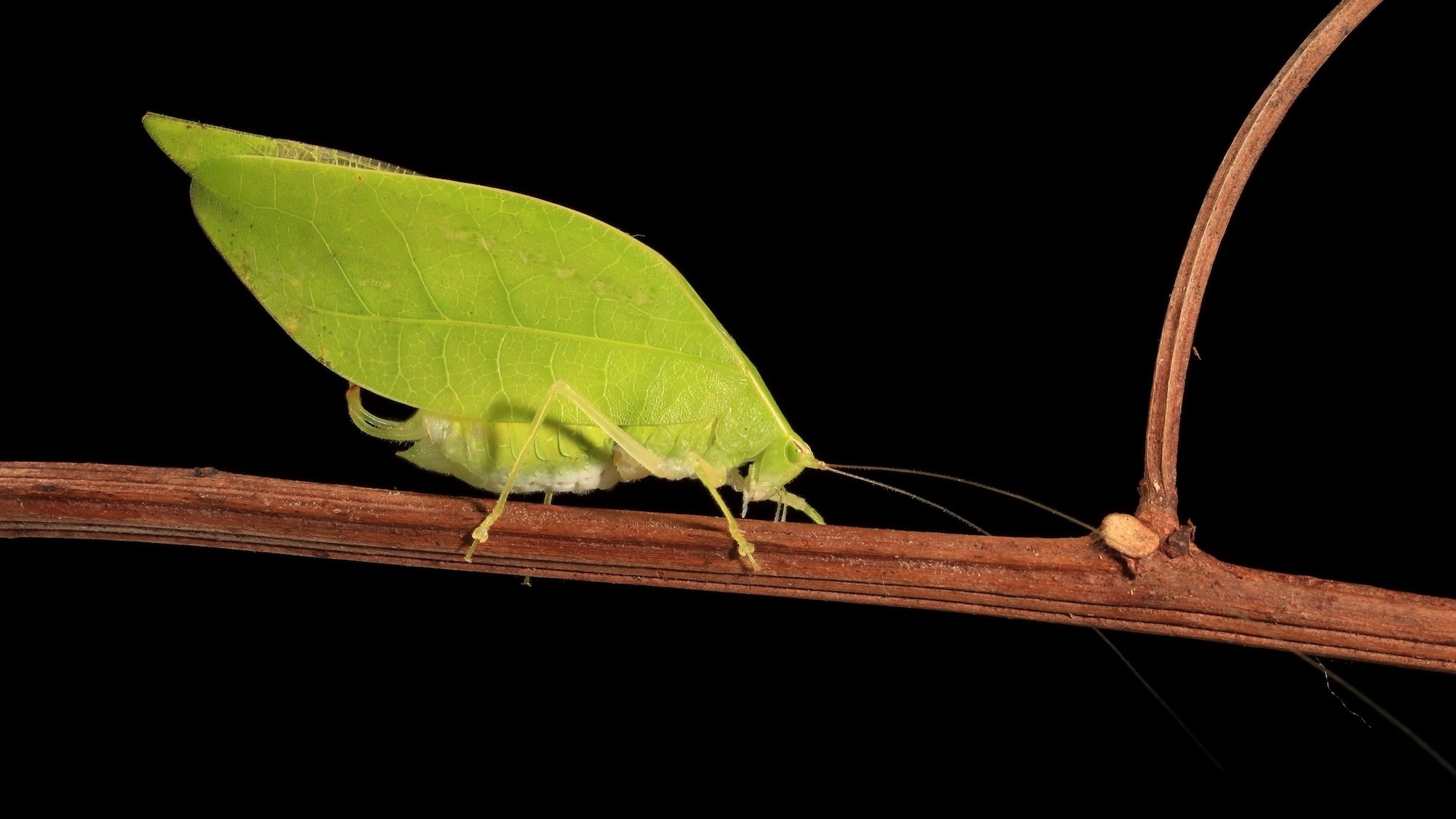
a green insect with a large, green wing that looks like a leaf hands upside down on a stick
Most of the wing structure is devoted to helping male katydids look more like a leaf. Image: Christian Ziegler.

Previously, scientists believed physical adaptations for survival and for attracting mates can function in conflict with one another, particularly if they are physically connected. A male peacock’s flashy tail feathers may help it attract a female, but it also makes it easier for predators to find them. Male katydids, on the other hand, are able to use the acoustic properties of the structures that they use for defense to their reproductive advantage. They are a rare example of how an adaptation for self-defence and reproduction can work together without necessarily putting the animal in jeopardy. 

The team performed a series of bioacoustic, behavioral, and biophysical experiments, showing that these leafy structures on their wings make them more attractive to females, while also helping conceal them. After removing the leafy portions of a male V. brunneri’s wings, the pitch became higher and the volume of their songs also changed. The team then played these calls for females who preferred the lower pitch calls from males with their leafy wing sections still intact. 

While male katydids do all the singing, females indicate their interest by replying to the song with clicks. The insects produce short, sporadic and infrequent calls, possibly for only two seconds in a single night. They perform these calls in ultrasounds, which our ears can’t pick up. They also found that the leafy portions of the male katydid wing will vibrate to amplify their songs, making them more detectable to females. 

“Our study provides a rare example of natural and sexual selection acting in harmony, producing traits that simultaneously improve survival and mating success,” Dr. Benito Wainwright, a study co-author and evolutionary biologist at the University of St Andrews, said in a statement. “We are now extremely excited to start exploring how such an interesting interaction evolved in katydids.” 

The post Big wings and sweet songs: The mating lives of Panama’s katydids appeared first on Popular Science.

Ötzi and His Microbiome: Exploring a 5,300-Year-Old Human-Microbial Connection

3 June 2026 at 03:01

In the heart of the Alpine glaciers lies an extraordinary archive of prehistoric biology—Ötzi the Iceman. Preserved for over 5,000 years at a steady -6°C and nearly 99% relative humidity, Ötzi’s remarkably intact body has long fascinated scientists exploring ancient human life. Recently, a team of researchers unveiled groundbreaking discoveries about the diverse microorganisms that have endured within and around this ancient mummy, shedding light on microbial evolution, preservation, and potential biotechnological applications.

Through a sophisticated combination of genetic sampling and microbiological analysis, the researchers succeeded in distinguishing microbial species that existed within Ötzi during his lifetime from those that colonized him after death. Samples were meticulously collected from both the mummy’s external environment—ice and meltwater inside his refrigeration chamber—and internal tissues, including preserved samples of intestinal tissue and stomach contents. Swab samples augmented these data to create a comprehensive microbial profile, tracing both ancient and modern microbial communities.

The study revealed genetic material from bacteria consistent with Ötzi’s original gut flora, tightly linking his microbiome to those of early human populations. This microbiota composition diverges markedly from that seen in modern industrialized societies, where such bacteria are rare or absent. This remarkable preservation offers an unprecedented glimpse into the microbial ecosystems inhabited by humans during the Copper Age, highlighting evolutionary trajectories and host-microbe relationships dating back millennia.

A particularly surprising discovery emerged from the analysis of yeasts inhabiting Ötzi’s skin, stomach contents, and internal meltwater. These yeasts are highly specialized and extant cold-adapted species, genetically related to strains found in the extreme environments of Antarctica. This affiliation strongly suggests that these microorganisms originated from the glacial setting surrounding Ötzi and have survived, likely in a dormant state, throughout his frozen journey across thousands of years.

What is equally fascinating is the presence of both heavily degraded, ancient DNA and well-preserved modern DNA within these yeasts. This duality indicates that the microbial environment surrounding Ötzi is not static but dynamic—continuously shaped by conditions within the preservation chamber. Frank Maixner, director of the Institute for Mummy Studies at Eurac Research, underscores this by describing Ötzi as more than a lifeless relic; instead, it is a living biological system wherein these yeasts persist and evolve under current conservation parameters.

Furthermore, the study casts new light on how past conservation efforts have inadvertently influenced microbial ecology on the mummy’s surface. For example, phenol, an antifungal agent applied to Ötzi after his discovery in 1991, appears to have selected for yeasts genetically equipped to metabolize phenol. This adaptation suggests that human interventions, even those aimed at preservation, can lead to ecological shifts favoring resilient microbial populations capable of exploiting introduced chemical compounds.

Mohamed S. Sarhan, the study’s lead microbiologist, affirms the unique nature of Ötzi’s microbiome, emphasizing its composition of ancient and newly introduced microbes. Such a complex microbiome challenges traditional notions that ancient microbial life inevitably succumbs to decomposition or becomes fully replaced over time. Instead, Ötzi provides a living laboratory where microbial continuity and evolution can be observed under stable preservation conditions.

Elisabeth Vallazza, director of the South Tyrol Museum of Archaeology, whose institution oversees the Iceman’s conservation, emphasizes the critical role of ongoing microbiological monitoring to safeguard against damage. Although conditions in the refrigeration chamber are currently stable, the researchers highlight that sustained efforts and further studies remain essential to ensure this invaluable specimen lasts for future generations to study and marvel at.

Marco Samadelli, an expert in conservation and a co-author of the research, notes that glacial mummies represent complex biological systems preserved in environments that are not yet fully understood. This investigation enriches existing knowledge about glacial preservation by identifying microbial processes and interactions that affect long-term biological conservation. Understanding these factors is crucial for improving preservation protocols globally.

Beyond its historical and archaeological importance, the discovery of cold-adapted yeasts associated with Ötzi opens promising new avenues for biotechnology. Microorganisms that can perform metabolic functions at low temperatures are highly desirable for energy-efficient industrial processes, such as low-temperature fermentation, which save resources and reduce environmental impact. These extremophile yeasts could serve as models or sources for developing novel bio-catalytic processes.

This detailed microbiome study of the Iceman also contributes to broader microbiological science by juxtaposing ancient human microbiomes with those resulting from modern interventions and environmental changes. The intermingling of age-old microbes with contemporary species paints a complex picture of microbial persistence and adaptability that extends far beyond the mummy itself, informing research into ancient diseases, human evolution, and microbiome-environment interactions.

In essence, Ötzi’s frozen microbiome is a testament to persistence and change, a biological time capsule that simultaneously preserves a microbial community from 5,000 years ago while reflecting thousands of years of environmental influence and recent conservation efforts. This unique interplay offers an unparalleled opportunity to deepen our understanding of life at the microscopic level over archaeological time scales.

The research was published in the esteemed journal Microbiome on June 3, 2026. By integrating multidisciplinary approaches involving molecular biology, archaeology, microbiology, and conservation science, this study underscores the potential hidden within ancient remains to revolutionize biotechnology and biological conservation strategies going forward.


Subject of Research: Human tissue samples

Article Title: The Iceman’s microbiome: unveiling millennia of microbial diversity and continuity

News Publication Date: 3-Jun-2026

Web References: 10.1186/s40168-026-02417-6

Image Credits: South Tyrol Museum of Archaeology/Eurac Research/Marion Lafogler

Keywords: Human microbiota, Human remains, Yeast strains, Human gut microbiota

Life in the ancient Arctic: Tiny teeth of newly discovered species suggest it was a cradle of mammalian evolution

A fossil mammal tooth smaller than a grain of rice does not announce itself loudly. It must be hard won from sediment and stone. Then, under a microscope, it reveals itself—no longer just a speck of blackness but a surface of cusps, ridges, and worn edges.

Lab evolution recreates COVID's path to omicron in months, reveals key conditions

A key step in the origin of many pandemics occurs when an animal-borne virus infects humans and then evolves to spread more efficiently from person to person. That is why scientists and physicians keep a close watch on viruses that could jump from animals to humans, such as emerging strains of avian flu and bat coronaviruses, as well as viruses that have already crossed into humans but, for now, spread poorly among people, such as hantavirus and Ebola.

Animals were sharpening their senses long before the Cambrian explosion, ancient tracks reveal

Tracks left by some of the earliest complex animals are giving new insights into how they experienced the world. New research reveals how these creatures started to understand their surroundings, paving the way for animal life to spread across the planet.

❌