Confine a liquid to a region a millimetre or less in size, and you’re in the weird world of “microfluidics” – where surface tension and capillary action dominate in ways we easily overlook from our macro-scale vantage point. Despite being a term that was coined only in 1992, the underlying phenomena have been with us for millennia, as Albert Folch argues in How the World Flows: Microfluidics From Raindrops to COVID Tests.
Folch, who is a professor of bioengineering at the University of Washington in the US, has spent his career developing microfluidic devices that exploit the peculiar properties of flows at this scale. In this book, he now steps back to admire the full scope and impact of microfluidics, revelling in droplets that form rainbows, deliver inhalable asthma medications, make up salad dressings and cosmetics, and print scaffolds of living tissue to aid patients’ healing.
I particularly enjoyed Folch’s ode to the Olmec – Indigenous people who lived in Central America from about 1200 BCE to 400 BCE. They would harvest latex from Panama rubber trees by tapping the bark and collecting the liquid drop by drop before the day’s heat caused the latex to coagulate and seal the cut. The Olmec even had their own version of vulcanization – the process that makes rubber elastic – using the juice of morning glory vines to process the sap into bouncy elastic balls, stretchy bands, shoe soles and raingear.
The Olmec spread their knowledge to neighbours as well. In fact, the name “Olmec” comes from the Aztec language and literally means “the rubber people”. Like the maple sugar industry – which gets its own historical treatment from Folch – the Olmecs’ latex harvest relied on a tree’s vascular system, made up of narrow 25 µm capillaries that carry liquids like water, sap, resin and latex to nourish and defend the tree. Although the Olmec civilization eventually declined, their technology and ingenuity lived on, impacting the entire world.
Folch walks readers not just through the physics and biology of these systems – capillary rise, photosynthesis, transpiration – but through their human impact, too. He includes wonders, such as natural rubber powering a Victorian-era craze that brought us tyres, inflatable boats, children’s dummies (pacifiers) and other objects. Folch also covers darker stuff, such as the British businessman Henry Wickham (1846–1928) who smuggled thousands of rubber tree seeds out of the Brazilian Amazon to establish plantations in Africa and Asia, where he could exploit cheaper labourers.
Another chapter begins in the mountains near Granada, Spain, where villagers are rebuilding acequias – open-air waterways originally built by the Moors in medieval times. For nearly 1000 years, acequias turned the arid slopes into terraced fruit gardens by diverting snowmelt toward agriculture and recharging the groundwater. Water seeps downward through the acequia’s dirt bottom, protecting it from evaporating in the hot Sun and feeding aquifers.
As Folch notes, aquifers contain nearly 30% of Earth’s freshwater – far more than is found in rivers and lakes, which make up less than 1% of the total. But in the US alone, industrial agriculture has been draining aquifers at rates as high as 60 cm per year, far exceeding the slow percolation of rainfall into these underground reservoirs.
In fact, aquifers take hundreds or thousands of years to recharge, which, Folch notes, means a depleted aquifer effectively ceases to exist for those of us living now. Without acequias and other dedicated efforts to replenish aquifer levels through microfluidic flow, today’s corn fields will soon turn to dust.
Candles to kidneys
How the World Flows charts the history of other unexpectedly microfluidic technologies too. Candles, for example, carry their fuel to the flame by capillary action along the wick. Then there’s paper, which soaks up ink through capillary action. Among more recent microfluidic inventions, Folch offers special laurels to the ballpoint pen, of which BIC alone has sold over 100 billion units since 1950.
Folch also takes care to introduce readers to many microfluidic medical devices, which might not be as widespread as ballpoint pens, but are perhaps more important. They range from dialysis machines that clean blood for failing kidneys, to COVID tests and continuous glucose monitors that let diabetics manage their blood glucose levels – a microfluidic technology that’s critical in my own home.
Folch describes the microfluidic devices that enable the Human Genome Project, as well as prototype instruments that could one day catch cancer cells through a simple blood screening. He also covers devices that could pick the perfect personalized drug cocktail for treating a patient’s tumour by studying their biopsied cells.
The most stunning microfluidic device Folch describes may be us.
But the most stunning microfluidic device Folch describes may be us. As he argues, we ourselves are microfluidic. From our lungs to our cardiovascular system, from our lymphatic system to our sweat glands, our bodies rely on flow through tiny vessels.
Our bodies make up for diffusion’s slow pace by operating in parallel. Like the many co-operating central-processing units in a supercomputer, our bodies absorb oxygen through 500 million micro-sized alveoli in our lungs. We hear through ears equipped by microfluidics to act as both microphones and accelerometers. Our kidneys clean some 200 litres of blood a day – sending two litres of urine to our bladders as they do – through massively parallelized filtration.
Throughout How the World Flows, Folch’s enthusiasm for his subject shines. His approach is that of a storyteller, rather than a scientist, and the book is all the better for it. Whether readers are microfluidics experts or not, they will walk away with new stories to tell. (Don’t skip the footnotes…)
Although Folch’s stories are wide-ranging and entertaining, he stumbles at times with the overarching narrative. Some transitions are rough, and it’s not always clear why he’s chosen to order the stories in the way they’re presented. Nevertheless, his book is a fun and highly readable introduction to microfluidics that’s sure to entertain lay readers and excite a new generation of microfluidic engineers.
2025 Oxford University Press 306pp £22.31hb £19.16ebook
See how much you know about the subject by trying our interactive crossword. Most of the clues are based on the article, but there are a few additional brain teasers thrown in. If you’re feeling stuck, check out the “assist” menu for help.
Food physicists have a lot on their plate just now. Across academia and industry, the community faces systemic challenges, not least the obesity epidemic, mounting health-and-safety concerns around ultra-processed foods, and the regulatory backlash against plastic food-packaging waste.
The war in the Middle East is another uncomfortable wake-up call. While the effective closure of the Strait of Hormuz to commercial shipping has sent oil and gas prices soaring, that strategic choke point has also shut off around one-third of the seaborne trade in fertilizers, fuelling price spikes and warnings of global food shortages to come.
All these factors will intensify the push from policymakers and the public for a more sustainable “food system”. The goal is to make better use of water, energy and raw materials, while minimizing environmental impacts like deforestation and pollution.
What’s cooking?
The food-physics community is a diverse mix of senior academics, early-career researchers and R&D scientists from the food-and-drink industry. Many of them came together recently in Leeds, UK, at Food Physics X – the 10th annual conference of the food-physics group of the Institute of Physics (IOP). Top of the agenda was how the food industry can deliver nutritious and tasty products, while at the same time accelerating technology and process innovation to cut manufacturing costs and time-to-market.
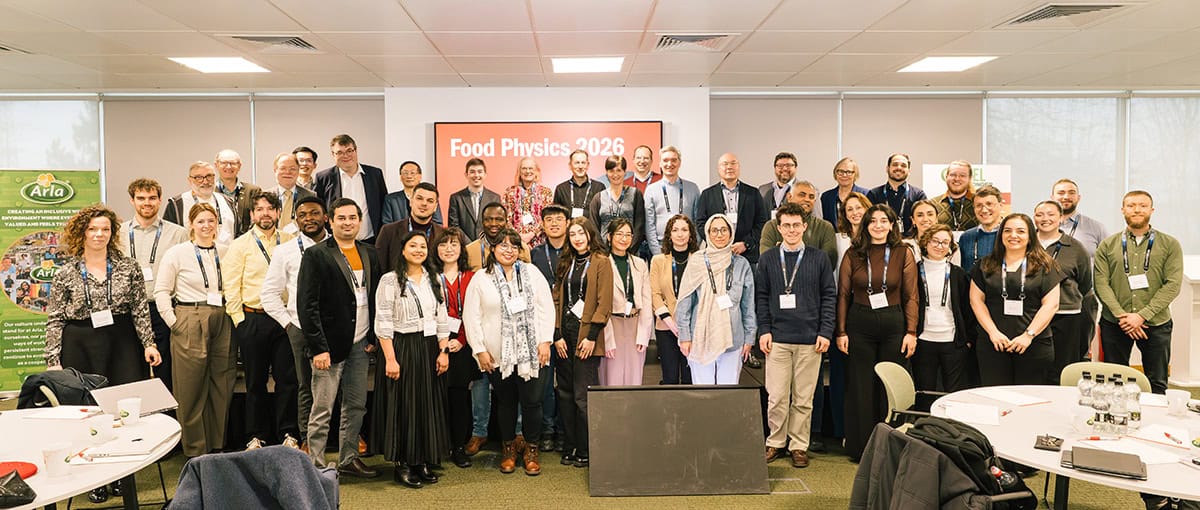
Multidisciplinary by nature Across two days of talks, poster sessions and panel discussions, Food Physics X in Leeds earlier this year provided a forum for networking, collaboration and knowledge transfer between academic and industrial scientists. (Courtesy: IOP/Rob Watson Photography)
“Food physics and its multidisciplinary practitioners have a key enabling role here,” says Zachary Glover, an industrial biophysicist who has chaired the IOP’s food physics group since 2021. “Collectively, the challenge lies not just in improving food security and resilience of supply, but also in supporting industry R&D initiatives towards enhanced productivity, circularity [to minimize waste] and environmental sustainability.”
Glover is optimistic about the food industry’s ability to reinvent itself, especially when it comes to addressing the growing regulatory and geopolitical challenges through new digital technologies. “AI and machine learning are already transforming best practice in research, publishing and education,” he says. “Our task as a food physics community is to leverage what these tools have to offer to boost innovation and minimize the risks of bland homogeneity in our at-scale food production.”
Yet reinvention for food manufacturers will not be easy. The path to smart manufacturing (what’s sometimes dubbed “industry 4.0”) is more of a digital evolution than a revolution – whether that’s using “cobots” to reduce physical loading during manual-handling operations or exploiting AI to control manufacturing processes.
“Nationally, there is a huge sunk cost in the food industry’s existing manufacturing asset base,” says Glover. “This cannot and will not be replaced wholesale, while economic and geopolitical factors will ultimately dictate the pace at which industry is able to disrupt itself with new digital technologies.”
Out of the lab, into the factory
Despite the conservatism of those in the food industry, academics are pressing ahead, with physics-informed AI and machine learning (PIAI and PIML) fuelling both technology push and food-process innovation. According to University of Leeds food physicist Megan Povey in her keynote presentation at Food Physics X, physicists have integrated fundamental models of transport phenomena with PIML to create hybrid model systems that are both data-efficient and physically consistent. “The payoff is a reduced reliance on costly trial-and-error experimentation,” she says.
Povey uses ultrasound spectroscopy for food characterization and ultrasound processing in food manufacturing R&D. She also focuses on the computer and mathematical modelling of foods, pointing out that PIML can now solve complex partial differential equations relevant to heat transfer, mass transfer, microbial inactivation and structural changes, even when limited data are available.
“PIML has improved the accuracy of forward and inverse modelling, accelerated virtual prototyping of food products, and increasingly supported the development of real-time digital twins [interactive computer simulations] for process optimization,” Povey told delegates at Food Physics X. She and her colleagues are putting such advances to practical use at the Leeds Food AI Lab, which brings together experts from a range of disciplines in sensing, machine learning, optimization and life-cycle assessment.
By training PIML models on food-system-relevant data generated using the lab’s “sensor-fusion” capability, the Food AI Lab and its research partners are, for example, transforming variable, low-value agri-food residues into reliable sources of sustainable protein – what’s known as “agri-food waste upcycling”. The lab also uses near-infrared spectroscopy and machine learning to detect allergens in powdered food and applies ultrasonic sensing, machine learning and Bayesian optimization to cut the cost and environmental impact of industrial cleaning processes.
Talent pipeline Visibility and recognition of early-career researchers was a defining theme of the Food Physics X conference in Leeds. (Courtesy: IOP/Rob Watson Photography)
“We are engaged in creating a more sustainable food industry at AI Food Lab,” Povey says. “Along the way, new measurement techniques, advances in mathematics, plus PIAI and PIML innovations will transform our understanding of the physics of food and nutrition.”
For both Povey and Glover, who this summer ends his five-year stint as IOP food physics chair, being part of an organization that promotes and defends physics is integral to their professional identities. “With the help of our colleagues at the IOP, we weathered the COVID years with online events and have had three strong in-person annual conferences since then,” says Glover. “The feedback on our conferences is fantastic and it genuinely feels like our members want to be there, engaging face-to-face with their peers.”
For Glover, the food physics group is all about bringing like-minded scientists and engineers together, with a self-sustaining community of shared practice among the main achievements during his tenure as group chair. “Looking ahead, the group will continue to educate physicists in academia about the richness of questions in food science,” he says. “Just as important, we will engage industry scientists about the role of physics as a ‘quiet enabler’ of technology translation and food-product innovation.”
Food physics: the next generation
One notable feature of the IOP food physics group’s annual gathering is the prominence given to early-career researchers. Food Physics X in February was no different, with the work of two early-career scientists recognized by best poster awards.
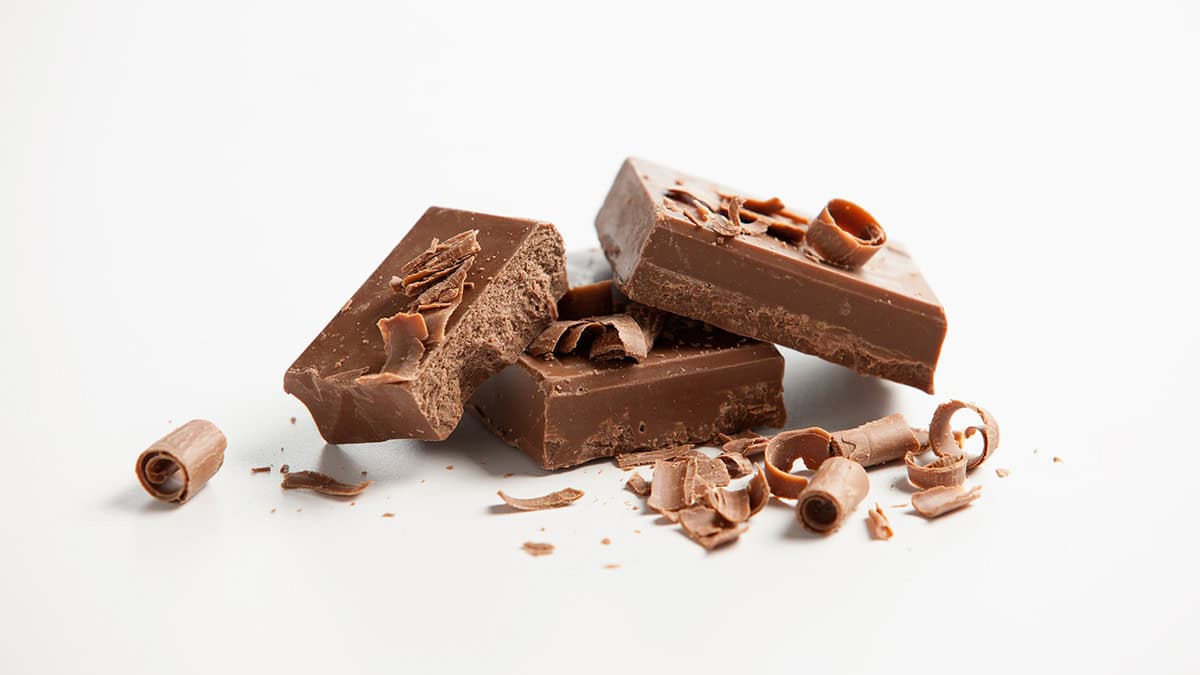
(Courtesy: iStock/AleaImage)
Best oral poster: Molly Massey, University of Leeds, UK
The crystallization and melting behaviour of blends of cocoa-butter equivalents and milk fats using small- and wide-angle X-ray scattering (SAXS/WAXS).
The texture, gloss and shelf-life of chocolate are largely governed by fat crystallization during production, with developers’ ability to control the various crystalline forms (or “polymorphs”) of cocoa butter underpinning the quality of the end-product. However, growing demand for plant-based alternatives means that food manufacturers want to replicate the qualities of cocoa butter using cocoa-butter equivalents (CBEs).
With this in mind, Massey is using synchrotron SAXS/WAXS experiments to evaluate the role of anhydrous milk fat – traditionally used in milk chocolate to influence texture, polymorphic transitions and melting profiles – on the crystallization behaviour of CBE blends. Her long-term goal is to replicate those structural and thermal effects in dairy-free material systems that rely on milk-fat replacement blends.
Best paper poster: Ashley Roye, King’s College London, UK
Biomimetic modelling of oral mucus microstructure for understanding lubrication and taste transport.
Roye is investigating the interaction between the mouth’s salivary/mucus layers and “tastant” molecules, which are food compounds that trigger the sensation of taste. Her research focuses on how mucins (large protein molecules with carbohydrate attachments) in saliva and the mucosal lining mediate tastant transport to the taste buds and, in turn, how that process influences lubrication, mouthfeel and textural sensation of different food components.
Espresso, flat white, cappuccino, cortado – there are dozens of ways you can get your coffee fix. Every day more than two billion cups of coffee are brewed worldwide, making it one of the most traded products on Earth. In fact, it is the seventh most traded commodity on the planet (after crude oils, natural gas, gold, silver and copper).
Produced mainly in south and central America, south-east Asia and east Africa, coffee sustains the livelihoods of more than 25 million farming households. But its future is increasingly precarious. Coffee plants need the right temperature range, rainfall patterns and altitude to thrive, but climate change is disrupting it all.
This has led to falling yields and rising prices. For example, the price of Arabica beans – the most dominant coffee variety – rose by more than 80% in 2024. In the UK, this led to the price of beans at supermarkets rising 20% and the cost of some instant coffee surging by 40%, while coffee shop prices were up 30% from 2021 to 2024.
And it’s not just that coffee is affected by climate change – the climate is impacted by coffee. It has one of the largest carbon footprints of any plant-based product, mainly due to the clearing of tropical forests, fertilizer and water use, and processing techniques.
So how can those of us making the drinks help with the coffee and climate crisis?
At-home scientists
Coffee is an unusual drink. Unlike products such as whisky, wine and beer, it is brewed at the point of consumption, whether that’s in a café or restaurant, or in a home. “The very last step, which is probably the most complicated, is all done by untrained scientists,” says Christopher Hendon, a computational materials chemist and coffee expert at the University of Oregon.
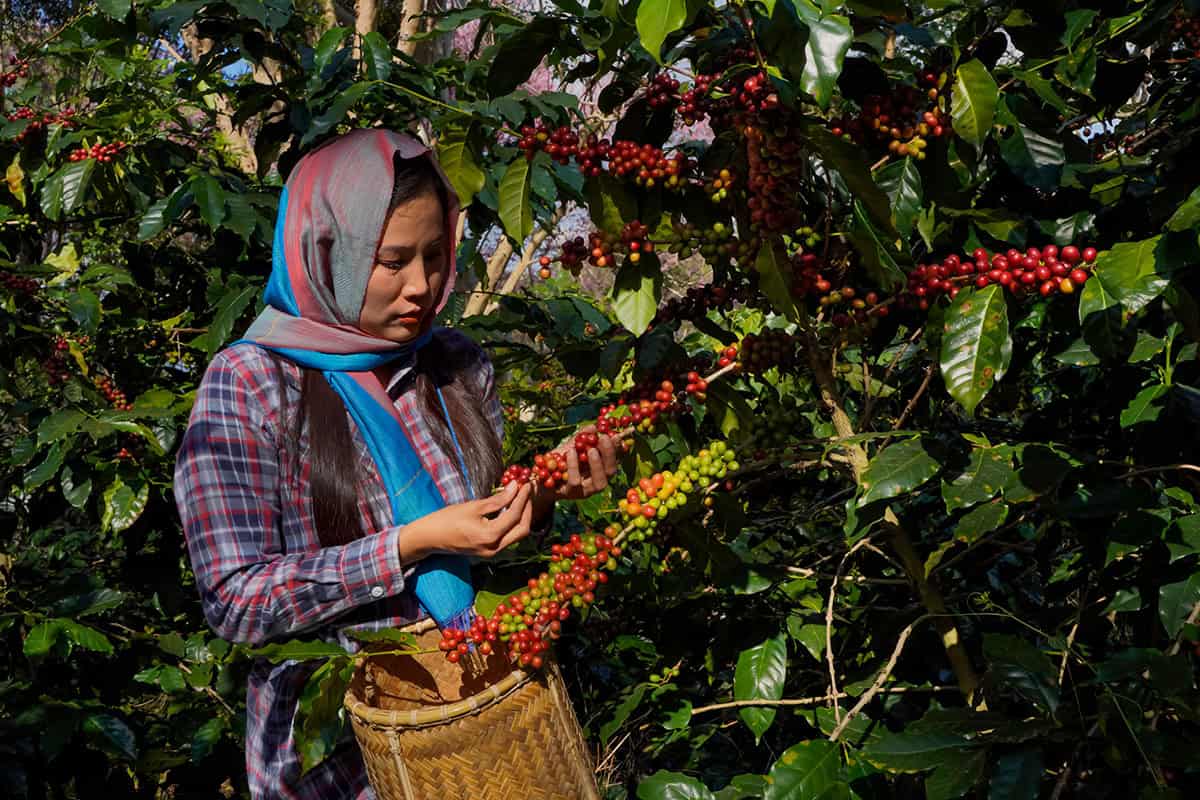
From farm to cup A cup of coffee starts with the coffee farm workers planting the seeds and picking coffee berries – but climate change is starting to affect crop yields. (Courtesy: iStock/SupawadeeAdam)
It is estimated that it takes 155 people to make a cup of coffee – all the way from the farmer who plants the seed in the ground, to the barista who hands you your cup of coffee. “154 people can do their job perfectly,” says Dan Pabst, manager of innovations and product development at coffee provider Melitta North America. “But if that last person doesn’t pay attention, does something wrong and the coffee doesn’t taste right, they’ve just ruined all that hard work.”
This is where physics can help. Beyond longer-term, large-scale solutions such as re-engineering coffee plants or tackling climate change, physics can actually tell us a lot right now about what happens during the seconds and minutes it takes to brew a cup of coffee. It is a surprisingly complex process and by understanding it, we can improve the quality of the drink and even reduce the amount of coffee needed, cutting waste and helping the environment.
Under pressure
Let’s start with the espresso – those concentrated coffee “shots” you get in tiny cups that also form the base for your latte, americano or cappuccino (and many more).
The Specialty Coffee Association (SCA) has historically defined an espresso as a 25–35 ml beverage prepared from 7–9 g of coffee through which water heated to 90–96 °C is forced at 9–10 bars of pressure for 20–30 seconds. “While brewing, the flow of espresso will appear to have the viscosity of warm honey and the resulting beverage will exhibit a thick, dark golden crema,” states the SCA. This can be achieved using an espresso machine (figure 1), or with smaller contraptions at much lower pressures such as a moka pot or AeroPress.
1 Espresso basics
(Courtesy: iStock/GerasimovSergey)
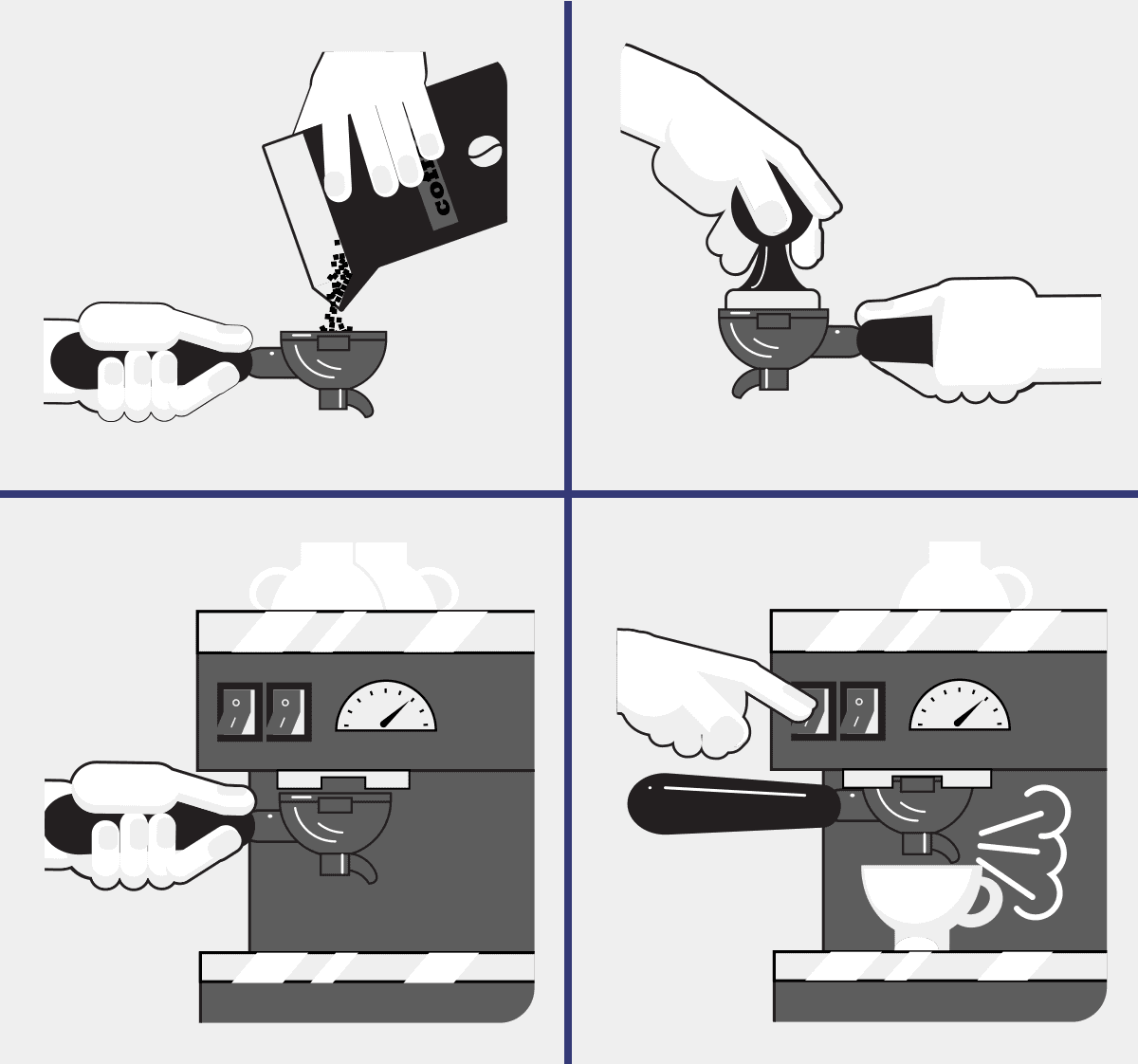
If you’ve ever had an espresso-based coffee, you’ll know that making that base shot of concentrated caffeine is more than just putting some beans in a machine and pressing go. Like with any experiment in a lab, there is a strict process with a range of variables (and a bunch of lingo). Here’s a quick and very basic guide to making an espresso with an espresso machine:
The coffee beans are ground down into a powder-like substance
The ground coffee is then measured out in a “basket” at the end of a “portafilter” (top left)
To ensure this coffee is evenly distributed, baristas then lightly tap the basket, and some may manually move it around
Next the coffee is pressed down in the basket using a “tamper” to make it tightly and evenly compacted (top right), creating the coffee “puck”
Before the portafilter is attached, it’s a good idea to purge the machine with water to ensure no contamination from the previous brew
Now it’s time to actually “pull the shot”. The portafilter clicks into place (bottom left) and, if following the historical definition, high-pressure hot water (9–10 bars, 90–96 °C) is pushed through the puck for 20–30 seconds resulting in 25–35 ml of espresso (bottom right)
In 2017 the SCA and the Barista Guild of America surveyed baristas around the world to see how they were preparing their cups of espresso and if they were following the historical definition. Turns out that the average barista brews an espresso with 18–20 g of coffee in 25–30 seconds using water heated to 93 °C at 9 bars of pressure. This produces an average shot of 36.5 g.
Go online and you’ll also find all sorts of claims about how to produce a perfect coffee. “From a scientific point of view, this advice is often given with no substantial evidence,” says Maciej Lisicki, a physicist at the University of Warsaw. Keen to understand the real science behind a good espresso, Lisicki and his colleagues looked at the complexity of flow in coffee brewing (arXiv:2512.21528).
One frequent claim by coffee experts is that the optimal brewing pressure for an espresso is around 6–9 bars, and that pushing it higher yields diminishing returns. To find out why, Lisicki’s team rigged a café-grade espresso machine with a pressure sensor at the pump outlet, and a precision scale under the coffee cup so they could calculate flow rate. They prepared the puck using a high-spec coffee grinder and automatic tamper to ensure consistency, and then brewed shots of espresso at pressures ranging from 1 to 12 bars. “We strive for our espresso to be the same every time,” says Lisicki. To visualize their structure, the researchers also took X-ray micro-computed tomography (micro-CT) scans of the coffee pucks before and after brewing.
Fluid flowing through a porous medium, such as sand, glass beads or packed soil, usually follows Darcy’s law, with flow rate increasing linearly with the pressure of the liquid. But the researchers found that this was only true for coffee up to around 5 bars. Above that, the flow rate flattened and then fell as pressure increased.
The team observed that as the coffee is brewed, the puck starts compacting under mechanical load, causing its pores to collapse and its permeability to decrease faster than the rising pressure can increase the flow. “The dynamics of espresso brewing is governed by this poroelastic effect,” Lisicki says. “There is an interplay between the porosity and the elasticity of the coffee matrix.”
Ultimately, the work confirmed what the coffee experts had observed. There is no point pushing the pressure beyond about 8 or 9 bars as the flow rate has already peaked.
The coffee in your coffee
Next, to explore how coffee dissolves over time, the team separated an espresso into different vials every five seconds as it brewed. An optical refractometer then measured the total dissolved solids in each vial. This, says Lisicki, tells you “how much coffee is in your actual coffee”.
The work showed that the first few drops of coffee that fall into your cup are very concentrated, but there aren’t many of them because flow rate is initially low. The flow rate then increases, but the amount of dissolved solids falls. This creates a sweet spot at around 15 to 20 seconds where the dissolved solids entering the cup peak, due to the balance between the increasing flow and decreasing solids.
Again, this tallies with expert opinion. “What we see is that most of the substance, the solubles, go into your cup within the first 30 to 35 seconds,” Lisicki says.
After talking to a friend who works as a barista, Lisicki and his colleagues also explored an annoying problem in coffee brewing known as channelling. This happens when the water finds a path of least resistance in the puck and forms a “channel” through the coffee grains. When they brewed coffees with artificially induced channels in the puck, the researchers found that the flow rate was as expected but the total amount of dissolved solids that were extracted was very low. Essentially, the water doesn’t permeate the rest of the puck, so you can’t extract all its coffee.
In fact, the team found that the more careless you are about preparing your coffee puck, the higher the chances of channelling. To mitigate this, you should stir the coffee grounds to make the puck as homogenous as possible and tamp it evenly. “You don’t need to tamp it very strongly, but tamping is important because if you don’t tamp then it’s easier for the water under high pressure to find a preferential flow path,” Lisicki says.
More from less
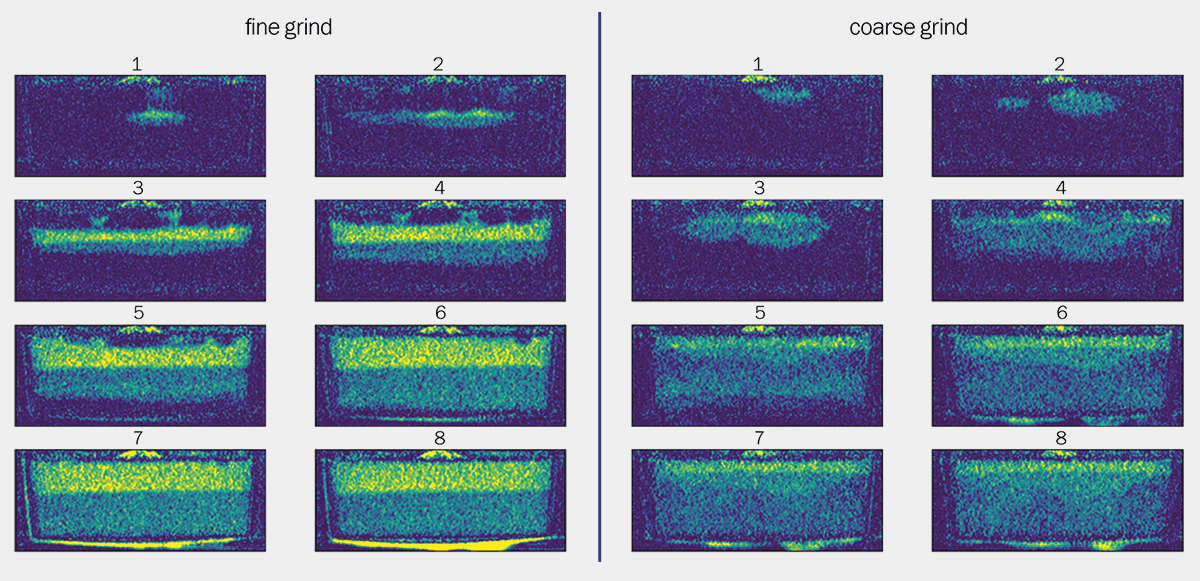
But even before you tamp your puck, how you prepare your coffee grains affects your drink’s quality. This is where grind size matters (figure 2). Back in 2020 Hendon and an international team were funded by the Coffee Science Foundation – the research arm of the SCA – to study ways to make highly reproducible espresso (Matter2 631).
The group started by looking at what happens in the coffee grinder. You might think that a more finely ground coffee will maximize the surface area exposed to water, thereby maximizing extraction. Hendon and his colleagues discovered, however, that this was not the case.
2 Infiltrating the puck
(CC BY 4.0 NC Physics of Fluids37 013383)
When water is initially pushed through a dry espresso puck, it can take up to one-third of the brewing time to permeate the entire bed of ground coffee. But according to mathematician Ann Smith and colleagues, this process remains relatively neglected by mathematical models of coffee extraction.
“Understanding the infiltration process gives insights into the extraction rate across the coffee bed,” says Smith, who is based at the University of Huddersfield in the UK. “Over-extracting coffee results in bitter taste while under-extraction leads to both weak brews and wasted resources.”
To study infiltration dynamics through both a coarse and a fine grind, the researchers set up an espresso machine at the centre of a rotating X-ray tomography system, which allowed them to build 3D reconstructions of the pucks (Physics of Fluids37 013383). They found that water travels more slowly but more uniformly through a fine grind (left) than a coarse grind (right), which can be seen in the above cross sections of the coffee pucks showing the absorption data for the first 8 seconds of brewing time. The researchers also built a flow model of the water permeation, which showed a good fit to the experimental data.
The team plans to build on the model by looking at other infiltration influences, such as brewing temperature and pores in the puck. “We have pioneered a new technique for experimentally validating coffee models, opening up several interesting avenues of future research,” the team says.
As grind size decreases, from coarse to fine, the amount of coffee that gets extracted initially rises but then peaks and falls. If the grind is too fine, the coffee bed clogs so that water can no longer percolate uniformly through it. Much like with channelling, some areas are over-extracted, while others are barely touched
“If you find the tipping point, you’ll realize the amount that you’re extracting on average [with a coarser grain] is actually much higher than if you ground finer,” Hendon explains. This means you also need less coffee to make an espresso of the same concentration.
The bottom line of the team’s experiments and mathematical modelling is that to get the most reproducible shots just use less coffee and grind it more coarsely.
Pabst echoes that advice: “My recommendation for people at home, without knowing anything they are doing, 90% chance that if you use less coffee and grind a little coarser [your coffee] will actually taste better.”
Hendon and his team trialled their “waste reduction protocol” at a small café in Eugene, Oregon in the US. By grinding more coarsely and reducing the dry coffee mass by 25%, from 20 g to 15 g, the business increased its revenue by more than $3000 over a year, without sacrificing drink strength or flavour.
Based on estimated US espresso consumption figures from the time, Hendon and his colleagues suggested that if their findings were implemented across the entire US, it could save the country about a billion dollars per year.
Volcanic coffee
It was not until Hendon teamed up with a volcanologist that he figured out why finer grinds clog the coffee bed and reduce extraction. Joshua Méndez Harper at Portland State University studies electrification in volcanic eruptions, where magma fragments charge up as they grind together in the plume, generating lightning. Coffee grinding, it turns out, creates a similar phenomenon (Matter 7 266, iScience 27 110639).
Together, Hendon and Harper found that friction between beans and the fracturing of beans during grinding generates static electricity. By passing coffee through a grinder a second time at a coarse setting, which removes fracturing from the process, the researchers discovered that most of the static charge arises from fracturing rather than friction.
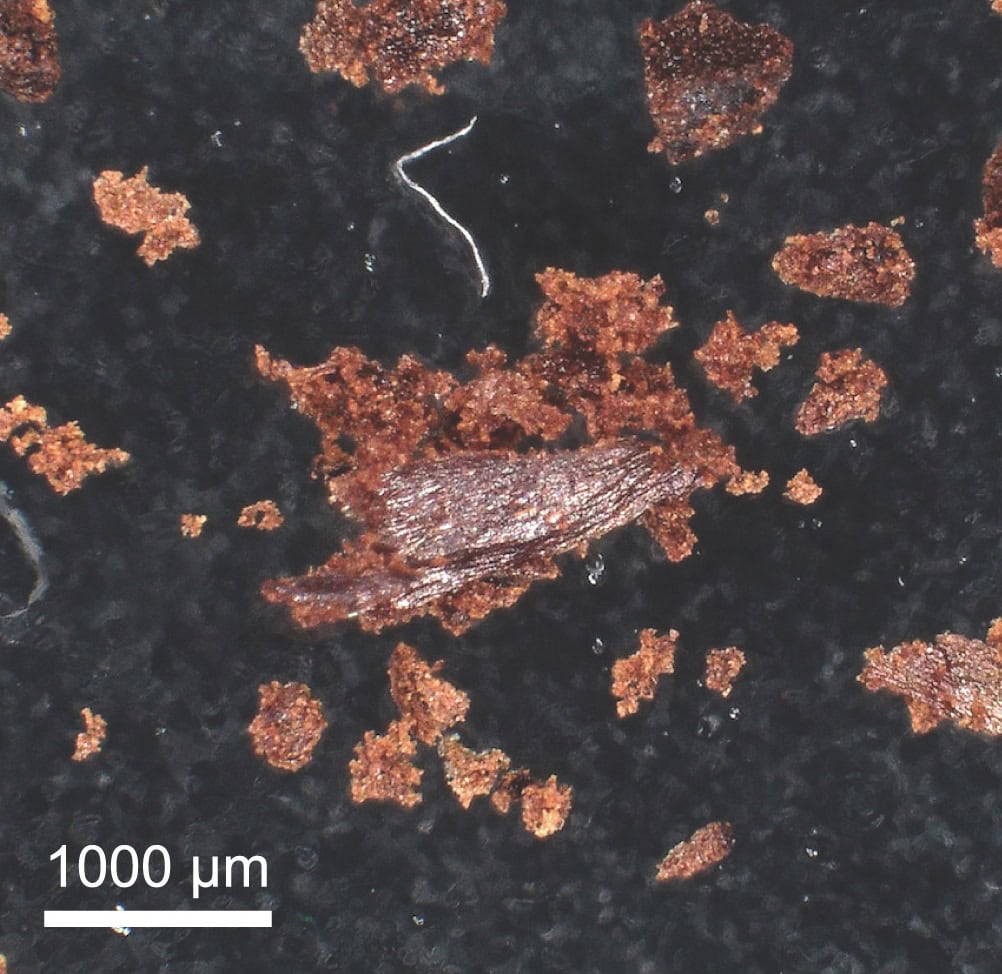
According to Hendon, the more times you fragment your coffee, the more static electricity you generate. “You’re making lots of small particles when you grind finer, but they clump together to form an aggregate [because of static], which is effectively impermeable to water,” he adds (figure 3).
A team of scientists including coffee expert Christopher Hendon found that pores in a coffee puck clog if the coffee is ground too finely. After teaming up with volcanologist Joshua Méndez Harper, he discovered this was due to the grinding process introducing static charge, which caused the coffee to form aggregates, like those shown, that blocked water flow.
The solution, the researchers found, is to squirt a little bit of water on the beans before you grind them. “That totally suppresses the static accumulation,” Hendon says. Wetting whole beans with less than 0.05 ml of water per gram of coffee – or about 0.5 ml for an average espresso shot – resulted in a marked shift in particle size distribution by preventing clump formation.
But again, the coffee experts got here first. In the coffee industry, this is known as the Ross droplet technique and was anecdotally thought to reduce static charge, even if the physics wasn’t well understood. Pabst says that a lot of the recent findings “are not necessarily newer ideas, they are validating what we have taught in the industry for many years”. But he describes it as an exciting time, with science providing deep insight into industry knowledge.
Moisture content of the beans is another key variable, Hendon’s team found, with drier, darker roasts charging most strongly and therefore benefiting most from pre-wetting. The researchers also found that the right amount of water results in near-zero grounds being retained by the coffee grinder, again due to the reduced static charge.
They note that their findings have implications for waste reduction and drink quality. Hendon says that adding water during grinding allows you to reduce coffee mass by about 25%, while maintaining espresso concentration.
Pour-over science
Coffee is not just espresso.
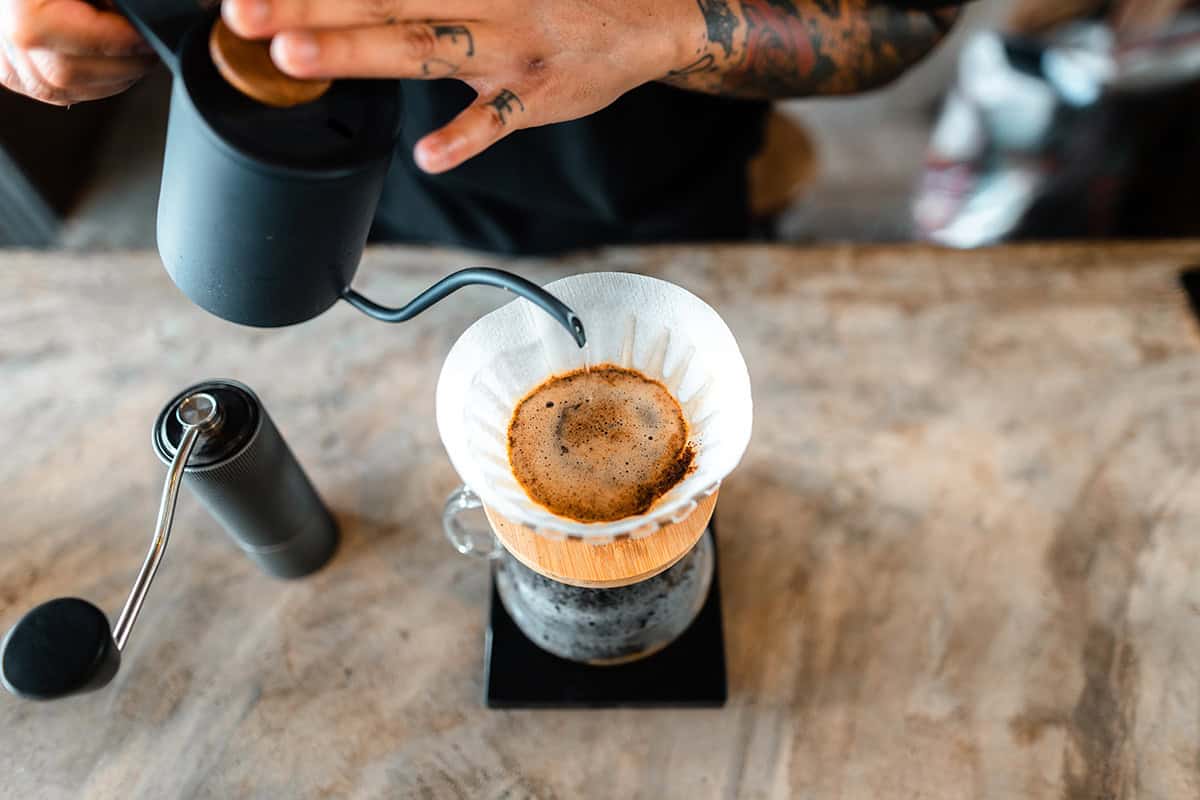
Among the myriad of coffee-making techniques available, pour-over coffee is increasingly popular with enthusiasts due to its reputation for being better able to extract the unique characteristics of different coffee beans. A popular set-up uses a conical filter or “dripper” containing a filter paper, and the process is simple – you put coffee grounds in the filter, pour in hot water, and let the coffee drip out into a cup. There is a wealth of variables – such as grain size, water temperature and water speed – that allows whoever is holding the kettle to experiment and vary the process.
Drip drip drop Pour-over coffee allows the brewer to experiment with variables such as water temperature and grind size. (Courtesy: iStock/ArtRachen01)
As with an espresso, the challenge is to bring the water into uniform contact with every particle in the coffee bed. If the stream is too slow, for instance, it might run to the edges of the cone, flow through the filter paper and drain away without touching the grains in the centre.
To investigate how pouring technique affects this, Mathijssen and colleagues used a transparent glass cone similar in shape to a popular pour-over filter, and ultrathin filter paper. They then filled it with silica gel particles as a transparent model for coffee grains, and illuminated the set-up with a laser sheet while filming it with a high-speed camera.
The experiment revealed the importance of pour height for a static kettle. Pour from close range and the slow stream fails to effectively disturb the coffee bed. Lift the kettle to around 20 cm above the filter and something different happens. “We found that as you increase the height of the kettle this kind of avalanche dynamic emerges,” describes Mathijssen.
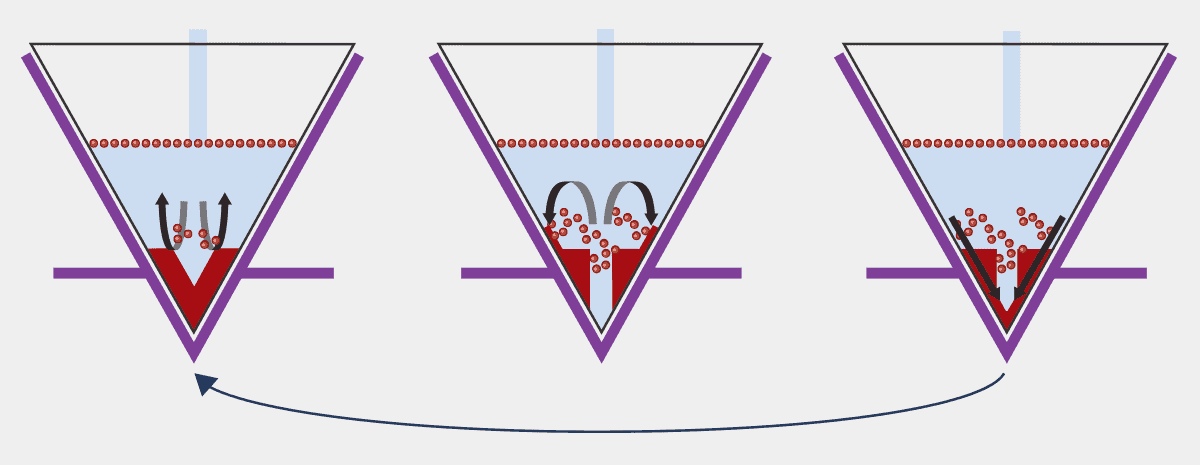
The increased energy in the stream enables it to dig deep into the coffee bed, suspending the particles and creating a hole in the middle. Particles around the side then slide into the centre and are themselves suspended, establishing a recirculating vortex (figure 4).
The stages of coffee grinds moving in a pour-over coffee set-up. First, a water jet starts to erode the coffee bed, causing the granules to become suspended and mixed into the water (left). These then accrete outwards towards the edge of the coffee bed (centre). The movement of granules from the bottom to the top edge causes the bed to collapse inwards (right), and the entire process repeats while the water jet continues.
“Every single particle in that cone is moving up and down through this vortex, so you get very nice and even extraction,” explains Mathijssen. “All of the particles see the water for an equal amount of time.”
But go too high, above about 30 cm, and surface tension breaks the stream into droplets – a process known as the Rayleigh–Plateau instability. The drops fail to dig deep into the bed, so the vortex does not form and coffee extraction falls. There is a sweet spot at a height of around 15–20 cm, Mathijssen says.
When the researchers switched back to coffee, they found that higher pours did indeed create stronger coffees with more total dissolved solids.
One cup at a time
These studies highlight a common theme. Decent coffee extraction is about creating uniform fluid contact with a porous medium that tends to be heterogeneous. And if it goes wrong, it is probably due to some failure of that uniformity.
As climate change squeezes yields and pushes prices higher, the coffee industry faces growing pressure to do more with less. Physics cannot protect vulnerable growing regions from drought and rising temperatures, but its insights can ensure that coffee is not wasted in the final seconds or minutes by a poorly prepared puck, a clumped grind or a lazy kettle lift.
“The best thing we can do,” says Hendon, “to be good custodians of any agricultural product is figure out how to use less of it so that more people can enjoy it.”

 Login
Login