Login
Login

RTX Spark may split the AI PC market into mainstream laptops and premium workstations
Nvidia’s RTX Spark could give PC makers a new high-end category, built around machines that run more demanding AI workloads locally rather than in the cloud.
The chipmaker and Microsoft said RTX Spark Windows PCs will be built for personal AI agents and heavier local AI workloads, from AI development to engineering and content creation.
Nvidia said RTX Spark will offer up to 1 petaflop of AI performance and up to 128GB of unified memory, allowing systems to run 120-billion-parameter large language models locally.
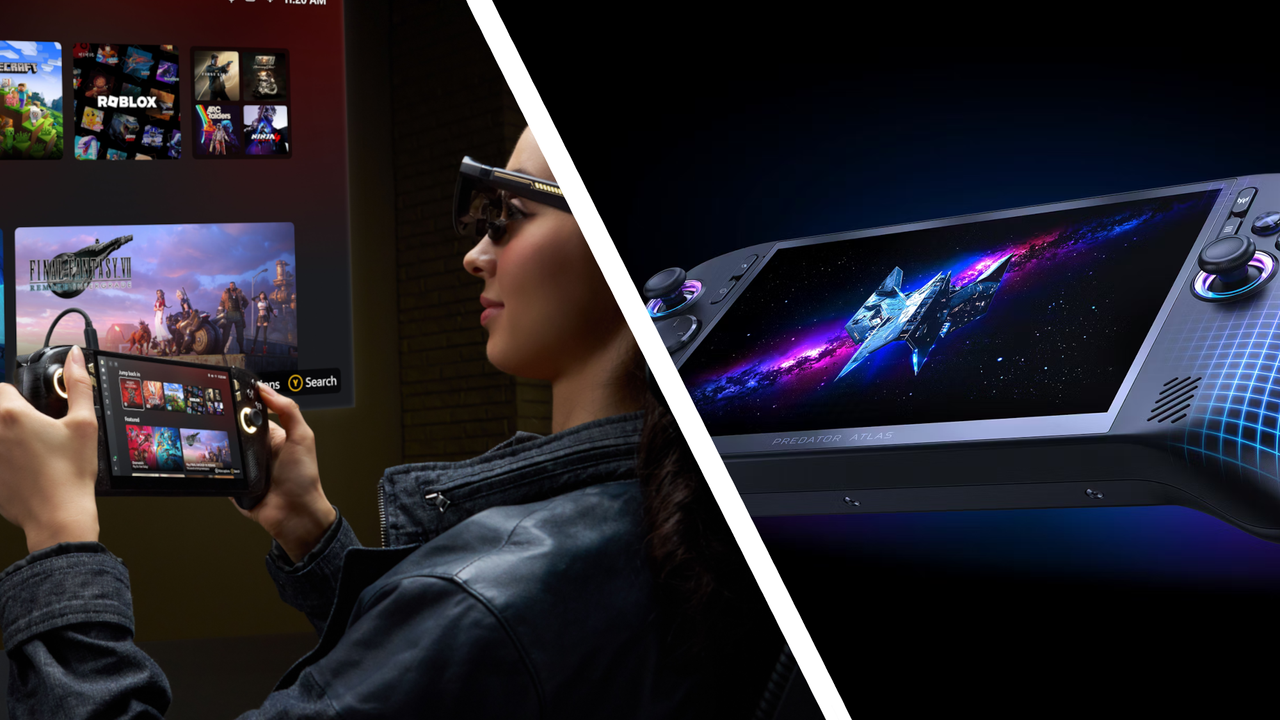
Nvidia has lined up several major PC makers for the launch. The company said RTX Spark laptops and compact desktops will be available this fall from Asus, Dell, HP, Lenovo, Microsoft Surface, and MSI, with models from Acer and Gigabyte to follow. Dell is bringing the platform to its XPS 16 Creator Edition, while HP said upcoming OmniBooks powered by Nvidia will target agentic developers. Microsoft is positioning its Surface Laptop Ultra for creators, developers, and engineers.
Microsoft is also introducing the Surface RTX Spark Dev Box, a compact Windows AI developer PC designed to let developers build and refine models locally before turning to the cloud for larger workloads.
That could create a premium tier above mainstream AI PCs based on Intel, AMD and Qualcomm chips, helping lift average selling prices in a PC market where growth has been uneven. It could also raise questions about whether current AI PCs have enough local computing power for the more ambitious AI workloads that software makers and chip companies are now promoting.
But broad enterprise adoption is not assured. According to Futurum Research, the AI PC market could grow at a compound annual growth rate of about 38% between 2025 and 2030, but adoption is likely to slow in 2026 after a Windows 10 end-of-support-driven refresh cycle and normalize through 2027.
Futurum expects another wave of upgrades around 2028, as systems with higher levels of on-device AI compute become capable of running agentic AI workloads locally, suggesting RTX Spark’s early impact may be felt more in premium and specialist systems than in broad corporate fleets.
Adoption potential
Analysts say RTX Spark’s first test will be whether enterprises treat local AI compute as a workstation requirement rather than a standard laptop feature.
“In the near term, RTX Spark is more likely to be a high-end enterprise AI workstation category than a mass-market PC category,” said Pareekh Jain, CEO of Pareekh Consulting. “Most enterprise users do not need the level of local AI compute that RTX Spark offers.”
Jain said the platform could establish a premium tier between traditional workstations and AI servers, similar to how gaming GPUs created a premium PC segment. Its longer-term significance, he said, may lie less in unit volumes than in whether it becomes a reference architecture for AI-native workstations that can run large models on-device with strong security and low latency.
Prabhu Ram, VP of the industry research group at Cybermedia Research, said RTX Spark adoption would start in niche segments but could expand over the next two to three years if the software vision materializes. Its prospects will depend on post-launch performance, real-world pricing, and early enterprise pilot results, he said.
Ram added that OEM uptake would be the clearest early signal of whether RTX Spark is becoming a real enterprise category rather than a niche workstation product.
Cost and competition
The clearest near-term effect may be at the high end of the PC market, where RTX Spark could give vendors a more powerful class of AI system to sell above mainstream business laptops.
Jain said RTX Spark systems, which he expects to cost more than $2,000, are designed for heavier local AI workloads, including large language models and advanced content creation. By contrast, he said mainstream AI PCs based on Intel, AMD and Qualcomm chips are typically priced below $1,500 and are aimed more at Copilot+, summarization and other office productivity tasks.
That split could raise enterprise PC spending for power users, while making mainstream AI PCs look more like productivity devices, Jain said. Over time, it could increase pressure on Intel, AMD and Qualcomm to add more AI capabilities at lower price points.
But the immediate impact may not be on demand for mainstream PCs based on Qualcomm, Intel or AMD chips, according to Neil Shah, vice president for research and partner at Counterpoint Research. He said the more likely scenario is that RTX Spark may create a new segment that competes more directly with gaming PCs, Apple’s Mac Mini, and higher-end Macs used for on-device AI applications.
Who needs RTX Spark?
Analysts said RTX Spark-class systems are likely to be justified only where running AI locally has clear business value.
Sanchit Vir Gogia, chief analyst at Greyhound Research, said the test for enterprises is not whether a workload uses AI, but whether the organization gains by running that AI closer to the user, data, device or operating environment.
“If the work is meeting summaries, drafting, email triage, transcription, translation, search and ordinary assistance, Spark is unnecessary and a mainstream AI PC will do,” Gogia said. “Issuing Spark to every employee for that would be sending a Formula One car to fetch the milk.”
Gogia said likely early users include software developers, AI engineers, data scientists and security teams working with sensitive code, larger models, forensic data or local retrieval pipelines that companies may not want to move into external systems.
The security question could also shape adoption. Nvidia said the platform will rely on new Windows security tools and its OpenShell runtime, allowing companies to set policies for agents while keeping some queries on local models and masking personal data before selected queries are sent to cloud services.
“Nvidia is not only selling endpoint hardware,” Gogia said. “It is installing itself into the endpoint’s runtime, its policy layer and its agent orchestration. The endpoint conversation has quietly expanded from endpoint hardware to endpoint agency, and that is a CISO question long before it is a procurement one.”
Manish Rawat, analyst at TechInsights, said local AI compute could support faster development cycles, stronger privacy and lower cloud inference costs, while enabling workloads such as 12K video editing, simulations, digital twins and edge AI applications.
“CIOs should buy Spark where the workload justifies it, where the governance model supports it, and where the economics hold, and nowhere else,” Gogia added.


%20052026%20SOURCE%20Microsoft.jpg)