
Normal view

Received — 31 May 2026 The Conversation

How traffic makes cities warmer

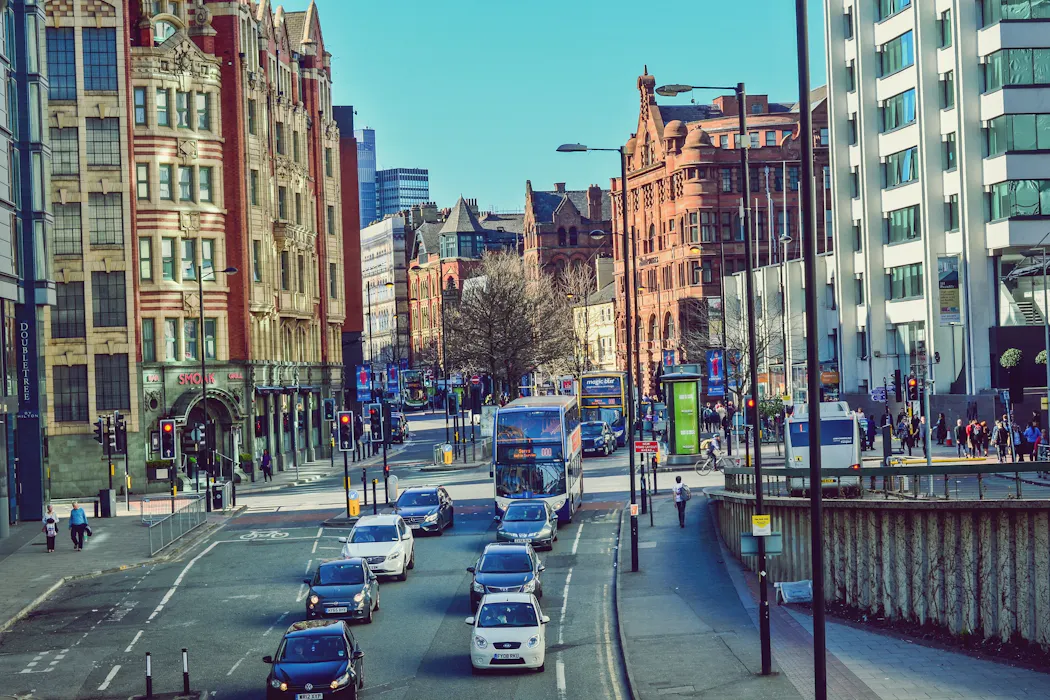
A queue of vehicles in central Manchester, one of two cities modelled to quantify the effect of traffic on urban heating. Marina J/Shutterstock

More than half the world’s population now lives in cities that are often much hotter than their rural surroundings. Roads, buildings and paved surfaces absorb and store heat during the day, then release it slowly after sunset. This is known as the urban heat island effect.

Discussions about why cities overheat tend to focus on buildings, which is understandable. As well as absorbing solar radiation, residential and office buildings consume a lot of energy through lighting, heating and air conditioning. They release waste heat, and shape the flow of air through surrounding streets.

But another source of urban heat receives much less attention: traffic.

Motorised vehicles release heat directly into the urban environment. This is especially true of petrol and diesel vehicles, where much of the fuel energy is lost as waste heat from internal combustion engines and exhaust systems. Tyres, brakes and friction with the road surface all add to these heat emissions.

In streets with heavy traffic and limited ventilation, traffic can be a significant source of human-made heat – as my recent study with colleagues of two major European cities shows.

In the southern French city of Toulouse, our modelling found that traffic heat increases the average annual air temperature by about 0.4°C. In Manchester, a typically cooler city in the north of England, the average annual air temperature increased by around 0.25°C thanks to its traffic.

These numbers may sound small, but in urban climate terms they are meaningful. During heatwaves, even small increases in air temperature can worsen thermal discomfort, increase health risks and raise demand for cooling.

Our past research has shown how the intensity, frequency and length of urban heatwaves are projected to increase in many parts of the world by 2070 (see maps). This includes cities in North America, Europe, India and China. Our latest work suggests these rises could in part be mitigated by reducing urban petrol and diesel traffic.

Projected urban heat changes by 2061-70:

How Manchester and Toulouse compare

The Community Earth System Model is a widely used open-source model for simulating interactions between land, atmosphere, climate and human activity – launched by the US National Center for Atmospheric Research in 2010.

However, traffic-related heat was not considered by the model – so we developed a new module for it which estimates heat generated from factors like traffic volume, vehicle type, road characteristics and weather conditions. Our results change depending on the time of day, according to the nature of the traffic and local weather conditions, for example.

We found that the most heat-polluting elements are generally high traffic volumes – and which kind of vehicles predominate in these traffic jams. Conventional petrol and diesel vehicles release substantially more waste heat than electric vehicles. In cities with lots of these vehicles, peak-period rush hours can become important sources of heat emissions.

We modelled traffic in two European cities – the central Capitole area of Toulouse and central Manchester – using traffic data provided by Transport for Greater Manchester and other open datasets.

Toulouse and Manchester have quite different climates, urban landscapes and traffic patterns – all of which affect not only how much heat is released by traffic, but how that heat affects each city.

A queue of cars in central Toulouse.
The heating effect of traffic was greater in Toulouse than Manchester. Ensapa37/Shutterstock

In Toulouse, morning traffic heat built up through the day and persisted into the night. In contrast, Manchester’s evening rush hour contributed to stronger overnight warming, with its air temperature from traffic peaking around 3am, on average.

In both cities, the traffic-related warming effect was stronger in winter than summer. In Toulouse, our modelling found it raised air temperature by an average of 0.5°C in winter and 0.3°C in summer, while in Manchester the increase was 0.35°C in winter and 0.16°C in summer.

The role of traffic in urban heating

Awareness of urban heat risk is increasing, but the role played by traffic is still rarely considered in urban climate adaptation and transport planning.

As cities continue to grow and climate extremes become more common, governments need better tools to understand where urban heat comes from and how it can be reduced. Our work is another step towards more realistic simulations of future cities.

Our model could offer more accurate answers to important questions such as: how much will electrification of vehicles reduce heat levels? How will changes in road design, vehicle use and congestion patterns affect local heat exposure? And to what extent can changes in urban transport methods limit the effects of predicted future heatwaves?

These are, of course, not just scientific questions but policy and design issues. Concerns around cities getting hotter often focus on trees, parks, cool roofs and building design. But traffic is not just a source of pollution and carbon emissions – it can also be part of how we plan cooler, healthier and more resilient cities.

The Conversation

Dr Zhonghua Zheng receives funding from UK Research and Innovation (UKRI).
The Pennine hills are full of holes – here’s how they’re helping fight climate change

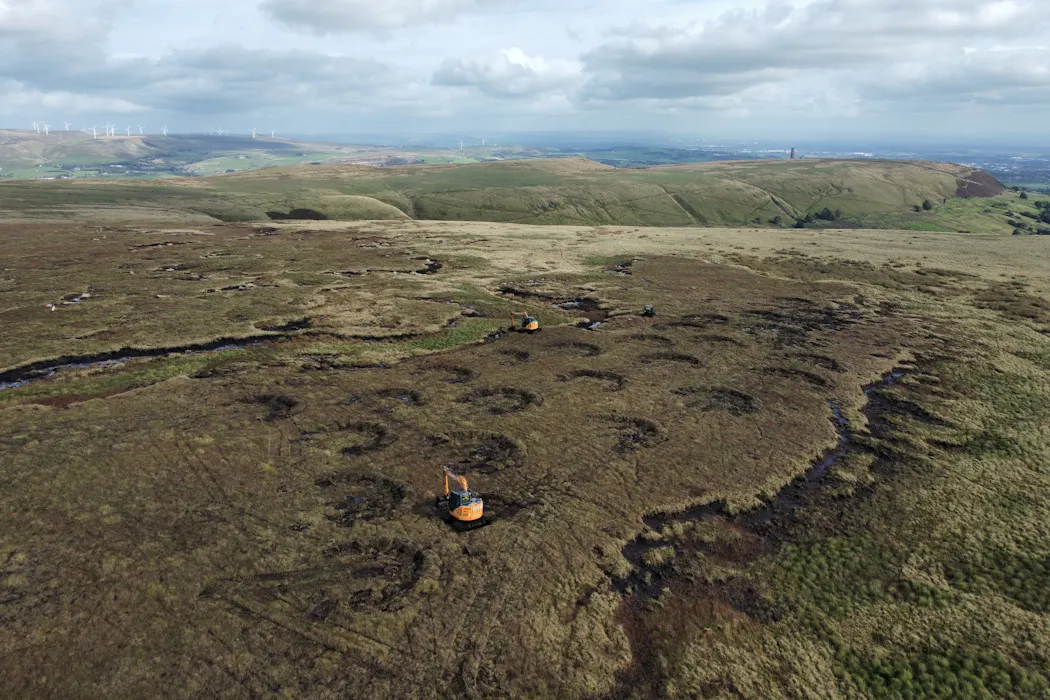
Excavators cut shallow areas in the peatlands as part of a project to develop more wetlands. Adam Johnston, CC BY-SA

Thousands of holes are appearing in the Pennine hills, as part of efforts to improve carbon storage by restoring damaged peatland.

Peat itself is carbon rich and so as it grows it will help to capture the CO₂ that is produced by industrial fossil fuel use that is warming the atmosphere.

Meanwhile, damaged or drained peatlands turn into a carbon source, releasing greenhouses gases themselves. About 15% of the world’s peatlands have been drained, making these kind of restoration projects essential.

But now a new project is attempting to bring these wetlands back to life. On Holcombe Moor in the West Pennines, 3,000 bunds were created in 2021, with a further 700 in 2024 as part of Natural England’s Nature for Climate Peatland Grant Scheme. Improvements are already starting to be seen.

What’s the history here?

The hills of the West Pennines are no stranger to holes, with a long history of lead and coal mining stretching back to the Roman period.

Coal fired the mills nearby during the industrial revolution in cities such as Manchester, Leeds and Sheffield. Smoke drifted back to the hills, carrying the heavy metal impurities of lead and arsenic from coal burning.

The industrial legacy remains visible in the elevated concentrations of heavy metals near the soil surface, which made it difficult for most plants to survive. Areas were stripped of all vegetation, leaving expanses of exposed soil. In the most affected places, these erosional gullies cut deep into the surface, turning places like Kinder Scout into a moonscape.

What was exposed and eroded so quickly had taken over 8,000 years to form. Much of the Pennines are covered in blanket peatland, a type of bog made through the slow accumulation of partially decayed plant matter (the type of soil we call peat).

The conditions for peat to form require a delicate balance, with the water table maintained high enough to limit the decomposition of plant matter, while still allowing plants to grow. Not just any plant can tolerate these harsh growing conditions. One species is truly specialised to bog life and forms the main building block of peat itself – Sphagnum.

A close up of Sphagnum moss.
The Sphagnum moss being used in the peatlands project. Adam Johnston, CC BY-SA

Finding a super moss

Sphagnum moss is the key ecosystem engineer in peatlands, holding up to 20 times its weight in water to maintain the saturated conditions needed for its growth.

When in a healthy state, new Sphagnum grows up through the older moss, raising the water table with it to leave the older moss submerged, partially decayed, which forms the peat itself. Bogs grow only millimetres per year, but over millennia this can build several metres of peat.

The organic nature of peat means it is carbon rich, so much so that UK peatlands store over 3 billion tonnes of carbon, around ten times more than all UK woodland carbon stocks.

Restored wetlands could also help protect the area from wildfires at the UK starts to see more extreme temperatures.

A close up of a bund pool with a measuring stick in it.
Measuring a bund pool. Adam Johnston., CC BY-SA

Human pressure and pollution

With human pressures, including past industrial pollution, bog growth has been disrupted. Sphagnum has disappeared from these peatlands.

Now, peatland restoration efforts are under way. From the early 2000s organisations including Moors for the Future Partnership have spent decades blocking gullies to raise water tables, reseeding bare peat and planting Sphagnum moss, transforming the worst affected peatlands from dark moonscapes to vibrant green moss-scapes.

Though blocking erosional gullies with stone or timber dams has proven successful in deeply eroded peat, restoring flatter moorland plateaux presents a different set of challenges. Namely, how to restore the wet conditions required to encourage more Sphagnum moss to grow. However, this hasn’t stopped restoration organisations from trying a novel restoration method which might work to restore flatter peatlands.

Five years on from the start of the project, the original bunds are covered with grasses and many pools are now brimming with Sphagnum moss, looking more like natural bog pools.

Scallop bunds are crescent-shaped pools, created by digging shallow scrapes in the peat surface using special low impact excavators. The aim is to capture surface water which would otherwise run quickly off the hill after rainfall. The water stored in bund pools helps to maintain wetter conditions at the bog surface for Sphagnum moss to re-establish and grow on moorland plateaus.

The National Trust, in partnership with the University of Manchester, is undertaking long-term research to understand the potential for bunds as a peatland restoration method.

The 2025 drought followed one of the driest springs in England for over 100 years.

It provided the first test of extreme weather in this peat bund experiment. Preliminary monitoring during the 2025 drought suggests bunded areas remained wetter for longer than unrestored peat, helping to maintain wetter conditions near the peat surface for longer – the conditions required to support Sphagnum growth.

The excavator machines up on the hills today don’t signal a return to the industrial past, but an attempt to restore the damage it left behind.

The Conversation

Adam Johnston has received funding from charities delivering peatland restoration

❌