For captive animals, engaging in natural behaviour is a pillar of the animal welfare framework. But when it comes to sex, one important behaviour has
been largely ignored, and sometimes even punished: masturbation.
Solo sex is surprisingly common across the animal kingdom. It is well documented in primates. Tortoises are surprisingly vocal during their solo lovemaking endeavours, if not very graceful. Camels masturbate by rubbing their penises in the sand and porcupines make inventive use of all sorts of objects.
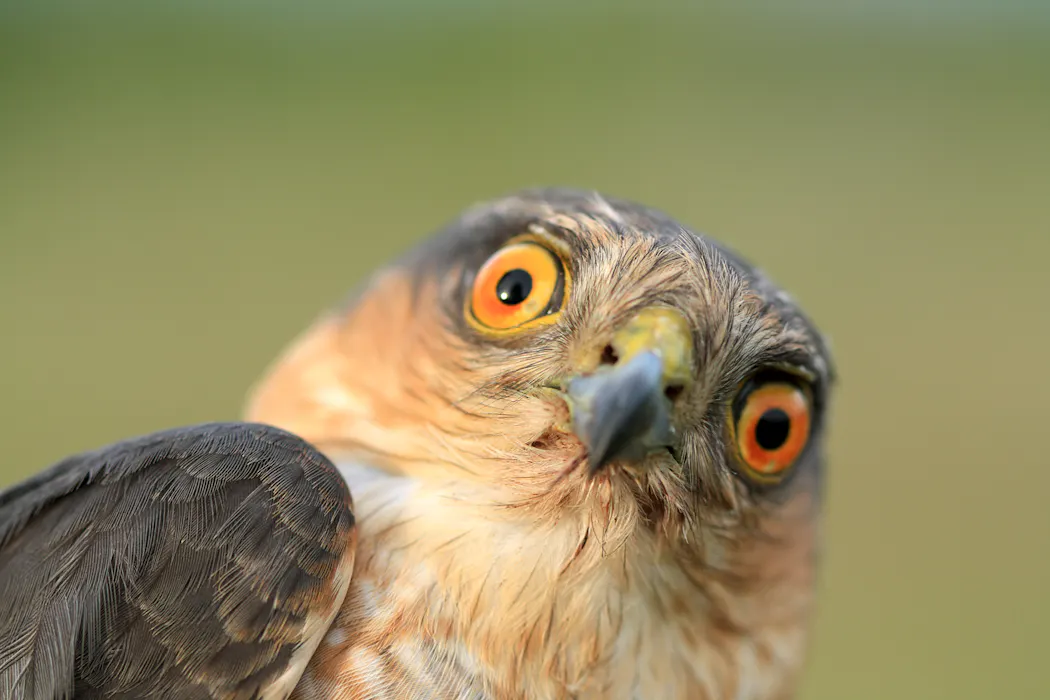
Our new study could change how other scientists view masturbation in birds and improve their welfare.
Masturbation also seems to be common in birds. A quick internet search brings up an abundance of video clips on social media and dedicated posts on bird-keeping forums, largely from worried or bemused hobbyist bird keepers.
It has often been treated as an abnormal problem behaviour in captive birds (particularly parrots). Folklore husbandry has assumed it is the undesirable outcome of stress, bad health or poor environment. Bird keepers often therefore discourage masturbation via punishment or veterinary interventions such as diet or care changes and, sometimes, even drugs and surgery. Despite the welfare implications, masturbation in birds had been largely unexplored by the scientific community.
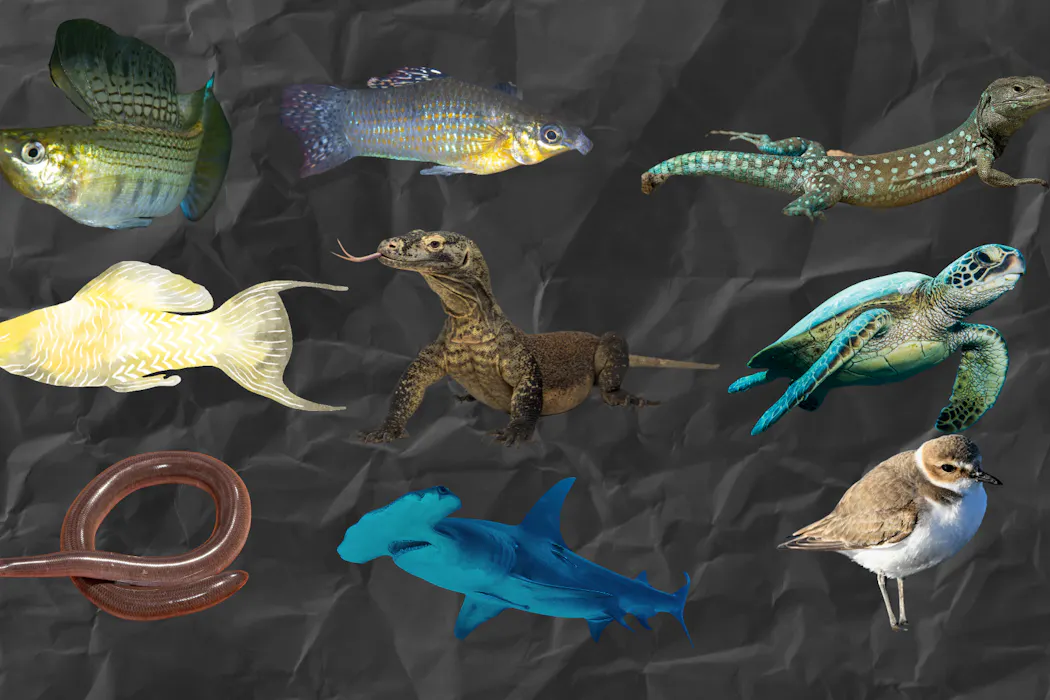
We set out to change that, by investigating the distribution and evolutionary history of masturbation in birds for the first time. We studied 120 species of bird across 22 major groups, gathering data from the scattered scientific literature, online reports and community forums, and surveys of bird experts.
Our study found that masturbation is widespread across birds with a strong evolutionary history, meaning that it’s an ancient trait probably similar in closely related species. Although we found more records of masturbation in male birds, it occurs in both sexes and across all age groups.
Solo sex also seems to be linked to species that mate with multiple partners, supporting the idea that it might help to increase reproductive success when there is a high degree of competition over fertilisation. For instance, in males it may flush out old sperm to leave newer (better condition) sperm for mating. In females it may increase sexual arousal to help with sneak mating with males other than their partner.
Wild behaviour
Crucially, we discovered that masturbation is actually less common in captivity than the wild, and more common in birds reared by their own parents than by humans.
What this tells us is that masturbation in birds is neither an unnatural
behaviour, nor a consequence of captivity. Given this finding, it is important
that birds are not prevented from masturbation. Of course, as with any behaviour, there may be extreme cases where chronic masturbation could indicate underlying health or husbandry issues.
Avian self-pleasure is usually a rather inelegant affair, in which a bird rubs their cloaca (a shared orifice for both excretion and reproduction) against an object, like a branch, twig or toy. This is often accompanied by a lot of flapping and self-satisfied vocalisation.
One potential reason for the lack of scientific studies exploring avian masturbation may be because the cloaca is thought to have fewer nerve clusters, and therefore lower sensitivity, than our own genitals.
Clearly however, birds are getting some satisfaction from masturbation, so perhaps there is more to a bird’s sensations during sex than has previously been recognised. Further exploration of this could have important implications for both welfare and captive breeding programmes. While sexual pleasure may not be exactly the same experience as for mammals, it is wildly premature to dismiss the idea that birds also feel pleasure.
The authors do not work for, consult, own shares in or receive funding from any company or organisation that would benefit from this article, and have disclosed no relevant affiliations beyond their academic appointment.
Artist's impression of the Prince Creek Formation in northern Alaska during the Late Cretaceous period, with small mammal highlighted.James Havens, CC BY-NC-SA
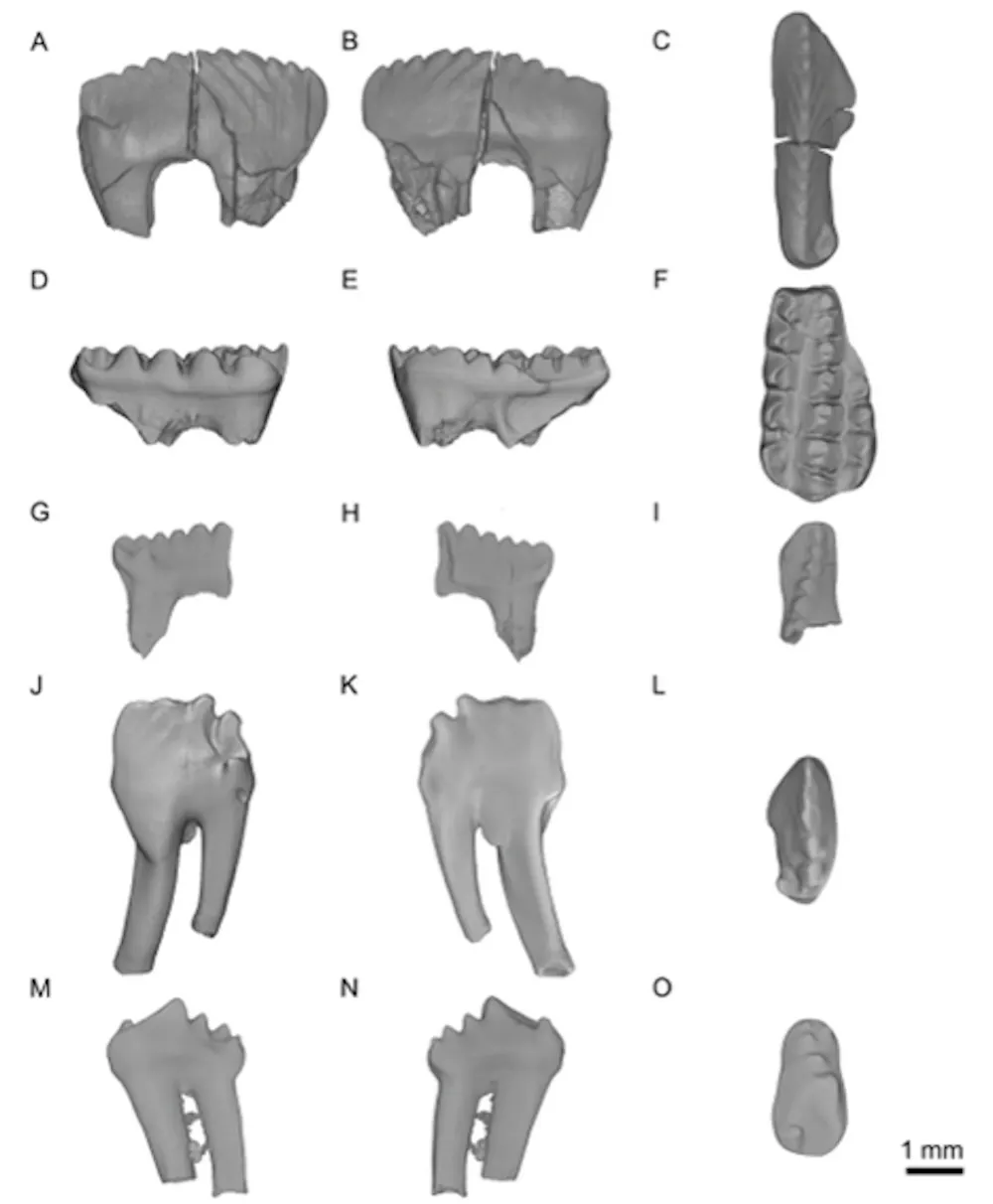
A fossil mammal tooth smaller than a grain of rice does not announce itself loudly. It must be hard won from sediment and stone. Then, under a microscope, it reveals itself – no longer just a speck of blackness but a surface of cusps, ridges and worn edges.
It is a small object, easily missed. Yet five such teeth from northern Alaska, belonging to three newly discovered species of long-extinct rodent-like mammals, hold an unexpectedly large history: of polar environments, shifting continents, winter darkness – and of mammals moving through this world that was colder, stranger and more connected than we once imagined.
The fossil mammal teeth at the centre of my new study with US colleagues come from the Late Cretaceous Prince Creek Formation, around 73 million years ago. At that time, northern Alaska’s palaeolatitude was roughly 80-85°N (10-15° closer to the north pole than it is today).
Our discovery shows the Arctic was not simply a cold, lifeless edge of the Cretaceous world, but a place where mammals adapted, diversified, migrated and originated. It raises deeper questions about what it means for a species to be native to a place whose landscapes, climates and inhabitants are forever changing.
The Arctic is not an empty landscape now, and nor was it in the deep past. It was a distinctive and demanding biome, with months of winter darkness, freezing temperatures and strong seasonality.
Rivers crossed this landscape. Plants grew through the long light of summer. Dinosaurs lived and thrived there, and evidence suggests they reared their young in the Arctic. There was also a diversity of birds, fish and mammals: tenacious denizens of the polar dark.
Colville River in northern Alaska, where tiny multituberculate fossilised teeth were discovered.Pat Druckenmiller, CC BY-NC-SA
The teeth we found
Finding miniscule fossil mammals is not the kind of palaeontology that begins with a spectacular skeleton weathering from a cliff. It begins with bulk sediment. Bags and buckets of it.
The material is dug out, washed, sieved through fine screens, dried, then meticulously sorted grain by grain beneath a microscope.
Mammalian palaeontology often depends on fragments: a tooth cusp, a root, a worn edge of enamel. It asks for patience more than drama. The field site may be remote, the landscape vast, but the discovery happens at the scale of a fingertip. It is an act of attention.
The five teeth described in our new study are multituberculates: a group of rodent-like mammals that lived alongside dinosaurs. They are the longest-lived mammal group to date, with a history spanning well over 100 million years. Our own species Homo sapiens, by comparison, is only a few hundred thousand years old.
But their success was not permanent. After surviving for longer than any other mammalian lineage, multituberculates eventually vanished, with their last representatives disappearing around the Eocene-Oligocene boundary, roughly 34 million years ago.
The teeth we found at Prince Creek represent three new species: Camurodon borealis, Kaniqsiqcosmodon polaris and Qayaqgruk peregrinus. The last of these sits especially close to the heart of the story.
Qayaqgruk peregrinus has close evolutionary affinities with a group of multituberculates discovered in Mongolia,, indicating that, many millions of years ago, these minute mammals moved between Asia and North America through a polar land corridor.
This was not the world of Pangaea, the single giant continent of earlier Earth history. By 73 million years ago, the continents were taking on more familiar shapes, but they had not yet settled into the map we know today.
North America was split by a shallow inland sea, and its far northwestern edge lay near northeastern Asia, creating a high-latitude corridor through which animals could move between continents.
The Arctic corridor itself was not unknown. Fossils of dinosaurs, birds and some mammals have shown that animals were migrating between Asia and North America during the Cretaceous.
But for multituberculates, the picture was much less clear. Their fossil record left open whether they crossed between the continents early and repeatedly, or only later in the Cretaceous. Qayaqgruk peregrinus helps close that gap.
Its name draws on the language of the Iñupiat, Alaska Native people, from the region where the fossils were found. Qayaq is a legendary Iñupiaq hero and wanderer whose journeys are told in The Epic of Qayaq.
Many of its Mongolian relatives carry the suffix -baatar, meaning hero in Mongolian, so the name also links its Alaskan discovery to its Asian evolutionary affinities.
Kaniqsiqcosmodon polaris is the oldest known member of the Microcosmodontidae family of multituberculates, suggesting this lineage, later known from North America, may have had a polar origin. Camurodon borealis represents the northernmost known occurrence of the North American family Cimolomyidae.
Five teeth are not a complete ecosystem, but they are enough to show these mammals were not occasional strays at the edge of their range. They belonged to the Arctic.
Surviving mass extinction
Survival in this environment was not a passive condition. Multituberculates survived through the end-Cretaceous mass extinction, 66 million years ago, when as much as 75% of all life on Earth went extinct, including the non-avian dinosaurs.
The adaptations that helped these ancient Arctic species live though deep winter cold, short dark days and seasonal scarcity may have given them advantages when the world’s ecosystems were devastated.
This is not to say the Arctic was a refuge in any simple sense. Evolution is rarely simple – it is full of bottlenecks and unexpected openings. But tiny mammals already adapted to seasonal scarcity may have carried some advantages into a disrupted world.
The Alaskan multituberculates did not belong to the Arctic because they had always been there, or because their lineages had never moved. They belonged because they were part of that ecosystem for a time: shaped by its dark, its cold, its flora, its fauna, its seasons and its routes of passage.
Fossils make this kind of belonging harder to define, but more interesting. They give the word indigenous, at least when we use it for species, a chronology: deep time shows that belonging is not always a matter of original presence, but of ecological participation across changing landscapes.
These five multituberculate teeth from the Prince Creek Formation are small enough to vanish in a pinch of sediment. Yet in their enamel are continents, seasons, darkness, ancestry and journeys.
They show that the ancient Arctic was not an evolutionary margin. It was a living biome, a passage between worlds, and part of the deep history of mammalian evolution.
Sarah Shelley does not work for, consult, own shares in or receive funding from any company or organisation that would benefit from this article, and has disclosed no relevant affiliations beyond their academic appointment.
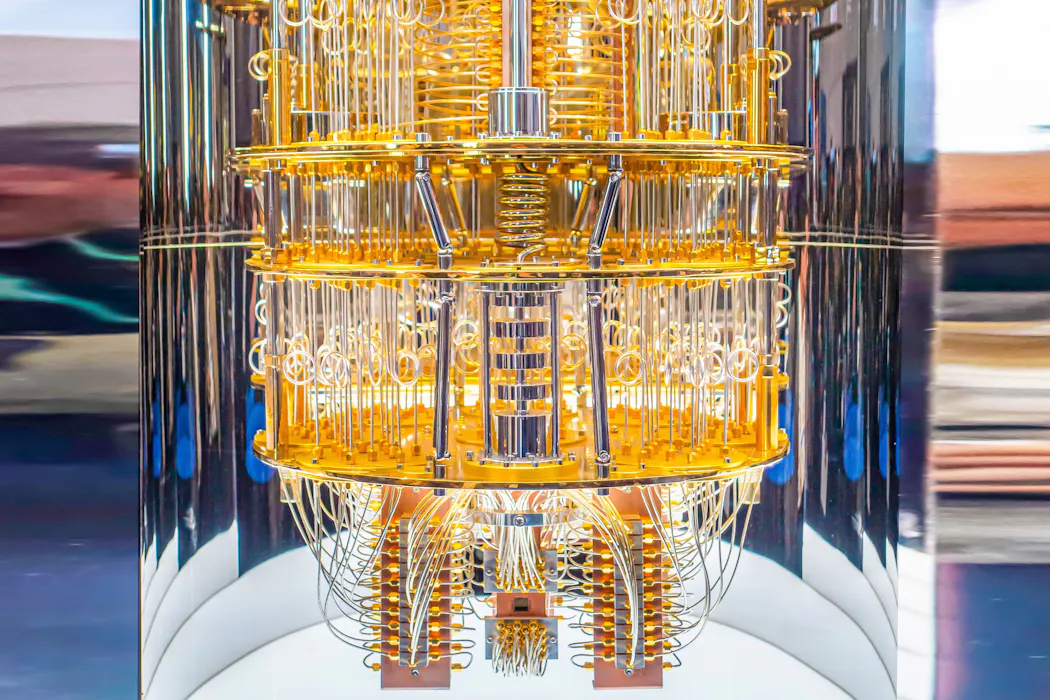
Quantum computers are coming. Or, at least, that’s what current predictions say. These machines harness the power of quantum mechanics, the set of rules governing how physics operates at atomic and sub-atomic scales.
Because of this, they operate in radically different ways to current machines. Tasks requiring trillions of years on existing supercomputers might be reduced to days on future quantum computers. They could tackle a range of challenges that are out of reach for existing technology.
These potential challenges include code-breaking. In 1994, the American computer scientist Peter Shor came up with a quantum algorithm capable of breaking the form of encryption that would later underpin routine email messaging and internet security. Shor’s advance drew interest from the US military and intelligence community, which began investing in the emerging field.
While decryption is often touted as a potential use for quantum computers, there are now protections against attempts to use them in this way. And in recent decades, other exciting applications have emerged. So is the threat to secure communications being overstated?
Currently, nobody knows for sure which quantum computing technologies will prevail, when the obstacles to their production will be overcome, or who will build one first.
But we can make educated guesses. Quantum computers built for specialised tasks will probably arrive before machines for more generalised uses. Between 10 and 20 years is a plausible guesstimate for the emergence of practical machines – amid considerable uncertainty. The US and China appear to be market leaders, so the big breakthrough could come from one of them.
It’s perhaps understandable why decryption is the poster child for quantum computing applications. The security of our digital world relies on cryptography, which provides a toolkit of mathematical techniques that underpin cyber security.
Digital secrets are protected by encryption, which converts meaningful data into an unintelligible form. If quantum computers could unscramble current encryption, they could expose highly sensitive data. Useful, perhaps, for nation states tracking terror cells or spying on strategic competitors – but bad news for everyone else.
Cryptography apocalypse
If we fail to act, this digital disaster might indeed happen. But researchers in this field have not been sitting on their hands. In the last decade, they have developed standards for new encryption techniques offering protection against quantum code-breaking. This area is known as post-quantum cryptography.
Many governments have announced timelines designed to motivate organisations to migrate from existing cryptography to the new post-quantum encryption standards. If everyone moves swiftly, by the time cryptographically-relevant quantum computers are built, our data should be sufficiently protected.
Yet stories of a pending cryptography apocalypse – sometimes referred to as “Q day” – still abound. So why, as we manoeuvre towards a future protected by post-quantum cryptography, are headlines still obsessed with decryption?
Well, everyone loves an origin story. The quantum algorithm developed in 1994 by Peter Shor caused a sensation. Cryptographers immediately commenced the hunt for new types of encryption invulnerable to Shor’s algorithm. More significantly, this theoretical breakthrough helped drive the actual development of quantum computers, since Shor’s algorithm was arguably the first convincing application for these machines.
There’s a tangibility to this quantum threat. The (often overblown) idea of a Q-Day posits that we awake one morning and our cyber security has suddenly been lost. In contrast, most constructive use cases for quantum computers seem more abstract. They might greatly assist mathematical modelling of scientific problems such as climate change, along with complex simulations of how physics works.
Other end uses sound fantastical. For example, quantum computers might help us find a cure for cancer or harness vast clean energy from nuclear fusion. In the absence of a proven killer app, decryption often prevails as a prominent, imagined end use. And the prospect of doomsday always focuses human minds.
Other uses
Quantum computing has also become firmly embedded in great power competition. China, the US and Russia, among others, are all pushing the development of quantum computers. To some in government, the consequences of losing a quantum computing race are unthinkable. What if your strategic rival can decrypt your secrets, but you can’t decrypt theirs?
The question is, are these anxieties really driving the stacks of cash being pumped into the field?
Setting aside political advantages, as well as criminal gains, the real money from quantum computing is not going to be made from decryption.
A range of quantum computing companies are now promoting their technologies and there’s barely a mention of decryption. Instead, other compelling uses are being trumpeted. Quantum computers would excel at optimisation, which is all about finding the most efficient solutions to complex problems that classical computers struggle with.
This could transform parts of the finance industry that deal with large-scale, complex transactions, and intricate investment strategies. It could also make supply chain logistics easier to manage. Quantum computers could supercharge drug discovery and lead to the development of new industrial materials.
Most of these remain unrealised visions, but the prospect of breakthroughs and enrichment fuels investment.
Quantum computing could be a lucrative gamechanger in the field of drug discovery.Andrey_Popov
So, there’s a genuine geopolitical power struggle in play, but it’s no longer solely or even primarily about decrypting secrets. Quantum competition between great powers concerns first-mover advantage across a broad base of technological domains. Ultimately, it’s about who’s going to make money.
Early progress seems most likely in industrial materials and optimisation. Later opportunities may involve advanced mathematical modelling and predictive simulations.
If quantum computers surpass the sceptics’ doubts to become capable of breaking current encryption, this will probably be a much later development. And if everyone’s done their post-quantum cryptography migration, it will hopefully be largely irrelevant.
William Adams was entranced by energy. As a young man, his interest was nursed by working as a clerk in a London patent office in the 1860s. This gave him an early look at some of the first British designs for exploiting solar energy using mirrors, water or both.
Adams would later recount his excitement at reading about the French mathematician Augustin Mouchot’s invention of the first machine ever to run on energy from the Sun. The device, which connected a solar boiler to a specifically designed steam engine, was warmly received by Napoleon III when it was presented to the emperor in 1866.
Inspired, Adams soon designed and patented his own rudimentary solar boiler. The only problem was, he needed more sun.
This series is dedicated to lesser-known, highly influential scientists who have had a powerful influence on the careers and research paths of many others, including the authors of these articles.
When offered the chance to become deputy registrar of Bombay by the Indian city’s governor, Sir Philip Edmond Wodehouse, Adams jumped at the opportunity. There, he became the first Briton to design, build and test a fully-functioning solar steam engine fit for industrial purpose.
But he also came up against the conservatism of India’s colonial rulers, who did not see this Bombay bureaucrat for the energy visionary that he undoubtedly was.
‘The rays beat like missiles’
Adams arrived in Bombay in 1873 to find it in the middle of a cotton boom, with mills popping up like mushrooms across the city. The population was growing so quickly that firewood was depleted for miles around. The landscape grew “bald as a billiard ball”, as Adams put it.
Every morning before setting off for work near Bombay’s central fort, Adams would set up his outdoor laboratory at his home in the southernmost Colaba district, near the open sea. He instructed an Indian fundhi (skilled carpenter) to build a set of three-tiered wooden shelves to hold 18 looking glasses.
“Each glass was moveable on a swivel in the same manner as an ordinary toilet glass”, Adams explained, meaning he could pivot each glass by “the touch of the finger”.
Later, for open-air experiments, Adams used two banks of mirrors (36 in total) which made “the mercury in the thermometer boil, leaping up to over 670 degrees fahrenheit”. He then placed a copper cylinder containing three gallons of water in the focus of all 36 mirrors, making it boil in exactly 20 minutes.
But Adams’s ambition did not end there. To reach sufficient pressure in the boiler to drive a steam engine, this bureaucrat-cum-engineer built a giant concave mirror, 24 feet in diameter. He then sent for his London solar boiler, which was delivered by ship to Bombay in 1876.
One fine morning, Adams – wearing dark glasses for safety – turned his giant concave mirror on the copper cylinder filled with water. “The rays beat like missiles in a continuous and incessant storm of solar fire,” he wrote.
An hour later, the cylinder registered 55 pounds of pressure per square inch. He hired a steam engine of 3 horsepower and connected it to the boiler: the pressure moved the pistons. Adams had built the first working, British-designed solar steam engine.
For a fortnight, he kept the pump going near his bungalow in Colaba – proudly and sweatily displaying his innovation to government officials, newspaper reporters, mill owners and the local Indian communities. Members of the public were invited to witness his experiments too, via a notification in a Bombay newspaper.
In 1877, Adams wrote a letter to the editor of the Times of India arguing that the application of his solar steam engine would “make India the seat of the principal manufacturing industries of the world”.
Later, in his wildly ahead-of-its-time treatise Solar Heat: A Substitute for Fuel in Tropical Countries (1878), Adams argued that countries near the equator “possess, in their clear skies, a gratuitous and inexhaustible source of wealth, equal to that which western nations have to dig, with infinite labour and toil, from the bowels of the Earth”.
Adams sketched out plans to use solar heat for everything from cotton gins (engines to separate cotton fibres from seeds) to Hindu crematoria. He called upon the colonial British government to invest in this promising substitute for coal, which was then being imported to India at great expense.
Adams envisioned solar energy transforming the Raj. Just like the coal-combusting steam engine had replaced the waterwheel in England, he argued that thermal heat could now replace fossil fuels in India. But his colonial bosses were not persuaded.
‘Too subversive’
Adams was part of a 19th-century wave of global research into solar steam engines, as I explore in my postdoctoral project and upcoming book. But in contrast to fellow pioneers including Frenchman Mouchot, Adams built his solar steam engine to stimulate local Indian industry, not to benefit the colonial government.
The locals shared Adams’s belief in this technology. One even wrote to Scientific American magazine to express their desire for the rapid adoption of solar power:
My residence is in a tropical part of India … where fuel is scarce and dear … In this part of the country (about 300 miles north of Bombay), there is a great opening for cheap power in small units.
Bombay’s new governor Sir Richard Temple concluded, however, that solar heat “could not be used for commercial purposes on a large scale”. He argued that local factory owners would not like giving “the workmen a holiday on days when the sky is not clear”.
In truth, Adams’s invention was too subversive for Britain’s colonial officials and capitalists. In less sunny climes, solar energy – tethered to the seasonal rhythms of nature – might negate their commercial ambition for timeless industrial production. But they also saw India as an important market for British coal exports.
While a few mill owners adopted Adams’s auxiliary solar heater for their steam engines, most regarded it as a primitive contraption unfit to satisfy the demands of modern civilisation.
Increasingly frustrated that neither the industrial capitalists nor the colonial government supported his vision, Adams abandoned further experiments. His dream of India switching away from coal to solar power, from combustion to concentration, would not happen for at least another century.
Which begs the question: how much further advanced would this technology be had Adams’s 19th-century solar experiments been embraced by India’s colonial rulers at the time?
Sebastian Egholm Lund receives funding from the Carlsberg Foundation. His upcoming book, Changing the Climate at the Fin de Siècle, is published by Cambridge University Press (September 2026).
For the last few years, I’ve been seconded to assist the Catholic Church’s unprecedented global grassroots listening initiative. Just as that process drew to a close, I received a surprise request: would I help Pope Leo XIV launch his first social encyclical, focused on what it means to be human in a time of artificial intelligence?
It is difficult to think of a more important theme right now than the impact of digital technologies, AI and robotics on every level of our social interactions and structures.
The Vatican has addressed technological questions before. My research includes the social teaching of popes since 1891, starting with Pope Leo XIII’s influential text Rerum Novarum (Of New Things), which addressed the impact of the industrial revolution on working people (and which this new text commemorates). A range of previous letters have addressed both the opportunities and dangers of technology.
Of course, the Vatican does have a chequered history with regard to theological reflection on scientific and medical developments. Over the past decade, it has been pursuing focused and, in my view, productive conversations with the AI tech sector through initiatives such as the Minerva Dialogues – a series of closed-door conferences with leading figures from both worlds. In this sense, the concern with AI does not spring from nowhere.
Nonetheless, Magnifica Humanitas (Magnificent Humanity) was a landmark moment: a papal text addressing AI as its central focus for the first time, launched by a pope in person – this does not usually happen – in the presence of the very industry it sought to critique. The encyclical panel on which I sat also included Chris Olah, co-founder of the AI tech firm Anthropic.
All of this meant a much higher level of media and public interest. In the run-up to launch, questions about the make-up of the panel and how equipped a pope is to comment on AI showed me this text would be controversial. And that’s OK.
The job of the text is both to offer the stimulus of a particular tradition – Catholic social teaching – and to encourage debate among people with a variety of views about what makes for a common good use of AI technologies. Our task as a panel was to explore both of these realities.
Not anti-technology but pro-human
The Vatican was unconcerned about the encyclical’s lack of neutrality because it declares its hand transparently – and does not believe the tech sector operates with a neutral mindset either.
The inclusion of Anthropic on the panel was welcomed by some as a sign of serious engagement with the sector on these issues. For others, it showed a risk of naïvety about the Vatican’s corporate capture, or of privileging the voices of capital.
The document calls for a movement out of the silos of private boardrooms where the morality (and profits) of new technologies is decided by the few, into a public space of transparency, participation, common benefit and shared power – if that is possible.
Olah did at least note that the tech sector requires exactly the kind of conversation this text promotes: a public, shared conversation in which the shape of our working, educational, political and social lives are not determined by a few wealthy individuals.
The text is neither anti-technology nor anti-industry. It is pro-human, pro-social and resistant to false religious claims that AI will, in itself, save us. It resists the idea that human limits are things to be despised and overcome with models of perfected or eternal bodies or minds.
It stresses that AI should enhance the human capacity for finite, embodied relationships, for meaningful work as part of a dignified life, and for the human person to be recognised as an end – not a tool of utility, power or profit.
Technology is as old as humanity. It is part of how we shape and steward our world. It preserves and fosters our survival, and the social lives that give us meaning. Pope Leo was clear: what matters are the ends to which these new AI technologies are set, and their relationship with the Earth’s natural resources.
Reshaping the idea of being human
The Vatican has issued previous texts comparing human and artificial intelligence, as well as a separate text critiquing trans- and post-humanisms. The added dimension in Leo’s first social encyclical is to ask questions about how technologies are reshaping the very idea of being human – rescripting work, education, politics and warfare – and how they are enacting and enmeshed in new cultures of dominating power.
The text interrogates freedom and flourishing – two categories central to Enlightenment thought.
Within the church, there are theologians who are engaged optimists regarding the possibility of AI technologies, and those who are more guarded. There are also some who might be characterised as “radical pessimists” – an honourable tradition to be distinguished from the merely cynical.
The new text draws from each of these perspectives, while remaining closest to a prudential middle. It names the risk of new dependencies, exclusions, manipulations and inequalities. Any positive and hopeful account of such new tech must be able to face and respond to these realities.
Above all, this text marks a new phase in the papacy’s public (rather than closed-door) involvement in debates about AI technology. Its invitation is for a social dialogue on many levels across many groups, sectors and stakeholders.
My experience is that views on these matters are lively and fiercely contested. But above all, they are urgent.
Anna Rowlands is a member of the Dicastery for Integral Human Development at the Vatican. This is a governance role. She has also served as an advisor to the Vatican in various capacities for the last five years.
As an expert on personality disorders, people often ask me about psychopathy. It seems everybody has had an ex, a boss, a neighbour or a relative who they suspect has traits of it. People are curious about how to recognise psychopathy, and whether it can explain certain harmful behaviour. It’s easy to see why. Psychopathic people are everywhere – from books and movies to newspaper articles and academic papers.
But while such questions are usually asked with confidence, the answers are far less straightforward. In fact, a growing number of academic papers have failed to find evidence that psychopathy exists at all. Could the disorder be something we’ve just invented because it’s convenient, doing away with old concepts of good and evil? Some experts believe so. But I am not so sure.
Psychopathy is normally identified by a few specific traits. These include a lack of empathy and remorse, callousness, impulsiveness, shallow emotions, arrogance and manipulation.
We’ve all come across people who have a combination of these traits. Perhaps they are emotionally detached, cruel, untruthful or even violent. There is no denying that such characteristics exist. What is difficult to prove is that people with psychopathy actually have those traits. Why? I believe it’s down to a mismatch between what we expect psychopathy to look like and how personality actually unfolds in the real world. And this gap is where much of the confusion begins.
The empathy paradox
A recent systematic review of empathy research, which included 66 studies and 5,711 people assessed with a common tool called the Hare Psychopathy Checklist (PCL), found that 89% of all tests failed to show that those with psychopathic traits were less empathetic than others. If psychopathy is defined by a lack of empathy, why is it so difficult to demonstrate? At first glance, this seems like a serious challenge to the concept itself.
The Insights section is committed to high-quality longform journalism. Our editors work with academics from many different backgrounds who are tackling a wide range of societal and scientific challenges.
A similar lack of clear evidence has been found for other traits often linked to psychopathy. Research examining shallow emotions, in particular a lack of fear, using measures such as skin conductance (which can estimate sweating), startle reflexes and autonomic arousal (increased heart rate) has often produced mixed findings. Claims that people with psychopathy have extreme impairments in moral reasoning have likewise been challenged.
In fact, recent reviews have questioned whether any single deficit in a specific trait can be consistently linked to psychopathy. So what’s going on?
As we shall see, the issue may not be that empathy, immoral reasoning or a lack of fear is absent in those with psychopathy, but that these traits are being measured in overly narrow ways.
A zombie idea?
Some researchers have taken these inconsistencies a step further. In a recent essay in Aeon, one of the authors behind this body of work argues that psychopathy may be what researchers call a “zombie idea”. This refers to a concept that continues to be widely accepted despite weak or inconsistent evidence, like the old idea that the Earth was at the centre of the universe.
The idea is that psychopathy persists because it is intuitively appealing. Like outdated scientific beliefs that lingered long after being challenged, it offers a compelling explanation for behaviour that is otherwise difficult to understand.
It’s an interesting thought. Psychopathy is culturally familiar and has long been associated with extreme and disturbing behaviour. This makes it an attractive concept for explaining antisocial acts – it offers a seemingly objective framework for behaviour that can feel deeply unsettling. It provides a sense of certainty in situations that are complex and uncomfortable.
Take the rapist and serial killer Ted Bundy. Even when he faced justice for his heinous crimes, Bundy didn’t show remorse – always sporting a movie star smile. This is impossible for most people to comprehend, and Bundy has been branded as psychopathic countless times. This has in turn helped to shape public and scientific ideas about what the label means.
But this is precisely where the problem lies. Human behaviour is rarely so clear-cut. Bundy himself had a range of different problems that may have contributed, including obsession and substance abuse issues. The appeal of psychopathy as a concept may come from its simplicity – the idea that there is a distinct type of person who lacks empathy and poses a clear risk. The reality is likely to be far more nuanced. And the “zombie idea” argument forces us to confront the possibility that the concept has endured because it is useful rather than well-defined – academically, forensically and culturally.
How psychopathy is measured
To understand why the evidence is so mixed, let’s look at how psychopathy is actually assessed. In psychiatric and forensic settings, it is most commonly measured using structured tools such as the Psychopathy Checklist-Revised (PCL-R). This approach combines interview data with information about a person’s behaviour and life history.
This means that clinicians consider traits such as superficial charm, grandiosity, pathological lying and lack of remorse alongside behavioural patterns such as repeated rule-breaking, unstable relationships, poor work history, aggression, early conduct problems and criminal records.
This has proven useful in prisons and psychiatric units. Recent evidence, drawing on many studies, suggests the PCL-R can indeed help identify future risky behaviour in such settings, particularly in relation to re-offending and institutional misconduct. This implies that structured assessments may capture something clinically relevant in high-risk populations.
Another issue is that psychopathy is not included as a formal diagnosis in the Diagnostic and Statistical Manual of Mental Disorders (DSM). Instead, it overlaps with antisocial personality disorder, which focuses more on patterns of behaviour such as rule-breaking, impulsivity and aggression.
This creates an important tension. Psychopathy is often used to describe underlying personality traits, while antisocial personality disorder is defined by observable behaviours. In practice, these do not always align. Someone may engage in harmful behaviour without displaying the emotional features associated with psychopathy, while others may show emotional detachment without criminality.
This ambiguity is not just a technical issue. It shapes how the construct is used in practice. In forensic settings, psychopathy is often treated as a meaningful indicator of risk. But if the boundaries of the construct are unclear, then its application becomes more difficult to justify.
The real problem: measurement
A large part of the difficulty may therefore lie in how we measure psychopathy – and the traits we believe underlie it.
Importantly, many of the studies included in the recent psychopathy and empathy review used the PCL-R in forensic settings, meaning psychopathy was often assessed through structured clinical interviews alongside criminal histories and file reviews. In other words, the psychopathy assessments themselves were frequently extensive and clinically informed.
Yet despite this, the evidence linking psychopathy to empathy deficits remained inconsistent. This suggests the problem may lie less in identifying psychopathic traits themselves and more in how empathy is tested.
Many studies rely on narrow laboratory tasks or self-report questionnaires designed to capture specific components of empathy, such as recognising facial expressions, in controlled settings. While these methods offer experimental control, they may fail to reflect how empathy operates in real-world relationships, conflicts and situations involving personal gain.
The recent review on psychopathy and empathy, for example, drew on a wide range of standard empathy measures, including self-report questionnaires and laboratory tasks such as recognising emotions in faces or voices, interpreting photographs of eyes, or responding to hypothetical scenarios. These are established tools, but they often assess specific components of empathy rather than how empathy operates in real-world relationships, conflicts or situations involving personal gain.
Empathy is not a single ability. It involves recognising emotions, understanding perspectives and responding appropriately. Someone may be able to recognise distress without feeling concern, or understand another person’s perspective without acting on it. These distinctions are rarely captured in simple tests. Different studies may be measuring different aspects of empathy, leading to apparently contradictory results.
For example, how someone responds to distress may depend on who the other person is, what the relationship is and what is at stake. These are not variables that can easily be reproduced in a laboratory setting. A person with psychopathy may in fact have some level of basic empathy, as measured on these tests, but be able to completely switch it off when it’s in their interest. As a result, the findings may tell us more about how people perform in artificial laboratory conditions than how they behave in everyday life.
In this sense, researchers may be trying to capture a complex pattern of traits using tools that are too narrow to detect it reliably.
In other academic studies, the measurement of psychopathy in itself could be a problem. When psychopathic traits are measured in the general population, such as students or people taking tests online, they often rely on self-report questionnaires rather than the full PCL-R – asking people about to assess their own thoughts, feelings and behaviour. Such studies were indeed included in the review about moral reasoning and psychopathic traits.
But psychopathy is, after all, famously linked to lying and manipulation, pointing to a deeper paradox. Researchers are relying on self-report measures to assess traits that, by definition, involve deception. If someone is motivated to present themselves in a certain way, or does not recognise their own behaviour as a problem, then their responses may not reflect their underlying traits.
Different kinds of psychopathy?
Another issue is how psychopathy has traditionally been framed in clinical practice. It is often treated as a distinct category – something a person either is or is not. But research on personality more broadly suggests that traits exist on a spectrum. Characteristics such as empathy, impulsivity and emotional regulation vary across individuals rather than being confined to a specific group.
If psychopathic traits are distributed along a continuum, then it is perhaps unsurprising that studies struggle to find clear-cut differences between groups. What looks like inconsistency in the evidence may instead reflect the fact that we are trying to draw firm boundaries around something that is inherently gradual and variable.
This shift is already reshaping how personality disorders are understood more broadly, moving away from rigid categories.
Even within traditional models of psychopathy, researchers have long recognised that psychopathic traits can vary. The PCL-R, for example, separates Factor 1 traits such as superficial charm, grandiosity, manipulation and lack of remorse from Factor 2 traits such as impulsivity, aggression, irresponsibility and chronic rule-breaking.
These two dimensions often relate to different outcomes and may appear in different combinations. For example, there may be more Factor 1 personality traits without severe antisocial behaviour in the general population, while there are more elevated Factor 2 traits in prisons. This means that studies focusing on different samples may appear inconsistent – measuring different parts of the same broader construct.
A useful comparison can be found in research on narcissism. Narcissism was once treated as a single construct, typically associated with grandiosity and entitlement. However, it is now widely understood to include distinct forms, such as grandiose and vulnerable narcissism.
Grandiose narcissism is characterised by confidence, dominance and a sense of superiority. But, as I and other researchers have shown, vulnerable narcissism, by contrast, is associated with insecurity, hypersensitivity and emotional reactivity. Both fall under the same broader construct, but they present very differently in everyday life.
This distinction matters because it shows how a concept can appear inconsistent until its underlying variation is recognised. Psychopathy may be in a similar position. What appears to be conflicting evidence in the literature may reflect the fact that different studies are capturing different aspects of a broader construct, often using different measures of psychopathy to do so.
Gender differences
Another limitation is that much of the initial research on psychopathy has been conducted in male, forensic samples – often focusing on people in prison. These have then been used to develop general tests of psychopathy that may not be relevant to a general population of men and women who are not criminals.
Traits associated with psychopathy may present differently outside these contexts. In women, for example, these traits may be expressed in more relational ways – through patterns of manipulation, emotional detachment and aggression that is less overt.
Some studies have suggested that women who commit violent crimes tend to score relatively higher on interpersonal and affective traits (closer to Factor 1) than on the overtly antisocial behaviours (captured by Factor 2), compared with male violent offenders. This may help explain why female presentations can be overlooked when assessment tools are heavily skewed towards male behaviour.
A similar pattern has been observed in narcissism research. Early models focused heavily on externally visible traits, such as overt grandiosity, entitlement and assertiveness, which are more commonly associated with men. Only more recently has vulnerable narcissism – defined by low self-esteem, hypersensitivity, and feelings of shame – been recognised as more typical of female expressions of narcissism.
If our understanding of psychopathy is based on a narrow subset of individuals, then it’s likely to miss important variations in how these traits are expressed.
Why this matters
Taken together, these issues help explain why psychopathy can feel both familiar and elusive. The traits often associated with it – emotional detachment, reduced empathy, impulsivity – do exist and appear in real interactions. But they rarely present in the clear, consistent way that diagnostic labels suggest.
Instead, they emerge unevenly, shaped by context, relationships and other aspects of personality. This gap between real life and formal measurement has real-world consequences. In prisons, it can influence decisions about risk, sentencing and rehabilitation. And in the workplace, it may mean that employers miss psychopathic traits in the people they promote – they may appear charming and reliable to those who are senior to them – leading to chaos and suffering among staff.
Rather than asking whether psychopathy exists, a more useful question may be why it has been so difficult to define and measure in a consistent way.
The evidence does seem to suggest that it may be too narrowly framed and too simply measured. A more effective approach may involve treating these traits as existing along a continuum, recognising their variability across people and contexts and combining multiple methods of assessment rather than relying on any single tool. For example, this might include integrating clinical judgement with patterns of behaviour over long periods of time to build a more complete picture of how these traits manifest.
Seen in this light, psychopathy may not be a “zombie idea” after all. Perhaps it is just a concept that we have yet to fully understand. The challenge is not to abandon it, but to refine how we study it – and how we interpret what we find.
To hear about new Insights articles, join the hundreds of thousands of people who value The Conversation’s evidence-based news. Subscribe to our newsletter.
Ava Green does not work for, consult, own shares in or receive funding from any company or organisation that would benefit from this article, and has disclosed no relevant affiliations beyond their academic appointment.
When disappointment strikes, is your instinct to try to shake it off, forget about it and move on? My research and experience of many workplaces suggests this might be exactly the wrong response.
My interest in the science of disappointment began more than 15 years ago as a workplace consultant. I was struck by how often clients described episodes that left them feeling disappointed as deeply personal and unsettling experiences – and by how little research there was to help me respond meaningfully. That prompted me to do a PhD on the subject.
Disappointment often reflects a gap between expectation and reality. It can involve grieving a future we had already begun to live in our minds.
My subsequent research with colleagues revealed a telling pattern. In the workplace, disappointment is frequently generated at a systemic level by unrealistic targets – yet lands on individuals as a sense of personal failure.
In many walks of life, it is commonly dismissed as an unwanted and unhelpful emotion. But our research tells a different story. Disappointment can be an important fuel for creativity. It surfaces what we truly desire, clarifies what matters to us, and points us toward what we are not yet willing to accept.
Whether in our professional or personal lives, disappointment is a signal worth learning to read. Here are some ideas for when you next come up against it.
1. Don’t get ahead of yourself
When we are waiting on a significant decision – a job offer, test result or relationship turning point – our emotional response is prepared long before the answer arrives. The same outcome can feel entirely different depending on what we anticipated would happen. The wider the gap between expectation and reality, the greater the disappointment.
In the workplace, severe disappointment in not getting a job or missing out on a promotion can stem from the loss of a working future we had already begun to imagine. If that future does not materialise, we grieve it – even if it never fully existed.
2. Beware the success trap
Success can quietly raise the bar for future failure. One of our respondents illustrated this dynamic neatly. Exceed your work target by 10% one year, they observed, and your manager is unlikely to reward you with a lighter load the next. Rather, the target is raised again, making falling short more likely – and the disappointment more acute because of your past success.
The same pattern can play out in social situations. Think of a friend who often picks up the bill. Over time, a generous gesture becomes expected behaviour. Then, on the one occasion they don’t pay, this becomes a moment of disappointment that people notice and remember. That disappointment is not proportionate to what actually happened, but to the gap with what was expected.
3. Try not to blame yourself (or anyone else)
People rarely experience disappointment in a neutral way. Rather, they tend to interpret it through one of two familiar patterns.
The first is internal: “I am the problem.” This assumes they did not try hard enough or were simply not good enough. Disappointment is treated as a sign they are a flawed or bad person.
The second interpretation is external. The fault is with others who did not recognise the person’s value and did not live up to expectations. The instinct is to blame and get angry with them.
Our research on disappointment in organisations shows both responses miss the point. Blaming ourselves or others can be a way of avoiding something harder to confront: that expectations are unrealistic or based on inaccurate assumptions.
4. The Ikea effect
Environments shape expectations. In workplaces, many people are encouraged to aim high and improve continuously. Organisations often promote ideals of progress, achievement and fulfilment.
These ideals can be motivating, but they can also create a perfect scenario that reality struggles to match. From this perspective, disappointment can be a structural feature of systems that rely on high expectations and idealised outcomes.
But there’s a personal aspect too. Research on what psychologists call “the Ikea effect” shows the more effort we invest in something, the more we value it – rather like a flatpack piece of furniture that we have built ourselves. At work, we routinely pour time, energy and identity into projects, roles and relationships. So, when things don’t go as hoped, we are losing something very personal.
And because failure at work is often witnessed by colleagues and managers, the stakes feel higher. The loss can become entangled with how others see us, and how we see ourselves.
Left unexamined, such feelings can calcify into something more damaging than the original disappointment: a diminished appetite for risk, a reluctance to invest fully in what comes next, and a growing suspicion that doing so is simply not worth it.
5. Be realistic, not idealistic
Moving from trying to eliminate disappointment to tolerating it can make it less destabilising and more informative. As a manager, this might mean developing the habit of noting, at the outset of a project, what a realistic rather than an ideal result would look like.
Similar patterns can appear in relationships too, where expecting things to feel perfect all the time can make an otherwise good relationship seem lacking.
Research consistently shows that naming difficult emotions reduces their intensity, and that workplaces where disappointment can be discussed honestly tend to be psychologically safer, more creative and better at learning from setbacks than those where such feelings are expected to be quietly moved past.
6. Accept disappointment, don’t dismiss it
Disappointment is uncomfortable because it confronts us with limits: to what we can control, to what organisations can deliver, or to what relationships can provide. An understandable instinct is to try to move past this quickly.
But a more constructive approach is to reflect on where our expectations come from, how they are formed, and whether they can be moderated in ways that benefit us. If disappointment is a signal that our expectations and reality are out of alignment, then understanding this may be one of the most important forms of resilience we can develop.
Annette Clancy does not work for, consult, own shares in or receive funding from any company or organisation that would benefit from this article, and has disclosed no relevant affiliations beyond their academic appointment.
What happens when a leader suddenly disappears? In politics, business and other human organisations, leadership transitions can trigger intense power struggles. Rivals compete for control, alliances shift and institutions can become unstable.
Similar dynamics occur throughout the animal kingdom. Our new research on tropical paper wasps, published in the journal Animal Behaviour, shows just how chaotic leadership struggles can be – but also how societies can remain stable even while conflict rages.
Many animal societies revolve around a single dominant breeder. In cooperative paper wasps, as in many other social wasp species, dozens or even hundreds of females live together in a colony. But reproduction is usually controlled by one dominant individual: the queen. The other females help raise her offspring by foraging for food, feeding larvae and defending the nest.
Unlike in honeybee, yellowjacket wasp or ant colonies, however, these helpers are not sterile. If the queen disappears, any of them could potentially take over and become the next breeder. Often there is a queue – ladies-in-waiting, hoping to be queen. But succession isn’t always predetermined, and in some cases, it can become a contest.
How is the contest settled?
It was in a derelict building in Panama that we found the answer to this question. We experimentally removed queens from 19 wild colonies of the tropical paper wasp, Polistes canadensis, and watched to see what happened next.
The effects were immediate. Aggressive interactions between females increased sharply as several of them competed for dominance. The colony’s usual patterns of behaviour broke down and its dominance hierarchies rapidly became unstable. Rather than a smooth transfer of power, succession turned into a period of widespread conflict involving many members of the colony.
At first glance, this kind of turmoil looks risky. Fighting takes time and energy, and wasps distracted by conflict might neglect essential tasks such as foraging for prey, feeding larvae and maintaining nest structure and hygiene. Violent fights over leadership have been reported in other paper wasps, resulting in societal collapse.
But that wasn’t what we observed.
Despite the chaos, the colonies continued functioning. While some wasps fought to be queen, others avoided the conflict and instead stepped up their investment in foraging and brood care. They ignored the conflict and kept the colony running.
Cooperation didn’t disappear – it was redistributed.
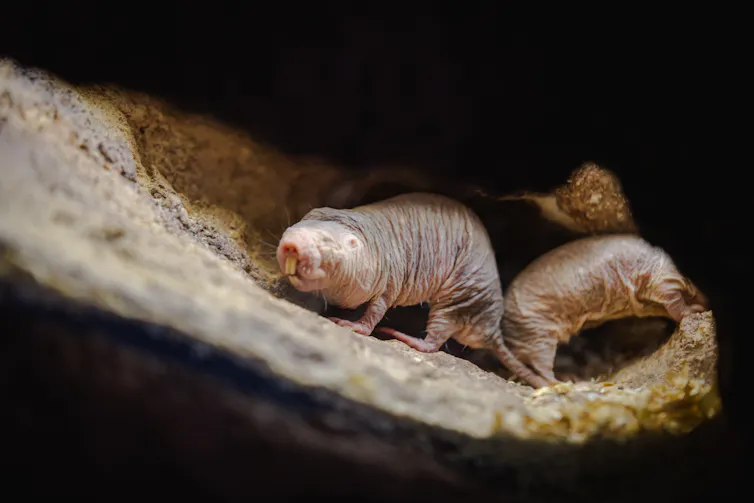
One surprising finding was that the peaceful wasps didn’t appear biologically different from the fighters. In many animal societies, traits such as body size, age or position in the hierarchy help predict who will compete for leadership. For example, in meerkats the largest and oldest females are most likely to inherit the dominant breeding role. In naked mole rats, females already high in the hierarchy fight hardest when the queen dies.
But in our wasp colonies we found no clear differences in body size, age or previous status between individuals that fought and those that stepped back.
This suggests the behaviour may reflect strategic decisions rather than fixed roles. Some wasps may judge that competing for dominance offers them a good chance of producing their own young, while others may gain more by assuring the survival of the brood, which are typically the wasps’ siblings. Investing in the survival of your close relatives is an alternative reproductive strategy and explains the evolution of helping behaviour in animal societies.
Cooperation during conflict
Social insects are often portrayed as perfectly organised societies with rigid rules. Honeybee and ant colonies, for example, typically have sterile workers, leaving little competition over who becomes the next queen. But paper wasps are different. Workers retain the ability to reproduce, and in the tropical species we studied there appears to be no “next in line” when the queen disappears.
Aggression-driven succession might seem too costly for a society to tolerate. Yet our results show it can work, so long as some animals compensate for the disruption by maintaining essential tasks. Even during intense leadership battles, cooperation can persist if some members adjust their behaviour to keep the system functioning.
The balance the wasps in our study maintained may be a common feature of social systems more broadly. When power struggles intensify, stability depends upon those who keep crucial work going in the background.
It’s easy to get distracted when political rivals are fighting it out, but, perhaps we should be shining a light on the unsung heroes who quietly keep things ticking over.
Seirian Sumner receives funding from UK government's Natural Environment Research Council (NERC) and the Biotechnology and Biological Sciences Research Council (BBSRC). She is a Trustee and Fellow of the Royal Entomological Society, and author of the book 'Endless Forms: Why We Should Love Wasps'.
Owen Corbett receives funding from the UK government's Natural Environment Research Council (NERC).
You unlock your phone with your face, your fingerprint sends your laptop whirring into action, you pass airport security by glancing at a camera. Biometric technology has become so woven into the daily routine that for many people, it barely registers any more.
That invisibility is part of the point. These systems are usually fast, convenient and feel secure. Unlike a password, you can’t forget your face. But that doesn’t mean they are without risk.
Biometrics fall into two broad families: physiological (fingerprints, faces, irises, even nailbed patterns) and behavioural (how you walk or type, the rhythm of your speech, the angle you hold your phone).
Both forms are already being widely used – you just may not realise it. Many banks and retailers now monitor how you interact with your device – from swipes, taps and scrolls to the angle you hold your phone, the rhythm of how you move between fields, and the pressure of your touch. If someone else picks up your unlocked phone and tries to access your banking app, this can automatically trigger a fraud alert.
My research with colleagues even shows it’s possible to infer a user’s name and native language from the timing patterns of their keystrokes.
The graphic below shows the full extent of biometric technologies. Those marked dark green are in widespread commercial and government use today – including less-familiar examples such as the veins in your hand and other bodily vein patterns.
Physiological and behavioural biometric systems:
Biometric technology colour-coded by use status, from active to still in research.Oli Buckley, CC BY
Gait analysis – reading how you walk – is already used for security and surveillance purposes, from venue access to detecting potentially suspicious behaviour. You can wear a mask, pull up a hood, avoid looking at a camera – but you can’t easily change how you walk.
A number of other biometric technologies (marked light green), ranging from skin texture and ear shape to micro-expressions and hand-grip patterns, are being actively researched for use in the near future. A further group (marked red) have so far only been demonstrated in the laboratory. But even body odour and breath signatures are further along than their novelty might suggest.
What once felt like science fiction is now embedded in our everyday lives. You can’t always see this technology, and you can’t always opt out. But knowing it exists is the first step to understanding how much of yourself you’re already sharing.
V is for vulnerability
In April 2026, financial security expert Li Chang showed Chinese TV viewers how AI tools could extract a celebrity’s fingerprints from a single selfie. The culprit? The classic V-sign, finger pads pointed straight at the lens.
This built on work by Japan’s National Institute of Informatics which in 2017 showed that usable fingerprints could be lifted from photos taken up to three metres away. And phone camera technology has only got better since then.
In the UK, police have made at least two arrests based on fingerprints lifted from photos: one from a WhatsApp image of a hand holding ecstasy pills, the other when a drug dealer was identified from a photo of him holding a block of Stilton cheese.
This technology can work in the other direction too. In the Chinese city of Hangzhou in July 2025, criminals reportedly tried to unlock a smart door using a photo the homeowner had posted online with his fingers visible. The attempt failed but the intent was clear.
While this kind of targeted, technically demanding attack is still unusual, there are some precautions I would advise taking as the use of biometric technology grows.
China’s use of biometric surveillance technology explained. Video: The New York Times.
How to protect yourself
First, be selective about when you agree to share biometric data – fingerprints, face, iris, voice, all of it.
Most modern smartphones store biometric templates in a secure chip that never leaves the device. But third-party apps and workplace systems rarely offer the same guarantee.
In July 2024, US tech giant Meta paid the state of Texas US$1.4 billion (£1.1bn) after running facial recognition on users without consent. This followed a class-action settlement with TikTok’s parent company ByteDance in Illinois for US$92 million over similar allegations.
So, try to keep track of which apps have access to your camera and microphone. On both iOS and Android, this takes about two minutes. And don’t use biometrics as the only layer of security – make sure there’s a second step.
Three potential biometric weakpoints
Voice: This is probably the most casually surrendered biometric. AI voice cloning requires only seconds of audio to produce a convincing replica, and it’s being used in fraud calls impersonating family members. This is a far more realistic – and terrifying – version of the virtual kidnapping scam that’s been around for years. Establishing a safe word with the people closest to you for any unexpected financial request is a simple and underrated defence.
Eyes: Iris recognition is considered robust because this coloured eye muscle has around 250 measurable features – far more than a fingerprint – and remains stable throughout your life. But the quiet expansion of eye-tracking data collected through VR headsets, for example, is going unnoticed. Check the privacy settings on any VR device you use, and be aware that gaze data is increasingly treated as a commercial asset by platforms that collect it.
Fingerprints: Beyond being careful what you point at the camera, know where you’ve enrolled your fingerprint. Workplace access systems and payment terminals vary widely in how they store and protect data – and unlike your phone, they’re not legally required to tell you.
None of this means biometric systems are broken. For most purposes, they are more secure than the passwords they are replacing. The question is not whether to engage with these systems – they’re already too embedded to avoid. It’s whether we’re engaging with our eyes open – eyes that are, of course, already regularly being scanned.
Oli Buckley receives funding from UKRI (including EPSRC and ESRC).
Each of us tells a story about who we are, often tracing our identity back through an imagined line of ancestors. Though identity is fundamentally cultural, we tend to anchor it in biology – in the idea of a stable genetic inheritance passed down through generations.
Population genomics has exposed a history far more complex, dynamic and intertwined than we might wish to imagine. Even in a place such as Britain, long imagined as an island of deep and uninterrupted heritage, genetic data suggest a history marked by intense migration, mixture and cultural reinvention.
Two new studies have reinforced this picture, by analysing DNA from the skeletal remains of British individuals who lived during Roman and medieval times.
Prehistoric Britain witnessed periodic major migrations interspersed with smaller and more regular movements of peoples across what was then a contiguous landscape.
After about 6100BC, rising sea levels isolated Britain from mainland Europe, helping to promote later historical narratives of a population relatively isolated.
Yet even early observers recognised otherwise. Writing in the first century AD, the
Roman historian Tacitus noted the diversity of Britain’s tribes, suggesting their origins lay in Germany, Gaul and Iberia.
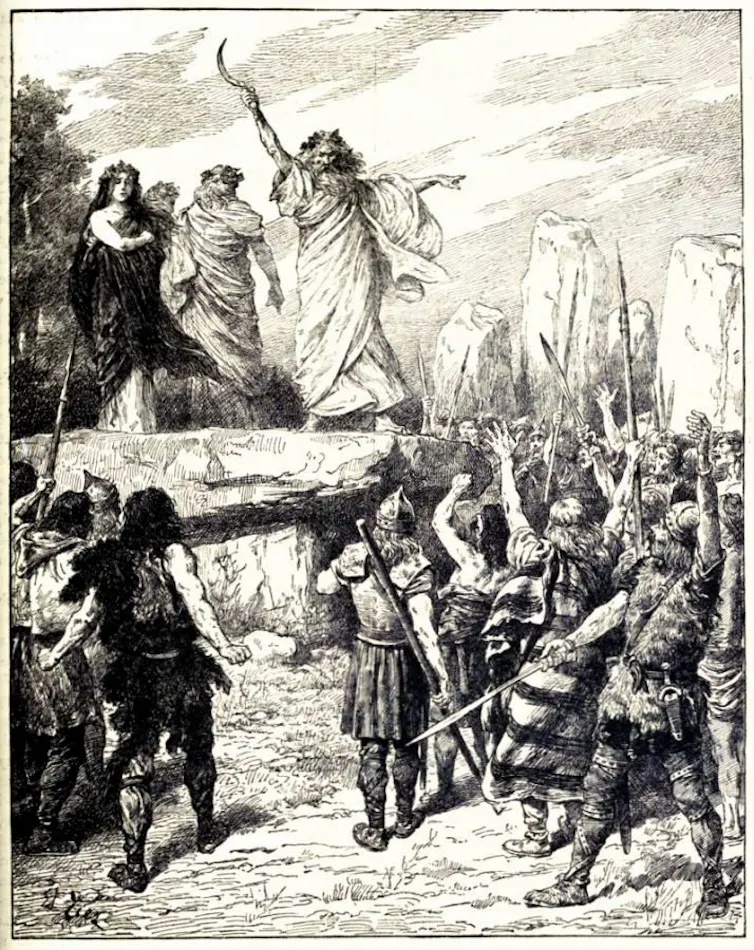
Druids incite the Britons to oppose the landing of the Romans.Edouard Zier
Such conclusions were drawn from physical, cultural and linguistic observations. Now it is testable, thanks to rapid advances in population genomics and ancient DNA sequencing, allowing direct ancestry reconstruction across demographic and political changes.
A major recent study by Marina Silva, from the Francis Crick Institute in London, and colleagues analysed more than 1,000 ancient genomes from across Britain during the first millennium AD.
The pre-print, which has not yet been published in a journal, asks one simple question: could the main historical events of Britain – the Roman occupation, Anglo-Saxon migration, the Viking Age and the Norman conquest – be detected in the genetic data of the populations that lived through these eras?
The answer was complicated. The Roman period, for all its political and cultural upheaval, left surprisingly little mark on the genetic structure of the wider population. About 80% of the individuals who lived during Roman times in Britain cluster almost exactly with those of the immediately preceding Iron Age, arguing for genetic continuity and no replacement. Even in urban centres where occupying Roman elites were most prevalent, the broader population retained overwhelmingly local ancestry.
In contrast, the early medieval period, from around 410AD (when Roman rule collapsed) to 1066AD, saw a substantial influx of new ancestry from across the North Sea. The researchers were able to detect this influx by comparing the British samples with genetic data from populations in other parts of north-west Europe. Continental ancestry associated with Anglo-Saxon migration appears in more than 70% of of the burials in southern “Anglo-Saxon” Britain.
The early medieval period saw a substantial influx of new ancestry from across the North Sea.Shutterstock AI
Thus, migration was not just cultural but demographic on a scale sufficient to leave its imprint on the shape of population structure.
Yet even this transformation cannot be generalised. From about 700AD to 1000AD, further waves of continental influence appear in Britain, with the arrival of settlers from central Europe (seemingly from France and the Rhineland) and, to a lesser extent, the south of Europe. However, the Viking Age leaves a more uneven and regionally variable genetic signal than its historical prominence might suggest.
While a Scandinavian component is clearly present in northern and eastern regions,
it is rarely of a magnitude comparable to that found in early medieval migrations.
Most surprisingly, the Norman conquest of 1066 appears to have been largely an
elite process, leaving little detectable trace in the genomes of the common
population.
Genome-wide ancestry profiles straddle the date of the conquest, with
no hint of abrupt population replacement. Despite all its drama, the conquest seems, at the level of population genetics, to have involved elite replacement by relatively few individuals.
A second pre-print study provides a closer view of what this looked like on the ground. Focusing on a rural cemetery at Priory Orchard in Surrey, Flavio De Angelis, from Arizona State University in Tempe, and colleagues examined individuals buried across the centuries before and after the Norman conquest.
Again, the results are surprising: rather than any clear genetic break after 1066, both pre- and post-conquest burials fall within the same cluster, showing shared ancestry and no evidence for demographic turnover. The continuity is not just qualitative, but visible in the statistical similarity of ancestry components
across generations.
Instead, the community reflects a much longer history of interaction across the North Sea world. Its ancestry includes Anglo-Saxon-associated components, significant Scandinavian input dating to the Viking period, and smaller continental contributions.
Crucially, these elements are already present before the Norman arrival and persist
afterward. The Norman conquest, in genetic terms, is barely visible. What looks, on historical timelines, like a moment of dramatic rupture appears, at the level of the common individual, as a continuation. Genes tell the story of populations and detect localised impacts of migration, but they do not map neatly onto geopolitics.
Taken together, these studies point to a crucial distinction. Cultural and political change does not necessarily equate to demographic change. Britain’s history is neither one of uninterrupted continuity nor of repeated population replacement, but something more complex: long-term mixture punctuated by events that reshape institutions more than populations.
Some migrations – such as those of the early medieval period – left deep and
measurable genetic legacies. Others, despite their prominence in historical
narratives, left only faint traces. The discrepancy is striking: the scale of genetic change does not map neatly onto the scale of historical attention.
Modern genetic data reinforce this picture. Contemporary populations across the
British Isles do not form a single, uniform group. Instead, they cluster into
overlapping but distinct lineages reflecting different regional histories and varying degrees of past migration.
These patterns echo the ancient record, but they did not affect all regions equally. Wales and Ireland retain stronger continuity with earlier populations, while England shows clearer evidence of ancestry linked to early medieval migration from northern Europe. Scotland occupies an intermediate position, reflecting both long-term continuity and later Scandinavian influence.
Importantly, these differences are matters of degree, not kind. All populations of the British Isles share deep common ancestry overlaid by layers of migration whose
effects vary regionally. The structure we see today is the product of these layered
histories, not the survival of isolated or “pure” populations.
What emerges is not a story of rooted, bounded identities, but of continual
connection. British identity – like all identities – has been assembled over millennia through movement, interaction and adaptation.
Modern genomes do not simply tell us who we are; they preserve how we got here.
History does not make migration exceptional – it reveals it as the norm.
Jay Silverstein does not work for, consult, own shares in or receive funding from any company or organisation that would benefit from this article, and has disclosed no relevant affiliations beyond their academic appointment.
There is not yet much research on the effects of heatwaves on bees. What little there is focuses on super extremes of weather that would kill an adult bee.
However, my new research with colleagues shows that UK populations of solitary bees may be much more sensitive than previously thought to the kinds of extreme weather we are now seeing regularly.
To find out what happens to bees during hot weather, my team recreated the three-day UK heatwave of July 2022. We subjected a group of developing larvae of red mason bees to three days where temperatures peaked daily at 40°C.
Red mason bees are common solitary bees found in UK gardens, and are important pollinators of apples and other fruits. At the same time, a control group experienced normal July temperatures for Hull, where the study was conducted, peaking daily at about 25°C.
After that, we treated both groups identically and allowed them to spin their cocoons and hibernate as normal. Nine months later, all the bees emerged fine, so it appeared initially that the heatwave had had no effect.
But this was before we dissected the bees to look at their reproductive health.
Staggeringly, in males from the heatwave group, sperm activity had dropped by half compared with the control group, and sperm counts by one third. In females, there was a 15% reduction in both the size and the number of developing eggs.
The heatwave had wrecked their fertility, especially in males.
Reduction of sperm motility in bees during heatwave
The heatwave reduced sperm motility by half.Jamie Smith/Journal of Thermal Biology, CC BY
These numbers are shocking because they suggest solitary bee populations are much more sensitive to weather extremes than we thought, and that this should be factored into calculations of the broader effects of climate change. While bees did not die outright, their fertility was severely affected.
This means that a heatwave one year could lead to a drastic drop in the number of bees the following year, and therefore less efficient pollination for key crops like apples, cherries and oilseed rape.
This would leave commercial fruit growers even more reliant on temporarily renting honeybee hives, commonly called “hire-a-hive” schemes, to combat pollination deficits. This is at a time when research increasingly shows that wild bees, whose services come for free, are better pollinators than honeybees.
What else happens in heatwaves?
In honeybees and bumblebees, living together as a group is the key to withstanding weather extremes. With their social hives, honeybees can flexibly respond to periods of heavy rainfall and strong winds by rapidly reallocating the tasks that worker bees perform – switching from nest maintenance to foraging, for example.
Honeybees and bumblebees are also able to respond to temperature changes. They maintain their nests within strict temperature limits, with some workers switching to becoming living radiators when temperatures drop, buzzing their wing muscles to produce heat that keeps the brood at the ideal growing temperature.
Bumblebee nests begin with a single queen hibernating over winter and then working alone to build up her brood. New research is revealing secrets of their resilience: for example, hibernating bumblebee queens can survive underwater for up to a week when their nest is flooded.
However, honeybees and bumblebees are not most bees.
Unlike honeybees and bumblebees, most bees are solitary, which means they don’t have social nestmates to help them when times get tough – they work entirely on their own. Nests of these solitary bees are at the mercy of the elements, so solitary bees are much more vulnerable to climate change than social bees.
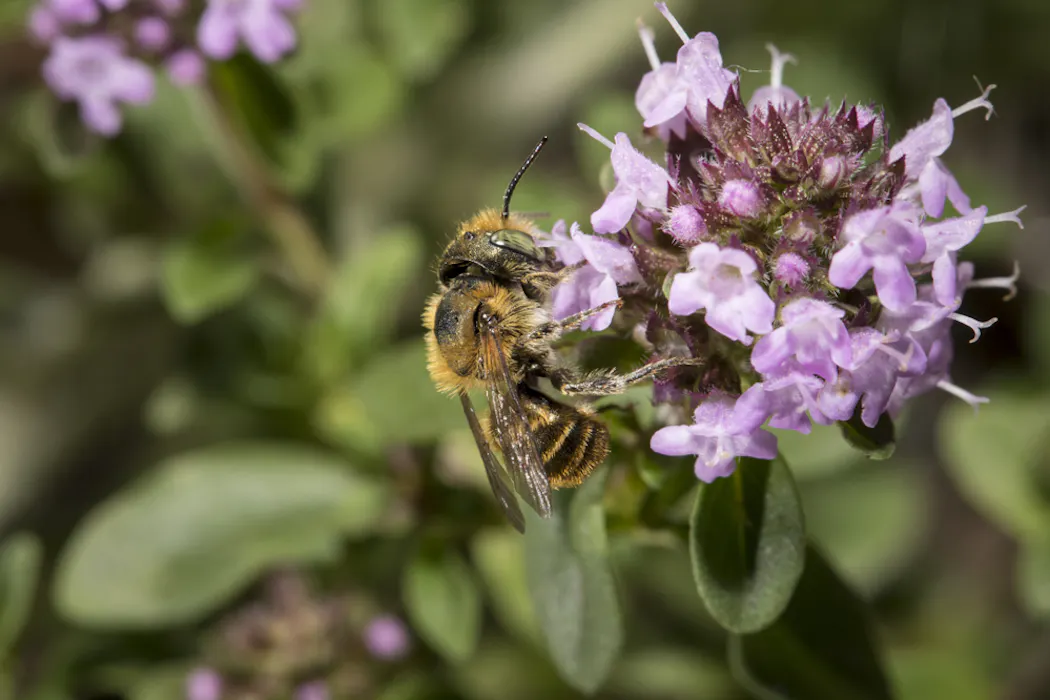
Female red mason bee adding pollen to her nest. The sealed cells behind her are completed with eggs, and the larvae will hatch out and eat the pollen.James Gilbert, CC BY
The priority now is to investigate how bees affected by heatwaves also cope with these other problems. Our lab heads up a government-funded study looking at how climate change affects the nutritional needs of growing wild bees, and how parent bees respond to these needs.
Excitingly, we are beginning to see patterns indicating that growing bees require different balances of nutrients when they are reared at different temperatures. We are now testing whether bee mothers are sensitive to these requirements, and can adjust the pollen they gather to compensate.
Extreme hot weather is becoming more prevalent, even in cooler countries. These studies show that severe weather, while not necessarily killing bees outright, has the ability to seriously damage the bee population – with long-term consequences for pollination as well as the human food chain.
James Gilbert currently receives funding from UKRI (BBSRC) and the study mentioned in this article, on which James is a coauthor, was funded by UKRI (NERC).
In the first landmark publication of his papacy, Pope Leo XIV has addressed recent advances in artificial intelligence by focusing on the threat it poses to workers, social justice and “the dignity of persons”.
Presenting his first papal encyclical, “Magnifica Humanitas” (“Magnificent Humanity”), at the Vatican on May 25, Leo declared: “Artificial intelligence needs to be disarmed.”
In the document – comprising around 42,300 words in its English translation – the pope writes: “To disarm does not mean rejecting technology, but preventing it from dominating humanity.”
Encyclicals are exceptionally important papal documents that respond to the most pressing social issues of the time. Typically written as letters to all bishops and archbishops, they have become a crucial vehicle for disseminating the theology and political commitments of the Roman Catholic Church across the world.
Pope Leo XIV signing his first encyclical on May 15 2026. Video: Vatican News.
Leo chose to sign his first encyclical on May 15 2026, the exact anniversary of Pope Leo XIII’s “Rerum novarum” (“Of new things”). This famous encyclical, which responded to the technological advances of the industrial revolution, became the foundational document of all modern Catholic social teaching.
Indeed, the current pope probably chose the name Leo because of Leo XIII’s renowned commitment to social justice.
Just as “Rerum novarum” responded to the industrial revolution by emphasising workers’ rights and the dignity of human labour, so too Leo XIV has responded to the explosion of AI technology by emphasising the importance of human over machine intelligence.
In 1891, Leo XIII wrote: “Wage-earners … should be specially cared for and protected by the government.”
Leo XIV now makes similar appeals to world governments about AI: “It is necessary to establish adequate regulatory tools capable of upholding justice and curbing the distorting effects of technological power.”
Leo XIV’s presentation was preceded by a short film which juxtaposed images of previous popes with major technological innovations. Radio towers gave way to images of broadband centres; early computers to a sea of people holding up their smartphones in St Peter’s Square, Vatican City.
Perhaps the crucial theme of this video was the connection between technology and war. Pictures of second world war aircraft were intercut with the dropping of the atomic bomb, soon followed by images of the 9/11 attacks.
In the encyclical, Leo warns: “The growing ease with which autonomous weapons systems can be deployed makes war more ‘feasible’ and less subject to human control.”
Call for disarmament
Leo XIV isn’t the first pope to address the potential threat posed by AI technology. In January 2025, his predecessor Francis signed off the doctrinal note “Antiqua et nova” (“Ancient and new”) – which called for AI technology “to include the least of our brothers and sisters, the vulnerable and those most in need”.
Leo’s new call for the disarmament of AI is not a demand to discontinue its development, but to regulate AI robustly so it only serves the common good.
In this, the pope drew an analogy with the nuclear disarmament movement, suggesting that both nuclear and AI technologies should only be developed for the good of humanity, and never used as weapons.
Video: Vatican News.
Those invited to offer their thoughts on Leo’s encyclical included Christopher Olah, the Canadian billionaire and co-founder of AI firm Anthropic. The appearance of Olah marks the first time a speaker entirely outside clerical or theological circles has been included in such a presentation.
Anthropic is currently locked in a legal dispute with the US government regarding the military application of its AI systems. Leo’s encyclical underlines his concerns about the escalation of war around the world, stating: “It is important to reaffirm that the ‘just war’ theory, which has all too often been used to justify any kind of war, is now outdated.”
Olah echoed Leo’s demands for greater social justice around the use of AI, stating: “His Holiness’s call for disarmament is profoundly timely.”
He called for people working outside computer science to contribute to AI governance and ethics – people “beyond the incentives” of financial markets “who can see what we, from the inside, cannot”.
Leo answered Olah by saying: “In the name of the Church, I accept your invitation to walk together, to listen and to speak – and together, to find the way for humanity in this time of artificial intelligence.”
James Lorenz does not work for, consult, own shares in or receive funding from any company or organisation that would benefit from this article, and has disclosed no relevant affiliations beyond their academic appointment.
The world we live in today runs on batteries. But the lithium ion batteries that dominate the market are expensive and environmentally demanding to extract. The raw materials for lithium ion batteries are scarce and concentrated in a few geographical regions. This places continued pressure on supply chains.
Sodium-ion batteries are a promising alternative because they use abundant materials. But sodium has shortcomings that have blocked it from being used as a replacement for lithium.
In work carried out at the University of Limerick’s Bernal Institute, my team has now produced a battery that combines the strengths of sodium and lithium. This could lead to more sustainable batteries that reduce the supply chain pressures associated with lithium. The results have been published in the journal Nano Energy.
Sodium-ion batteries lag behind lithium ones in their energy density. Energy density is the amount of energy stored in a battery relative to its weight or size. Lower battery energy densities have an impact on the devices and machines they power.
If electric vehicles used battery modules with lower energy densities, it would limit the distance they could travel before needing to be recharged. Lowering the energy densities of batteries would also make tablet devices and laptops heavier.
As an energy storage researcher, this paradox gnawed at me. How could we harness sodium’s sustainability without sacrificing performance? The tension feels like the ancient philosophical concept of yin and yang. This idea describes how seemingly opposing forces are actually complementary and connected.
In this case, sodium is abundant but weak, while lithium is powerful but scarce. Inspired by this dichotomy, I wondered whether the two technologies could work in harmony rather than competing.
This led us to produce the first full cell battery with two electrodes – one positive, one negative – that uses two charged atoms or molecules (ions). In this case the charged atoms are sodium and lithium. Batteries that use different positively charged ions to store and transfer energy are known as dual cation batteries.
Why sodium ions fall short
A standard battery is made up of one or more cells. The cell converts chemical energy into electrical energy. In the cell are two electrodes, or terminals: a positive terminal called a cathode and a negative terminal called the anode.
When the battery is used to power an electronic device, negatively charged electrons flow through the circuit and reach the battery’s positive terminal. The chemical medium between the anode and cathode is called the electrolyte.
I decided to combine lithium and sodium in a half cell, which has one electrode immersed in an electrolyte rather than two. Just a modest amount of lithium salt added to a sodium-dominant electrolyte radically changed the way the battery behaved.
Syed Abdul Ahad (L) and Hugh Geaney are shown with the experimental set-up.University of Limerick
It roughly doubled the storage capacity of our half cell compared with an equivalent state-of-the-art sodium based battery. It was also stable up to 1,000 charge-discharge cycles at higher charging currents. Charge-discharge cycles measure how many times a battery can drain from 100% to 0% and recharge to 100% before its capacity degrades.
For someone who had previously watched sodium-ion batteries fade after a few dozen cycles, these results felt like witnessing a miracle.
Behind the scenes, a fascinating chemical ballet between lithium and sodium was taking place. Lithium ions are smaller than sodium ions, so they can move more easily through the anode material. Their movement helps open smoother pathways for sodium, lowering the “diffusion barrier” – resistance at the anode that normally slows sodium batteries down. This allowed more ions to enter the anode, allowing it to store more charge.
Just as importantly, sodium helped prevent lithium from getting trapped inside the material after discharge. This back-and-forth exchange kept the reaction reversible, giving the battery both higher capacity and better cycle stability. In this yin–yang interplay, neither ion dominated; instead, they worked in harmony.
Powering clean energy
Half-cell tests are the first step towards real world applications. For the next step, I demonstrated how a mixture of lithium and sodium worked in a full battery cell.
Battery capacity retention measures the percentage of the energy originally stored in a battery that remains available after a given period of usage. The full cell delivered a battery capacity retention of 70% after 200 cycles. This is far better than the sodium-only electrolyte, which started to fail after about 50 cycles.
The full cell performance was particularly satisfying, as sodium remains the dominant charge carrier. This ensures that the battery is still fundamentally a sodium-ion system.
This breakthrough could help power the world’s clean-energy transition by reducing reliance on cobalt- and nickel-rich cathodes, which are common, but expensive, supply-constrained and linked to environmental concerns. Our design keeps sodium as the main working ion and pairs it with a more sustainable iron sulphide cathode.
Because sodium and iron are more abundant than many conventional battery metals, the chemistry could be cheaper and easier to scale.
The small amount of lithium acts mainly as a performance booster rather than the main resource. That makes the battery both higher performing and potentially less dependent on costly critical materials. Furthermore, it represents a new route to storing renewable energy on the grid, which can help communities and industries transition to a greener future.
Despite the success of our prototype, much work remains to be done. The anode in our cell and half-cell was made of germanium, which is expensive. The next challenge is to replace germanium with cheaper anode materials. One candidate is silicon, which can reversibly host both lithium and sodium ions during charging and discharging, but also provide the battery with a higher storage capacity.
This boost would increase the energy density of sodium-dominated batteries. We also need to pair the anode with a cathode capable of producing higher voltages than we currently have.
I have already been exploring alternative and sustainable pairings of different ions, such as lithium–magnesium and potassium–sodium. I am also experimenting with new electrolyte formulations.
My team’s research shows that by embracing the yin-yang of lithium and sodium, we can move towards batteries that show both high performance and sustainability. This raises the prospect of a world where your phone, car and even the grid will draw power from cheap, abundant sodium ions – gently assisted by a whisper of lithium.
Syed Abdul Ahad receives funding from Research Ireland Postdoctoral Fellowship supported by government of Ireland.
While Syed Abdul Ahad led the conceptual design and experimentation, these findings would not have been possible without the support of his mentor, Professsor Hugh Geaney, and collaborators within the University of Limerick and the University of Birmingham.
An Irish Air Corps helicopter extinguishing a wildfire in Howth, Dublin, in 2023.Thomas Halpin/Shutterstock
The most destructive wildfire season on record in Europe was in 2025, with more than one million hectares burned and tens of thousands of people displaced by fires across the continent.
For people in Ireland and Britain, the type of destructive wildfires that ravage southern Europe each summer can seem like a distant problem. But these fires are not confined to the dry Mediterranean landscapes of Spain, Portugal and Greece. In recent years, they have started to extend into regions more commonly associated with rain-soaked hills and bogs.
Similar warnings were issued nationally in Ireland over the Easter bank holiday weekend, when the public was urged to avoid lighting fires or bringing barbecues into the countryside. The threat of wildfires is only expected to ramp up this summer as temperatures rise further.
These are important messages. But focusing only on how fires start risks missing a slower and less visible transformation already unfolding across many upland landscapes. The real wildfire story in places like Ireland and Scotland is not just about climate or how fires start. It is also about how rural upland landscapes themselves are changing.
Changing farming styles
Recent research explores how decades of agricultural policy reform under the EU’s common agricultural policy, alongside falling farming populations and declining active land management, are reshaping vegetation patterns across Ireland’s uplands.
Historically, many upland landscapes were actively managed through livestock grazing, cutting and controlled patch burning. These practices helped maintain open landscapes and reduced the build-up of highly flammable vegetation.
But that balance has shifted. Reduced grazing pressure and changing land management practices are contributing to the expansion of highly flammable vegetation such as gorse, heather and purple moor grass.
While lower grazing pressure can bring biodiversity benefits and support natural regeneration, it can also increase the amount and proliferation of flammable vegetation across the landscape, known as fuel loads and fuel continuity. In practice, this means larger and more connected stretches of vegetation that allow fires to spread more rapidly and across greater distances.
This is especially concerning in upland areas where the average age of people working on farms is rising, and active land management is declining. Rural depopulation and labour shortages mean fewer people are available to manage what is known as commonages in Ireland and common grazing in Scotland. That means less maintenance of grazing systems and a reduction in the small, controlled vegetation burns that historically decreased wildfire risk by clearing vegetation and creating firebreaks. As one upland farmer in County Kerry recently described it to me: “It’s a bomb waiting to go off.”
Increasing flammability
Climate change is intensifying these risks. Hotter, drier conditions increase the likelihood that vegetation will dry out, increasing flammability. But climate alone does not explain why some landscapes burn more severely than others.
Wildfire risk is also shaped by what is growing on the land, how landscapes are managed, and whether fuel loads are reduced or allowed to accumulate over time. Experts responding to the recent Scottish fires also highlighted the role of vegetation build-up, prolonged dry conditions and changing land management in shaping fire behaviour, warning that historically wetter regions may face increasing wildfire risks in the future.
Similar patterns have already emerged across parts of southern Europe, where rural depopulation and land abandonment have contributed to increasingly severe wildfire regimes.
Recent research from Italy has shown abandoned land, declining grazing and reduced active land management have contributed to fuel accumulation, and to the build-up of dense, continuous vegetation – conditions associated with increasingly large and severe wildfires. While the climates and landscapes of Ireland and Scotland differ from the Mediterranean, similar long-term changes are beginning to emerge here.
This creates a difficult tension for policymakers and conservationists. Reduced grazing pressure and natural regeneration can support biodiversity recovery in upland systems. Yet these same changes may also increase wildfire risk where vegetation becomes dense, continuous and unmanaged. The challenge is therefore not choosing between farming or conservation, but finding ways to support landscapes that can sustain biodiversity, rural livelihoods and wildfire resilience together.
Wildfire risk in Ireland and Scotland can no longer be understood simply as a problem of careless ignitions or extreme weather. It runs much deeper than that. It is increasingly tied to long-term changes in how upland landscapes are farmed, governed and managed.
If future policy is serious about reducing wildfire risk, it must look beyond seasonal warnings and begin addressing the deeper forces reshaping our uplands.
Will Hayes is affiliated with the Department of Geography at Royal Holloway, University of London, and the Leverhulme Centre for Wildfires, Environment and Society. Funding for this research was provided by the Leverhulme Trust.
It may sound too bizarre to be true but the Amazon molly (Poecilia formosa), a fish that inhabits rivers, lakes and swamps in Mexico and Texas, exists over much of its range in populations that are 100% female. In 1932, the Amazon molly became the first known vertebrate to reproduce by cloning itself, producing all-female populations. A new genetic study has given scientists insights into the longstanding mystery about how and why this happens.
The proportion of females in the human population is roughly 50%. A few countries such as Maldives (38% female) and Moldova (54% female) diverge from this, but these differences can largely be explained due to male immigration and emigration. However, much more dramatic sex ratios are found in the animal kingdom. Kentish plover bird populations, where males care for offspring, comprise only 14% female, and sea turtle populations, where sex is determined by temperature often exceed 75% female.
Most animal species reproduce sexually. This involves the fusion of two gametes, the sperm and egg, that develops into an embryo. A process, known as recombination, randomly shuffles the genetic material from the mother and father. This produces increased variability in the offspring, and new combinations of traits. The genetic diversity improves the chances of survival for the species if its environment changes.
But the Amazon molly reproduces asexually, where there is no mixing of genetic material. This reduces genetic diversity, making populations vulnerable to extinction – if one Amazon molly is susceptible to a disease, they all are.
And there is another problem to being identical. Asexual species are more likely to accumulate harmful mutations. This phenomenon, known as Muller’s ratchet, predicts that clones should go extinct within 10,000 years. Yet, the Amazon molly, – a hybrid that arose through sexual reproduction between a female Atlantic molly (P. mexicana) and a male sailfin molly (P. latipinna) – has survived for over 100,000 years.
So, what is the secret to their sustained existence?
Gene conversion is a process where one version of a gene is replaced by another. In most species, such as humans, it is used to repair damaged DNA. However, in the Amazon molly, gene conversion has slowed Muller’s ratchet. The new study found that gene conversion appears to play the same role as recombination. This essentially enables the fish to purge harmful mutations and preserve beneficial ones. Indeed, despite reproducing asexually, the Amazon molly shows differences in body shape between populations, demonstrating evolution in response to its local environment.
The Amazon molly reproduces via a process called parthenogenesis, also known as “virgin birth”, where young are produced from an unfertilised gamete. This allows rapid growth of successful genotypes, the genetic blueprints of organisms, as all of the Amazon mollies can reproduce without finding a mate. As such, animals created via virgin births can colonise habitats quickly.
Parthenogenesis can be obligative, like in the Amazon molly, where it is the only means of reproduction. But, it can also be facultative, where species can switch between sexual and asexual reproduction. For example, the marbled crayfish, reproduce sexually in their native range but rapidly establish themselves in new habitats asexually, often from a single female.
The Amazon molly has a type of parthenogenesis known as gynogenesis where sperm is required to stimulate development of the unfertilised egg. So, the Amazon molly still needs to “mate” each time she reproduces, but the sperm is not incorporated into the offspring.
The Amazon molly mates with males from species closely related to them, which reproduce sexually. Although the genes of these males are not passed on to the next generation, it is still advantageous for them. That’s because female animals often follow trends when it comes to selecting a mate. So when the female fish of their own species see the males with an Amazon molly, they are more likely to mate with them.
Parthenogenesis is common in invertebrate animals, including ants, bees and wasps. It is less common in vertebrates but has been found in other fish, amphibians, reptiles including the Komodo dragon, birds such as Californian condors and sharks for example hammerheads.
Other all-female parthenogenic vertebrates include the whiptail lizards, where almost a third of species are comprised solely of females. The New Mexico whiptail lizard has even become a queer icon. Unlike the Amazon molly, these “lesbian lizards” do not need sperm from a male to stimulate egg development. They just need to engage in mating behaviour to stimulate ovulation, bypassing males completely.
Some blue-spotted salamanders have reproduced asexually for several million years. Although the all-female populations of the salamanders reproduce in a similar way to the molly fish, requiring sperm to stimulate development, they are kleptogenic. This means that they replace a portion of the mother’s DNA with a portion of DNA from the male’s sperm, incorporating a small amount of his genetic material into the offspring. This facilitates the genetic diversity that has enabled the salamanders to survive for so long.
Like the Amazon molly, the Brahminy blind snake, also known as the flowerpot snake due to its habit of burrowing in potted plants, is the only other known vertebrate that breeds exclusively via parthenogenesis.
The snakes have three copies of each chromosome, rather than the usual two, probably due to an error in cell division at some point in the evolutionary history of the species. Increased numbers of chromosomes have been found in many species, including salmon with four copies, and sturgeon fish with eight copies.
Increased numbers of chromosomes generates increased genetic diversity, which probably explains how the blind snake clones have survived for so long.
There could be more all-female animals out there yet to be discovered. After all, up until a few years ago we didn’t know that female snakes have two clitorises.
Louise Gentle works for Nottingham Trent University.
Society depends on chemistry far more than we consciously realise, from medicines to energy to electronics. However, chemistry is viewed with as much apprehension as gratitude, because of the pollution and health problems that some chemicals cause.
There is a strong desire to have all the benefits of chemistry, but none of the downsides. This has led to terms like “chemical free product” coming into popular usage.
Of course it’s impossible to have a chemical free product – the ingredients in these products are still chemicals. But they employ a different approach, using benign ingredients from nature. These innovative products are examples of “green chemistry”.
Green chemistry takes a holistic – all encompassing – approach to the production of chemicals. This approach brings chemistry into balance with nature and avoids harm. Green chemistry protects the environment and considers the future by design.
Examples of green chemistry include using compounds derived from seaweed to replace man-made plastics. Another is capturing CO₂ from power plants and transforming it into more sustainable fuels for jets and ships. The principles of green chemistry are also being applied to developing smart materials that can change their properties, such as their colour.
Fresh approaches
Instead of merely making older approaches to chemistry a little bit “less bad”, green chemistry is about finding new functions for the materials we use in our daily lives and getting better levels of performance out of them.
This approach reflects the fact that using resources wastefully can be eliminated through smarter chemistry. This involves rethinking everything, including the supply chains.
Alginates are compounds obtained from brown seaweed. They can form natural polymers with a variety of uses.Arfin Studio
An example of finding new functions for existing chemicals includes the use of natural polymers derived from seaweed, called alginates, that are already used in cosmetics and foods, to also replace plastics in packaging so that packaging biodegrades in soil.
The Green Chemistry in America 2026 report published by the Gordon and Betty Moore Foundation surveyed 300 US executives and other leaders from the worlds of research and development and technology. Over 90% of those leaders who were familiar with green chemistry agreed that it
delivers a competitive advantage. Some 76% of these leaders said that green chemistry will fuel innovation and long term economic growth.
Waste as raw material
Countless tonnes of waste are often generated during manufacturing. This can be produced in far greater quantities than the product itself and can turn into pollution. Instead, green chemistry uses waste as a raw material, making chemical use more circular and sustainable.
Instead of changing our climate with gigatonnes of CO₂ emitted from smokestacks,
green chemistry is capturing CO₂ and transforming it into products like more
sustainable fuels for jets and ships. These synthetic fuels are created by combining green hydrogen (produced from water using renewable electricity) with the captured carbon dioxide.
Near-term investments are advancing the development of dynamic – and sustainable – materials that will change in ways that we want them to on command; such as their colour, or ability to conduct electricity.
Smart materials that can change colour or shape are already a reality (University of Waterloo).
These are but a few of the near-term visions of how green chemistry could foster a
revolution in innovation. However, these advances need to take place on a timeframe
and scale that can benefit humanity in the near future.
Some of the world’s top scientists met in Stockholm in May 2025 to wrestle with the question of how to make this possible. The result was The Stockholm Declaration on Chemistry for the Future.
This declaration contains two particularly important sentences that reflect its purpose. The first of these is that “the chemistry of sustainability recognises that sustainability without innovation is impossible and innovation without sustainability would be ruinous”. The second key sentence is: “While scientific discovery and invention is crucial, it is also not sufficient by itself.”
Carbon dioxide from power plants can be captured and used to make more sustainable fuels for aircraft and ships.David Jancik / Shutterstock
The Stockholm document goes on to list all the sectors of society that are needed to implement its vision. These include business, investment, education, communication, policy and public support.
All consumers are affected by “bad” chemistry, so they should take decisions accordingly – demanding green chemistry in all products.
The resources available to improve the ways that chemicals are made include sunlight, wind, agricultural and food waste, geothermal energy and – most importantly – human ingenuity. There is an immense potential for innovation.
Paul T Anastas has equity in several carbon dioxide utilisation companies.
Andrew C Marr does not work for, consult, own shares in or receive funding from any company or organisation that would benefit from this article, and has disclosed no relevant affiliations beyond their academic appointment.
In the early 1990s, crime-loving television audiences could choose mainly between cozy, fictional detective series such as Columbo and Murder, She Wrote. The US docuseries Unsolved Mysteries brought a few real cold-case investigations to light, but coverage of forensic science on screen was still relatively simple.
Then, in May 1991, The Silence of the Lambs was released. Based on Thomas Harris’s 1988 novel, this big-budget thriller was darker, more disturbing and psychologically complex than most crime films of the time.
The protagonist, FBI trainee Clarice Starling (played by Jodie Foster), is a young woman working in a predominantly male environment – who is often underestimated by her colleagues. When she discovers key evidence through a suspenseful process of extraction from a young victim’s mouth, viewers are introduced to a field of criminal investigation they may never have considered before: forensic entomology.
Some kind of seed pod?
No, sir … that’s a bug cocoon.
Entomology – the scientific study of insects – is one of the oldest branches of the natural sciences. And the application of insects to criminal cases dates back almost as far. In the forensic text The Washing Away of Wrongs (1247), written by Chinese investigator Sung T’zu, flies attracted to traces of blood on a sickle helped identify a murderer.
However, it was not until the late 19th century that forensic entomology was formalised as a scientific discipline – thanks largely to the studies of Jean Pierre Mégnin. Influenced by his experiences on the battlefield, the French vet began investigating which insects were attracted to animal and human remains at different stages of decomposition.
Human remains are commonly colonised by blowflies and their maggots. But in The Silence of the Lambs, Starling was faced with something more unusual: the cocoon of a death’s-head hawkmoth (Acherontia atropos).
The cocoon, which the serial killer inserts into his victims’ throats, is identified by two entomologists who are clearly not forensically trained. Otherwise, they would have thought twice before cutting open the only piece of insect evidence without seeking permission for such a destructive analysis.
Today, many of us working in forensic entomology and taphonomy (the study of what happens to organisms between death and discovery) are still told our work is “just like The Silence of the Lambs”. But 35 years after the film’s release, forensic entomology is no longer limited to microscopes, forceps and entomologists working alone.
Today’s criminal investigations often feature complex interactions between environmental conditions, decomposition processes and human activity. This makes collaborations between multiple scientific (and non-scientific) disciplines essential.
How the science has progressed
In the two decades preceding the film’s release, the biomedical and life sciences journal PubMed listed 37 publications on the subject of forensic entomology. Since then, there have been more than 1,800.
Methods used for insect identification and age estimation have changed dramatically. Today, molecular and chemical techniques can identify insect species and determine their stage in the lifecycle and geographic origin. These techniques are especially useful in cold cases or poorly preserved crime scenes, where samples may have been damaged or improperly stored.
Insects are also playing an increasingly accurate role in determining the time of death. As well as feeding on decomposing remains, they help spread the bacteria and other microorganisms involved in decomposition. These microbial communities change in predictable ways over time – even in extreme environmental scenarios – offering investigators a further indicator of the postmortem interval.
Forensic entomology has also expanded into areas such as entomotoxicology, where insects feeding on decomposing remains are analysed for the presence of drugs, toxins or other chemical compounds. It is even possible to recover the DNA of the individual on whom an insect has been feeding directly from that insect’s gut contents.
The film’s infamous moth cocoon scene – which saw the extracted evidence collected with forceps, then taken for visual inspection at a museum – would be approached rather differently today.
Firstly, spoons are now recommended over forceps to avoid damaging the sample. Modern forensic practice aims to preserve specimens by taking photographs before any manipulation. Where possible, insects are reared to the adult stage which is often easier to identify with certainty.
Rather than opening the cocoon, it could be compared as is with museum reference collections or analysed using technology such as hyperspectral imaging. This would confirm the species and estimate its developmental stage without altering the evidence.
However, technological advances are not enough. The reliability of forensic entomology depends on appropriate crime scene protocols, evidence collection, ongoing research and, perhaps most importantly, specialist training and attention to detail. These qualities are certainly embodied by agent Starling.
But there is another major difference since the film came out in 1991. Unlike Starling’s experience, women now represent a major part of the forensic science workforce. They contribute to a discipline that has become far more diverse, collaborative and scientifically advanced than the one portrayed in The Silence of the Lambs.
This article features a reference to a book included for editorial reasons, and a link to bookshop.org. If you click on this link and go on to buy something from bookshop.org, The Conversation UK may earn a commission.
Noemi Procopio receives funding from UK Research and Innovation (UKRI) via a Future Leaders Fellowship, from National Institute of Justice (NIJ), and from Science and Technology in Policing.
Paola A. Magni does not work for, consult, own shares in or receive funding from any company or organisation that would benefit from this article, and has disclosed no relevant affiliations beyond their academic appointment.
Even advanced technology can struggle when the real world becomes unpredictable. In April 2026, a Waymo robotaxi in San Antonio, Texas, drove into a flooded lane during severe weather, prompting the company to recall about 3,800 vehicles for a software fix.
No one was injured, but the incident exposed a deeper challenge: intelligence is not just about processing data. It is about knowing where to look, what to notice, when to act and how to use previous experience when conditions change.
AI researchers are now looking at bees and other insects to help them design machines and robots that can make better decisions.
By combining behavioural experiments, neural recording (for example, measuring signals from the brain) and neuromorphic computing (an approach to computing inspired by the animal brain), my goal is to uncover the biological code that allows tiny brains to navigate a complex world and make efficient decisions. I have also worked in industry to translate these biological discoveries into robotic applications – bringing the intelligence of the hive to machine intelligence.
Research on honeybee decision making has shown that bees make rapid and accurate choices about whether to accept or reject flowers. They do not need perfect information. Instead, they combine sensory evidence, past experience and the likely value of a reward (for example, how much nectar they might gather).
Many autonomous systems need to be able to do this. A robot exploring a greenhouse, warehouse or disaster zone cannot wait for perfect data. Bees offer a model based on flexible decisions and useful shortcuts rather than huge computation.
With brains smaller than a sesame seed, bees navigate long distances, move through cluttered landscapes, identify rewarding flowers, avoid danger, communicate with nestmates and make rapid decisions. They achieve this with a tiny fraction of the energy used by modern computers, and can learn after only a few experiences that a new colour, scent or pattern predicts food.
This makes the bee an unlikely blueprint for low-power, robust AI and autonomous systems that can cope with the real world.
Bees can multitask
Many AI systems are designed to do one task well, such as recognising an image, following a route or detecting an object. Robotics has a harder ambition: compact machines that handle many tasks in unpredictable environments while using little power.
Bees offer a working example. During one foraging trip, a bee must find food, stay orientated, avoid danger and update its choices from experience, all with a brain containing around one million neurons. They do this by combining vision, smell, touch, vibration and airflow. Rather than processing every detail, they fuse information streams and extract what matters for survival.
Bees are valuable for robotics because they show how a small system can coordinate many tasks without huge computing power. That principle could guide low-power autonomous systems for agriculture, search and rescue, environmental monitoring and planetary exploration.
Bees also show that intelligence depends not only on what an animal senses, but also on how it moves to gather and shape information. This idea, known as active sensing, could transform robotics. When a bee approaches a flower, it does not take a still image like a camera. It moves its head and body; changes angle and creates patterns of visual motion across its eyes. These movements help useful information stand out, allowing the bee to ignore irrelevant details. This is why bees do not need to remember a flower as a detailed image. They only need to learn the key cues that help them recognise it again. Movement becomes part of sensing.
That is different from many machine-vision systems, which passively analyse images. A small robot using the bee’s strategy would not need to process every pixel. It could move to make the scene easier to understand, shifting position to judge distance, turning to improve contrast or using motion to detect obstacles.
The lesson is simple: intelligence is less about processing everything and more about using the right strategy to find the right information at the right time.
For a foraging bee, a bad decision can be costly. Visiting the wrong flower after a long journey wastes time and energy. Taking too long can mean losing an opportunity or being exposed to danger. To solve this, bees use relatively simple neural circuits to make rapid, accurate and risk-aware decisions. They do not need a huge brain or vast computing power. Instead, this minimal circuit helps them quickly decide whether to reject a flower or land on it safely.
Robotic navigation inspired by honey bee flight.
Navigation without a map
Navigation is another area where bees inspire engineers. Bees can travel several kilometres from the hive to food sources and return home using visual landmarks, distance estimates and memory. New research inspired by honeybee flights has shown how tiny drones could navigate using very small neural networks. In the study, a bee-inspired system called Bee-Nav allowed small robots to travel away from home and return using only a compact neural memory. Therefore, future drones may not need GPS, detailed maps or large onboard computers.
Instead, they may use compact memories of important views and simple movement rules. Such systems could be useful where GPS is unreliable, such as in forests, tunnels, greenhouses or collapsed buildings.
Many future machines, from small drones to farm robots and environmental sensors, will need to act without heavy batteries or constant cloud computing. Like bees, they will need simple navigation strategies that work with limited energy, memory and information.
The real lesson is broader: intelligence does not always require scale. As AI becomes more common in daily life, the bee offers an elegant answer to rising energy demands. For decades, the ambition of AI was to build systems that match the human mind, but the bee shows that smart does not have to mean big.
By mimicking the bee’s ability to learn fast, navigate without maps and integrate multiple sources of information, we may build technology that is more efficient, flexible and resilient.
HaDi MaBouDi does not work for, consult, own shares in or receive funding from any company or organisation that would benefit from this article, and has disclosed no relevant affiliations beyond their academic appointment.
Walking the dog: a US service member patrols with a Ghost Robotics Vision 60 prototype at Nellis Air Force Base in Nevada.Tech. Sgt. Cory Payne / US Air Force
The third in a series of military AI summits was held in La Coruña, Spain in February 2026. The aim of the meeting was to convert previously agreed principles on the military use of AI into action. The summit was attended by government officials, military personnel, representatives from industry and researchers from thinktanks.
The goal of many experts and policymakers in this area is to usher countries towards a regulatory framework on using machine intelligence in warfare. To this end, the latest Responsible AI in the Military Domain (REAIM) summit presented a non-binding commitment for countries to sign.
The REAIM agreement affirmed the need for human oversight of military AI systems, called for countries to carry out risk assessments and robust testing, and committed to transparency on how decisions are made when using AI in conflicts.
The reasoning behind such recommendations is sound. However, translating such a framework from plan to action faces multiple hurdles. Ultimately, less than half of the countries represented at this year’s REAIM summit signed the non-binding commitment.
To understand why, it’s instructive to look at what happened at the 80th UN General Assembly held in New York in December 2025. At the meeting, members of the assembly’s first committee voted overwhelmingly to approve two resolutions calling for greater international scrutiny of the risks from military uses of AI. However, the US and Russia notably opposed the resolutions.
The US had been a signatory to earlier REAIM summit commitments. But this year, the US and China both declined to sign it. There seems little doubt that this helped fuel the hesitancy of other countries.
The Netherlands’ defence minister Ruben Brekelmans put it succinctly when he said that governments face a “prisoner’s dilemma”. This is a concept in game theory where two rational individuals face competing incentives to cooperate with or betray one other.
Countries are effectively having to implement responsible restrictions on military AI without subjecting their armed forces to limitations that could be exploited by a less conscientious enemy.
Battlefield robots are being used in Ukraine, but they remain firmly under human control.Devdroid, CC BY-SA
An important sticking point is the deployment of autonomous AI systems in warfare. The idea of autonomous weapons systems, which make decisions without input from a human, remains a grave concern for many interested parties on this issue.
There continues to be a consensus against using such weapons. But countries can’t reach a common position over how to define them, particularly so-called lethal autonomous weapons systems – or Laws for short. These are often characterised as “killer robots”, though a more detailed description remains elusive.
A uniform definition for such systems could be an important first step towards a discussion on regulation. But, despite efforts by academic experts to draft and amend flexible definitions, countries remain too far apart on the characteristics they ascribe to these weapons.
The impasse is informed by a fear that accepting a definition could restrict countries’ militaries on the battlefield – threatening national security.
Testing grounds for tech
Existing legal mechanisms, such as international humanitarian laws, already prohibit the irresponsible and unethical use of military AI – in theory, at least. But how these laws would function in practice when applied to real world scenarios is uncertain.
The ongoing Russia-Ukraine war, the war in Gaza and the more recent escalation in Iran are being used by militaries as testing grounds for such technology.
The Lavender intelligence gathering and targeting software, used by Israel in Gaza, and Anthropic’s AI Model Claude, used by the US in Iran, demonstrate the rapid pace of advancement in AI-powered data gathering and analysis. This can help military planners make quicker decisions.
Drone warfare – AI assisted, autonomous and semi-autonomous – has grown at an equally rapid rate. This emerging technology is evolving significantly faster than the potential rules that could govern its use.
There’s a recurring argument that humans in the loop can operate as effective safeguards against the misuse of military AI systems. But as human overseers become familiar with the AI systems they use, their engagement may slip, causing them to become detached from the process.
As this happens, they may start to view real people as mere objects on a screen. This effect is known as automation bias. In such instances, human oversight could cease to be meaningful and instead lead to the simple rubber stamping of recommendations made by AI.
Additionally, the downsides of AI technology, such as bias, misinformation and disinformation generated by the systems themselves, and the erosion of human judgement resulting from overreliance on these systems, are not easy to solve after they enter use. This is why the REAIM summit commitment recommended risk assessments and robust testing before AI systems are adopted by militaries.
Without regulation, the risk of harm caused by AI systems remains significant. The severity of such risks balloons in magnitude when they are applied to military contexts. Miscalculations can lead to unintended escalation, as well as civilian deaths.
Mark Tsagas does not work for, consult, own shares in or receive funding from any company or organisation that would benefit from this article, and has disclosed no relevant affiliations beyond their academic appointment.
A queue of vehicles in central Manchester, one of two cities modelled to quantify the effect of traffic on urban heating.Marina J/Shutterstock
More than half the world’s population now lives in cities that are often much hotter than their rural surroundings. Roads, buildings and paved surfaces absorb and store heat during the day, then release it slowly after sunset. This is known as the urban heat island effect.
Discussions about why cities overheat tend to focus on buildings, which is understandable. As well as absorbing solar radiation, residential and office buildings consume a lot of energy through lighting, heating and air conditioning. They release waste heat, and shape the flow of air through surrounding streets.
But another source of urban heat receives much less attention: traffic.
Motorised vehicles release heat directly into the urban environment. This is especially true of petrol and diesel vehicles, where much of the fuel energy is lost as waste heat from internal combustion engines and exhaust systems. Tyres, brakes and friction with the road surface all add to these heat emissions.
In streets with heavy traffic and limited ventilation, traffic can be a significant source of human-made heat – as my recent study with colleagues of two major European cities shows.
In the southern French city of Toulouse, our modelling found that traffic heat increases the average annual air temperature by about 0.4°C. In Manchester, a typically cooler city in the north of England, the average annual air temperature increased by around 0.25°C thanks to its traffic.
Our past research has shown how the intensity, frequency and length of urban heatwaves are projected to increase in many parts of the world by 2070 (see maps). This includes cities in North America, Europe, India and China. Our latest work suggests these rises could in part be mitigated by reducing urban petrol and diesel traffic.
Projected urban heat changes by 2061-70:
How Manchester and Toulouse compare
The Community Earth System Model is a widely used open-source model for simulating interactions between land, atmosphere, climate and human activity – launched by the US National Center for Atmospheric Research in 2010.
However, traffic-related heat was not considered by the model – so we developed a new module for it which estimates heat generated from factors like traffic volume, vehicle type, road characteristics and weather conditions. Our results change depending on the time of day, according to the nature of the traffic and local weather conditions, for example.
We found that the most heat-polluting elements are generally high traffic volumes – and which kind of vehicles predominate in these traffic jams. Conventional petrol and diesel vehicles release substantially more waste heat than electric vehicles. In cities with lots of these vehicles, peak-period rush hours can become important sources of heat emissions.
We modelled traffic in two European cities – the central Capitole area of Toulouse and central Manchester – using traffic data provided by Transport for Greater Manchester and other opendatasets.
Toulouse and Manchester have quite different climates, urban landscapes and traffic patterns – all of which affect not only how much heat is released by traffic, but how that heat affects each city.
The heating effect of traffic was greater in Toulouse than Manchester.Ensapa37/Shutterstock
In Toulouse, morning traffic heat built up through the day and persisted into the night. In contrast, Manchester’s evening rush hour contributed to stronger overnight warming, with its air temperature from traffic peaking around 3am, on average.
In both cities, the traffic-related warming effect was stronger in winter than summer. In Toulouse, our modelling found it raised air temperature by an average of 0.5°C in winter and 0.3°C in summer, while in Manchester the increase was 0.35°C in winter and 0.16°C in summer.
The role of traffic in urban heating
Awareness of urban heat risk is increasing, but the role played by traffic is still rarely considered in urban climate adaptation and transport planning.
As cities continue to grow and climate extremes become more common, governments need better tools to understand where urban heat comes from and how it can be reduced. Our work is another step towards more realistic simulations of future cities.
Our model could offer more accurate answers to important questions such as: how much will electrification of vehicles reduce heat levels? How will changes in road design, vehicle use and congestion patterns affect local heat exposure? And to what extent can changes in urban transport methods limit the effects of predicted future heatwaves?
These are, of course, not just scientific questions but policy and design issues. Concerns around cities getting hotter often focus on trees, parks, cool roofs and building design. But traffic is not just a source of pollution and carbon emissions – it can also be part of how we plan cooler, healthier and more resilient cities.
Dr Zhonghua Zheng receives funding from UK Research and Innovation (UKRI).

 Login
Login