
Normal view

Great apes: what we know about their cognition, cooperation and curiosity after two decades of research

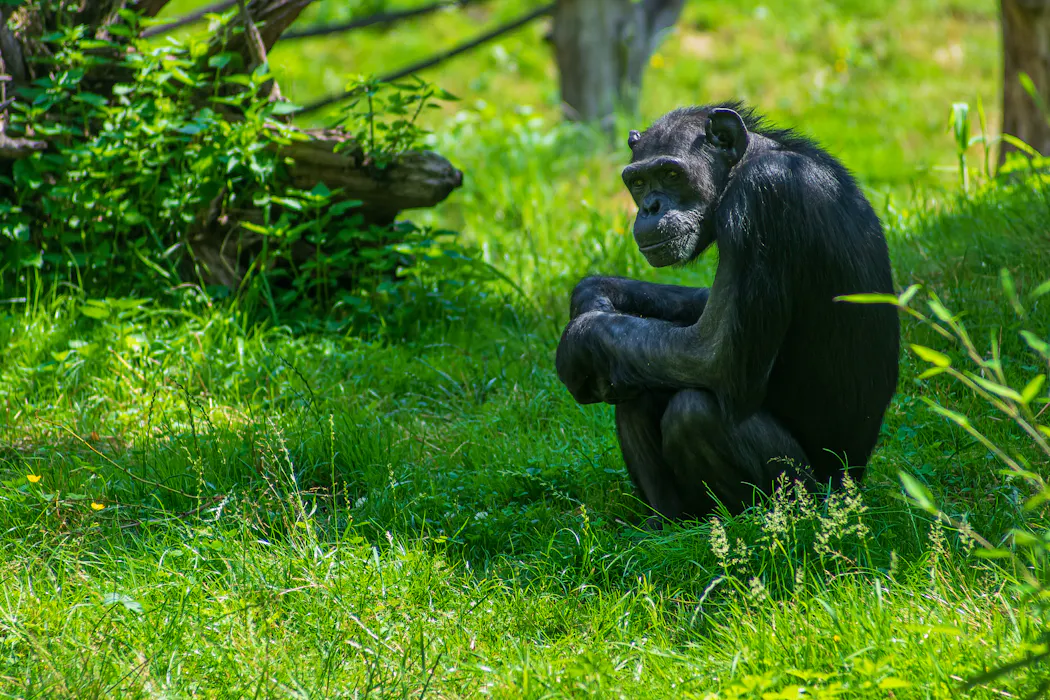
A chimpanzee sits in the Pongoland enclosure at Leipzig Zoo, where a huge amount of research has been conducted since 2004. Marco Warm/Shutterstock

Leipzig Zoo in central Germany is a world-leading centre of great ape research. Recent studies have seen chimpanzees there using touchscreen controls to navigate virtual forests and locate food rewards – applying similar techniques to what they would use in the wild.

Other research (of which I was part) has investigated chimpanzees’ social curiosity. We discovered they actively seek out information about others’ interactions, even if it means forgoing food rewards. Keeping track of their peers’ latest social developments appears central to these great apes’ social wellbeing.

But in my decade working with Leipzig Zoo’s chimpanzees and bonobos, one question came up repeatedly. Were differences in how each great ape would cooperate and resolve conflicts simply down to its mood on a particular day? Or were there longer-term explanations – deep-rooted personality traits, for example, or their relationship history with other apes?

Long-term questions like this are very difficult to tackle in single studies, which often draw on just a handful of participants. So, my colleagues and I have developed EVApeCognition: a standardised database of 18 years’ worth of great ape experiences, decisions and relationships.

This lays the groundwork for answering many more questions about these extraordinary creatures’ cognition, intelligence and social behaviour. If a bonobo showed striking generosity towards a partner in 2008, for example, we can piece together whether that behaviour was linked with their stable disposition, a particular relationship, or some other factor.

Changing how we study great apes

In all, EVApeCognition comprises 262 experimental datasets from 150 scientific publications between 2004 and 2021. These were all overseen by the Wolfgang Köhler Primate Research Centre, headquartered at Leipzig Zoo. Eighty-one great apes participated in these studies, with the vast majority (78) taking part in more than one.

These wide-ranging social cognition studies have assessed how great apes think about other apes, how they cooperate, and to what extent they are motivated to help their peers. But there have been limitations to this research.

A group of chimpanzees in Leipzig Zoo.
Larger-group studies of chimpanzees and other great apes may prove more relevant to their behaviour in the wild. The Otters/Wikimedia Commons, CC BY-NC-SA

In the wild, great apes are social animals who live in stable groups with histories, hierarchies and relationships that change over time. In contrast, a large majority of the studies in our database were with apes in pairs that imposed strict control conditions.

So, moving to larger-group studies could offer a more ecologically relevant window on their cognition and social behaviour. Group settings can present apes with different problems that map more closely on to the social challenges they face every day in the wild.

Our most recent study, led by Kirsten Sutherland at the Max Planck Institute for Evolutionary Anthropology, found that great ape quartets maintained access to a pool of yoghurt for significantly longer than pairs did. Social tolerance played a key role, with more tolerant quartets maintaining access to the yoghurt for longer periods.

We found that cooperation was strongest when the highest-ranking individual showed restraint, emphasising the importance of tolerant leadership.

The new database also highlights an imbalance running through captive great ape research: chimpanzees dominate the record, while bonobos, gorillas and orangutans remain comparatively underrepresented.

Bonobos – which, unlike chimpanzees, are known to cooperate in the wild outside the limits of their group’s territory – would be particularly compelling subjects for this research shift towards studying larger groups.

Closing the gap with wild settings

Experimental performance does not occur in a social vacuum. A great ape’s willingness to cooperate on a task on a given Tuesday may not only reflect its intelligence, but whether it groomed its partner that morning, or if its status had changed within the group.

Providing this context is essential to understanding how everyday experience and social relations shape their cognitive development. Fortunately, the field is moving in promising directions, with the EVApeCognition database one piece of a larger picture.

The global ManyPrimates project, established in 2017, has already produced the most comprehensive overview of primate short-term memory. This shows that genetic lineage has played a larger role than ecology or sociality in the evolution of their short-term memory.

At the level of higher-order reasoning, we now know that chimpanzees update their beliefs by considering all sources of information before making a choice. A 2025 study showed they remained committed to an initial belief when counter-evidence was weaker, but revised this when the supporting evidence became stronger – a pattern long thought to be distinctly human.

Perhaps most ambitiously, the divide between captive and wild settings is also beginning to close. Research led by Sofie Forss at the University of Zurich, for example, has found a systematic “captivity effect” when presenting the same new stimuli to both wild and captive orangutans. The wild individuals responded far more cautiously to novelty than their zoo-housed counterparts.

Taken together, these efforts point in a common direction: toward an understanding of great ape cognition that is at once broader in scope, richer in context, and more faithful to the complexity of their social lives.

The Conversation

Alejandro Sánchez-Amaro does not work for, consult, own shares in or receive funding from any company or organisation that would benefit from this article, and has disclosed no relevant affiliations beyond their academic appointment.
Received — 31 May 2026 The Conversation

Eurovision Song Contest: what the science of statistics reveals about an infamous voting scandal

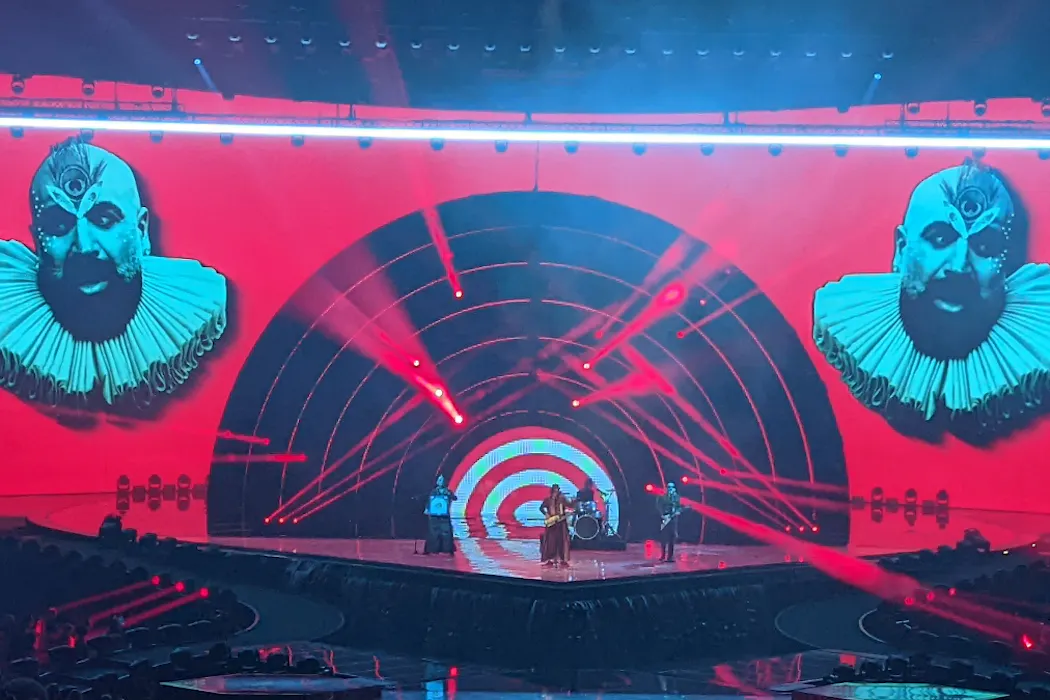
Georgia's entry Circus Mircus during the controversial second semi-final of the 2022 Eurovision Song Contest. Michael Doherty/Wikimedia, CC BY-NC-SA

The Eurovision Song Contest was founded 70 years ago as a way for Europe, divided after war, to come together by celebrating its music. Every year, several dozen countries across the continent – and, more recently, far beyond – compete in what is considered the world’s most viewed non-sporting event.

As a cultural institution that last year attracted around 166 million viewers, the results of Eurovision have a big impact – not least by deciding the venue of the following year’s event. Yet the issue of bloc voting, where countries tend to vote more favourably within regional or cultural blocs, has long been a controversial aspect of the contest.

In 2008, the BBC’s Eurovision commentator Terry Wogan spoke out against bloc voting by Eastern European countries, saying: “You have to say that this is no longer a music contest. I have to decide whether I want to do this again.” He didn’t – it was his final show in the commentary hotseat.

On occasion, suspiciously friendly voting has strayed into something even more troubling. The 1968 contest, held at the Royal Albert Hall in London, saw a major upset when home favourite Congratulations, sung by Cliff Richard, was pipped by the Spanish entry La, La, La.

Forty years later, Spanish Eurovision host Jose Maria Inigo claimed that the vote had been rigged at the behest of Spain’s military dictator, Franco. His claims were later supported by an Irish TV investigation.

The modern, expanded Eurovision features two semi-finals as well as the grand final, held this year in Vienna on May 16. Its scoring combines a jury panel with a public vote, reducing the impact of each jury. But that didn’t stop another major voting scandal emerging in 2022.

The 2022 scandal

During the 2022 grand final in Turin, Italy, the European Broadcasting Union (EBU) announced that six juries’ scores from the second semi-final – Azerbaijan, Georgia, Montenegro, Poland, Romania and San Marino – had been nullified after “certain irregular voting patterns were identified in the results of [these] countries”.

The countries’ votes were replaced with an aggregate score “based on the results of other countries with similar voting records” for both the semi-final and grand final. This process was acknowledged by Eurovision’s Independent Voting Monitor.

The countries’ broadcasters strongly denied any wrongdoing, with Georgia even suggesting their first-place vote in the final had been wrongly allocated as a result of the imposed system. Among online audiences, there was immediate speculation of a cover-up. After the final, the EBU issued a long explanation for their decision.

So had there really been collusion? Colleagues and I from the University of Stirling, including Riley Uttley, have re-assessed the 2022 voting scandal using applied statistical methods.

Each five-member Eurovision jury selected their ten favourite songs, with 12 points going to their favourite, ten points for second, then eight down to one for their tenth-best song. A similar points system was used to reflect each country’s public vote, doubling the total number of votes awarded by each country.

The jury results prior to the EBU’s intervention are shown below. The six juries whose scores were nullified – marked in red – awarded each other a total of 251 points. This is just seven points shy of the absolute maximum they could have given each other: 6 x (12+10+8+7+6) = 258 points.

Eurovision jury scores, 2022 second semi-final

Table shows votes cast in second Eurovision semi-final, 2022
Scores in red were later nullified. Points include three non-competing juries: Germany, Spain and UK. Robin Hankin, CC BY

If the scores were allocated randomly, the odds of the six countries awarding each other 251 points would be less than 1 in 10,000. Such a low probability provides strong objective evidence that the six juries were indeed colluding.

But applied statistics can precisely quantify the strength of this collusion – using a version of the Bradley-Terry (BT) method of paired comparisons, first published in December 1952.

Calculating the strength of collusion

Say we have two songs, a and b, and want to know the probability that a is judged better than b. Using the BT method, this probability is:

p(a) / p(a) + p(b)

where p(a) and p(b) are the respective strengths of the two songs.

This idea can be extended to the ranking of any number of songs. If we observe, say, that a ≻ b ≻ c ≻ d ≻ e (that is, song a is the best, then b, down to e), the probability of this voting decision is:

Plackett-Luce likelihood function

This is known as a Plackett-Luce likelihood function. While calculating each value is difficult, we can use standard optimisation techniques to maximise this probability, and thereby estimate the strengths of the songs.

When it comes to identifying the strength of collusion in the 2022 contest, my own technique known as reified Bradley-Terry can be applied to this likelihood function.

The unfair advantage of collusion is represented by adding an extra strength term to any competitor who benefitted from collusion. In the equation below, S represents the strength of the collusion effect, and is applied to song b. So, we replace every occurrence of p(b) with p(b)+S. Then, the probability of a ≻ b ≻ c ≻ d ≻ e is now:

Reified Bradley-Terry method is used to estimate the degree of jury collusion (term S)

The Eurovision 2022 semifinal had 18 songs and 21 juries, leading to a probability equation like the one above – but with a total of 220 terms. While this is a lot for a person to work with, it can be easily handled by the R programming language, an open-source statistical tool designed to handle masses of data and produce graphics and visualisations.

The removed juries all appeared to have very similar behaviour, so we represented the strength of the collusion of all six as a single number S, which we calculated to be 0.262. We then calculated the probability of S being as high, or higher, than this value on the assumption of no collusion.

We calculated this probability to be one in 58,000. Put another way, if you have 2.5km of matchsticks laid out end-to-end and burn one, it’s the probability of picking the burnt one. We can, therefore, confidently conclude that collusion did take place.

The 2026 voting system explained. Video: Eurovision Song Contest.

A final quirk

The 2022 Eurovision voting scandal had ramifications beyond the nullification of the six collusive scores. Jury voting for semi-finals was discontinued from 2023 until this year’s contest. Perhaps perversely, this made the juries carry more weight in each grand final.

With the semi-finals decided purely by public votes, which tend to be more dispersed and unpredictable, this meant the juries’ more concentrated voting patterns played a more significant role in deciding the ultimate winner.

Jury voting was reinstated for the semi-finals of this year’s contest. However, the juries are larger (seven members rather than five) and chosen from a more diverse background.

The clear favourites, Finland, will hope this is another step towards eradicating the controversial voting patterns that have haunted past contests – and made Eurovision a focus of keen interest for some applied statisticians.

The Conversation

Robin Hankin does not work for, consult, own shares in or receive funding from any company or organisation that would benefit from this article, and has disclosed no relevant affiliations beyond their academic appointment.

❌