Normal view

Received — 1 June 2026 SpaceDaily News

We talk about anxiety as if it starts in the mind — but for some people, the eyes may be the first place it shows up

1 June 2026 at 21:00

The first sign was never a thought.

It was visual. Something in the way the room looked. The walls would seem slightly farther away than they had been a moment before. Colours stayed, shapes stayed, the furniture stayed in exactly the right places — and yet something about the scene lost a quality I can only describe as immediacy. The world was still there. It just stopped feeling available.

This would happen before I felt afraid. Before I could name what was coming. Before any thought had formed that I could call anxious. Something changed in the way I was receiving the world through my eyes, and only later — sometimes much later — would the rest of the experience catch up.

I spent years not knowing what to call this.

I tried “dizzy,” which wasn’t right. I tried “tired,” which was too soft. I tried “dissociating,” which felt too clinical for something that happened in quiet moments, not only in crises. What I was looking for was a word for the way the world could go slightly flat. Not dark. Not frightening in any obvious way. Just — less textured. Less arrived. As if someone had turned the resolution of reality down just slightly, and I was the only one in the room who noticed.

The world went flat before I had words for it

What I was experiencing had a name. Derealization — the sense that the external world has become unreal, distant, or visually altered — is a well-documented symptom that occurs frequently in anxiety and panic, and in the broader condition known as depersonalization-derealization disorder. It affects a surprising number of people, though most, like me, spend a long time describing it badly before they discover it has a name at all.

What I did not expect, once I found the name, was to realize how early in the anxiety sequence it was arriving for me.

Most descriptions of anxiety lead with thought. The worry, the spiral, the catastrophizing. The racing mind. And for many people that may be accurate — the cognitive element comes first, and the body follows. But for me, the sequence ran differently. The visual alteration came before the worry. My eyes created distance before my mind could explain why. By the time I was consciously afraid, I had already been looking at the world through a kind of filter for several minutes. Sometimes longer.

The world went flat before I had words for what was happening.

Once I recognized this, I started paying attention to it differently. Not as a malfunction, but as a signal. Something my system was doing before it had time to speak.

Before anxiety had language, it had a way of altering sight

The neuroscience here is not fully settled, but the broad shape of it makes sense.

The brain does not passively receive visual information and then decide what it means. It actively constructs perception, using prior experience, expectation, and internal state to shape what we experience as seeing. When the nervous system is in a state of hyperarousal — even before that state is consciously registered — the way the brain builds the visual world can shift. Attention narrows. Certain details flatten. The sense of depth and richness that makes the world feel real can diminish, because the system is already doing something else with its resources.

The amygdala, which processes emotional and threat-relevant stimuli, is thought to receive threat-relevant signals very rapidly — in some models, before the slower analytical pathways that give us conscious perception have fully resolved what we’re seeing. This means the body’s threat response can activate before the thinking mind has noticed anything. The alarm goes off, the nervous system reorganizes, and the first sign you have — if you are paying attention to your body rather than your thoughts — might be something as subtle as the way the room looks.

That was my experience. I didn’t first think anxiety. I saw it.

The first thing anxiety stole, reliably, was the texture of the world.

Learning to read the signal

For years, the visual shift frightened me in its own right. The unreality was unsettling before any worry arrived to explain it. There were moments when I genuinely questioned whether I was losing something — my grip on reality, my trust in my own perception, something I couldn’t name. The derealization felt like a symptom without a cause, which is one of the lonelier things you can experience.

It is also disorienting in a specific way: when perception itself becomes the thing you can’t trust, you lose the ground you’d normally stand on to figure out what is wrong. You can’t think your way out of a problem that is currently happening in your thinking. You can’t look clearly at something when it is your looking that has shifted.

What changed was noticing the pattern.

Not during the episode, but afterward. Tracing the sequence: where had I been, what had I been carrying before I noticed the flatness, what came before the flatness itself. And what I found, slowly, was that the visual shift was not random. It was a leading indicator. Something had already been building in my nervous system — a stress response, a low-grade overwhelm I hadn’t consciously registered — and my eyes were the first thing that showed it. Before my thoughts caught up. Before my chest tightened. Before I would have said, if anyone had asked, that anything was wrong.

My eyes were filtering the world before I knew I needed a filter.

Maybe it was never malfunction

I am careful about what I claim here. I am not saying anxiety lives in the eyes, or that this is how it works for everyone. What I am saying is something smaller and, to me, more useful: for some people, the first felt experience of anxiety may be visual. Perceptual. Something that shows up in how the world looks before it shows up in what the mind thinks.

And if that is true — even sometimes, even for some people — then it changes where you learn to look for the early signs.

I used to search for the anxious thought. The belief I could challenge, the worry I could reframe, the cognitive distortion I could name and dispute. These have their place. But I kept arriving at them too late, after the nervous system had already been organizing itself around something I hadn’t consciously noticed. I was looking for the fire after the smoke had already been there for a while.

Now I know to check in with what I’m seeing. Whether the room feels arrived. Whether the world has its texture. Whether reality is still emotionally available, or whether it has quietly started to step back — a little flatter, a little more distant, a little less like itself — without explanation.

Those were never signs that something was wrong with my eyes.

They were signs that something in me was trying to protect itself before I understood what from. The nervous system, doing what nervous systems do — adjusting the aperture, reducing the input, creating a small buffer between me and a world it had decided, for some reason, was temporarily too much.

That is not a disorder. That is a system trying to survive.

It just took me a long time to recognize the signal for what it was, instead of fearing it as one more thing that was wrong.

This article reflects personal experience and is for informational purposes only. It is not a substitute for professional mental health advice. If you are experiencing symptoms of derealization or anxiety, consider speaking with a qualified professional.

The post We talk about anxiety as if it starts in the mind — but for some people, the eyes may be the first place it shows up appeared first on Space Daily.


Thought of the day from Stoic philosopher Marcus Aurelius: “Each of us lives only now, this brief instant. The rest has been lived already, or is impossible to see.”

1 June 2026 at 19:36

The kettle is doing its thing. Light is coming in sideways across the kichen table, the way it does early, catching the steam coming off the cup. Outside there’s a motorbike, then another, then the muffled start of the street waking up.

And I am not in any of it.

I am three emails ahead, rehearsing a sentence I’ll say later, or mulling over something that happened last week and cannot be changed. The coffee goes cold. The light moves on. I drink it lukewarm and barely taste it. This is the scene most mornings, if I am being honest.

A quick note before I go further: I’m not a psychologist or a therapist, and this is a piece of reading and reflection, not advice. The one study I lean on below is observational, which means it describes a pattern across a lot of people, not a rule about you or any single morning of your life.

The line that keeps pulling me back to that cold cup is from Marcus Aurelius, the Roman emperor who wrote a private notebook to himself that we now call Meditations. In Gregory Hays’s translation, Book 3.10, he writes: “Each of us lives only now, this brief instant. The rest has been lived already, or is impossible to see.” Just before it, he tells himself: “Forget everything else. Keep hold of this alone and remember it.”

Read it slowly and it’s almost a piece of accounting. The past is spent, gone, unrecoverable. The future is not yet here and most of it you’ll never see anyway. The only thing you actually have, the only ground you can stand on, is this instant. He isn’t being mystical about it. 

This is a philosophical claim about how to hold your attention, not a settled scientific fact about how consciousness works but as a way to frame a morning, I find it hard to argue with. The cold coffee was real. The email I was rehearsing wasn’t, not yet. I traded the thing that was happening for two things that weren’t.

I read Meditations properly a few years ago, during a stretch of failure and confusion when I was rooting around for something solid to hold. What struck me most wasn’t the advice. It was the continuity. Here is a man who ran an empire, and his private worries are my not unlike my worries. Reputation. Mortality. What other people think. Whether the work matters. Two thousand years, and the furniture of the human head has barely been rearranged.

Knowing the present is all you have, and actually living there, are two completely different skills. The mind has its own gravity, pulling backward and forward, almost never down into the now.

There’s one study I keep coming back to on this. In 2010, the Harvard psychologists Matthew Killingsworth and Daniel Gilbert built an iPhone app that pinged 2,250 volunteers at random moments and asked what they were doing, how they felt, and whether their minds were on the task in front of them. The volunteers reported their minds wandering 46.9 percent of the time. Nearly half of waking life, somewhere other than here. Killingsworth’s summary was that “our mental lives are pervaded, to a remarkable degree, by the nonpresent.”

This is one study, not settled consensus, and the effect it found was modest rather than enormous. What made it stick with me is what it suggested about mood. Killingsworth has said that how often our minds leave the present, and where they go, predicted happiness better than the activity people were actually doing. Drifting seems to drag mood down. The phrase the researchers used, which is a little too neat for a single study but lodges anyway, was “a wandering mind is an unhappy mind.”

I am bad at this. I have not solved anything. But a few small things have nudged me, on good days, closer to enjoying the cup of coffee and further from the imaginary email.

The first is novelty, and I learned it by accident. My first year living in Vietnam felt enormous. The city, the noise on the streets, food I’d never eaten, a language I couldn’t read, the person I was slowly turning into. In retrospect that year is longer and richer than most years since. Nothing was automatic, so nothing got skipped. The brain can’t autopilot through what it doesn’t recognize yet. I can’t move to a new country every year, but I can walk a route I don’t know, and it pulls me back into the present the way a comfortable routine never does.

The second is duller and more reliable: noticing one physical thing on purpose. The heat of the cup. The actual taste of the first mouthful. It sounds almost too small to count, and it isn’t a cure for a wandering mind. It’s just a handle. A way to land for a second before the gravity takes over again.

The third is lowering the bar. Marcus wasn’t writing a finished man’s manual. He was talking himself into it, the same exhortation over and over, because he kept failing at it too. That’s the part I find oddly comforting. The point was never to live perfectly in the present. It’s to come back, again, when you notice you’ve drifted.

If any of this is landing closer to home than it is interesting, and the pull away from the present feels less like a habit and more like something heavier, a qualified counsellor or therapist is worth talking to.

Now read this next: Psychology suggests people who browse social media but never post or comment aren’t passive — they’ve simply opted out of the performance while retaining access to the information, which is a sign of quiet self-awareness

The post Thought of the day from Stoic philosopher Marcus Aurelius: “Each of us lives only now, this brief instant. The rest has been lived already, or is impossible to see.” appeared first on Space Daily.
Cats can’t taste sweetness — evolution turned off the relevant gene in their distant ancestors when they became obligate carnivores, and without working sweet receptors, a cat is as indifferent to sugar as a person is to ultraviolet light

Cats are notoriously indifferent to sweet things. Pour syrup near a dog and the dog will investigate. Pour syrup near a cat and the cat will ignore it. Veterinarians and cat-food companies have long noted that cats show no preference for sugar in feeding tests, no matter how much sugar is presented. The reason is not a behavioural quirk or a learned aversion. It is genetic, and it traces back tens of millions of years to the point at which the ancestors of modern cats became obligate carnivores, eating only meat. The gene that produces a working sweet receptor on the tongue, called Tas1r2, has been broken in cats for so long that it no longer functions at all. A cat looking at a sugar cube is in the same sensory position as a human looking at an ultraviolet light source: the signal exists, but the receptor that would detect it does not.

What the genetic evidence shows

The molecular discovery came in 2005 from a team led by Xia Li and Joseph Brand at the Monell Chemical Senses Center in Philadelphia, in collaboration with colleagues at the Waltham Centre for Pet Nutrition in the United Kingdom. Their paper in PLOS Genetics, titled “Pseudogenization of a Sweet-Receptor Gene Accounts for Cats’ Indifference toward Sugar,” established that the cat sweet receptor is not just inefficient. It is, at the genetic level, non-functional.

The mammalian sweet receptor is formed by two protein subunits, called T1R2 and T1R3, encoded by the genes Tas1r2 and Tas1r3. Both have to be present and functional for the receptor to assemble correctly on the taste cell membrane. The Monell team sequenced both genes in domestic cats, tigers, and cheetahs, comparing them with the equivalent sequences in dogs, mice, rats, and humans. Tas1r3 was intact in cats. Tas1r2 was not. The cat version of the gene carried a 247-base-pair deletion in one of its critical exons, plus additional disabling mutations, all of which prevented the gene from being translated into a working protein. The researchers further found no detectable Tas1r2 messenger RNA in cat taste tissue, no Tas1r2 protein in cat taste buds, and no evidence that the gene was being expressed at all. In every cat species tested, the gene was the same kind of broken in roughly the same place. It had become a “pseudogene”: a relic of an ancestral working gene, accumulating mutations because it no longer faced selective pressure to remain intact.

Why this happened

The evolutionary logic is straightforward. Sweet receptors exist in most mammals because their ancestors ate sugar-rich plant material at some point in their evolutionary history. Detecting sweetness was useful because sweetness in nature is a reliable proxy for accessible carbohydrate, an important food source for animals that eat plants or mixed diets. For an obligate carnivore that consumes only animal tissue, sweetness is irrelevant. Meat contains very little carbohydrate. A receptor that detected sweetness in such an animal would be metabolically expensive to maintain without conferring any survival advantage. Mutations that disabled the receptor would not be selected against, and over enough generations, random mutations would accumulate until the gene was non-functional.

This is precisely what appears to have happened in the felid lineage. The pseudogenization of Tas1r2 in cats is estimated to have occurred some tens of millions of years ago, well before the divergence of the modern cat species. Every member of the cat family Felidae, from the smallest domestic tabby to the largest Siberian tiger, shares the same broken gene.

Not unique to cats

The cat finding turned out to be the first identified case of what is now understood to be a widespread phenomenon across obligate carnivores. In 2012, the Monell-led group, working with colleagues at the University of Zurich, published a follow-up paper in PNAS titled “Major taste loss in carnivorous mammals.” The team sequenced Tas1r2 in 12 species from the order Carnivora, looking for the same kind of pseudogenization. Seven of those species, all exclusive meat eaters, had also independently lost functional Tas1r2.

The animals affected included the California sea lion, the southern fur seal, the Pacific harbor seal, the Asian small-clawed otter, the spotted hyena, the fossa (Madagascar’s largest carnivore), and the banded linsang. Crucially, the disabling mutations in each of these species occurred in different places within the Tas1r2 gene, indicating that the losses happened independently in each lineage, not via inheritance from a common ancestor. The same evolutionary pressure that turned off the gene in cats turned it off, separately, in at least seven other carnivorous lineages over the same broad timeframe. Behavioural testing of two of the genotyped species — the Asian small-clawed otter (broken Tas1r2) and the spectacled bear (intact Tas1r2, and predominantly herbivorous despite its order) — confirmed the pattern. The otter showed no preference for sweet compounds. The bear preferred sugars and even some non-caloric sweeteners.

The pattern across these species, summarised in a 2015 review in the journal Flavour co-authored by some of the same researchers, suggests that the loss of sweet taste is a general feature of mammalian carnivory rather than a quirk of cats specifically. Wherever a lineage of mammals has committed strictly to meat eating for long enough, the sweet receptor has tended to disappear.

What cats can still taste

Cats are not generally taste-impaired. They retain functional receptors for bitter, sour, salty, and umami tastes, and a 2015 PLOS One study identified at least seven functional bitter-taste receptor genes in domestic cats, with response profiles that overlap considerably with those of humans. The umami receptor, which detects the amino acids characteristic of protein-rich foods, is particularly relevant to cat behaviour: it is the receptor that allows a cat to distinguish meat from non-meat, and it is presumed to be doing a lot of the heavy lifting in a cat’s sensory evaluation of food. What cats lack is specifically the modality that would allow them to perceive sugar.

The implications for cat feeding are practical. Sweet ingredients in cat food, such as the high-fructose corn syrup or sucrose sometimes added to commercial products, are not adding palatability from the cat’s perspective. Cats select food based on protein content, fat content, amino acid profile, and texture, not on sweetness. Owners who notice their cat licking ice cream or showing interest in a bowl of cereal are usually witnessing a response to the fat or protein content, not the sugar. The sugar is, to the cat, sensory noise. The signal it carries to a human tongue is, for a feline, simply absent.

The post Cats can’t taste sweetness — evolution turned off the relevant gene in their distant ancestors when they became obligate carnivores, and without working sweet receptors, a cat is as indifferent to sugar as a person is to ultraviolet light appeared first on Space Daily.

A particle just passed through the Mediterranean carrying 220 petaelectronvolts of energy — roughly twenty times more than any neutrino ever recorded before it, and scientists still aren’t sure where it came from

In the middle of the night of 13 February 2023, a muon passed through a partially built detector sitting 3,450 metres below the surface of the Mediterranean Sea, off the southeast coast of Sicily. The detector is KM3NeT/ARCA, the Astroparticle Research with Cosmics in the Abyss component of the Cubic Kilometre Neutrino Telescope, a European research infrastructure still under construction at the time. In a window of just under two microseconds, more than 28,000 photons lit up the instrument’s photomultipliers. More than a quarter of those sensors saturated outright. The muon had crossed the entire detector.

After two years of analysis, the KM3NeT collaboration published its findings in Nature on 12 February 2025. The muon’s energy was estimated at 120 petaelectronvolts. The neutrino that produced it, they concluded, carried approximately 220 petaelectronvolts. No neutrino of comparable energy had ever been recorded anywhere. The previous record, held by events in IceCube’s dataset, sat around 10 petaelectronvolts. The event, designated KM3-230213A, nearly an order of magnitude higher.

This is one detection, not a population. The questions it raises are real, but a single event cannot settle them.

What a neutrino at this energy means

Neutrinos interact so rarely with matter that trillions pass through a human body every second without leaving any trace. They carry no electric charge and have almost no mass. Those properties make them useful as astronomical messengers: unlike photons or charged particles, they travel from their source to the detector in a straight line, largely unaffected by the magnetic fields and radiation that fill intergalactic space. A neutrino arriving from a distant source carries information about that source in a relatively uncorrupted form.

Energy is a key piece of that information. At 220 PeV, KM3-230213A falls into a regime that the KM3NeT collaboration describes as the first confirmed detection of a neutrino in the hundreds-of-PeV range. The detector was not full at the time: only 21 of the planned 230 detection strings were in place, with 378 optical modules operating. That the instrument caught an event of this energy while still a fraction of its eventual size is, at minimum, an indication of what the completed detector may see.

The almost horizontal trajectory of the muon, combined with its energy, rules out the possibility that the particle arrived from the atmosphere above, which is where the vast majority of muons at KM3NeT’s depth originate. The track’s geometry and energy together point to a neutrino that entered the Earth from above, interacted with rock or seawater near the detector, and produced the muon that ARCA recorded. In the collaboration’s analysis, the probability of this being an atmospheric background event is negligibly small.

Where it came from: the open question

The neutrino’s reconstructed direction points to celestial coordinates of right ascension 94.3 degrees and declination minus 7.8 degrees. The KM3NeT collaboration searched that region for potential sources. They found nothing significant. No known Galactic object has been proposed as a plausible source for a neutrino at this energy. The direction is also inconsistent with any nearby extragalactic source that would straightforwardly explain the observation.

Several candidate categories have been proposed in the literature since the paper’s publication. Active galactic nuclei, particularly blazars, are among them: blazars are a class of active galaxy in which a relativistic jet points toward Earth, and they have already been associated with lower-energy neutrino detections by IceCube. One analysis, published in early 2025, examined blazar candidates within the angular uncertainty of KM3-230213A and found no convincing match. A separate paper considered gamma-ray bursts as the source, including a search for associations with documented GRB events accounting for possible Lorentz invariance violations that might have delayed the neutrino’s arrival relative to the gamma-ray signal. Those searches also found no definitive association.

A third category is the cosmogenic neutrino: a particle produced not at an astrophysical source but in transit, when an ultra-high-energy cosmic ray collides with a photon from the cosmic microwave background that fills the Universe. This process, known as the GZK mechanism after the physicists who described it, is expected to produce neutrinos at very high energies, and 220 PeV sits within a plausible range. The KM3NeT collaboration’s own companion paper on the cosmogenic scenario found it consistent with the observation but not conclusive. A more exotic proposal, published in Physical Review Letters in 2026, suggested the event could have been produced by the final evaporation of a primordial black hole, an event that would generate a short burst of high-energy particles including neutrinos. That hypothesis remains speculative and is not supported by independent evidence.

None of these scenarios has been confirmed. The source of KM3-230213A is, at present, unknown.

The IceCube problem

The more awkward question about KM3-230213A is not where the neutrino came from, but why IceCube has not seen anything like it.

IceCube is the larger instrument. It operates in the ice beneath the South Pole with an instrumented volume of one cubic kilometre and has been collecting data since 2010. Its exposure, the product of effective detection area and operating time, substantially exceeds KM3NeT’s at the energy of KM3-230213A. On purely statistical grounds, IceCube should have been the first detector to observe a neutrino at this energy, and it should have observed more than one by now. It has not. IceCube’s published upper limits on the neutrino flux at these energies are, in fact, below the rate implied by a single KM3NeT event observed over the period KM3NeT was running.

Several papers have attempted to quantify this tension. Estimates vary between roughly two and three-and-a-half sigma, depending on assumptions about the neutrino’s source spectrum and the angular region of sky considered. That range sits below the conventional threshold for claiming a significant discrepancy, but it is not negligible, and it has generated a substantial volume of follow-up work.

One natural explanation is statistical: a single-event detection at an energy where event rates are expected to be very low will inevitably produce some tension with non-detection elsewhere, and the significance of that tension is sensitive to the model used to estimate expected rates. It is possible that KM3NeT was simply fortunate to catch an unusually rare event, and that IceCube’s non-detection is consistent with that rate at the two-sigma level.

A more theoretically ambitious explanation was put forward by Vedran Brdar and Dibya S. Chattopadhyay in a paper published in Physical Review Letters in February 2026. Their argument centres on a geometrical fact. The neutrino detected by KM3NeT travelled through approximately 147 kilometres of rock and seawater before reaching the detector. A neutrino arriving at IceCube from the same direction in the sky would have passed through only about 14 kilometres of ice. That difference in path length through matter, they suggest, could explain the discrepancy if the particle was originally a sterile neutrino, a hypothetical particle that does not interact via the standard weak force, which oscillated into a detectable active neutrino over the longer path to KM3NeT. The shorter path to IceCube would have been insufficient for that conversion to occur at the required rate.

The paper presents two mechanisms by which such oscillations could arise, both involving physics beyond the Standard Model. The authors are explicit that this is a proposal, not a confirmed result: the paper identifies a possible resolution, not a demonstrated one.

What the detector was, and what it is becoming

KM3NeT/ARCA at the time of the detection was operating with 21 detection strings out of a planned 230. The full detector will instrument approximately one cubic kilometre of deep Mediterranean water, with roughly 200,000 photomultiplier tubes distributed across the string array. At the time of writing, the collaboration has continued deploying detection units through annual marine campaigns, and an online alert system is being developed to distribute direction and timing information for interesting events shortly after detection, enabling rapid follow-up from other instruments.

The collaboration also notes that an upgrade to the detector’s positioning system will improve directional reconstruction for future events from the current angular uncertainty of approximately 1.5 degrees down to the target of around 0.1 degrees. That improvement will apply retroactively to KM3-230213A as well, potentially tightening the source region enough to either implicate or exclude specific candidate objects that currently fall within the uncertainty cone.

A parallel development worth watching is the collaboration between KM3NeT and IceCube. Both teams have indicated interest in joint analysis of the ultra-high-energy neutrino sky, combining IceCube’s larger exposure with KM3NeT’s different viewing geometry and detection medium. That comparison may eventually resolve whether the apparent tension between the two instruments reflects astrophysics, instrument response, or something more fundamental. At the moment, it remains unresolved.

What this is, and what it is not

KM3-230213A is a real detection. The analysis behind it is careful and the publication in Nature was peer-reviewed. The energy estimate of 220 PeV carries a 90 per cent confidence interval running from 72 PeV to 2.6 exaelectronvolts, which is wide, but even the lower bound of that range comfortably exceeds any previous neutrino detection. The event is what the KM3NeT collaboration says it is.

What it is not is a resolved scientific story. The source is unknown. The IceCube tension is real but not yet statistically decisive. The proposals for exotic physics, sterile neutrino oscillations, primordial black hole evaporation, remain speculative. The collaboration itself is measured about what can be concluded from a single event, and the papers published since the Nature article reflect the genuine uncertainty that still surrounds it.

The more useful frame, for now, is that KM3-230213A establishes that neutrinos at these energies exist and can be detected with instruments of this kind. The completed KM3NeT will see more of them. Whether the next one resolves the questions the first has raised, or adds new ones, is the part that remains to be seen.

The post A particle just passed through the Mediterranean carrying 220 petaelectronvolts of energy — roughly twenty times more than any neutrino ever recorded before it, and scientists still aren’t sure where it came from appeared first on Space Daily.
In a 1999 experiment, people were asked to watch a short video and count how many times a basketball was passed. Around half of them completely failed to notice a person in a gorilla suit stroll into the middle of the scene 

1 June 2026 at 15:30

In 1999, psychologists showed people a short video of a basketball being passed around, asked them to count the passes, and then watched as about half of them failed to see a person in a gorilla suit walk straight into the middle of the scene. 

Not a subtle gorilla. Not a gorilla tucked away in a corner. A person in a full gorilla suit, dead center. And roughly one in two viewers, eyes open and pointed at the screen, simply did not see it.

Before going further, a small note. I am not a psychologist or a neuroscientist, and this is one person reading the research and reflecting on it, not advice about your attention or your mind. The studies here are findings from particular groups of people, not laws about how every individual works.

What Simons and Chabris found

The experiment belongs to Daniel Simons and Christopher Chabris, who published it under the title “Gorillas in our midst.” Two teams (mostly students), one in white shirts and one in black, pass basketballs around. You are told to count the passes made by the white team. While you are busy counting, the gorilla strolls in.

The detail that has always stuck with me is not just the missing. It is the certainty. People are sure they would have caught it. As Simons has put it, “What’s interesting is not just that people miss things, but that people are convinced that they would see it.” Tell someone about the experiment and they nod along, quietly confident they are in the half that notices. Most of us are not as immune as we feel.

The name for this is inattentional blindness, the failure to perceive something fully visible because your attention is committed elsewhere. The gorilla is right there. The photons are hitting your retina. But seeing, it turns out, is not the same as looking. Simons argues the harder conclusion is the one worth sitting with. He told LiveScience: “Although people do still try to rationalize why they missed the gorilla, it’s hard to explain such a failure of awareness without confronting the possibility that we are aware of far less of our world than we think.”

That last phrase is his interpretation, not a settled fact. But it lands.

Why a working brain misses a gorilla

The reflex is to call this a failure. A glitch. Something a sharper, more present person would not do. I do not think that is right. The brain is not broken when it misses the gorilla. It is doing exactly what attention is built to do, which is to choose.

You cannot take in everything. The world offers far more than any mind can hold at once, so attention works by selection, which means it works by exclusion. Counting passes is the task you were given, and your brain quietly drops everything that does not serve it. The gorilla is not the task. So the gorilla is gone.

What makes this hard to dismiss as a quirk of bored undergraduates is that it holds up in people whose entire job is looking carefully. In 2013, the attention researcher Trafton Drew and his colleagues inserted a small image of a gorilla into lung CT scans and asked radiologists to search for nodules. Most missed the gorilla, even though eye-tracking showed they had looked right at it. As the researchers   put it, “When engaged in a demanding task, attention can act like a set of blinders, making it possible for salient stimuli to pass unnoticed right in front of our eyes.”

This is one study with a small sample, not the final word on expertise. But Drew’s explanation of the mechanism is the part I keep returning to. The radiologists, he told NPR, “look right at it, but because they’re not looking for a gorilla, they don’t see that it’s a gorilla.” Expertise did not protect them. In a way, it made the blinders narrower.

The gorillas in an ordinary week

I went looking for the milk last week and could not find it. Opened the fridge, looked for about four seconds, concluded we had run out, and closed the door. My wife found it thirty seconds later, sitting on the second shelf, exactly where it always lives. I had looked directly at it. I had not seen it because we usually get a carton, and what was in front of me was a bottle. The bottle was not in my search pattern, so my brain filed it under absent.

It is such a small and stupid example that I almost did not include it in this piece but I think the small examples are the ones worth paying attention to, because they catch you without your defences up. You cannot tell yourself you were stressed or overloaded. You were just a person looking for milk, and you missed it.

The bigger version of this is what happens outside. I walk a lot, between cafes mostly, or just to clear my head between things. And I have noticed, over a long time of walking, that what I see on any given day is very heavily shaped by what I am already carrying. On the days I am working through a problem I walk through the world like a person watching television with the sound off. There are streets and buildings and other people, and they register at some level, but they do not really arrive. I have walked past things I later could not describe at all.

The days I am not carrying anything in particular are different. A tree I must have passed four hundred times suddenly has a detail I have never clocked. The light on a wet footpath does something I cannot explain. A bird is doing something faintly ridiculous on a bin. None of this is revelation. But it is there, continuously there, and it only shows up when I am not already looking for something else.

I think this is the version of inattentional blindness that costs the most and gets talked about the least: the ordinary, ambient failure to see the things that are not in your task stack. Not a gorilla in a lab video. Just the day, going past.

Someone you speak to every week is struggling, and you do not see it. Not because you are callous, and not because they are hiding it especially well, but because you are looking at them through whatever frame you already have. You have a model of this person — fine, capable, the one who sorts things out — and so when you look at them you see the model and not quite the person. The gorilla is there. Your eyes are open. The frame is doing the work.

I have been on both sides of this, missed and misser, and I am not sure which one leaves the stranger feeling. Missing someone feels, in retrospect, like something that happened behind your back. You were not ignoring them. You were simply not looking for what was actually there.

Attention is a trade, not a flaw

It would be easy to read all this as a story about how oblivious we are, and to leave a little ashamed of our own narrow eyes. I do not think that is the useful reading. The gorilla experiment is not proof that we are stupid. It is proof that attention costs something, and that the cost is always paid in everything you are not attending to.

Every time you lock onto one thing, you are quietly agreeing not to see a hundred others. That is not a malfunction. That is the deal. The only conclusion I can find, after sitting with this for a while, is a small and slightly humbling one. Since I cannot see everything, it is worth occasionally asking what I have decided not to look at, and whether I picked the right thing to count.

The gorilla is almost always somewhere in the frame. The question is never whether you are missing something. You are. The question is whether the thing you chose to watch was worth the things you didn’t.

The post In a 1999 experiment, people were asked to watch a short video and count how many times a basketball was passed. Around half of them completely failed to notice a person in a gorilla suit stroll into the middle of the scene  appeared first on Space Daily.
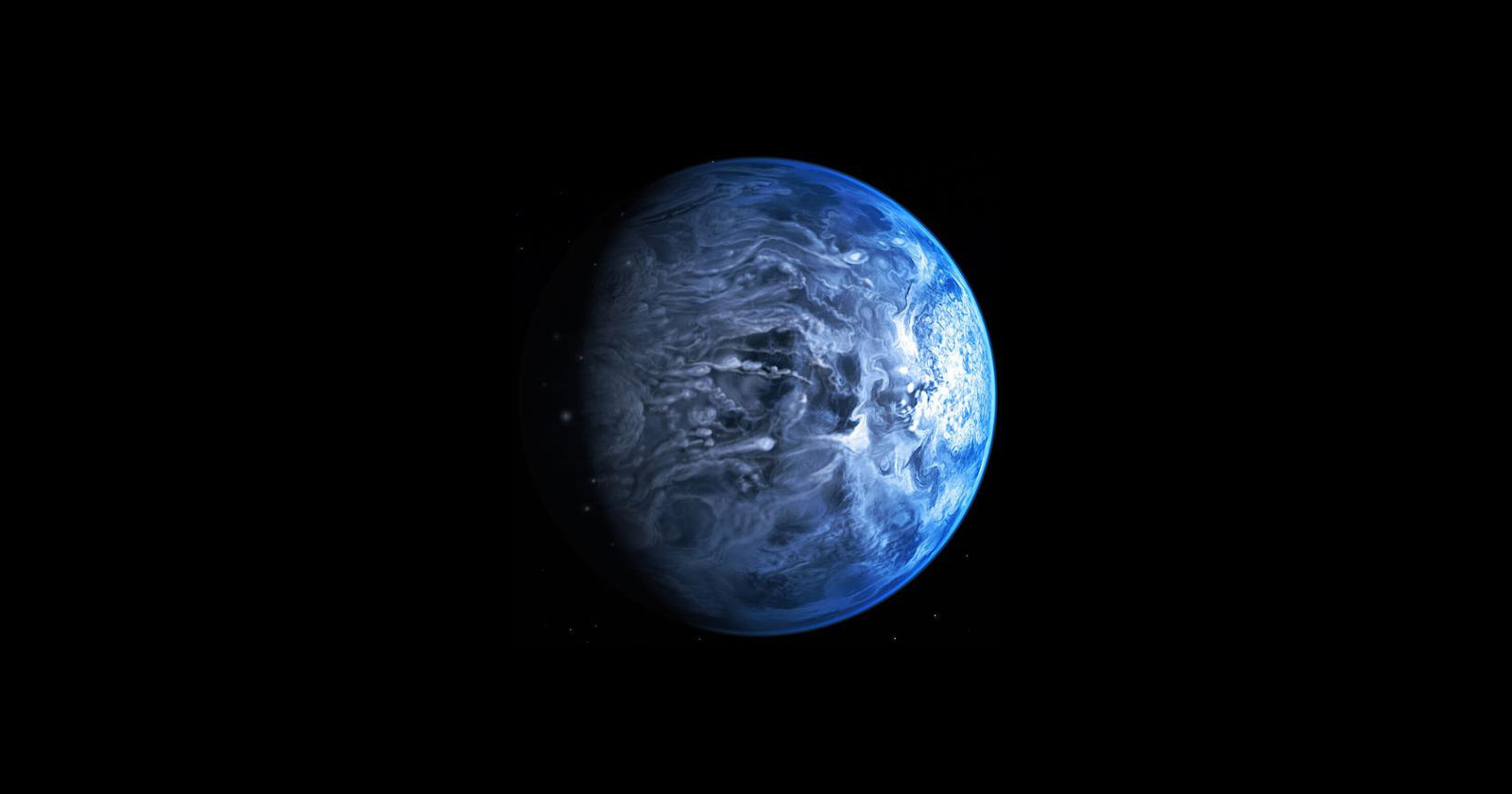
About 63 light-years away there is a deep-blue world that looks deceptively like Earth from a distance, but on the planet HD 189733b the temperature reaches 2,000 degrees Fahrenheit and the winds scream at thousands of miles an hour 

Point the right instrument at HD 189733b and the colour that comes back is a deep cobalt blue, the kind of blue a person who grew up with photographs of Earth from orbit would recognise in an instant. Astronomers determined the colour in 2013 using the Hubble Space Telescope, and the resemblance to a pale blue dot is almost uncanny. It is also a trap.

The assumption underneath that blue, that a blue world is a watery world and therefore something like home, is exactly what HD 189733b dismantles. As NASA puts it: “To the human eye, this far-off planet looks bright blue. But any space traveler confusing it with the friendly skies of Earth would be badly mistaken.”

The blue does not come from water. HD 189733b is a hot Jupiter, with no ocean to reflect a sky. The colour comes from the atmosphere itself. NASA describes it this way: “The cobalt blue color comes not from the reflection of a tropical ocean, as on Earth, but rather a hazy, blow-torched atmosphere containing high clouds laced with silicate particles.”

It might look a bit like home but it’s not so hospitable. NASA puts the temperature at nearly 2,000 degrees during the day! 

Then there is the wind. A University of Warwick team led by Tom Louden measured air moving from the planet’s dayside to its nightside at extraordinary speed.As Louden said: “This is the first-ever weather map from outside of our solar system. Whilst we have previously known of wind on exoplanets, we have never before been able to directly measure and map a weather system.” The figure that came out of that work is the one that sticks. NASA describes winds that “blow up to 5,400 mph (2 km/s) at seven times the speed of sound, whipping all would-be travelers in a sickening spiral around the planet.” Combine that with a sky of molten silicate and you get the planet’s signature: possible horizontal rain made of glass. NASA, in its Halloween-themed framing, calls getting caught in that rain “more than an inconvenience; it’s death by a thousand cuts.” Please note that this glass-rain picture is an inference drawn from the temperature and wind data rather than a directly imaged event, best read as the likely consequence of what has been measured.

It would be easy to file this planet under the gallery of hostile worlds and move on. HD 189733b earns its place in the literature for a quieter reason. It is one of the most heavily studied exoplanets we have, which is why it could be measured in this much detail in the first place. It became the proving ground for techniques, mapping a wind system and reading a visible colour, that now get pointed at fainter and stranger targets.

Perhaps the deeper use of the planet is as a correction to a habit of mind. The search for worlds like ours leans, understandably, on familiar signals: the right size, the right distance from a star, a hint of blue. HD 189733b satisfies one of those cues and fails every test that follows. A colour that reads as ocean on Earth reads as molten glass here, and the only way to tell the two apart is to keep measuring past the first impression. The blue dot 63 light-years away is a reminder that resemblance, at interstellar distance, is perhaps the easiest thing to mistake for kinship.

The post About 63 light-years away there is a deep-blue world that looks deceptively like Earth from a distance, but on the planet HD 189733b the temperature reaches 2,000 degrees Fahrenheit and the winds scream at thousands of miles an hour  appeared first on Space Daily.

In 2017, astronomers spotted the first object ever confirmed to have come from another star system passing through our own: a strange, elongated visitor called ‘Oumuamua that seemed to accelerate as it left, in a way scientists are still debating

In October 2017, a survey telescope on Maui caught a faint, fast point of light that did not belong here. The object was moving too quickly, on the wrong kind of orbit, to have formed around our Sun. It had come from somewhere else, passed close to the Sun a few weeks earlier, and was already on its way back out.

The object was found on 19 October 2017 by Robert Weryk, working with the Pan-STARRS1 telescope run by the University of Hawaii and funded through NASA’s near-Earth object program. The International Astronomical Union later gave it the designation 1I/2017 U1, the “1I” marking it as the first confirmed interstellar object on record. The Pan-STARRS team named it ‘Oumuamua, Hawaiian for a messenger from afar arriving first.

It was a genuine first. What it was, exactly, is a question that has not fully closed.

What the observations actually showed

‘Oumuamua was found late and seen briefly. By the time anyone noticed it, it had already passed perihelion, its closest approach to the Sun, on 9 September 2017, and was heading away. Astronomers had roughly a fortnight of useful observation before it faded.

From that short window, a few things were established. Its orbit was steeply hyperbolic, with an eccentricity near 1.2, far outside the range of anything bound to the Sun. Its incoming interstellar speed was about 26 kilometres per second, and after swinging past the Sun it was moving far faster. Its brightness swung dramatically as it tumbled, which pointed to an extreme elongated shape, though whether it was closer to a cigar or a flattened disc has never been resolved. Estimates put its longest dimension at a few hundred metres.

By colour and surface it looked broadly like the icy nuclei of comets. It did not behave like one in the way that mattered most.

The push that did not add up

In June 2018, a team led by Marco Micheli of the European Space Agency reported in Nature that ‘Oumuamua’s path could not be explained by gravity alone. As it left the inner Solar System it carried a small extra push directed away from the Sun. The deviation was tiny, but the orbit had been measured carefully enough to be confident it was real.

For a comet, this would be unremarkable. Comets warm as they near the Sun, ices turn to gas, and that escaping material acts like a weak, off-centre thruster. The trouble was that ‘Oumuamua showed no sign of doing this. No tail. No coma. No dust. Repeated searches found nothing being shed.

So there was a force consistent with outgassing, and no outgassing anyone could see.

That is the puzzle that has kept the object in the literature for years.

The competing explanations

Most of the serious proposals try to keep ‘Oumuamua natural while accounting for an invisible push. One line of argument is that it was venting something hard to detect. Nitrogen ice was suggested, with the idea that the object was a fragment of a nitrogen-rich body. Hydrogen has also been proposed.

In 2023, Jennifer Bergner and Darryl Seligman published a hydrogen-based explanation in Nature. Their model argues that radiation in interstellar space could produce trapped molecular hydrogen inside water-rich ice, which is later released as the object warms near the Sun, giving a push with no visible dust tail. It is a plausible mechanism. It is also one model, built to fit a single object whose data is limited, and it has not been tested against a second case.

A separate and far more contested suggestion came from Harvard astronomer Avi Loeb, who argued the acceleration might point to an artificial origin, such as a thin, sail-like structure pushed by sunlight. Most researchers working on the object do not accept this. The natural explanations, unsettled as they are among themselves, remain the mainstream reading, and there is no direct evidence the object was anything other than a strange natural body.

Why the question stays open

The honest limitation is the data. ‘Oumuamua was caught on its way out, observed for a short time, and is now far beyond reach. No spacecraft visited it. No sample exists. Every explanation is being fitted to one faint, fast, briefly seen object, which is why no single account has won.

What has changed since is the company it now keeps. In 2019, a clearly cometary interstellar object, 2I/Borisov, passed through and behaved exactly as a comet should, complete with a visible tail. In July 2025 a third, 3I/ATLAS, was found, and it too shows ordinary cometary activity. The Vera C. Rubin Observatory, which recorded 3I/ATLAS in commissioning data ten days before its official discovery, is expected to turn up many more now that its decade-long survey has begun.

That is the value of more cases. If interstellar objects prove to be a varied population, ‘Oumuamua may simply have been an unusual member of it, seen at a bad angle and too late. If others show the same quiet push without a tail, the hydrogen and nitrogen models gain real support rather than a single fit.

For now, the first interstellar object remains the least explained of the three. The next ones, caught earlier and watched longer, are the ones likely to settle what ‘Oumuamua could not.

The post In 2017, astronomers spotted the first object ever confirmed to have come from another star system passing through our own: a strange, elongated visitor called ‘Oumuamua that seemed to accelerate as it left, in a way scientists are still debating appeared first on Space Daily.
Rocket debris that has been drifting in low Earth orbit since the 1960s just helped scientists find something they had missed for decades — a specific threshold in solar activity past which space junk starts falling toward Earth measurably faster

Spent rocket stages and defunct satellites do not manoeuvre. Once launched, they simply fall, very slowly, pulled toward Earth by the drag of an upper atmosphere that thickens and thins with the Sun’s eleven-year activity cycle. That passivity makes them useful. Because they never fire a thruster to correct their orbit, every metre of altitude lost is a direct record of the air pushing against them, and through that, a record of the thermosphere itself.A team led by Ayisha M. Ashruf at the Space Physics Laboratory, Vikram Sarabhai Space Centre, in Thiruvananthapuram, India, has now published a paper in Frontiers in Astronomy and Space Sciences that reads those records in a new way. The paper is built around 17 debris objects, all launched in the 1960s and all still in orbit, tracked across three consecutive solar cycles spanning 1986 to 2024. What it finds, across all 17 objects and all three cycles, is that the relationship between solar activity and orbital decay is not a smooth gradient. There is a threshold. Cross it, and the rate of descent increases sharply.This is one study, not settled consensus. But the pattern holds consistently across three decades of data and 17 independent objects.

The objects and why they were chosen

The paper draws on Two-Line Element data from the Space-Track database, the standard orbital-mechanics format used to track every object in Earth orbit. Ashruf’s team began with a set of 95 candidate debris objects from the 1960s, then filtered for objects in low Earth orbit below 800 km, with stable near-circular orbits and continuous data across the full period. Seventeen survived that filtering.

The list includes TIROS weather satellites, Thor rocket debris, Delta stage fragments, and two Soviet-era Cosmos objects. They orbit at inclinations ranging from roughly 48 to 99 degrees, and altitudes between about 600 and 800 km, completing a full loop of the planet every 90 to 120 minutes. Their masses range from under 20 kg to over 1,400 kg.

What they share is longevity and passivity. None have performed any orbital adjustment in over sixty years. That makes their altitude history a clean signal: whatever happened to their orbit happened because of the atmosphere, not because of anything onboard.

The threshold

Solar activity is most commonly tracked through sunspot numbers, a count that correlates with the Sun’s emission of extreme ultraviolet radiation. The Sun’s eleven-year cycle moves between quiet periods, when sunspot numbers are low and the thermosphere cools and contracts, and active periods when numbers climb and the upper atmosphere heats and expands. More atmosphere at orbital altitude means more drag on any object passing through it.

Earlier research had established this general connection. What it had not established was where within a solar cycle the drag effect becomes meaningfully stronger. Ashruf’s team fitted a Gaussian curve to the sunspot record for each of the three cycles studied, then identified the point in each cycle where the 17 debris objects showed a transition from slow, gradual decay to markedly steeper decay. That point, consistent across three cycles and across the full range of objects, fell between approximately 67 and 75 per cent of the cycle’s peak sunspot number.

The authors describe this as a threshold beyond which thermospheric density increases sufficiently to drive a clear acceleration in orbital decay. Below the threshold, descent is slow and fairly uniform. Above it, the curve steepens. The threshold appears on the way up through each cycle and again on the way back down.

Cross-checking with direct measurements of extreme ultraviolet flux from the Solar and Heliospheric Observatory confirms the pattern. Within the rapid-decay windows identified by the debris data, EUV flux in the 0.1 to 50 nanometre band ran roughly 50 to 130 per cent above levels seen outside those windows. The debris records and the solar measurements point to the same mechanism: heightened EUV output heats the thermosphere, which expands upward, and the increased air density at orbital altitude increases drag.

Three cycles, one staircase

The three cycles in the dataset were not equal in strength. Solar cycle 22, which peaked around 1989 to 1991, was the most active of the three. Cycle 23, peaking around 2000 to 2002, was moderately active. Cycle 24, peaking around 2014, was historically weak by modern standards.

The debris records reflect that hierarchy directly. Peak decay rates during cycle 22 averaged 0.59 metres per hour across the 17 objects. Cycle 23 produced a mean of 0.54 metres per hour. Cycle 24 came in at 0.25 metres per hour, roughly half of cycle 22’s pace. The staircase is clean: each successive cycle, as solar activity weakened, drove proportionally less orbital decay.

The paper also compared the correlation between decay rates and several different solar and geomagnetic indices. Solar proxies performed strongly: the F10.7 radio flux index explained about 75 per cent of the variance in decay rate across the 17 objects; sunspot numbers accounted for about 67 per cent. Geomagnetic indices fared poorly. The AE index, which tracks auroral electrojet activity driven by particle precipitation and magnetic disturbances, explained less than 2 per cent of the long-term variance. The Dst index, which measures the ring current, explained around 22 per cent. The paper’s interpretation is that geomagnetic storms matter for short-term orbital perturbations, but for sustained, long-term decay the dominant driver is solar EUV forcing of the thermosphere, not geomagnetic disturbance.

The polar gap in the model

The team used ballistic coefficients derived from the cycle 22 and cycle 23 data to model what cycle 24 orbital decay should have looked like, then compared those predictions to what the TLE data actually showed. For 15 of the 17 objects, the model reproduced the observed decay profiles reasonably well, though it required a scaling factor ranging from 0.55 to 0.79 to match observed behaviour. The need for that scaling reflects known limitations in empirical atmospheric density models, particularly around the transition between solar minimum and solar maximum conditions.

Two objects did not fit at all. SAT 733, a Thor Agena D rocket body, and SAT 734, a satellite called OPS 3367A, showed persistent large discrepancies between modelled and observed decay that no scaling factor could close. Both travel near-polar orbits, at inclinations close to 99 degrees. The other 15 objects orbit between roughly 48 and 67 degrees of inclination.

The paper’s interpretation is cautious but direct: the NRLMSIS 2.0 atmospheric model, which is the standard empirical model used for this kind of orbital prediction, likely underestimates atmospheric density variability at high latitudes. The thermosphere at polar regions is influenced by geomagnetic activity in ways that are not fully captured by models built primarily around lower-latitude data. The gap matters because polar and sun-synchronous orbits are common choices for Earth-observation missions, and their reentry predictions may carry larger errors than the model currently reflects.

What the finding offers operators

The practical value of a threshold is that it gives satellite operators a more specific warning indicator than a general solar forecast. Rather than tracking the entire solar cycle, operators can watch sunspot numbers relative to the expected cycle peak. When that ratio climbs past roughly two-thirds of peak, conditions enter the regime where drag-driven decay accelerates. Fuel reserves for orbit maintenance need to be adequate for that period, not just for quiet-Sun operations.

The February 2022 Starlink event sits in the background here. A moderate geomagnetic storm shortly after launch pushed 38 satellites into orbits lower than planned, and atmospheric drag was sufficient to prevent them from reaching their target altitude. Most reentered within weeks. The Starlink case involved a geomagnetic disturbance rather than sustained solar maximum conditions, so the mechanisms are not identical, but the broader point stands: drag at low Earth orbit is not a fixed baseline to plan against, and the Sun’s eleven-year cycle is the primary long-term variable.

The paper notes that missions launched near a solar maximum may consume propellant faster than mission planners expect, particularly if planning tools use average solar conditions rather than the cycle-phase-specific drag rates the new threshold identifies.

What the study does not resolve

The 17 objects all orbit within the 600 to 800 km altitude range. The paper does not claim the same threshold applies at lower altitudes, where atmospheric density is higher and the relationship between solar activity and drag may behave differently. Most of the large satellite constellations being deployed now operate below 600 km, and the paper’s findings do not directly translate to that regime without further work.

The three solar cycles in the dataset were also all relatively moderate by historical standards. The most active cycles on record, including cycle 19 in the late 1950s, produced solar maxima substantially stronger than cycle 22. Whether the 67 to 75 per cent threshold holds under more extreme solar conditions is not something this data can answer.

The polar orbit modelling gap remains open. Ashruf’s team notes it explicitly as a direction for future work, and it is a real limitation for anyone predicting the reentry timing of debris in high-inclination orbits.

Better empirical models for high-latitude atmospheric density are needed, and the debris records in this study now provide one benchmark for testing them.

The paper is published as “Characterizing solar cycle influence on long-term orbital deterioration of low-earth orbiting space debris”, authored by Ayisha M. Ashruf, Ankush Bhaskar, C. Vineeth, and Tarun Kumar Pant, in Frontiers in Astronomy and Space Sciences, volume 13, published 6 May 2026. It is open access.

The post Rocket debris that has been drifting in low Earth orbit since the 1960s just helped scientists find something they had missed for decades — a specific threshold in solar activity past which space junk starts falling toward Earth measurably faster appeared first on Space Daily.
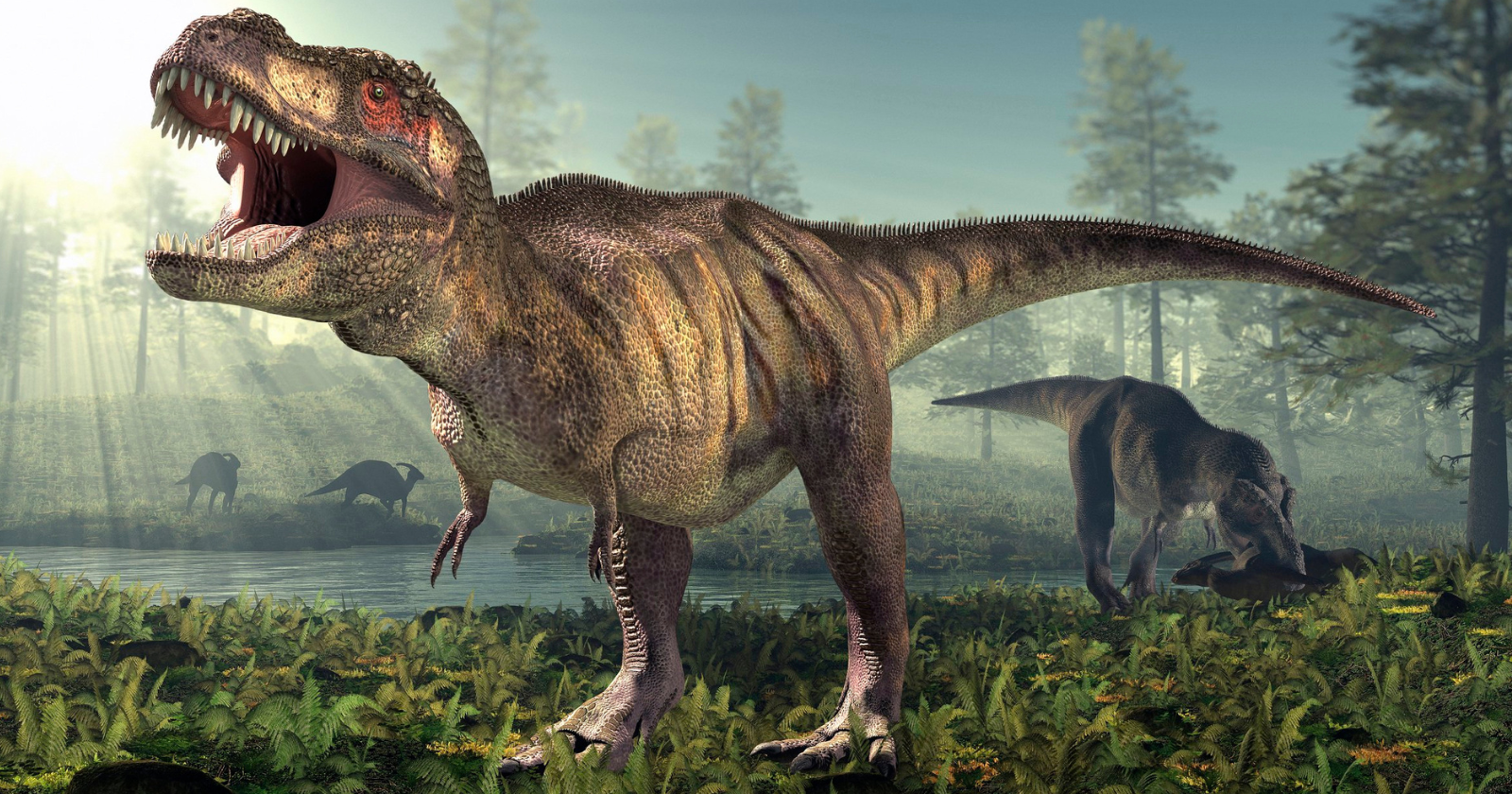
Tyrannosaurus rex lived closer in time to humans than to Stegosaurus — the gap between T. rex and the present day is about 66 million years, while the gap between T. rex and Stegosaurus is about 83 million years, which means T. rex would have seen Stegosaurus as an ancient creature in the same way we see T. rex now

The popular mental image of the Mesozoic Era treats it as a single long period in which dinosaurs lived together, in roughly the configurations that toy companies have arranged them. Tyrannosaurus rex and Stegosaurus are among the most familiar pairings, often shown facing off in films, books, and the plastic dinosaur sets that have been a fixture of childhood for several generations. The actual fossil record places these two animals so far apart in time that the comparison is closer to imagining a human meeting an early prosimian primate than to imagining contemporaries. The time gap between T. rex and Stegosaurus is about 83 million years. The time gap between T. rex and the present day is about 66 million years. By the only measurement that matters, deep time, T. rex is closer to us than to Stegosaurus. Anatomically modern Homo sapiens only appeared roughly 300,000 years ago, which is a rounding error against the 66-million-year span and does not change the comparison materially.

The arithmetic is straightforward and the dates are well-constrained. According to the Natural History Museum’s overview of the Cretaceous Period, the dinosaurs most strongly associated with the popular image of “the age of dinosaurs,” including Tyrannosaurus rex and Triceratops, only lived at the very end of the Cretaceous, between roughly 68 and 66 million years ago. The Cretaceous Period itself, the museum’s expert Susie Maidment notes, is nearly 80 million years long, “so there’s a lot of turnover in that time.” The dinosaurs at the start of the Cretaceous were not the same dinosaurs that lived at the end. The Jurassic, the period before the Cretaceous, ended 145 million years ago. That is when Stegosaurus and the other large herbivores of the period, including Diplodocus and Brachiosaurus, were already going extinct or declining.

When the two species actually lived

Stegosaurus lived during the Late Jurassic, between approximately 155 and 145 million years ago. The Natural History Museum’s Stegosaurus specimen page, describing the most complete Stegosaurus skeleton in any public collection outside the United States, dates the species to about 150 million years ago. The closest contemporary predators of Stegosaurus were not T. rex but Allosaurus and Ceratosaurus, the dominant theropods of the Late Jurassic in the western United States, in what is now Wyoming, Colorado, and Utah.

Tyrannosaurus rex lived only during the final two million years of the Mesozoic. According to National Museums Scotland, the species inhabited forested river valleys in western North America during the Late Cretaceous, became extinct about 66 million years ago, and was contemporary with Triceratops and other late-Cretaceous fauna that the Jurassic dinosaurs would not have recognised. T. rex‘s closest contemporary herbivorous prey species included ceratopsids, hadrosaurs, and ankylosaurs, all of which evolved long after Stegosaurus. There was no possibility of T. rex encountering Stegosaurus in any natural habitat. The two animals are separated by roughly the same span of time that separates T. rex from the early primates of the Paleocene.

What 83 million years actually looks like

The way most people fail to grasp this comparison is the way most people fail to grasp deep time generally. Eighty-three million years is approximately the length of the entire Cretaceous Period, and about seventeen million years longer than the entire Cenozoic Era — the so-called “Age of Mammals” that has elapsed since the dinosaur extinction. According to a 2012 piece in Smithsonian Magazine by the palaeontology writer Riley Black, the gap between Apatosaurus and Tyrannosaurus is comparable, with about 83 million years separating Allosaurus from Triceratops. “Consider how much life has changed in the past 66 million years,” Black wrote. “Now consider that even more time separated T. rex from Stegosaurus.” The “age of dinosaurs,” in the singular sense the phrase implies, was not a single age at all.

The implications extend further if you look earlier. The first dinosaurs, like Eoraptor and Herrerasaurus, evolved roughly 230 million years ago, in the Late Triassic. They are twice as far from T. rex, in chronological terms, as Stegosaurus is. The dinosaur clade spans an interval of evolutionary time longer than the time elapsed since the dinosaurs disappeared. To group them all into a single “age” treats a 165-million-year span as a single moment, in the same way the geological record of, say, the entire age of mammals is sometimes summarised in a textbook chapter.

What T. rex would have seen

The editorial framing that places T. rex as a relative latecomer is, paradoxically, the framing that has the most explanatory power. If T. rex had somehow encountered a Stegosaurus fossil while it was alive, it would have been encountering a dinosaur that was, from its perspective, ancient. The bones would have been roughly the same age, relative to a living T. rex, as a T. rex fossil is now relative to a living human. A T. rex palaeontologist, had one existed, would have studied Stegosaurus as a creature from a different geological era, separated by tens of millions of years of intervening evolution. The closest T. rex ever came to Stegosaurus was through the medium of buried bones.

That is the framing that the popular phrase “the age of dinosaurs” tends to obscure. The dinosaurs were not a community of contemporaries. They were a long-lived clade whose internal history is longer than the history of every mammal lineage combined. T. rex and Stegosaurus happen to be the two dinosaurs that everyone learns first, which is what makes the time-distance between them surprising. The same surprise would attach to any pairing across two distant periods of the Mesozoic. The dinosaurs lived a very long time. Most of the time, they were not living together.

The post Tyrannosaurus rex lived closer in time to humans than to Stegosaurus — the gap between T. rex and the present day is about 66 million years, while the gap between T. rex and Stegosaurus is about 83 million years, which means T. rex would have seen Stegosaurus as an ancient creature in the same way we see T. rex now appeared first on Space Daily.
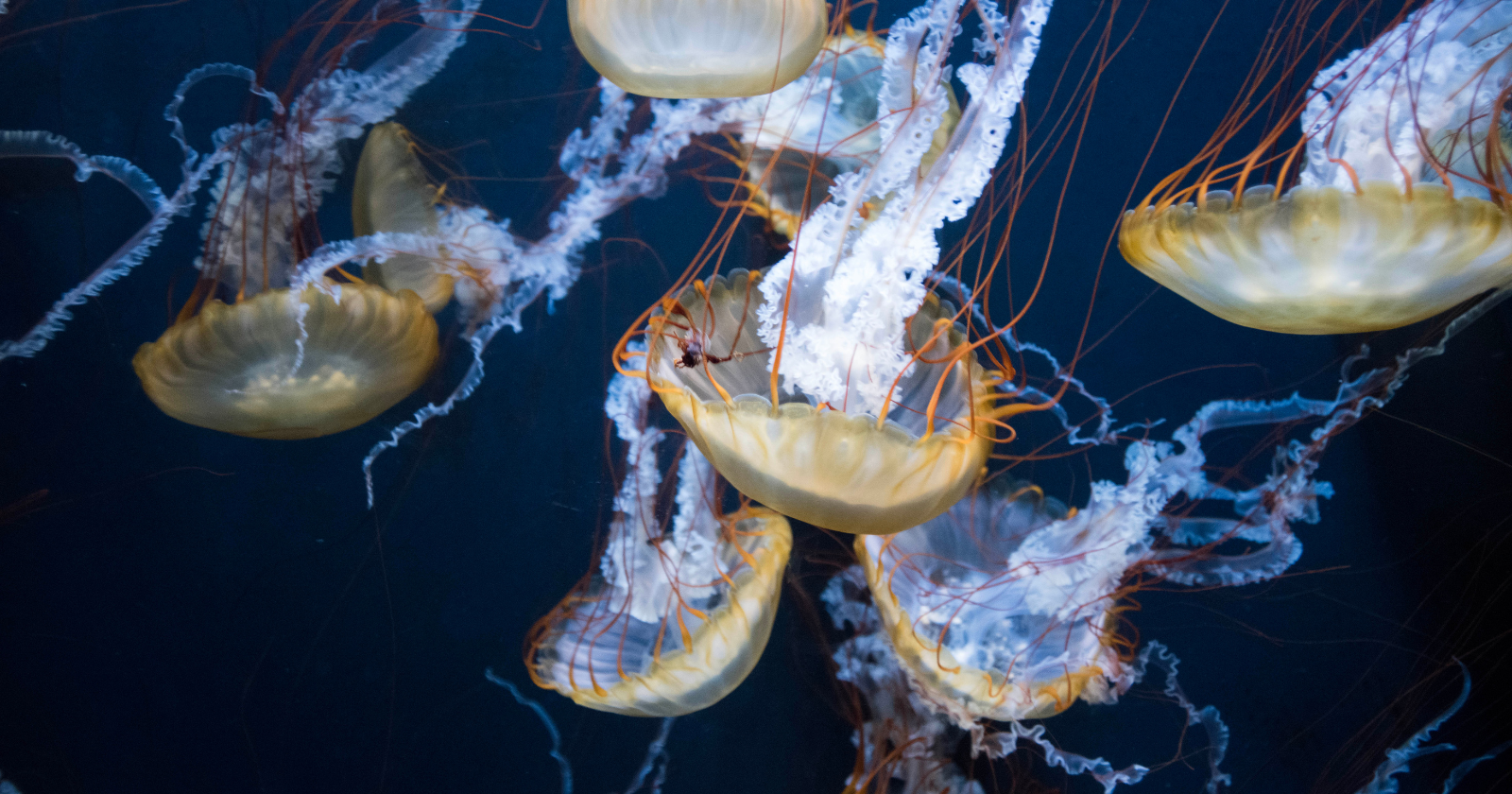
There is a species of jellyfish that is essentially immortal — Turritopsis dohrnii, which can revert from its adult form back to its juvenile polyp stage when stressed or injured, and then mature again, potentially repeating the cycle indefinitely, in the only known case of a complex animal that can reverse its own aging process

In the warm coastal waters of the Mediterranean, and now globally distributed via ship ballast water, lives a translucent jellyfish about the size of a pinky-nail clipping, with a bright red stomach visible through its bell. Turritopsis dohrnii looks unremarkable. It feeds on plankton, swims at the mercy of currents, and gets eaten in large numbers by fish, sea turtles, and other predators that consume jellyfish without much discrimination. What distinguishes T. dohrnii from the thousands of other jellyfish species is what happens when one of these medusae becomes injured, starved, sick, or simply old. Instead of dying, the animal can transform itself back into its juvenile polyp stage and start its life over.

The phenomenon was first described in 1992 by Giorgio Bavestrello and colleagues at the University of Genoa, working with Christian Sommer at Ruhr University Bochum. Bavestrello and Sommer had collected specimens of what they assumed was a typical hydrozoan jellyfish, intending to rear them for unrelated research. Instead, they observed that under stress, the medusae did not die. They settled to the bottom, lost their swimming ability, contracted into a “cyst” of cells with no medusa-like features, and then over 24 to 72 hours regrew as polyps — the juvenile colonial stage that normally precedes the adult medusa in the jellyfish life cycle. According to a September 2025 feature in The Scientist on the species, Stefano Piraino of the University of Salento, who had been involved in the investigation since the early 1990s and was lead author on the foundational 1996 paper characterising the cellular mechanism, recalled the initial reaction: “This was certainly a point of interest for the media, because they claimed that we had discovered the elixir of immortality.”

How the reversal works

The cellular process underlying the reversal is called transdifferentiation. In ordinary animal development, cells start out as undifferentiated stem cells, gradually commit to specific lineages (muscle, nerve, epithelium, and so on), and then remain in their committed state for the rest of the cell’s life. In T. dohrnii, this is not what happens. Under stress, fully differentiated cells in the medusa change their commitment, transforming into cells of a different lineage entirely. Muscle cells become epithelial cells. Tissues that had specialised for one function reorganise into tissues with another function. The overall result is a complete reorganisation of the animal’s body plan, from adult medusa to juvenile polyp, accomplished by reprogramming the cells already present rather than by generating new ones from a reserve of stem cells.

Not every medusa can perform the reversal. According to tissue-excision experiments published in 1996 by Piraino, Boero, Aeschbach and Schmid in the Biological Bulletin, the transformation of medusae into polyps occurs only if differentiated cells of the exumbrellar epidermis (the outer cell layer) and part of the gastrovascular system (the circulatory canal system) are present in the dying medusa. Severely damaged individuals with these tissues missing cannot complete the reversal and die. A 2021 transcriptomic study of the species, building on the 1996 cellular work, identified gene expression changes in the cyst stage that include upregulation of telomere maintenance, DNA repair pathways, and developmental transcription factors, alongside silencing of regulators that normally maintain cellular commitment. The transition appears to be controlled by stress signals that include senescence: as the medusa ages, the same pathways that trigger reversal under injury become active spontaneously.

What the genome shows

The most extensive genetic analysis of the species came in 2022 from Maria Pascual-Torner, Carlos López-Otín, and colleagues at the University of Oviedo, who published the first whole-genome assembly of T. dohrnii alongside a comparison genome of Turritopsis rubra, a sister species that the team described as incapable of postreproductive rejuvenation. According to the Pascual-Torner team’s paper in PNAS, T. dohrnii carries approximately double the number of genes associated with DNA repair and damage protection compared with T. rubra, as well as variants in genes affecting cell division regulation and telomere stability. During the life-cycle-reversal process, the team observed activation of pluripotency-associated transcription factors comparable to the Yamanaka factors used in mammalian cell reprogramming, and silencing of polycomb repressive complex 2 targets that normally maintain differentiated cell states.

The Pascual-Torner paper has been formally contested in the same journal. In a 2023 PNAS letter, Maria Pia Miglietta of Texas A&M University at Galveston argued that the central premise of the comparative genomic analysis — that T. rubra is incapable of postreproductive rejuvenation — is incorrect. According to Miglietta, the paper that the Pascual-Torner team cited as evidence of T. rubra‘s incapacity never actually tested the species’ rejuvenation capacity. The implication is that the genetic differences identified between the two species may not be the differences that explain T. dohrnii‘s immortality, because the comparison may be between two species that are both capable of the trick. The Pascual-Torner team responded to Miglietta’s critique in a published reply. The dispute remains active and the genetic basis of the rejuvenation remains, for now, less settled than the original paper’s framing implied.

The qualifications on “immortal”

Two important qualifications attach to the popular “immortal jellyfish” framing. The first is that the rejuvenation is theoretical rather than practical. T. dohrnii medusae are constantly eaten by predators in their natural habitat, killed by parasites, and otherwise removed from the population by ordinary causes of mortality. The species’ ability to reverse its life cycle does not protect it from being eaten. The “biological immortality” claim refers to the absence of an inherent senescence limit on the cellular machinery, not to the persistence of any individual jellyfish.

The second qualification is that the genus contains several species with varying degrees of life-cycle-reversal capacity. The Pascual-Torner team noted in their 2022 paper that Turritopsis sp.5 and Turritopsis sp.2 can also undergo reversal at earlier stages, though both lose the capacity at sexual maturity. T. dohrnii, on the Pascual-Torner reading, is the only species that maintains the full capacity in adult medusae. On Miglietta’s reading, T. rubra may share the capacity as well. The strong claim that T. dohrnii is the only species capable of this feat is therefore better described as the prevailing view rather than as a settled fact.

What is settled is that the reversal happens, that it is unlike anything observed in other multicellular animals at this scale, and that the cellular and genetic mechanisms involved overlap with the same pathways that mammalian regenerative medicine has been trying to control for therapeutic purposes. The 2012 Nobel Prize in Physiology or Medicine was awarded jointly to Sir John Gurdon and Shinya Yamanaka for the discovery that mature mammalian cells can be reprogrammed to become pluripotent — Gurdon for showing in 1962 that the nucleus of a differentiated cell still contains all the developmental potential of a stem cell, and Yamanaka for showing in 2006 that introducing four specific transcription factors could reprogram adult skin cells into induced pluripotent stem cells. The jellyfish appears to use a related toolkit, naturally and at the level of the whole organism, for a purpose that mammals cannot replicate. Whether that toolkit will eventually inform human medicine is one of the more interesting open questions in regenerative biology.

The post There is a species of jellyfish that is essentially immortal — Turritopsis dohrnii, which can revert from its adult form back to its juvenile polyp stage when stressed or injured, and then mature again, potentially repeating the cycle indefinitely, in the only known case of a complex animal that can reverse its own aging process appeared first on Space Daily.
Honeybees can recognize human faces — they can be trained to distinguish between individual humans by face and continue to recognize them across different viewpoints, despite having a brain smaller than the head of a pin

The standard popular framing of human facial recognition treats it as a problem so complex that large brains and specialised neural regions are required to solve it. The human fusiform face area, a section of the temporal lobe that activates specifically when a person looks at a face, has been studied for decades as the neural basis for this ability. The framing is plausible. It is also, by a 2005 finding that has been replicated and extended in the years since, not quite right. Honeybees, with brains roughly one millimetre across containing about a million neurons, can be trained to recognise individual human faces.

The result was published in the Journal of Experimental Biology by Adrian Dyer, then at Johannes Gutenberg University in Mainz and the University of Cambridge, working with Christa Neumeyer of Mainz and Lars Chittka of Queen Mary, University of London. According to the team’s 2005 paper, individual bees trained on photographs from a standard human psychology test could discriminate a target face from a similar distractor face with greater than 80 percent accuracy, and could continue to recognise the trained face two days after training. The bees had never previously been exposed to human faces in any evolutionary or developmental sense. They learned the task because Dyer’s team offered them sugar water for getting it right.

How the experiment worked

The methodology took advantage of the bees’ famously robust associative learning capabilities. Bees are accomplished pattern learners; they have to be, because the flowers they forage from come in an enormous diversity of shapes and colours, and accurate recognition of rewarding flower types is central to their lives. Dyer reasoned that the same machinery might be applicable to any visual pattern, including one with no evolutionary relevance to the bee at all.

The team presented bees with photographs of human faces taken from a face-recognition test originally developed for human psychology research. The photographs were cropped to face and neck only, with standardised lighting and background, to prevent the bees from using clothing or other contextual cues. One face was associated with a drop of sucrose solution. The other faces were associated with a drop of bitter quinine solution. Over repeated training trials, individual bees learned to fly to the rewarded face and avoid the others.

The key result came in the non-rewarded test trials, in which both faces were presented without any sugar to confirm that the bees were not simply following residual scent. The bees continued to approach the trained face with 80 to 90 percent accuracy. According to Science magazine’s coverage of the paper, the bees’ memory for the faces persisted at least two days after training, and the recognition was robust to changes in the position of the face on the test board.

The same strategy human brains use

The deeper finding came in a 2010 follow-up by Aurore Avargues-Weber and Martin Giurfa of the Université Paul Sabatier in Toulouse, working with Dyer. That study, also in the Journal of Experimental Biology, tested how the bees were recognising the faces. The team trained bees on highly simplified face-like images consisting of two dots for eyes, a vertical dash for a nose and a horizontal dash for a mouth, then tested whether the bees were learning the individual features, the relationships between the features, or both.

The bees were learning the configuration. When the features were rearranged into a non-face-like pattern, the trained bees no longer recognised the image as rewarded, even though all the individual features were present. When the features were scaled, slightly rotated, or moved across the visual field together as a group, recognition was maintained. The strategy the bees used is what cognitive scientists call configural processing: identification by the relative spatial arrangement of features rather than by the features themselves. It is the same strategy that the human visual system uses when processing faces, which is why face inversion, which disrupts configural cues, dramatically impairs human face recognition but has little effect on recognition of other categories of object.

Giurfa, quoted in the team’s press materials, framed the implication as follows: “What is really amazing is that an insect with a microdot-sized brain can handle this type of image analysis when we have entire regions of brain dedicated to the problem.”

What this implies about brain size

The honeybee brain contains roughly 960,000 neurons in a volume of about one cubic millimetre. The human brain contains roughly 86 billion neurons in a volume of about 1,200 cubic centimetres. The ratio is approximately one ten-thousandth. According to a December 2013 Scientific American feature co-written by Elizabeth Tibbetts of the University of Michigan and Adrian Dyer, now at RMIT University in Melbourne, the bee finding is part of a broader pattern in animal cognition research showing that several complex visual tasks, including individual face recognition, can be performed by neural circuits far smaller than the mammalian fusiform face area.

The implications go in two directions. First, the existence of a specialised face-processing region in the human brain may not mean that face recognition requires a specialised region, only that the human brain has dedicated one to a task that humans perform frequently. The bee result suggests that general-purpose visual learning machinery can solve the face-recognition problem given enough training, with no specialised hardware required. Second, it suggests that the actual computational problem of face recognition is less inherently difficult than the mammalian brain architecture has implied. Computer scientists working on artificial face-recognition systems have taken some notice; Dyer’s group has explicitly proposed that the bees’ configural-processing approach could inform algorithm design for systems that need to work with limited computational resources.

The broader cognitive picture is that complex social and visual abilities have evolved more than once, in lineages with very different brain architectures, on the basis of general learning principles that do not require large brains. Bees do not need to recognise human faces in their natural environment. The fact that they can, when offered a sugar-water incentive to try, is a piece of evidence for the surprising flexibility of small neural systems and the surprising tractability of a problem that human neuroscience has long treated as exceptional.

The post Honeybees can recognize human faces — they can be trained to distinguish between individual humans by face and continue to recognize them across different viewpoints, despite having a brain smaller than the head of a pin appeared first on Space Daily.
There is a fish that can live more than a hundred years — the rougheye rockfish, which inhabits the deep waters of the North Pacific — and the slow rate at which it grows, breeds, and ages means that some of the individuals being caught by fishermen today were already swimming the same waters during the American Civil War

In the deep, cold waters of the North Pacific, between Japan and the Aleutian Islands, lives a slow-growing red fish called the rougheye rockfish, Sebastes aleutianus. The species has been on the menu in restaurants from Vancouver to Seoul for decades, usually labelled simply as “rockfish” or, less accurately, as rock cod or red snapper. What is not usually advertised on the menu is that the rougheye rockfish is among the longest-lived vertebrates on Earth. The oldest documented individual ever caught was 205 years old. Caught today, that same fish would have hatched in 1821, four decades before the American Civil War began and a decade before Charles Darwin set off from Plymouth on the voyage that produced On the Origin of Species.

The current scientific picture of why the rougheye lives so long, and how it does it, comes from a 2021 paper in Science by Sree Rohit Raj Kolora and Gregory Owens, working as co-first authors in the lab of Peter Sudmant at the University of California, Berkeley. The paper, “Origins and evolution of extreme lifespan in Pacific Ocean rockfishes”, sequenced and compared the genomes of 88 species of rockfish to identify the genetic features associated with the rougheye’s remarkable longevity. The findings have implications well beyond fisheries science, because the same genus contains species that live only 11 years, and the contrast offers a rare natural experiment in the genetic basis of aging.

How long the rougheye actually lives

The genus Sebastes contains roughly 137 known species of rockfish, distributed throughout the North Pacific. Their lifespans vary enormously. The calico rockfish lives about a decade. The yelloweye rockfish lives 140 years. The rougheye rockfish lives more than 200. According to Scientific American’s coverage of the 2021 study, this is one of the most rapid radiations of lifespan among vertebrates ever recorded: the rockfish genus diversified into its current range of life-history strategies over roughly 10 million years, with closely related species ending up with lifespans that differ by a factor of 20 or more.

Determining the age of individual fish to the year is, on its own, an interesting piece of biology. The standard method is otolith reading. Fish carry small calcium-carbonate structures in their inner ears called otoliths, which add a thin annual growth layer for every year of the fish’s life, in the same way trees add growth rings. Counting the rings in a thin slice of an otolith gives the fish’s age. For very old fish, the technique is supplemented by radiometric dating methods, including lead-210 and radium-226 isotope analysis, and by bomb radiocarbon dating, which uses the elevated carbon-14 levels produced by atmospheric nuclear tests in the 1950s as a temporal marker. A fish older than 70 years should show no detectable bomb-era carbon signal in its otolith core, because the core formed before 1950.

Why it can do this

The rougheye’s longevity emerges from a combination of life-history and genetic factors. The environment helps. Rockfish at depth live in cold water, often near 4 degrees Celsius, which slows metabolism and is generally associated with longer lifespans across the animal kingdom. They also grow large, with adult rougheyes reaching about a metre in length, and larger body size correlates with longer life in fish for the usual reasons of reduced predation pressure and slower growth rates.

The Kolora and Owens team’s contribution was to identify the genetic underpinnings layered on top of these life-history features. According to Sudmant in interviews accompanying the paper’s release, size at maturity and the depth at which a fish lives can together predict about 60 percent of lifespan variation across rockfish species. “We can explain 60% of the variation in lifespan just by looking at the size at maturity and the depth at which a fish lives,” Sudmant said. The remaining 40 percent is attributable to genetic factors that operate independently of size and depth. The team identified 137 longevity-associated genes that are repeatedly enriched in long-lived rockfish species. Many of these are involved in DNA repair pathways, which protect against the accumulation of mutations over a long life. Others are in the insulin signalling pathway, which has been linked to lifespan in organisms ranging from fruit flies to humans. The long-lived rockfish species also show expansions in the butyrophilin family of immune-modulatory genes, which appears to be a distinctive feature of the longest-lived rockfish lineages and may help reduce inflammation-related damage over time.

The cost of long life

Living for two centuries comes with biological trade-offs. The rougheye matures very slowly. A typical rougheye does not reach reproductive maturity until around 20 years old, by which point a calico rockfish has already cycled through two complete generations. Once mature, the rougheye can produce roughly 700,000 eggs per year, and continue producing them for as much as 150 years of life. But this reproductive output is back-loaded: the early years are committed to growth, and a rougheye that dies young leaves few offspring behind.

That fact has direct consequences for the species’ vulnerability to fishing. As The Fisheries Blog has noted in its discussion of the Kolora et al. paper, total lifetime fecundity of the rougheye rockfish only matches that of shorter-lived, faster-maturing species like the black rockfish if the rougheye is allowed to live to its maximum lifespan. Harvest pressure that removes individuals before they have had time to reproduce for several decades reduces the species’ reproductive output disproportionately compared with shorter-lived species. NOAA Fisheries and the relevant Canadian and Alaskan management bodies have flagged rougheye and similar long-lived deep-sea fish as among the species most vulnerable to overfishing for this reason. A fishery that takes the largest, oldest individuals can collapse a long-lived species’ breeding population in a few decades, and rebuilding the lost age structure can take centuries.

What this means for fisheries

The implications for management are unusual. Most fish populations recover from overfishing on timescales of 5 to 30 years, depending on the species’ generation time. A rougheye rockfish population recovers, if it recovers at all, on timescales that are not far short of human historical memory. A school of rougheyes wiped out by trawling in 1950 might only have rebuilt its age structure to pre-fishing levels by, optimistically, the late 22nd century. The slow demographics that allow individuals to live for 200 years are the same slow demographics that make populations correspondingly slow to recover from any disturbance.

The rougheye rockfish caught for dinner tonight is not necessarily 200 years old; commercial catches typically take younger individuals, and the population’s mean age is shifting downward under continuing fishing pressure. But the fact that some individuals at the bottom of the North Pacific have been swimming through the same waters since the early 1800s, predating most of modern industrial civilisation, gives the species a quiet claim to one of the more impressive lifespans on Earth, and a place in the small group of vertebrates that have outlasted their human contemporaries by an order of magnitude.

The post There is a fish that can live more than a hundred years — the rougheye rockfish, which inhabits the deep waters of the North Pacific — and the slow rate at which it grows, breeds, and ages means that some of the individuals being caught by fishermen today were already swimming the same waters during the American Civil War appeared first on Space Daily.
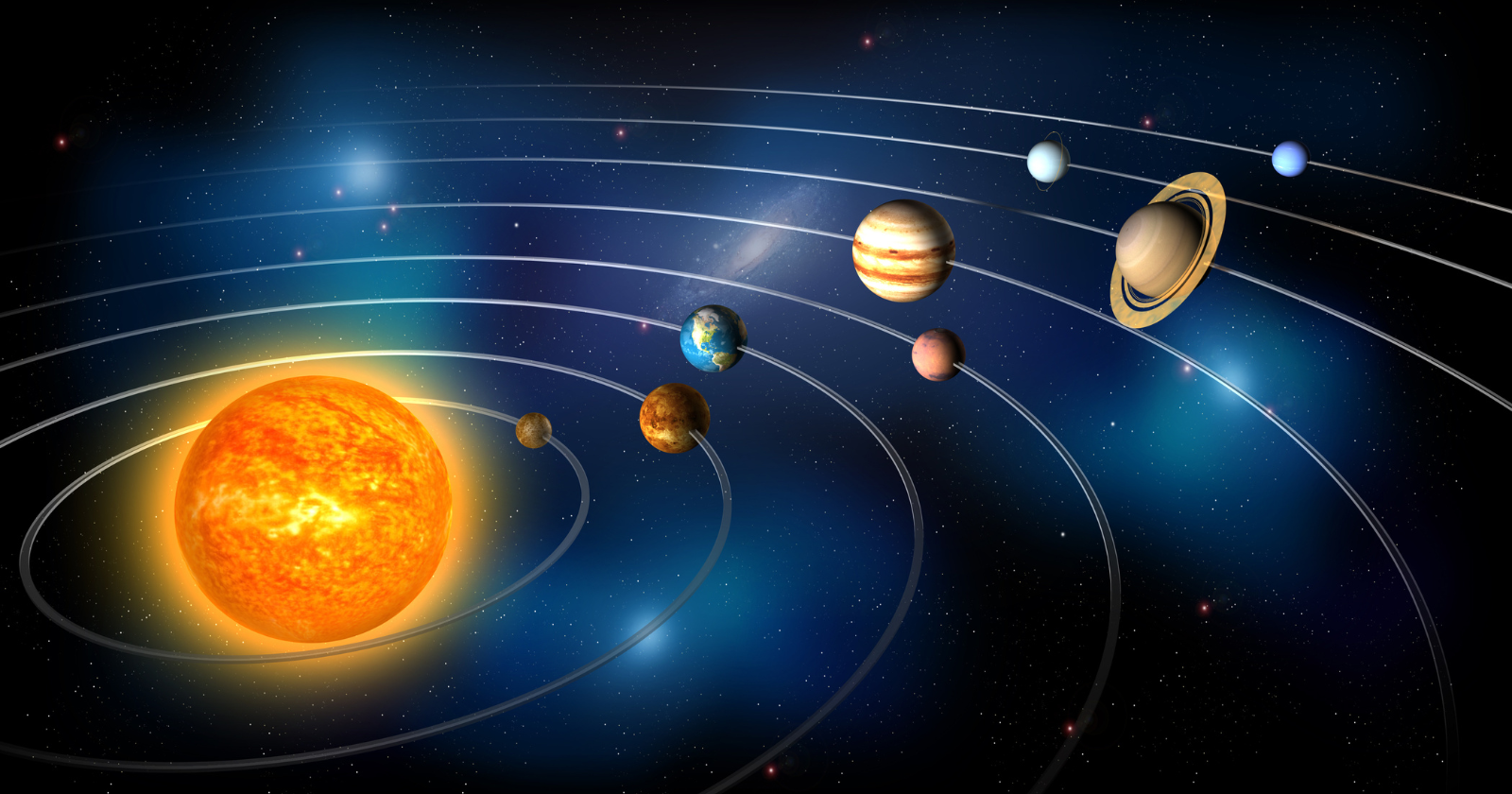
There are about 20 quadrillion ants alive on Earth at any moment — enough that their combined biomass outweighs every wild bird and mammal on the planet combined, even though the often-repeated claim that ant biomass equals human biomass has been overturned by recent research

The 2022 paper that established the modern estimate of how many ants are alive on Earth was published in the Proceedings of the National Academy of Sciences by Patrick Schultheiss, Sabine Nooten and colleagues. The work was conducted at the University of Hong Kong, with the two lead authors now based at the University of Würzburg in Germany. According to the team’s analysis of 489 separate studies of ant abundance across every continent and major biome, the population at any given moment is approximately 20 quadrillion individuals, written 2 × 10¹⁶. That works out to roughly 2.5 million ants for every human on Earth. The figure is a conservative estimate; the authors note in the paper that subterranean ants and ants in northern Asia and central Africa are inadequately sampled and that the true number is likely higher.

The number, large as it is, comes with a smaller and more contested figure for total biomass. The popular claim, repeated for decades in science journalism and natural-history writing, is that all the ants on Earth together weigh roughly as much as all the humans. The 2022 paper updates this claim, and the update goes in one direction.

How much the ants actually weigh

The Schultheiss group’s estimate of total ant biomass is 12 megatons of dry carbon, written 12 Mt C. Earlier estimates, from papers in 2009 and 2014, had given figures as high as 70 to 100 megatons of carbon. These higher numbers were the source of the famous “ants weigh as much as humans” comparison. According to a 2022 commentary in PNAS by Tom Fayle and Petr Klimes, which appeared alongside the Schultheiss paper as part of the peer-reviewed response to the new estimate, the more rigorous 2022 count puts global ant biomass at about one-fifth that of humans. The earlier comparison, in other words, was based on biomass figures that the new methodology has corrected downward by a factor of five to eight.

Even at the new figure, the ants are still doing extraordinarily well by any biological measure. According to a piece co-written by the study’s authors and published via The Conversation, the 12-megaton figure exceeds the combined biomass of all wild birds and all wild mammals on Earth put together. Wild bird biomass is estimated at about 2 megatons of carbon; wild mammal biomass at about 7 megatons. The ants alone outweigh both groups combined by a margin of roughly a third. To put the figures in their full biospheric context, the 2018 PNAS census of global biomass by Yinon Bar-On, Rob Phillips and Ron Milo found that plants account for around 450 gigatons of carbon (mostly wild terrestrial plants), bacteria for around 70 gigatons, and all animals combined for only about 2 gigatons. Humans and livestock together now outweigh all wild mammals combined by more than an order of magnitude, but the planet’s biomass overall remains dominated, by a wide margin, by wild plants and bacteria.

How the count was done

The methodology is worth describing, because the count of 20 quadrillion ants is the kind of figure that sounds invented and is in fact carefully derived. The Schultheiss team integrated data from two standard ant-sampling techniques used by ant ecologists around the world. The first is leaf-litter sampling, in which a measured area of leaf litter is collected, sifted, and all the ants in it are counted. The second is pitfall trapping, in which small cups are buried flush with the ground for a measured period of time and the ants that fall in are counted. Each method has limitations; pitfall trapping measures activity density rather than absolute abundance, and leaf-litter sampling misses arboreal and subterranean ants. The team combined the two methods, corrected for what neither could detect, and extrapolated by biome to a global figure.

The figure they reached, approximately 20 × 10¹⁵ ants, is described in the paper as conservative. The combined biomass estimate of 12 megatons of dry carbon corresponds to roughly 24 megatons if other bodily elements besides carbon are included. The team also found that ant density varies enormously by biome. Tropical moist forests and tropical savannahs carry the highest ant densities. Polar regions essentially carry none. The ants are extreme generalists across the rest of the planet’s land surfaces.

Why this matters beyond the headline number

The “20 quadrillion” figure has a practical use beyond being a piece of natural-history trivia. It establishes a baseline against which future surveys can measure changes in global insect abundance. The wider literature on insect decline, much of which has focused on European and North American populations of flying insects, has not previously had a robust global baseline for one of the most ecologically important insect groups. The Schultheiss paper provides that baseline, with explicit confidence intervals, for ants specifically. According to Mongabay’s account of the research, the authors regard the establishment of a comparable benchmark as one of the paper’s most useful contributions to future climate and biodiversity research.

Ants do disproportionate ecological work for their biomass. The biologist E.O. Wilson, whose career was largely devoted to ants and who died in 2021, famously called insects and other invertebrates “the little things that run the world.” Ants are the principal agents of seed dispersal for thousands of plant species, aerate soils on a scale that rivals earthworms, and recycle organic matter in tropical forests on a faster timescale than fungi alone could manage. The 12-megaton figure understates their ecological footprint, because ant impact on ecosystems is not strictly proportional to their mass.

The honest version of the famous fact is therefore that ants are extraordinarily numerous and extraordinarily important, that they outweigh every wild vertebrate group on land combined, and that they are best described as the dominant terrestrial animal life on Earth by abundance. The specific claim that they weigh as much as humans, however, is no longer the best estimate. The current best figure puts them at roughly a fifth of the human biomass, even before livestock are factored in. The number that has replaced it, 2.5 million ants for every person, is doing the same rhetorical work in a different and more defensible way.

The post There are about 20 quadrillion ants alive on Earth at any moment — enough that their combined biomass outweighs every wild bird and mammal on the planet combined, even though the often-repeated claim that ant biomass equals human biomass has been overturned by recent research appeared first on Space Daily.

Bananas are slightly radioactive — they contain potassium-40, a naturally occurring radioactive isotope, and the radiation dose from eating one banana is so consistently measurable that nuclear scientists use it as an informal unit of measurement, called the “banana equivalent dose,” for explaining low-level radiation exposure to the public

Bananas are slightly radioactive.

They are one of the most potassium-rich common foods, with about 0.5 grams of potassium in a typical 150-gram fruit, and 0.0117 percent of all naturally occurring potassium on Earth is the isotope potassium-40, which is radioactive. A medium banana therefore contains roughly 15 becquerels of radioactivity, meaning about 15 atoms decay every second somewhere inside it. The radiation dose delivered to a human who eats the banana is small but consistent enough to have become a popular unit of measurement in radiation safety education, called the banana equivalent dose, or BED. One BED is conventionally given as 0.1 microsieverts. A chest CT scan delivers roughly 70,000 BED. The metaphor is durable enough that nuclear-safety educators reach for it constantly. It is also more complicated than the simplified version suggests.

Where the unit came from

The banana equivalent dose was proposed in 1995 by Gary Mansfield, a scientist at Lawrence Livermore National Laboratory, in a post to the RadSafe mailing list, an online forum for radiation safety professionals. According to Versant Medical Physics and Radiation Safety’s account of the unit’s origin, Mansfield wrote that he had found the BED “very useful in attempting to explain infinitesimal doses (and corresponding infinitesimal risks) to members of the public.” The idea spread quickly through health-physics teaching and popular science journalism, and it has been a fixture of public communication about radiation ever since, including in news coverage of the Fukushima and Three Mile Island accidents.

The underlying physics is straightforward. Potassium-40 has a half-life of 1.25 billion years, decaying so slowly that a given atom is overwhelmingly likely to outlast the lifetime of any individual organism. About 89 percent of K-40 atoms beta-decay into calcium-40; the remaining 11 percent undergo electron capture to become argon-40, with a characteristic gamma-ray emission at 1.46 megaelectronvolts. The slow decay rate is what allows potassium-40 to persist on Earth from the time the planet formed, and the same slow decay rate is what makes the dose from any single banana tiny.

The complication

The complication, which most popular accounts skip, is that the radiation dose from eating a banana is not cumulative. The human body maintains its potassium levels under strict homeostatic control. A healthy adult contains roughly 140 grams of potassium at any given moment, and the kidneys excrete excess potassium in urine to keep that level constant. When a banana is eaten, the new potassium it contributes is absorbed and distributed through the body, but the body responds by excreting an equivalent amount of pre-existing potassium. The total potassium content of the body, and therefore the total potassium-40 content, returns to its baseline within a few hours.

This means the additional radiation dose from eating a banana lasts only as long as the body takes to re-establish potassium balance. The 0.1 microsievert figure, calculated using the US Environmental Protection Agency’s standard committed-dose model for ingested potassium-40, assumes a 30-day biological half-life. In practice, for routine dietary potassium intake, the half-life is more like a few hours, which would shrink the committed dose accordingly. The body’s baseline radioactivity from its existing 140 grams of potassium, including roughly 16 milligrams of potassium-40, is about 4,400 becquerels of continuous internal decay. A banana adds another 15 becquerels for a few hours. The ratio is essentially imperceptible.

What health physicists actually say

Some radiation safety professionals find the banana equivalent dose actively misleading. Geoff Meggitt, a retired health physicist, former editor of the Journal of Radiological Protection, and former scientist at the UK Atomic Energy Authority, set out the case against the BED in a 2010 interview with the science journalist Maggie Koerth-Baker for Boing Boing, which has become the canonical popular reference for the critique. Meggitt, who is also the author of Taming the Rays, a history of radiation and protection, told Koerth-Baker that “the potassium content of our bodies seems to be under homeostatic control. When you eat a banana, your body’s level of Potassium-40 doesn’t increase. You just get rid of some excess Potassium-40. The net dose of a banana is zero.” His broader argument is that the BED gives the impression of a cumulative comparison when in fact no such accumulation occurs. Comparing a CT scan to “70,000 bananas” implies the bananas, if eaten, would add up to a CT scan’s worth of radiation. They would not. The CT scan delivers its dose all at once and the dose stays delivered. The bananas deliver theirs and the body resets within hours.

The UK radiation safety consultancy Ionactive, in its own teaching materials, is direct about the same limitation. The BED “does not deliver a committed effective dose at all,” the consultancy notes, because “the radiation dose from eating a banana is not cumulative since the body regulates potassium (and therefore K-40) by a process called homeostasis.” Ionactive’s broader assessment is that the BED remains a useful risk comparator for training and reassurance, provided the user understands its pitfalls.

The honest version of the famous fact is therefore narrower than the popular telling. A banana really does deliver a small, measurable dose of ionizing radiation, primarily from potassium-40. The dose is real. The comparison to other radiation sources is useful for public communication. The caveat is that the banana dose is essentially transient while many other doses are not, and that distinction is the part the famous metaphor leaves out.

The post Bananas are slightly radioactive — they contain potassium-40, a naturally occurring radioactive isotope, and the radiation dose from eating one banana is so consistently measurable that nuclear scientists use it as an informal unit of measurement, called the “banana equivalent dose,” for explaining low-level radiation exposure to the public appeared first on Space Daily.

Deep beneath our feet, Earth’s inner core is thought to be roughly as hot as the surface of the Sun — around five and a half thousand degrees Celsius — yet the crushing pressure keeps it solid.

Roughly 5,100 kilometres beneath the surface, Earth’s inner core is usually estimated to sit somewhere around 5,000 to 6,000 degrees Celsius, close to the temperature of the Sun’s visible surface. It is also solid. That pairing sounds like a contradiction, and it is worth taking the time to understand why it is not.

The short version is that pressure, not temperature alone, decides whether iron stays liquid or solid. At the centre of the planet the pressure is so high that iron remains locked in a solid state well past the point where it would melt at the surface.

The longer version is more interesting, because it involves how anyone arrived at a number for a place no one has ever sampled.

How anyone knows the temperature at all

There are no samples of the core. The deepest holes humans have drilled barely scratch the crust, and the inner core begins about 5,100 kilometres down. Everything we say about it is inferred.

The structure itself was worked out from earthquakes. In 1936 the Danish seismologist Inge Lehmann noticed seismic-wave behaviour that pointed to a distinct inner core inside the liquid outer core, an interpretation later confirmed and refined by better seismology. That basic picture has held for nearly ninety years.

The temperature is harder, and it comes from the laboratory rather than from listening to earthquakes. The core is mostly iron, with some nickel and lighter elements, so the question becomes the melting point of iron under the pressure found at the inner core boundary. Researchers reproduce those pressures in diamond-anvil cells and shock-wave experiments, then read off where iron melts. According to Scientific American’s account of the method, estimates for that melting temperature still range from about 4,500 to 7,500 kelvin, which is a wide band.

That spread is the honest part of the story. The often-quoted figure of roughly 5,400 degrees Celsius is a central estimate, not a measured fact, and different methods land in different places. A 1993 paper by Reinhard Boehler in Nature, based on melting-point measurements of iron at high static pressures, sits towards the lower end of the modern range. Later first-principles simulations, including work by Dario Alfè, put the melting point near the inner core boundary higher, closer to 6,000 kelvin. The comparison with the Sun’s surface is a useful image, but the underlying number carries error bars that are easy to lose.

Why the pressure keeps it solid

Heat pushes a material towards melting. Pressure pushes it back towards solid, because squeezing atoms together makes it harder for them to break out of an ordered lattice and flow.

At the inner-core boundary the pressure is about 330 gigapascals, rising higher toward the centre of the planet, more than three million times the pressure at sea level. In simple terms, the melting point of iron rises sharply under pressure, so the temperature at the centre, high as it is, sits below the raised melting point. That is why the core can be both extraordinarily hot and solid at once.

The outer core, sitting at lower pressure, does melt, which is why the inner core is a solid ball inside a liquid shell rather than one continuous mass.

The solid ball is not as static as it looks

For much of the last century, the inner core was often presented in simple diagrams as a fixed, solid sphere. Recent seismology has complicated that picture.

In a 2024 paper in Nature, Wei Wang, John Vidale and colleagues argued that the inner core’s rotation relative to the surface has changed direction, with the inner core moving back through the same path more slowly after about 2008. The conclusion rests on a set of repeating earthquakes near the South Sandwich Islands recorded between 1991 and 2023, read as showing the core moving backward relative to the mantle. Other groups have read similar data differently.

It is one well-argued position in a long-running debate, not a closed case.

A follow-up study in Nature Geoscience in 2025, with the same group, went further and suggested that the near surface of the inner core is not only rotating but deforming, with the boundary between solid and liquid possibly developing bulges as iron freezes and melts. This is a single study built on the same family of seismic observations, and the authors present the deformation as a tentative reading of subtle changes in wave shape rather than a settled result. The narrower, more defensible point is that the boundary between the inner and outer core appears to be an active place, not a frozen one.

What is worth watching

None of this overturns the basic picture. The inner core is solid, it is roughly as hot as the surface of the Sun, and pressure is the reason those two facts sit together.

What stays open is the detail. The exact temperature depends on which iron-melting experiments hold up. The behaviour of the boundary depends on seismic readings that a handful of groups are still arguing over. The next round of evidence will come from the same slow source it always has, which is earthquakes large enough to send waves through the centre of the planet, recorded carefully enough to notice when something down there has shifted.

The post Deep beneath our feet, Earth’s inner core is thought to be roughly as hot as the surface of the Sun — around five and a half thousand degrees Celsius — yet the crushing pressure keeps it solid. appeared first on Space Daily.

Bolted to Pioneer 10 is a plaque showing two humans and a cosmic map back to Earth, while the spacecraft itself is now a silent ghost ship drifting toward Aldebaran, a star it will not pass for another two million years.

Bolted to the side of Pioneer 10 is a gold-anodised aluminium plaque, about 152 by 229 millimetres, engraved with the figures of a man and a woman and a set of symbols meant to mark where and when the spacecraft came from. The craft that carries it has been silent for more than two decades. It is still moving, coasting outward beyond the planets on a path that points in the general direction of the star Aldebaran, in Taurus.

The message was not NASA’s idea, or even Carl Sagan’s. As the Smithsonian National Air and Space Museum recounts, the science writer Eric Burgess suggested during the mission’s planning that Pioneer should carry a greeting to any civilisation that found it. Sagan took up the idea, designed the plaque with Frank Drake, and had the human figures drawn by Linda Salzman Sagan. Its best-known feature is not the figures but the diagram beside them: a radial pattern showing the Sun’s position relative to fourteen pulsars, each line marked in binary with that pulsar’s frequency. The idea was that any finder able to identify those pulsars could triangulate the Sun’s location, and read the frequencies as a rough timestamp, since pulsars slow at known rates. It is a map home, and also a clock.

How the spacecraft went quiet

Pioneer 10 launched on 2 March 1972 and became the first spacecraft to cross the main asteroid belt and the first to fly past Jupiter, which it reached in December 1973. Its routine science mission ended on 31 March 1997. After that, NASA kept tracking its weakening signal as a test of deep-space communication.

The power was the limit. Pioneer 10 ran on radioisotope thermoelectric generators, which produce less electricity as their plutonium decays. According to NASA’s account, the last telemetry came back on 27 April 2002, and the final faint signal, carrying no data, was detected on 23 January 2003. A contact attempt on 7 February 2003 found nothing, and a last try in March 2006 also failed. The spacecraft did not break or crash. Its RTGs had likely fallen below the power needed to keep the transmitter operating.

The Aldebaran figure, and what it actually means

The line repeated in most accounts is that Pioneer 10 is heading for Aldebaran and will take about two million years to get there. NASA uses the same framing, putting Aldebaran at roughly 68 light-years away and the trip at more than two million years.

Two qualifications matter. The first is that the two-million-year figure assumes Aldebaran stays put. It does not. The number is calculated as if the star had zero velocity relative to the spacecraft, which is a convenient simplification rather than a prediction. Over two million years both the star and Pioneer 10 will have moved, so the figure describes the crossing time to Aldebaran’s current position, not a genuine rendezvous.

The second is that “heading for” overstates the aim. Pioneer 10 is drifting in the broad direction of Aldebaran, not on course to reach it. Nothing is steering. The plaque and the trajectory have become a single object now, a labelled probe on a fixed coast, and the star is a marker on the horizon rather than a destination.

Why the message is more durable than the machine

The spacecraft itself may not remain recognisable forever. Across millions of years of travel, micrometeoroid impacts and cosmic-ray erosion will slowly wear at the structure. The plaque was mounted on the antenna support struts partly to shield it from interstellar dust, and gold-anodised aluminium was chosen with durability in mind, but durability here is relative, and no one can say with confidence how legible it would be to a finder in the far future.

The more honest point is about audience. The plaque was never likely to be read by anyone. The nearest stars are light-years apart, the space between them is mostly empty, and the chance of any object the size of a car being intercepted is vanishingly small. Sagan understood this. The plaque worked at least as well as a message to the people who made it, a statement in 1972 that a species capable of building the probe was also capable of imagining who might one day find it.

Where it is now

Pioneer 10 is no longer the most distant human-made object. Voyager 1 passed it on 17 February 1998, at a distance of about 69 astronomical units, and has remained farther out since. Pioneer 10 continues outward regardless, unpowered and untracked, likely somewhere around 140 astronomical units from the Sun by now depending on how the estimate is framed, and receding by roughly 2.5 astronomical units a year. Without a signal, that position is inferred from its trajectory rather than measured.

There is nothing left to wait for from it, no next contact and no milestone NASA is tracking. What remains is a quiet piece of bookkeeping: a 1972 spacecraft, its last word logged in January 2003, still carrying a map of where it came from on a path that points, for now, at a red star in Taurus.

The post Bolted to Pioneer 10 is a plaque showing two humans and a cosmic map back to Earth, while the spacecraft itself is now a silent ghost ship drifting toward Aldebaran, a star it will not pass for another two million years. appeared first on Space Daily.

After a crippled seven-year journey Japan’s Hayabusa probe limped home in 2010 and burned up in the sky over Australia, but not before releasing the first asteroid samples ever returned to Earth.

Japan’s Hayabusa probe returned to Earth on 13 June 2010, breaking apart in a bright streak over the Woomera Test Range in South Australia. About three hours before that final reentry, it had released a 40-centimetre capsule, which parachuted down into the outback intact. Inside were the first samples ever returned from the surface of an asteroid. The mission had taken seven years and very nearly did not make it back at all.

The spacecraft, known as MUSES-C until it was renamed Hayabusa just before its launch on 9 May 2003, was built by what is now the Japan Aerospace Exploration Agency primarily as an engineering demonstration. Its target was 25143 Itokawa, a near-Earth asteroid roughly 550 metres long, which Hayabusa reached in September 2005. The headline that survives is the clean one: first asteroid sample return. The actual story is messier, and more interesting for it.

What went wrong, in order

The list of failures is long enough that the return reads less like a plan executed than a plan salvaged. As Space.com summarised at the time, the probe suffered a fuel leak, repeated communications breakdowns, and malfunctions in its ion engines, problems that together added about three years to the journey. A small hopping lander called MINERVA, meant to bounce across the surface taking pictures, was released during a descent and drifted off into space without ever reaching the asteroid.

Then there was the sampling system itself, which is the part most worth dwelling on.

The sampler that did not fire

Hayabusa was designed to collect material by touching a horn-shaped device to the surface and firing a five-gram tantalum projectile into the asteroid at about 300 metres per second. The fragments thrown up by that impact would be funnelled through the horn into a sealed canister. Tantalum was chosen deliberately, because it is rare in meteorites and so would not be confused with the asteroid material.

The projectiles never fired. JAXA’s own account notes that during the first touchdown the spacecraft detected a possible hazard and issued an abort, and the abort command also cancelled the firing. The paper reporting the touchdowns in Science, led by JAXA’s team, recorded that the pyrotechnic control device gave no indication the projectiles had completed firing. Hayabusa touched down twice on a smooth patch named the Muses Sea on 19 and 25 November 2005, but the mechanism that was supposed to generate the sample did not work as intended either time.

Why there were samples anyway

What saved the science was the asteroid’s almost negligible gravity. When the horn made contact with the surface, the touchdowns themselves disturbed the regolith, and a small amount of dust drifted up into the collection area and stayed there. According to NASA, examination of the capsule later revealed roughly 1,500 dust particles from Itokawa, presumed to have been kicked into the catcher during the contacts rather than collected by the intended firing.

The grains were tiny, mostly tens of micrometres across, smaller than the width of a human hair. Confirming they were asteroid material rather than terrestrial contamination took JAXA several months of analysis. In November 2010 the agency reported that at least 1,500 grains had been identified as rocky particles, most of extraterrestrial origin and traceable to Itokawa.

What the dust actually settled

The payoff was not the quantity but a specific scientific question the grains could answer. Researchers had long debated whether the common S-type asteroids, the stony bodies that dominate the inner asteroid belt, were the parent objects of the most common meteorites found on Earth, the ordinary chondrites. The spectra did not quite match, and the suspected reason was space weathering, the gradual alteration of an airless surface by solar wind and micrometeorite bombardment.

The Itokawa grains, described across a set of papers in the 26 August 2011 issue of Science, closed much of that gap. The mineralogy matched a class called LL chondrites, tying a specific meteorite type directly to a specific asteroid for the first time using returned material rather than inference. That is the result the seven-year ordeal delivered: not a large sample, but a clean link between the rocks that fall to Earth and the bodies they come from.

What it set up

Hayabusa’s value turned out to be as much procedural as scientific. The mission proved that a sample could be retrieved from an asteroid and brought home, and it gave JAXA a hard education in everything that could go wrong doing it. The successor, Hayabusa2, launched in 2014 to the asteroid Ryugu with a redesigned sampling system, collected surface material in February 2019 and subsurface material that July, and delivered its capsule, this time with the collection mechanism working as designed, to the same Woomera range on 6 December 2020.

The richest comparison now comes from NASA’s OSIRIS-REx, which delivered material from asteroid Bennu on 24 September 2023. Bennu is a carbonaceous asteroid rather than a stony one like Itokawa, and early analysis of its sample has reported amino acids, nucleobases, and evidence of ancient salty water, the kind of organic and aqueous chemistry the dry Itokawa grains were never going to carry. That work is ongoing, and the Itokawa and Ryugu samples are increasingly read alongside it as the catalogue of directly sampled asteroids grows.

The post After a crippled seven-year journey Japan’s Hayabusa probe limped home in 2010 and burned up in the sky over Australia, but not before releasing the first asteroid samples ever returned to Earth. appeared first on Space Daily.

When the Apollo 11 crew prepared to leave the Moon, they found the circuit breaker that armed their ascent engine had snapped off after a bulky backpack knocked it, and Buzz Aldrin pushed it back into place with a felt-tip pen rather than risk putting metal into a live electrical circuit.

After their first moonwalk, Aldrin and Neil Armstrong were back inside the Eagle, attempting to rest before the ascent. Aldrin noticed a small black plastic object on the floor. On inspection, it was the broken-off switch from the engine arm circuit breaker, marked ENG ARM on the panel. That breaker fed power to the ascent engine. Without that breaker closed at the right point in the checklist, the normal procedure for arming the ascent engine would not work. The command module was still above them, but their own route back to it now depended on a broken plastic switch.

The popular version of the story compresses everything that followed into a single dramatic beat. Aldrin pulls out a felt-tipped pen, jams it into the panel, the engine fires, and the moon launch proceeds on schedule. The actual sequence is less cinematic and more interesting.

How the breaker got broken

The lunar module was an extreme weight-reduction exercise, and its cramped cabin left many controls and circuit breakers exposed. In a pressurised suit with a Portable Life Support System backpack on, the cabin became a hazard course of protrusions waiting to be bumped.

That is what happened. Either Aldrin or Armstrong, manoeuvring in the cramped space after the moonwalk, had caught the engine arm breaker switch with the PLSS pack and snapped it off the panel. Neither noticed at the time. The first sign of the problem was a piece of plastic on the floor.

Aldrin reported the broken breaker to Houston. The astronauts then tried to sleep. They did not sleep well.

What Mission Control was actually doing

This is the part most retellings omit. The decision to push the breaker in with a pen was not a desperate field repair. It was one option being considered alongside others. The night between the moonwalk and the ascent was spent, on the ground, with engineers and controllers working through alternative procedures for arming the ascent engine if the breaker could not be closed.

William Barry, then NASA Chief Historian, has been clear about this in interviews. As History.com quotes him: had the felt-tip pen not worked, Mission Control and the crew would have continued working to find other ways to close the circuit so the ascent engine could be fired. The men were not, in the operational sense Apollo used the word, stranded. They were in trouble. There is a difference.

That difference matters because the popular framing turns the pen into the only thing standing between two astronauts and a slow death on the lunar surface. The pen was the first thing that worked. The list of things that might have worked next was not empty.

Why the pen, not a finger or a screwdriver

Aldrin’s stated reasoning, in his memoir Magnificent Desolation, is the part the lede gets exactly right. He decided against using his finger because the circuit was electrical. He decided against anything with metal at the end for the same reason. He had a felt-tipped pen in the shoulder pocket of his suit, which he had brought along to write on a rendezvous chart. The pen had a plastic body. He inserted it into the opening where the switch had been, and the breaker held.

The pen was a Duro felt-tip marker, not a Fisher Space Pen. The Fisher pen story, which crops up in roughly half the retellings, is a separate piece of Apollo folklore involving a different pen, different mission requirements, and a different commercial backstory. Both the Duro pen and the broken switch were later donated to the Museum of Flight in Seattle, displayed together as physical evidence of a particular kind of engineering moment.

The fix that became a design change

The technical legacy of the incident was small and immediate. On subsequent Apollo missions, the engine arm breaker and other critical breakers in the lunar module cabin were given guards. The vulnerability had been identified by snapping it off in flight, and the fix took the form of a small piece of metal that prevented a backpack from finding the switch by accident.

This is the unglamorous version of how spacecraft hardware evolves. Find the failure mode in flight. Patch it on the next vehicle. The Apollo programme accumulated many such fixes between missions, most of which never surfaced in public memory because they corrected problems that did not become near-disasters.

The engine arm breaker became part of public memory because Aldrin kept the broken switch, kept the pen, wrote about both, and donated them to a museum.

What the story actually demonstrates

What we find useful about the felt-tip pen story is not the dramatic version, which treats it as a near miss saved by quick thinking. The more interesting version is what it shows about how a working spaceflight programme actually handles problems.

A piece of plastic ends up on the floor of a lunar module. Two crew members notice it, identify it, and report it. Mission Control begins working alternatives without panicking. The crew sleeps badly. In the morning, the simplest possible fix is tried first. It works. The mission continues. The vehicle design is updated for the next flight.

That is what a functioning operations culture looks like, and it is the part of the story that gets compressed when the pen is asked to carry all the drama on its own. The pen did the job. So did the system around it.

The broken switch and the Duro pen were later displayed together in Seattle, and the engine arm breaker on subsequent lunar modules was protected by a guard.

The post When the Apollo 11 crew prepared to leave the Moon, they found the circuit breaker that armed their ascent engine had snapped off after a bulky backpack knocked it, and Buzz Aldrin pushed it back into place with a felt-tip pen rather than risk putting metal into a live electrical circuit. appeared first on Space Daily.

Nearly four kilometres beneath the Antarctic ice sheet lies Lake Vostok, a hidden lake the size of a small sea. It has been cut off from sunlight and the atmosphere for hundreds of thousands, and perhaps millions, of years — making it one of Earth’s closest rehearsals for the buried oceans of Europa and Enceladus, where any life would also have to survive in darkness beneath a frozen shell.

Nearly four kilometres beneath the East Antarctic ice sheet sits Lake Vostok, a body of freshwater roughly the size of Lake Ontario. It is the largest of the nearly 400 subglacial lakes mapped across the continent, about 250 kilometres long and 50 wide, and it has been sealed under the ice long enough to make it one of the better earthly stand-ins for the sub-ice oceans thought to lie beneath Jupiter’s moon Europa and Saturn’s moon Enceladus.

How long is “long enough” is itself an estimate rather than a measurement. The ice above the lake has covered it for something like 15 million years, and some analyses put the isolation of the water itself at 15 to 25 million years, though more cautious figures run lower. Either way, this is water cut off from sunlight, from the atmosphere, and from the rest of the biosphere for an interval with no easy parallel anywhere we can readily reach. Live Science has a good overview of how the lake was found and mapped.

What the analogue is, and where it stops

The reason Vostok keeps coming up in discussions of Europa and Enceladus is the shape of the problem, not the specifics. Here is liquid water held liquid by pressure and geothermal heat rather than the Sun, sitting in permanent darkness under a thick lid of ice. Anything living in it would have to run on chemistry rather than photosynthesis. That is the condition the icy moons are thought to share.

The match is loose past that point. Vostok is freshwater, fed by melting glacial ice; the moon oceans are believed to be salty and chemically richer. The cap over Vostok is about four kilometres of ice, while Europa’s shell is estimated at 15 to 25 kilometres and Enceladus’s is thinner again. The strongest case for the moons also rests on something Vostok shows less plainly: a rocky seafloor where hot water reacts with rock. Cassini’s passes through the plumes erupting from Enceladus turned up silica and molecular hydrogen consistent with that kind of activity. Vostok is most useful for the general question of whether life can persist in dark, sealed, sub-ice water, rather than as a literal model of either moon.

The drilling problem

This is where Vostok’s record turns frustrating, and where the most transferable lesson sits. A Russian team reached the lake surface on 5 February 2012, the end of a years-long effort and the deepest ice core ever taken. The borehole had been kept open with kerosene and Freon, and when the drill finally broke through, lake water surged up and mixed with that fluid. The fluid carried surface bacteria.

The consequence is that organisms later reported from Vostok ice cannot be cleanly separated from contamination introduced during the drilling. A 2013 analysis of accreted ice reported genetic sequences from thousands of taxa. Other work found almost nothing, and the Russian microbiologist Sergey Bulat cautioned that even a single candidate organism might be a contaminant. The disagreement says less about what lives in the lake than about whether anyone has yet sampled the lake at all.

How it should have gone

The counter-example arrived almost immediately. In January 2013, the United States WISSARD project reached Subglacial Lake Whillans in West Antarctica using a clean hot-water drill fitted with filtration and ultraviolet decontamination, described in the project’s operational account in the Annals of Glaciology. The samples held up to scrutiny. Writing in Nature in 2014, Brent Christner and colleagues reported a functioning microbial ecosystem, on the order of 4,000 single-celled taxa, living on chemical energy in permanent darkness.

Whillans is not a substitute for Vostok. It sits under only about 800 metres of ice and forms part of an active subglacial drainage network that fills and flushes, so it is younger and far less isolated. But it answered the question Vostok could not. Subglacial water can hold life, and clean access can demonstrate it without leaving the result open to doubt.

What it means for the moons

The line from these lakes to Europa and Enceladus runs through the contamination problem more than the biology. Both moons almost certainly hold liquid water. Europa’s induced magnetic field, detected by the Galileo spacecraft, points to a salty ocean that may contain twice the water of all Earth’s oceans, and Enceladus vents its ocean straight into space, where Cassini sampled it directly. NASA’s Europa Clipper, launched on 14 October 2024, is due to reach the Jupiter system in 2030 and will study the ice shell and ocean chemistry from orbit rather than by landing.

That choice is driven partly by Jupiter’s radiation. But the harder long-term obstacle, for any mission that eventually tries to sample one of these oceans rather than observe it from above, is the one that compromised Vostok: reaching the water without carrying your own microbes into it. The engineering of clean access, not the question of whether the water exists, is the part still waiting on a convincing answer.

For now, the nearest thing to a verdict comes from Whillans, not Vostok. What Clipper returns from 2030 onward will be read against that standard, and against the long, contaminated cautionary tale four kilometres down in East Antarctica.

The post Nearly four kilometres beneath the Antarctic ice sheet lies Lake Vostok, a hidden lake the size of a small sea. It has been cut off from sunlight and the atmosphere for hundreds of thousands, and perhaps millions, of years — making it one of Earth’s closest rehearsals for the buried oceans of Europa and Enceladus, where any life would also have to survive in darkness beneath a frozen shell. appeared first on Space Daily.

Received — 31 May 2026 SpaceDaily News

The Sun is not standing still. It is carrying the entire Solar System around the centre of the Milky Way, and one lap takes roughly 230 million years. The last time we were this far around the galaxy, Earth was in the Triassic Period and the very first dinosaurs were only just beginning to walk.

The Sun is not fixed in space. It carries the entire Solar System around the centre of the Milky Way, completing one lap in roughly 230 million years. One galactic year ago, Earth was in the Late Triassic, and the first dinosaurs were only just beginning to appear in the fossil record.

The image is tidy and the underlying facts hold up reasonably well. But both numbers carry more uncertainty than the neat pairing suggests, and the idea that we have come back to the same place is, on closer reading, not quite right.

How well we actually know the number

The Sun’s orbital period around the galactic centre is not pinned to a single value. Estimates run from about 225 to 250 million years, with 230 million the figure most often quoted. Keith Hawkins, an astronomer at the University of Texas at Austin, put it at around 220 to 230 million years and made the point that this so-called galactic year is specific to our position in the galaxy: stars closer to the centre orbit faster, those further out more slowly.

The numbers underneath are better constrained than the period itself. The Sun sits roughly 26,000 light-years from the galactic centre and moves through its orbit at about 230 kilometres a second, a figure the National Radio Astronomy Observatory gives alongside a period of about 226 million years. Data from the European Space Agency’s Gaia mission has since tightened the rotation curve and nudged the favoured period towards the lower end of the range. So when anyone says 230 million years, the honest reading is a figure good to within a few tens of millions of years, not a precise count.

The Triassic check

The dinosaur half of the claim survives scrutiny. One galactic year ago lands in the Late Triassic, in the stage palaeontologists call the Carnian. The oldest dinosaurs that are confidently identified as dinosaurs come from the Ischigualasto Formation in northwestern Argentina, dated to around 230 to 233 million years ago: small bipedal animals such as Eoraptor and Eodromaeus, and the larger predator Herrerasaurus.

What the popular version tends to leave out is that these animals were not yet the rulers of anything. The Natural History Museum in London, drawing on the work of dinosaur researcher Paul Barrett, notes that the first definite dinosaurs around 230 million years ago were rare members of the fauna, overshadowed by crocodile-line reptiles. Their dominance did not begin until the end-Triassic extinction about 201 million years ago cleared the field. The coincidence with the galactic year works as well as it does partly because two independently uncertain dates, the orbital period and the first-dinosaur date, happen to fall in the same window.

Why “this far around” is the wrong picture

The phrase that does the heavy lifting in the original observation is “this far around the galaxy,” and it implies a return to the same spot. We have not returned to the same spot.

Several things get in the way. The galaxy rotates differentially, so there is no single rigid sweep that carries everything around together. The spiral arms are not solid structures made of fixed stars; they behave more like wave patterns moving through the disc, which means the arm we sit near now is not the arm we sat near in the Triassic. The Sun also bobs up and down through the galactic plane, crossing it every few tens of millions of years, with a full vertical cycle of roughly 60 to 70 million years. Over hundreds of millions of years it drifts in galactic radius as well.

Put together, one lap brings the Sun back to a similar distance from the centre and a similar angular position, while the actual neighbourhood, the nearby stars, the gas clouds, the arms, is entirely different. The clock comes back around. The place does not.

What not to read into it

The tempting next step is to treat galactic position as a cause of what happens on Earth, and there is a real line of research that flirts with exactly this. In 1984, Schwartz and James proposed in Nature that an apparent periodicity in mass extinctions might track the Sun’s oscillation through the galactic plane, the suggested mechanism being that plane crossings disturb the outer comet cloud and send impactors towards the inner Solar System.

The idea has been revisited and challenged repeatedly in the decades since. The main objections are that the plane-crossing interval does not cleanly match the claimed extinction period, and that the extinction periodicity itself is disputed. It remains an unconfirmed hypothesis, not an established link. The galactic year is a useful way to feel the depth of geological time. On the available evidence it is not a lever on terrestrial biology.

The figure will keep moving as Gaia data accumulates and the Milky Way’s rotation curve is measured more precisely. The defensible version of the dinosaur line is the modest one: roughly one trip around the galaxy ago, by a clock we can only read to within tens of millions of years, the first dinosaurs were small, rare, and a long way from inheriting the planet.

The post The Sun is not standing still. It is carrying the entire Solar System around the centre of the Milky Way, and one lap takes roughly 230 million years. The last time we were this far around the galaxy, Earth was in the Triassic Period and the very first dinosaurs were only just beginning to walk. appeared first on Space Daily.

❌