
Normal view

Received — 31 May 2026 Google News Content : ScienceAlert : The Best in Science News and Amazing Breakthroughs

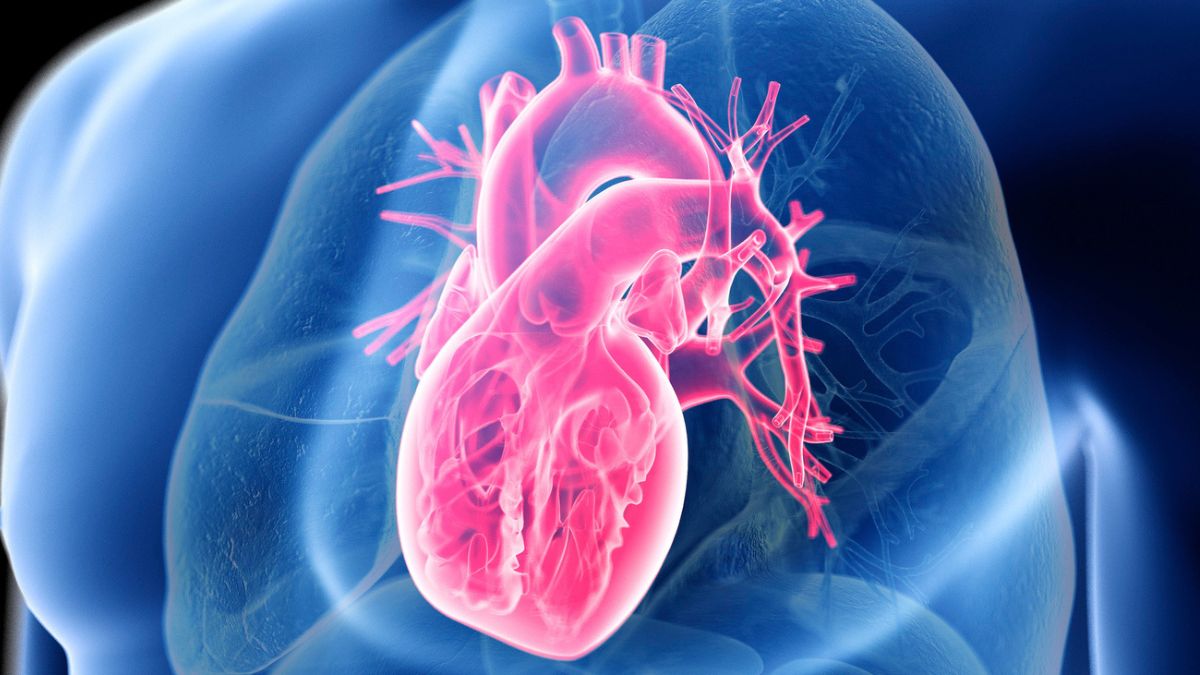
Giant Study Reveals The Secret to Heart Health Isn't Low-Carb or Low-Fat

The key to heart health isn't cutting down on pasta or potatoes, new evidence suggests; it's not even a low-fat diet.

The research suggests the focus of healthy eating shouldn't necessarily be on what's being excluded from your diet (for example, reduced carbs or lowered calories).

Instead, the emphasis should be on what you're actually putting into your body, and the quality of those ingredients.

A study that tracked nearly 200,000 men and women in the US for around 30 years found that some low-fat and low-carb diets are better for heart health than others.

What separates them?

The key was the quality of the food itself, not the quantity of carbs or fats.

The research, led by public health researchers at Harvard University, suggests that if a diet contains too many processed foods and animal proteins or fats, or if it otherwise lacks in adequate vegetables, fruits, whole grains, healthy fats, or essential macronutrients, it may not benefit cardiovascular health as much in the long run, even if it is low carb or low fat by definition.

"Our findings highlighted that it's not simply about cutting carbs or fat, but it's about the quality of foods people choose to construct those diets," concluded Harvard epidemiologist Zhiyuan Wu, who led the research, published in February.

"Focusing only on nutrient compositions but not food quality may not lead to health benefits."

Participants in the study who ate healthy, varied diets with adequate macronutrients showed higher levels of 'good' cholesterol in their blood, as well as lower levels of fats and inflammatory markers compared to those who ate diets lacking in those essentials.

They also had a significantly lower risk of developing coronary heart disease, the most common cause of heart attacks.

Cutting Carbs or Eating Low Fat
The research suggests the focus of healthy eating shouldn't be on what's being excluded from your diet. (fcafotodigital/Getty Images)

"These results suggest that healthy low-carbohydrate and low-fat diets may share common biological pathways that improve cardiovascular health," explained Wu.

"Focusing on overall diet quality may offer flexibility for individuals to choose eating patterns that align with their preferences while still supporting heart health."

YouTube Thumbnail

The findings are based on the self-reported diets of participants, who were all health professionals, so they may have had higher health awareness and better access to health care than the general population.

Related: This Diet Change Cuts Over 300 Calories a Day, Without Decreasing Meal Size

That's somewhat limiting; however, the length of follow-up in the study is impressive, amounting to more than 5.2 million person-years.

The findings join growing evidence suggesting that eating fewer processed foods and more whole grains and vegetables is generally best for a wide range of health outcomes.

Strict diets that count calories, carbs, or fats may not be necessary.

Subscribe to ScienceAlert's free fact-checked newsletter

"This study helps move the conversation beyond the long-standing debate over low-carbohydrate versus low-fat diets," said Yale University cardiologist Harlan Krumholz, editor-in-chief of the Journal of the American College of Cardiology.

"The findings show that what matters most for heart health is the quality of the foods people eat. Whether a diet is lower in carbohydrates or fat, emphasizing plant-based foods, whole grains, and healthy fats is associated with better cardiovascular outcomes."

The study was published in the Journal of the American College of Cardiology.

ScienceAlert stories are written, fact-checked, and edited by humans, never generated by AI. Don't miss a story, subscribe here.

New Wearable Ultrasound Device Could 'Transform' Pregnancy Care

It's hard to imagine pregnancy care without the ultrasound.

Since the 1950s, this incredible technology has provided an essential snapshot into the womb.

Now, scientists are taking it up a notch by trying to provide a continuous window of imaging.

In the coming years, new inventions may allow prospective parents and their physicians to monitor a developing fetus for hours on end, without the need for a traditional handheld ultrasound device or a sonographer standing by.

That sounds like sci-fi, but the proof of concept already exists.

Scientists at the University of California San Diego, Stanford, and Oxford have now invented a wearable ultrasound patch, called UPatch.

Mariana Tome, study co-author and obstetrics doctor at the University of Oxford, thinks the invention could "transform pregnancy care".

"This is the kind of technology obstetrics has been waiting for," she claims.

Like a handheld ultrasound, UPatch sends high-frequency sound waves inside the body to bounce off structures.

Ultrasound is used to periodically monitor fetal growth during pregnancy. A new device could provide continuous monitoring over longer periods. (Maskot/Getty Images)

The returning echoes are then read by special software to capture a real-time view of what's going on inside the body.

UPatch sticks to the skin of the abdomen, where it 'reads' the echoes of red blood cells deep within the vessels of a developing fetus.

It can even accurately measure anatomical features of the fetus, such as the head circumference, abdominal circumference, or femur length, thereby providing an estimated weight.

Most impressively, UPatch does all this autonomously, without the need for a trained sonographer on hand.

The patch needs to be connected to a bulky backend powering system, and it doesn't work when a mother is walking or moving too much, but it is technically hands-free.

"Babies in the womb still cannot be monitored reliably, which is a major gap in maternity care worldwide, with huge implications. Solutions are needed urgently," says Antoniya Georgieva, a reproductive health researcher at Oxford.

"The UPatch technology opens the possibility of monitoring the most important signals of fetal health over much longer periods, gain essential new knowledge of how babies' oxygen supply and wellbeing adapt inside the womb, and ultimately helping clinicians identify problems earlier."

New Ultrasound Patch Could "Transform Pregnancy Care"
An exploded view of the UPatch and how it works. (Park et al., Nat. Biotechnol., 2026)

When researchers tested the patch on 62 pregnancies within a clinical setting, it performed on par with current ultrasound devices.

For one participant, the patch even noticed a dangerous change in blood flow to the fetus, signaling preeclampsia.

"Following the detection of compromised fetal health using the UPatch, the preeclamptic participant underwent intensive monitoring and the baby was delivered by Cesarean section four days later," write the study authors.

During pregnancy, ultrasounds are regularly recommended to monitor the health of both the mother and the child.

In higher-risk pregnancies, where patients are kept in the clinic for longer periods of time, ultrasounds are done multiple times a week.

Each one of those scans, however, takes time and requires a sonographer to use a handheld device to focus on parts of the uterus.

UPatch allows patients to be monitored in bed for hours, without the need for a clinician to move the device's focus or interpret the results in real time.

Movements UPatch
UPatch can image the womb even when a mother moves around. (Park et al., Nat. Biotechnol., 2026)

If UPatch is used in conjunction with classical imaging techniques, then perhaps pregnancy outcomes could be greatly improved, its inventors argue.

"This technology could expand access to prenatal imaging in healthcare deserts and low-resource settings, where shortages of trained sonographers often delay care for high-risk pregnancies," says Tom Park, the main engineer who designed and fabricated UPatch.

After comparing the patch to current ultrasound devices, the researchers then tested the patch continuously for between 1 and 6 hours in 52 pregnant women, including those affected by preeclampsia, gestational diabetes, hypertension, or poor fetal growth.

The findings reveal differences between short-term fluctuations in ultrasound readings and longer-term changes that require closer monitoring.

Subscribe to ScienceAlert's free fact-checked newsletter

Researchers hope the device can help clinicians more readily detect signs of sustained fetal distress, so they can intervene sooner.

The flexible patch is designed with electrodes and an acoustic lens, so that when it wraps around an expectant mother's abdomen, it provides a window to the entire uterus while sitting, standing, or lying down.

Related: Yawning Is So Contagious You Can Catch It Before You're Born, Study Suggests

It can even provide details on how blood flow rates in the umbilical artery compare to those in the fetus's brain.

"This work shows how advances in soft electronics, ultrasound engineering, and clinical science can come together to address one of the most important unmet needs in pregnancy care," says senior author and engineer Sheng Xu from Stanford.

The study is published in Nature Biotechnology.

ScienceAlert stories are written, fact-checked, and edited by humans, never generated by AI. Don't miss a story, subscribe here.

❌