Normal view

Received today — 3 June 2026 Google News Content : ScienceAlert : The Best in Science News and Amazing Breakthroughs

Scientists Find Signs of Active Life in Ötzi The Iceman

Ötzi the Iceman is about as deceased as an organism can be.

He died 5,300 years ago, his body exquisitely mummified in Italy's glacial Ötztal Alps – one of the oldest and best-preserved human mummies ever discovered.

In the extreme cold of the alpine environment in which he died, microbial activity was suppressed – and, since microbes are the main driver of decomposition, Ötzi did not succumb to its ravages.

But the Iceman's corpse may not have been completely devoid of life.

A new study of the microbes all over his body suggests that some potentially active species may be nearly as old as the mummy himself – while others may have adapted to the conditions of the cold storage where he lies today.

"A mummy's microbiome is unique because we are dealing with microbes that are over 5,000 years old and, at the same time, with modern microbes that have been introduced since the discovery," says first author Mohamed Sarhan, a microbiologist at Eurac Research in Italy.

How Ötzi was discovered, protruding from the ice. (Helmut Simon/Wikimedia Commons)

Ötzi (pronounced like 'curtsy' without the 'c') was discovered in 1991, when two hikers spotted what they thought was a recently deceased mountaineer protruding from the melting ice of a glacier, at an elevation of 3,210 meters (10,530 feet).

It was only once his body had been transported to a laboratory that scientists understood the true significance of the find – a Copper Age hunter who had lived and died around 3300 BCE, mummified so exceptionally well that he appeared far more recent.

Since then, scientists have discovered much about Ötzi.

He was around 46 years old when he died, was adorned with at least 61 hand-poked tattoos on his dark skin, wore clothing stitched from the skins of multiple animals, and ate a last meal rich in ibex fat, wild meat, and cereals.

A reconstruction of how Ötzi may have looked in life, although recent genetic analysis suggests he may have had darker skin and male pattern baldness. (South Tyrol Museum of Archaeology/Augustin Ochsenreiter/All rights reserved)

Previous studies even examined his gut microbiome, finding it more consistent with that of ancient, non-industrialized human populations than with that of modern Western populations.

Researchers also recovered an ancient strain of Helicobacter pylori, the stomach bacterium associated today with ulcers and gastric cancer.

However, all these studies had one thing in common: They mostly treated those microbes as biological remains, rather than investigating whether any might still be active today.

And no one had undertaken the painstaking work of extricating Ötzi's native microbiome from environmental contaminants that may have moved in after he died, both on the glacier and afterward, when he was moved to cold storage to prevent decomposition.

Sarhan and his colleagues took swab samples from all over Ötzi's body, as well as meltwater inside him. They also used data on intestinal and stomach tissue from previous studies, and tested a sample of the soil from where he was found, collected at the same time as the Iceman himself.

YouTube Thumbnail

They ran these samples through DNA and RNA sequencing, looking for patterns in the types of microbes therein.

Broadly, the microbes fell into two main groups. The first were ancient microbes that were part of Ötzi's living microbiome.

The second were cold-loving yeasts found on Ötzi's skin and in meltwater collected from inside the mummy. These yeasts were highly specialized species adapted to cold environments, genetically related to microbes found in gelid regions such as Antarctica.

This suggests that these microbes likely originated in the glacier environment that preserved Ötzi's body.

Ötzi is kept at -6 degrees Celsius (21 degrees Fahrenheit) and regularly sprayed with water to keep him from drying out. (South Tyrol Museum of Archaeology/Eurac Research/Marion Lafogler)

But there was something else a bit strange. Some of the samples were heavily degraded, showing that the microbes were ancient – but others were relatively fresh, implying ongoing activity.

"We see continuity here," says microbiologist Frank Maixner, director of the Institute for Mummy Studies at Eurac Research.

"These yeasts have accompanied Ötzi on his long journey through the millennia."

There's another piece of the strange puzzle. Some of the microbes may have benefited from the conservation techniques used on the body.

After he was found, Ötzi's body was treated with phenol, a toxic compound that prevents fungal growth. Three of the four yeasts were species capable of metabolizing phenol.

Subscribe to ScienceAlert's free fact-checked newsletter

It is, to be clear, impossible to tell whether these active microbes are the descendants of a long, unbroken line quietly making their home on Ötzi's body for millennia, even in the ice-cold, or whether they were dormant and revived after the mummy was thawed.

Related: Artist Tattooed Himself to Solve Mystery of Ötzi The Iceman's Tattoos

But the evidence strongly indicates that, in some fashion, the Iceman's body supported their survival.

Samples taken in 2010 and 2019 showed that one cold-loving species increased over the decade – suggesting that at least some of the microbes are surviving and even slowly reproducing in the subzero conditions of Ötzi's storage chamber.

"The Iceman mummy is not a static artifact but a dynamic ecosystem of living archive where ancient glacier-derived microbes and modern contaminants coexist under museum conditions," the researchers write.

The findings have been published in Microbiome.

ScienceAlert stories are written, fact-checked, and edited by humans, never generated by AI. Don't miss a story, subscribe here.

Received yesterday — 2 June 2026 Google News Content : ScienceAlert : The Best in Science News and Amazing Breakthroughs

Astronomers Have Uncovered a Strange Pattern in The Winds of Alien Worlds

The hottest giant planets in the galaxy should, in theory, have the fastest winds.

The hotter a planet is, the stronger its atmospheric currents should be – and a category of exoplanets known as hot Jupiters contains the hottest worlds we've ever found.

They orbit so insanely close to their host stars that some of them are literally evaporating from the heat…

Yet a new analysis of seven hot Jupiters reveals wind speeds that are practically sluggish, compared to what astronomers expected.

The best explanation for this surprise, according to a team led by astronomer Julia Seidel of Côte d'Azur Observatory in France, is that something is holding the winds back.

And the mechanism that could best explain that powerful braking effect is a magnetic field.

If the team's findings are validated, these laggardly winds could be the best evidence we've seen yet of magnetic activity on a world outside the Solar System.

YouTube Thumbnail

"This breakthrough opens a completely new window on exoplanet research," Seidel says.

"It's the first time we can compare the magnetic environments of other worlds – a key step toward ultimately understanding which planets can stay alive, keep their water, and perhaps even, one day, host life as we know it."

Hot Jupiters are already some of the most fascinating exoplanets in the Milky Way. These worlds are in such proximity to their stars that, in the most extreme cases, their orbits are less than a day.

This means that two things are usually true for hot Jupiters. The first is that they are tidally locked, with one side permanently in daylight facing the star, and the other in permanent darkness facing away.

An artist's impression of a hot Jupiter. (NASA, ESA and G. Bacon)

This produces a temperature contrast that should create some absolutely demented weather.

The second is that these worlds are usually heated to equilibrium temperatures of several thousand degrees, helping drive even stronger atmospheric circulation.

Now, we can't directly measure magnetic fields on exoplanets, but previous studies of individual hot Jupiters have shown that, by tracing vaporized iron in the atmosphere, wind speeds can be established.

Because we know that magnetic fields can act as a brake on electrically charged gases, the researchers thought they might be able to use hot Jupiter wind speeds as a proxy for magnetic field activity.

An artist's impression of a hot Jupiter orbiting its star. (ESA/ATG medialab, CC BY-SA 3.0 IGO)

They used the MAROON-X instrument on the Gemini North telescope and the ESPRESSO instrument on ESO's Very Large Telescope to measure wind speeds across seven hot Jupiters.

Now, wind speeds on these worlds are still far beyond anything we might see in the Solar System. The researchers recorded howling gales at speeds between 2 and 7 kilometers (1.2 to 4.3 miles) per second. Jupiter's wind speeds – the fastest in the Solar System – only get as high as about 0.4 kilometers per second.

However, what makes the hot Jupiters interesting is the clear relationship between wind speed and temperature.

The researchers found that the hotter the exoplanet, the slower its winds.

YouTube Thumbnail

There are some other explanations for slower-than-expected winds on hot Jupiters; but, the researchers argue, the other possibilities would still show the opposite trend, with wind speed increasing with temperature.

"This is totally counterintuitive because, all things being equal, hot planets have more energy to accelerate the winds!" says astronomer Vivien Parmentier of Côte d'Azur Observatory. "Something must happen that slows down the wind speeds for hotter objects."

This something, the researchers argue, is most likely to be magnetic fields… and, based on the trend in their observations, they were even able to infer the strength of the field producing the effect.

The hot Jupiters, they found, should have magnetic fields of only a few gauss, roughly comparable to Jupiter's.

Subscribe to ScienceAlert's free fact-checked newsletter

Because it's a proxy measurement, further observations may be required to confirm the team's findings.

Related: Ludicrous Lemon-Shaped World Is Like Nothing We've Ever Seen

However, it's still a lovely result – one that shows just how far we've come in understanding alien worlds, moving away from the characteristics of individual planets to statistical-level analyses that start to reveal patterns.

"Here on Earth, we know the beauty of the northern and southern lights, where particles from the Sun hit our magnetic field and are guided toward the poles, colliding with gases in the atmosphere to produce colorful displays of green, pink, and purple," says astronomer Bibiana Prinoth, formerly of Lund University, Sweden, now at the ESO.

"I like to imagine that some of these worlds have a sky filled not only with stars, but with vast curtains of colorful light dancing across a planet that's half in perpetual day and half in endless night."

The research has been published in Nature Astronomy.

ScienceAlert stories are written, fact-checked, and edited by humans, never generated by AI. Don't miss a story, subscribe here.

Physicists Just Achieved 'Perfect Randomness' For The First Time Ever

One of the hardest things to do in physics is to generate true, provably unpredictable randomness.

That's because it's impossible to determine randomness based on the output alone.

Dice may have nicks and flaws that influence how they roll.

Computer random-number generators are usually driven by algorithms.

Even coin flips are governed by physical forces that, in theory, could be predicted.

The difficulty lies not in generating numbers that appear random, but in showing that no one could have possibly predicted the outcome – that the system isn't secretly affected by subtle hidden rules or biases.

Now, a team of physicists at ETH Zurich in Switzerland has overcome that challenge by leveraging one of the strangest phenomena in quantum mechanics: entanglement.

YouTube Thumbnail

"The resulting sequence of zeros and ones is now really perfectly random, and we can even certify that," says physicist Renato Renner of ETH Zurich.

Randomness is crucial to modern security.

It's the core feature that makes passwords, authentication codes, and encryption keys harder to guess.

It's the reason password generators will produce a string of meaninglessly jumbled characters rather than something like YourFirstPet123.

But the stakes extend far beyond a Flickr password to international security.

Recent examples of security weaknesses include the 2024 PuTTY vulnerability, in which one of the world's most widely used SSH clients had a flaw in its random-number generation for cryptographic signatures.

And don't forget the 2025 AMD Zen 5 RDSEED bug, in which a hardware random-number instruction would generate predictable values while falsely reporting success.

The 30-meter tube that connects the qubits. Photons can move between the two chips, allowing quantum entanglement. (Kilian Kessler/ETH Zurich)

If a code is not perfectly random, it's easier for attackers to guess.

"Any conventional electronic device, like a phone or a computer, is completely deterministic," Renner told Adam Kovac at Scientific American, "so it's actually very difficult for a computer or any other electronic device to generate a random value."

To try to find a solution to this problem, the researchers turned to a quantum experiment known as the Bell test.

They created a pair of entangled quantum bits, or qubits, separated by 30 meters (98 feet) and cooled to temperatures close to absolute zero.

Physicists Just Created 'Perfect Randomness' For The First Time
An image of a sheep (left) encrypted using imperfect randomness (middle) and perfect randomness (right). (ETH Zurich)

Entangled particles are those that, when measured, show similarities that cannot be explained by classical physics alone.

Measurements performed on the qubits produced correlations so strong that they could not be explained by ordinary hidden rules or pre-programmed behavior.

This achievement required major technical improvements to both the stability and speed of the experiment, allowing the team to perform more than a billion Bell-test trials over roughly nine hours.

A graph showing how ow earlier Bell-test experiments fell short of the threshold needed for randomness amplification, while the ETH Zurich experiment finally crossed into the regime where certifiably perfect randomness became possible. (Kulikov et al., Nature, 2026)

Previous quantum random-number generators could produce highly random outputs, but they still relied on trusted hardware and perfectly random starting conditions.

The ETH Zurich team instead demonstrated something called randomness amplification, deliberately starting with imperfect randomness – taking randomness that may contain subtle flaws or biases and transforming it into randomness that can be certified as perfectly unpredictable.

"Crucially," they write in their paper, "randomness amplification has been proven to be impossible by purely classical means."

Subscribe to ScienceAlert's free fact-checked newsletter

The result is a system capable of generating certifiably perfect randomness, even when starting with flawed or imperfect randomness.

Related: Crystals Have Been Used to Generate Truly Random Numbers For The Very First Time

And it's also device independent, which means the randomness does not depend on trusting the hardware itself, but on the quantum behavior observed in the experiment.

In the long term, the researchers say that their system could perform the same function atomic clocks perform for timekeeping – a physically certified source of randomness against which others can be measured and set.

"The technical improvements allowed us, for the first time, to create random numbers that will remain perfectly random for all eternity – no matter what analytical methods are used to assess their randomness," Renner says.

The research has been published in Nature.

ScienceAlert stories are written, fact-checked, and edited by humans, never generated by AI. Don't miss a story, subscribe here.

Received — 1 June 2026 Google News Content : ScienceAlert : The Best in Science News and Amazing Breakthroughs

Scientists Find Cosmic 'Rosetta Stone' To Decode Baffling Signals From Deep Space

Just a few years ago, a strange signal was received from the plane of the Milky Way.

It was something astronomers had never seen before, pulsing with a radio beat too slow to fit any known astronomical object.

It may have just come and gone as a one-off anomaly.

But then they found another one.

And another.

To date, around a dozen of these long-period radio transients (LPTs) have been detected from diverse corners of the galaxy, leaving scientists baffled.

Now, a team led by astronomer Kovi Rose of the University of Sydney in Australia thinks they may finally have found their Rosetta Stone, the object that could help them interpret at least some of these weird, pulsating objects.

In the direction of the galaxy's inner regions, the researchers traced an LPT signal directly to a magnetic cataclysmic variable star – a strongly magnetized white dwarf cannibalizing its companion and belching periodic radiation.

An artist's impression of a magnetic cataclysmic variable binary. (Carl Knox/OzGrav/Swinburne and Dr Joshua Preson Pritchard/CSIRO)

"Long-period radio transients have puzzled astronomers for years," Rose says.

"We've only found about a dozen, and their origins have been unclear. Now, we've been able to show that the source for one of these transients comes from a white dwarf actively pulling material from a companion star."

The mystery of the LPTs, first detailed in a 2022 paper, reared its head again after astronomers found something in the plane of the Milky Way pulsing in a weird way.

Every 18.18 minutes, the brightness of an object named GLEAM-X J162759.5−523504.3 increased for 30 to 60 seconds, temporarily making it one of the brightest objects in the low-frequency radio sky.

Then it stopped.

But it wasn't long before astronomers found more – showing that, whatever this strange object was, it wasn't just a one-off weirdness.

As the population grew, astronomers began to piece together possible explanations.

Some observations pointed to highly magnetized white dwarfs, while others hinted that at least some LPTs might arise in binary systems, where a white dwarf interacts with a companion star.

YouTube Thumbnail

A major breakthrough came in 2025, when one LPT signal, named ILT J1101+5521, was traced to a binary star consisting of a red dwarf and a white dwarf, orbiting so closely together that their magnetic fields repeatedly clashed, sending out periodic bursts of radio waves.

The picture grew even more complicated when astronomers discovered that one LPT, ASKAP J1832-0911, also emitted X-rays, suggesting energetic processes beyond radio emission alone.

But no single object seemed capable of tying all the clues together.

And that's what makes this new discovery so intriguing. Its name is ASKAP J1745-5051, and it's the first object to unite many of the puzzle pieces previously observed in other LPTs.

That includes both radio and X-ray emission, a white dwarf and a binary companion, strong magnetic activity, orbital motion, and accretion – the gravitational transfer of material onto the white dwarf.

"Some similar objects had been linked to binary systems before, but this is the first one where we can clearly see both stars and the accretion process in action," says astrophysicist Tara Murphy of the University of Sydney and the ARC Center of Excellence for Gravitational Wave Discovery (OzGrav).

The discovery was made using CSIRO's ASKAP radio telescope in Wajarri Yamaji Country in Western Australia – one of the world's most sensitive facilities.

A graph that maps the X-ray emission (top), radio emission (middle) and orbit (bottom). (Rose et al., Nat. Astron., 2026)

Because the system is such a chaos gremlin, it's impossible to tell exactly how far away it is. The best estimates place it between around 1,300 and 30,000 light-years away.

But the data were detailed enough that the researchers could figure out what kind of object it is.

ASKAP observations show a system that flares in radio waves every 81 minutes (1.35 hours), accompanied by matching periodic X-ray emission detected by NASA's Swift observatory and the Einstein Probe X-ray Telescope.

Optical observations obtained using the Southern Astrophysical Research (SOAR) Telescope showed a white dwarf binary at the emission's location in the sky, with spectra revealing a clear orbital period of about 81 minutes – closely matching the period of the radio and X-ray bursts.

These observations reveal that the object is a magnetic cataclysmic variable. Every orbit, the white dwarf pulls material from its red dwarf companion star, which is funneled by the white dwarf's magnetic field onto its surface.

Subscribe to ScienceAlert's free fact-checked newsletter

As the material crashes onto the white dwarf, it heats to millions of degrees and emits high-energy radiation – that's the source of the X-ray signal.

Related: Mystery Signals May Be Coming From One of The Rarest Stars in The Galaxy

Meanwhile, gas accelerated by the two stars' clashing magnetic fields appears to produce the radio signal, similar to the mechanism proposed for ILT J1101+5521.

It's such a beautiful convergence of characteristics that it could help explain other LPTs that only show some of these traits.

And it's genuinely exciting to be able to observe our understanding of LPTs evolve in real time.

"Each new discovery is helping us piece together the bigger picture," Rose says.

"We're only just beginning to understand this new class of cosmic events."

The research has been published in Nature Astronomy.

ScienceAlert stories are written, fact-checked, and edited by humans, never generated by AI. Don't miss a story, subscribe here.

Humans Are Still Evolving Right Before Our Eyes on The Tibetan Plateau

Humans are not yet done cooking. We're continuing to evolve and adjust to the world around us, the records of our adaptations written in our bodies.

We know that some environments can make us unwell. Mountain climbers often experience altitude sickness – the body's reaction to a significant drop in atmospheric pressure, which means less oxygen is taken in with each breath.

And yet, at high altitudes on the Tibetan Plateau, where oxygen levels in the air people breathe are notably low, human communities thrive.

Over more than 10,000 years of settlement in the region, the bodies of those living there have changed.

They've changed in ways that allow the inhabitants to make the most of an atmosphere that, for most humans, would result in insufficient oxygen being delivered to the body's tissues via blood cells, a condition known as hypoxia.

Watch the video below for a summary of the research:

YouTube Thumbnail

"Adaptation to high-altitude hypoxia is fascinating because the stress is severe, experienced equally by everyone at a given altitude, and quantifiable," anthropologist Cynthia Beall of Case Western Reserve University in the US told ScienceAlert.

"It is a beautiful example of how and why our species has so much biological variation."

Beall has been studying the human response to hypoxic living conditions for years. In research published in October 2024, she and her team revealed some of the specific adaptations in Tibetan communities: traits that improve the blood's ability to deliver oxygen.

To unlock this discovery, the researchers looked into one of the markers of what we call evolutionary fitness: reproductive success.

Women who deliver live babies are those who pass on their traits to the next generation.

We're Watching Humans Evolve Right Before Our Very Eyes on The Tibetan Plateau
Lo Manthang in Nepal, where some of the data was collected. (James J. Yu)

The traits that maximize an individual's success in a given environment are most likely to be found in women who are able to survive the stresses of pregnancy and childbirth.

These women are more likely to give birth to more babies.

Those offspring, having inherited survivability traits from their mothers, are also more likely to survive, reproduce, and carry those same traits forward.

That's natural selection at work.

Natural selection can be a bit strange and counterintuitive; in places where malaria is common, for example, the incidence of sickle cell anemia is high, because it involves a gene that protects against malaria.

Subscribe to ScienceAlert's free fact-checked newsletter

Beall and her team studied 417 women aged 46 to 86 who had lived their entire lives in Nepal at altitudes above 3,500 meters (11,480 feet).

The researchers recorded the number of live births – ranging from 0 to 14 per woman, with an average of 5.2 – along with physical and health measurements.

Among the things they measured were levels of hemoglobin, the protein in red blood cells responsible for delivering oxygen to tissues.

They also measured how much oxygen was being carried by the hemoglobin.

Interestingly, the women who demonstrated the highest rate of live births had hemoglobin levels that were neither high nor low, but average for the testing group.

But the oxygen saturation of their hemoglobin was high.

A 3D molecular model of hemoglobin, shown as a dense cluster of red, blue, white, and gray atoms against a black background.
Hemoglobin in red blood cells is responsible for delivering oxygen to tissues. (Science Photo Library/Canva)

The results suggest that the adaptations are able to maximize oxygen delivery to cells and tissues without thickening the blood – an outcome that would increase stress on the heart as it struggles to pump a higher-viscosity fluid more resistant to flow.

"Previously we knew that lower hemoglobin was beneficial; now we understand that an intermediate value has the highest benefit," Beall said.

"We knew that higher oxygen saturation of hemoglobin was beneficial; now we understand that the higher the saturation, the more beneficial. The number of live births quantifies the benefits.

"It was unexpected to find that women can have many live births with low values of some oxygen transport traits if they have favorable values of other oxygen transport traits."

We're Watching Humans Evolve Right Before Our Very Eyes on The Tibetan Plateau
The noninvasive measurement of hemoglobin concentration and oxygen saturation. (Sienna R. Craig)

The women with the highest reproductive success rate also had a high rate of blood flow into the lungs, and their hearts had wider-than-average left ventricles, the chamber of the heart responsible for pumping oxygenated blood into the body.

Taken all together, these traits increase the rate of oxygen transport and delivery, enabling the human body to make the most of the low oxygen in the air respired.

It's important to note that cultural factors can play a role, too. Women who start reproducing young and have long marriages seem to have a longer exposure to the possibility of pregnancy, which also increases the number of live births, the researchers found.

Even taking that into account, however, the physical traits played a role. Nepalese women with physiologies most similar to women in unstressed, low-altitude environments tended to have the highest rate of reproductive success.

Related: Humans in The Andes Appear to Have Evolved a Strange Genetic Ability

"This is a case of ongoing natural selection," Beall said.

"Understanding how populations like these adapt gives us a better grasp of the processes of human evolution."

The research was published in the Proceedings of the National Academy of Sciences.

An earlier version of this article was published in October 2024.

ScienceAlert stories are written, fact-checked, and edited by humans, never generated by AI. Don't miss a story, subscribe here.

Received — 31 May 2026 Google News Content : ScienceAlert : The Best in Science News and Amazing Breakthroughs

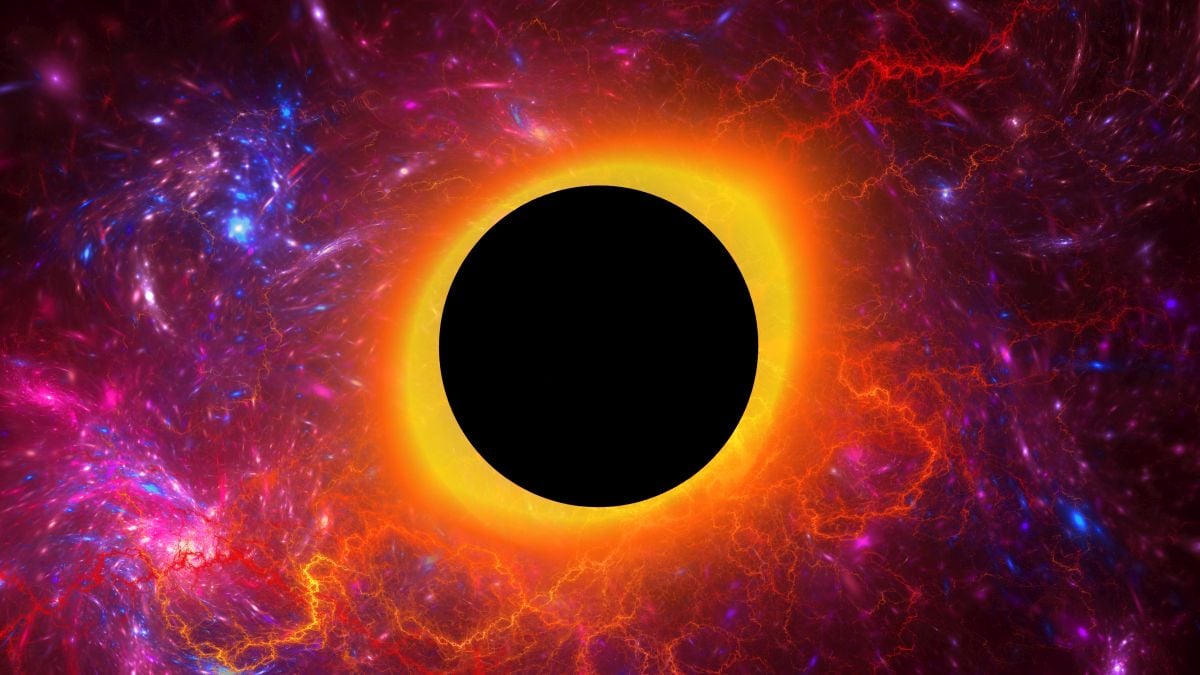
Strange Event Might Have Been A Primordial Black Hole Winking At Us

In 2019, astronomers recorded a distant star doing something unexpected.

For about an hour, its brightness gently flared before settling back down to baseline levels.

Its behavior matched no obvious stellar phenomenon – too long for a stellar flare, too brief for a supernova, and too smooth for most known kinds of stellar variability.

Now, after a careful probe into the event's properties, astronomers say it could be a signal from one of the most elusive objects in the Universe: a tiny primordial black hole weighing only about as much as three of Earth's Moons.

A black hole of that mass would have an event horizon about the same size as the period at the end of this sentence.

A team of astronomers led by Renee Key of Swinburne University of Technology in Australia say that no other explanation fits the event's statistics quite so well, and so they've named the candidate black hole Phoebe.

"Phoebe suggests a population of compact, lunar-mass objects associated with the dark matter distribution of the Milky Way, and potentially opens a new window to the physics of inflation," the team writes in a preprint posted to arXiv.

YouTube Thumbnail

We tend to think of black holes as really weighty, large objects – with masses starting at at least a few Suns, and ranging all the way up to tens of billions of Suns.

This is because of the way they form, starting with the death of a massive star whose giant core then collapses under gravity, giving birth to one of the densest known objects in the Universe.

Just after the Big Bang, however, conditions may have been just right to create much, much smaller black holes. Quantum fluctuations in space-time could have created overdensities in the expanding Universe that collapsed much as a stellar core can today.

These black holes are known as primordial black holes, and currently, they are only known to exist in the world of theory.

This could be because they are hard to detect. A primordial black hole the mass of Earth would be just 1.8 centimeters (0.7 inches) across.

Actual size of a 5 Earth mass black hole, from a 2019 paper speculating on the nature of Planet Nine. (Scholtz and Unwin, arXiv, 2019)

Even if such a black hole did manage to have an accretion event, the light screaming from the material caught in its gravitational grasp would be barely a pinprick – not detectable from Earth with our current instruments.

But that's not the only way we could detect a primordial black hole.

Even at very tiny diameters, the gravity around these objects would be extreme enough to bend space-time outside the event horizon.

This region of strongly curved space-time can act as a cosmic lens, and any background light passing through it would be magnified, producing a brief, gentle brightening before returning to normal levels – what is known as a microlensing event.

That's exactly the kind of signal the Dark Energy Camera (DECam) recorded in 2019 when it turned its gaze in the direction of the Large Magellanic Cloud, about 163,000 light-years away from Earth.

The event took place on December 18, when DECam ran for five consecutive nights as part of the Asteroid-Mass Primordial black hole Microlensing (AMPM) survey.

For about 60 minutes, the light of a star in the Large Magellanic Cloud grew in brightness when its neighboring light sources did not.

An image taken at the peak amplification of Phoebe, with light curves showing how its brightness flared when that of neighboring stars did not. (Key et al., arXiv, 2026)

Microlensing events are rare, but not unknown. Previous microlensing events have been attributed to stellar-mass black holes, tiny, dim stars and their attendant worlds, or rogue exoplanets drifting through space untethered from a star.

To find whether Phoebe could be a black hole, the researchers had to first rule out glitches in the instrument, stellar flares, contamination from other stars, and stellar fluctuations.

Then, they had to model different microlensing scenarios: a free-floating exoplanet in the Milky Way; a free-floating exoplanet in the Large Magellanic Cloud; and a primordial black hole in the Milky Way's extended dark matter halo, away from the concentration of matter in the galactic plane.

The Milky Way's halo is the extended region around the galaxy disk. (Melissa Weiss/Center for Astrophysics | Harvard & Smithsonian)

According to their calculations, the lensing body, Phoebe – whatever it is – is five orders of magnitude more likely to belong to the Milky Way's dark matter halo than to known stellar populations in either galaxy.

The preferred explanation is that Phoebe is a primordial black hole, about three times the mass of the Moon, located around 59,630 light-years away.

That doesn't rule out a rogue exoplanet in the Milky Way's halo. In fact, the rogue exoplanet is still firmly on the table, given that, observationally at least, rogue exoplanets are far more likely to exist and be detected.

But, in the Milky Way's halo, which is only sparsely populated at best, a black hole is far more likely than a rogue exoplanet, which are generally thought to be more populous in regions of space that have a lot of stars.

Subscribe to ScienceAlert's free fact-checked newsletter

The discovery lands smack-bang amid another debate.

In February 2026, astronomers in the US and Japan, analyzing data from the Subaru Telescope, identified 12 microlensing candidates toward Andromeda that, they said, could be due to primordial black holes.

Then, a different team from the University of Warsaw, Poland, reanalyzed the same data and uploaded their rebuttal in March, finding that every one of the events could be attributed to normal, known stars.

Related: LIGO May Have Detected The First Primordial Black Hole, Scientists Say

This new discovery is grist for this debate.

Key and her colleagues say their finding supports the original interpretation of the Subaru data that the events are consistent with primordial black holes.

Which means only one thing. We're going to need a more sensitive telescope.

"Our detection motivates the Roman and Vera C. Rubin Observatory microlensing programs to support high cadence, sit-and-stare observations to boost the sensitivity to low-mass microlenses," the team writes in their paper.

We can't wait.

The preprint is available on arXiv.

ScienceAlert stories are written, fact-checked, and edited by humans, never generated by AI. Don't miss a story, subscribe here.

Mysterious Stone in US Backyard Turns Out to Be an Archaeological Treasure

If you've ever tried to overhaul a garden, you know you're bound to find broken bits of pottery and long-forgotten statuary swallowed by vines.

But for one couple, that imitation of archaeological discovery turned into the real thing.

At first glance, the marble slab etched in Latin – including the phrase "spirits of the dead" – might have looked like a mass-produced facsimile designed to lend a garden a little decorative gravitas.

But for anthropologist Daniella Santoro, who lives with her husband Aaron Lopez in a historic home in New Orleans' Carrollton neighborhood, the object – found half-buried in the undergrowth – set off some spidey senses.

For a moment, she feared they might have uncovered an old grave.

YouTube Thumbnail

"The fact that it was in Latin that really just gave us pause, right?" Santoro told the Associated Press.

"I mean, you see something like that and you say, 'Okay, this is not an ordinary thing.'"

Instead of ignoring the instinct, Santoro reached out to experts.

Among those who examined the inscription were archaeologist Susann Lusnia of Tulane University and anthropologist D. Ryan Gray of the University of New Orleans, who shared the find with other colleagues.

It didn't take long for the researchers to recognize what the couple had found.

The Latin text begins Dis Manibus – "to the spirits of the dead" – a common dedication on Roman funerary tablets.

Mysterious Stone in US Backyard Turned Out to Be an Archaeological Treasure
The object, found half-buried in the undergrowth, set off some spidey senses. (D. Ryan Gray/PRCNO)

In Roman funerary practice, Dis Manibus was a standard dedication to the spirits of the departed, often carved at the top of tombstones. Thousands of such inscriptions survive across the former Roman Empire.

Further translation revealed that the stone commemorated a Roman soldier, a Thracian named Sextus Congenius Verus.

Commissioned by his heirs, Atilius Carus and Vettius Longinus, the grave marker records that he died at 42, after 22 years of military service – some 1,900 years before Santoro and Lopez found his grave marker in an overgrown garden, half a world away.

Intriguingly, this was not the first record of the stone. Early in the 20th century, it had been documented as part of the collection of the National Archaeological Museum of Civitavecchia, Italy, a port town where the grave marker once stood in a small cemetery.

Subscribe to ScienceAlert's free fact-checked newsletter

The museum was heavily damaged during Allied bombing in 1943 and 1944, and numerous artifacts were lost or displaced. Across Europe, wartime bombing and looting displaced countless cultural artifacts, many of which remain unaccounted for decades later.

The grave marker was among those later listed as missing. Its exact measurements, as recorded by the museum, matched those of the tablet found in Santoro and Lopez's garden.

Exactly how the stone traveled from wartime Italy to suburban Louisiana remained an equally fascinating saga.

According to Erin Scott O'Brien, the Carrollton house's former owner, the tablet had been on display in a cabinet containing other heirlooms in the Gentilly house of her grandfather, Charles Paddock Jr., a soldier stationed in Italy during WWII.

Related: 'Mammoth' Bones Kept in a Museum For 70 Years Turn Out to Be An Entirely Different Animal

Paddock Jr. and his wife died in the 1980s; when O'Brien moved into the home in the early 2000s, her mother gifted her the stone.

"We planted a tree and said this is the start of our new house. Let's put it outside in our garden," O'Brien told Preservation in Print. "I just thought it was a piece of art. I had no idea it was a 2,000-year-old relic."

More than 80 years have passed since the museum that once held the relic was devastated by war, and the principal players in the drama are dead.

It's likely we'll never know the true story of how Paddock came into possession of the stone, but perhaps what really matters is that it's finally returning home – to the land of the empire Sextus Congenius Verus so faithfully served.

The FBI's Art Crime Team is coordinating its repatriation to the National Archaeological Museum of Civitavecchia.

An earlier version of this article was published in February 2026.

ScienceAlert stories are written, fact-checked, and edited by humans, never generated by AI. Don't miss a story, subscribe here.

❌