Normal view

Received — 31 May 2026 Popular Science

3 driving myths too many people believe

31 May 2026 at 18:03

The average American spends nearly an hour a day behind the wheel, according to the US Department of Transportation. Some people love driving. Others tolerate it in order to get around. But either way, on average we all spend a lot of time doing it.

So it’s understandable if, over time, we all come to believe a few things about our cars that aren’t true. There’s nothing more human than believing myths, but some of these false beliefs have people wasting money or getting upset at people who are actually doing the right thing. With that in mind, here are a few widely believed driving myths—and why research suggests they’re false. 

Premium fuel is pointless (unless your car is made for it).

Diesel aside, there are three kinds of fuel at most gas pumps—regular, plus, and premium. The overwhelming majority of personal vehicles are built with regular fuel in mind; it’s basically just sports cars and a few luxury vehicles that require the higher octane. 

Some people believe using premium fuel offers benefits, such as higher fuel economy, increased performance, or reduced tailpipe emissions. But there’s no evidence to support this idea. Engines are designed with a specific octane in mind. Using a higher octane won’t hurt anything, but it doesn’t benefit the vehicle in any way. 

Closeup of a service station pump;
Save yourself the money. Image: Shutterstock Joel A Johnson

A 2016 study by the American Automobile Association (AAA) tested different fuels in identical cars. The study found no consistent increase in horsepower or fuel economy, and there was also no change in tailpipe emissions. The only real difference was the price of the fuel. 

A 2003 publication from the US Federal Trade Commission put it plainly: “In most cases, using a higher octane gasoline than your owner’s manual recommends offers absolutely no benefit.”

Generally, if your car requires a higher octane fuel, there will be a sticker saying so when you flip open the fuel door. If not, check your car’s manual—it will state which kind of gas your car needs. But basically, if you don’t own a sports car or luxury vehicle, you should just use regular fuel. 

Waiting to merge is good, actually.

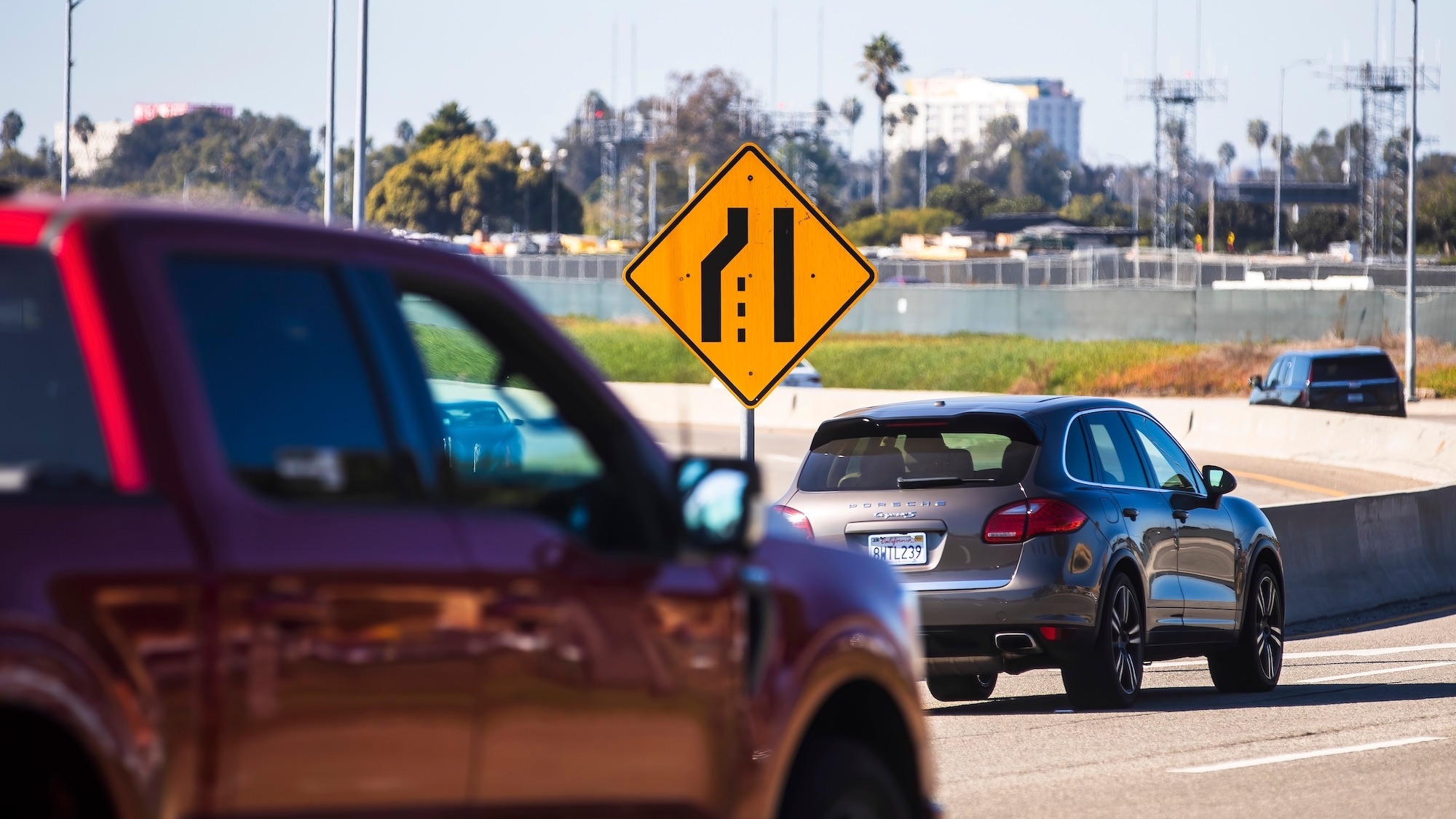
There’s a widespread belief that, if there’s a lane closure up ahead, people should merge into the open lane as soon as possible. The problem is that doing this slows down traffic. “When most drivers see the first ‘lane closed ahead’ sign in a work zone, they slow too quickly and move to the lane that will continue through the construction area,” reported the Minnesota Department of Transportation. “This behavior can lead to unexpected and dangerous lane switching, serious crashes, and road rage.” 

There’s research backing this up. A 1999 study by researchers from the University of Nebraska showed that traffic moves faster if people stay in their lanes until the merge point, then take turns merging. A 2018 study from North Carolina State University shows that there’s a real safety benefit to this system, which is referred to as a zipper merge. According to the study, “drivers merged at much safer distances after installation of the zipper merge at these sites than before the zipper merge was in place.” The study also found that the zipper merge was safer for construction workers. A 2024 paper by researchers from Iowa State University analyzed construction sites in Michigan and Missouri, where portable lit signs instructed drivers to stay in the closing lane until the merge point. They found increased traffic throughput at those sites. 

The problem is that not many people know about the benefits of the zipper merge. Some drivers get angry at drivers who don’t merge early, and in some cases will even cut them off. But research suggests everyone would get home faster if we all stayed in our lanes until the merge point. 

Manual transmissions aren’t more efficient than automatic ones.

This myth was true, at some point, and still might be true for particular cars with particularly skilled drivers. Overall, though, there’s no real fuel economy advantage to driving a modern manual car. That’s according to the US Department of Energy (DoE), which stated that “advances in automatic transmissions have improved their efficiency to the point that the automatic version of a vehicle often gets the same or better fuel economy than the version with a manual transmission.” 

Anyone who is interested can head to FuelEconomy.gov, a website run by the US Environmental Protection Agency (EPA) and the DoE. On this site you can see the miles per gallon (MPG) for any make and model, allowing you to directly compare the manual and automatic versions of any car. You can dig into the numbers yourself, comparing the automatic and manual version of the same car—assuming, that is, that the car is available as a manual. Such vehicles are a relative rarity in the United States, possibly making this myth largely academic (and that’s before we factor in the shift toward electric cars). 

The post 3 driving myths too many people believe appeared first on Popular Science.

Fans don’t cool rooms and 3 other myths about home energy conservation

27 May 2026 at 15:00

Want to spend less on energy? You’re not alone. Summer’s approach means air conditioning season is almost here, just in time for a global energy crisis.

Naturally, we’re all looking for ways to lower our energy bills. There’s a lot of great advice out there, from ditching incandescent lights to getting a heat pump. But there’s also some energy-saving advice that is useless—and a few tips that actually waste energy. Here are a few common myths about energy conservation, debunked with actual science. 

Closing vents in empty rooms doesn’t save energy.

If there are rooms in your house you don’t regularly use—a guest bedroom, say, or an occasionally used rec room—you might wonder whether it’s worth heating or cooling it year-round. What if you closed the vents in those rooms, just to save a little money? There’s a certain intuitive logic to this. Heating and cooling costs money, so why bother leaving the vents open in rooms you’re not using? 

But HVAC systems don’t work that way. Research suggests that closing vents will probably end up costing you more money. Here’s how.

A 2003 study by I.S. Walker at the Lawrence Berkeley National Laboratory tested this in a lab environment, simulating various California households and climates. Researchers found that closing vents actually increases energy usage. 

“The reduction in building thermal loads due to conditioning only a part of the house was offset by increased duct system losses,” the study concluded, stating this was “mostly due to increased duct leakage.” 

Put simply: Closing vents doesn’t save energy, because doing so pushes heated or cooled air into your walls instead of your rooms. HVAC systems use pressure to force air through vents, and the system is typically calibrated for the number of vents in your home. Closing one of those vents means there’s more pressure. Because no home HVAC system is free from leaks, that increased pressure means air ends up being pushed through those leaks into your attic or walls instead of any of your rooms. 

This doesn’t mean you can’t ever close your vents—you might do so for comfort reasons, for example. It just means that closing vents isn’t a good way to save money on energy. 

Fans don’t cool rooms; they cool people.

If it’s hot out you should turn on the fans, right? Not exactly. It turns out fans are only useful if there are people in the room; leaving them on in an empty room is pointless. 

Why is that? Because fans don’t cool rooms, only people. You can experiment with this at home if you have a thermometer. Turn on the fan and see if the temperature goes down (it won’t), then also note if the room feels cooler (it will). The reason behind this is the windchill effect

Air moving across your body speeds up heat transfer from your skin to the air, which we experience as cooling. Anyone who lives in a climate with cold winters is used to hearing both the actual physical temperature and what the temperature feels like given the windchill effect. The wind doesn’t change the physical temperature, which you can measure with a thermometer, but the human experience of it. 

The exact same force is at work inside when you turn on a fan, and it can lead to real energy savings. According to the US Department of Energy, turning on a ceiling fan during the summer “allows you to raise the thermostat setting by about 4 degrees Fahrenheit without reducing comfort.” A 2013 study by researchers from the University of California in Berkeley goes further, suggesting people can feel comfortable in a room 6 degrees higher with a fan than without it.

Either way, turning on a fan could allow you to avoid turning on the air conditioning in some conditions, which obviously saves energy. Even with AC on, though, a fan could allow you to set the thermostat a little bit higher. Just remember: There is no point to leaving a fan on if you’re not in the room. 

Cranking the thermostat doesn’t speed things up.

Here’s a trick people try sometimes: turning the thermostat up past what you actually want in order to speed things along. The problem is that HVAC systems don’t work that way. That’s according to Trane, a leading manufacturer of HVAC systems. “When you set your thermostat to a specific temperature, such as 70 degrees, your HVAC system will operate at the same rate to reach that temperature, regardless of whether you initially set it higher or lower,” the company wrote in a blog post. “Setting it higher won’t make your home heat up any faster; it will only cause your system to overshoot the desired temperature, resulting in unnecessary energy consumption.”

Close Up Of Senior Man Setting Digital Smart Heating Thermostat At Home
Set the temperature you want and walk away. Image: Shutterstock Monkey Business Images

BC Hydro, a Canadian energy utility, agrees, writing that “the science is that rooms don’t heat up any faster when you crank the temperature up to 24 degrees Celsius instead of 21 degrees”. With very few exceptions, HVAC systems adjust the temperature at a pretty consistent rate. The best policy is setting the temperature you want and waiting. 

Turning the lights on and off doesn’t affect modern light bulbs.

There is an idea that you shouldn’t turn off the lights every time you leave a room, because doing so takes up more energy than simply leaving them on. It’s not true. 

Many energy-saving myths have their origin in now-obsolete technology. This is one of those. Fluorescent lighting, the light-saber shaped tubes of light once common in office buildings and schools, wear down more quickly if they’re constantly being turned on and off. The same is true of compact fluorescent bulbs, or CFLs, which were a common energy-saving tool in the 2000s. For this reason, according to the US Department of Energy, you should only turn off fluorescent lights if you’re going to be out of the room for 15 minutes or more. 

This advice isn’t really relevant in the 2020s, though, because fluorescent lighting is a rarity now. Most modern lighting is LED-based, and “the operating life of a LED is unaffected by turning it on and off,” according to the Department of Energy.

So, unless you’ve got some really old lighting, go ahead and turn the lights off every time you leave a room. You’ll use a little bit less energy and it won’t damage your bulb at all. 

The post Fans don’t cool rooms and 3 other myths about home energy conservation appeared first on Popular Science.

3 buttons that don’t actually do anything

24 May 2026 at 13:03

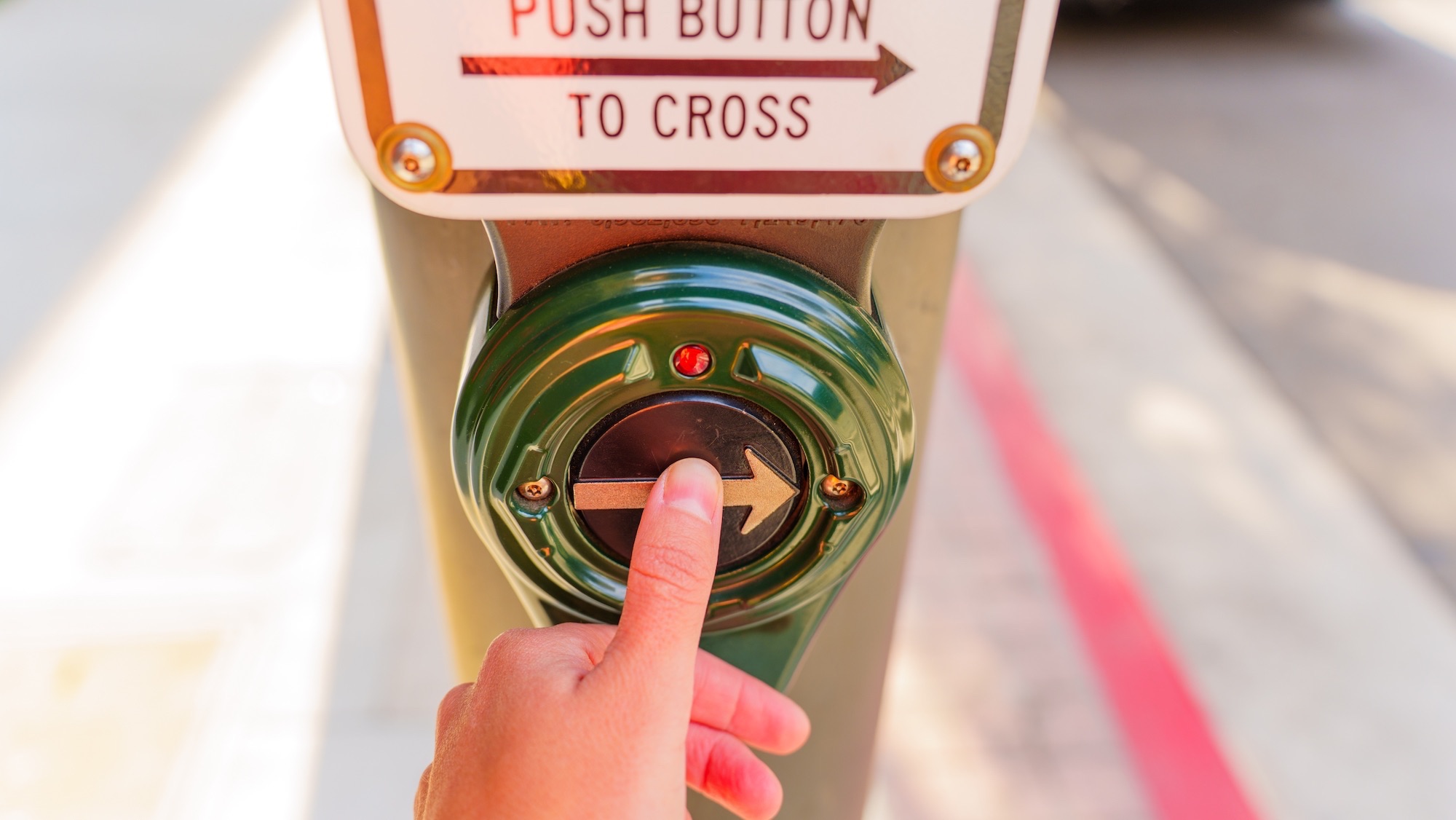
Have you ever pressed a crosswalk button and wondered if it actually does anything? You might be onto something. 

Called placebo buttons, controls that don’t do anything exist everywhere. Sometimes it’s because of accidents of history; sometimes they’re installed specifically to trick people into feeling an illusion of control. Either way, they’re hard to notice. Here are a few buttons you press every day that might not actually work. 

Pedestrian buttons may or may not do anything

In New York City, an official told CNN that only around 100 of the 1,000 crosswalk buttons in that city actually do anything. The Boston Globe has reported that the buttons in and around downtown areas of that city aren’t functional. And in the UK, the BBC has reported that the buttons in downtown London are completely superfluous during the day when pedestrian traffic is high—the lights trigger on the same timed routine, regardless of any button presses. The buttons do, however, work in the evening, when pedestrian traffic slows down. 

Why is this? Timing. Modern traffic lights are designed to allow the flow of traffic to be consistent. The general idea is that cars driving at the speed limit should more-or-less hit green lights as they go. Regularly timed pedestrian crossings make this math a lot simpler in places with a lot of pedestrian traffic, so most cities opt for them in downtown areas. 

crosswalk button to turn on the green light with a background of people crossing the street;
Pushing the crosswalk button may or may not change the light, depending on the time of day. Image: Shutterstock MFajarH

The situation is different if you live in a small town, suburb, or anywhere else with infrequent pedestrian traffic. In such areas, pressing the button may be necessary to trigger the walk light. 

The problem: It’s not always clear whether the button you see triggers the walk light or not. If you press the button and the light changes, you’ll naturally assume pressing the button worked even if it’s the timer that triggers it. But if pressing the button is necessary, well, then the only way to find out involves waiting longer than necessary at a cross walk (which might be interesting, scientifically, but only if you’re not in a rush).

My personal solution: I just press the button. If it works, great, and if not I’ll never know. 

Elevator “close door” buttons don’t work immediately

Have you ever pressed the “close door” button on an elevator and noticed the door didn’t immediately close? There’s a reason for that, at least in the United States: the Americans with Disabilities Act (ADA). 

This law, passed in 1990, set specific rules for elevators, including how long the door needs to stay open. The regulations state that elevator doors “shall remain fully open in response to a car call for 3 seconds minimum.” There’s another rule that adds more time based on how far the call button in the hallway is from the elevator entrance, assuming a walking speed of 1.5 feet per second. For example: If the button is 10 feet from the door, that means the door needs to stay open for 6.67 seconds. 

Using an Elevator: A person pressing the close door button in the elevator,
Sure, feel like you’re in control. Image: Shutterstock sommthink

What’s this have to do with the close door button? Well, in theory someone could press the button to close the door earlier than the code dictates is legally required. Some elevators are designed so that the close door button does nothing until enough time has passed, but in some cases the button is just disabled entirely for the sake of simplicity (generally because the door automatically closes after the required wait time). 

That’s why, in many situations, pressing the close door button on an elevator doesn’t do anything. That doesn’t stop a certain kind of guy from repeatedly mashing it, though.

Your office thermostat might be a lie

A 2003 article published by the Wall Street Journal revealed something many office workers already suspected: some office thermostats don’t actually do anything. The article includes a widely cited claim— from a single HVAC installer—that up to 90 percent of office thermostats are fake. That’s almost certainly not true, and the article itself notes that other experts say the number is below two percent. 

But what is certain is that at least some fake thermostats exist. Why? To reduce complaints. A 2022 article published by Propmodo, a real estate trade publication, quotes an HVAC installer who claims to have installed a fake thermostat after a number of complaints from office workers. “Our service calls disappeared, and to my knowledge, the system is still set up and working as it has since 1987,” said Vaughn Langless, an electrical inspector from Rochester, New York. 

It’s a good story, and points to a psychological reality: Being able to make choices about our environment is psychologically beneficial. A 1976 study by psychologists Judith Rodin and Ellen Langer gave some nursing home residents control over small things in their environment—which plants they want to care for, for example, or when to watch a movie. Another floor was told staff would make those choices. The residents able to make choices were more alert, active, and even died at a lower rate. There is decades of similar research, showing that control over your environment leads to real benefits. 

Placebo buttons are what happens when designers notice this psychological reality and try to get the benefit on the cheap. A working office thermostat would require either letting employees actually change the temperature (which costs money) or running a more responsive HVAC system. But a button that looks like it works costs basically nothing. That may be brilliant, or evil, or both—it’s all a matter of perspective. Regardless, placebo buttons lurk all around us. 

The post 3 buttons that don’t actually do anything appeared first on Popular Science.

❌