Normal view

Amazon’s AI-Generated Animated Series Canceled After Relentless Derision

3 June 2026 at 15:48

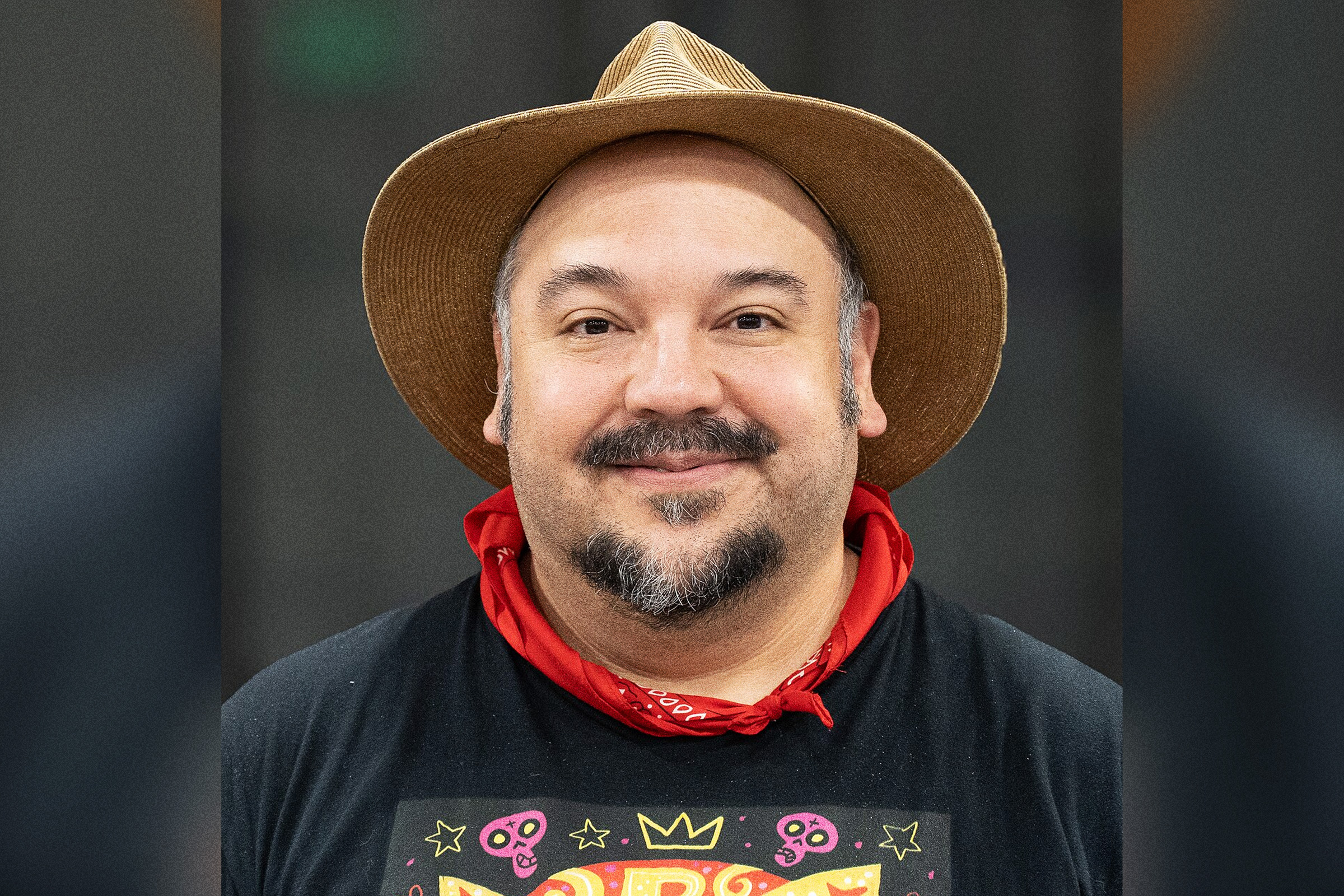
At first, it felt a bit like Emmy-winning writer director Jorge Gutierrez had been living under a rock.

On May 27, Amazon announced that it had ordered an animated series, dubbed “Punky Duck,” as part of its GenAI Creators’ Fund, celebrating it as a “creative breakthrough.” The fund, a collaboration between Amazon’s MGM Studios and its Amazon Web Services, was designed to hand creators “access to professional-grade AI tools and funding” to “produce high-quality cinematic entertainment.”

Gutierrez seemingly couldn’t believe the power he’d been handed.

“The best way I can describe it is, it’s like you have sex, and then someone hands you the baby,” he told a panel during an announcement last week. “It’s pretty crazy.”

However, given the way the conversation surrounding the use of AI in creative industries has been headed, it shouldn’t come as a surprise that reactions to the news were overwhelmingly negative, with Gutierrez swiftly becoming the target of an astonishing amount of online outrage.

His Wikipedia profile was edited to describe him as a “sellout” and early attempts to allow his fans to vent their frustration on his Instagram account didn’t go over well, either, forcing him to delete swaths of posts.

Not all the derision was from the online peanut gallery.

“It is very seductive that something now exists that contains the collective works of millions of artists and wordsmiths all thrown in a blender allowing one to pour out on demand things based on suggestions and prompts,” wrote acclaimed voice actor Billy West. “You become a soul stealer, a grave robber of sorts. You are an artist! God gave you a far greater gift and purpose to share with others. We need your true self!”

The backlash was so extensive, Gutierrez ended up backtracking on the lucrative gig entirely, in one of the clearest signs yet that AI has become toxic sludge to much of the audience Amazon is trying to woo.

“I have decided to drop out of the AI program at Amazon,” he tweeted on May 29, just two days after the company’s announcement. “I will not be making a Punky Duck series. Actions speak louder than words.”

The incident perfectly highlights just how much the AI backlash has grown, with experts warning that the tech is causing cultural stagnation while Hollywood actors panic over being replaced. Some of the biggest names in the industry have publicly spoken out against the use of AI in creative fields, forming a expanding line of resistance.

It apparently wasn’t just angry comments directed at Gutierrez for “selling out.” In a separate tweet, Gutierrez said that “the racist stuff and the attack on my kid were too much,” indicating pundits online had gone to extreme lengths.

Even this attempt to defuse the situation didn’t sit well, with users accusing him of pulling the “racism card,” while others claimed he was “making this up to deflect from your piss poor choices.”

Oddly enough, Gutierrez was once a vocal critic of AI, as the Los Angeles Times reports, posting several memes decrying the tech between 2023 and 2025.

“Threatening the dude and his family is obviously going way too far, but I’m still against major animators using AI, 100 percent,” one Reddit user argued. “I’m still glad he dropped out of it, but I f***ing hate that people threatened the dude.”

“Animation isn’t worth that, the hell is wrong with people?” the user added.

Meanwhile, Gutierrez has tried to get the angry mob back on his side.

“Learning a lot from many of you,” he tweeted. “Thank you. Lots of information that I’m digesting wholeheartedly. I am absolutely understanding the concern of using AI to assist an animation pipeline.”

“For all those showing me grace, I really appreciate it,” Gutierrez added. “I have a lot to think about.”

More on AI backlash: Harvard Graduation Speaker Unloads on AI in Profanity-Loaded Tirade, Prompting Cheers From Students: “I’m Here to Tell You the Mission of Your Generation Is to Destroy AI”

The post Amazon’s AI-Generated Animated Series Canceled After Relentless Derision appeared first on Futurism.

Anthropic and DeepMind Now Actively Investigating AI Consciousness

3 June 2026 at 14:55

Are AI models conscious, and if not, could they be in the near future? The possibility is far-fetched, but AI companies seem to feel it’s in their best interests to keep the question as open-ended as possible.

Now, the Financial Times reports that three of the industry’s top dogs — Anthropic, Google’s AI lab DeepMind, and Meta — have all hired experts in fields like psychology, philosophy, and ethics to pursue research into machine consciousness and AI welfare. 

Anthropic, which has arguably done the most out of the bunch to anthropomorphize its models and play up the AI consciousness angle — its chatbot has the human name of “Claude,” after all — has been testing its models for behaviors that resemble “panic” and “anxiety,” per the reporting, and is pursuing “model welfare research” to explore whether AI models might have experiences that matter morally.

“We remain deeply uncertain about this, but we think the question is serious enough to study carefully as AI systems get more capable,” the company said in a statement.

DeepMind, meanwhile, has hired University of Cambridge researcher Henry Shevlin as a philosopher working on machine consciousness, human-AI relationships, and AGI readiness, per the reporting. (Earlier this year, Shevlin sparked a wave of discourse in online AI circles after sharing his stunned reaction to an email he received from an AI agent.)

DeepMind ethicist Iason Gabriel, who leads the lab’s AGI and society team, called the question of AI consciousness “very complicated,” and described AI as “highly capable cognitive agents that are also just very deeply different from human beings and even from animal consciousness.”

These weighty claims are disputed by many scientists and AI researchers. But the FT, in seeking a counterargument to round out its reporting, quotes an expert who makes claims that ascribe a questionable degree of humanlike agency to chatbots. “[AI models] have goals, they can deceive, they can hide what their true interests are,” Susan Schneider, director of the Center for the Future of AI, Mind and Society, told the newspaper. But she added it’s “entirely scientifically possible that they’re doing this without having the felt quality of experience, which is what consciousness is.”

Certainly, the possibility of AI consciousness shouldn’t be completely dismissed out of hand. But neither should alien civilizations, which are generally treated more as a sci-fi musing than an urgent existential issue. 

Moreover, we should be skeptical when most of the noise on this topic is coming from the industry itself. Anthropic CEO Dario Amodei has repeatedly dangled the possibility of AI consciousness in interviews. And his company’s research frequently makes bold claims about their models showing humanlike behavior, such as supposedly harboring “emotions.” Just remember that it’s easier for AI companies to string us along with wild Skynet doomsday scenarios instead of confronting the tech’s far mundane consequences currently playing out before our eyes.

More on AI: Was This the Moment That AI Psychosis Began?

The post Anthropic and DeepMind Now Actively Investigating AI Consciousness appeared first on Futurism.

All These Galaxy-Scale IPOs Are Piling on Risk of an Economic Crisis

3 June 2026 at 13:51

The United States is facing what’s shaping up to be the largest series of initial public offerings in the history of the modern stock market. How they go is anyone’s guess, but the results are sure to be extreme one way or another.

There are three absolute whoppers looming on the horizon: Elon Musk’s absurd $1.75 trillion SpaceX public launch targeted for early June, as well as IPOs by the already-hulking AI firms Anthropic and OpenAI. As the Economist notes, the triple threat could feed some $4 trillion worth of value into the US stock market — if, that is, the market can keep them down, or even swallow them all in the first place.

As the publication observes, huge IPOs like his are typically seen as signs that a bull market, a long period of rising stock prices, is about to come to an end. For example, we saw similar conditions prior to market downturns in 2021, 2008, and the late 1990s. The Economist explains that mega-IPOs sometimes signal bear markets — prolonged periods of declining prices — as in 2021, but could likewise forewarn heavier downturns, like the Great Recession or the collapse of the dot-com bubble.

How severe that reversal could be depends in no small part on how those three mega corps perform. If there’s underwhelming investor appetite for their unprecedented valuation targets, the Economist notes the three IPOs could easily drag markets into correction territory all on their own.

That’s because each firm is heavily involved in the financial behemoth that is AI. With global private investment in the tech skyrocketing despite no tangible financial returns, the bill will eventually come due on the AI frenzy. If the IPOs disappoint, analysts fret, it could signal that patience has finally run out for the country’s unprecedented technological spending.

What ultimately sparks the panic that sends stock brokers stampeding for the door is impossible to predict, but it seems painfully clear this can’t keep on forever.

More on finance: Bank Warns of Tesla Stock Collapse

The post All These Galaxy-Scale IPOs Are Piling on Risk of an Economic Crisis appeared first on Futurism.

Film Community Aghast as Martin Scorsese Extolls AI Startup, Says He Now Uses AI for Storyboards

2 June 2026 at 22:04

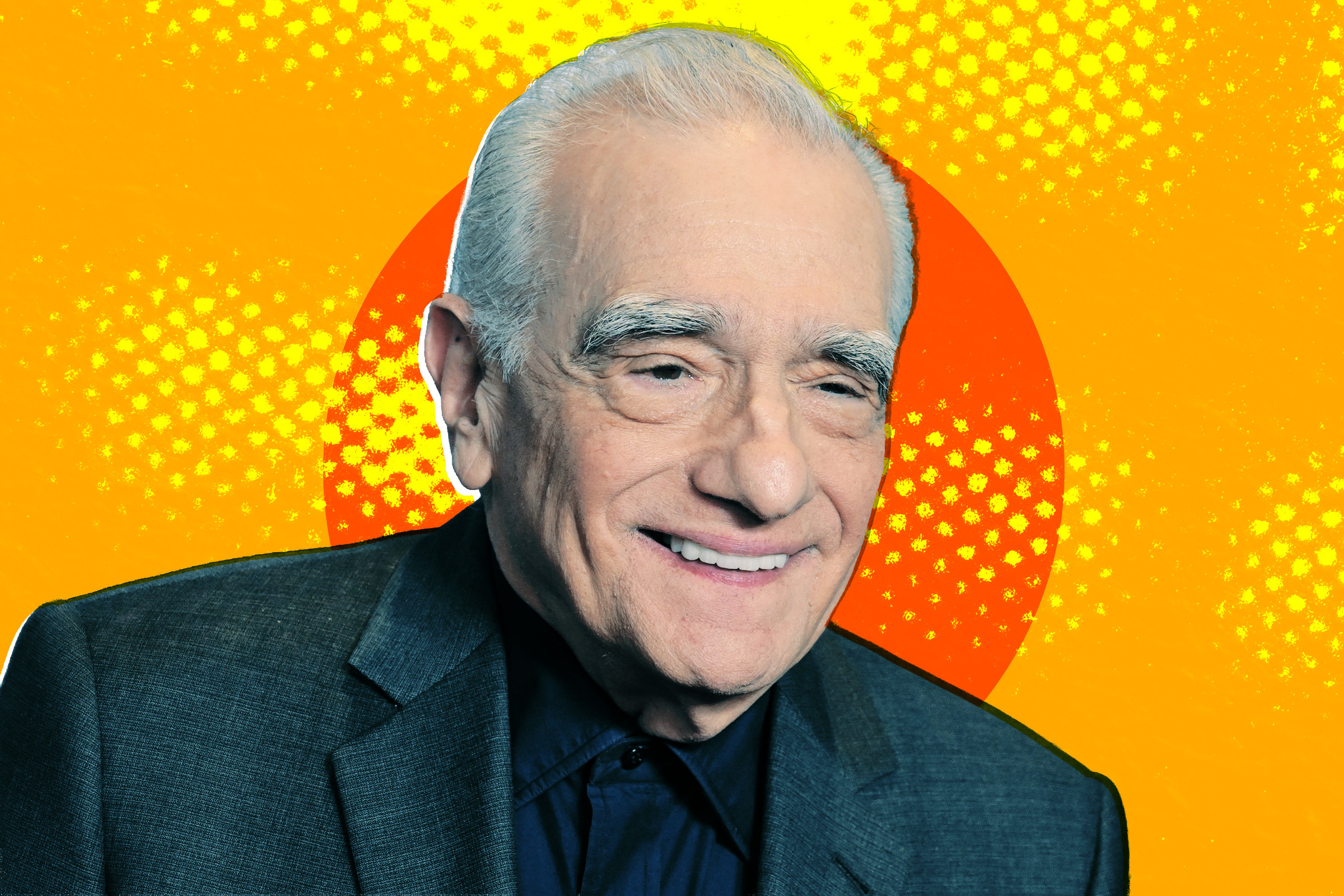
The film community is in meltdown after acclaimed director Martin Scorsese promoted a new AI startup called Black Forest Labs, saying that he’s already using its tech to help plan his movies.

Scorsese revealed this collaboration in a statement to The New York Times on Tuesday, which was accompanied by the release of a new promotional video from Black Forest Labs depicting the 83-year-old film legend using its AI image generation tool for storyboarding, the process of visualizing scenes using illustrations in preparation for filming. According to the reporting, Scorsese signed on as a partner and an adviser to the venture last year.

Such shilling by a venerated artist for AI was, in the eyes of many filmgoers, the opposite of “Absolute Cinema.”

“Cannot stress enough how disappointing it is that Martin Scorsese is collaborating with an AI company and putting a stain on his name so late in his life and career,” wrote one cineaste.

“Putting storyboard artists out of work is bad and that should not be a controversial opinion,” another fumed.

For film journalist Richard Newby, the reaction was visceral. “I feel like I’m going to throw up,” he tweeted.

It’s easy to understand where they’re coming from, since Scorsese is one of the most revered filmmakers alive. The “GoodFellas” and “Mean Streets” director spearheaded a movement that cast off the shackles of the stodgy old studio system and ushered in a Renaissance of Hollywood filmmaking that embraced authorial intent, drawing on a deep reverence for foreign filmmakers — from Akira Kurosawa to the duo of Michael Powell and Emeric Pressburger — to create something more stylistic and transgressive, while taking a unflinching eye to social issues of the day. 

Beyond his role behind the camera, Scorsese has also been an important champion of overlooked international films, and has helped preserve cinema history through his Film Foundation. For him to throw his weight behind AI is a big victory for the industry — and a gut punch to artists who view the tech as not only a threat to their livelihoods, but to creativity itself.

That said, Scorsese is being conspicuously limited in how he praises AI, though this is likely to be little consolation to the anti-AI crowd. In the promotional video and in his remarks to the NYT, he was careful to stress that he only uses AI for storyboarding, claiming that it’s allowed his team “to move faster without sacrificing quality or craft” during preproduction.

“For 70 years, I’ve been creating my own storyboards,” Scorsese told the NYT in a statement (which is notable, since it definitely reads more like a company-approved release than something he’s said in one of his many insightful interviews.) “There’s always been this problem of how do you communicate what you see in your head to your cast and crew. There are some things you have to see and feel.”

“Now with this tool,” he added, “I can share what I’m visualizing more clearly and efficiently to my creative team — the production designer, art designer and cinematographer.”

The sense of betrayal hit one Scorsese fan especially close to home.

“Scorsese’s storyboards for Taxi Driver were a big inspiration for me, a poor artist, to feel confident drawing ideas to share with our illustrators,” the indie game developer lamented. “I can’t understand why so much of the older generation of artists are swayed by this crap when they already had it all figured out.”

More on AI: OpenAI’s Attempt at an AI-Generated Pixar-Style Movie Is in Shambles

The post Film Community Aghast as Martin Scorsese Extolls AI Startup, Says He Now Uses AI for Storyboards appeared first on Futurism.

❌