
Normal view

In 1965, Soviet cosmonaut Alexei Leonov stepped outside Voskhod 2 for the first spacewalk in history, and his suit ballooned so badly in vacuum that he had to bleed oxygen through a valve to fit back inside before orbital darkness

In 1965, Soviet cosmonaut Alexei Leonov stepped out of Voskhod 2 for the first spacewalk in history and his suit ballooned so badly in the vacuum that he couldn't fit back through the airlock, and he had to bleed air out of his suit until his ears nearly burst just to squeeze inside before the sun set on him.

On 18 March 1965, a 30-year-old Soviet Air Force pilot named Alexei Leonov opened the hatch of an inflatable airlock on Voskhod 2 and became the first human being to float free in space. According to the Smithsonian National Air and Space Museum, he stayed outside for just over 12 minutes. Then the suit around him began to become the problem.

In vacuum, Leonov’s Berkut suit stiffened and ballooned. The Smithsonian says he had to vent air from the suit to fit back through the airlock, and that Soviet television and radio broadcasts ended once the trouble began.

Leonov later gave a more dramatic version of the emergency, saying his feet had pulled away from his boots and his fingers from his gloves, and that he had to force himself back in head-first. But a later Smithsonian Air & Space review by space historian Anatoly Zak cites contemporary documents and footage that complicate that version. In his immediate report, published decades afterward, Leonov said he had planned for the pressure drop in advance and re-entered feet-first.

That does not make the first spacewalk safe. It makes it stranger: a real emergency remembered through secrecy, propaganda, later memoir, and finally archival correction.

Alexei Leonov spacewalk 1965

A spacecraft modified around one dangerous idea

Voskhod 2 was a Vostok-derived spacecraft with two seats and an inflatable external airlock called Volga. The airlock mattered because the capsule itself could not simply be depressurised for the spacewalk. Its systems needed an atmosphere inside the cabin.

The mission launched from Baikonur on 18 March 1965 with Pavel Belyayev as commander and Leonov as pilot. NASA’s Gemini IV mission page places Ed White’s first American spacewalk on 3 June 1965, which means Leonov beat the United States to EVA by less than three months.

The Soviet hardware had been built quickly. A Google Arts & Culture history of the first spacewalk notes that only nine months passed between the technical specification for the airlock and spacesuit and Leonov’s EVA.

Leonov’s task was simple in outline and brutal in practice: enter the Volga airlock, wait while Belyayev sealed him off from the cabin, open the outer hatch, move outside on a tether, then return before the spacecraft passed into darkness.

The first spacewalk lasted just over 12 minutes

The hatch opened above Earth. Leonov moved out on his tether while the Soviet Union broadcast images of the achievement to the public.

The National Air and Space Museum says Leonov remained outside for just over 12 minutes, the world’s first walk in space. NASA-hosted Smithsonian video material gives the same date and says he remained outside Voskhod 2 for just over 12 minutes.

Outside the spacecraft, the physics was unforgiving. A pressure suit is a small human-shaped spacecraft. It has to hold gas in when the outside pressure falls almost to zero.

The result was not a soft garment but an inflated pressure vessel. The suit swelled, the joints resisted movement, and Leonov had to work against the thing keeping him alive.

That is the core fact that survives every version of the story. The first human spacewalk was not only a triumph of courage and engineering. It was also an immediate lesson in how badly a suit can fight the body inside it.

The valve became the difference between outside and inside

Leonov reduced the pressure in his suit so it would become flexible enough to get him back through the airlock. The National Air and Space Museum describes the venting as risky, and later accounts identify the danger as the loss of pressure margin and the possibility of decompression sickness.

In his 2005 Smithsonian account, Leonov wrote that he decided not to tell mission control before opening the pressure valve because he believed he was the only person who could bring the situation under control. That version also says he pulled himself in head-first and then had to turn around inside the airlock.

But the later Smithsonian review by Zak says the contemporary record points to a less cinematic sequence. Leonov’s immediate post-flight report said he had planned to switch suit pressure from 0.4 atmospheres to 0.27 atmospheres if the first re-entry attempt failed, and that he inserted both legs into the airlock first.

For publication, the article should not state the head-first entry, the flip inside the airlock, or the “ears nearly burst” detail as settled fact. The safer version is that the suit ballooned, Leonov lowered its pressure through a valve, and the later memoir version was more dramatic than the contemporary record supports.

Voskhod 2 capsule airlock

The danger did not end when the hatch closed

Once Leonov was back inside, Voskhod 2 still had to survive the rest of the flight. Encyclopedia Astronautica summarises the mission as a first spacewalk followed by cascading trouble: an oxygen-flooded cabin, manual re-entry, and an off-target landing.

The cabin oxygen problem mattered because oxygen-rich environments turn small ignition risks into catastrophic ones. Less than two years later, Ed White would die with Gus Grissom and Roger Chaffee in the Apollo 1 fire during a ground test on 27 January 1967.

Then the automatic re-entry system failed. Belyayev and Leonov had to orient the spacecraft manually and choose the re-entry timing themselves, a demanding procedure inside a cramped capsule after a mission that had already nearly gone wrong.

The descent put them far from the planned recovery zone. Leonov’s Smithsonian account says they came down in deep snow in a taiga of fir and birch, with the hatch jammed against a tree and the cold becoming the real immediate enemy.

The forest became the second survival problem

The common retelling says wolves were nearby. Leonov’s own account is more careful: he wrote that the taiga was habitat for bears and wolves, and that spring was a dangerous season for both, but the immediate hardship he describes is cold, snow, wet clothing, and the difficulty of rescue.

Aircraft found them, but could not lift them out that first night. Supplies were dropped. Some were useful. Some were not. Leonov wrote that an axe was thrown from one aircraft, and that warm clothing was dropped from another.

The first night was spent in and around the capsule in severe cold. The next day, an advance rescue party reached them on skis, but a helicopter still needed a clearing. Leonov and Belyayev spent another night in the forest before skiing out to a helicopter pickup.

The public version in 1965 did not carry that texture. It carried the achievement. The Soviet Union had put a man outside a spacecraft and brought him home.

Every later EVA began after Leonov’s valve

NASA’s Gemini IV mission showed how quickly the United States followed. Ed White stepped outside on 3 June 1965, used a hand-held maneuvering unit until its gas ran out, and spent 23 minutes outside before returning to the spacecraft.

Later EVAs made the lesson clearer. Astronauts needed handholds, footholds, cooling, restraint layers, choreography, and long preparation. A human being outside a spacecraft was not simply floating. He was working inside a machine that had to bend, breathe, cool, seal, and survive.

That is why Leonov’s first spacewalk still feels modern. The image is simple: a man outside a capsule, Earth below him, a tether between him and the only pressurised cabin in reach. The engineering lesson is harsher. In space, even the suit can become terrain.

Sixty-one years later, every astronaut who has stepped outside a spacecraft has done so on the far side of that first valve, after the moment when Leonov learned that the difference between returning and remaining outside could be measured in the pressure inside a suit.

The post In 1965, Soviet cosmonaut Alexei Leonov stepped outside Voskhod 2 for the first spacewalk in history, and his suit ballooned so badly in vacuum that he had to bleed oxygen through a valve to fit back inside before orbital darkness appeared first on Space Daily.
On a Saturday afternoon in May 2026, a rock about three feet across hit the atmosphere over New England at 75,000 mph and broke apart with the energy of roughly 300 tons of TNT, and the boom carried from Delaware to Montreal, farther than any fragment ever fell

A three-foot rock hit the atmosphere over New England at 75,000 mph and detonated with the force of 300 tons of TNT — and the sound traveled farther than the fragments did

At 2:06 p.m. on Saturday, May 30, 2026, a rock about three feet across hit the air over New England at roughly 75,000 mph and tore itself apart some 40 miles up. NASA put the energy of that breakup at about 300 tons of TNT — enough to send a double boom rolling across the ground from Delaware to Montreal, rattling windows and sending dozens of people reaching for their phones, some to film, others to report what they were certain had been an earthquake.

NASA confirmed the object was natural material, describing it as “a natural object and not a re-entry of space debris or a satellite,” in the words of NASA spokesperson Allard Beutel. No satellite was lost. No asteroid was inbound. A single stray meteoroid had simply met the atmosphere at speed.

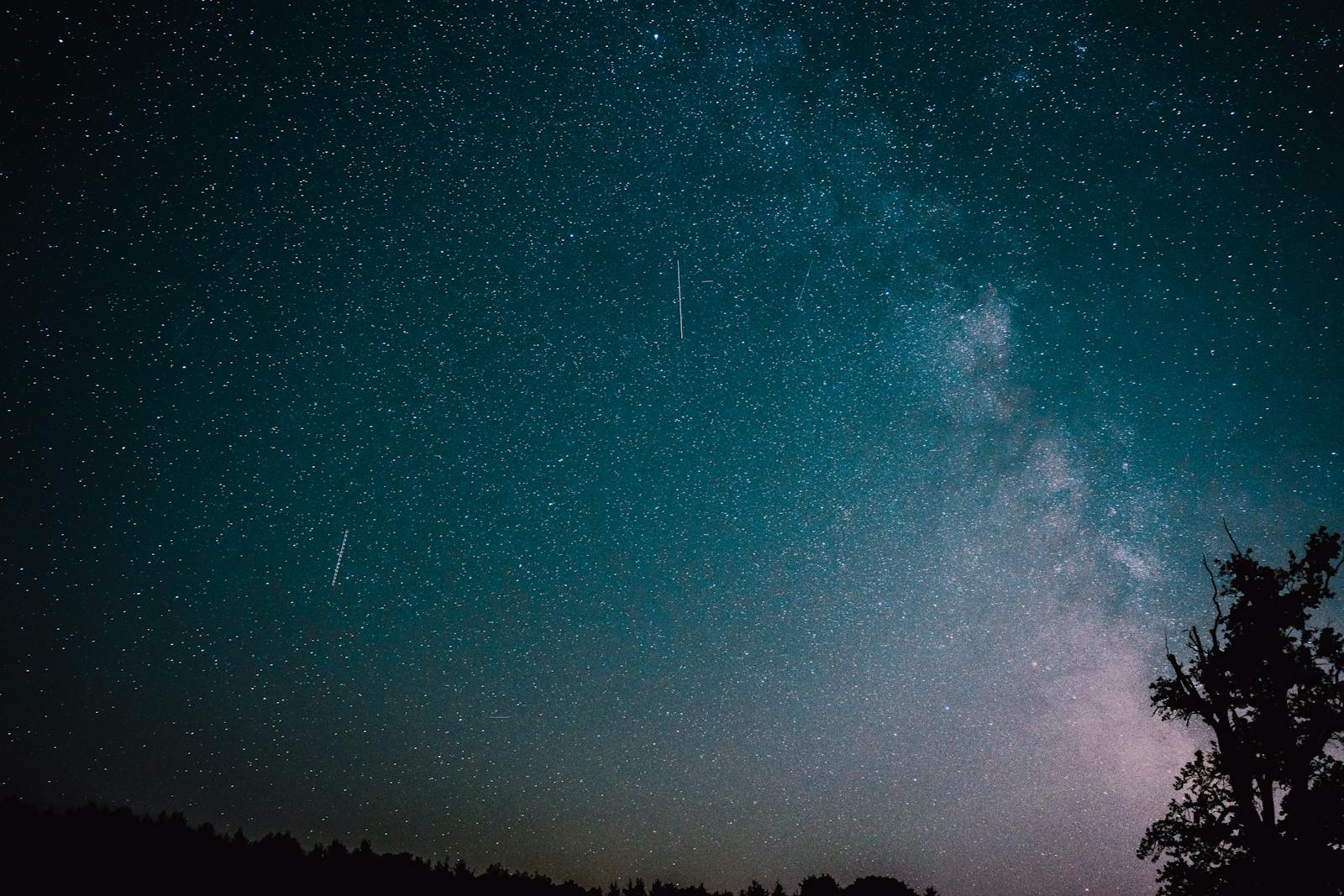
fireball meteor sky

What happened over New England

The fireball entered as a daytime bolide, bright enough to register against an overcast afternoon sky. NOAA weather satellites recorded a flash over the region at the moment witnesses began calling local newsrooms, according to CBS Boston. The American Meteor Society logged more than 80 eyewitness accounts within hours.

NASA’s reconstruction placed the breakup at an altitude of about 40 miles over extreme northeastern Massachusetts and southeastern New Hampshire — near the state line, north of Boston — with the flash recorded off the coast over Cape Cod Bay. Most of the object likely vaporized at that altitude. Any surviving fragments would be effectively unrecoverable.

Robert Lunsford of the American Meteor Society, which collected the eyewitness data, said the meteor was unusually large for a fireball. “It was definitely bigger than a normal fireball, about a yard wide,” he said.

Why the boom traveled so far

The geographic spread of the reports — eyewitnesses in eleven states and Canadian provinces, per the society’s event page for the fireball — points to the physics of how shockwaves behave in the upper atmosphere. A meteor moving at tens of thousands of miles per hour compresses the air ahead of it, generating a pressure wave that propagates outward like the wake from a supersonic aircraft.

The U.S. Geological Survey, which opened an event page after the shaking, drew the distinction plainly: unlike an earthquake, which originates at a discrete point underground, a sonic boom of this kind travels along a linear path through the atmosphere, according to NBC News. That linear geometry is why a single object can produce ground shaking across a corridor hundreds of miles wide.

Part of the sound is the air itself compressing; part is the rock breaking apart under aerodynamic stress as it decelerates. The combination produces the characteristic double boom that witnesses described.

The earthquake confusion

Several residents filed reports with the USGS believing they had felt a tremor. The agency’s seismographs registered nothing. The shaking people felt was atmospheric, not geological — the USGS classified the event as a widely felt sonic boom from a suspected bolide, with no seismic signal.

The Massachusetts Emergency Management Agency said public safety officials received reports of an audible boom and tremors across the eastern part of the state, but logged no emergency police or fire requests connected to the event. No injuries were reported.

This kind of confusion is becoming routine. Similar events elsewhere have prompted residents to report mysterious blasts they initially blamed on earthquakes, which authorities later concluded were consistent with sonic booms.

A noisy year for fireballs

The Massachusetts bolide caps an unusually active stretch. In the first months of 2026, meteors have exploded over multiple states and produced sonic booms across wide areas. One Texas fireball scattered meteorites across the Houston area, including a fragment that reportedly punched through the roof of a home.

Whether the cluster reflects a genuine uptick in atmospheric entries or simply improved detection through doorbell cameras, dashcams, and satellite lightning mappers is an open question. The detection infrastructure has changed far faster than the population of small near-Earth objects.

What hasn’t changed is the basic statistics. Earth’s atmosphere intercepts a substantial amount of extraterrestrial material every year. Most arrives as dust. A handful of objects each year reach the size of the Massachusetts bolide. Even fewer produce ground-level effects loud enough to flood emergency lines.

What survives, and what doesn’t

Lunsford noted that meteors in this size class typically burn up before reaching the ground, and that any surviving fragments from this one most likely fell into the ocean.

The odds favored the ocean from the start. Roughly 71% of Earth’s surface is water, which is why the vast majority of meteorite falls go unrecovered. The 1954 case of Ann Hodges — struck on a couch in Sylacauga, Alabama, after a meteorite tore through her roof — remains the best-documented case of a person hit directly.

Even when fragments are lost, eyewitness accounts and video allow scientists to reconstruct trajectory, mass, and likely composition. Brightness, duration, angle of descent, and fragmentation pattern all carry information about the parent body.

That reconstruction work matters because meteorites are one of the few direct samples humanity gets of the early solar system. Apart from a handful of lunar sample-return missions and the material brought back from asteroids by Hayabusa2 and OSIRIS-REx, almost everything known about the chemistry of primitive bodies comes from rocks that fell on their own. Missions like NASA’s Psyche probe, now en route to a metal asteroid, will study such bodies up close, but for now the supply chain still runs through the atmosphere.

What the event does and doesn’t mean

NASA was emphatic that the bolide carried no impact threat and signaled no change in the population of hazardous near-Earth objects. A three-foot stone is far below the size at which planetary-defense systems track individual objects. The 2013 Chelyabinsk meteor, which injured roughly 1,500 people in Russia, was an order of magnitude larger and released energy vastly greater than Saturday’s event.

The more striking story is institutional. A natural event that would have passed largely unnoticed a generation ago now generates a satellite flash, a seismograph cross-check, an emergency-management bulletin, a NASA statement, and dozens of eyewitness reports compiled by a volunteer scientific society within hours.

Somewhere under Cape Cod Bay, if anything survived at all, a few dark stones are settling into the sediment, indistinguishable now from ordinary gravel. The boom that announced them died away long ago over the rooftops of Boston and the hills of Vermont. What remains is the record — the satellite flash, the seismograph that stayed flat, the reports filed within the hour — a fuller account of a falling rock than any earlier generation could have assembled, for an object that not long ago would have slipped into the sea unseen.

The post On a Saturday afternoon in May 2026, a rock about three feet across hit the atmosphere over New England at 75,000 mph and broke apart with the energy of roughly 300 tons of TNT, and the boom carried from Delaware to Montreal, farther than any fragment ever fell appeared first on Space Daily.

Fossils found in Scotland just pushed back the origin of land-walking animals by 14 million years and placed them in a stretch of the fossil record where nothing was supposed to exist

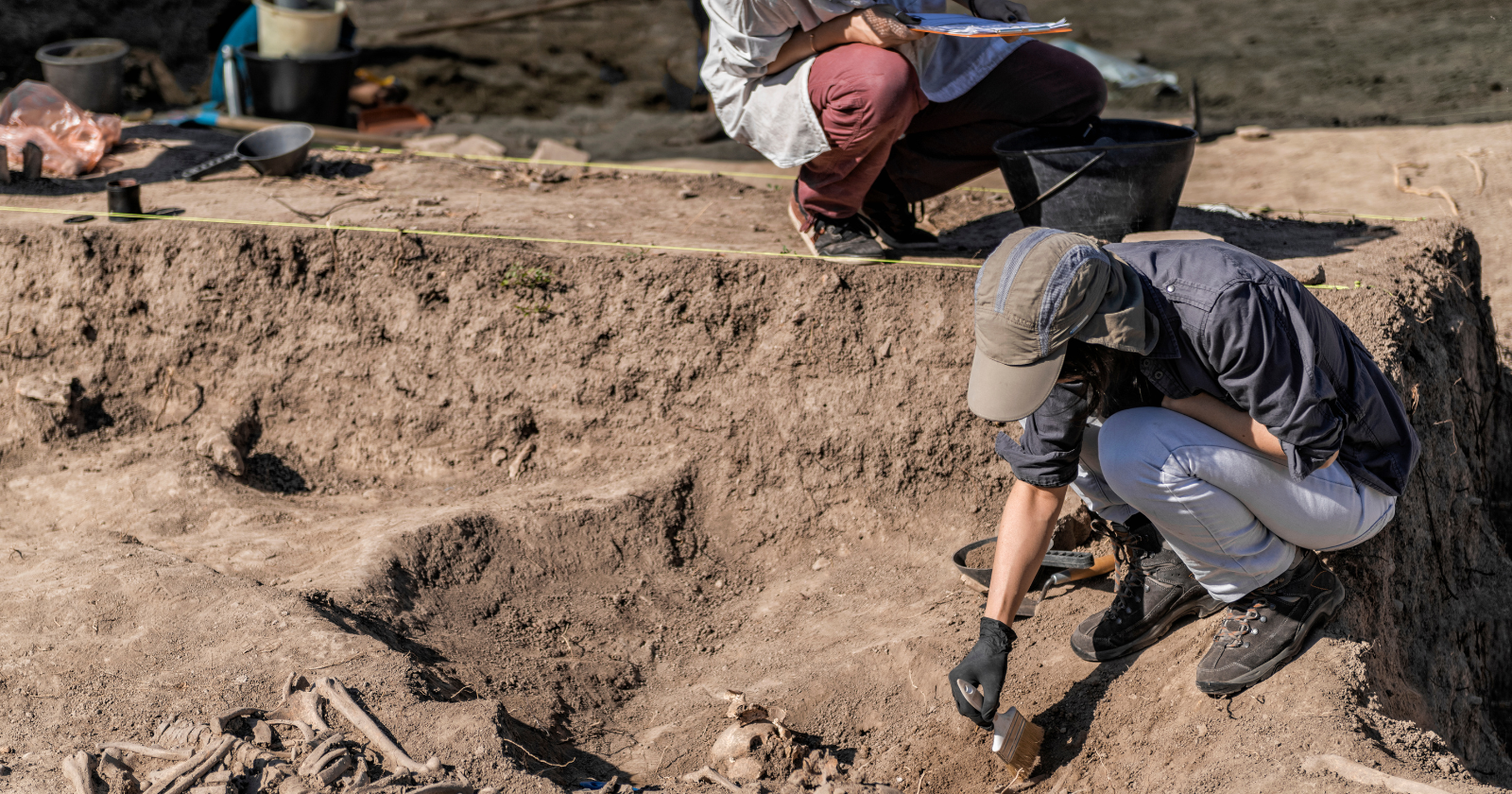
In 1984, an amateur palaeontologist found a small, nearly complete fossil in a quarry in West Lothian, Scotland. The creature, later named Westlothiana lizziae, is about 20 centimetres long and resembles a salamander. It is one of the earliest known examples of a four-limbed animal that had made the transition from water to land, a stem tetrapod: a common ancestor of every amphibian, reptile, bird, and mammal alive today, including humans. Despite its significance, no one had managed to accurately date it.

New research from The University of Texas at Austin, published in PLOS One, places Westlothiana lizziae and several similar creatures from the same Scottish site at a maximum age of around 341 million years — roughly 10 million years older than the previous estimate of 331 million. The figure of 346 million years, cited in some accounts of the research, represents the oldest individual zircon grain recovered; the study’s central estimate, derived from seven dates, is 341 ± 3 million years. That revision of 14 to 15 million years matters because it moves the specimens into a specific and poorly-understood period in the fossil record called Romer’s Gap.

This is one study, not settled consensus, and the dating method produces a maximum age rather than a precise one. What it offers is a better constraint on timing than anything previously available for these particular specimens.

What Romer’s Gap is

Romer’s Gap refers to the period from roughly 360 to 345 million years ago. It is named after the American palaeontologist Alfred Romer, who noticed in the mid-twentieth century that the fossil record from this window is strikingly sparse. The transition from water-dwelling fish to four-limbed land animals is thought to have happened during or around this period, but the fossils that should document that process are largely absent. Whether the gap reflects a real collapse in animal populations, a geological accident that destroyed the record, or simply a research blind spot is still debated.

The East Kirkton Quarry, where the Scottish fossils were found, sits in what was, hundreds of millions of years ago, a tropical landscape with active volcanoes and a toxic lake. Seven stem tetrapod fossils have been recovered there, including Westlothiana lizziae. The site is one of the better-preserved early tetrapod records in the world. What it had lacked was a reliable date.

Why dating the site was difficult

The standard technique for dating ancient rocks is uranium-lead radiometric dating, which relies on zircon crystals. Zircons form in certain rock types, particularly those that cool slowly from molten material. The East Kirkton site sits near ancient volcanoes whose flows hardened into basalt, a rock type where zircons do not typically form. Colleagues warned Hector Garza, the doctoral student at the UT Jackson School of Geosciences who led the study, that trying to extract datable zircons from these rocks was likely to produce nothing.

He tried anyway. The key turned out to be that as material eroded from the volcanic surroundings, sediment containing zircons washed into a lake where limestone was forming. That limestone entombed the early tetrapods, and with it came the zircons Garza needed. He X-rayed 11 rock samples and extracted zircons from six of them. He then conducted uranium-lead laser dating on those zircons at the University of Houston.

The result is a maximum age of 346 million years, placing the specimens inside Romer’s Gap.

What the new age does, and does not, establish

“Better constraining the age of these fossils is key to understanding the timing of the emergence of vertebrates on to land,” said Julia Clarke, professor at the Jackson School and a co-author of the paper. “Timing in turn is key to assessing why this transition occurs when it does and what factors in the environment may be linked to this event.”

That framing is careful, and it is worth taking seriously. The new dating does not explain why the transition from water to land happened when it did. It does not fill Romer’s Gap; it places specific specimens within it. The significance is that it becomes harder to argue these creatures lived outside the Gap, which means they were alive during the period palaeontologists most want to understand.

What drove animals from water to land, whether climate, competition, the availability of food, or some combination, remains an open question. Having better-dated specimens from within the Gap gives researchers a fixed point to work from when trying to connect evolutionary timing to environmental conditions.

Other co-authors on the paper include Associate Professor Elizabeth Catlos and Michael Brookfield of the UT Jackson School, and Thomas Lapen of the University of Houston. The National Museum of Scotland provided rock samples surrounding the fossils for analysis.

The next step, according to the paper’s authors, is to use the more precise age estimate as a reference point for understanding what was happening to the environment around the time these animals were alive, and whether that context helps explain the transition the fossils represent.

The post Fossils found in Scotland just pushed back the origin of land-walking animals by 14 million years and placed them in a stretch of the fossil record where nothing was supposed to exist appeared first on Space Daily.

In 2026, Kovi Rose traced a 1.3-hour radio pulse and matching X-ray flicker to ASKAP J1745-5051, a white-dwarf system so tight that the orbit itself appears to become the clock

Astronomers spent years blaming neutron stars for the strangest radio pulses in the sky — a Ph.D. student just proved the real culprit is a pair of dead-and-dying stars dancing too close

ASKAP J1745-5051 pulses in radio light every 1.345 hours, and its X-rays flicker on nearly the same clock.

That clock is not the spin of a solitary neutron star. In a Nature Astronomy paper published on June 1, 2026, Kovi Rose and colleagues identify the source as an accreting white dwarf binary, a compact pair in which a dense stellar remnant is drawing material from a lower-mass companion.

The system is named ASKAP J174508.9-505149, shortened by the team to ASKAP J1745-5051. It was found with CSIRO’s Australian SKA Pathfinder, or ASKAP, and then followed up in radio, optical, ultraviolet and X-ray light.

The result does not solve every long-period radio transient. It does something narrower and more useful: it gives astronomers one confirmed physical system that can be compared against the rest of the strange class.

artist impression of a white dwarf binary emitting radio and X-ray signals

The pulse was tied to an orbit

Long-period radio transients are coherent bursts of polarized radio emission that repeat on timescales of minutes to hours. That is what made them so awkward.

Ordinary radio pulsars are neutron stars rotating far faster, often on timescales of milliseconds to seconds. Thomas Gold’s classic 1968 Nature paper argued that pulsating radio sources could be rotating neutron stars with beamed magnetospheric emission, a model that became one of the foundations of pulsar astronomy.

The newer long-period objects sit uneasily beside that model. Some proposed explanations involved ultra-slow neutron stars or magnetars, but others pointed toward compact white dwarf binaries.

ASKAP J1745-5051 lands firmly in the second camp. Rose’s team measured a spectroscopic orbital period of 1.368 hours and a radio pulse period of 1.34497 hours, close enough to show that the radio signal is locked to the binary system rather than to a freely spinning isolated object.

The source is a magnetic cataclysmic variable

A white dwarf is a dead stellar core, roughly Earth-sized but with a mass often comparable to the Sun. In ASKAP J1745-5051, that compact remnant is paired with a red dwarf companion in an orbit so tight it completes a circuit in just over an hour.

Follow-up spectra showed strong hydrogen and helium emission lines, the signature of a magnetic cataclysmic variable. In that kind of system, gas pulled from the companion does not simply fall inward in a quiet stream.

The white dwarf’s magnetic field shapes the flow. Material is guided through magnetized plasma and can crash down near the white dwarf’s magnetic regions, producing high-energy emission.

The University of Sydney announcement described the system as a rare white dwarf binary and said the smaller, dense star is accreting material from the larger but less dense companion. It also described the discovery as a “Rosetta Stone” for understanding these mysterious signals.

The X-rays made the case stronger

The radio pulses alone would have been suggestive. The X-rays made the system much harder to dismiss.

The team found X-ray emission varying with a period of 1.32 hours, within the uncertainties of the orbital and radio periods. The X-ray flux also changed by more than an order of magnitude, behavior consistent with variable accretion in a compact binary.

That matters because ASKAP J1745-5051 is only the third long-period radio transient detected at X-ray wavelengths, after ASKAP J1448 and ASKAP J1832-0911. The Nature Astronomy paper says the detections fall in the range expected for accretion-generated X-rays in cataclysmic variables.

It is still not a universal answer. The authors state that the result strengthens the link between at least some long-period transients and white dwarf binaries, not that every object in the class has the same origin.

Why the old neutron-star answer became less tidy

The neutron-star idea did not appear from nowhere. Neutron stars are the established engines behind many pulsing radio sources, and magnetars can produce extreme bursts of energy.

But long-period transients stretch that picture. Their periods can run from minutes to hours, and several models struggle to produce bright coherent radio emission from an isolated compact object rotating that slowly.

ASKAP J1745-5051 changes the argument by giving the pulse a mechanical clock. The orbit itself appears to organize the radio and X-ray behavior.

That puts it beside another important case, ILT J1101+5521, which emits minute-long radio pulses every 125.5 minutes. In that system, the pulse period is also tied to the orbital period of a white dwarf and M dwarf binary.

ASKAP found the blip and made it local

The instrument is part of the story. CSIRO says ASKAP has 36 dish antennas in Western Australia, each 12 metres wide, working together across about six square kilometres.

ASKAP’s wide field of view and survey speed make it unusually good at finding radio sources that vary or appear unexpectedly. Its science archive also turns those detections into a searchable record rather than a one-off glimpse.

Once ASKAP localized ASKAP J1745-5051, the team could bring in other telescopes. Optical spectroscopy with SOAR and Magellan identified the cataclysmic-variable signature, while Swift and Einstein Probe observations supplied the ultraviolet and X-ray pieces.

That chain matters because a radio transient without a counterpart is only a strange flash. A radio transient with spectra, X-rays and a measured orbit becomes a physical system.

The rest of the class is still unsettled

ASKAP J1832-0911 shows why the problem is not finished. A 2025 Nature paper reported radio and X-ray emission from that object on a 44.2-minute period, with properties unlike any known Galactic object.

Some models treat objects like that as possible magnetars. Others invoke white dwarfs, accretion, magnetic interaction or even more exotic engines.

The cleaner conclusion is that long-period transients may not have one parent population. Some may be white dwarf binaries. Some may be magnetars or other compact objects. Some may remain stranger until better timing, polarization and multiwavelength follow-up pins them down.

For ASKAP J1745-5051, the clock is now visible. Every 1.3 hours, the radio source brightens, the X-rays answer, and a pair of stars too faint to see with the naked eye marks time by stripping matter across a space smaller than many stellar systems ever become.

The post In 2026, Kovi Rose traced a 1.3-hour radio pulse and matching X-ray flicker to ASKAP J1745-5051, a white-dwarf system so tight that the orbit itself appears to become the clock appeared first on Space Daily.

❌