
❌

Normal view

Scientists Turn Sound Into a New Propulsion System for Tiny Microrobots

19 August 2026 at 14:00

Using the same basic physics based on the familiar hollow tone produced by blowing across an empty bottle, researchers in Switzerland have developed a sound-powered propulsion system that can steer microrobots and even lift tiny machines.

In a new study published in Science Advances, engineers at the Swiss Federal Institute of Technology Lausanne (EPFL) demonstrated that 3D-printed cavities known as Helmholtz resonators can convert sound into directed jets of air and usable thrust.

The researchers built devices ranging from centimeters down to micrometers, used sound to propel and steer tiny boats, and created two microscopic flying machines—one microrobot lifted directly by acoustic thrust and another using rapidly spinning rotor blades. One version generated nearly five times its own weight in thrust, while another spun at up to 13,000 revolutions per minute to produce aerodynamic thrust.

The work points to a new way to power small robots without conventional motors, while also exposing the considerable engineering problems that remain before such machines can operate autonomously.

“While acoustic resonators have been extensively studied in liquids for the realization of untethered microrobots, their implementation in air remains largely unexplored,” researchers write. “The actuation scheme is compatible with even further miniaturization, pushing the boundaries of robotics and aeronautics.”

The idea behind the technology is surprisingly familiar. Blow across the top of an empty bottle and you hear a deep, hollow note created as the air trapped inside begins to vibrate.

Known as Helmholtz resonance, the effect happens because the air inside the bottle and its narrow opening behave somewhat like a mass attached to a spring. When sound at the right frequency excites a specially designed resonator, those vibrations become much stronger, forcing air rapidly through the opening. The resulting airflow can form a directional jet powerful enough to generate thrust.

The researchers set out to harness the same physics behind Helmholtz resonance as an unconventional propulsion method for microrobots.

The researchers designed tiny cavities that take advantage of the same principle. When sound hits one of these resonators at just the right frequency, the air in its narrow neck begins moving rapidly back and forth.

Because that airflow is slightly uneven as it enters and exits, it creates a small but focused jet of air. That jet produces thrust, giving the resonator enough force to help move or even lift a microrobot.

The team 3D-printed resonators ranging from centimeter to micrometer scales, designing them to respond to frequencies between roughly 200 hertz and 40 kilohertz. Experiments showed that larger cavities generally produced greater thrust, while the geometry and thickness of the resonator’s neck played a particularly important role in determining performance.

Importantly, researchers could tune different resonators to different frequencies. That means sound does more than supply power; frequency can effectively serve as a control signal.

The researchers demonstrated the concept using miniature boats equipped with acoustic resonators. One early prototype carried a resonator tuned to 1.2 kilohertz and moved only when exposed to sound at that frequency.

More advanced versions used separate resonators for propulsion and steering, allowing the researchers to guide a boat around obstacles remotely and along a figure-eight course with a mean tracking error of just 5.70 millimeters.

The team also showed that an external speaker is not always necessary. By attaching small vibration transducers directly to resonators, they could send sound through the robot’s structure itself.

This approach allowed the researchers to build a fully integrated boat equipped with its own battery, control electronics, and acoustic transducers. Bluetooth commands activated resonators tuned for propulsion and steering, with a total communication latency of about 30 milliseconds. The boat successfully traced the letters “EPFL,” navigated past obstacles, and could be steered back on course after researchers deliberately disturbed it by blowing air or physically pushing it.

However, shrinking the technology into flying microrobots provided the study’s most striking demonstration.

One microflier consisted of three microscopic resonators operating at 40 kilohertz and weighed only about 150 micrograms. Focused ultrasound caused each resonator to eject a tiny jet of air downward. Together, the three produced a thrust-to-weight ratio of approximately 4.9. The machine accelerated upward, climbed roughly 12 millimeters before settling around seven millimeters above its starting position.

A second design took a different approach. Instead of pointing the acoustic jets downward, the researchers used them to spin a rotor fitted with tiny aerodynamic blades. The entire aircraft weighed 184 micrograms.

Once exposed to ultrasound, the rotor accelerated to approximately 13,000 rpm. Its blades generated enough aerodynamic thrust for takeoff before settling to roughly 6,500 rpm while hovering.

Turning the device upside down prevented it from ascending, helping confirm that aerodynamic thrust, rather than acoustic radiation pressure alone, enabled flight.

Researchers demonstrated unconstrained flight with both microrobot designs. The direct-thrust version climbed rapidly but sometimes flipped in the air. The spinning version was more stable, apparently because its swift rotation provided a gyroscopic stabilizing effect similar to that found in helicopters and spinning discs.

Ultimately, the experiments remain proof-of-concept demonstrations rather than prototypes of free-ranging autonomous microrobots. Airborne propulsion requires external acoustic hardware capable of keeping a sufficiently strong sound field focused on a tiny moving object. That essentially limits the robot’s operating area. Putting the acoustic source onboard offers greater autonomy but might significantly increase the robot’s weight.

The current flying system also operates at a single 40-kilohertz frequency, restricting how independently its resonators can be controlled. The researchers suggest future multifrequency ultrasonic arrays could selectively activate different resonators, allowing small aircraft to steer and coordinate their movement through sound alone.

Further miniaturization is technically possible. Modern 3D nanoprinting can fabricate structures with resolutions around 700 nanometers, possibly allowing resonators only several micrometers across. However, at those scales, viscous forces become increasingly important and may dramatically reduce thrust, meaning simply shrinking the existing design may eventually stop working.

Still, the wider concept could go beyond flying machines. Researchers envision flexible structures containing many differently tuned resonators that can bend, vibrate, or change shape depending on the applied sound frequency, possibly resulting in shape-morphing microrobots and mechanical metamaterials.

“Our work extends the concept of acoustic manipulation toward active propulsion by harnessing cavity resonance to generate directional thrust and controlled motion,” the researchers write. “This approach broadens the scope of airborne acoustic actuation toward small-scale robots capable of autonomous operation in open environments.”

The recent study, “Acoustic Resonators as Wireless Actuators in Air for Small-Scale Robots,” was published in Science Advances. 

Tim McMillan is a retired law enforcement executive, investigative reporter and co-founder of The Debrief. His writing typically focuses on defense, national security, the Intelligence Community and topics related to psychology. You can follow Tim on Twitter: @LtTimMcMillan.  Tim can be reached by email: tim@thedebrief.org or through encrypted email: LtTimMcMillan@protonmail.com 
Impulse Space Unveils New Electric Propulsion System to Enable Hybrid Spaceflight Strategy for Extended Missions

29 July 2026 at 15:14

Impulse Space has unveiled its first electric propulsion system, designed to work in tandem with chemical rocket engines to extend the capabilities of spacecraft during long space missions.

On Tuesday, the California-based company revealed Electra, which complements traditional rocket propulsion, rather than replacing it, providing a new layer of efficiency for spaceflight aided by electric thrusters.

“As launch becomes more accessible, the next frontier is enabling spacecraft to do more once they arrive in orbit,” said Tom Mueller, founder, CEO, and chief technology officer of Impulse, in a statement.

The Future is Electric

While electric propulsion systems produce lower levels of thrust compared to chemical rockets, they also consume far less propellant during spaceflight. Because of this, they are an ideal candidate for certain tasks, such as station keeping—the process where a spacecraft’s assigned orbit is maintained over long periods of months, or even years.

Presently, as much as 50% of a conventional spacecraft’s chemical propellant can be required solely for maintaining its orbit for the duration of a mission. Assigning those duties to an electric propulsion system allows chemical fuel to be reallocated toward higher-value mission operations, which include rapid orbital transfers and time-sensitive maneuvers.

Rapid Pace for Development

Electra was developed entirely in-house and in under a year, the company said in a statement this week. Engineers required less than half that time to advance from initial design stages to completion of a functioning propulsion system.

Almost all major components, which include Electra’s thruster and supporting avionics systems, were designed, manufactured, and tested in-house.

“The best part of building Electra has been the opportunity to move fast and try new things,” said Charlie Kelly, Lead Electric Propulsion Engineer at Impulse.

“We get to turn ideas into plasma in a matter of weeks or months, not years,” Kelly added.

Advancing Future Space Propulsion

Presently, the company is rapidly developing its next-generation designs, and qualification is currently underway for Electra’s integration with Mira, Impulse’s orbital transfer vehicle.

An initial in-space demonstration is expected to take place aboard Impulse’s GEO Express 1 mission next year, as part of the Caravan 1 mission.

The Next Generation of Spacecraft

In the past, The Debrief has reported on next-generation electric propulsion concepts, which include similar technologiesthat bring together modern chemical and electrical thruster systems currently used to propel spacecraft into a singular, hybrid system.

For Impulse, the new propulsion system represents another step toward building what it characterizes as a complete in-space mobility architecture—extending beyond launch itself to support satellite servicing, orbital transfers, cargo transportation, and future operations throughout cislunar space and beyond.

With an ever-increasing level of commercial activity in Earth orbit, such technologies will help to propel spacecraft for much longer periods, enabling long-duration space missions that reduce overall costs and fuel requirements.

“Our strategy has always been to develop the mobility technologies needed to support all missions after launch,” Mueller said this week, adding that “electric propulsion is an essential component of that strategy.”

Additional details about the company’s novel propulsion designs can be found at Impulse Space’s website.

Micah Hanks is the Editor-in-Chief and Co-Founder of The Debrief. A longtime reporter on science, defense, and technology with a focus on space and astronomy, he can be reached at micah@thedebrief.org. Follow him on X @MicahHanks, and at micahhanks.com.

NASA, GE Aerospace Work Enables Hybrid-Electric Flight Demonstration

20 July 2026 at 19:54

4 min read

Preparations for Next Moonwalk Simulations Underway (and Underwater)

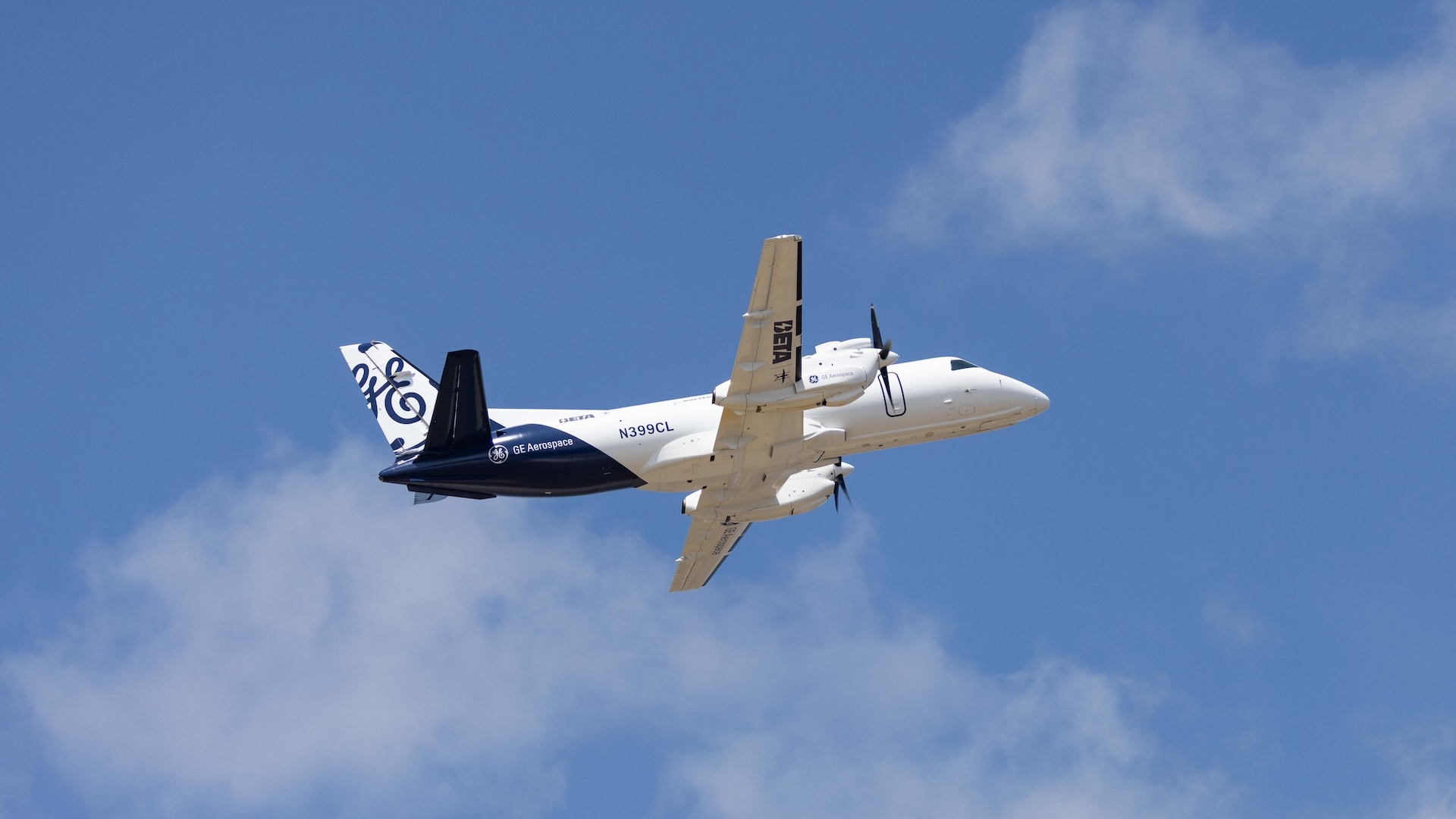
Modified Saab 340, a hybrid-electric aircraft in flight.
A modified Saab 340B aircraft in flight powered in part by a hybrid electric system built by GE Aerospace, along with NASA, BETA Technologies, and Boeing.
GE Aerospace

An aircraft powered by a megawatt-class hybrid-electric engine developed in collaboration with NASA and built by GE Aerospace, demonstrated flight of an innovation that can inform new generations of fuel-saving aircraft power systems.

Mounted to a Saab 340B aircraft, the engine flew at Farnborough International Air Show in the United Kingdom. It was the public debut of a system that has in recent months made historic test flights, becoming the first hybrid electric-powered aircraft to fly above 30,000 feet.

“This achievement reflects what NASA does best in aeronautics: we explore bold possibilities, validate them through rigorous research and testing, and work with industry to turn breakthrough ideas into technologies that bring real value for the American people,” said Laurie Grindle, director of the Aeronautics Division within the agency’s Research and Technology Mission Directorate at NASA Headquarters in Washington.

The testing leveraged work done through NASA’s former Electrified Powertrain Flight Demonstration project and the agency’s ongoing Subsonic Vehicle Technologies and Tools project – years of collaborative research that included key testing at NASA test facilities. 

The engine integrates electric motors, a gas turbine, and energy storage capabilities. It was designed to demonstrate the capacity to power an aircraft around the size of a regional-class jet, reducing fuel burn and costs without sacrificing performance. The unit’s technology and designs are expected to be used to help develop future hybrid systems that could lower airline operating costs. 

The demonstration flight came after years of rapid development for the technology. For NASA, it also validates work that stretches back to a time when hybrid aviation propulsion seemed almost beyond the horizon of possibility.

This achievement reflects what NASA does best in aeronautics: we explore bold possibilities, validate them through rigorous research and testing, and work with industry to turn breakthrough ideas into technologies that bring real value for the American people.

LAURIE A. GRINDLE

LAURIE A. GRINDLE

Director of the Aeronautics Division within the agency's Research and Technology Mission Directorate

“This is the culmination of more than 15 years of work, and we did that because it’s going to have an impact for aircraft that will help reduce energy use and help U.S. companies and the public,” said Ralph Jansen, aerospace engineer at NASA’s Glenn Research Center in Cleveland. “It’s about having a vision that no one believes can happen and then doing the work to define and execute the research and development needed to make it happen.”  

This accomplishment was possible because of the collaborative effort of hundreds of people working on Electrified Powertrain Flight Demonstration and Subsonic Vehicle Technologies and Tools projects across NASA centers, in conjunction with GE Aerospace and its partner companies.

Hybird-Electric Evolves

In recent years, aviation has seen a boom in small aircraft and drones powered by electrical systems drawing from batteries. But large passenger and cargo planes require complex engines capable of supplying massive amounts of power. So more than a decade ago when NASA began contemplating hybrid systems, just the possibility of using electric motors to supplement some energy was a daunting engineering challenge. 

NASA spent about seven years performing preliminary research, working with small businesses and other partners to consider technological obstacles and the potential commercial viability of hybrid systems. During that time, the agency addressed several barriers to implementation including the power, thermal, and battery technology, and the integration of the power system, engine, and aircraft.

Through the agency’s Electrified Powertrain Flight Demonstration award, GE Aerospace and NASA worked with researchers to develop lighter and more efficient power systems and shrink key components – sometimes dramatically. 

NASA and GE Aerospace also leveraged agency facilities and resources to further their research. In 2022, GE Aerospace tested an integrated version of its propulsion system at NASA’s Electric Aircraft Testbed at the agency’s Neil A. Armstrong Test Facility in Sandusky, Ohio. Testing allowed the system to operate in conditions simulating 45,000 feet in altitude, the range in which commercial single-aisle aircraft fly. 

The team added components, including electric motors, power converters, propellers, and a GE Aerospace commercial engine, followed by more ground tests and eventual flight tests. For the researchers who’d spent years on the concept, seeing the engine powering an aircraft in flight was a major step in a long journey.

“I’ve got to say, I was pretty touched seeing it fly. It was just awesome,” Jansen said.  “It’s just like a regular plane, which is probably the best thing of all.”

NASA’s current support for this research is through the Aeronautics Division of its Research and Technology Mission Directorate.

Austrian propulsion startup joins sovereign space funding surge

19 June 2026 at 08:00

Austrian satellite propulsion startup Gate Space has won 6.3 million euros in funding from Europe’s government-backed accelerator program, joining a wave of European companies attracting capital for greater space sovereignty.

The post Austrian propulsion startup joins sovereign space funding surge appeared first on SpaceNews.

Sustained maneuver has a propulsion problem

15 June 2026 at 14:00
A gridded ion thruster at NASA’s Glenn Research Center that was used on NASA’s Double Asteroid Redirection Test (DART). Credit: NASA

For years, space architecture was treated mostly as a question of placement: where to put a spacecraft, and how reliably it could hold position. That framing is now too narrow. […]

The post Sustained maneuver has a propulsion problem appeared first on SpaceNews.

NASA and USAF-Backed Research Reveals the Breakthrough Propulsion Technology That Could Propell Future Satellite Swarms

12 June 2026 at 13:21


In a University of Kentucky laboratory, three small spacecraft stand-ins slid across low-friction air tracks, nudging and pulling one another without thrusters, propellant, or physical contact.

Instead, they used carefully timed magnetic fields, a technique that could one day help future satellite swarms hold precise formations in space without constantly burning fuel.

The NASA and Air Force-backed study, set to be published in the September 2026 edition of Aerospace Science and Technology,  marks a step toward what researchers call electromagnetic formation flying, a proposed method for controlling the relative positions of satellites using onboard coils rather than conventional propellant-based thrusters.

In the study, researchers demonstrated a decentralized, three-satellite control system that used alternating magnetic field forces to maintain formation with centimeter-level precision, offering a possible pathway for future space telescopes, interferometers, gravity-wave detectors, and other distributed spacecraft missions.

“Spacecraft formation flying can advance a variety of space technologies such as distributed-aperture telescopes, gravity-wave detectors, and interferometers,” researchers write. “One challenge for spacecraft formation flying is that traditional propellant thrusters eventually deplete, and they can contaminate sensitive spacecraft components.”

The study, authored by scientists from the University of Kentucky’s Department of Mechanical and Aerospace Engineering, focuses on a longstanding problem in spacecraft engineering.

Many future missions may not rely on a single large spacecraft, but instead on groups of smaller satellites flying in carefully arranged formations. If those satellites can maintain their spacing and orientation with extreme precision, they could function together like a much larger scientific instrument.

For example, a distributed-aperture telescope could use multiple spacecraft separated by carefully controlled distances to achieve observing capabilities that might be difficult or impossible with a single monolithic telescope.

Similar formation-flying concepts have been proposed for space-based interferometers and additional missions in which the relative positions of spacecraft are central to mission performance.

However, keeping multiple satellites in formation is not easy. Standard spacecraft rely on thrusters, which consume limited propellant. Over time, that fuel runs out, limiting mission duration and maneuverability. Thruster plumes can also contaminate sensitive instruments, a concern on spacecraft carrying delicate optical, scientific, or electromagnetic sensors.

However, electromagnetic formation flying, or EMFF, offers a different possibility. Each spacecraft carries electromagnetic coils. When electric current flows through those coils, they create magnetic fields. Those fields interact with magnetic fields created by nearby spacecraft, producing attractive or repulsive forces that can alter the satellites’ positions relative to one another.

Put simply, the satellites can push or pull on each other using magnetism.

The idea is not entirely new. Previous work has explored electromagnetic formation flying between two spacecraft, including experiments using direct-current-driven coils.

The problem becomes much harder when the formation includes three or more satellites. In that case, every satellite’s magnetic field can interact with the others, creating a web of coupled forces that becomes increasingly difficult to control as the formation grows.

The new study approaches that problem using alternating magnetic field forces, or AMFF. Rather than driving the coils with steady direct current, the researchers use sinusoidal currents at specific frequencies.

The key insight is that two satellites generate a nonzero time-averaged interaction force only when their magnetic moments alternate at the same frequency. If they do not share a frequency, the average force between them is negligible.

That frequency-matching approach effectively allows the system to pair satellites electromagnetically. One pair can interact at one frequency, while another pair interacts at a different frequency.

By adjusting the amplitude of each sinusoidal signal, the satellites can control the strength of the force between each pair without requiring a centralized controller to solve the entire formation’s motion at once.

“Only pairs with a common frequency can generate a nonzero time-averaged intersatellite force, and that force is determined solely by the amplitudes at the common frequency,” researchers write. “The method in this paper is decentralized, which means that each satellite has access to measurements of its position and velocity relative to only its local neighbor satellites.”

Centralized control can work in smaller systems, but it can turn computationally clumsy as satellite formations grow. A scalable system would need each spacecraft to make local decisions based on nearby neighbors, rather than requiring a single controller to calculate every force across the entire formation.

To test the idea, the researchers built a ground-based experimental platform using three custom electromagnetic actuation system units placed on linear air tracks.

The air tracks allowed the units to move with low friction, simulating one-dimensional relative motion between satellites. Each unit included an electromagnetic coil, batteries, power electronics, an Arduino Due microcontroller, wireless communication hardware, and laser range-finding sensors for measuring relative position.

In the three-satellite setup, the center unit was driven by a sum of two sinusoidal currents, while each outer unit was driven by one of those frequencies. This allowed the center unit to interact independently with each outer unit, demonstrating the central premise of frequency-multiplexed magnetic control.

In closed-loop experiments, the three-satellite system achieved formation in less than 30 seconds. The maximum steady-state formation error was less than plus or minus 0.01 meters, or about 0.4 inches. The mean steady-state formation error was less than plus or minus 0.001 meters, or about 0.04 inches.

Those numbers demonstrate that the method did more than produce a magnetic tug in a lab. It allowed multiple units to settle into a desired formation using local feedback and alternating magnetic fields, while avoiding the coupling problem that has limited electromagnetic control for larger formations.

The researchers also compared the experimental results with computer simulations. While the simulations generally matched the observed behavior, the team noted some differences caused by real-world hardware factors, including sensor interference, current saturation, possible misalignment, airflow disturbances along the air tracks, and unmodeled magnetic effects.

Those caveats are important. This was not a spaceflight demonstration, and the system was tested only in one dimension. Real spacecraft would operate in a far more complex environment, where microgravity, radiation, extreme temperature swings, atmospheric drag in low Earth orbit, gravitational forces, Earth’s magnetic field, and equipment restrictions would all matter.

Researchers also note that traditional thrusters may still be needed for orbit maintenance, orbit transfers, or controlling the overall center of mass of a satellite formation.

In essence, this is not a replacement for all spacecraft propulsion. It is better understood as a possible propellantless method for controlling the relative positions of satellites once they are already in orbit and operating as part of a formation.

Still, that limitation does not diminish the possible impact. If electromagnetic formation flying can be scaled and adapted for real spacecraft, it could reduce propellant demands for future distributed missions. That could extend mission lifetimes, reduce contamination hazards to sensitive instruments, and enable spacecraft formations more flexible than today’s architectures.

The research was supported in part by the National Aeronautics and Space Administration (NASA), the National Science Foundation, and the Air Force Office of Scientific Research.

The funding mix reflects the dual scientific and strategic interests in the work. NASA has clear reasons to explore precise formation flying for future space observatories and scientific missions. The Air Force, meanwhile, has an obvious interest in satellite coordination, maneuverability, and resilient distributed space systems.

The study’s most intriguing contribution may be its demonstration that magnetic-field-based satellite control can be both decentralized and scalable.

Rather than treating a multi-satellite formation in a single complicated system that must be controlled from the top down, AMFF allows each satellite to manage interactions with its neighbors using assigned frequencies. That could become increasingly valuable as space missions move toward constellations, swarms, and distributed architectures.

Researchers caution that additional work will be needed to move beyond one-dimensional air-track experiments and toward three-dimensional testing, more realistic sensing and control hardware, and, eventually, on-orbit validation.

Additional coils would be needed for three-dimensional position control, and relative attitude control could require additional actuation frequencies for each interacting satellite pair.

Nevertheless, the laboratory results show that the underlying concept works in a three-body system, which is exactly where the hard part begins.

Two satellites can pull or push on each other relatively easily. Three satellites introduce the coupling problem that makes electromagnetic formation flying difficult. By demonstrating three-satellite control with alternating magnetic fields, the study delivers experimental evidence that the frequency-based solution can work.

For forthcoming space missions, that could be a meaningful step. The next generation of telescopes and orbital instruments may not always be built as single enormous spacecraft. They may be assembled virtually, with multiple satellites flying together as one coordinated machine.

If so, keeping those satellites precisely arranged without wasting propellant could become one of the enabling technologies of future astronomy, Earth observation, and national security space systems.

“This article presented a 3-satellite experimental demonstration of decentralized EMFF using AMFF,” researchers conclude. “The settling time and steady-state formation error achieved in these experiments demonstrate that this approach is most likely capable of meeting requirements for satellite constellation reconfiguration and maintenance, thereby addressing the need for propellant-free formation flying.”

Tim McMillan is a retired law enforcement executive, investigative reporter and co-founder of The Debrief. His writing typically focuses on defense, national security, the Intelligence Community and topics related to psychology. You can follow Tim on Twitter: @LtTimMcMillan.  Tim can be reached by email: tim@thedebrief.org or through encrypted email: LtTimMcMillan@protonmail.com 

MIT Engineers Testing Exotic ‘Electrospray’ Propulsion for Faster, More Maneuverable Spacecraft

10 June 2026 at 12:58


Massachusetts Institute of Technology (MIT) engineers are testing a new category of advanced-propulsion “electrospray” thrusters that combine the benefits of modern chemical and electrical thrusters used to drive satellites and other spacecraft into one hybrid system.

The team behind the novel propulsion technology said that electrospray thrusters could allow mission planners to design smaller, more nimble satellites and spacecraft capable of performing faster, more powerful maneuvers or slower, more precise adjustments, depending on mission requirements.

Electrospray Combines the Best of Chemical and Electric Propulsion

Launching rockets into space still requires chemical thrusters, but once spacecraft and satellites reach orbit, engineers continue to develop novel propulsion methods that are more efficient than chemical propulsion technologies. Given the strict weight requirements of spacecraft launches, finding alternatives to chemical propellants has opened up a wider range of mission profiles.

Among the most common alternatives to chemical thrusters are designs that combine electrical energy with small amounts of propellant to produce small but sustainable thrust. Although electric thruster designs require less fuel, saving significantly on launch weight, they also lack both the power and the rapid, quick burst performance of chemical thrusters.

According to study author Amelia Bruno, a former postdoc in MIT’s Department of Aeronautics and Astronautics (AeroAstro), combining chemical and electrical propulsion into a single system is “the best of both worlds.”

“This opens the door for small satellites to do even more science, more observations, and more interesting missions, all on a smaller and cheaper platform,” Bruno explained to MIT News.

Study co-author Paulo Lozano, the Miguel Alemán Velasco Professor of Aeronautics and Astronautics at MIT, agreed, noting that combining both technologies could enable a CubeSat mission to Mars “where they could make the journey slowly, using electrospray thrusters.”

“You could then use your chemical thrusters to quickly move to look at interesting features,” the professor added. “You could have a lot more flexibility to do a lot more things.”

ASCENT Rocket Fuel as the Thruster’s Ionic Liquid Propellant Enables Hybrid Design

According to a statement detailing the new electrospray thruster’s design, the ones developed by the MIT team are about the size of a thumbnail. Each thruster is also placed directly above a small fuel reservoir. For the MT electrospray thrusters, the fuel is an ionic liquid propellant, a liquid composed of salts that remain dissolved in a solution.

electrospray propulsion
These four flight-unit electrospray thrusters were delivered by the MIT Space Propulsion Laboratory to NASA for the upcoming Green Propulsion Dual Mode (GPDM) mission. Image Credit: Amelia Bruno

“Ionic liquids are very stable and can even remain a liquid in space, which not a lot of materials can do,” Bruno explained. “And it’s basically a sea of ions, which is why we base our technology around it, so we can pull those ions out into an electrospray.”

When a spacecraft’s battery delivers an electric charge to the fuel reservoir, the ions within the fuel also become charged. The thruster’s design channels the charged particles from the reservoir and through the thruster tips, expelling them into space.

Although the team has tested several types of ionic propellant in its electrospray propulsion thrusters, Bruno and Lozano have collaborated with the U.S. Air Force to synthesize an all-new ionic liquid propellant, which they are calling the Advanced SpaceCraft Energetic Non-Toxic propellant, or ASCENT.

Originally designed as a “green” alternative to extremely hazardous hydrazine rocket fuel that has been the staple in the rocket industry for decades, Bruno notes that ASCENT “happens to be an ionic liquid mixture.”

“And we said, hey, that’s the stuff we typically use,” the researcher added. “Theoretically, this should work. Let’s go figure out how.” 

Tests: Chemical Propellant Equally Efficient as Conventional Ionic Liquids

To test their electrospray design, each tested thruster was attached to a small reservoir about the size of a single Lego brick, and then the reservoir was filled with ASCENT. Next, electrospray thrusters were mounted on opposite sides of a traditional CubeSat.

To simulate the microgravity environment of Near-Earth Orbit, the team placed the thruster-equipped CubeSat on a MagLev stand. The team noted that the MagLev in Lozano’s lab is installed inside a large vacuum chamber. This design allows the researchers to fine-tune the environment to best mimic the conditions in space.

During a series of tests, the team applied varying voltage levels to the electrospray thrusters. As expected, the reaction produced a spray from the thruster nozzles, which spun the CubeSat around on the MagLev stand like a freely spinning top.

During each thruster firing, the team measured the amount of thrust produced. This data, combined with the voltage and fuel data, allowed the team to calculate ASCENT’s fuel efficiency during continuous operation. Some tests lasted up to 100 hours.

When the MIT group evaluated the results, they first determined that the choice of ASCENT was correct, as it successfully fueled each electrospray thruster. Even more significantly, the tests revealed that the readily available chemical propellant was equally efficient as conventional ionic liquids.

“Compared to our normal electrospray propellants, ASCENT can provide similar performance in terms of thrust,” Bruno explained. “Now that we know our thrusters work with ASCENT, we can start thinking of all the ways we can make them even better.”

Testing Electrospray Thrusters on NASA’s Green Propulsion Dual Mode Mission

When discussing the benefits of their successful electrospray thruster tests, Lozano noted that a spacecraft with electric and chemical thrusters can share a single fuel tank. Due to its compact design, this hybrid electrospray thruster could be mounted on a small satellite.

Fortunately, the team won’t have to wait long to see their thruster in action. According to the research team, whose work was partially supported by NASA, their design will be incorporated into NASA’s upcoming Green Propulsion Dual Mode mission scheduled to launch in November. The Green Propulsion Dual-Mode mission will carry a briefcase-sized CubeSat with a primary chemical thruster and specially designed electrospray thrusters, making it the first attempt to combine electrical and chemical propulsion in a small spacecraft.

“This will be the first time that a satellite will have a shared propellant tank,” Lozano explained.

Although a large portion of proposed electric propulsion missions that might employ the new electrospray thruster are designed to explore deeper into the Solar System and beyond, Lozano also highlighted the technology’s possible applications closer to home. For example, satellites equipped with both technologies could rapidly respond to environmental or climate changes in real time with a speed and efficiency unavailable with current propulsion options.

“Say there’s a storm coming, and you’d want to deploy your constellation of small satellites to observe over one location,” the researcher explained. “You could choose to send them quickly or slowly, depending on the nature of the observation.”

“And the only way to do that is if you have two propulsion systems, which is now possible,” he added.

Although the mission will not launch before November, Bruno noted that a successful test could allow engineers to consider missions they never thought possible.

“Now that we know our thrusters work with ASCENT, we can start thinking of all the ways we can make them even better,” the researcher explained.

The study “Performance Characterization of Electrospray Thrusters with Energetic Ionic Liquid Monopropellant” was published in the Journal of Propulsion and Power.

Christopher Plain is a Science Fiction and Fantasy novelist and Head Science Writer at The Debrief. Follow and connect with him on X, learn about his books at plainfiction.com, or email him directly at christopher@thedebrief.org.

❌