Lançado em 2022 e disponível em mercados selecionados, o Self Service Repair permite que consumidores adquiram peças genuínas de dispositivos da Maçã e as ferramentas adequadas para realizar manutenções por conta própria, além de oferecer manuais de reparo.
No caso dos iPhones supracitados, agora é possível comprar itens como vidro traseiro, bateria, alto-falante inferior, alto-falante superior, câmera traseira, câmera frontal, tela, carcaça, placa lógica, microfone principal, bandeja do cartão, Taptic Engine e outros componentes.
No caso da nova geração do Mac Studio, é possível comprar peças como portas Thunderbolt e USB-C, ventoinhas, alto-falante, módulo de SSD, placa lógica e fonte de energia.
Como assinalado pelo 9to5Mac, o Mac mini tem uma lista mais enxuta de peças disponíveis do que os demais, mas ainda é possível encontrar componentes como ventoinhas, alto-falantes, placas lógicas e fontes de energia.
Ao que tudo indica, os preços dessas peças ficaram, em grande parte, inalterados em relação aos das gerações anteriores. Um módulo de câmera para os iPhones, por exemplo, segue saindo por US$250 — valor que cai para US$189,24 caso você devolva o original.
Já é possível adquirir essas peças nas lojas do Self Service Repair nos Estados Unidos, no Canadá e na Europa.
iPhone 18 Pro Max
Cores: bordô, glacial, prateado e preto Armazenamento: 256GB, 512GB, 1TB ou 2TB
NOTA DE TRANSPARÊNCIA: O MacMagazine recebe uma pequena comissão sobre vendas concluídas por meio de links deste post, mas você, como consumidor, não paga nada a mais pelos produtos/serviços ao usar os nossos links de afiliado.
Em mais um aceno ao governo dos Estados Unidos, a Apple anunciou hoje novas parcerias com empresas do seu país natal para o fornecimento de materiais para os iPhones 18 Pro/18 Pro Max e Duo.
Parte do American Manufacturing Program (AMP), essas parcerias incluem companhias como a Perryman Company, produtora de titânio do estado da Pensilvânia, e a Qnity Electronics, fabricante de tecnologias para câmeras do estado do Delaware.
Sabih Khan, COO 1Chief operating officer, ou diretor de operações. da Apple, comentou o anúncio:
Estamos muito felizes em expandir nossa parceria com empresas que produzem materiais e componentes avançados para nossa nova linha de iPhones aqui mesmo nos Estados Unidos. A engenhosidade americana é vital para todos os nossos produtos, desde o titânio usado no iPhone Duo até as inovações revolucionárias em câmeras do iPhone 18 Pro. Temos orgulho de trabalhar com a Perryman e a Qnity Electronics para continuar expandindo nosso Programa de Fabricação Americana e apoiar a geração de empregos nos EUA.
Ainda segundo a Maçã, a Perryman receberá um investimento de US$100 milhões ao longo dos próximos três anos, que garantirá o fornecimento, para o iPhone Duo, de titânio de grau 5 com pelo menos 80% de material reciclado.
Parte do AMP desde março, a Qnity Electronics vai produzir filmes avançados para o novo sistema de câmera com abertura variável dos iPhones 18 Pro/18 Pro Max.
A Apple também aproveitou a oportunidade para relembrar outros investimentos em fabricantes americanos (ou com fábricas nos EUA), incluindo a Broadcom, que fornece chips de radiofrequência para seus dispositivos; a Corning, responsável pelos vidros Ceramic Shield; a Coherent, que produz componentes para o Face ID; a TSMC, que fabrica chips para todos os principais produtos da empresa; e a Amkor Technology, empresa de empacotamento de semicondutores.
New US partners like Perryman and Qnity Electronics have helped to make iPhone Duo and iPhone 18 Pro possible. https://t.co/12nNak07z6
Novas parceiras americanas, como a Perryman e a Qnity Electronics, ajudaram a viabilizar o iPhone Duo e o iPhone 18 Pro.
Anunciado em 2025, o AMP envolve um investimento de US$600 bilhões [1, 2] na economia dos EUA — e, segundo a Apple, já sustenta mais de 450 mil empregos. O programa, vale lembrar, surgiu em meio às ameaças tarifárias feitas pelo presidente Donald Trump a importações, com destaque para a China — principal polo de fabricação de iPhones.
O material parece confirmar um vazamento de julho, posicionando o dobrável da Apple entre os 4.288mAh do iPhone 18 Pro e os 5.567mAh do iPhone 18 Pro Max — ambos, vale notar, em suas versões sem bandeja para chip.
O dobrável da Apple tem capacidade ligeiramente superior à do Samsung Galaxy Z Fold8, que utiliza silício-carbono no bateria e conta com 4.800mAh, além de ser 36% maior do que o iPhone Air, o modelo mais fino lançado pela Apple até então (com 3.149mAh).
Embora não tenha a maior bateria entre os iPhones, o dobrável apresenta autonomia semelhante à do iPhone 18 Pro Max: pela métrica de reprodução de vídeo divulgada pela Apple, são até 44 horas na tela externa, contra até 45 horas do iPhone 18 Pro Max.
Já a tela interna do iPhone Duo tem uma autonomia de 31 horas, um pouco abaixo das 34 horas possíveis no 18 Pro.
iPhone Duo
Cores: branco-estrela ou céu noturno Armazenamento: 256GB, 512GB, 1TB ou 2TB
NOTA DE TRANSPARÊNCIA: O MacMagazine recebe uma pequena comissão sobre vendas concluídas por meio de links deste post, mas você, como consumidor, não paga nada a mais pelos produtos/serviços ao usar os nossos links de afiliado.
Considerando que — ainda de acordo com ele — esse evento poderá revelar o “MacBook Ultra” (modelo com tela OLED 1Organic light-emitting diode, ou diodo emissor de luz orgânico. sensível ao toque), um novo iMac com o chip M6, a nova geração do iPad mini (com tela OLED) e uma nova versão do MacBook Pro de 14 polegadas com o chip M6, qualquer um desses produtos passa a ser candidato a esse lançamento — ou todos juntos, é claro.
Apple plans a retail store reset for Nov. 6, indicating potential new Mac release timing. More in Power On: https://t.co/imlJIzWeaS
Caso o rumor se concretize, a Apple terá um lançamento para cada sexta-feira pelas próximas quatro semanas, começando com o iPhone Duo e concluindo o cronograma com a chegada da nova Apple TV 4K e do HomeView, revelados junto com o HomePod mini 2 na última terça-feira (13/10).
A relação de lançamentos ficaria mais ou menos assim:
23 de outubro: iPhone Duo
30 de outubro: HomePod mini 2
6 de novembro: novos Macs e/ou novo iPad mini
13 de novembro: HomeView e Apple TV 4K
Falando em iPhone Duo…
Escassez do Duo pode aumentar as vendas do 18 Pro?
O jornalista também aproveitou o espaço para comentar a pré-venda do dobrável da Apple, classificada por ele como “desastrosa”, já que os prazos de entrega estão em janeiro (no caso dos Estados Unidos) ou em fevereiro (no caso do Brasil)!
Apple’s iPhone Duo preorders were an absolute disaster. That may help the iPhone 18 Pro. More in Power On: https://t.co/qX4Wp8R6sc
A pré-venda do iPhone Duo da Apple foi um desastre absoluto. Isso talvez ajude o iPhone 18 Pro. Mais em “Power On”.
Segundo ele, a Apple cometeu um “erro grave” ao manter o lançamento do Duo no início do primeiro trimestre fiscal sem ter um grande estoque do aparelho em escala global, em vez de lançar o produto inicialmente apenas nos Estados Unidos e na China. A empresa também poderia ter a intenção de oferecer os iPhones 18 Pro/18 Pro Max como alternativas ao Duo.
iPhone Duo
Cores: branco-estrela ou céu noturno Armazenamento: 256GB, 512GB, 1TB ou 2TB
NOTA DE TRANSPARÊNCIA: O MacMagazine recebe uma pequena comissão sobre vendas concluídas por meio de links deste post, mas você, como consumidor, não paga nada a mais pelos produtos/serviços ao usar os nossos links de afiliado.
Notas de rodapé
1
Organic light-emitting diode, ou diodo emissor de luz orgânico.
The smartphone market in India is going through a massive cool down, and even the biggest tech giants are feeling the chill. Overall phone shipments across the country dropped 26 percent in the third quarter of 2026, marking the lowest volume for this season in ten years. While Apple saw its iPhone sales in India […]
De acordo com ele, o novo modelo chegaria às lojas em 2027 e contaria com uma tela de 9 polegadas, 2″ a mais do que o produto revelado recentemente pela Apple. O braço articulado permitiria ainda que o visor fosse girado em até 360 graus, e o nome do produto poderia ter sufixos como “Ultra”, “360” ou “Max”.
Power On: Apple’s new HomeView shows the undeniable potential of a higher-end version with a robotic arm. https://t.co/NVMPS3cJOo
“Power On”: o novo HomeView da Apple demonstra o potencial inegável de uma versão mais sofisticada com um braço robótico.
Na avaliação do jornalista, essa nova versão não seria um sucessor ou uma nova geração do HomeView, mas uma “opção mais sofisticada” do produto revelado na semana passada, posicionada “em uma categoria superior”.
A variante com um braço robótico poderia permitir, por exemplo, que a tela do aparelho acompanhasse a movimentação do usuário enquanto ele circulasse pela cozinha durante uma chamada pelo FaceTime, ou se voltasse para quem estivesse falando, caso haja uma família reunida (já que, mesmo em sua versão original, o HomeView é projetado para reconhecer até seis pessoas diferentes).
Les Benjamins designer Bünyamin Aydın designed his new collection, “From Earth to Sky,” on iPad Pro with Apple Pencil Pro, and filmmaker Neels Castillon shot the brand’s Cappadocia fashion show on iPhone 18 Pro Max, Apple said in an October 14, 2026 story. The show marks 15 years of the Istanbul-based lifestyle brand and is […]
Our solution hinges on splitting the Apple Reference Image process into two phases: creating a secure digital negative, and developing that negative into a reference image. Each phase receives our strongest protections.
[…]
Apple Reference Image provides both a lower bound and an upper bound on capture time from Apple’s cryptographic timestamp service, and we guarantee the photo was taken between the two bounds. On a regular heartbeat, the device requests a cryptographic timestamp token, and retains the most recent one it has received. Globally this happens on average every 15 minutes, though the interval depends on local network conditions. This provides a proven lower bound timestamp for the photographic capture. After capture, the device requests a second timestamp to use as an upper bound, and both timestamps are embedded and signed with the sensor data.
[…]
When the user chooses to create a reference image, the device uploads the digital negative to PCC, which runs the processing steps needed to render the image — including demosaicing, tone mapping, and compression — in a highly secure, private, and verifiable environment. Experts can verify that PCC doesn’t alter a digital negative during development: they can examine the software that does the work.
[…]
Finally, as no security system is perfect, we created a revocation system that can revoke individual photos, as well as all photos from a specific sensor.
[…]
We built Apple Reference Image to avoid using an explicit, public credential for photographers, and to avoid even implicit public association between different photos taken by the same sensor. The final reference image is instead signed by Apple’s signing service, after validation by PCC.
Here’s the 17 family data as a percentage of overall usage for Widgetsmith.
Generally they followed the usual adoption pattern, and overall did very well ending at around 20% of total usage.
With the exception of the Air really struggling to find market share. For comparison the 16 Plus ended its first year at around 1.4% (vs the Air’s 0.3%).
This works out to about 6% of my iPhone users using the iPhone Air, or about 20x more proportionally than David's more mainstream app. Honestly, the numbers are pretty striking here, with David showing a pretty even split between the iPhone 17, 17 Pro, and 17 Pro Max, slightly decreasing in that order. Meanwhile, almost half of my users are on the Pro Max, another quarter are on the Pro, and the 17 is neck and neck with the Air. Clearly, my customers lean more enthusiast and are higher end buyers on average.
The apparent unpopularity of the iPhone Air is not what caught my eye. Instead, it is the percentage of iPhone 17e users: 0.5% of Widgetsmith users, and something like 1–2% of the total iPhone 17 generation in Birchler’s.
The iPhone 17e hasn’t been on sale for as long, though.
In the entire year since the iPhone Air was announced, I’ve never seen Apple advertise it. No billboards, no commercials. It raises a chicken/egg question: did no one buy it because Apple didn’t market it, or did Apple not market it because no one wanted it?
[…]
But the shame of these low iPhone Air sales reminds me, very much, of the late great iPhone 12 and 13 Mini — also a truly great design, also terribly disappointing sales numbers.
The People v Gorilla Grodd is the only DCU TV show in active development
HBO's boss recently confirmed as much at the 2026 Emmys
His comments have got me fearing for Lanterns' future
The boss of HBO has revealed that only one DC Universe (DCU) TV show is officially in the works — and now I'm afraid for the future of Lanterns.
Speaking to Deadline, Casey Bloys confirmed that The People v Gorilla Grodd (TPvGG), aka the recently announced Superman TV spin-off, is the only TV series in active development at DC Studios.
Asked for a status update on DC's myriad television productions, Bloys replied: "People read about development, and they assume that those are greenlit shows and they're [already in] development. And everybody knows that development is just that — you're trying things, you take big swings, [and] not everything comes through.
"I would say our track record in DC, from Watchmen to Peacemaker to Penguin and now Lanterns, is pretty good. We're very selective. We're careful about what we do, nothing has changed. You'll read about development, but focus on what we're greenlighting."
Pressed on whether any other show was in active development, Bloys added: "No, not right now, obviously you've got[The People v] Gorilla Grodd, which I'm very happy about, [they're] doing something different, and I think it's a really fun idea. They just started shooting."
Why I'm fearing the worst for the fate of HBO's Green Lantern TV show
Fans have fallen in love with the abrasive Hal Jordan since Lanterns premiered in mid-August (Image credit: DC Studios/HBO Max)
For fans who've immersed themselves in the DCU since day one, Bloys' comments will be of concern.
Since then, four more series have been added to the list of potential TV candidates, but only one — The People v Gorilla Grodd — has been greenlit. Meanwhile, some shows that were named as part of Gunn's initial announcement, including Waller and Paradise Lost, have reportedly been shelved. Others, such as Booster Gold, have been trapped in development hell.
John Stewart has also won a whole new army of fans in HBO's Green Lanterns TV show (Image credit: HBO)
With Bloys outright confirming TPvGG is all that DC Studios' TV division is actively working on, it's not surprising that fans — myself included — are fearing for Lanterns' future.
The Aaron Pierre and Kyle Chandler-led sci-fi crime drama, which has seen its audience share seemingly grow week-on-week amid positive word of mouth, is one of the most popular shows on television right now. With three more episodes of its debut season yet to air (at the time of publication, anyway), I'm convinced that its viewership will increase in the weeks to come, too.
Considering that HBO's Green Lantern TV show has been such a hit, it's inevitable that a second season will be made, right? Not if we believe Bloys. After all, there are numerous examples of hugely successful shows — on HBO, HBO Max, and otherwise — that haven't returned for another round. There's no guarantee, then, that Lanterns season 2 will be a thing.
That said, DC Studios has assembled a writers room for Lanterns season 2 to kick around potential story ideas. That doesn't mean DC and HBO have pledged to make another season of the DCU Chapter One program, but it does offer hope that, if the right story angle can be found, another eight-part installment might be *ahem* constructed.
As I said at the start of this article, though, I am worried for Lanterns' fate. Bloys is likely playing it coy, but I'm of the opinion that he would've had something positive to say about Lanterns' future if a sophomore season was more likely to happen than not. Right now, then, I'm reluctantly confident that it'll be a one and done scenario.
If, and it's a big if, we get a big-screen Lanterns follow-up to the hit comic book-inspired show, you certainly won't hear me complaining about the decision not to make a second season.
Small RC cars often have to make a compromise between portability and driving performance. The ZLL SG616 PRO/MAX takes a different approach, packing four-wheel drive, proportional controls and a relatively aggressive power system into a 1:24-scale chassis.
1:24 scale also changes where the car makes the most sense. Rather than requiring a large dedicated driving area, its compact dimensions make it easier to use on driveways, compact outdoor spaces and other locations where a larger 4WD RC car would be inconvenient.
What makes this model particularly interesting is that buyers can choose between a brushed version and a brushless version. The brushed model is rated for up to 30 km/h, while the brushless configuration raises the claimed top speed to 38 km/h.
A Compact RC Car With Serious Speed
At 208 × 113 × 80 mm, the SG616 is small enough to transport easily, but its specifications are closer to what enthusiasts expect from a performance-oriented RC vehicle than a basic toy-grade car.
The 1:24 scale also changes where the car makes the most sense. Rather than requiring a large dedicated driving area, its compact dimensions make it easier to use on driveways, compact outdoor spaces and other locations where a larger RC truck would be inconvenient.
The 12 mm ground clearance is modest, so the SG616 is not designed to behave like a full-size crawler. Its appeal is instead centered on quick acceleration, directional control and short off-road runs.
Brushed or Brushless: The Important Buying Decision
The biggest difference between the SG616 PRO and MAX configurations is the power system.
The brushed version uses an RC180 motor and has a claimed maximum speed of 30 km/h. The brushless version moves to a 2030 4500KV motor and is rated for up to 38 km/h. Both configurations use an integrated 35A ESC.
That distinction matters because the brushless model is not simply a cosmetic upgrade. Its higher claimed speed makes it more suitable for users who want a faster RC driving experience, while the brushed version may make more sense for someone who values a simpler setup.
The brushless configuration also gets an all-metal driveshaft, giving it a mechanical upgrade beyond the motor itself.
Four-Wheel Drive and Independent Suspension
The SG616 uses a 4WD drivetrain with planetary differential gearing and independent suspension. Combined with a 45-degree steering angle, these features are intended to give the small chassis more flexibility when changing direction or dealing with uneven surfaces.
The car also uses ball bearings throughout, while an aluminum motor heatsink helps manage heat around the power system.
This combination is more important than the headline speed. A fast RC car is only enjoyable when the chassis can translate that power into controllable movement. The SG616’s proportional throttle and four-wheel-drive layout are therefore two of its more meaningful features.
Full-Proportional Control Makes a Difference
The included 2.4GHz transmitter provides four control channels and a claimed control distance of around 80 to 100 meters, depending on the configuration or listing specification.
More importantly, the car supports full-proportional control. Instead of limiting the vehicle to simple forward, reverse and steering commands, proportional control allows the driver to vary throttle input more precisely.
That is useful when moving through tighter spaces. It also gives the SG616 a more controllable feel when approaching corners or transitioning between slower technical driving and high-speed runs.
Battery Life Is Designed Around Short Sessions
The SG616 uses a 7.4V Li-ion battery, with the brushed and brushless versions using 500mAh and 800mAh capacities respectively according to the current listing. Charging takes approximately 1.5 hours, while the advertised running time is around 30 to 40 minutes.
These numbers suggest that the car is better suited to several relatively short driving sessions than continuous long-distance running.
The included USB charging cable also keeps the package straightforward. Buyers receive the car, battery, transmitter, charging cable, manual, spare R-clips and screwdriver, so there is no need to assemble a separate basic control system before getting started.
Designed for Outdoor Driving
The SG616 has several details aimed at reducing the limitations of a compact RC chassis.
Its circuit board and steering servo are listed as waterproof, while the front bumper integrates LED lights for a more distinctive appearance during low-light driving. The 47 mm tires and independent suspension also help the car deal with surfaces that are less predictable than a smooth indoor floor.
However, waterproof electronics should not automatically be interpreted as a license for deep-water driving. The practical advantage is better resistance to splashes and wet conditions rather than treating the car as a fully submersible vehicle.
What Kind of RC Driver Is It For?
The ZLL SG616 PRO/MAX occupies an interesting middle ground.
It is substantially more performance-focused than a basic toy RC car, yet its 1:24 scale keeps it much easier to carry and deploy than a larger hobby-grade truck. The brushless version is particularly notable for its claimed 38 km/h maximum speed, while the proportional controls and 4WD system give the driver more control than a simple entry-level model.
For buyers deciding between the two versions, the choice largely comes down to driving priorities. The brushed model provides a lower-speed configuration, while the brushless model targets users who specifically want more speed and the additional mechanical hardware that comes with that configuration.
Final Takeaway
ZLL SG616 PRO/MAX is interesting because it does not rely on one headline specification. Its appeal comes from how several features work together: a compact 1:24 chassis, 4WD, independent suspension, proportional throttle, 2.4GHz control and two different motor configurations.
The brushless version’s 38 km/h claim is certainly the attention-grabbing number, but the proportional controls, drivetrain design and compact dimensions may ultimately have a greater impact on everyday usability.
For shoppers comparing small off-road RC cars, the SG616 is therefore worth looking at as a performance-focused compact model rather than simply another inexpensive remote-control toy.
AULA F75 MAX keyboard is designed for users who want more than a basic compact mechanical gaming keyboard. Instead of focusing on a single headline feature, it combines a space-saving 75% layout with a dedicated TFT screen, rotary knob, hot-swappable switches, gasket mounting and three connection modes.
That combination makes the F75 MAX interesting for both gaming and everyday desktop use. Its design also reflects a broader trend in mechanical keyboards: smaller layouts are becoming more feature-rich without completely sacrificing the controls that PC users rely on.
Why the 75% Layout Makes Sense
The F75 MAX uses an 80-key 75% layout, keeping the function row and arrow-key cluster while removing the large gaps and dedicated number pad found on full-size keyboards.
For a gaming setup, this layout can free up more desk space for mouse movement. At the same time, it remains practical for productivity because users do not have to give up the dedicated arrow keys and function row.
The trade-off is the missing number pad. Anyone who regularly enters large amounts of numerical data may still prefer a full-size keyboard, but for gaming, general typing and compact workstations, the 75% format is a useful middle ground.
The TFT Screen Is More Than Decoration
One of the F75 MAX’s most noticeable design elements is its built-in TFT screen. Instead of relying entirely on RGB lighting for visual customization, the keyboard adds a small display that gives the top section a more personalized appearance. Banggood specifically lists a GIF-capable TFT screen interface.
This feature does not fundamentally change typing performance, but it gives the keyboard a distinct identity. For users who enjoy customizing their desktop setup, the screen can make the F75 MAX feel more like a configurable gadget than a conventional mechanical keyboard.
The separate metal knob also adds a practical control point, giving users a physical way to interact with supported functions instead of relying entirely on keyboard shortcuts.
Gasket Mounting Targets a Softer Typing Feel
The keyboard uses a gasket-mounted structure with multiple layers of sound-dampening material. AULA lists five layers of dampening, while the product listing describes a six-layer sound-absorbing structure, so the exact terminology varies between listings.
The important part is what this construction is intended to achieve. A gasket-mounted keyboard isolates the plate from parts of the case, allowing slightly more flex while reducing some of the direct vibration transferred through the chassis.
Combined with the F75 MAX’s foam and silicone layers, the design is aimed at producing a deeper and less harsh typing sound than a basic rigid keyboard.
That makes the keyboard potentially more appealing to people who care about typing acoustics as well as gaming performance.
Hot-Swappable Switches Make Future Upgrades Easier
Another useful feature is the hot-swappable PCB, which supports 3-pin and 5-pin mechanical switches according to AULA’s specifications.
This means owners are not necessarily locked into the factory switch configuration. Users who prefer a lighter linear feel, a different actuation characteristic or another sound profile can experiment with compatible switches without replacing the entire keyboard.
The F75 MAX comes with LEOBOG Reaper linear switches. AULA lists them as factory-lubed, while EPOMAKER’s specifications give the switch a 45±3gf trigger force and 3.6±0.3mm total travel.
For someone buying a mechanical keyboard as a long-term platform, this upgradeability may be more meaningful than RGB effects alone.
Tri-Mode Connectivity Covers Different Setups
The F75 MAX supports USB-C wired, 2.4GHz wireless and Bluetooth 5.0 connections.
That gives the keyboard three distinct use cases. Wired mode is suitable for a desktop gaming setup, 2.4GHz wireless keeps the desk cleaner while maintaining a low-latency connection, and Bluetooth is convenient when switching between compatible computers or mobile devices.
AULA rates the keyboard at up to 1000Hz polling through USB and 2.4GHz, while Bluetooth is listed at 125Hz. The manufacturer also lists latency of around 3ms over USB, 7ms via 2.4GHz and 18ms through Bluetooth.
For competitive gaming, the wired and 2.4GHz modes are therefore the more relevant choices.
4000mAh Battery Gives Wireless Mode Some Flexibility
The built-in 4000mAh battery is another reason the F75 MAX works well as a wireless desktop keyboard. AULA rates battery life at approximately 30.5 hours with the RGB backlight enabled and up to 80 hours with the lighting switched off.
Actual endurance will depend on lighting brightness, connection mode and usage patterns, so these figures should be treated as manufacturer ratings rather than guaranteed real-world results.
Still, the option to turn off RGB lighting when maximum battery life matters gives users more control over how they use the keyboard.
PBT Keycaps and South-Facing RGB
The F75 MAX uses double-shot PBT keycaps and south-facing per-key RGB lighting.
PBT is commonly chosen for mechanical keyboards because it generally resists the glossy wear that can develop on frequently used ABS keycaps. The south-facing RGB arrangement also works well with the keyboard’s overall enthusiast-oriented design.
AULA lists support for more than 16 million RGB colors and multiple lighting effects, although the visual customization is ultimately secondary to the keyboard’s typing and connectivity features.
A Compact Keyboard With Room to Experiment
AULA F75 MAX is best understood as a feature-rich 75% mechanical keyboard rather than simply another RGB gaming board.
Its strongest combination is the compact layout, gasket construction, hot-swappable PCB and tri-mode connectivity. The TFT display and rotary knob then add a layer of customization that separates it from more conventional 75% keyboards.
For gamers, the 2.4GHz connection and 1000Hz polling rate give the keyboard a performance-oriented side. For enthusiasts, the hot-swap PCB and gasket structure leave room for future customization. And for everyday users, the 75% layout provides a useful balance between desk space and functionality.
The main compromise is straightforward: users who need a dedicated number pad will need a larger keyboard. But for anyone comfortable with the 75% format, the AULA F75 MAX offers a combination of customization, wireless flexibility and enthusiast-style construction that makes it worth considering.
For the latest specifications and software information, buyers should also check the official AULA product page before ordering, since configurations and regional listings can vary.
iPhone 18 Pro and Pro Max will be available in four elegant finishes: black, silver, glacier, and burgundy.
Average wait times for Apple’s new iPhone 18 Pro models have lengthened to 2.6 weeks across eight countries just three days into pre-orders, a jump that veteran Apple watcher Gene Munster called a historically favorable sign for demand.
Munster, managing partner at Deepwater Asset Management, posted his latest tracker Monday. Lead times rose from 1.6 weeks the day before to 2.6 weeks, matching where last year’s Pro models stood at the same point in the cycle. Part of the one-day surge, he noted, came from buyers returning to their computers after pre-orders opened on Saturday rather than the usual Friday. The more important takeaway, he said, is that wait times are moving higher.
iPhone Lead Time Tracker 3 days into Pre-Orders: We’re seeing average lead times of 2.6 weeks across 8 countries. That’s in line with where the Pro models were last year.
My take: Most importantly, the lead times jumped from 1.6 weeks yesterday to 2.6 weeks today. Part of that jump is people are back in front of their computers (pre-orders started on Saturday). The important part is lead times are going up, which has historically been a favorable sign for demand.
Pre-orders for the iPhone 18 Pro and iPhone 18 Pro Max began September 12. The phones go on sale Friday, September 18. This year’s launch is unusually narrow: Apple skipped the standard iPhone 18 and iPhone Air, delaying those models until 2027 amid memory and chip shortages, and scheduled its first foldable, the iPhone Duo, for pre-order on October 16 and availability October 23. Only the two Pro models are available now, at starting prices of $1,199 and $1,299.
Some configurations, especially popular Pro Max storage and color combinations, already show delivery windows stretching into early October. That tightening inventory is what Munster’s tracker is capturing. Rising lead times have often preceded stronger-than-expected iPhone units in past cycles, which is why he flagged the move as constructive for Apple.
Not every analyst reads the same data the same way. Bank of America and JPMorgan have noted that some year-over-year comparisons look shorter than last year’s iPhone 17 Pro cycle, and GF Securities’ Jeff Pu described initial demand as “lukewarm,” citing limited spec upgrades, higher prices, and buyers who may be waiting for the Duo. Munster’s point is narrower and more sequential: the fact that waits lengthened from one day to the next still matters.
The Duo, starting at $1,999, is expected to siphon some high-end buyers who would otherwise have chosen a Pro Max. How large that substitution effect becomes will only become clear after October 16. For now, Munster’s tracker suggests the phones that are on sale are finding buyers quickly enough to push delivery dates later.
MacDailyNews Take: Munster’s data showing lengthening wait times is meaningful. The other analysts’ looking just at YoY lead times do not have enoguh data to draw any meaningful conclusions.
You cannot measure demand based on shipping times without knowing how much supply Apple has in hand… and where and how those supplies are allocated in each geographic area. – MacDailyNews, September 17, 2024
Please help support MacDailyNews — and enjoy subscriber-only articles, comments, chat, and more — by subscribing to our Substack: macdailynews.substack.com. Thank you!
iPhone 18 Pro arrives with Apple concentrating its biggest changes in three areas: camera control, sustained performance, and battery life. The new Pro models retain familiar 6.3-inch and 6.9-inch display sizes, but introduce a variable-aperture main camera, the 2-nanometer A20 Pro chip, redesigned thermal hardware, and a smaller Dynamic Island.
The lineup consists of iPhone 18 Pro and iPhone 18 Pro Max, starting at $1,199 and $1,299 in the U.S., respectively. Both begin with 256GB of storage and are available in black, silver, glacier, and a new burgundy finish. Preorders opened September 12, with retail availability beginning September 18 in more than 65 countries and regions.
Rather than treating the Pro models as a cosmetic update, Apple has focused on changes that become more noticeable during demanding use, particularly photography, video work, gaming, AI processing, and long sessions away from a charger.
iPhone 18 Pro brings variable aperture to the main camera
The centerpiece is a new 48MP Fusion Main camera with a physical variable aperture, a first for the iPhone.
Six laser-cut aperture blades can adjust the amount of light reaching the sensor while also changing depth of field. The camera supports four aperture settings: ƒ/1.48, ƒ/1.8, ƒ/2.8, and ƒ/4.0.
At the wider end, the camera can gather more light in darker scenes. A narrower aperture can keep more people or background detail in focus, giving photographers another tool beyond computational depth effects and Portrait mode.
Apple also gives users direct access to those settings through new Pro controls in the Camera app. Aperture, shutter speed, and white balance can be adjusted manually, while a histogram provides a more conventional way to monitor exposure.
The feature is paired with a new main-camera sensor and updated computational imaging pipeline. Apple says the combination improves low-light performance and detail, while Photographic Styles gain texture and grain controls for additional control over an image’s appearance.
Video receives several additions as well. Cinematic effects can now be applied after recording to footage captured at up to 60 frames per second, while Time-lapse can record in 4K with Dolby Vision HDR. Audio Mix has also been updated with improved voice processing and the ability to isolate music.
For photographers who want more evidence of how an image originated, Apple is introducing Apple Reference Image. In Reference mode, the main camera signs sensor data, which Private Cloud Compute uses to create an unalterable reference version that can be compared with an edited image in Photos. Apple is also preparing support for the SynthID standard as another way of identifying AI-generated or altered content.
Image Credit: Apple Inc.
iPhone 18 Pro uses A20 Pro and a redesigned vapor chamber
A20 Pro is built using a 2-nanometer manufacturing process and contains a six-core CPU, seven-core GPU, and dual 16-core Neural Engine.
Apple says memory bandwidth is 50% higher than on A19 Pro, while GPU performance can be up to 40% faster. The Neural Engine provides 32 cores in total, doubling the AI processing capability of the previous Pro chip.
The silicon change is closely tied to a redesigned cooling system. Apple has rearranged the chip package so that the silicon die sits beside the memory rather than beneath it in the thermal path, allowing A20 Pro to connect more directly to a next-generation vapor chamber.
That vapor chamber has three times the surface area of the previous generation and uses new materials to move heat away from the processor more effectively. Apple claims the design can deliver up to a 40% gain in sustained performance compared with iPhone 17 Pro.
That distinction is more relevant than peak benchmark numbers for workloads such as extended gaming sessions, video editing, computational photography, and local AI models, where heat can force a phone to reduce performance over time.
Connectivity has also moved further toward Apple-designed silicon. The N1 wireless chip supports Wi-Fi 7, Bluetooth 6, and Thread, while the new C2 modem succeeds C1X. Apple says C2 uses 15% less energy while offering faster uploads and adds mmWave support in the U.S.
Image Credit: Apple Inc.
iPhone 18 Pro Max reaches 45 hours of video playback
Battery improvements are another major part of the new hardware.
Apple rates eSIM-only versions of iPhone 18 Pro for up to 36 hours of video playback, while iPhone 18 Pro Max reaches as much as 45 hours. Apple says Pro Max receives the largest battery-life increase ever delivered in an iPhone.
Some of that gain comes from using the space previously occupied by a physical SIM tray. In markets receiving eSIM-only models, including the U.S., Canada, Japan, Mexico, Saudi Arabia, and the UAE, the larger internal battery provides an additional two hours of rated video playback.
Charging has accelerated as well. iPhone 18 Pro can reach 50% charge in approximately 15 minutes using a supported wired setup, while wireless charging reaches 50% in around 30 minutes. Apple says five minutes of wired charging on iPhone 18 Pro Max can provide roughly seven hours of video playback.
Both devices use aluminum unibody construction with Ceramic Shield 2 on the front and Ceramic Shield on the back. Storage options run from 256GB through 2TB.
The iPhone 18 Pro weighs 211 grams, while iPhone 18 Pro Max weighs 249 grams. Display sizes remain 6.3 inches and 6.9 inches, respectively.
Image Credit: Apple Inc.
iOS 27 brings Siri AI and new Apple Intelligence tools
The hardware launches alongside iOS 27, which places Apple Intelligence and the new Siri AI more prominently across the system.
Siri AI can use personal context from information stored across apps, respond to onscreen content, perform actions in supported apps, and handle more open-ended questions. A new Siri mode in Camera lets users ask questions and take action based on objects or information visible through the viewfinder.
Photo tools include Spatial Reframing, Extend, and an upgraded Clean Up feature, while Safari can monitor selected webpages for changes such as a product restock or price adjustment.
The Dynamic Island has also been physically reduced and redesigned. It can display up to three Live Activities simultaneously while continuing to support Face ID.
Apple released iOS 27 on September 14, while Siri AI is rolling out initially as a beta in English, with additional language support planned. iPhone 18 Pro and iPhone 18 Pro Max reach stores September 18, giving Apple a Pro lineup whose most substantial additions are less about a new exterior shape and more about physical camera control, heat management, and how long the hardware can sustain demanding workloads.
Esteja você de olho nos recém-anunciados iPhones 18 Pro e 18 Pro Max ou no badalado iPhone Duo, é bem provável que já tenha pensado em maneiras de economizar na hora de comprar um desses novos aparelhos. Como sempre, uma das melhores alternativas é optar por fazer isso nos Estados Unidos, com um cartão internacional da Nomad!
Parceira de longa data do MacMagazine, a Nomad está oferecendo 5% de cashback (limitado a US$100) para quem abrir uma conta até 30 de setembro com o cupom MAC26 e converter pelo menos R$3.500 (aproximadamente US$700/600€) — assim, você consegue adquirir seu iPhone novinho em folha com uma economia extra. 💵
Vamos usar como exemplo o iPhone 18 Pro de 256GB, que sai por US$1.200 nos EUA e por R$12.000 no Brasil. No momento da redação desta matéria, a cotação do dólar gira em torno de R$5,14, o que significa que, considerando encargos de 3,5% e uma taxa de serviço de 1,9%, o mais novo flagship da Maçã pode acabar saindo por ~R$6.504 — valor que cai para cerca de R$6.178 com cashback supracitado!
Vendido oficialmente por US$1.300/R$13.000, o iPhone 18 Pro Max pode acabar saindo por apenas ~R$6.693, enquanto o atual queridinho da galera, o iPhone Duo (preço tabelado de US$2.000/R$22.000), tem o potencial de lhe custar algo em torno de R$10.840!
Em outras palavras, caso você esteja planejando trocar de iPhone por agora, uma compra internacional com o cartão da Nomad torna-se uma das melhores opções — principalmente considerando que os preços no varejo nacional continuarão bem altos por um tempo.
Abra sua conta Nomad e ganhe até 5% de cashback!
Como dito, para aproveitar essa oferta, basta abrir sua conta internacional na Nomad até 30 de setembro e converter pelo menos R$3.500.
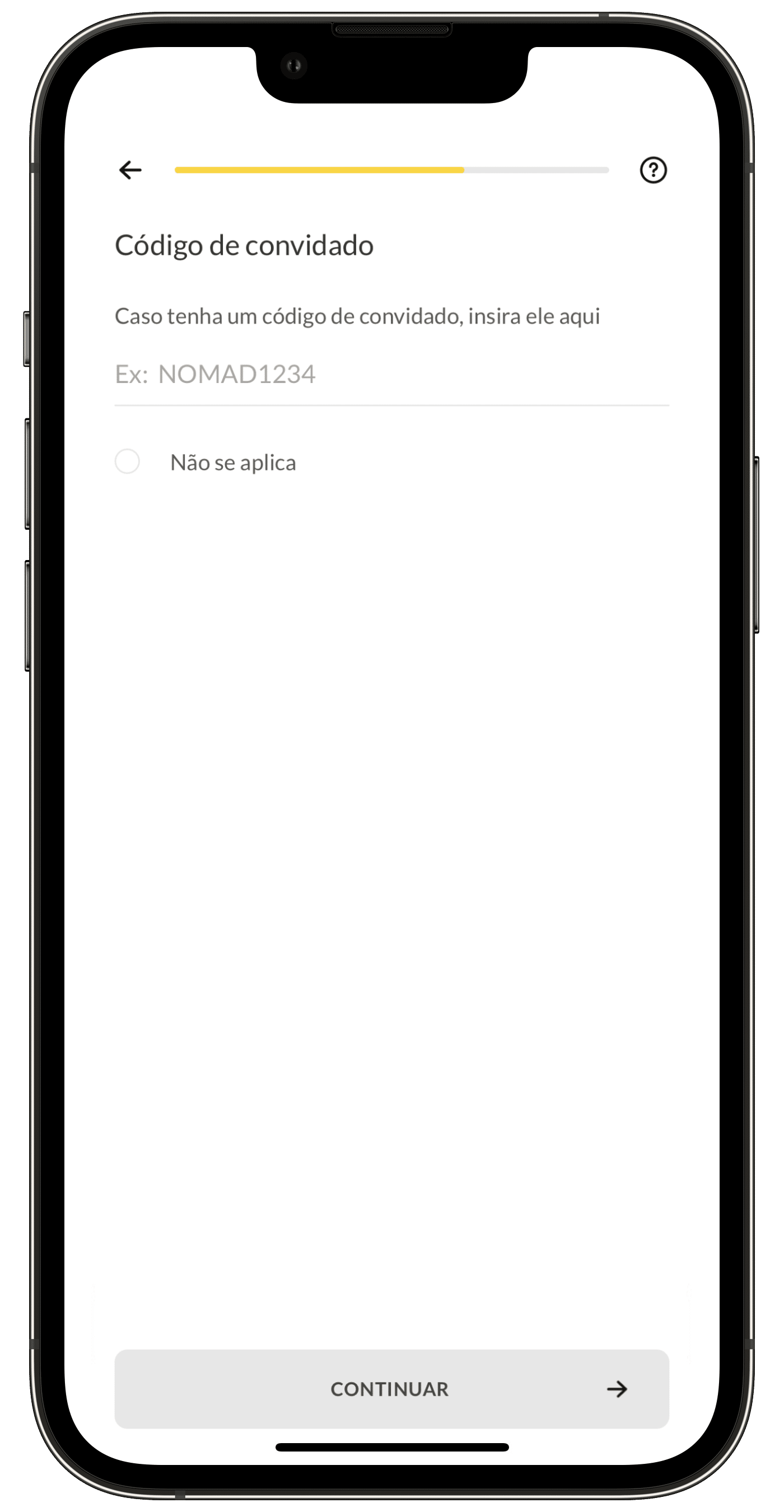
Para tal, baixe o app da Nomad e cadastre-se usando o código MAC26 no campo “Código de convidado”:
Nesta tela, digite o cupom MAC26 para ganhar 5% de cashback!
Sobre a Nomad
A Nomad foi a primeira a oferecer uma conta em dólar hospedada nos Estados Unidos, sem nenhuma taxa de abertura, anuidade ou manutenção. O cartão da empresa é aceito em mais de 180 países, oferecendo taxas bastante menores que as dos cartões de crédito internacionais.
A conta bancária da Nomad é assegurada em até US$250 mil pelo Community Federal Savings Bank, membro do fundo garantidor dos EUA (FDIC), para cada tipo de conta por titular, e permite que você faça/receba transferências de outras contas da Nomad sem nenhum custo, além de transferências para contas americanas (via Wire Transfer) e outras pagando bem menos do que as taxas cobradas nos EUA.
E não para por aí: com a sua conta Nomad você tem acesso a descontos em lojas parceiras e ainda pode aproveitar o Nomad Lounge, que concede acesso a uma das melhores salas VIP do Terminal 3 do Aeroporto Internacional de Guarulhos (SP).
Só na Nomad você tem uma conta internacional sem taxas mensais de manutenção, além de poder desfrutar de toda a praticidade e segurança que ela oferece!
NOTA DE TRANSPARÊNCIA: O MacMagazine recebe uma pequena comissão sobre vendas concluídas por meio de links deste post, mas você, como consumidor, não paga nada mais pelos produtos/serviços usando os nossos links de afiliado.
L’iPhone 18 vient de pointer le bout de son écran, mais l’iPhone 17 Pro Max n’a pas rangé les armes. Toujours aussi musclé côté performances et photo, le smartphone Apple profite désormais d’une promotion séduisante chez Amazon.

 Login