❌

Reading view

Survey links three capabilities with Indonesian welfare-data integration

A survey-based study of 246 village-level social welfare data operators found that business architecture, cross-organizational collaboration and technological readiness were positively and statistically significantly associated with perceived e-government integration impact in two Indonesian regencies. The research, focused on Gunung Kidul and Bangkalan, examined organizational, institutional, relational and technological capabilities associated with social welfare data integration. Governance and leadership and information policy did not show statistically significant direct relationships with perceived integration impact in the pooled sample.

The authors analyzed the survey with partial least squares structural equation modeling. In their framework, e-government integration impact, or EGII, represents perceived improvements in information, system and service quality, responsiveness and public trust. E-government integration scope, or EGIS, describes the breadth of integration across data, applications, electronic communication and knowledge-sharing processes.

EGII was strongly associated with EGIS, meaning that operators reporting more favorable perceived integration outcomes also tended to report broader integration. Because this was an observational analysis of survey responses, the results establish statistical relationships rather than causal effects. The findings identify three capabilities with significant direct relationships to EGII in the pooled model: business architecture, cross-organizational collaboration and technological readiness.

The evidence does not provide operational definitions for these constructs, but the results show that their measured levels were associated with respondents’ assessments of e-government integration outcomes. By contrast, governance and leadership and information policy had no statistically significant direct relationships with EGII in that analysis. This absence of a detected direct relationship does not establish that the two factors are unimportant or that they operate only through indirect pathways, because the supplied findings do not report such indirect effects.

A regency-based robustness analysis found that some relationships were sensitive to local implementation conditions. Significant differences between Gunung Kidul and Bangkan were reported for the technological-readiness-to-EGII relationship and the EGII-to-EGIS relationship. The geographic comparison therefore cautions against assuming that the same capability relationships apply uniformly across the two regencies, although it does not identify the specific local practices responsible for those differences.

Its direct contribution is to show which measured interoperability capabilities were associated with perceived integration impact in the surveyed population, alongside evidence that some relationships varied between the two regencies.

Subject of Research: Survey-based analysis of interoperability capabilities for social welfare data integration in two Indonesian regencies

Article Title: Determinants of E-government interoperability capabilities for social welfare data integration in Gunung Kidul and Bangkalan Regencies, Indonesia

Article References: Fikri, R., Purnomo, E. P., Pribadi, U., Mohamed, A. M., & Mohammad, N. B. (2026). Determinants of E-government interoperability capabilities for social welfare data integration in Gunung Kidul and Bangkalan Regencies, Indonesia. Discover Sustainability. https://doi.org/10.1007/s43621-026-04608-5

Image Credits: AI Generated

DOI: 10.1007/s43621-026-04608-5

Keywords: social welfare data, e-government, interoperability, Indonesia, PLS-SEM, technological readiness, cross-organizational collaboration, business architecture, digital governance, public services, Determinants, capabilities

  •  

Ukrainian media coverage casts land as both lifeline and danger zone

An international team led by Alexander Vorbrugg analyzed (online) media reporting on war-related land changes in Ukraine. The study asked: How is damage to land represented? What knowledge do these representations draw on? How does the war affect the symbolic meaning of land and visions of the future? How are material damage and destruction translated into the media discourse? What ideas of landscape does this create?

  •  

Study finds connected car apps and cloud services are growing security risks

The weakest part of a modern car’s digital security may sit outside the vehicle itself. A new study finds that more reported weaknesses now involve connected apps, websites and cloud services that handle information about drivers and their journeys. Researchers from the University of Gothenburg and Chalmers University of Technology examined 413 reported automotive software […]

The post Study finds connected car apps and cloud services are growing security risks appeared first on Knowridge Science Report.

  •  

NASA’s CASALS Instrument Bridges Gaps in 3D Maps of Earth’s Surface

From orbit, today’s space-based laser instruments measure Earth’s forests and terrain one narrow line at a time. Between those lines are enormous gaps that include millions of acres of land scientists never directly measure. NASA’s CASALS instrument will blend machine learning with an ultra-compact lidar instrument to adaptively ‘sweep’ large swaths of Earth’s surface. This new capability for space-based remote sensors allows CASALS to create truly three-dimensional (3D) topographical renderings. 

Video from a CASALS flight over the Great Cypress Swamp in Delaware on Nov. 12, 2024, showing tree canopy tops in green, the ground in purple, and near-ground vegetation in blue.
Credit: NASA

A team of researchers at NASA’s Goddard Space Flight Center (GSFC) has developed a new instrument designed to eliminate blind spots between lines of lidar data on the Earth’s surface. Built with support from NASA’s Earth Science Technology Office (ESTO), the Concurrent Artificially-intelligent Spectrometry Lidar System (CASALS) could help researchers map the features of Earth’s surface with unprecedented detail. Rather than mechanically steering a laser with moving mirrors, CASALS steers light using wavelength itself, generating a continuous, 3D swath of the ground below. 

John Yorks, a physical research scientist at GSFC and Principal Investigator for CASALS, explained that the instrument features a novel transmitter and optical grating system that manipulates laser pulses without heavy, failure-prone motorized mirrors. 

Instead, CASALS uses a fast-pulsing, tunable “seed” laser centered at 1040 nanometers, rapidly cycling through 256 unique wavelengths as it pulses through an optical component with a microscopic pattern of ridges called a transmission grating. 

At this point, the physics of diffraction takes over. Because light bends at slightly different angles depending on its exact wavelength, the grating naturally “steers” each of the 256 pulses into a distinct position across the flight path. 

This non-mechanical approach paints a continuous 3D swath of the ground. Not only does this eliminate the large unmapped gaps left between the isolated tracks of legacy spaceborne lidars, but stripping away moving parts drastically reduces the instrument’s size, weight, and power (SWaP) requirements. This makes it more reliable for the harsh environment of space. 

Another key innovation within CASALS is its detector array. This component features a uniquely high Quantum Efficiency (QE), a variable that describes how effectively a detector converts incoming light (photons) into an electrical signal. CASALS operates at 80% QE. This means CASALS wastes almost none of the light that makes it back to the sensor. 

With QE that high, CASALS can detect much weaker return signals, allowing it to collect useful measurements from darker surfaces or through denser vegetation. 

This technology isn’t limited to a laboratory environment. In November 2024, an airborne CASALS prototype flew aboard NASA’s B200 King Air aircraft. The instrument produced science-quality datasets on its first campaign, exceeding the team’s expectations. 

“I’m very impressed with Guang Yang, Jeffrey Chen, and all our engineers, and how well CASALS performed. This worked really well from the first time we flew it, which is pretty impressive,” said Yorks. 

Flying at an altitude of roughly five kilometers, CASALS can distinguish individual tree branches and subtle changes in ground elevation, thanks to its 22-centimeter horizontal resolution. 

“We’re able to see really fine details of vegetation structure and changes in the topography of the surface,” Yorks said. 

The team aims to fly CASALS again as part of the Airborne Surface, Cryosphere, Ecosystem, and Nearshore Topography (ASCENT) campaign, scheduled for summer 2027. 

But there’s more work to do to prepare the technology for space. The team plans to make several improvements to CASALS before creating a space-ready prototype. Specifically, they’re widening the instrument’s swath and adding onboard data processing software. 

Transitioning from a successful airborne prototype to a fully realized space mission is a challenge, but the CASALS team is up to the task. 

“The team’s really done a great job of sticking together and keeping on task and on schedule. We are being funded to optimize and improve the performance, and we’re also then looking at ways to take the technologies used in the airborne instrument and mature them and prepare them for a spaceborne version in the future,” said Yorks. 

If successful, CASALS could become the first spaceborne lidar capable of mapping Earth’s forests and terrain as continuous three-dimensional swaths rather than isolated profiles, giving scientists a dramatically more complete picture of our changing planet. 

For additional details, see the entry for this project on NASA TechPort. 

Project Lead(s): John Yorks, NASA’s Goddard Space Flight Center 

Sponsoring Organization(s): NASA’s Decadal Survey Incubation (DSI) program; NASA’s Instrument Incubation Program (IIP); NASA’s Goddard Space Flight Center; University of California, Santa Barbara; Virginia Polytechnic Institute and State University 

Share

Details

Last Updated
Oct 21, 2026
Editor
NASA Science Editorial Team
Location
Goddard Space Flight Center
  •  

New toolkit helps care homes communicate during cyberattacks

When a care home suffers a cyberattack, the problem is not limited to computers. Staff may lose access to important records while residents, families and partner organizations urgently need reliable information. A new communications toolkit aims to help adult social care providers prepare for these situations before they happen. Developed by Digital Care Hub with […]

The post New toolkit helps care homes communicate during cyberattacks appeared first on Knowridge Science Report.

  •  

Disappearing Hurricanes Leave Disappointed Scientists Without Fuel for Climate Alarm

Hurricanes in the North Atlantic have largely disappeared this year, leaving bitterly disappointed scientists without fuel for their climate alarm and having to admit the role of natural variation, says Chris Morrison.

The post Disappearing Hurricanes Leave Disappointed Scientists Without Fuel for Climate Alarm appeared first on The Daily Sceptic.

  •  
  •  

Quantum error correction goes well beyond breakeven

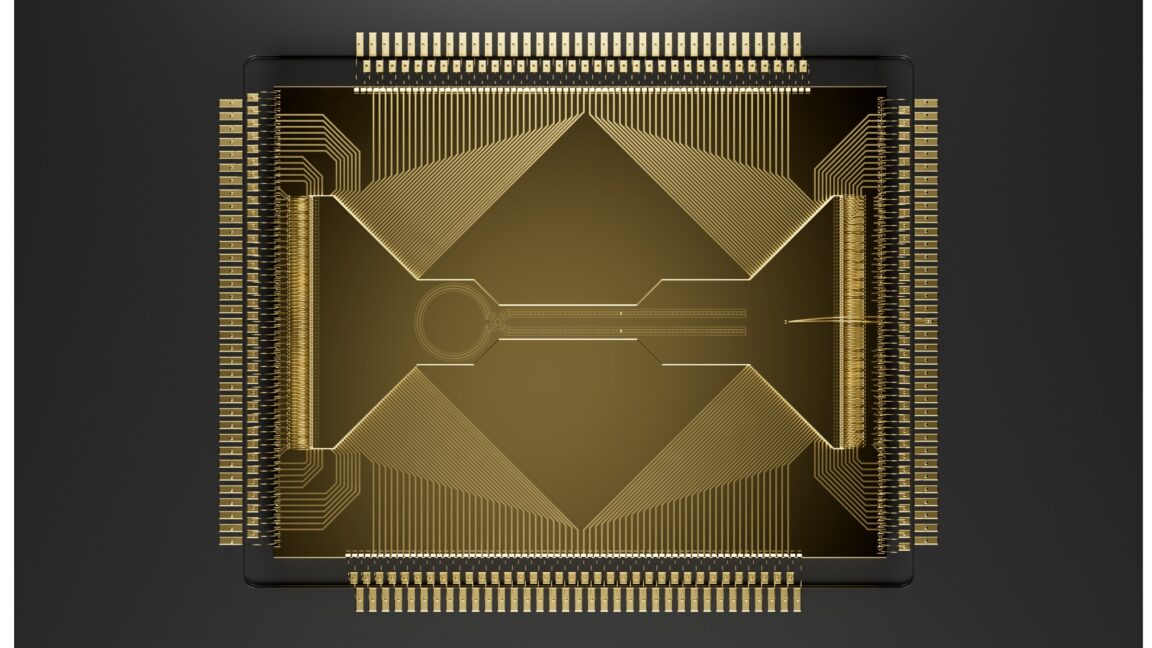
Running complicated algorithms on quantum computing hardware is going to require the use of logical qubits, where collections of hardware qubits are linked together in ways that allow errors to be detected and corrected. In general, the more hardware qubits you dedicate to each logical qubit, the better the chances are of identifying errors. But, given that the hardware qubits are prone to errors, adding more of them also increases the probability that errors will occur. If the hardware error rate is too high, then growing the logical qubit will only make matters worse.

Fortunately, several companies have demonstrated hardware where the error rate is not too high. Several demonstrations show logical qubits are beyond the breakeven point, where adding more qubits improves performance. The problem is that the improvement isn't very dramatic. To lower error rates to levels we'll need to run complex algorithms, we'd have to add a completely impractical number of qubits to each logical qubit.

On Monday, Quantinuum announced that its current generation of hardware is capable of scaling well beyond the breakeven point. Each step up in the size of logical qubits improved some measures of their performance by a factor of over 10.

Read full article

Comments

© Quantinuum

  •  

The dangers of letting tech billionaires shape our world

As SpaceX impacts Ukraine and AI-generated music divides artists and fans, critics are asking what happens when technology has too much control over our lives

Hello, and welcome to TechScape. I’m Blake Montgomery, US tech editor at the Guardian, writing to you while sitting in front of Roy Lichtenstein’s monumental Drowning Girl, on view in New York City. Today in tech, we’re discussing the perils of Elon Musk’s one-man global infrastructure, AI-generated music and a Guardian AI conference in Paris.

Continue reading...

© Photograph: Gonzalo Fuentes/Reuters

© Photograph: Gonzalo Fuentes/Reuters

© Photograph: Gonzalo Fuentes/Reuters

  •  

Ultrasound waves that jiggle deep brain structures may relieve delusions in schizophrenia, small trial hints

Stimulating the brain with ultrasound could help counter the delusions people experience in schizophrenia, a small trial finds.

The trial involved transcranial ultrasound stimulation, in which a device placed on a patient's head delivers ultrasound waves through the skull and into the brain. Its goal is to change the activity in a targeted brain region.

Delusions are false beliefs that are very difficult to shake; for example, a person might believe they are being stalked when they aren't or think that a major disaster is about to occur without any evidence to suggest so. In the trial, researchers found that a 10-minute session of the ultrasound treatment reduced the severity of delusions for at least a week in patients with schizophrenia or a related disorder.

This targeted ultrasound treatment delivered directly to the brain could avoid some of the full-body effects of antipsychotic medications, such as weight gain and high blood pressure. That said, the new results, published Tuesday (Oct. 20) in the journal npj Acoustics, are a first step and will need further verification in larger trials.

"It's too early to know for certain what the therapeutic benefits will be, but it's very exciting," study co-author Dr. Donald Goff, a professor of psychiatry at the New York University Grossman School of Medicine, told Live Science.

Targeting deep brain structures

The pilot study included 10 patients with either schizophrenia or schizoaffective disorder. In both conditions, patients experience psychotic symptoms, including delusions and hallucinations. Schizoaffective disorder also includes mood symptoms, such as mania.

The researchers interviewed each participant to characterize the content of their delusions, and also documented their cognitive state and experiences with auditory hallucinations — perceptions of sounds that aren't actually occurring. The participants then received both an ultrasound treatment and a placebo treatment, spaced one week apart.

Other noninvasive therapies — such as transcranial magnetic stimulation, which uses magnetic fields — can also stimulate the brain. But the ultrasound technique differs from these therapies because ultrasound waves can penetrate deeper into the brain with greater specificity, study co-author Shy Shoham, a neural engineer at NYU Grossman, told Live Science. He compared the way a transducer directs ultrasound waves toward a given brain region with the way a lens focuses light.

In this case, the researchers focused this lens on a brain network called the cortico-striatal-pallido-thalamic circuit, which includes structures underneath the brain's outer cortex. The relationship between this circuit and schizophrenia symptoms is still somewhat unclear, partly because its deeper components are hard to study in adequate resolution with MRI, said co-author Dr. Wei Qi, a clinical assistant professor of psychiatry at NYU Grossman. However, some past studies have suggested that this network plays a part in schizophrenia.

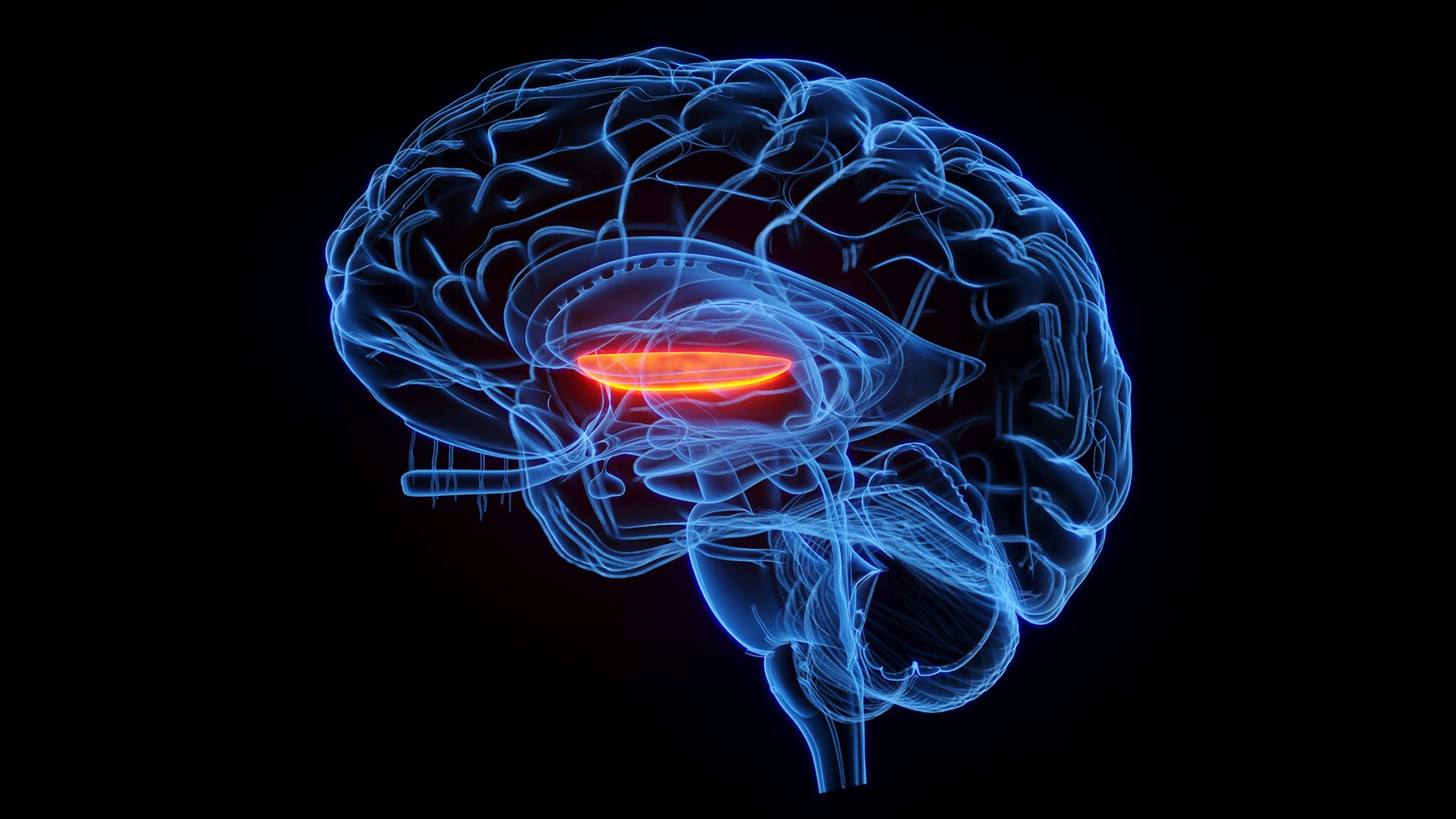
A cartoon of a transparent brain with an inner region glowing red.

The ultrasound treatment targeted a brain structure called the globus pallidus internus (orange). (Image credit: SEBASTIAN KAULITZKI/SCIENCE PHOTO LIBRARY via Getty Images)

Much of what scientists know about the network comes from research in movement disorders, such as Parkinson's disease, in which there is an imbalance between excitation and inhibition in the neurons that control movement. A similar dynamic could help to explain symptoms of schizophrenia, the scientists think.

"Our hypothesis is that, in schizophrenia, there is an imbalance between excitation and inhibition regarding what in the environment is actually important," Qi told Live Science. "The failure to inhibit irrelevant signals could be the basis of psychosis."

"Quite optimistic"

The researchers surveyed the study participants after each treatment, asking about the degree of belief each person had in their delusions and the amount of stress they caused. Compared with the placebo treatment, the ultrasound stimulation was associated with less-severe delusions over the following week. There was no significant change in patients' auditory hallucinations or overall cognition, though.

The ultrasound therapy came with mild side effects, such as fatigue and headache. Some patients had transient increases in delusions, which Qi attributed to normal fluctuations in symptoms that are expected in schizophrenia. These outcomes were just as common after the placebo treatment, so they may not be related to the ultrasound specifically.

The stimulation was aimed specifically at the right side of a brain structure called the globus pallidus internus (GPI). In a previous study, the authors found that greater connectivity between this region and another structure — the dorsal anterior cingulate gyrus — was linked to more-severe psychotic symptoms in schizophrenia. So, they made the GPI their target.

To date, "there haven't been many successful therapeutic attempts at targeting some of these deeper structures," said Dr. Deepak Sarpal, an associate professor of psychiatry at the University of Pittsburgh School of Medicine who was not involved with the study. Ultrasound waves reach brain regions under the cortex in a less-invasive manner than deep brain stimulation, in which a surgeon implants an electrode in a patient's brain, Sarpal noted.

The researchers are not the only group using transcranial ultrasound to influence the cortico-striatal-pallido-thalamic circuit. Earlier this year, another group stimulated portions of the striatum, which is located directly under the cortex, in patients with schizophrenia. They evaluated hallucinations rather than delusions, finding that the treatment reduced symptoms for at least a week after the procedure.

In this line of research, the targeted nature of transcranial ultrasound presents advantages as a research tool as well as a treatment approach.

"If we find that a specific circuit or a node in a circuit seems to be closely linked to symptoms we're trying to treat, then it will be a matter of understanding what pattern of stimulation may allow us to correct that," Goff said. Qi, Goff and colleagues now plan to continue testing their technique on more patients and to experiment with different doses of ultrasound.

"A lot more work needs to be done," Goff said, "but we're really quite optimistic about its promise."

This article is for informational purposes only and is not meant to offer medical advice.

See how much you know about the most complex organ in the human body with our brain quiz!

  •  

HPE to launch AI straight to the Moon

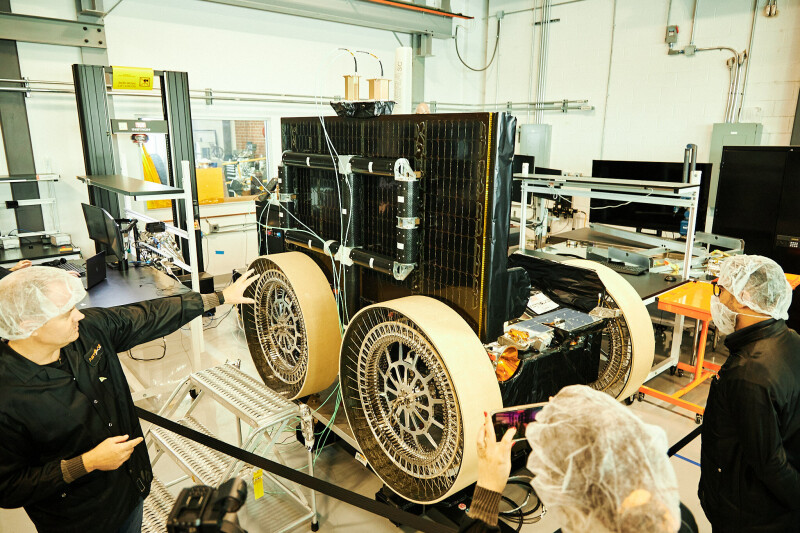
Forget space datacenters. Before the end of the year, HPE will have AI running on the Moon. This isn’t some exec’s loony fantasy either. HPE has been building orbital compute platforms for the International Space Station (ISS) for years. Now, it’s sending its fourth-gen Spaceborne Computer to the Moon aboard Astrolab’s Flex Lunar Innovation Platform (FLIP) lunar rover. Part of NASA’s Commercial Lunar Payload Services (CLPS) program, the rover is set to be deployed near the Moon’s south pole by the Voyager Technologies Griffin-1 lander later this year. Assuming a safe landing on the surface, FLIP will serve as a test bed for a range of emerging technologies including HPE’s latest space-faring compute platform. Specifically, Spaceborne Computer 4, which for the sake of brevity we’ll just call SBC4, will carry out a number of AI and HPC-centric experiments during the rover’s year long mission on the lunar pole. What we know about SBC4 so far The actual silicon powering SBC4 is still a bit of a mystery. We’re told the reason for the secrecy largely comes down to the high-risk nature of the mission. If the hardware fails, HPE’s compute partner doesn’t want their name tied to it. No guts but for the glory, we suppose, though Kioxia doesn't seem too worried. What we do know is that it is equipped with a low-power central processing unit, a graphics processor, and will be equipped with a pair of mirrored Kioxia SSDs totaling 1 TB of capacity. That said, while it'll be among the most powerful computers on the Moon, it's still a pretty small system. The FLIP rover doesn't have an unlimited power or thermal budget. The rover's radiators can only dissipate so much heat. Measuring in at around 5x10 inches and about an inch thick, while not a particularly big system, it's still large enough to house any number of existing compute platforms. For all we know, it could be powered by Nvidia’s GB10, AMD’s Xilinx Versal AI, or the guts of an old smartphone. We won't know until the thing powers up. Less of a mystery is what SBC4 will be running and where. NASA plans to run a series of tuned LLM tests on the system, including a retrieval augmented generation (RAG) system to assist with searching and interpreting onboard documents. Additionally, the system will be tasked with running machine learning algorithms against camera and LiDAR data. However, without knowing how large these LLMs are, it’s hard to infer the nature of the underlying hardware. We’re told to expect more details about the chips powering SBC4 once it’s up and running. Alongside AI, SBC4 will also run several high performance computing (HPC) benchmarks designed to push the system to its limits. These benchmarks include high performance Linpack (HPL) and high performance conjugate gradient (HPCG), which means HPE and Astrolab will soon hold the distinction of the first Top500 submission made from a celestial body. Not only do HPE’s systems power some of the fastest supercomputers on Earth, but they could soon hold the number one spot on the Moon — not that that’s a particularly high bar. Beyond bragging rights, a workload like HPL could have other benefits like helping to keep the rover from icing over during the roughly 14-day-long night cycles the rover will repeatedly endure over the course of its mission. Hardening SBC4 for the Moon The Rover and by extension SBC4 will have to contend with extreme vibration stresses during launch and landing, wild temperature swings, not to mention cosmic rays and solar radiation since the Moon lacks the thick atmosphere and magnetic field that shields terrestrial compute. But, as it turns out, radiation might not be as big a problem as you’d think. According to Fernandez, SBC4 is largely assembled from off-the-shelf components, including the solid state drives. The compute platform is using standard Kioxia BG6 M.2 drives with the main line of protection being a software RAID 1. “It’s a silent mirror. The boot order is to try this and if something has happened to it, go here,” Mark Fernandez, HPE’s chief scientist of space tech and solutions, explained. “With our nine years' experience in the Space Station using drives, we’ve even convinced them we don’t need to do anything special for space.” However, this wasn’t always the thinking. As we reported at the time, early Spaceborne Computers suffered from high SSD failure rates. But as it turned out, so did the same drives deployed terrestrially. The cause of the failures wasn’t cosmic rays or energetic particles from the Sun, but rather bad capacitors, he explained. “I’ve had zero SSD failure since 2019.” While off-the-shelf electronics are surprisingly radiation resistant — at least within FLIP’s mission parameters — HPE has invested heavily in software based redundancy and recovery. Fernandez calls this “hardware hardening in software.” The idea being that the spare CPU cycles are used to continuously monitor and compare hardware metrics against a state table. If a parameter exceeds the specified threshold, SBC4 will take action to protect itself. “At a high level, I say, I like to be running at full speed. I can't do that. I'll run at a slower speed. If I can't do that, I'd like to be booted, but not running anything, and then maybe the server will recover. And worst case, I'd like to be powered down rather than get destroyed,” he explained. At the edge of the edge FLIP is primarily intended as a proof of concept vehicle, which is to say it’s a test bed for technologies that may eventually find their way to the Moon on other missions. The inclusion of SBC4 reflects the realities of operating at the far edge of Earth’s orbit. The latency between Earth and the Moon is nowhere near as bad as Mars's up to 44 minute round-trip communication time, but even 2.5 seconds makes real-time control from Houston, or in this case Astrolab’s mission control, which by the way is also powered by HPE's Greenlake Private Cloud stack, in Hawthorne, California a bit unwieldy. Further complicating matters is the bandwidth afforded the rover. When Artemis 2 traveled around the Moon earlier this year, astronauts weren’t able to send back high-res photographs in real time due to the lack of bandwidth. It was only after the mission was on its way back to Earth that they were able to establish a big enough pipe to transmit the full-res images. For this reason, SBC4 is designed to operate “at the edge of the edge,” Fernandez said. Given the bandwidth constraints, it’s far easier to process as much of the data and telemetry gathered by the rover’s array of cameras, lidars, and environmental sensors locally. “It’s important to ship back insight to Earth rather than all the raw data whenever possible. So having the edge compute capability to process the raw data locally, save on bandwidth back to Earth,” Astrolab CEO Jaret Matthews said. Matthews isn’t the only one to share this perspective. Earlier this year, Nvidia CEO Jensen Huang described the challenges and opportunities of space-based computing with analysts during the company’s Q1 earnings call. "There are many different computing problems that really want to be done in space," he said at the time. "One of the best use cases of GPUs in space is imaging. To be able to do imaging at very large, very high resolutions, extremely large scales and very, very fast, it's hard to do that by sending petabytes and petabytes of imaging data back here on Earth and doing that work, it's easier just to do it out in space." Though others' ambitions are far greater. Google, Amazon, and SpaceX are all touting orbital datacenters powered by the Sun as the answer to terrestrial power constraints — Elon Musk wants you to believe he'll eventually be manufacturing deep-space datacenters on the Moon and lobbing them into the far reaches of the solar system using mass drivers — the economics of getting those bit barns into low Earth orbit remain unproven and so far unviable. Despite this, executives and administrators at HPE, Astrolab, Kioxia, and NASA believe that space-based datacenters are still feasible long term. FLIP HPE’s Spaceborne Computer 4 will be one of several payloads aboard the FLIP rover. FLIP will be the largest rover launched by the US since the Apollo program’s manned Moon buggy. And it is by no means small. Designed by Astrolab while measuring roughly 7 feet (2.13 meters) in length and weighing about half a ton, the rover is packed to the gills with cameras, sensors, and even a projector which will eventually be used in place of LCDs on future manned missions to the lunar surface. For FLIP’s purposes, it’ll mostly be used to project partners' logos onto the Moon’s surface as a sorta advertising gimmick to keep the lights on back at Astrolab’s facilities in Hawthorne while it works on its FLEX rover, which Matthews characterizes as a sort of F150 or Caterpillar tractor for the Moon. Beyond the scientific equipment, solar panels, and radiators, arguably FLIP’s most striking feature is its disproportionately large wheels. Developed by Venturi Space, along with the rover’s battery pack, these wheels are designed to function much like a pneumatic tire, just without air or rubber. Their size is also intentional. The same wheels found on FLIP are intended for use on NASA’s CLV-1 rover, which is slated to launch in 2028. Much like FLIP offers HPE as a proving ground to test its lunar compute platform, the rover will do the same for Venturi’s wheels. Spaceborne Computer 4 and FLIP are slated to launch aboard a SpaceX Falcon Heavy rocket later this year and will fly to the Moon’s south pole by Astrobotic’s Griffin-1 lander. Griffin is classified as a medium class lander measuring roughly 15 feet around and 6.5 feet tall (that’s about 4.5 and 2 meters for those of you living in a nation civilized enough to use metric outside the sciences). The lander is equipped with seven main engines responsible for everything from trans-lunar injection, trajectory correction, lunar orbit insertion, and powered descent to the surface. Four clusters of attitude control thrusters, meanwhile, will (hopefully) keep the thing pointed the right way up. FLIP is expected to touch down near the Mons Mouton area along the edge of the South Pole before the end of the year. ®

  •  
❌