❌

Reading view

Sci-fi legend Alan Dean Foster on his new futuristic adventure 'Lost On Paradise': 'It's paradise until you get there, and then maybe you mess it up' (interview)

Few names in the science fiction literary world carry as much weight and respect as author Alan Dean Foster. His award-winning 55-year career as a grandmaster of the genre continues with his latest novel from Blackstone Publishing, "Lost on Paradise", and we have an exclusive excerpt to share with our readers ahead of its release this week.

Foster famously ghost-wrote the first "Star Wars" novelization for George Lucas in 1976 and "Splinter of the Mind’s Eye" in 1978, which was intended to be a low-budget Star Wars sequel should the space opera not become a hit. He’s been a mainstay for go-to fantastic adventures featuring engaging characters, dynamic plotlines, and imaginative worlds for six decades.

In addition to crafting the screen story for "Star Trek: The Motion Picture," Foster also wrote the novelizations for the first three "Alien" films, Disney's "The Black Hole," John Carpenter's "The Thing," "The Last Starfighter," "Star Trek," "Transformers," "Terminator: Salvation", and many more.
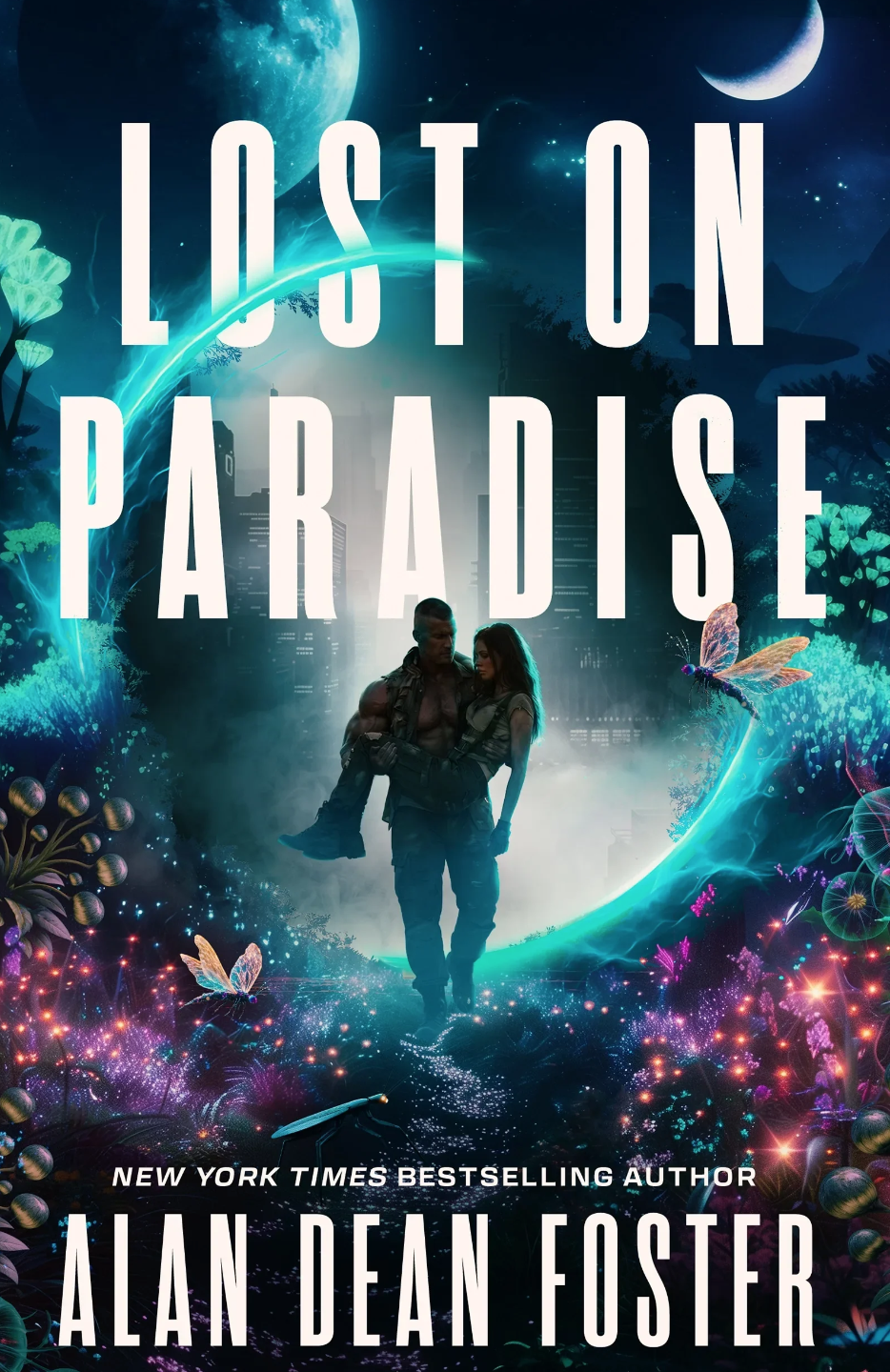
Lost on Paradise by Alan Dean Foster: $19.99
New York Times bestselling author Alan Dean Foster, master of both action and emotion, reveals a world where everything is perfect, but nothing is as it seems…View Deal

The near-future, off-world escapades of "Lost On Paradise" are the latest addition to Foster’s acclaimed bounty of bestselling standalone novels and series, including the popular "Spellsinger" series.

"Earth is crowded, polluted, and dismal," states the novel's synopsis. "Like millions of others, Jonos and Liina scrape by on her poorly paying job and what little money he gets selling items scavenged from rich people’s trash. Like millions of others, Jonos and Liina dream of Paradise.

The colorful cover of a science fiction novel

A brilliant cover design heralds the arrival of Alan Dean Foster's latest novel (Image credit: Blackstone Publishing)

"Paradise: a beautiful, clean, verdant world where three races live in harmony—at least, according to the videos sent back to Earth. There are the Eiquan, masters of astonishing technology; the Lusanata, hunters and farmers; and humans, who may be restricted to a few scattered settlements, but still live a life ten times better than those on Earth.

"On the run after a criminal act, Jonos and Liina finally escape to Paradise. It's everything they hoped for. Until tragedy strikes."

The genesis of Foster's "Lost on Paradise" is something that’s been percolating in his fertile mind for many years.

"I had this notion of a planet called Paradise where everything is perfect, and everything on Earth is seriously messed up," Foster tells Space. "There’s this couple who have problems; they’re poor like everybody else.

"And you have a unique male protagonist because he recognizes that his female partner is smarter than him, so she’s the brains of the outfit, and he supplies the muscle. Although he's not stupid. Too often you get a big, hulking guy with no brains. But she has a potentially fatal disease, and they’re trying to get away like a lot of poor people in the world today. So here's a place called Paradise. How do you get there? It’s expensive and difficult. And what happens if they do? Maybe Paradise isn’t always Paradise."
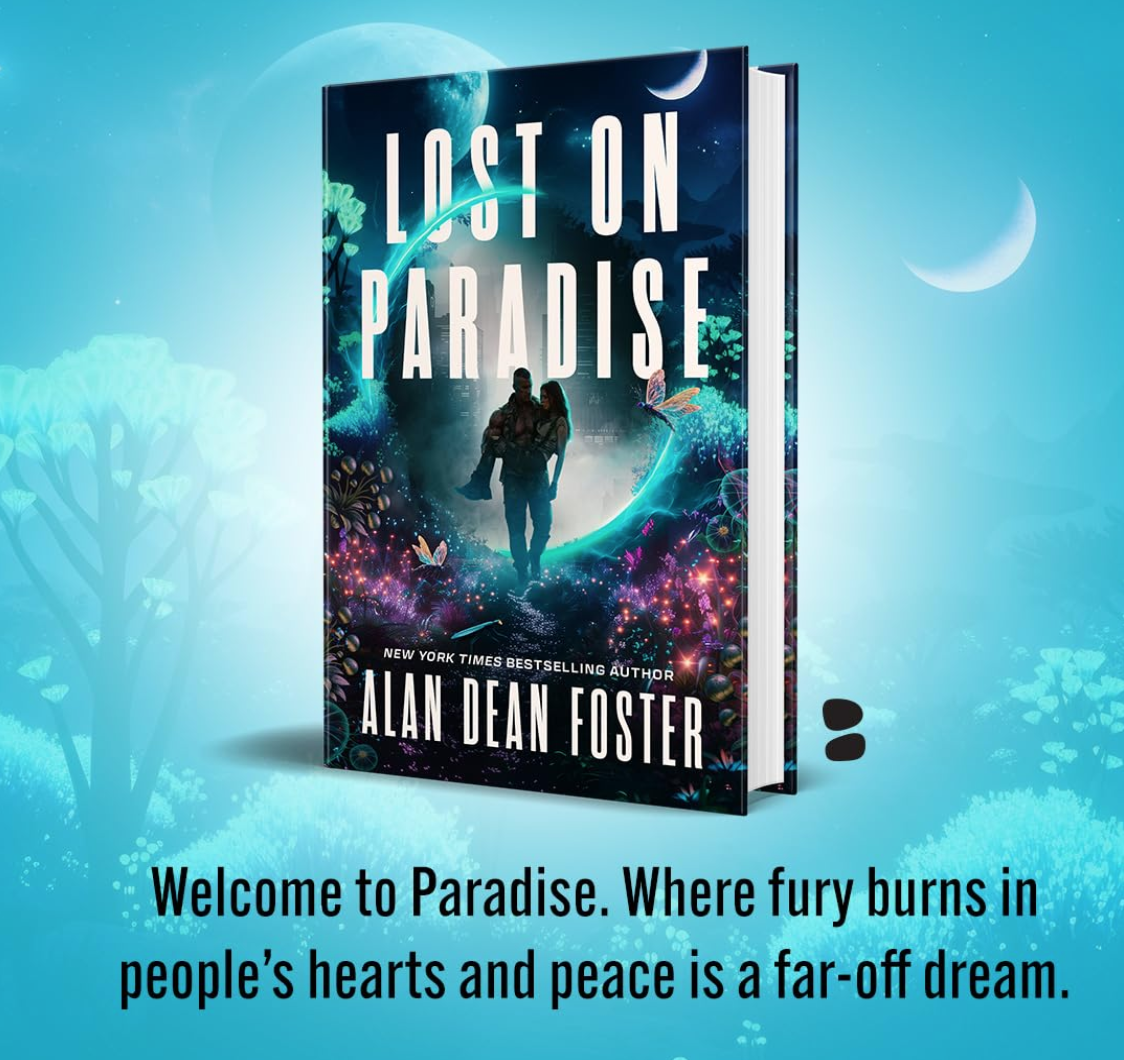
a promo poster for a new sci-fi novel

"Lost On Paradise" lands on Oct. 20, 2026 from Blackstone Publishing (Image credit: Blackstone Publishing)

In crafting a deteriorating New York some 150 years or so down the calendar, it was important to stay sharp regarding developments that pop up in the news to avoid any internal logic conflicts.

"You just don’t want to get caught out by a scientific development that you postulate is near future when it's actually contemporary," explains Foster. "So I was very careful with that. But as you’re building out an alien environment and one that’s supposed to be perfect and beautiful, and then there’s maybe some things about it that aren’t, what do you introduce to show that?

"You don’t want to contradict yourself when you’re worldbuilding. That's a large problem that’s unfortunately common in science fiction," notes Foster. "Where somebody is breathing air, and suddenly they’re breathing methane, and it just doesn’t work. There’s a lot of different variables that come together that prove that Paradise is Paradise in some ways and not in others. A good example would be when the first Europeans reached Tahiti. The problem was that the people who entered this Paradise brought venereal disease and smallpox, to which the Polynesians had no resistance. So it's Paradise until you get there, and then maybe you mess it up."

Now enjoy our exclusive chapter excerpt from Alan Dean Foster’s "Lost On Paradise." Published by Blackstone Publishing.

Why shouldn’t a man and a woman in his and Liina’s position try to get to Paradise? Jonos mused as he treaded his way homeward. Though morning continued its ascent, the sun did not. Or so it seemed, when the omnipresent pollution often rendered day as dark as night. The gloom was useful for masking scavenging activities and for concealing one’s identity. It was less suitable for more plebian activities such as breathing and eating. Or living. Life on Earth sucked.

But on Paradise…

To emigrant humans it went without saying that Paradise was aptly named. Everyone had heard the stories. On Paradise a person could breathe freely. Without a mask, without fear of needing lung implants, without having to worry about inhaling a soupçon of strychnine or similar industrial pollutants. On Paradise food was plentiful and fresh, water devoid of contaminants. There was work, too, for anyone willing to adapt to entirely new surroundings, for those willing to acknowledge the much-talked-about overlordship of the dominant species. For arrivals willing to submit to the experimental, ever-evolving social structure, and to the limitations that were placed on newcomers, the technologically superior Eiquans professed an indifference that amounted to a willing welcome.

Or so the compendium of hugely diverse anecdotes insisted. That’s all they were, Jonos knew. Stories and speculation, rumors and conjecture. Ignoring the spotty rain that had begun to fall, he turned a corner and nearly ran over a couple who scrambled to get out of his way. The man he had accidentally jostled started to say something, quickly realized the size of the individual he was about to chastise, and mumbled on his way, dragging a woman—likely his wife—with him. Jonos paid them no mind. Half of him was engaged in navigating his way home, the other half in dreaming of what Paradise might actually be like.

In truth, he had never met anyone who had actually been to Paradise. He had never met anyone who knew anyone who had been to Paradise. That did not make the distant world any less real. The media periodically released vits and images of the place. These showed an Earth-like planet swathed in an atmosphere perfectly suitable for humans. The indigenous wildlife was fascinating, the few but thriving, improvised communities intriguing, and the rarely seen Eiquans themselves tall, gracile, and sophisticated. So what if they weren’t humanoid? They were bisymmetrical, anyway, highly intelligent, and by all accounts no worse than indifferent to the interests of other species. So beautiful and graceful was their slender physicality, so mellifluous their speech, that even though they were quite alien the idea of living among them held no fear for Jonos.

Anything, he knew, would be a step up from Earth.

Lost on Paradise by Alan Dean Foster: $19.99
New York Times bestselling author Alan Dean Foster, master of both action and emotion, reveals a world where everything is perfect, but nothing is as it seems…
  •  

‘I’m always being real’: what on earth persuades disgraced people like Elizabeth Holmes to let the cameras in?

With You Can See Everything, Holmes joins other such high-profile subjects as Lance Armstrong, Imelda Marcos and Anthony Weiner to allow film-makers to document their lives. But do they ever come out well?

In You Can See Everything, convicted fraudster Elizabeth Holmes invites film-makers Nathan Fielder and Lance Oppenheim into her home in a supposed act of “radical transparency”. Holmes is filmed, along with her partner, Billy Evans, and their two young children, in the weeks before starting a prison sentence for defrauding Theranos investors. “The best way for people to see who she is,” Evans says, “is to give as much access as possible into our daily lives”. It may also be the best way to market “Theranos 2.0”, which the couple are working on during filming. But the documentary questions whether Holmes is presenting her authentic self or a manufactured persona. Fielder speaks for the audience when he asks Holmes in a tense exchange whether she’s “being real” with him. “I’m always being real,” she says.

That question of authenticity is at the heart of documentary film-making. You Can See Everything is as much about the ambiguous relationship between film-maker and subject as it is about Holmes herself. There is often a power struggle over narrative control in documentaries, with both sides of the dynamic wanting different outcomes from the final film. Watching You Can See Everything inevitably prompts the question: why would Holmes, days before she heads to jail, invite the scrutiny of a film crew?

Continue reading...

© Photograph: Courtesy of A24

© Photograph: Courtesy of A24

© Photograph: Courtesy of A24

  •  

New prize launches for books co-written with AI

After months of controversy over the possible use of AI by winners of prestigious awards, the Prix Pascal de Littérature IA is rewarding fiction written with the help of LLMs

A prize for AI-written books has launched this week.

The Prix Pascal de Littérature IA invites submissions of manuscripts co-written with AI tools, with the winner promised publication.

Continue reading...

© Photograph: Cheng Xin/Getty Images

© Photograph: Cheng Xin/Getty Images

© Photograph: Cheng Xin/Getty Images

  •  
  •  

Can’t make it to the Lucas Museum of Narrative Art for the 'Star Wars' display? This is the companion book set you’re looking for!

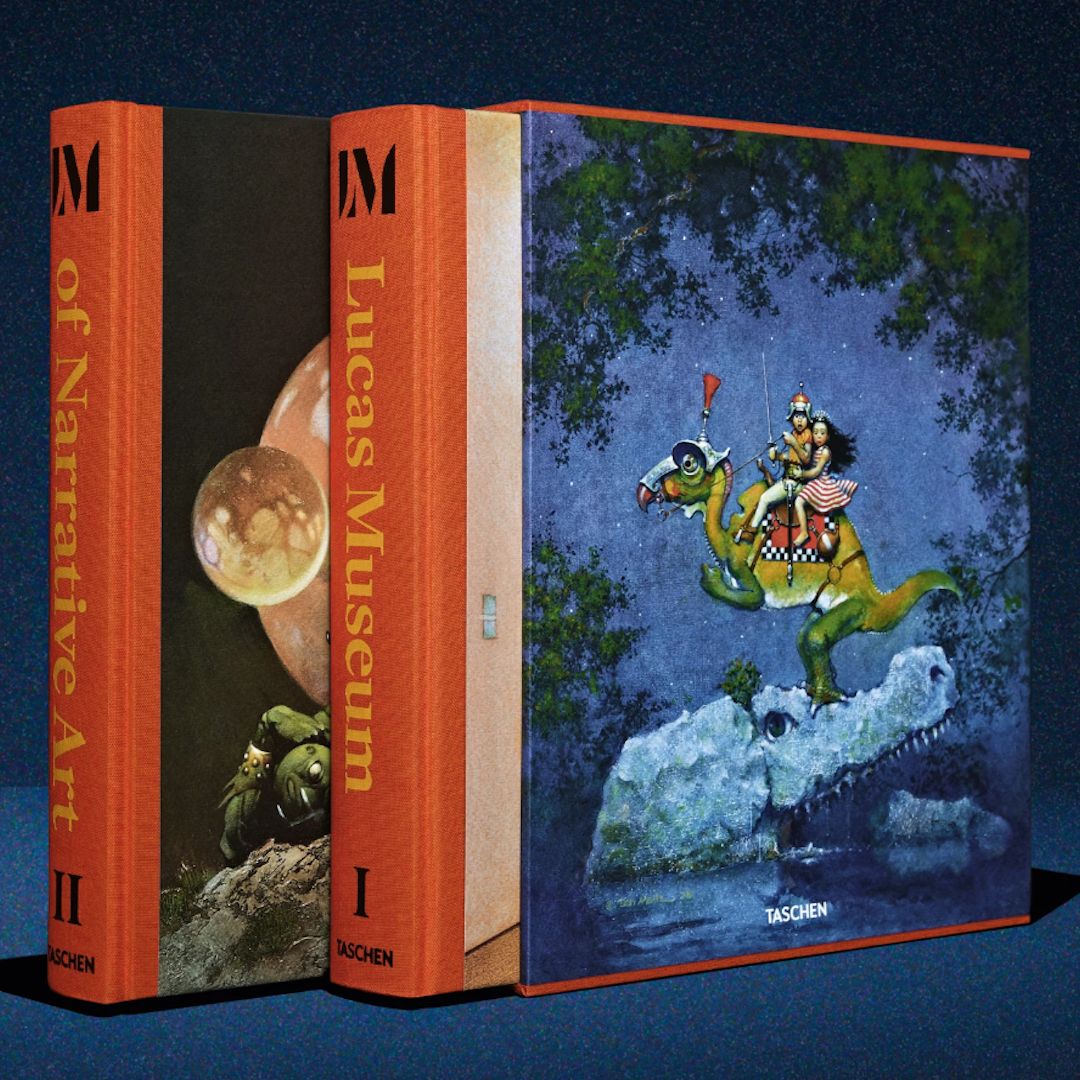
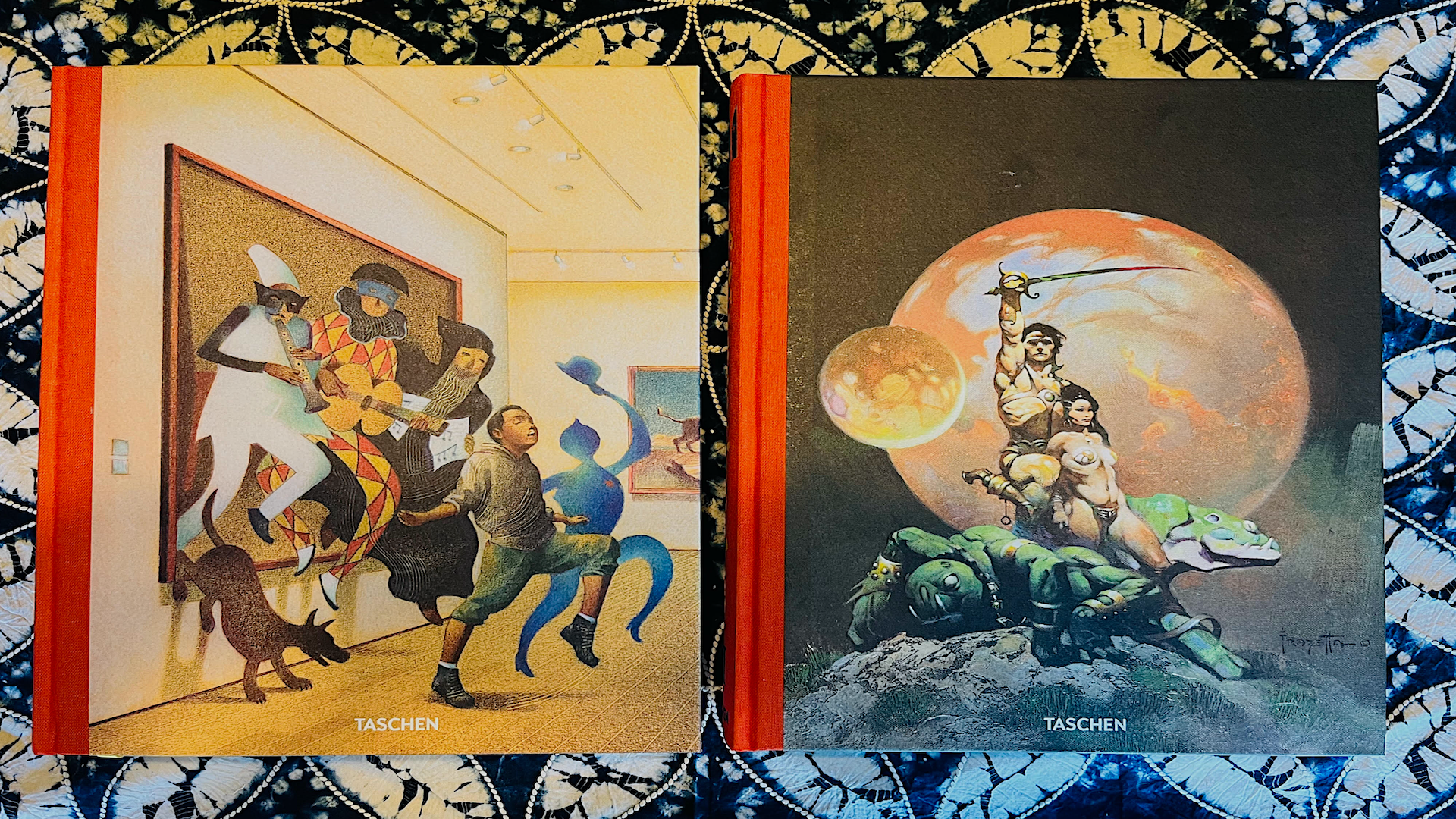
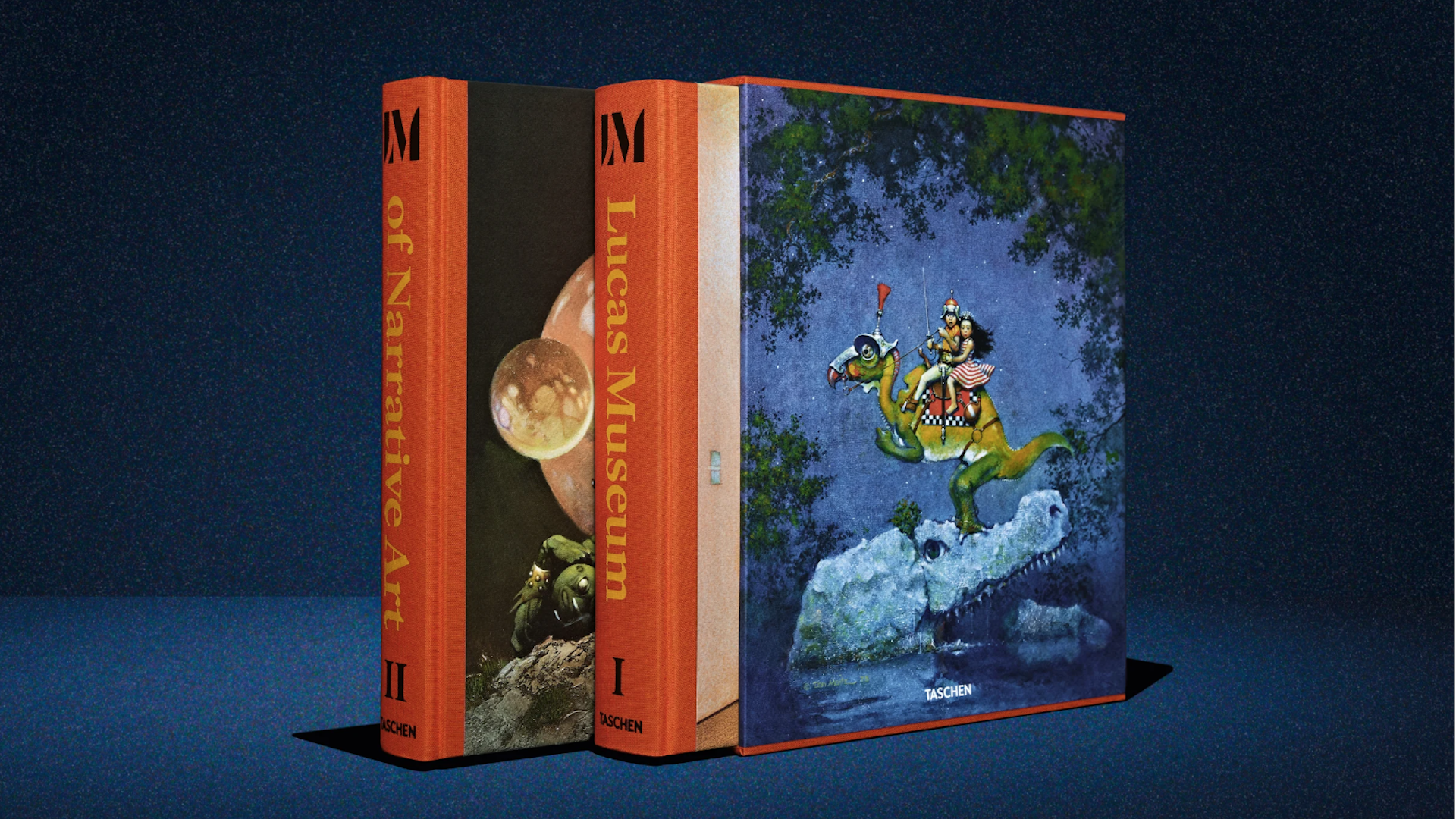
Taschen, purveyors of fine art and design special-edition books, have teamed up with George Lucas and his newly opened Lucas Museum of Narrative Art in Los Angeles to present a masterful two-volume catalog of the museum’s illuminating offerings.

Housed in a sturdy slipcase, readers will discover a pair of lavishly illustrated volumes spanning 832 pages and tipping the scales at nearly 14 pounds. At $200 for the pair, it's not cheap, but look on the bright side; hoisting these illustrated tomes will save you a subscription to your local gym!

This immersive collection documents in great detail the astounding scope of rare items on display in Lucas’s treasury of paintings, murals, photographs, sculptures, posters, comic strips, illustrations, costumes, and magazine covers that have spurred humankind’s imagination.

Developed in collaboration with George Lucas and the Lucas Museum of Narrative Art, this extensive two-volume catalog brings together an unparalleled collection of narrative art.View Deal

We'd absolutely recommend checking out the Lucas Museum of Narrative Art in person if you can.

Our own Chelsea Gohd visited the Los Angeles-based museum ahead of its opening in September 2026 and adored it. But if you're not a California local, getting lost in this collection's glossy pages is the next best thing to roaming the museum exhibitions on a rainy afternoon.

two deluxe volumes of special edition books

Volumes I and II of Tashen's stunning "Lucas Museum of Narrative Art" edition (Image credit: Taschen)

Far beyond a mere companion to the marvels inside the fantastic spaceship-shaped building poised near the University of Southern California campus — the same institution where Lucas attended film school in the late 1960s — these bold editions are an adventure in their own right.

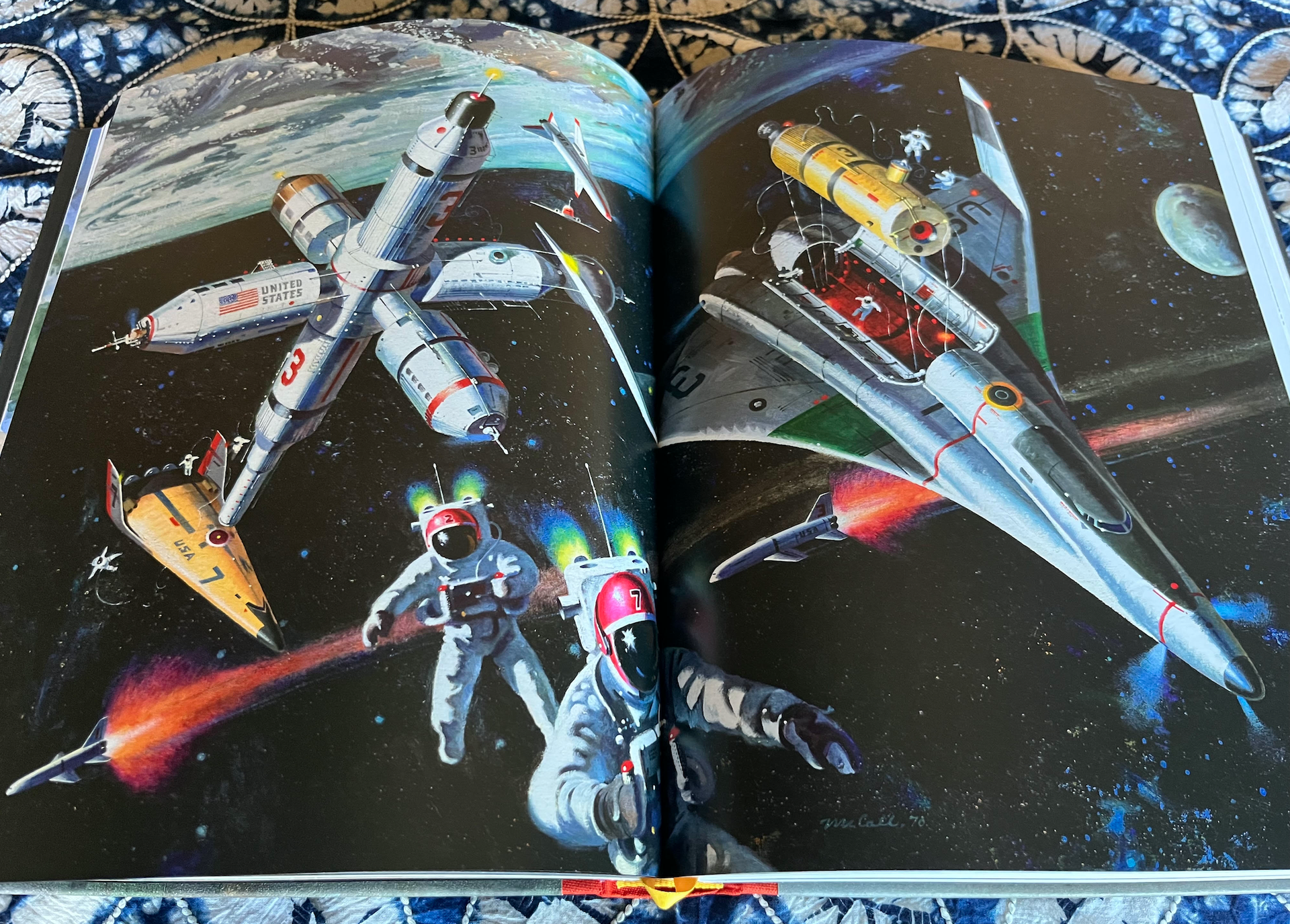
Waiting to be absorbed is an impressive assortment of storytelling expression that showcases beautiful works by everyone from Maxfield Parrish, N.C. Wyeth, and Norman Rockwell to Frank Frazetta, Jack Kirby, and Ralph McQuarrie. Lucas and his wife, Mellody Hobson, curated the museum’s contents that represent decades of collecting narrative art in all of its forms.

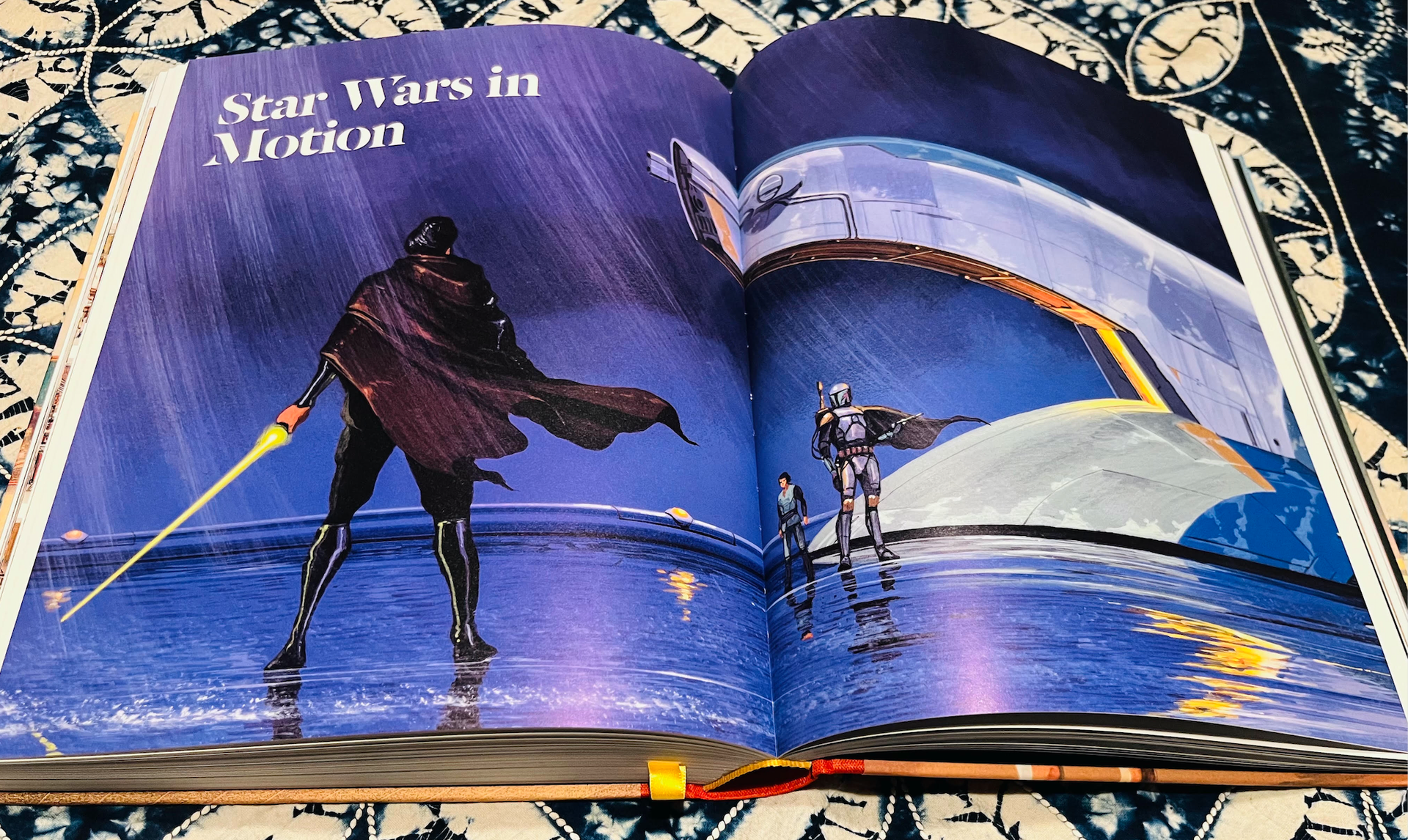
an open book with pages depicting space art

From Taschen's "Lucas Museum of the Narrative Art" catalog (Image credit: Taschen)

Our friends at Taschen were gracious enough to send us one of these Lucas Museum of Narrative Art special editions, and in unboxing this magnificent pair of books, one can feel the quality in the deluxe binding and thick covers. Inside you’ll find an eye-popping array of full-color photography and sharp descriptions for hundreds of artworks, all hand-picked by Lucas and Hobson.

Lucas himself delivers the preface, which is titled "The Art of Story," where he professes his love of art, myth, anthropology, illustrators, and cinema. He recalls when he came to meet his mentor, Professor Joseph Campbell, and how he amassed 40,000 pieces of art beginning when he was a student at USC.

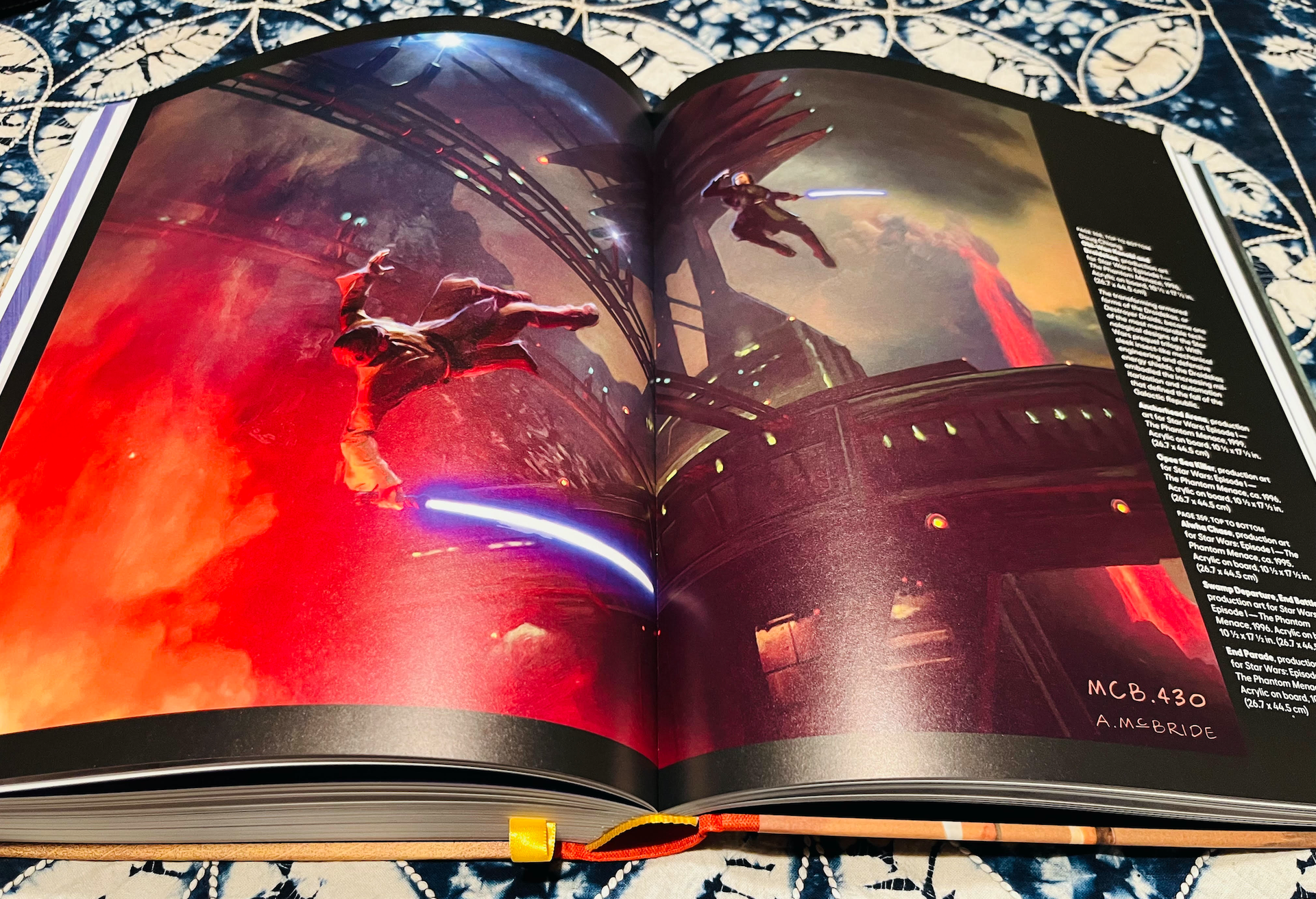
an open book with pages of sci-fi art

From Taschen's "Lucas Museum of the Narrative Art" catalog (Image credit: Taschen)

The great director Guillermo del Toro provides a heartfelt foreword praising the importance of the museum and these prestigious companion volumes depicting a multitude of visual wonders.

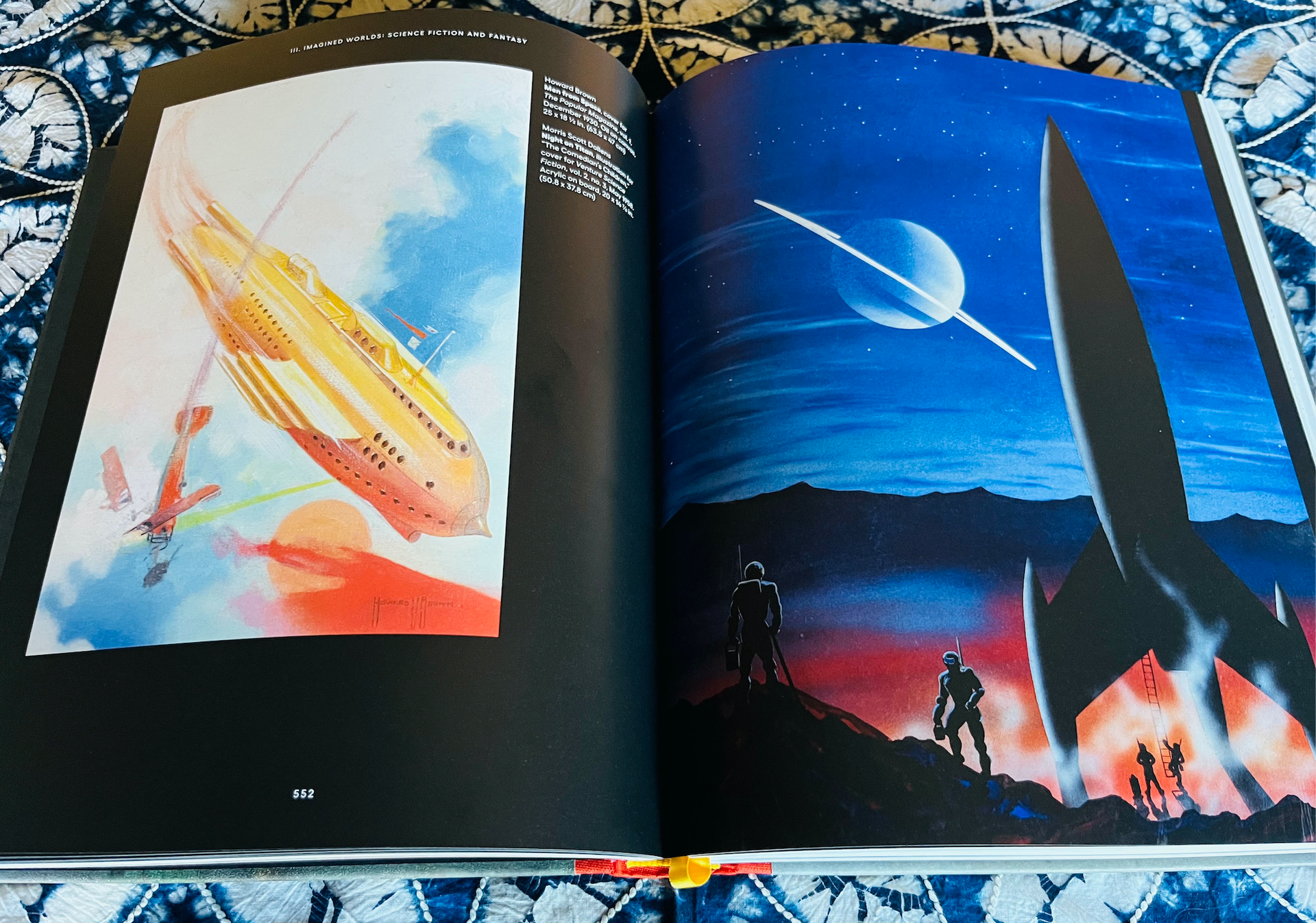
Between the duo of volumes, sections are divided into chapters dealing with topics such as history, children's stories, the American West, everyday life, romance and adventure, photography, science fiction and fantasy, and, of course, Star Wars in Motion.

an open book with pages depicting sci-fi art

From Taschen's "Lucas Museum of the Narrative Art" catalog (Image credit: Taschen)

They take you on an overwhelming journey through the gallery’s incredibly diverse holdings, not least of which are archival items and concept art chronicling Lucas's involvement in the galaxy far, far away.

This remarkable "Star Wars" section will be of particular interest to sci-fi aficionados, as it contains 100 pages of original props, paintings, concept artwork, costumes, models, and digital renderings created by some of Lucasfilm and Industrial Light and Magic’s best and brightest talents.

an open book with sci-fi art on the pages

From Taschen's "Lucas Museum of the Narrative Art" catalog (Image credit: Taschen)

Taken with the rest of the 832 combined pages of Taschen's ambitious release that fully captures the dizzying breadth of the Lucas Museum of Narrative Art, it's a brilliant keepsake to spark your soul and imagination.

The Lucas Museum of Narrative Art two-book collection is available now via Taschen's website and Amazon.

Developed in collaboration with George Lucas and the Lucas Museum of Narrative Art, this extensive two-volume catalog brings together an unparalleled collection of narrative art.View Deal

  •  

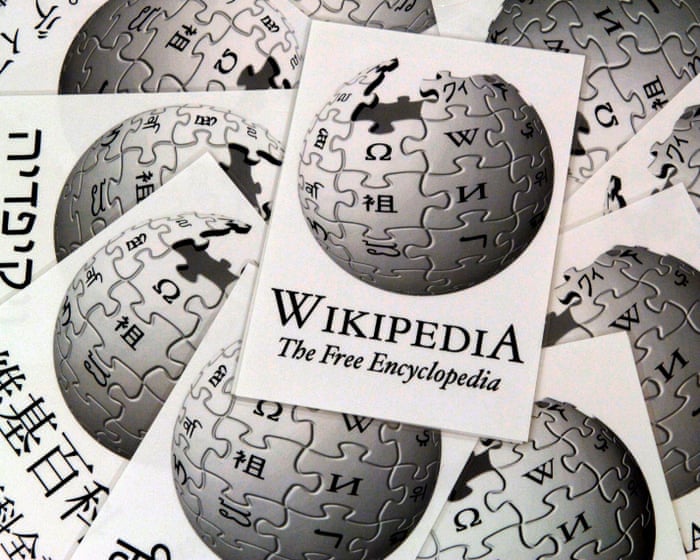
Wikipedia often gets taken for granted – but its history is fascinating, and its future is fragile

Wikipedia’s 68m articles have been consulted trillions of times. Not bad for a website that has barely changed since it was founded 20 years ago

A few years ago, I was struck by the tension between how Wikipedia was used, and how it was talked about. Everyone was on it all the time, and yet its reputation had stalled at “don’t trust it”, because it was the “free encyclopedia that anyone can edit”.

Clearly people were trusting it, so much so it had become part of the fabric of everyday life since it was founded by Jimmy Wales and Larry Sanger in 2001. But despite the fact it now has been consulted trillions of times by billions of people (English Wikipedia alone is 5.2bn words long), it inspires an odd lack of curiosity. Even people donating to Wikipedia might say the money was “for the factcheckers”, though there aren’t any – not paid ones, anyway. Meanwhile, the internet in the social media era had begun to feel like a much uglier place, and some digital nostalgia was setting in: here was this holdover that had somehow survived; a website that functions – and even looks – much the same as it did 20 years ago.

Continue reading...

© Photograph: Boris Roessler/EPA

© Photograph: Boris Roessler/EPA

© Photograph: Boris Roessler/EPA

  •  

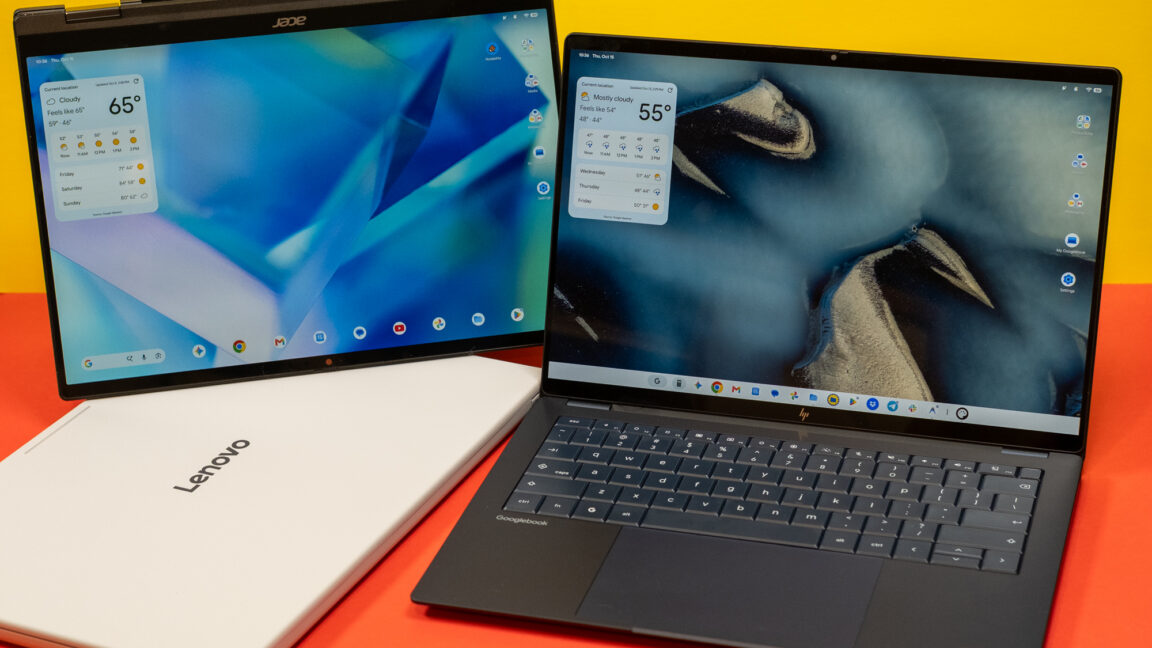
Googlebook review: Android on a laptop is still Android

Android was designed for phones, but that hasn't stopped Google from trying to adapt the OS and its apps to larger machines over the years. Googlebooks are just the latest attempt after tablets, Chromebooks, and foldables induced little change in how people interact with Android software. These new Android-powered laptops are designed to pick up where the web-focused ChromeOS left off, offering premium hardware and native support for Android apps.

Google sees Googlebooks as an alternative to Windows and macOS, but these platforms are entrenched with decades of software and UI conventions that keep users locked in. Googlebooks have to offer something very special to steal users away from either of the dominant operating systems.

For devoted Android phone users, there are some cool things in Googlebook OS, but the Android roots of these machines are impossible to miss. Sometimes it feels like using a Chromebook, and sometimes it feels like using a giant phone. It almost never feels like using a premium laptop, and that's the problem.

Read full article

Comments

© Ryan Whitwam

  •  
❌