Um tópico aberto recentemente no fórum de suporte da Withings indica que a empresa adotou uma estratégia no mínimo questionável no que se refere à sincronização automática de dados obtidos por seus dispositivos com o aplicativo Saúde (Health), da Apple.
Desde o dia 13 deste mês, qualquer nova conta da Withings precisa de uma assinatura do serviço Withings+ (que custa nada menos que R$50/mês ou R$500/ano) para realizar essa sincronização — algo que foi confirmado ao usuário pelo time de suporte da empresa.
“Qualquer conta criada depois de 13 de outubro precisará de uma assinatura do Withings+ para exportar dados”, disse o suporte da empresa, que justificou a mudança alegando “motivos de segurança” e a existência de um conector de inteligência artificial.
Como bem observado pelo usuário que fez a reclamação, sincronizar dados com o app Saúde é algo que acontece localmente no dispositivo com uma chamada básica de API 1Application programming interface, ou interface de programação de aplicações. e não requer qualquer custo com servidores ou conectores de IA para a empresa responsável.
Embora os usuários ainda possam exportar manualmente seus dados em um arquivo CSV, convenhamos que isso não é nada prático para quem está chegando agora ao ecossistema da Withings — a contrapartida é ser obrigado a pagar bem caro por algo que pode ser implementado de maneira simples.
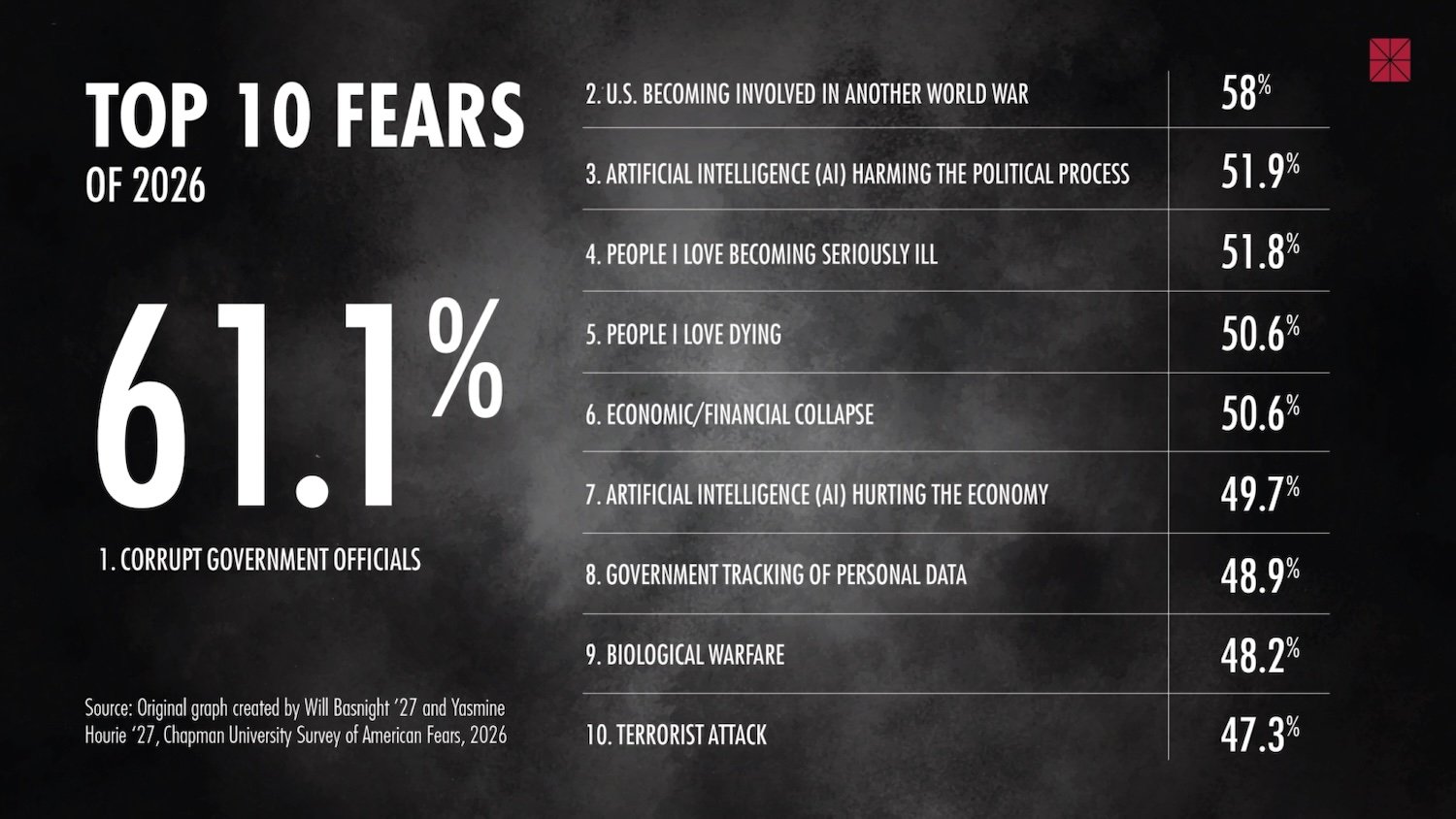
First conducted in 2014, the recurring questionnaire tracks yearly anxiety trends that often range from everyday concerns to existential terrors. This year, 61.1 percent of over 1,200 respondents once again cited “corrupt government officials” as their biggest fear—the same subject was last year’s number one entrant as well as its 11th year on the list. After that, it’s the fear of another world war (51.9 percent). However, “AI harming the political process” wasn’t too far behind for third place at 51.9 percent. The technocentric worry is now essentially tied with the fear of loved ones becoming gravely ill (51.8 percent).
Government corruption is once again at the top of the list. Credit: Chapman University
That said, the survey’s own plus or minus 3.79 percentage point margin of error complicates the results a bit. Taking the margin of error into consideration, it’s a tossup when trying to definitively rank the list’s third through tenth fears. Regardless, about 49.7 percent survey takers are also anxious about AI negatively impacting the economy—a double dose of AI-centric woes for the first time in the survey’s history. It’s also the first year researchers at Chapman University in California included questions about AI, but they made it clear it likely won’t be the last.
“As artificial intelligence becomes more integrated into everyday life, understanding these fears will be increasingly important,” said Chapman University sociologist and survey creator Christopher Bader. “We expect concerns about AI to remain a significant part of the national conversation in the years ahead.”
It’s understandable why AI currently vexes so many people. The blanket term now encompasses everything from photorealistic fake images, to dubious search engine chatbots, to nebulous doomsday warnings. Despite these worries, the AI industry’s biggest threats arguably remain the rampant spread of misinformation, coupled with a lack of meaningful regulations or oversight.
But no matter your top technological fear, survey organizers still believe the annual report highlights a very relatable human emotion.
“What I’m seeing more and more over time is that our fear about our loved ones is going to always be there, no matter what’s going on in the world,” said sociologist Ashley Kranjac, director of Chapman University’s Earl Babbie Research Center.
Mesmo com a medição funcionando normalmente, é possível que você esteja enfrentando problemas relacionados à leitura desses dados pelo aplicativo Sinais Vitais (Vitals) ao fazer o upgrade para o watchOS 27 — sabe-se lá por qual motivo. Como consequência, essa medição aparece indisponível no gráfico do app Saúde (Health) do iPhone.
Felizmente, um truque muito simples permite consertar isso. Veja como! ⌚️
Material: alumínio, titânio ou cerâmica Cores (alumínio): bronze-escuro, dourado-claro, preto ou cinza-espacial Cores (titânio): ouro-brilhante ou natural Cores (cerâmica): branco-pérola ou azul-noite Tamanhos: 42mm ou 46mm Conectividade: GPS ou GPS + Cellular Pulseiras: esportiva ou estilo milanês
NOTA DE TRANSPARÊNCIA: O MacMagazine recebe uma pequena comissão sobre vendas concluídas por meio de links deste post, mas você, como consumidor, não paga nada a mais pelos produtos/serviços ao usar os nossos links de afiliado.
Apple has launched hypertension notifications on Apple Watch in the Philippines, according to an update on its Philippine newsroom dated October 14, 2026. The feature works on Apple Watch Series 9, Series 10, Series 11, Ultra 2 and Ultra 3, but Apple says it will not initially be available in the Philippines on Apple Watch […]
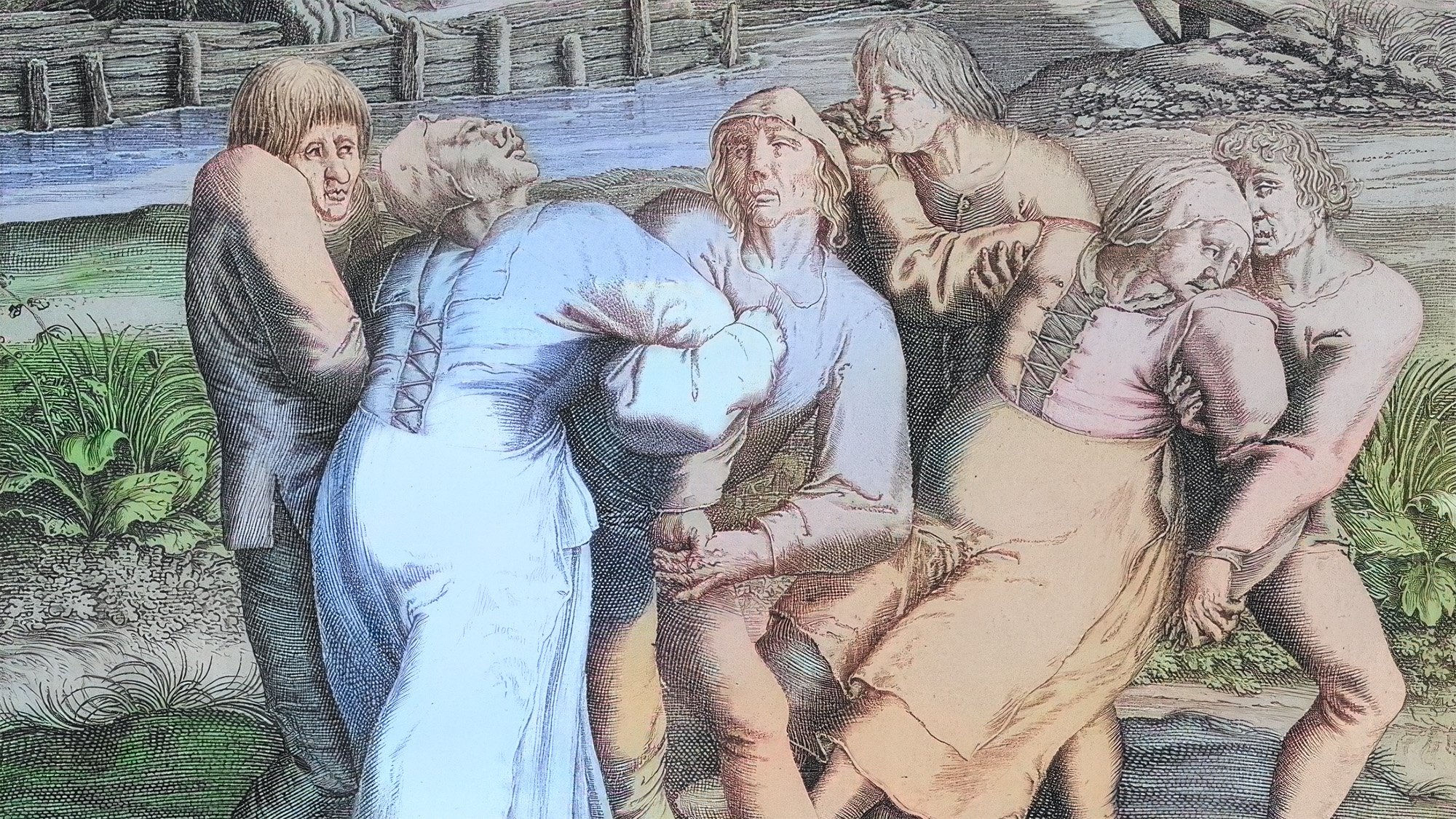
In the summer of 1518, people in Strasbourg couldn’t seem to stop dancing—some even danced themselves to death.
It all started with one woman, who stepped into the street and began moving uncontrollably. Soon, dozens of other residents followed suit, overcome with the inexplicable urge to hop, jerk, and sway. Within weeks, the outbreak had spread throughout the city, leaving officials, physicians, and religious leaders scrambling to figure out what was happening—and, more importantly, how to make it stop.
Five centuries later, the dancing plague of 1518 remains one of history’s strangest medical mysteries. Historical records confirm that a bizarre episode turned a medieval city into a very unwilling dance floor that summer, but exactly why it happened remains a matter of debate.
A bizarre outbreak takes hold
The dancing plague began on July 14, 1518, when a woman named Frau Troffea started dancing in Strasbourg, then part of the Holy Roman Empire and now a city in northeastern France. Though her husband begged her to stop, Troffea kept moving as day faded to night, while a crowd of onlookers gathered around to watch. Eventually, she collapsed and fell asleep, but when she awoke the next morning, she resumed her solitary jig.
Troffea’s uncontrollable dancing, known as choreomania, seemed to be contagious. Dozens of other people were soon gyrating in the streets of Strasbourg and, by late August, as many as 400 individuals had succumbed.
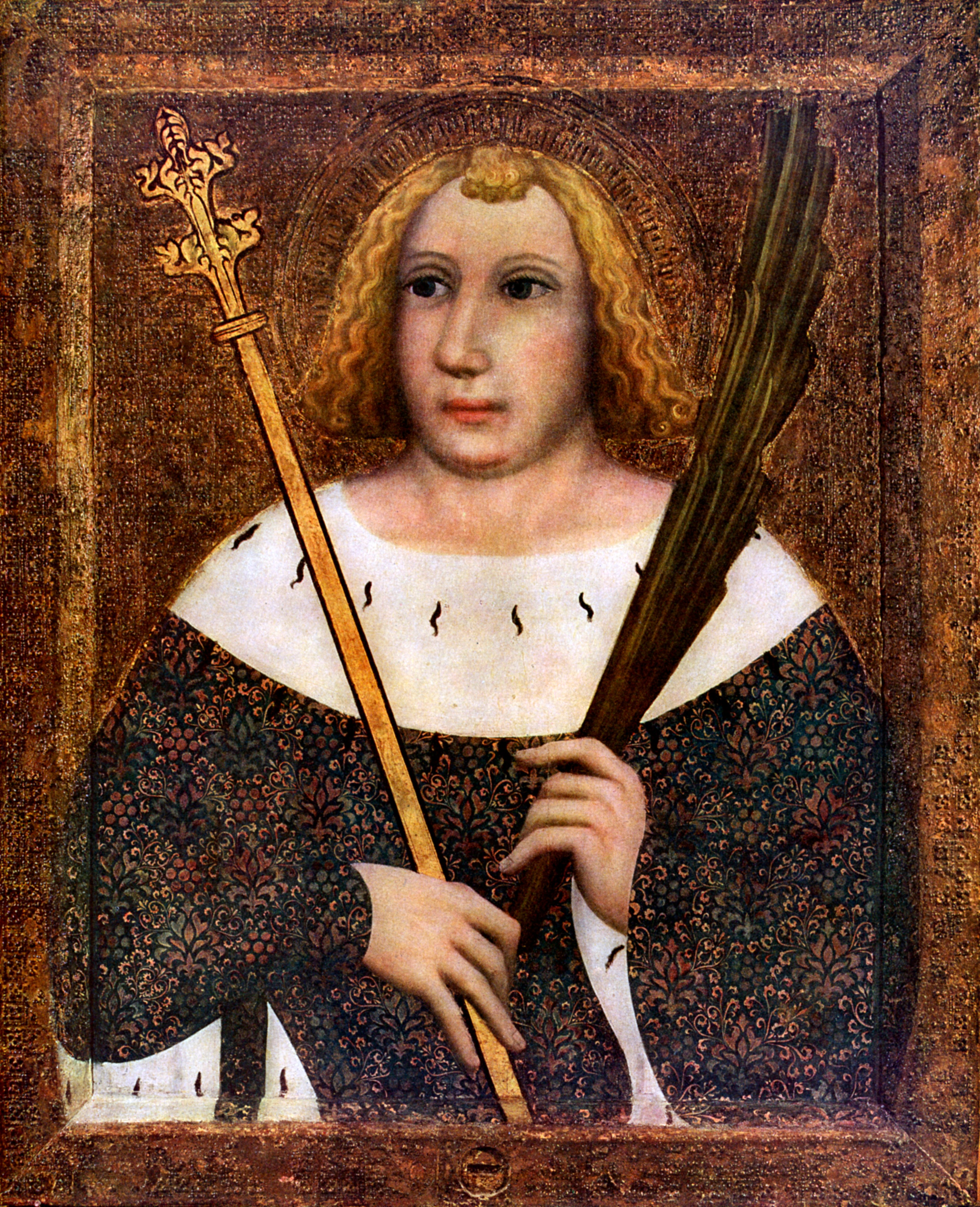
At the time, the leading theory was that St. Vitus, a fourth-century Sicilian martyr believed to punish sinners by making them dance, had cursed the afflicted. Then, once St. Vitus decided his victims had suffered enough, he would relieve them of the curse.
St. Vitus was martyred in 303 during the persecution of Christians by the co-Emperors Diocletian and Maximian. Image: Contributor / Getty Images / Print Collector
City leaders determined that the best course of action was to keep the dancers dancing, so they cleared the outdoor grain market, built a stage, and hired musicians. They didn’t explain their rationale in any known, surviving documents, so historians don’t know exactly why they did this. But John Waller, associate professor of the history of medicine at Michigan State University and the author of The Dancing Plague: The Strange, True Story of an Extraordinary Illness, suspects they had two reasons: They believed dancing could help people purge physical impurities from their bodies, and they viewed it as a form of penance.
“If people were believed to have been cursed by God or a saint for some kind of immorality, well, dancing was associated with hedonism and that was fundamentally immoral,” he tells Popular Science. “A way of basically punishing oneself would be to dance to the point of exhaustion and pain and potentially even death. It would make sense with that potential framework.” In other words, from the leaders’ perspective, if dancing was their punishment, let them be punished.
Dancing themselves to death
Regardless of their motives, the authorities’ decision had “very, very clear consequences,” he says. It was a hot summer, and the dancers were likely under the full glare of the sun. They weren’t eating or drinking much, and they weren’t resting.
“This is certainly going to be extremely dangerous for a large number of people, particularly anybody with any kind of susceptibility to heart attack or stroke,” says Waller.
The historical records are murky on exactly how many people died—one writer claimed as many as 15 per day, at least for a time—but it was enough to make city leaders completely change course.
“They essentially banned dancing, except for some people in the privacy of their own homes, and then instituted a program of penance and prayer,” says Waller. “They clearly realized that what they’d been doing before was causing harm and I suspect they got the impression that it was making things worse.”
Eventually, the authorities transported the remaining dancers to a shrine dedicated to St. Vitus about 30 miles away, where religious leaders went to work praying and leaving offerings. As days and weeks passed, the dancers overcame their choreomania and returned to their normal lives—traumatized and tired, but otherwise fine.
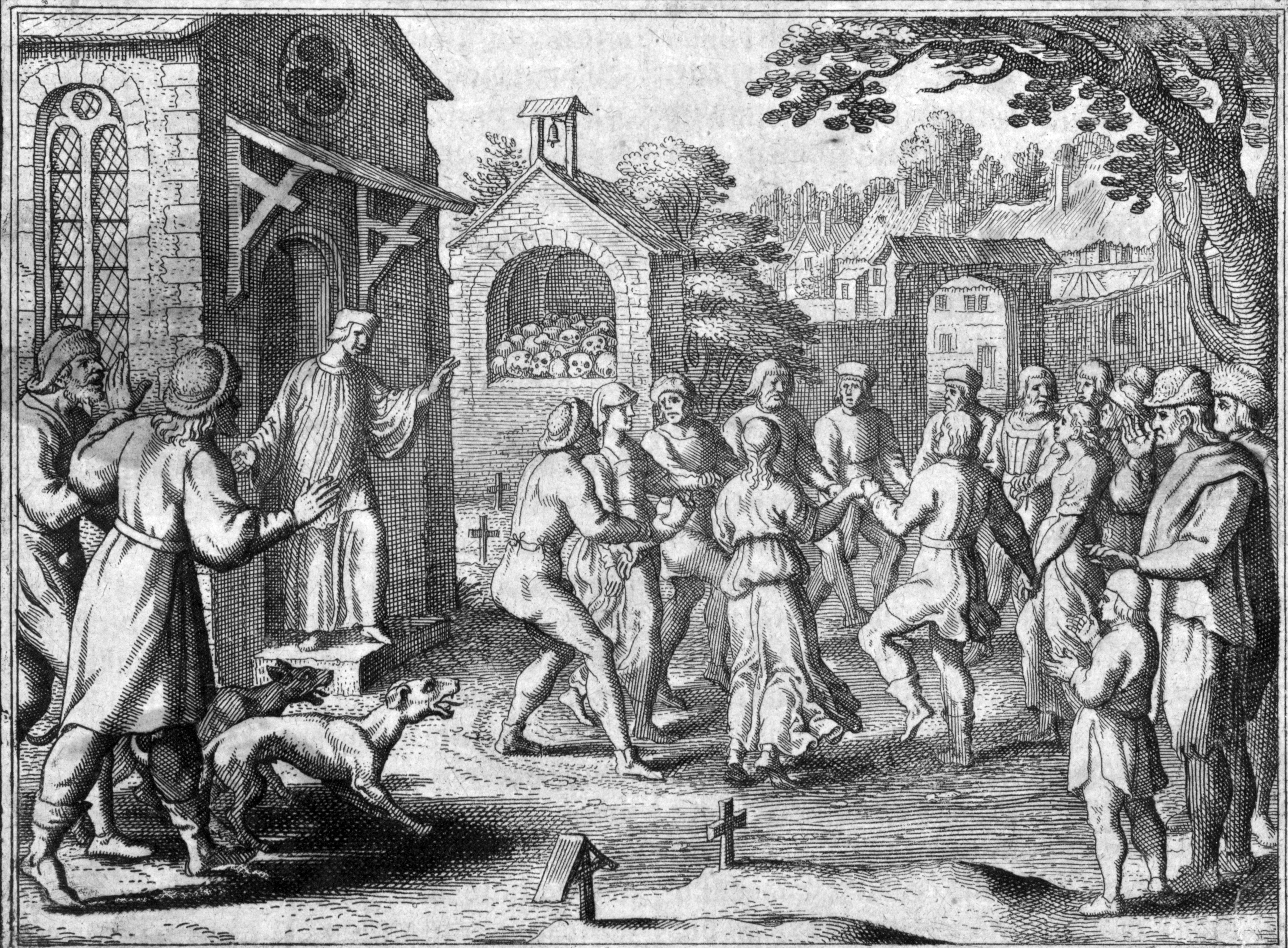
Strasbourg’s dancing plague in 1518 wasn’t the only such incident of its kind. Image: Getty Images / Contributor / Bettmann
The dancing plague of 1518 wasn’t the only such incident of its kind. Numerous other outbreaks of uncontrollable dancing occurred in western Europe between the late 1300s and mid-1500s—and Waller thinks it’s no coincidence that many were clustered along the Rhine River and its tributaries.
“Rivers are very good for, obviously, transporting trade goods, but they’re also very good for spreading ideas,” he says. “From the headwaters in Switzerland all the way down to where the Rhine flows into the North Sea, you’ve got this belief in a saint who curses with a dance.”
Theories behind the dancing
Now that we have the benefit of hindsight, what might explain the dancing plague of 1518 and others like it? One theory is that the dancers were sickened by ergot, a fungus that can contaminate grain. Another holds venomous spiders bit the afflicted. Demonic possession, epilepsy, typhus, and encephalitis—brain inflammation caused by an infection or autoimmune response—have also been put forward as possible explanations.
But after considering all the evidence, Waller thinks there’s only one plausible theory that truly makes sense. He suspects the dancers of Strasbourg were all victims of mass hysteria, also known as mass psychogenic illness, brought on by intense psychological distress.
The years leading up to 1518 were rough, particularly for the lower classes, with failed crops, bad weather, economic issues, social unrest, religious tensions, and illnesses like smallpox, leprosy, and syphilis taking a toll on peoples’ psyches. They were hungry, anxious, sad, scared, and worried that God had abandoned them.
Waller suspects the people living in Strasbourg simply reached their breaking point, then entered into a trance-like state that rendered them largely insensitive to their extreme fatigue and sore feet. They danced, Waller argues, rather than weeping, fighting, praying, or engaging in some other behavior because of their belief in St. Vitus and his dancing curse.
Given the period-specific cultural and religious underpinnings, could something like the dancing plague of 1518 happen today?
Waller shares several modern examples of mass psychogenic illness that, although they don’t involve dancing, he finds to be similar in nature. More than 300 students in Blackburn, England, suffered from a mysterious fainting fit in 1956, for example, and hundreds of people succumbed to alternating fits of laughing and sobbing in East Africa in 1962. In 2007, students at a Catholic boarding school near Mexico City came down with a mysterious sickness that made walking difficult. A year later, 20 female students in Tanzania suffered a mass fainting episode during their final-year national examinations.
And although the dancing plague of 1518 took place more than 500 years ago, Waller says we can still learn plenty from it. For him, the most important takeaway is “the way in which our expression of severe distress can be culturally conditioned and channeled.”
When Waller initially started researching the dancing plague of 1518, it was such a “wild phenomenon” that his inclination was to think “as strange as the past can be, this was simply too strange to have actually happened,” he says. But as he dug deeper—and, more importantly, began to understand the context within which it arose—it started to make more and more sense.
In other words, he says, it reminds us that psychological distress is not expressed in a vacuum. The culture, beliefs, and circumstances around us can shape how our inner turmoil manifests—and, in some cases, how it spreads from one person to another.
In That Time When, Popular Science tells the weirdest, most surprising, and little-known stories that shaped science, engineering, and innovation.

 Login