❌

Reading view

Chinese state media counters Anthropic's call to put brakes on AI development — paper says move is ‘a response to Chinese competition’

China's state-run newspaper has downplayed the call of Anthropic founder Dario Amodei to “pace the frontier.” China Daily, the official English mouthpiece of the Communist Party of China, questioned the move, which was supported by OpenAI CEO Sam Altman and SpaceXAI’s Elon Musk, asking if they were doing it out of concern for humanity or if they’re afraid of competition from China.

“The report, and the corporate ‘alliance’ that followed it, amounted in essence to a coordinated play — a response to Chinese competition and to the regulatory pressure coming from Washington. Its aims were threefold: to blunt China's AI advance, to win a favorable policy environment at home and to keep investors' enthusiasm for US AI alight,” the publication wrote. It further criticized the move thusly: “The proposed coordination among the three companies sounds rather like a club whose membership rules have been drafted before the guest list is announced. A global AI-safety framework that excludes China is not quite global.”

The paper also called out the U.S. efforts in blocking Chinese AI advancement, both through hardware, by blocking Beijing’s access to the latest Nvidia chips, and software, with Amodei’s multiple accusations of illegal distillation of Claude by Chinese AI labs. China Daily said that these efforts have apparently failed, and cited the success of the DeepSeek and Kimi K3 models, which turned out to perform well enough but at a much lower cost.

The availability of those models has resulted in many AI users shifting demand to cheaper tokens, like Kimi K3 (low) and DeepSeek V4 Pro, over the expensive frontier models like Fable 5.1, GPT 5.6 Sol, Grok 4.6, and Kimi K3 (max).

China Daily also took issue with Amodei’s focus on excluding China from his proposal. It suggests that the move is meant to widen the technological gap between the two rivals when it comes to AI technology and give American AI labs breathing room to “pace the frontier,” and that it reveals how Washington sees Chinese AI as an existential threat.

Nevertheless, Chinese policy acknowledges some of the risks that Amodei raised. The Standardization Administration of China, in cooperation with the Cyberspace Administration of China, says that the development of AI technology must be monitored as it may go beyond human control.

“Treating the AI race as a zero-sum game makes the cooperation needed to manage those risks more difficult. China and the US should cooperate where neither can manage the consequences alone,” says the state media outfit. “The planned AI-safety dialogue between the two sides and future high-level exchanges offer opportunities for practical engagement. The promise of AI lies in serving humanity's common good, not in being weaponized for geopolitical gain or instrumentalized for personal profit.”


  •  

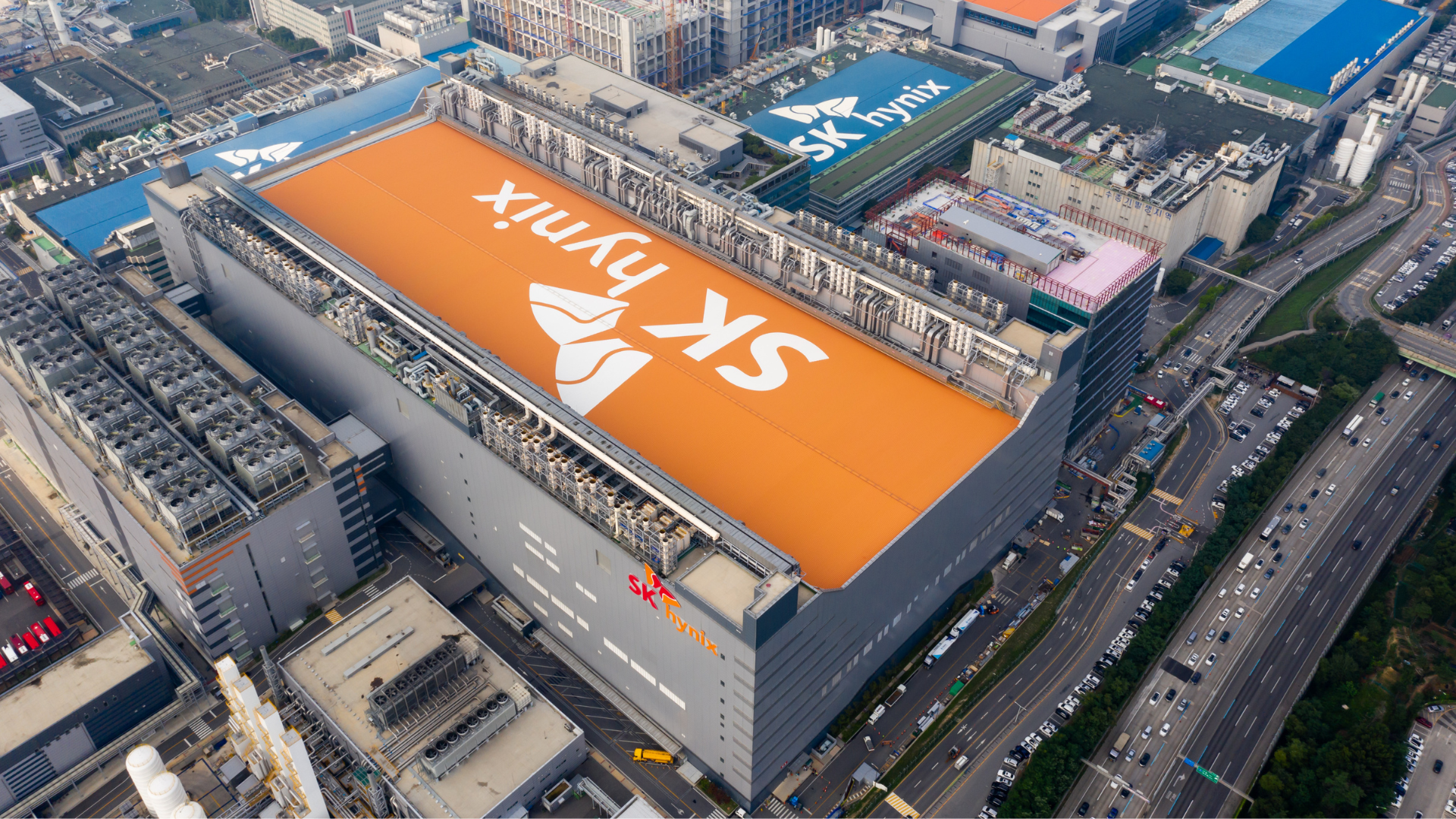
SK hynix reportedly discussing US memory chip manufacturing with Intel — options include leasing Ohio plant or forming joint venture with other AI hyperscalers

South Korean memory chip manufacturer SK hynix is in talks with Intel to start manufacturing inside the U.S., according to Reuters. The company is reportedly considering multiple options, including leasing space at the under-construction Intel Ohio One site and forming a joint venture with Intel and other AI hyperscalers desperate for HBM.

This move could help alleviate the memory shortage. It would also complement the company’s expansion in Indiana, where it recently broke ground on an HBM packaging plant a few weeks after its historic $26.5-billion Nasdaq listing. It’s unclear yet if these talks are part of the results of the South Korean president’s visit to Silicon Valley in an effort to expedite negotiations between its top tech companies and their U.S. counterparts, but SK Group chairperson Chey Tae-won told reporters in July, “I think we need to build a factory in the United States. If possible, I believe we should build it.”

However, there are also concerns that Seoul might object to such investment. The South Korean government just unveiled a $520 billion investment plan to increase chipmaking capacity within its shores and keep the country competitive in the AI race; at the same time, it’s also in talks with the U.S. to finalize its $350 billion investment commitment to Washington to reduce tariffs on South Korean goods, $200 billion of which is still undecided on which projects it will be deployed on. Meanwhile, the Commerce Department has threatened to impose more tariffs on South Korean and Taiwanese tech companies if they fail to invest in U.S. manufacturing. This potentially puts SK hynix at a precarious position, especially as it balances the demands from the White House and the Blue House.

Neither company has confirmed these rumors, though. SK hynix told Reuters that it’s “reviewing various measures, including establishing additional production bases, to strengthen the competitiveness of its memory business,” but “no matters have been determined at this stage.” On the other hand, Intel called them speculation and declined to comment on the matter, only saying that it was continuing to invest in the Ohio project, which is expected to come online between 2030 and 2031.

  •  

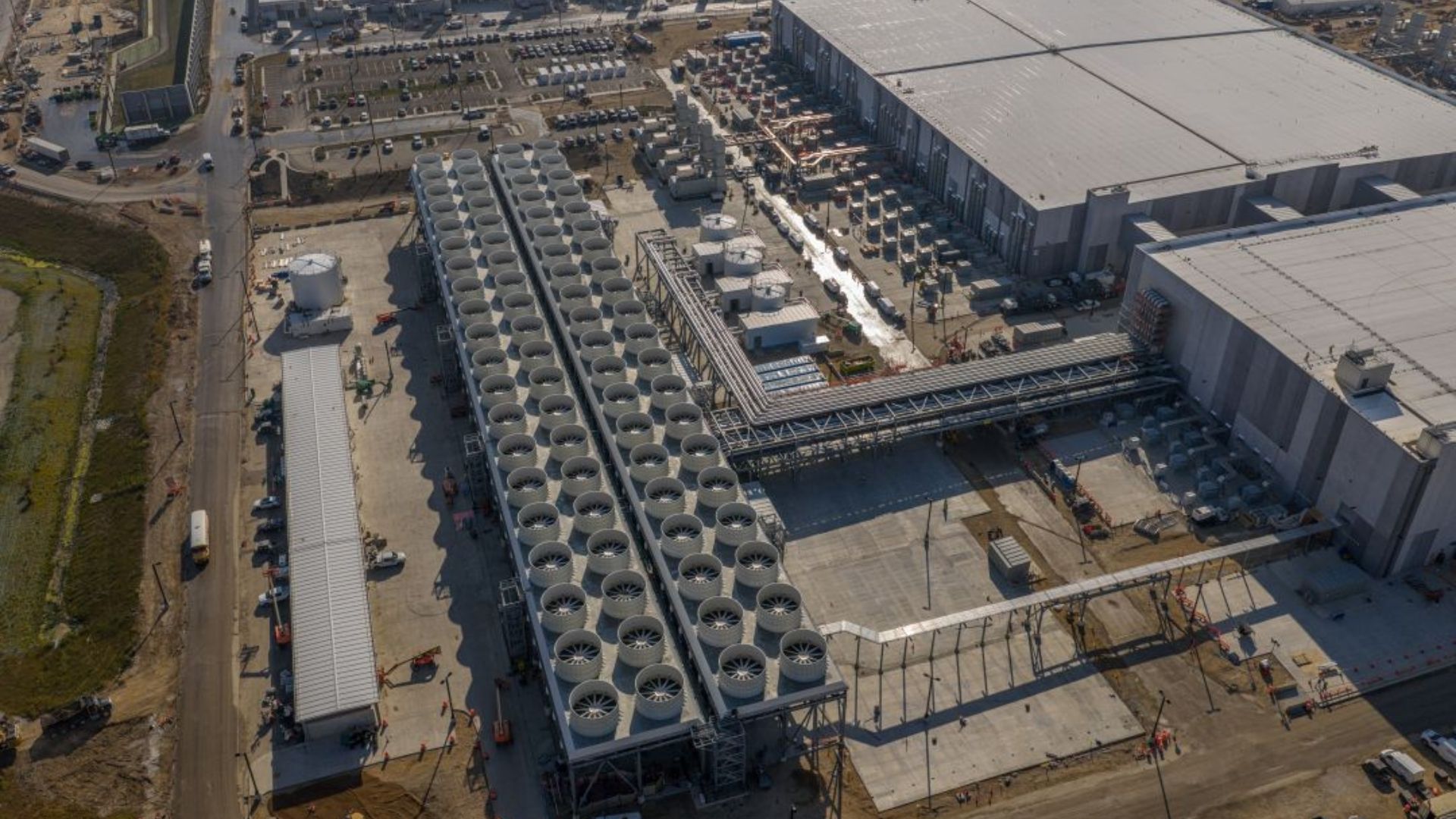
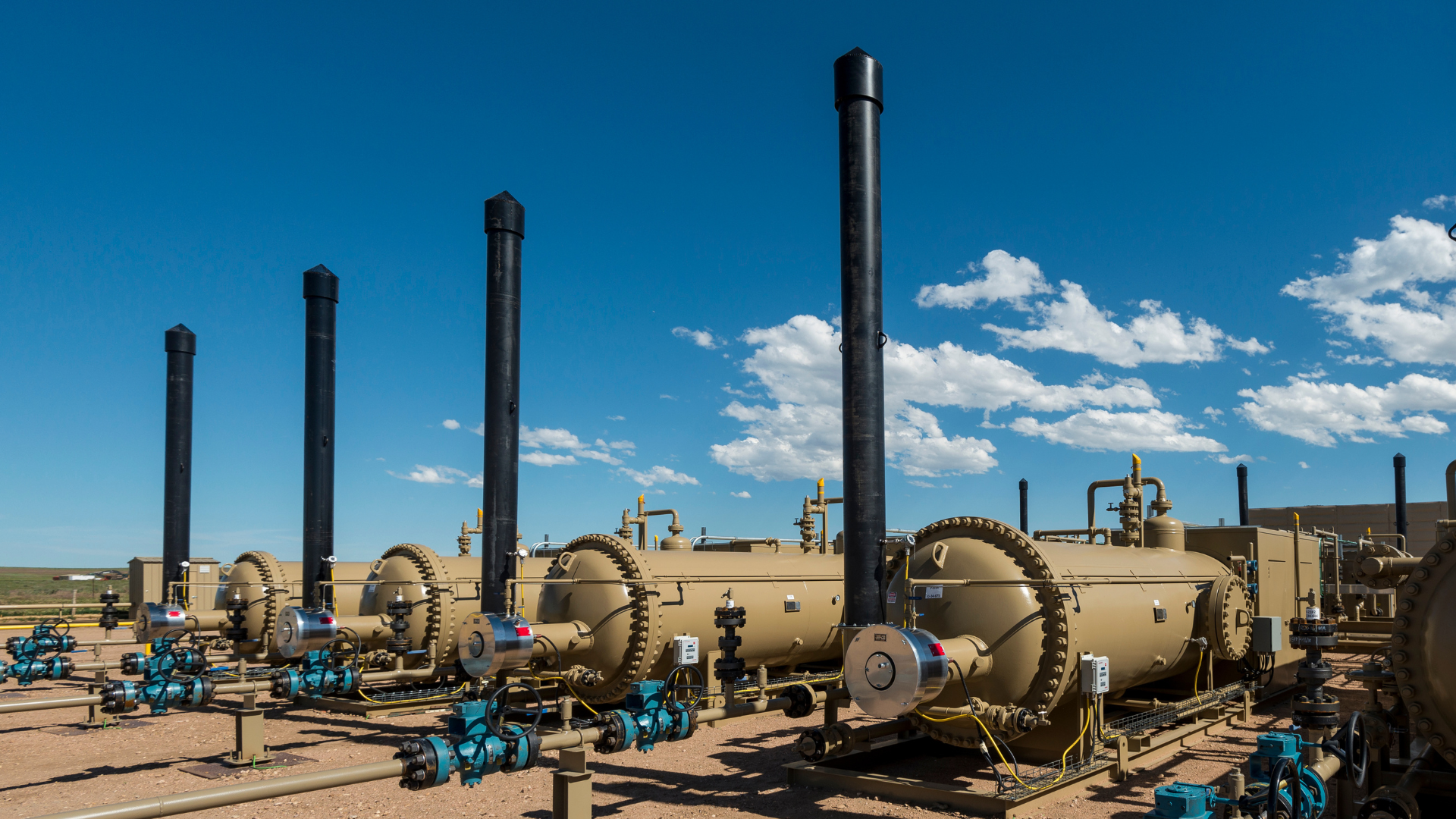
US AI data centers projected to become the fifth-largest natural gas consumer in the world by 2035 — consumption to grow by 15 billion cubic feet per day as demand for compute increases

The estimated natural gas consumption of data centers in the U.S. is expected to massively increase as these facilities increasingly rely on gas turbine generators for their power. According to Bloomberg, data centers are projected to use up to 15 billion cubic feet per day by 2035, a 117% increase from the previous forecast of 6.9 billion cubic feet. This number tracks with other data center forecasts, which suggest that data centers will use 20% of U.S. power by 2035, amounting to about 194 gigawatts.

Many data center projects have already been delayed by the lack of available power infrastructure, with power plants expected to take so much longer before they come online. It’s for this reason that many developments have turned towards onsite generators, so much so that AI demand is now compounding the jet engine shortage already plaguing the aviation industry.

Elon Musk was among the first to use gas turbines to power a data center when he deployed them at the Memphis Supercluster in 2024, even though he didn’t have permits for some of them. Now, it seems that the world’s richest man has seen this trend and has invested a billion dollars to buy a portable gas and diesel turbine leasing company. He even announced that SpaceX will start in-house turbine blade manufacturing to help cut down on the manufacturing bottleneck plaguing the jet engine industry.

New technologies like small modular reactors are currently being developed as an answer to AI data centers’ insatiable demand for power, like Ampera’s 3D-printed modular thorium nuclear reactor or Valar Atomics’ Ward 250 nuclear microreactor. Many AI hyperscalers, including Amazon, Google, Microsoft, Nvidia, and Oracle, have even invested in projects like these in a bid to generate massive amounts of clean energy for AI. However, they’re expected to take a few more years before they could become commercially viable — time that tech giants do not have. Because of this, Musk said that “natural gas will still be needed to supplement and bootstrap solar for several years.”

The deployment of natural gas turbines in data centers isn’t good news for the communities living around them, though. The NAACP said in its lawsuit against SpaceXAI that the use of these turbines at Colossus 2 increased nitrogen oxide exhaust by 111%, PM2.5 particles by 83%, and formaldehyde emissions by 88%. While the company has already pledged to remove all its unpermitted generators, the process will take at least a year as the portable turbines are slowly being replaced by a 1.2-gigawatt on-site power plant.

Aside from this, the massive demand for natural gas could potentially put a strain on the supply, causing prices to rise and hit the average consumer. Domestic natural gas producers are projected to raise their output by 35 billion cubic feet per day in the next decade, but this still falls short of the forecasted demand by around 11 billion cubic feet per day. So, unless output manages to catch up with the demand, prices are expected to shoot up and cause a scramble for available supply. Still, some experts suggest that there are still more than enough undeveloped gas fields within the U.S. to allow the industry to increase natural gas supplies and reduce costs.

  •  

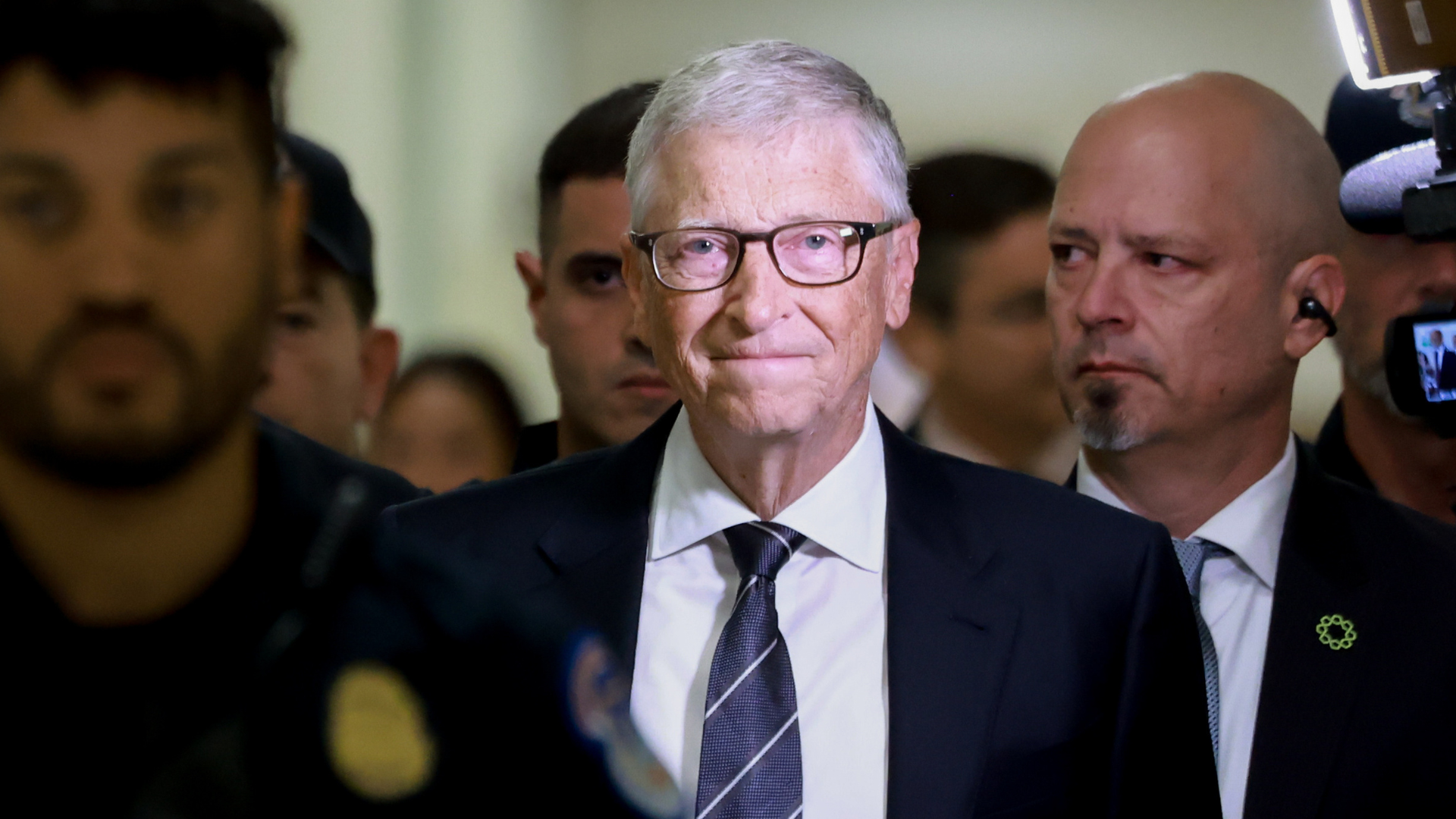
Bill Gates compares AI to alien intelligence in movies where ‘magically the US and China’ solve the problem together — warns world governments that they’re not ready for AI

Microsoft founder Bill Gates has said in an interview that the world’s governments are not ready for artificial intelligence. The billionaire philanthropist made the warning in an interview with Reuters, saying that nations must prepare for the various risks that the technology poses to the workforce and society as a whole.

“I don’t think any government is nearly as deep on this as they have to be. Governments are way behind on this one,” Gates told the publication. He also added, “There’s all sorts of movies where some aliens are coming, and magically, the U.S. and China and everybody comes together to solve the problem. AI is kind of like this alien intelligence. It’s here, and we better do like it shows in those movies.” In line with this, he said that he has been in talks with world leaders like U.S. President Donald Trump to share his concerns, and that he’s also trying to meet with Chinese President Xi Jinping.

While concerns AI’s impact on jobs and human society may seem small compared to the news about runaway AI taking over the world and ending all human life, governments still cannot ignore these seemingly lesser issues. This is especially true if businesses stop hiring people in favor of AI tools, with the CEO of Microsoft AI predicting that they could replace every white-collar job in 18 months. This is why Gates argues that authorities across the world must have plans in place when this begins to happen, even going as far as saying that some jobs should be “Human Reserved.”

It’s unclear what steps Bill Gates believes governments should take to prepare and protect its citizens from the predicted turmoil that AI technologies will bring on humanity, but U.S. Senator Bernie Sanders has already proposed an AI sovereign wealth fund that would have direct ownership stakes on American AI firms. He even went as far as introducing the Ban Artificial Superintelligence Act, which puts the penalty of developing powerful AI tools at par with building rogue nuclear weapons. However, the current administration has downplayed all these concerns about AI, with President Trump calling them a hoax.

Despite his warnings, Gates still believes that AI has great potential for good. The Gates Foundation is planning to spend at least a billion dollars in the next two years to give more people access to AI, saying that it could help the world’s poorest people “if managed properly and accessed equally.” This amount of money will go towards supporting the use of AI in education, healthcare, and agriculture, and even the expansion of large language models so that they would work across all the languages on earth.

  •  
❌