
❌

Reading view

How chimps teach their kids tool tricks

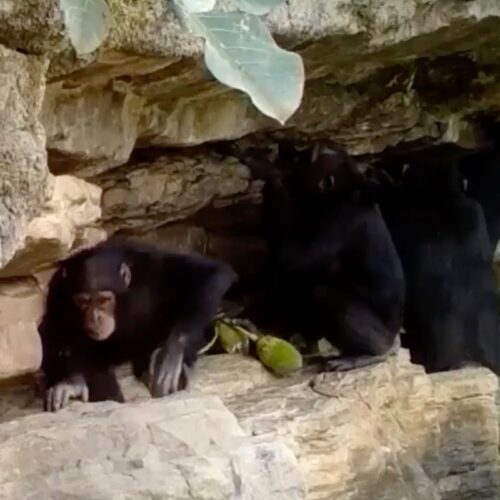
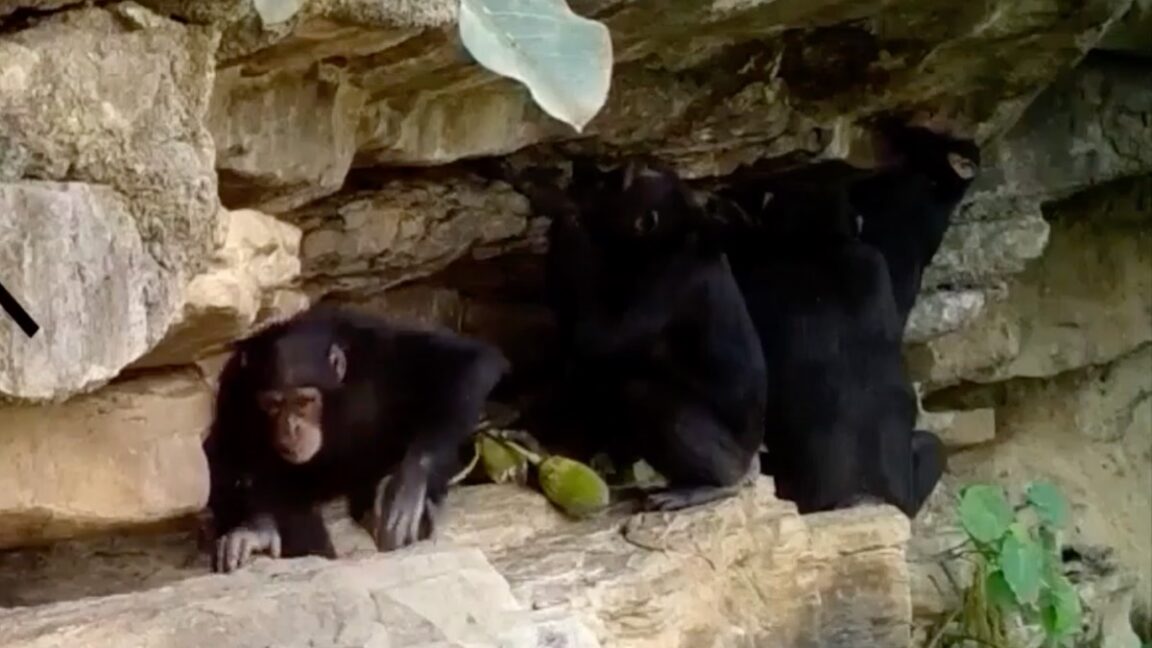
Chimpanzees are known to use rudimentary tools when foraging for food. According to a new paper in the journal Frontiers in Psychology, this learned behavior is passed down from adults to offspring through social learning. Specifically, adult chimps deliberately model the behavior, then turn their tools over to the youngsters so they can mimic the same motions.

"Receiving food and tools from experienced individuals, which we call food or tool transfer, may help chimpanzees learn to use technology to extract foods that are difficult to access,” said co-author Andreu SΓ‘nchez-MegΓ­as, a graduate student at the University of Barcelona and the Jane Goodall Institute Spain in Senegal. β€œTool transfers thus appear to be a form of teaching, together with observation and supervised practice. It appears that mothers are the main models and teachers for young chimpanzees in this manner.”

As we have previously reported, tool use was once thought to be one of the defining features of humans, although Charles Darwin observed chimpanzees using stones to crack nuts in 1871. In 1960, the late primatologist Jane Goodall observed a chimp named David Greybeard bend a twig, strip off the leaves, and use it to spoon termites out of a nest and into his mouth. When he learned of the behavior, Goodall's mentor, Louis Leakey, famously observed, β€œNow we must redefine β€˜tool,’ redefine β€˜man,’ or accept chimpanzees as humans.” Since then, chimps have been observed making sponges out of leaves to soak up liquids, shaping sticks to collect algae, and sharpening rudimentary spears for hunting.
Read full article

Comments

Β© Jane Goodall Institute Spain in Senegal
  •  

How chimps teach their kids tool tricks

Chimpanzees are known to use rudimentary tools when foraging for food. According to a new paper in the journal Frontiers in Psychology, this learned behavior is passed down from adults to offspring through social learning. Specifically, adult chimps deliberately model the behavior, then turn their tools over to the youngsters so they can mimic the same motions.

"Receiving food and tools from experienced individuals, which we call food or tool transfer, may help chimpanzees learn to use technology to extract foods that are difficult to access,” said co-author Andreu SΓ‘nchez-MegΓ­as, a graduate student at the University of Barcelona and the Jane Goodall Institute Spain in Senegal. β€œTool transfers thus appear to be a form of teaching, together with observation and supervised practice. It appears that mothers are the main models and teachers for young chimpanzees in this manner.”

As we have previously reported, tool use was once thought to be one of the defining features of humans, although Charles Darwin observed chimpanzees using stones to crack nuts in 1871. In 1960, the late primatologist Jane Goodall observed a chimp named David Greybeard bend a twig, strip off the leaves, and use it to spoon termites out of a nest and into his mouth. When he learned of the behavior, Goodall's mentor, Louis Leakey, famously observed, β€œNow we must redefine β€˜tool,’ redefine β€˜man,’ or accept chimpanzees as humans.” Since then, chimps have been observed making sponges out of leaves to soak up liquids, shaping sticks to collect algae, and sharpening rudimentary spears for hunting.

Read full article

Comments

Β© Jane Goodall Institute Spain in Senegal
  •  

Prehistoric builders transported Devil's Arrows 11 miles

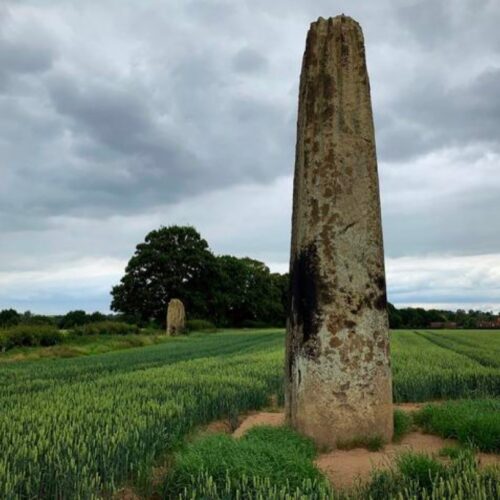
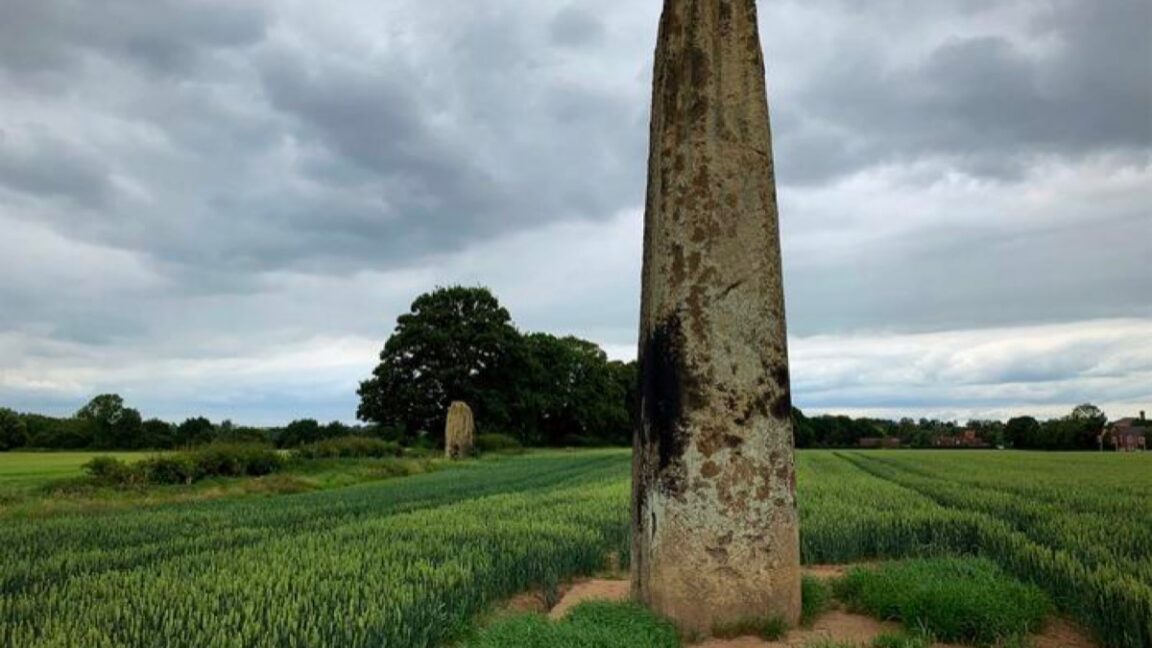
Stonehenge is the most famous example of megalithic architecture across Britain and Ireland, but there are plenty of others, including Calanais, Newgrange, and Avebury, as well as the Devil's Arrows. The latter is Britain's tallest standing stone alignment, yet little is known about the provenance of its stones. Scientists have confirmed that the stones came from a site 18 kilometers (11 miles) away, transported by humans rather than glacial movement, according to a paper published in the Proceedings of the Royal Society A: Mathematical, Physical and Engineering Sciences.

"Sites in southern England and Scotland receive considerable attention but monuments like the Devil's Arrows have remained comparatively understudied despite their significance," said co-author Jim Leary of the University of York. "We have now proved that Neolithic communities moved several 25-ton stones across Yorkshire, transforming a familiar site into an epic quest to create a sacred landscape."

Stonehenge has been the focus of recent chemical analyses identifying where all the stones that make up the structure came from, revealing that many originated in quarries a significant distance away. For instance, a 2019 study concluded that the 42 bluestones that make up the inner ring came all the way from western Wales. The outer layer of sarsen stones hails from much closer to home: Marlborough Downs, an area of round, grassy hills 25 to 30 km (17 miles) north of Stonehenge, which has the largest concentration of sarsen in the UK.

Read full article

Comments

Β© University of York

  •  

Scientists unlock secrets of ancient Egyptian materials with proteomics

Credit: Museum of Mediterranean and Near Eastern Antiquities, Stockholm

The precise composition of ancient Egyptian paints, binders, adhesives, and similar materials used to make artifacts is largely unknown, in part because a full analysis would require taking samples that would damage those valuable artifacts. The development of cutting-edge, non-destructive techniques has been helping to unlock those secrets, aiding conservation efforts.

Most recently, researchers have used mass spectrometry-based proteomics to analyze the glues and adhesives in a broad set of Egyptian artifacts, according to a new paper published in the journal Science Advances. They found plenty of expected sources, such as animal collagens and egg proteins, but also plant proteins, specifically from sesame and drumstick tree (moringa) cereals.

As previously reported, the ancient Egyptians had a highly formalized (and easily recognizable) painting style, and there has been considerable interest in gaining insights into the specific pigments and painting techniques employed. Common pigments included hematite and realgar for red; goethite and orpiment for yellow; Egyptian blue; Egyptian green; carbon-based black; and calcite, gypsum, anhydrite, and huntite for white. (Just last year, Washington State University researchers were able to re-create Egyptian blue by mixing together silicon dioxide, copper, calcium, and sodium carbonate in varying proportions and heating them at very high temperatures akin to those of ancient kilns.)

Read full article

Comments

Β© Johan Jeppsson/Museum of Mediterranean and Near Eastern Antiquities, Stockholm

  •  
❌