❌

Reading view

World's first open-access battery imaging library launches

Scientists from Diamond Light Source and the ISIS Neutron and Muon Source have contributed to the development of the world's first open-access battery imaging library. The library was created through an international collaboration led by Dr. Antony Vamvakeros, Royal Society Industry Fellow at Imperial College London and research and development lead at Finden Ltd., which is co-located with both facilities on the Harwell Science and Innovation Campus.

  •  

A brief history of AI executives calling for regulation

H.A.L.-style glowing red digital eye over a textured digital backdrop.

Over the past few days, a lot of people who stand to make a lot of money from AI all publicly agreed that it's time to make everyone slow down before we lose control - including OpenAI CEO Sam Altman, Anthropic CEO Dario Amodei, Google DeepMind cofounder Demis Hassabis, Microsoft CEO Satya Nadella, and X CEO Elon Musk.

When people who profit from something declare that it's dangerous and needs to be regulated, there's always reason to be skeptical. But whatever their reason, this is far from the first time AI thought leaders have sounded the alarm.

Charles Darwin's theory of evolution prompted author Samuel Butler to warn about intelligen …

Read the full story at The Verge.

  •  

The iPhone 18 Pro’s big camera update is all about the small gains

Blue iPhone 18 Pro on blue background.
Ice cold. | Photo: Amelia Holowaty Krales / The Verge

Last week, Apple announced an iPhone unlike any it has made in the past. An iPhone that has seemingly already led several other phone manufacturers to pursue entirely different designs for their flagship products. A remarkably distinct device with the kind of "I can't believe they did that" software touches that Apple sometimes pulls off when it's at the top of its game.

That phone is not the iPhone 18 Pro.

The 18 Pro and Pro Max are in the unusual position of being the second-most interesting iPhones that Apple is launching this year. The foldable iPhone Duo stole the show at Apple's launch event, but it's not arriving until next month. …

Read the full story at The Verge.

  •  

Logitech releases the MX Keypad to keep idle fingers busy

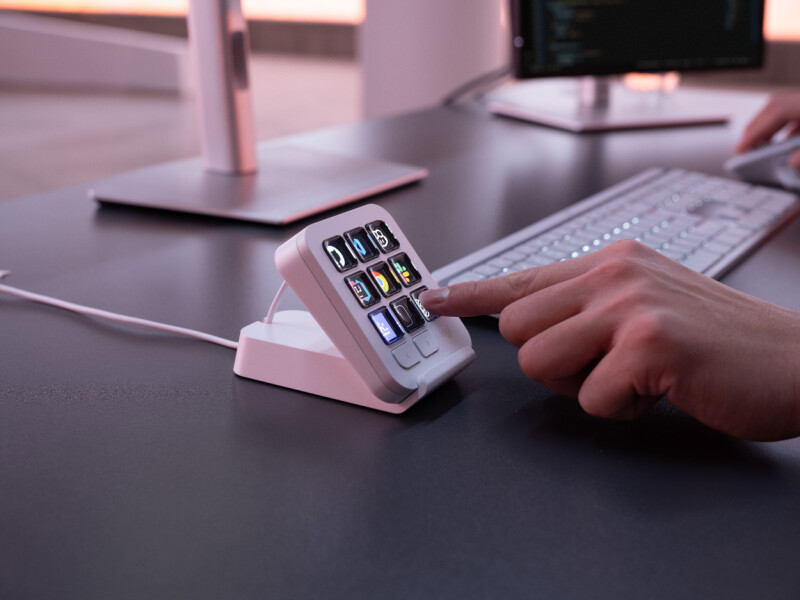
Logitech has released the MX Keypad, a developer-focused keypad derived from its MX Creative Console, and something that triggers a distinct sense of déjà vu. Do you remember Stack Overflow's "The Key" Joke? Three keys to copy and paste code from the developer's former best friend (until AI tools began to eat its lunch). Logitech took the keypad from its MX Creative Console product and made something similar to Stack Overflow's joke-that-became-a-thing, though considerably more extensible. The company sent us one to look at, and it's an interesting, if perhaps slightly expensive, bit of kit. At its heart, the MX Keypad is a set of nine keys that can trigger commands. Out of the box, it all looks a bit bland – there are monochrome images on the keys for playback, volume, screenshot taking, and even something to bring up an emoji panel when attached to a Windows device. However, things get a good deal more colorful and interesting when the device is connected to the Logi Options+ application. Then the device moves from being a curiosity to something that threatens to be indispensable, depending on your workflow. Using Word to knock out some writing? The MX Keypad will show a bunch of commonly used commands, or you can customize it to suit your workflow. How about Visual Studio Code? It's the same again – the keys light up with some default commands that you can easily make your own. According to Logitech, the device is a "Multi-App AI Control Center for Developers" and was developed in conjunction with keyboard jockeys. We'd call it a surprisingly useful bit of kit which has rapidly become part of our workflow, both for productivity and when diving into VS Code for some source wrangling. There are, of course, downsides. Although the price is relatively competitive, it is a little on the high side for what is ultimately a smart macro keypad. It also requires a USB-C connection, which we can understand given the power needs of those bright, backlit, color LCDs, but it would have been nice if Logitech could have come up with something that didn't need a cable. And, of course, you need Logitech's software to get the best out of it. In the box is the keypad itself, a USB-C cable, and a stand. We preferred to position it on the desk next to the keyboard for ease of access – the device has a slightly angled base, so it works well in that placement, but the inclusion of a stand is a nice touch. There's also an SDK if engineers (or their agents) wish to get their hands dirty, and a marketplace where plugins for the likes of Claude Code and OpenAI Codex can be found. According to Logitech, these give developers "real-time agent status tracking and CLI control right on the physical keys." Assuming you can make it work. We found the Logi Options+ software a little unintuitive and recommend some perseverance to get the best out of it, along with a little caution, since the built-in designer can create some deeply wince-inducing key designs. Ultimately, the MX Keypad represents some excellent repurposing by Logitech. The original MX Creative Console was useful for creative types, but its jog wheel was arguably of little use to developers. The touch panel, with its customizable keys, is a much more practical proposition; by selling it on its own, Logitech has cut the price to £89.99 ($99.99). It comes in light or dark gray and has a pleasingly quality feel. Having to plug it in is annoying, given the wireless nature of many other peripherals, and you do need to get to grips with the Logitech Options+ application to get the best out of it, but once it forms part of your workflow, it becomes a hard habit to break. ®

  •  

Coway Creates Third Ecological Forest at Seoul Elementary School

Coway employees and Gyeongil Elementary School students plant vegetation in the third Coway Ecological Forest. (Photo: Coway)

Coway has created an ecological forest featuring endangered and rare plants at Gyeongil Elementary School in Seongdong District, Seoul. The site will serve as an ecological learning space where students can observe plants and other living organisms.

Coway said on Sept. 16 that it created the third Coway Ecological Forest, covering about 365 square meters, on the school's grounds.

Coway planted 1,195 plants from 25 species, including endangered and nationally protected species such as Pseudolysimachion pusanensis, Hosta yingeri and Aster koraiensis. Coway employee volunteers and Gyeongil Elementary School students participated in the planting.

Environmental social enterprise Tree Planet and the Landscape Architecture Design Lab at the University of Seoul were responsible for the forest's design and construction. The ecological forest incorporates results from research collaboration between the two organizations.

Environmental education for students was also conducted after the forest was completed. Students observed the forest and completed ecological forest checklists. Coway selected 13 students as ecological forest gardeners and provided them with garden maintenance kits.

Coway operates an ecological forest program that plants endangered and rare species in South Korea designated by the International Union for Conservation of Nature (IUCN) and the Korea Forest Service, as well as plants endemic to the Korean Peninsula. The company created its first ecological forest in an outdoor space at its headquarters in 2024 and its second at Banghwa Elementary School in Seoul last year.

Coway also operates environmental social contribution programs including Clean School Classroom Forest, which provides air-purifying plants to elementary schools; river plogging to collect waste along waterways; and the throwing of effective microorganism (EM) mud balls to improve water quality.

  •  

GC Cell Signs GCC2005 Research Agreement With QuantHealth

GC Cell corporate identity. (Source: GC Cell)

GC Cell is introducing artificial intelligence technology into its clinical trials.

GC Cell said on Sept. 16 that it signed a joint research agreement with QuantHealth, a global AI-based clinical trial simulation company, to optimize the design of the next clinical trial for its drug candidate GCC2005 (CD5 CAR-NK).

The partnership is aimed at improving the design of the Phase 2 clinical trial for GCC2005.

QuantHealth uses an AI-based clinical trial simulation platform, predictive engines and real-world data (RWD) to predict treatment responses and outcomes. It also provides technologies for comparative analysis with competing therapies and reviewing clinical trial scenarios.

GCC2005 is a genetically engineered cell therapy designed to target CD5, a protein expressed in most T-cell lymphomas, a type of cancer affecting the immune system. It is designed to co-express interleukin-15 (IL-15), a protein secreted by white blood cells and other cells, to improve the persistence of immune cells in the body, a limitation of existing therapies.

  •  

Yuhan Marks 100th Anniversary With Lazertinib Development Event

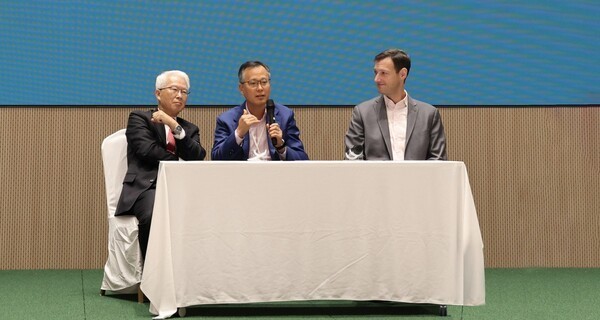
From left, Dr. Ko Jong-sung, Professor Cho Byoung-chul and J&J, who participated as speakers at the event. (Source: Yuhan Corporation)

Yuhan Corporation said on Sept. 15 that it held its "Beyond 100 Years" event at Willow House in Daebang-dong, Seoul, to mark its 100th anniversary and highlight the development achievements of lazertinib. Dr. Ko Jong-sung and Professor Cho Byoung-chul shared the drug's development process.

Lazertinib, marketed as LECLAZA, is a third-generation targeted cancer drug used to treat non-small cell lung cancer and has received regulatory approval from the U.S. Food and Drug Administration (FDA) and other authorities.

The event also presented Phase 3 results showing that a combination of lazertinib and amivantamab, a bispecific antibody targeting multiple targets, reduced the risk of death by 25% compared with osimertinib in the treatment of non-small cell lung cancer that had spread to other organs.

  •  

Kim Yong-min Named 2026 JW Sungcheon Award Recipient

Kim Yong-min, former professor at Chungbuk National University College of Medicine and recipient of the 2026 JW Sungcheon Award. (Photo: JW Pharmaceutical)

The JW Foundation, a public-interest foundation of JW Pharmaceutical, said on Sept. 16 that it selected Kim Yong-min, a former professor at Chungbuk National University College of Medicine, as the recipient of the 2026 JW Sungcheon Award. The award is presented to medical professionals dedicated to serving patients in the field.

Kim stepped down from his medical school professorship in 2018 and has since engaged in medical volunteer work.

"Kim is a medical professional who has gone wherever he is needed, whether in conflict zones, medically underserved areas or communities with limited access to medical care in South Korea, demonstrating a spirit of respect for life," said Lee Sung-nak, chairman of the JW Sungcheon Award Committee.

The award ceremony will be held at JW's Gwacheon office on Oct. 21.

  •  

Daewoong Pharmaceutical Wins 2026 National Contribution Award

Daewoong Pharmaceutical employees work according to their individual circumstances and job requirements. (Source: Daewoong Pharmaceutical)

Daewoong Pharmaceutical said on Sept. 16 that it received the Minister of Gender Equality and Family Award in the low birth rate response category at the 13th 2026 National Contribution Awards. The award recognized the company’s efforts to improve its working environment and introduce a Career Development Program (CDP).

The National Contribution Awards honor companies that contribute to strengthening national industrial competitiveness or engage in social contribution activities and environmental, social and governance (ESG) management.

"We will continue to improve our programs and working environment to create a model that makes a tangible contribution to addressing the low birth rate," CEO Lee Chang-jae said.

  •  

KPBMA Holds Korea-Thailand Pharmaceutical Forum in Bangkok

A meeting held as part of the Korea-Thailand pharmaceutical industry program. (Source: Korea Pharmaceutical and Bio-Pharma Manufacturers Association)

The Korea Pharmaceutical and Bio-Pharma Manufacturers Association (KPBMA) said on Sept. 16 that it formed a public-private delegation with the Ministry of Food and Drug Safety (MFDS), the Korea Trade-Investment Promotion Agency (KOTRA) and 10 Korean pharmaceutical companies to conduct market-entry support programs, including the Korea-Thailand Pharmaceutical Forum 2026, in Bangkok from Sept. 14 to 15.

Thailand ranked first in a KPBMA survey of preferred destinations for overseas delegations. The forum on Sept. 14 featured sessions on pharmaceutical and biotech industry trends and cooperation opportunities, as well as pharmaceutical regulations and approval systems in South Korea and Thailand. A business consultation event was held on Sept. 15, with KPBMA and participating companies holding talks with local Thai companies.

"We will work closely with relevant organizations, including MFDS and KOTRA, to actively support Korean companies in finding local partners and generating business results," KPBMA Chairman Noh Yeon-hong said.

  •  

Europa avança com proposta para barrar redes sociais até aos 13 anos e limitar uso a 1 hora por dia até 15 anos

No seu discurso de Estado da Nação, Ursula von der Leyen recordou o caso de Oléa, vítima de bullying online, e garantiu que a Europa vai tomar medidas para proteger os jovens dos efeitos negativos das redes sociais.

The post Europa avança com proposta para barrar redes sociais até aos 13 anos e limitar uso a 1 hora por dia até 15 anos appeared first on Tek Notícias.

  •  

Meta is reportedly ready to launch less pervy smart glasses

And illustration of Meta smart glasses recording a couple arguing

Meta may be ready to reveal a new pair of smart glasses with no camera at all, amid a PR crisis for the company caused by the video recording capabilities of its flagship smart glasses. A new report from The Information claims the camera-free glasses, codenamed Luna, could be revealed as soon as the Meta Connect event next week.

Instead of a camera, the Luna glasses will reportedly include six microphones that allow users to chat to Meta AI and the new Muse AI agent, along with speakers for audio playback. Stripping the camera out has apparently made it possible to make the glasses' arms smaller, and closer to ordinary frames. Meta is repor …

Read the full story at The Verge.

  •  

Salesforce, Google Cloud deepen alliance

Salesforce and Google Cloud expanded a strategic partnership, agreeing to run the former’s products natively on the hyperscaler’s infrastructure and connecting AI agent platforms so they can act on shared data.

Under the deal, Salesforce will begin migrating select US customers on to Google Cloud through its Hyperforce architecture in Q4, providing access to its partner’s infrastructure, data services and Gemini Enterprise.

Following general availability in North America, it expects to conduct a phased regional expansion in 2027.

Meir Amiel, Salesforce’s president and chief trust and infrastructure officer, said the infrastructure underneath customers is changing, not the trust they have built with the company.

He added Hyperforce running natively on Google Cloud would match its current security, compliance and resilience standards.

On the AI side, Google Cloud is among the first hyperscalers to implement Salesforce’s headless architecture, built on the open Model Context Protocol standard.

It lets Gemini Enterprise tap Salesforce data directly without custom integration for tasks including pipeline health checks, account summaries and case triage across sales, service, finance and advertising workflows.

The partnership also extends into analytics and commerce. Gemini Enterprise can now query Tableau analytics directly, with governance, row-level security and semantic models enforced on every request.

Integration with the Universal Commerce Protocol will let merchants using Salesforce Commerce Cloud highlight and sell products within Google Search and the Gemini app, while keeping payments and order management on existing commerce infrastructure.

Salesforce Data 360 and Google BigQuery, which are compatible with Zero Copy data sharing, are expanding integration to more regions and adopting the Iceberg Rest Catalogue open standard. The companies noted they are also exploring further capabilities such as bidirectional semantic data sharing.

The post Salesforce, Google Cloud deepen alliance appeared first on Mobile World Live.

  •  

Quartz é uma fintech criada por dois portugueses em Londres com “raízes” de engenharia em Portugal

A startup de gestão de património foi criada por dois portugueses que trabalharam na Revolut e na N26 e já conseguiu financiamento de 3,2 milhões de euros. Hoje a plataforma da Quartz começa a admitir os primeiros utilizadores, ainda por convite.

The post Quartz é uma fintech criada por dois portugueses em Londres com “raízes” de engenharia em Portugal appeared first on Tek Notícias.

  •  
❌