❌

Reading view

Scientists Develop “Pizza Model” to Reveal Hidden Links in Complex Networks

Networks shape much of the world around us. Friendships form social networks, computers connect through the internet, brain regions communicate with one another, and countries are linked through trade. However, scientists often face two major difficulties when studying these systems. They may see only part of a network, and they must decide whether an apparent […]

The post Scientists Develop “Pizza Model” to Reveal Hidden Links in Complex Networks appeared first on Knowridge Science Report.

  •  

How chimps teach their kids tool tricks

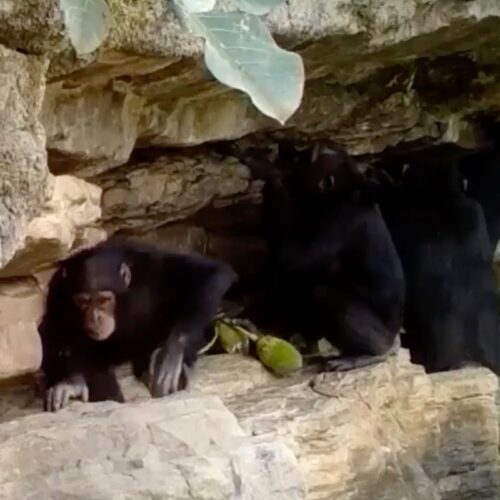
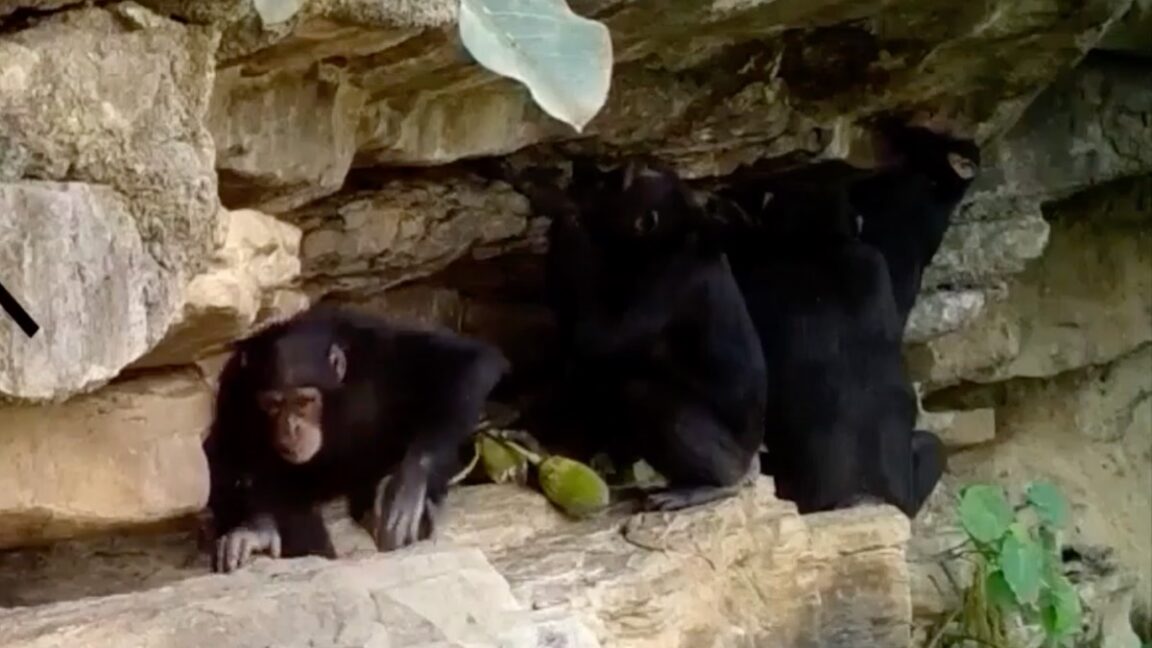
Chimpanzees are known to use rudimentary tools when foraging for food. According to a new paper in the journal Frontiers in Psychology, this learned behavior is passed down from adults to offspring through social learning. Specifically, adult chimps deliberately model the behavior, then turn their tools over to the youngsters so they can mimic the same motions.

"Receiving food and tools from experienced individuals, which we call food or tool transfer, may help chimpanzees learn to use technology to extract foods that are difficult to access,” said co-author Andreu Sánchez-Megías, a graduate student at the University of Barcelona and the Jane Goodall Institute Spain in Senegal. “Tool transfers thus appear to be a form of teaching, together with observation and supervised practice. It appears that mothers are the main models and teachers for young chimpanzees in this manner.”

As we have previously reported, tool use was once thought to be one of the defining features of humans, although Charles Darwin observed chimpanzees using stones to crack nuts in 1871. In 1960, the late primatologist Jane Goodall observed a chimp named David Greybeard bend a twig, strip off the leaves, and use it to spoon termites out of a nest and into his mouth. When he learned of the behavior, Goodall's mentor, Louis Leakey, famously observed, “Now we must redefine ‘tool,’ redefine ‘man,’ or accept chimpanzees as humans.” Since then, chimps have been observed making sponges out of leaves to soak up liquids, shaping sticks to collect algae, and sharpening rudimentary spears for hunting.

Read full article

Comments

© Jane Goodall Institute Spain in Senegal

  •  

Mathematician Says Relationships Have a Critical Threshold—and Crossing It Can Predict When Love Falls Apart

Equations once used to predict whether populations of rabbits would boom, stabilize, or collapse are now being applied to something potentially even more complicated: romantic relationships.

According to mathematician Laurent Pujo-Menjouet of Claude Bernard University Lyon 1, the forces that determine whether a couple survives life’s inevitable stresses can be studied much like other complex systems. Attraction can strengthen or fade, outside pressures can push a relationship away from stability, and perhaps most importantly, there may be a critical mathematical threshold beyond which recovery becomes increasingly difficult.

In his new book, Love! Valour! Equations! The Mathematics of the Couple, published by CRC Press, Pujo-Menjouet draws on mathematical ecology, psychology, literature, and even film to explore why some couples weather years of conflict, stress, children, illness, and financial hardship while others gradually drift apart.

The goal isn’t to produce an equation that predicts who will fall in love with whom. Instead, Pujo-Menjouet treats relationships as dynamical systems—systems that change over time, respond to disturbances, and can move toward either stability or decline.

“There is no mysterious enchantment or magic potion. By now, that would be known,” Pujo-Menjouet writes in the book, which draws on mathematics, psychology, literature, and film. “Is all hope lost then? Certainly not. That is precisely where everything becomes interesting.”

From Rabbits to Relationships

The mathematical models Pujo-Menjouet uses originated in ecology. His work uses Malthusian growth models and the Lotka-Volterra equations, originally developed to describe population dynamics in animals such as rabbits. He also studies the Allee effect, a phenomenon that explains how populations struggle to recover if they drop below a particular size.

Pujo-Menjouet adapts these concepts to relationships, using the idea of a critical threshold to examine when a couple may become increasingly vulnerable to separation. He also draws on the research of psychologist John Gottman, who showed that relationship behaviors can be quantified as data.

“Just as we can predict population growth or endangered species, we can model the evolution of feelings within a couple,” Pujo-Menjouet explains. “We’re not trying to predict who you’ll fall in love with, we’re trying to understand why some couples remain stable despite life’s inevitable shocks while others slowly drift apart.”

A Threshold for Falling Apart

The basic idea is simple: a relationship may have a critical threshold, or minimum level of stability needed to keep the bond intact. Pujo-Menjouet’s model considers three main forces: mutual attraction, the gradual weakening of feelings over time, and each partner’s emotional response to the other.

“If your feelings fall below this threshold and stay there, the mathematics predicts an inevitable decline toward separation,” Pujo-Menjouet says. “However, understanding this threshold gives couples a powerful tool: they can recognize danger zones and take corrective action.”

These models emphasize how couples recover from drifting apart. The key question is not whether couples experience conflict, but whether they have the resilience to restore balance afterward.

“Life will always send its wolves: stress, illness, work, children, financial difficulties,” Pujo-Menjouet says, “mathematics helps us understand how to build the brick house rather than the straw one.”

Could AI Become Love’s Early-Warning System?

Researchers such as Pujo-Menjouet are considering whether they could combine these mathematical models with artificial intelligence to create an early-warning system for relationships. Such a system could detect the signs of instability before they become apparent to the people involved.

Pujo-Menjouet compares this method to a GPS for relationships, showing where a couple currently is, where its dynamics may be heading, and the various ways they could arrive at a healthier place. Although the models don’t decide who somebody will love, they can help explain how relationships evolve and what actions might help couples maintain their connection. Early detection of problems would allow partners to make changes before reaching a stage where recovery becomes unlikely.

Why Love Resists a Formula

Pujo-Menjouet admits that present-day mathematical models have limitations. Most of these models are based on data from Western relationships. In contrast, the factors that impact whether a relationship succeeds or fails can differ from one culture, religion, or generation to another. He points out that the model must account for additional factors to be applicable everywhere.

Human behavior also introduces unpredictability that mathematical models cannot fully account for. People can change their habits, strengthen their commitment, seek therapy, or otherwise alter the dynamics of a relationship in ways the equations cannot anticipate. The equations identify tendencies rather than determine an unavoidable outcome.

“Mathematics can illuminate patterns and provide guidance,” Pujo-Menjouet says, “but ultimately, the success of a relationship depends on two people choosing, every day, to nurture their connection. The equations can show you the path, but you still have to walk it together.”

Austin Burgess is a writer and researcher with a background in sales, marketing, and data analytics. He holds an MBA, a Bachelor of Science in Business Administration, and a data analytics certification. His work focuses on breaking scientific developments, with an emphasis on emerging biology, cognitive neuroscience, and archaeological discoveries.

  •  

Rats make an ultrasonic sound when they eat chocolate

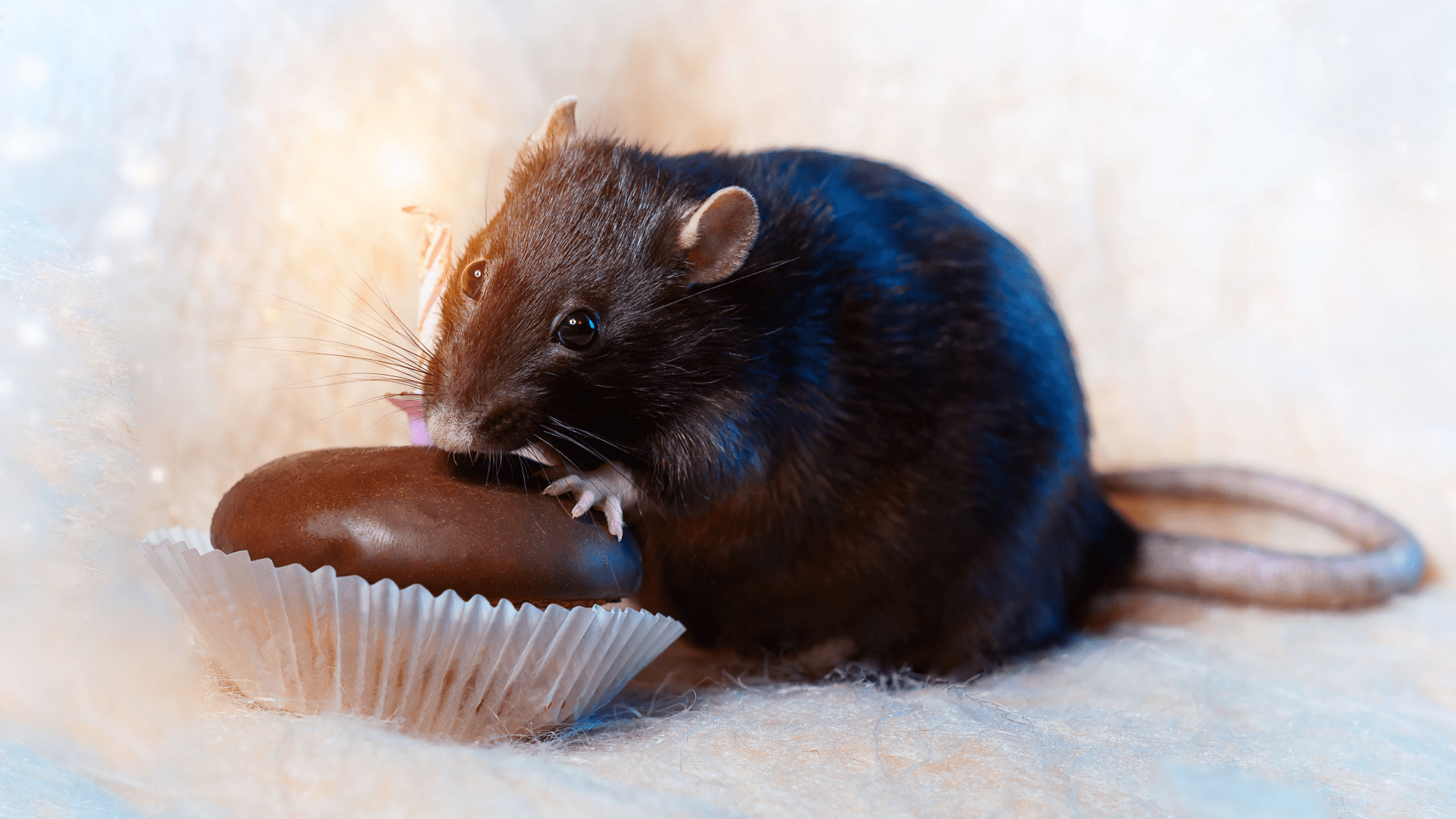
There’s nothing better than sinking your teeth into a sweet, creamy chocolate bar. Rats think so, too—and they may announce their chocolate-infused joy to the world at ultrasonic frequencies. 

Researchers have previously linked ultrasonic rat vocalizations with different emotional and motivational states in the animals, such as in reaction to rewarding stimuli. For example, the rodents vocalize in this way when eating something sweet. 

Now, a team of researchers in Japan have discovered that rats emit a particular ultrasonic vocalization while eating chocolate. Their findings are detailed in a study recently published in the journal eNeuro.

To come to this conclusion, the researchers compared ultrasonic vocalizations that rats emitted when they had access to chocolate, with those they made when they didn’t have access to the candy. The team also compared them with a chocolate-free control group of rats. Researchers then used AI to analyze the vocalizations’ acoustic features, identifying a distinct ultrasonic vocalization—officially 40 kHz inverted-U—strongly associated with chocolate snacking. 

“When rats eat something delicious such as chocolate, they emit a distinct ultrasonic call that humans cannot hear,” Koshi Murata, a study co-author and researcher at the University of Fukui, said in a statement. “This call drops sharply when the brain’s opioid ‘pleasure’ system is blocked. This suggests that rats may be vocally expressing the enjoyment of eating, offering a new window into whether animals experience pleasure as we do.”

To see if this distinct vocalization was related to the tastiness of food or just eating in general, Murata and colleagues compared chocolate-eating vocalizations with the sounds the rats produced while eating regular food. And while the rats ate similar amounts of both, they emitted significantly more 40 kHz inverted-U USVs while eating chocolate. 

In a separate food-choice test, the rats also demonstrated an obvious preference for chocolate: 15 out of 16 rats picked chocolate over the regular food (and can we blame them?). In two experiments, researchers also found that the vast majority of 40 kHz inverted-U USVs were emitted within one second of a feeding event. 

“Our discovery suggests that animal vocalizations could serve as a real-time, non-invasive readout of internal emotional states—specifically, how much an animal is enjoying its food,” said Murata. “Such a tool would allow researchers to measure ‘pleasure’ more directly than current methods permit, and could accelerate research into the brain mechanisms that generate positive emotions.” 

Understanding more about how the brain processes rewarding experiences could shed light on behaviors like overeating, as well as conditions like anhedonia, or the inability to feel pleasure and a common symptom of depression.

The post Rats make an ultrasonic sound when they eat chocolate appeared first on Popular Science.

  •  
❌