❌

Reading view

EU sets out social media limits for children  

European Commission (EC) President Ursula von der Leyen (pictured) outlined plans to restrict children’s access to social media under the watchdog’s proposed EU Kids Act, as concerns mount over the impact of addictive online services and increasingly capable AI systems.

In her annual State of the Union address, von der Leyen told the European Parliament: “What we are witnessing is a great capture of our children. A capture of their attention, their focus, their minds.” She explained the proposed EU Kids Act would ban children under 13 from social media and bar under 15 users from having personal accounts.

Meanwhile, 13 to 15-year-olds would only be able to use “mini accounts” set up and supervised by parents, with limited features and time restrictions. Platforms would also be required to implement additional safety features for users aged 15 to 18.

“We are reversing the burden of proof,” she said, adding, “platforms will have to prove that they are safe”.

Von der Leyen noted young Europeans now spend four to six hours a day on screens, pointing to concerns around addictive features, harmful content, online bullying and growing rates of sleep issues, anxiety and suicide.

“We do not have to accept addictive features. We do not have to accept children being drawn into ever more extreme content. We do not have to accept that girls have their photos used for AI-generated sexualised images,” she argued.

The measures form part of the EU Kids Act, which the EC is due to propose tomorrow (17 September). The proposal would introduce age checks across social media, video sharing platforms, app stores, online games and AI services.

The EC is also preparing a broader Digital Fairness Act aimed at addressing addictive design features beyond services used by children.

AI tipping point
AI was also a focus of the address, with von der Leyen describing it as “the second tipping point of our times”.

She warned that increasingly capable models could create new security risks, including more powerful hacking capabilities and the potential for self-improving systems to cause mass harm.

She revealed the EC plans to work with partners including the UK and Canada on “model evaluation, verification, early warning, AI security and much more”, while also seeking greater European computing capacity and investment in local AI companies.

Von der Leyen called on the region to use AI to support sectors including healthcare, manufacturing, transport and agriculture, while retaining human oversight. “Our approach is clear. We want AI… But above all, we want AI with human agency.”

Global concerns have been mounting over the pace of AI development this week, as Anthropic and OpenAI chiefs called for a slowdown in frontier AI development after researchers warned of existential risks from increasingly capable systems.

The post EU sets out social media limits for children   appeared first on Mobile World Live.

  •  

European telco bosses call for EU to correct the course

Europe’s biggest operators urged European Union (EU) policymakers to rethink regulation they argue is restricting investment in connectivity, with spectrum, fibre and cybersecurity rules amongst their top concerns.

In a joint statement, 17 European telecoms chiefs including Telefonica chairman and CEO Marc Murtra, Deutsche Telekom CEO Tim Hoettges, Orange CEO Christel Heydemann and Telenor Group president and CEO Benedicte Fasmer called on the EU to “correct the course” of the proposed Digital Networks Act (DNA) and Cybersecurity Act (CSA).

The executives argued that “incoherent policy reforms” risk weakening the region’s position. They noted the mobile sector requires €475 billion to establish world-class mobile networks, “requiring a step change in investment”.

The DNA, unveiled by the European Commission (EC) in January to modernise and simplify connectivity rules, aims to harmonise regulation, facilitate cross-border operations and promote investment in fibre and mobile networks. However, the operators argued the framework fails to improve the investment and innovation environment for European connectivity.

The CEOs called for spectrum licences to be granted indefinitely by default, with terms of at least 40 years in exceptional cases. They explained a move away from frequent auctions would free up capital for 5G, fibre and future 6G deployment, adding European operators spent €110 billion on spectrum licences alone over the past 12 years.

The group also pushed back against mandated copper shutdowns, stating operators should decide when to retire legacy networks based on customer demand and market conditions. European operators invest more than €30 billion annually in fibre-to-the-home (FTTH) networks.

Safety net
More broadly, the telcos called for a shift away from rules designed for legacy networks, arguing “regulation should remain a safety net” in “today’s increasingly competitive fibre market”. It also urged policymakers to allow greater scope for innovation with advanced 5G and 6G services, including network slicing and quality differentiation.

On cybersecurity, the operators warned CSA rules mandating the removal of equipment from high-risk third-country suppliers including Huawei could result in up to €40 billion in replacement costs for the sector. They called for a “proportionate, risk-based approach” that considers alternative measures, adding blanket replacement requirements could divert capital away from fibre, 5G and 6G investment.

Ultimately, the group argued stronger connectivity would support growth across AI, sovereign cloud and defence technology. “As CEOs of Europe’s leading telecom companies, we are ready to play our part in delivering European tech leadership,” the executives stated.

Other signatories included executives from TIM, KPN, Proximus, Swisscom and Liberty Global.

The post European telco bosses call for EU to correct the course appeared first on Mobile World Live.
  •  

Tele2 lines up next commercial head

Tele2 sought out an experienced telecoms executive to become its next EVP and CCO in an appointment due to happen no later than 1 June 2027.

Vahdat Zehtab brings 18-years of experience in the telecoms sector and is set to join from the post of CEO with Valdyr, creator of an AI-native network operating system.

Tele2 is filling a role opened when it promoted Nicholas Hogberg to be president and CEO in July after Jean Marc Harion stood down for personal reasons.

Zehtab spent five-years heading Telia’s B2C Mobile unit covering its Swedish operation. Tele2 also highlighted broad international experience in commercial director roles “across several European and Asian markets”.

There was further B2C experience gained with Ncell in Nepal.

Valdyr appeared to cash in on news of the appointment by choosing today (15 September) to reveal the moniker as its new brand, replacing its previous Telness Tech name.

Executives said the rebrand better reflects “what remains once the old” telecom stack is removed.

The post Tele2 lines up next commercial head appeared first on Mobile World Live.

  •  

Spanish Amber Deposit Offers Rare Window into Cretaceous Life

Life reconstruction of Hallucinochrysa diogenesi. Image credit: J.A. Peñas.

El Soplao, a fossil site tucked into the hills of Cantabria in northern Spain, stands out for yielding amber pieces with a blue-violet hue and abundant bioinclusions, according to a new review paper.

The post Spanish Amber Deposit Offers Rare Window into Cretaceous Life appeared first on Sci.News: Breaking Science News.

  •  
  •  

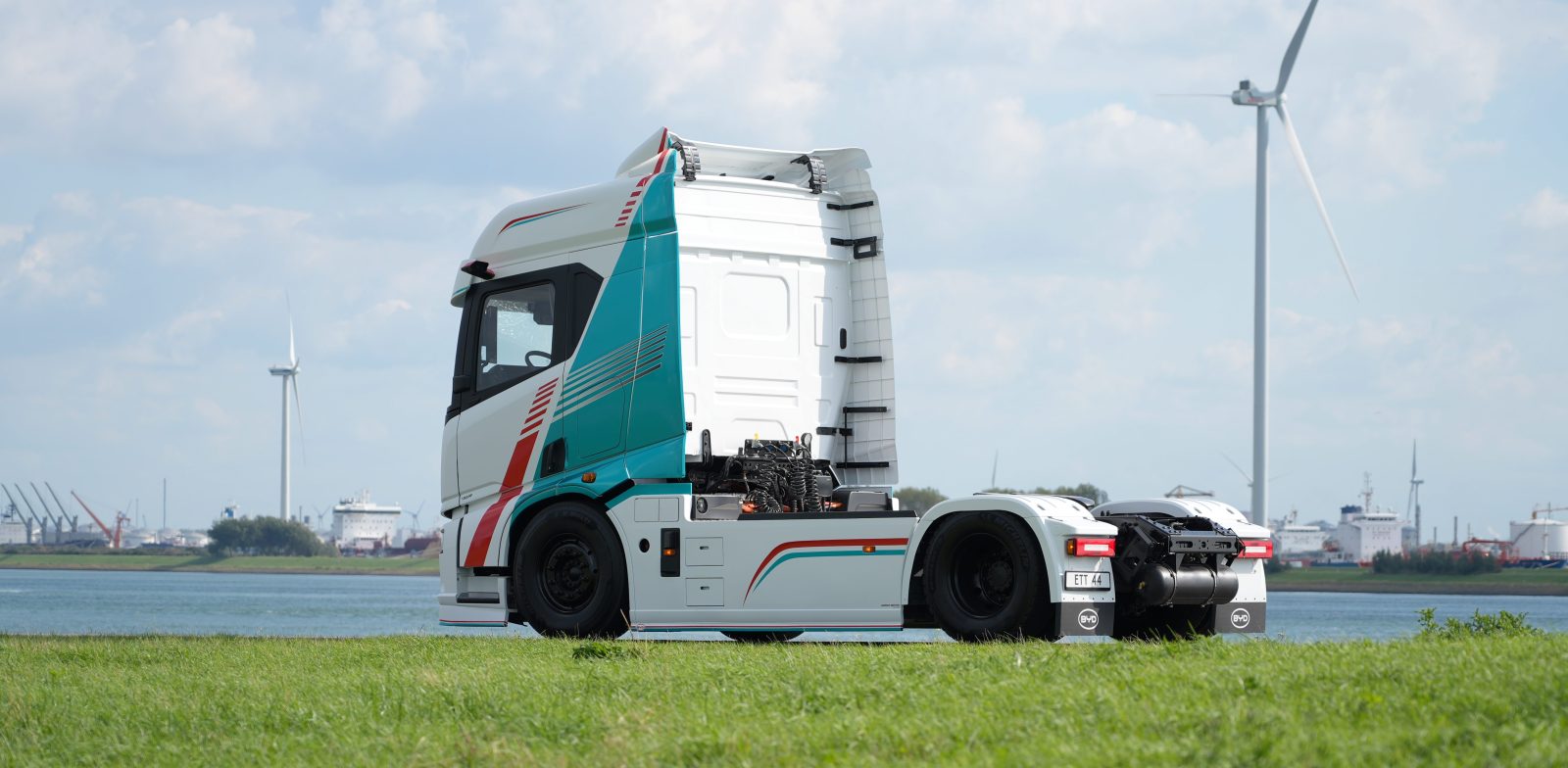
BYD unveils flagship 600 km electric truck with 1.5 MW charging

BYD unveiled its most complete electric commercial vehicle lineup yet at IAA Transportation 2026 in Hannover, headlined by the ETT 44, a heavy-duty tractor with up to 600 km of range and 1.5-megawatt charging.

It’s BYD’s clearest shot yet at Europe’s heavy-truck market, and it brings the “Flash Charging” pitch the company built around its cars straight to the freight business.

more…
  •  

Tesla reveals European Semi specs: 550 km range, 800 kW charging

Tesla revealed the European specs for its Semi electric truck, and they don’t match the version already in production in the US. The truck will offer up to 550 km (342 miles) of range at 40 tonnes fully loaded.

Tesla Europe posted the numbers today, days before the company plans to formally launch the Semi in Europe at the IAA Transportation show in Hannover.

more…
  •  
❌