You may not know it, but minivans are making a comeback in the US. Look around, and you'll start to notice an uptick in these breadboxes on wheels. Sales were up 21 percent in 2025, suggesting that the humble minivan is shaking off its "uncool" stigma and finding new fans among an SUV-weary public. I'm here for it.
One of the companies currently carrying the torch for minivans is Kia, which has sold its popular Carnival minivan here since 2021. Kia is also one of the few automakers making all-electric vans. This week, the Korean automaker rolled out its new PV7 at IAA Transportation in Germany. This is the second electric van from Kia's Pla …
There might not be the same degree of optimism regarding electric vehicle adoption as a few short years ago, but the transition toward battery-electric vehicles continues nevertheless. More than 1.8 million EVs had already been sold between the start of this year and the end of August, according to analysts. And in the US, there has been a large uptick in drivers considering EVs that they might have written off last year, due to escalating fuel prices with no clear end in sight. Despite this, charging infrastructure continues to lag, according to a new report from ChargePoint.
“All in all, things are moving forward. I think the North American market has been better shaped than a lot of the press reports,” said ChargePoint CEO Rick Wilmer. “Part of it is just the data we see in terms of the amount of RFPs that we receive for charging solutions. They haven't slowed down. We reported quarter over quarter growth in the last quarter we reported. And you look at the data around used EVs going up in price because the demand is so high. I saw a recent report… EV retention rates are 96 percent. So those folks that are putting their leased cars on the used market, they're not going back to gas, they're going to another EV,” he said.
Beyond that, cheap electric trucks from Slate and Ford indicate further future demand for charging. “When you look at how much interest there is in the used EVs that are at parity with an equivalent gas vehicle, that tells you the appetite is there for EVs if it's the right vehicle at the right price point," Wilmer said. "So I think the auto OEMs, maybe not homogeneously, but they're figuring out what the market wants in North America, and they're starting to introduce those vehicles, which I don't think a lot of the forward-looking forecasts accommodate the fact that the product market fit is getting better coming out of the car companies.”
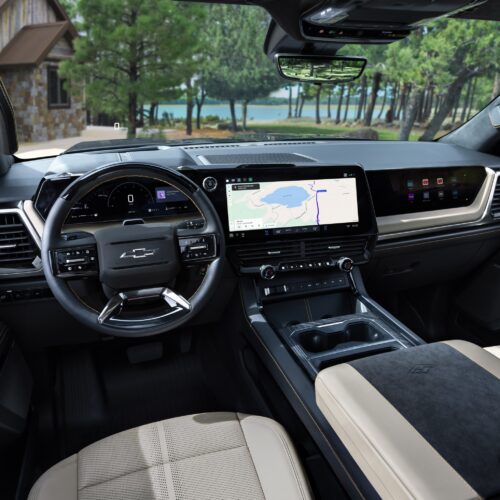
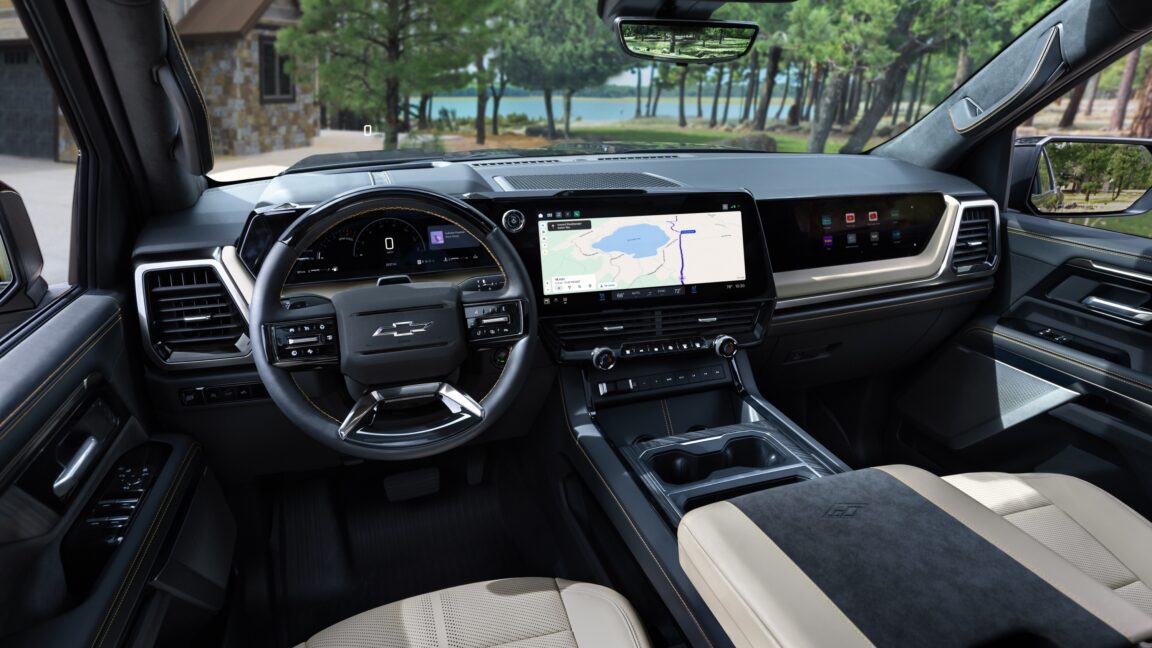
General Motors is about to launch new versions of its bestselling Chevrolet Silverado and GMC Sierra pickup trucks for model year 2027, and among the changes are new user interfaces for the trucks’ digital displays. The automaker has gone for a more minimalist approach than we’ve seen from it in the past, and after a demo yesterday, it seems like it has been listening to constructive feedback to improve the products. And yes, unlike GM’s electric vehicles, these trucks still let you cast your Apple or Android phone to the infotainment system.
Although GM showed us video of the main instrument cluster—the gauges and info that’s presented to the driver—we don’t have any screenshots we can show you. But I was impressed with the restraint and lack of visual noise; instead, the background is always black, which should be dark even at night thanks to local dimming technology.
There are a number of different views. One with simple half-moon dials for speed and engine rpm; on the right side of the display is a user-configurable zone, where you can browse your music or audio feeds, display trip info, or turn-by-turn directions. Another is a driver assist display, with green as the highlight color to show when Super Cruise is active; this shows you a representation of what the car’s fused sensors are seeing around it. A third is for off-road driving, with your various angles and diff settings, and a fourth is for towing.
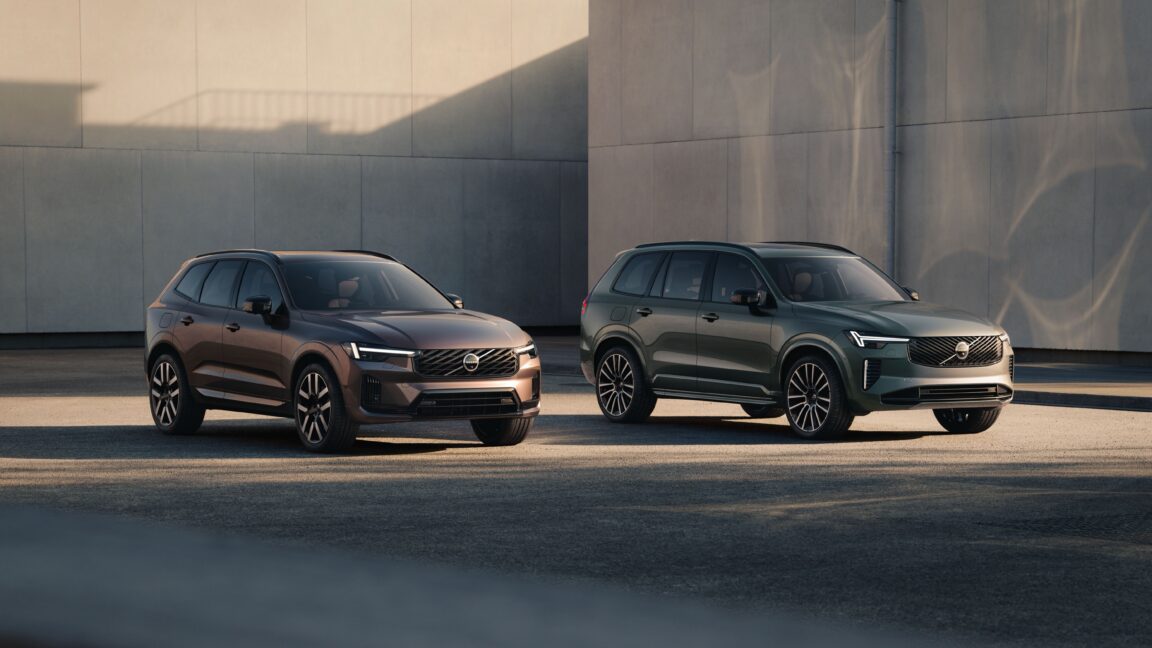
There must be a case of upgrade fever taking hold in Gothenburg. Yesterday, we saw the revised Volvo XC40; today it’s the turn of another pair of Volvo SUVs, the bestselling XC60 and the three-row XC90. While the styling changes are more subtle, the new plug-in hybrid powertrain—which more than doubles its real-world electric range—is most welcome.
Volvo had sold more than 2.7 million XC60s worldwide by the end of last year, so it’s an important car for the brand. Visually, there are changes to the “Thor’s Hammer” headlights: these keep their distinctive daylight running light signature but now hide matrix LED projectors within their depths. There’s a new front grille as well, one that has been slimmed down a little, together with tweaks to the bumpers, wings, and some other body panels.
On the inside, there’s a new ventilated leather interior option, and like the XC40, the new 11.2-inch infotainment system sports a Gemini personal assistant to enable conversational voice control of the android automotive OS-based infotainment system. Based on some brief testing, the new Gemini voice assistant does at least perform a lot better than the previous version, which, if anything, has degraded in ability over the past few years.
“Being Heumann” opened the Toronto International Film Festival on September 10th.
Four years after “CODA” delivered Apple Original Films its first Best Picture Oscar, Siân Heder is back in the awards conversation. Her new film, “Being Heumann,” opened the Toronto International Film Festival with a story that looks purpose-built for the Academy: a real-life civil-rights struggle, a largely disabled cast, and the same director who last turned inclusion into both a cultural moment and a trophy.
The movie follows Judy Heumann, the late activist often called the mother of the disability-rights movement, as she leads a group of disabled protesters in the 1977 occupation of a San Francisco federal building. The sit-in lasted 26 days and pressured then-Health, Education, and Welfare Secretary Joseph Califano Jr. to sign regulations implementing Section 504 of the Rehabilitation Act of 1973. Heder has described Heumann’s work as making “invisible people visible” and forcing “the hard change of inclusion.”
That framing is familiar. “CODA” was a coming-of-age story about a hearing daughter in a deaf family; it won Best Picture, Best Supporting Actor for Troy Kotsur, and Best Adapted Screenplay for Heder. Apple is repeating the playbook: a prestige festival launch, a limited theatrical window, then a swift move to Apple TV a week later.
The talent package is equally awards-ready. British actor Ruth Madeley plays Heumann. Mark Ruffalo plays Califano. Daniel Durant, who earned notice in CODA, returned to work with Heder. Most of the cast are disabled actors — an authenticity argument that studios now treat as both moral and strategic. Madeley has said the film tries to show Heumann’s humor and joy, not only her ferocity.
Whether “Being Heumann” is “Oscar bait” is a matter of tone, not facts. The film has the ingredients the Academy has rewarded: a historical injustice, underrepresented performers, a director with recent hardware, and a streamer that already proved it can campaign a mid-budget drama all the way to Best Picture.
Of course, “Oscar bait” is a loaded label that implies the movie was assembled to win prizes rather than because the story mattered. That judgment is about tone — cynicism versus generosity. One person looks at the same facts and says “this is a serious film about an overlooked chapter of history.” Another looks at them and says “this is a prestige package built for awards show voters.”
Apple does not need another trophy to justify the project. It would be nice if the film looks like more than just a prestige checklist.
The 1977 sit-in is a genuine piece of American history that still sits outside most popular memory. If “Being Heumann” makes that story land with audiences — and if Heder again finds the human texture that made “CODA” more than a message movie — Apple will have a real contender. If it plays as solemn, worthy, and slightly engineered, it will still get nominations and still stream. The question is whether the company can turn another Heder film into the same kind of industry event it pulled off in 2022.
MacDailyNews Take: Toronto was the first test. November theatrical and the Apple TV rollout will be the next. Awards season will decide whether this is another “CODA” or not.
Please help support MacDailyNews — and enjoy subscriber-only articles, comments, chat, and more — by subscribing to our Substack: macdailynews.substack.com. Thank you!

 Login