The bloc wants to curb Big Tech’s grip on children with its new EU Kids Act, but age checks, parental oversight, and privacy concerns could make its plan difficult to implement.
The bloc wants to curb Big Tech’s grip on children with its new EU KIDS ACTS, but age checks, parental oversight, and privacy concerns could make its plan difficult to implement.
She found a future in the internet’s past with a Tumblr blog of animated texts, a revolt against the clean minimalism of contemporary design aesthetics.
On social media, Meta’s chief executive appeared to jab at Anthropic by saying that leading A.I. labs should be focused on safety rather than improving their own technology.
Two years ago, social psychologist Jonathan Haidt released his New York Times bestseller The Anxious Generation. The book posits that the rise of social media and smartphone use is largely to blame for the prominent decline in teen mental health since 2010. It quickly became a central rallying cry of the social media backlash. Haidt has been credited with helping inspire Australia's nationwide teen social media ban. He has joined forces with bereaved parents who are fighting tech companies in court. His name comes up unprompted in conversations with people in power who say his book opened their eyes to an online crisis.
It was the fastest-growing emoji in 2025 – but if you’re older than 16, it has probably passed you by. Now, just as twentysomethings are catching up, it’s over
In the 2025 hit Netflix show Adolescence, DI Luke Bascombe’s 13-year-old son, Adam, has to explain to his father the way his generation use heart emojis. “Red means love, purple: horny, yellow: ‘I’m interested, are you interested?’, pink: ‘I’m interested but not in sex,’ orange: ‘You’re going to be fine,’” he explains. “It all has a meaning. Everything has a meaning.”
And those meanings are constantly evolving. Take the skull (), for example, which has come to be used as a reaction for finding something funny – a visual shorthand for the slang phrase: “I’m dead.” Or the wilting rose () which was, according to Google data analysed by the New York Times, the fastest-growing emoji in terms of popularity in 2025 – and was the 93rd most used. That the previously obscure wilting rose is now in the top 100 emojis is thanks to generation Alpha (those born between 2010 and 2024), who use it in place of the broken heart emoji () to signify sadness, or ironically, to suggest mock-heartbreak.
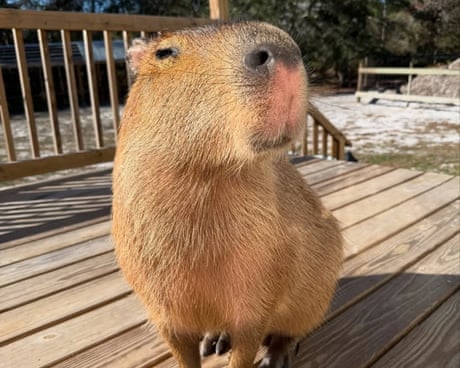
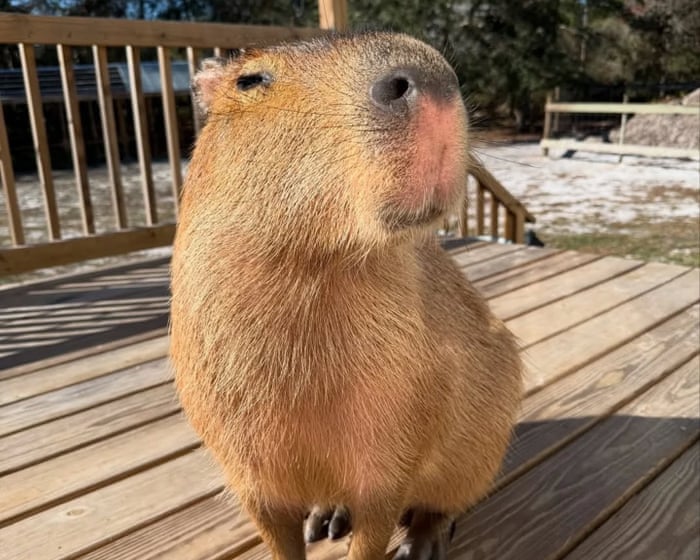
From a cappy-cafe owner in Japan to an escaped capybara in the UK, this homespun film takes the temperature of an international obsession
One of Midlands-based film-maker Sharon Walia’s previous works was The Keepers of the Pigs, proudly described on her production company’s website as “the first ever documentary about guinea pigs”. So it makes zoological sense that her latest film takes on capybaras, guinea pigs’ ridiculously cute semi-aquatic cousins that are indigenous to Latin America, and relatively recently became ubiquitous on social media in memes and short films alike. As glimpsed here, there was even a capybara in the recent Academy Award-winning animated feature Flow, some pro-cappy boosterism that captured the creatures’ chill vibe and snuffly sweetness.
Walia’s celebration of the species stays on script, rejoicing in the animals’ natural geniality, friendliness to other species in their natural habitat, and their compelling, remunerative charm that seems to have bolstered the fortunes of several animal attractions around the world.
Digital-age Australian psychodrama tracks the shut-in mania of dangerously disaffected male fan, but doesn’t get inside his mind
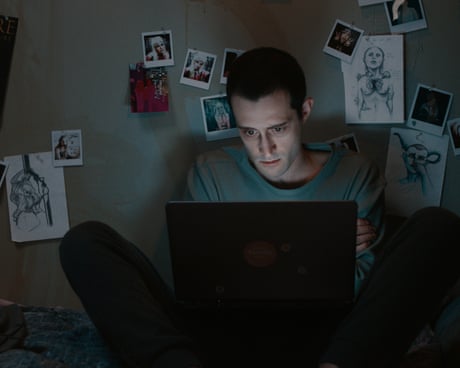
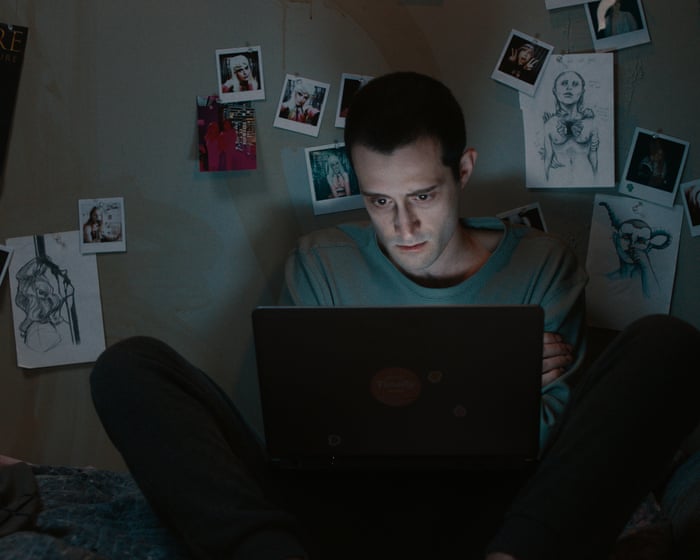
If the parasocial phenomenon is a kind of hell, then Max Wren, protagonist of this Australian digital-age psychodrama, resides in the ninth circle. Self-barricading in a basement room surrounded by screens, working on a documentary about the object of his disaffection (an enigmatic influencer called Lenore), this obsessive shut-in makes Eminem’s Stan look like the Dalai Lama. Touching on subjects including the attention economy, the male gaze, and incel isolation and misogyny, director David Ward feels both Max and Lenore’s pain. But his ungainly debut film doesn’t fully transcend its stage origins to capture the splintered headspace of the terminally online.
Like films about fictional pop stars that feature unconvincing music, it doesn’t help that the quickfire résumé of Lenore’s career only half-conveys her magnetism. A one-time beauty influencer called Veronica Brand, she later graduates to more extreme performance art-type stunts, such as livestreaming her miscarriage; a move that, spliced without her knowledge into a children’s TV broadcast, forced her into hiding. But this performative vulnerability, including hints of her abusive dad, apparently won her legions of OnlyFans-style acolytes. Not just Max, but also his colleague Sam (Sam Macdonald), a brash interloper outraged to find he was nothing special to Lenore and who turns up at Max’s door offering exclusive footage of her.
Many hoped that the march of technology would usher in an egalitarian utopia – but some foresaw the threat it would pose to liberal society. Why did nobody listen?
Adapted from The Rise and Fall of the Artificial State by Jill Lepore, published by Allen Lane on 25 August. To support the Guardian, order your copy at guardianbookshop.com
Influencers aren’t just battling competitors for brand deals. They’re now battling AI versions of themselves
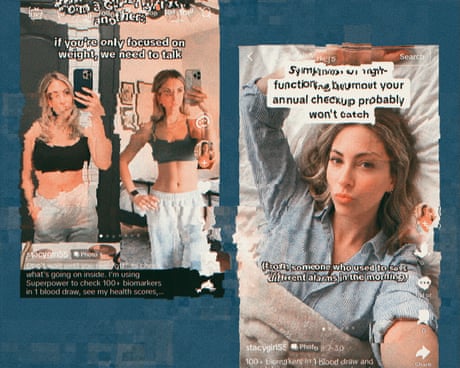
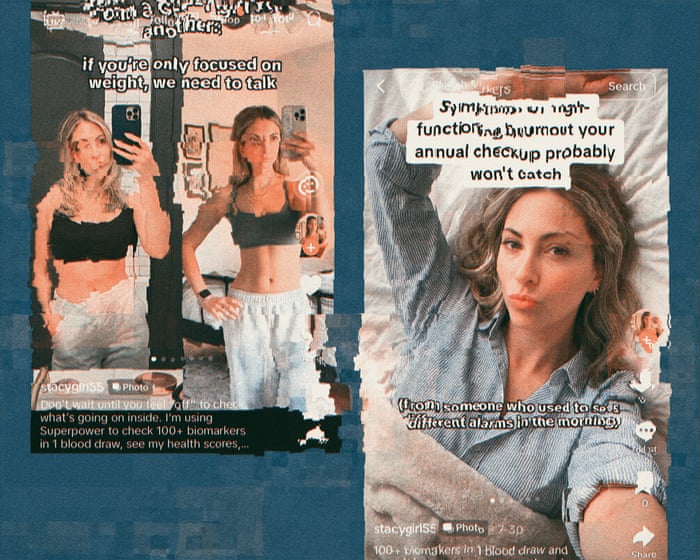
Earlier this year, Emily Schuman, the creator of the lifestyle blog Cupcakes and Cashmere, saw a photo of herself she didn’t recognize on Instagram. In a sponsored ad, Schuman, who has more than 500,000 Instagram followers, is holding up a vial of GLP-1 drugs, advertising the telehealth company Gala. There was just one problem: Schuman had never heard of Gala and had nothing to do with the ad.
The ad was based on a digitally altered version of a selfie Schuman had taken in her car and posted on Instagram years earlier. Once her followers got wind, they flooded her inbox with questions about the sponsorship as it didn’t seem consistent with Schuman’s personal brand. Soon after, Schuman discovered this was just the beginning. There was also an Instagram post where an AI version of her with darker hair appears to apply foundation to promote a makeup brand called Meroda Cosmetics, and TikTok posts with generated images of her promoting the blood testing company Superpower.
 Login