❌

Reading view

Naver Turns to In-House Security AI After Claude Access Disruption
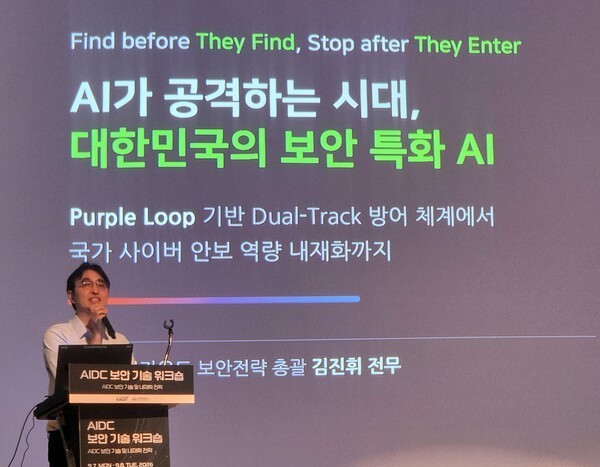
Kim Jin-hwi, an executive director at Naver Cloud’s Security Division, explains the company’s strategy for developing a security-specialized model at the AIDC Security Technology Workshop at Militopia Hotel in Seongnam, Gyeonggi Province, on Sept. 7. (Photo: THE ELEC)

Naver began developing an artificial intelligence (AI) model specialized for cybersecurity after export controls on Anthropic’s Claude disrupted access to the service.

The disruption led the company to conclude that it could not rely on overseas models for its security capabilities.

Kim Jin-hwi, an executive director at Naver Cloud’s Security Division, disclosed the circumstances at the AIDC Security Technology Workshop held at Militopia Hotel in Seongnam, Gyeonggi Province, on Sept. 7. Kim, a former National Intelligence Service official, joined Naver in April. He oversees infrastructure security across the group, including Naver, Naver Cloud and Naver Webtoon.

“The service was interrupted midway because of export controls,” Kim said. “After experiencing that problem, we decided that we needed to build our own AI model.”

The US Department of Commerce in June ordered Anthropic to suspend access by all foreign users to Claude Fable 5 and Claude Mythos 5, citing national security concerns. Access to the two models was blocked for 19 days until the department lifted the restrictions. Mythos 5 remains available only to certain approved organizations.

Kim also pointed to limitations of overseas models. “Foreign models don’t have an understanding of the domestic threat environment,” he said. “Their guardrails, or AI control mechanisms, also pose major problems for how we use them.” He added that the episode made Naver realize it could not depend on overseas providers for its security policies and capabilities.

Kim said, however, that Naver does not plan to handle all AI security tasks with its own model. The company intends to continue using external solutions for tasks including vulnerability assessments.

According to Kim, Naver is already using existing AI models in actual security operations. AI automatically scans all ports on about 100,000 externally exposed servers twice a day. The company also operates a system in which a red team responsible for attacks and a blue team responsible for defense and patching exchange results and repeatedly validate vulnerabilities.

As Naver prepared its own model, it also built an in-house “harness” that connects AI models with vulnerability-analysis tools and execution environments. “Using this harness, we reproduced all of the open-source vulnerabilities that Mythos had discovered,” Kim said. Naver’s security team identified and reported 29 previously undisclosed high-risk vulnerabilities during the process, he said.

Against that backdrop, the government announced a project in late July to develop an AI foundation model specialized for cybersecurity. Naver Cloud formed a consortium and applied. “There were many areas that were difficult to address at the level of a single company,” Kim said. “It is an opportunity to build GPU resources, data and validation capabilities on a national scale.”

The consortium, comprising Naver Cloud and 32 other organizations, was selected on Sept. 3 as the final contractor for the government’s project to develop an AI foundation model specialized for cybersecurity.

Naver will contribute 4,000 of its own GPUs. The consortium aims to train Naver’s HyperCLOVA X and LG’s EXAONE on security data to develop a mixture-of-experts (MoE) security model with 700 billion parameters. The completed model will also be deployed on domestic AI chips from FuriosaAI and HyperAccel to validate its performance.

Development will begin on Sept. 18. With Minister of Science and ICT Bae Kyung-hoon saying the security-specialized model will be unveiled within the year, the consortium is targeting a demonstration in December. An interim evaluation will follow in February next year, with the project scheduled to conclude in July. Naver plans to release the final model as open source and distribute it through application programming interfaces (APIs) and software development kits (SDKs), allowing Korea’s cybersecurity industry to use it.

  •  

Smilegate Profit Falls 30% as NPIXEL Bets on 'Eclipse' Amid Capital Impairment

Smilegate's new title "Eclipse: The Awakening," or "Eclipse," launched on PC and mobile at noon on Sept. 10. The game is a key project for Smilegate after its operating profit fell 30% last year, while developer NPIXEL is seeking to offset an operating loss of 12.3 billion won. With Com2uS's new title "Zeus," released about two weeks ago, holding the top spot in mobile game sales, attention is turning to how Eclipse will perform.

Eclipse is a free-to-play game with in-app purchases. The company designed its monetization model to attract users early on while reducing the burden of spending. According to Smilegate, the game secured 1 million pre-registrations before launch. During the first round of character pre-creation on Aug. 19, all 24 available servers reached capacity within 25 minutes. Some streamer servers filled up in just one minute. Smilegate increased capacity and opened a second round the following day, but that also closed within a day.

The game's core concept is "MMOLite," designed to reduce the time commitment, spending pressure and intensity of player competition typically associated with massively multiplayer online role-playing games (MMORPGs). A key example is "Sanctuary," which accumulates character-growth resources and summon tickets even while users are offline. An AI mode allows gameplay to continue automatically after users exit the game. Player-versus-player (PvP) combat is also disabled in most areas.

The monetization system follows the same approach. Eclipse does not allow users to directly purchase "cash accessories" that boost character stats. Some growth-related products are subject to weekly or monthly purchase limits rather than being available without restriction. The goal is to minimize the gap between hardcore and casual players. From a financial perspective, however, the policy could lower average revenue per user (ARPU) by reducing the incentive to spend. The model therefore depends on maximizing the overall number of paying users.

The importance of Eclipse's commercial performance is evident in the financial statements of Smilegate and NPIXEL for last year.

Smilegate posted consolidated revenue of 1.4365 trillion won and operating profit of 359.8 billion won in 2025. Revenue fell 5.6% from the previous year, while operating profit declined 30%. Net income dropped about 36% to 302.3 billion won.

The stakes are even higher for developer NPIXEL. According to its audit report, the company generated 13 billion won in revenue last year. Sales have continued to decline from 67 billion won in 2022 to 31.6 billion won in 2023 and 14.2 billion won in 2024. NPIXEL posted an operating loss of 12.3 billion won last year. It cut operating expenses to about 25.4 billion won from 67.6 billion won a year earlier, narrowing its operating loss by about 77% from 53.4 billion won in 2024. Despite the cost reductions, revenue has yet to recover.

NPIXEL also faces pressure from its financial structure. At the end of last year, the company had 7.7 billion won in current assets, compared with 56.3 billion won in current liabilities, more than seven times as much. Total assets stood at 14.8 billion won and total liabilities at 66 billion won. Total equity was negative 51.1 billion won, leaving the company in a state of complete capital impairment. EY Han Young said in its audit report that material uncertainty exists that may cast significant doubt on the company's ability to continue as a going concern. NPIXEL's co-chief executives have also lent money to the company. Borrowings related to co-CEO Jung Hyun-ho totaled 11.9 billion won, while those related to co-CEO Bae Bong-gun amounted to 6.9 billion won.

Eclipse therefore carries significant weight for both companies. For Smilegate, it represents a new revenue source that could help revive earnings. For NPIXEL, it is a game that needs to rebuild the company's revenue base and help it move out of losses and capital impairment.

The game industry is focusing less on Eclipse's initial user numbers than on its future retention rate and sales ranking. Users drawn in by free summon tickets and other incentives need to remain in the game for at least a month, with some converting into paying customers. Smilegate's "MMOLite" model will only prove viable if the game can generate meaningful revenue while keeping the burden of spending low.

As of 4 p.m. on Sept. 10, Eclipse ranked No. 10 in sales on Apple's App Store. It ranked No. 1 in free downloads.

  •  

Zscaler Automates SOC Operations With Frontier AI

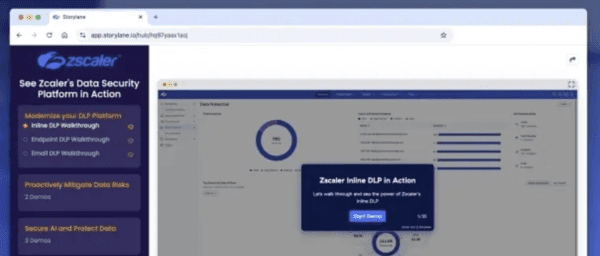
Zscaler screen capture. (Source: Zscaler)

Zscaler has unveiled Agentic SOC, a security operations platform that uses frontier artificial intelligence (AI) models from companies including OpenAI and Anthropic.

The U.S. cloud security company said on Sept. 9 that AI-powered attacks are occurring at speeds that traditional security operations centers (SOCs) struggle to handle, requiring SOCs to be redesigned so AI can take the lead in detecting, investigating and blocking threats.

Zscaler's Agentic SOC combines security information and event management (SIEM), which collects logs and detects threats, with security orchestration, automation and response (SOAR), which handles identified threats. It adds AI agents that can independently assess situations and take action throughout the process.

The company has also partnered with frontier AI labs including Anthropic and OpenAI, based on its view that a single model or approach has limitations in delivering accurate agentic AI operations.

Agentic SOC assigns AI agents to perform decisions and responses traditionally handled by security analysts. The agents identify genuine threats among large volumes of security alerts, investigate attack paths and root causes, and determine whether a threat is present. They can then automatically take necessary actions, such as isolating compromised users or blocking attackers' command-and-control (C2) communications.

Zscaler provides the AI agents with security data collected from networks in real time and its own threat intelligence. The platform can also integrate with customers' existing security tools to analyze threat information and automatically block lateral movement by attackers across systems.

"Agentic SOC represents a fundamental reimagining of security operations," said Deepen Desai, Zscaler's vice president of cybersecurity. "It is designed to proactively reduce exposure and contain threats at machine speed."

"AI attacks operate with a speed, scale and adaptability that are markedly different from humans, fundamentally changing the threat landscape," said Allie Mellen, a principal analyst at Forrester Research. "Defenders need to focus on fundamentals such as zero-trust principles, data loss prevention and access restrictions."

  •  

Union Biometrics Targets AI Data Center Security

Union Biometrics website. (Source: Union Biometrics)

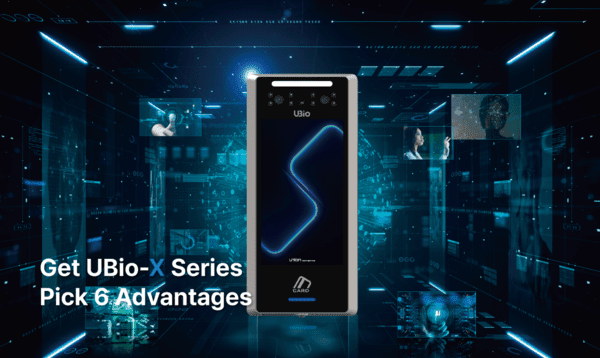
Biometric security company Union Biometrics said it plans to expand sales of biometric security solutions to data centers in Korea and overseas.

Physical access control and permission management are critical for artificial intelligence (AI) data centers because they house expensive computing equipment such as graphics processing units (GPUs) and handle critical data. Union Biometrics said it is addressing that demand by combining biometric technology with access control, permission management and authentication history management.

The company has deployed AI-based biometric security systems at data centers in Lyon and Grenoble operated by French data center operator Data One. It is also exploring the deployment of biometric access control solutions at new North American data centers, including one in Vineland, New Jersey.

Union Biometrics said it plans to leverage that experience to address new demand. The government launched an AI Data Center (AIDC) Alliance on July 29 and plans to establish a public-private cooperation framework in the second half of the year. Korean companies and global big tech companies are also pursuing AI data center projects totaling 5 gigawatts (GW) of capacity and 2 million GPUs.

"We will respond to expanding investment in AI infrastructure based on our experience supplying security solutions to data centers in Korea and overseas," a Union Biometrics official said.

Union Biometrics provides applications including access control and attendance management based on biometric identification technologies such as facial and iris recognition. Its security solutions can be deployed in areas ranging from general access zones to server rooms, control rooms, and power and cooling facilities. The company posted revenue of 51.3 billion won and operating profit of 1.2 billion won last year.

  •  
❌