Login

Stoke Space raises $1 billion for fully reusable rockets, targets 'early 2027' for 1st-ever launch
Stoke Space has amassed a substantial sum during its latest round of financing and is revealing exactly where it plans to invest its new stack of cash.
The Kent, Washington-based company just raised $1 billion via its"Series E" capital campaign, bringing Stoke’s total investor haul to $2.3 billion. The Sept. 8 announcement provided a development update for Stoke’s fully reusable Nova Pathfinder launch vehicle and included plans for its never-before-seen Nova Block 2 rocket, a more powerful system designed to be able to deliver up to 15 tons to low Earth orbit (LEO).
“We are humbled by the trust our investors and customers have placed in us in pursuit of this critical generational challenge,” said Andy Lapsa, Stoke CEO and co-founder. “This investment enables us to scale toward delivering the capability and cadence our customers require.”
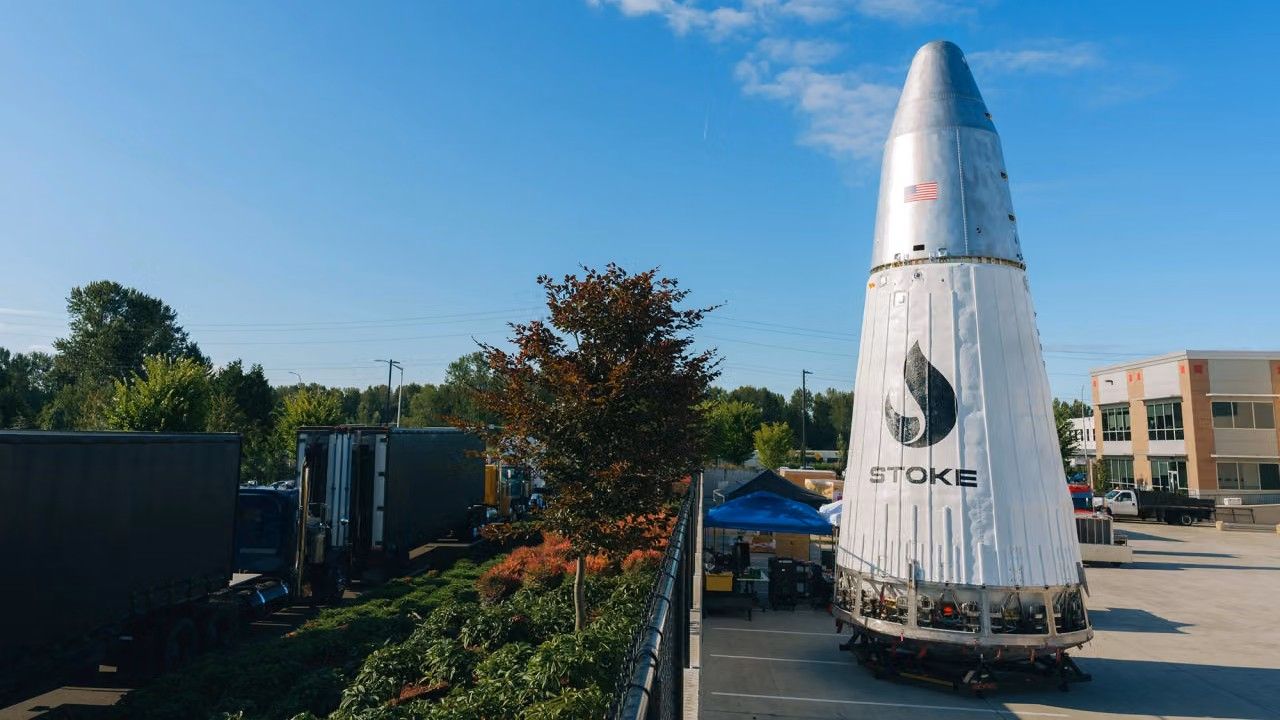
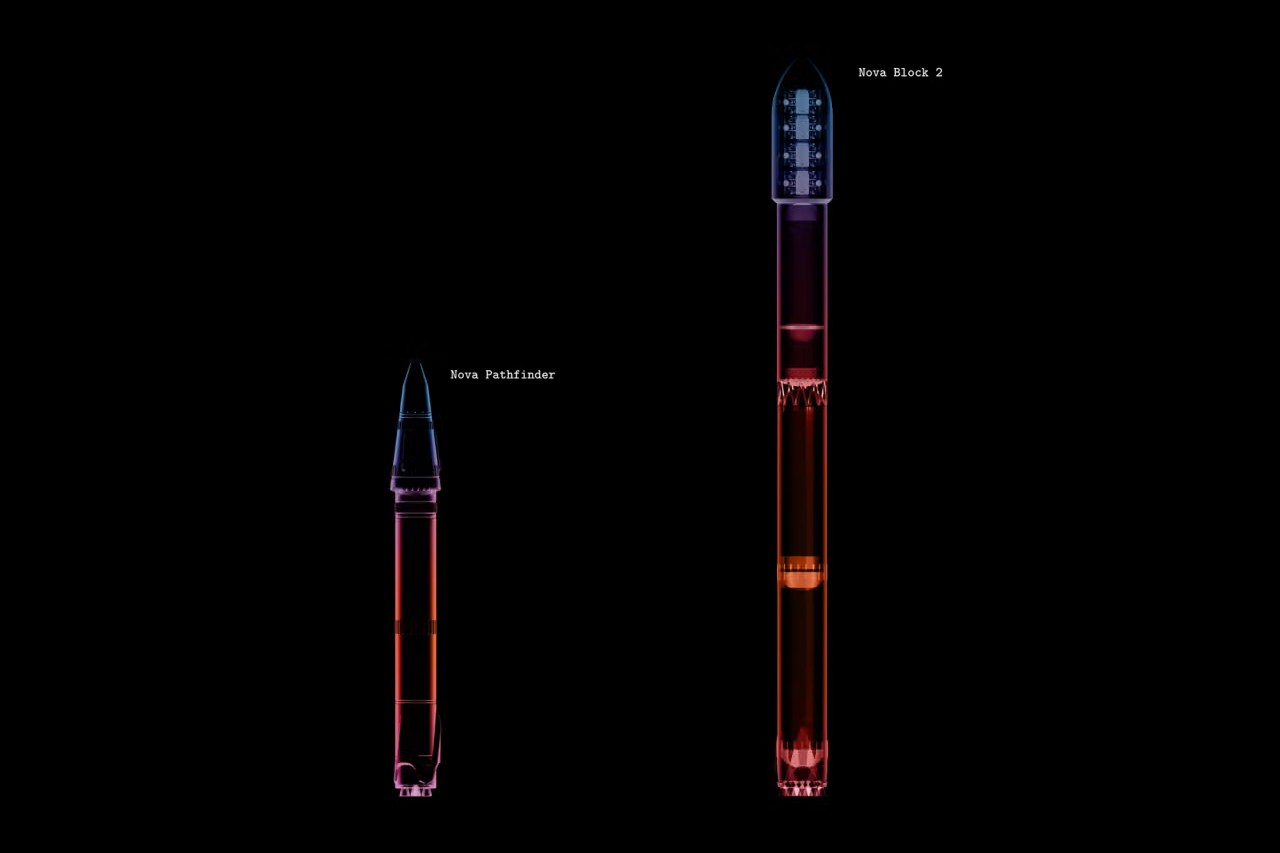
Nova Pathfinder is Stoke’s first orbital launch vehicle (the largest first rocket ever undertaken by a U.S. launch company, according to Stoke), and is based on the same technologies the company is building into its Block 2 design. Both two-stage vehicles are being manufactured with full and rapid reusability in mind, with Pathfinder serving as the proving ground for that architecture.
Pathfinder's first stage is powered by seven Stoke-designed full-flow, staged-combustion (FFSC) Zenith rocket engines, fueled by liquid oxygen and liquefied natural gas (LNG). The first stage on Nova Block 2 will be equipped with 14 Zeniths. Stoke calls FFSC “perhaps the most difficult rocket engine cycle to develop,” but highlights its advantages; the tech leaves fewer residuals like soot around the engines and reduces the amount of maintenance needed between flights, according to the company.
The upper stage of both rockets is the more atypical approach to spacecraft design, compared to other vehicles of the same launch class. The aft end of Nova’s second stage is designed with a heat shield to protect the vehicle during reentry through Earth’s atmosphere. Instead of the ceramic tiles historically used on the heat shields of previous spacecraft, the dome-like structure at the base of Nova’s upper stage is made of metal, which is actively cooled by the liquid hydrogen that fuels the stage’s Andromeda propulsion system.
Rather than a single large, vacuum-optimized engine bell at its center, Nova’s upper stage features 12 small dual-thrust chambers integrated into a circle around the outer edges of the vehicle’s heat shield. Stoke successfully completed a “hopper” test flight of Pathfinder’s upper stage engine system in 2023, flying the vehicle about 30 feet (10 meters) into the air before it safely touched down.
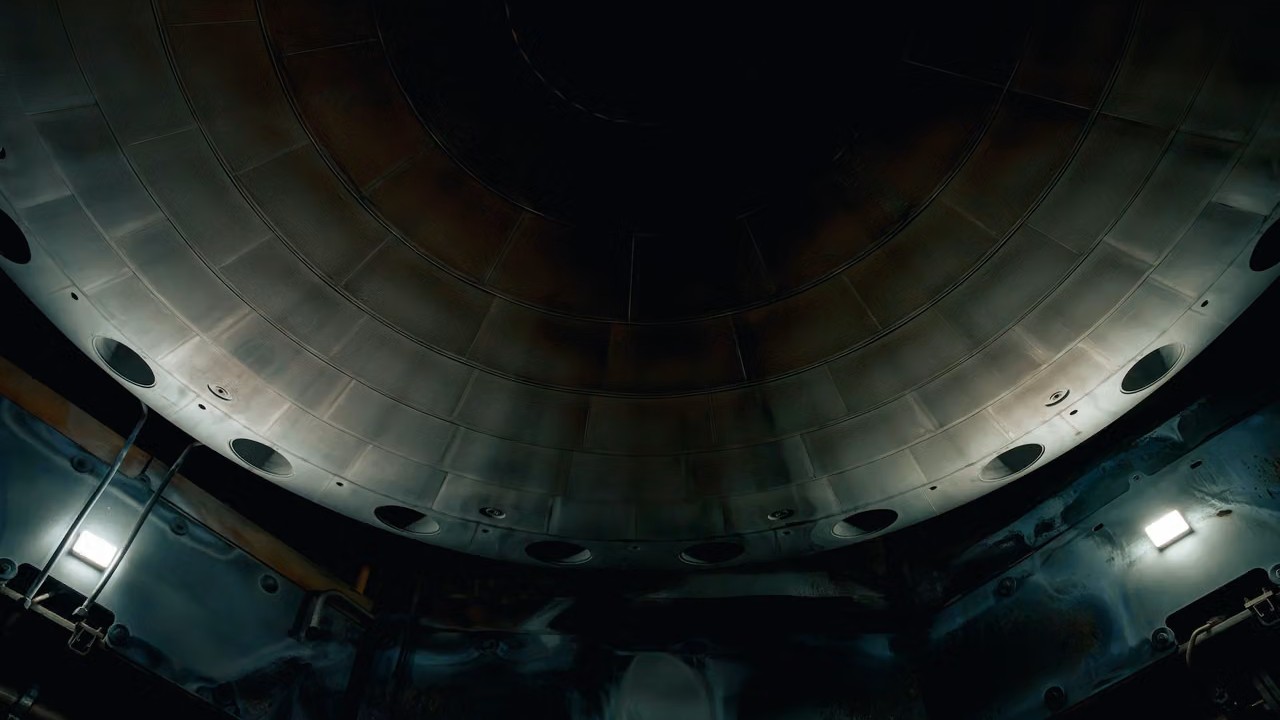
Scaling up to Block 2, Stoke plans to equip the upper-stage system with independent systems for each of the 12 engines, potentially increasing thrust by over a factor of five, according to the company. Block 2’s upper stage also drops Pathfinder’s tapered design in favor of cylindrical tanks, increasing propellant and payload volume to accommodate a 5-meter-wide (16.4 feet) fairing.
Stoke says the larger Block 2 configuration has been in the works alongside Pathfinder for several years. The company is developing the more powerful rocket to support large commercial and national security satellite constellations, of which there soon may be a high demand.
Nova Block 2’s closest competitors are SpaceX’s Falcon 9 rocket and Rocket Lab’s upcoming Neutron launch vehicle, which is still under development. And Falcon 9 is already being sundowned by SpaceX as the company gets closer to operational flights with its next-generation Starship rocket. While certain Falcon 9 flights for NASA, like crew launches to the International Space Station, are expected to continue until at least 2030, SpaceX CEO Elon Musk has said that Starship’s ultimate success “means winding down Falcon.” The timing should line up with when Stoke hopes to step in with Nova Block 2. Block 2’s first launch is targeted for 2029, with production and flight cadence expected to increase from there.
As Stoke ramps up development for its upgraded launch vehicle, the company’s fresh round of funding will also go toward construction of the physical infrastructure Stoke needs to build, test and eventually operate both vehicles. The company is planning a 475-acre (192 hectares) expansion to its 75-acre (30 hectares) Moses Lake Test Site in Washington to support propulsion and vehicle testing as Pathfinder nears its first launch and Block 2 hardware begins coming online.
Stoke is also expanding its operations at Cape Canaveral Space Force Station (CCSFS) in Florida. The company was selected by the U.S. Space Force in 2023 to manage CCSFS’s Space Launch Complex-14, where it’s now building a new payload processing facility sized to accommodate both vehicles. And to complete its full reusability system, the company is also developing an offshore recovery platform.
Pathfinder has a much shorter timeline to the launch pad. Stoke is targeting early 2027 for Pathfinder’s debut launch, which the company plans to send to orbit with a customer payload. If that’s successful, Stoke hopes to fly multiple Pathfinder missions throughout 2027 and 2028 while Block 2 development and testing continue in parallel.
Once Block 2 does reach the launch pad, Stoke plans to keep Pathfinder in service. “We see value in having more than one way to serve the market, since some missions are particularly well suited to the Pathfinder configuration,” the company said.