❌

Reading view

UKRSPECSYSTEMS Unveils RAM-2X for the First Time: The Strike UAV Is Already in Service with Ukraine’s Defense Forces

At the MSPO international exhibition in Poland, the Ukrainian unmanned systems developer UKRSPECSYSTEMS unveiled an attack drone with an X-shaped wing for the first time. It is reported that the RAM-2X system has already proven itself to the military, but had previously remained classified due to security restrictions. To demonstrate the operation and effectiveness of […]

The post UKRSPECSYSTEMS Unveils RAM-2X for the First Time: The Strike UAV Is Already in Service with Ukraine’s Defense Forces appeared first on AERONAUT.media.

  •  

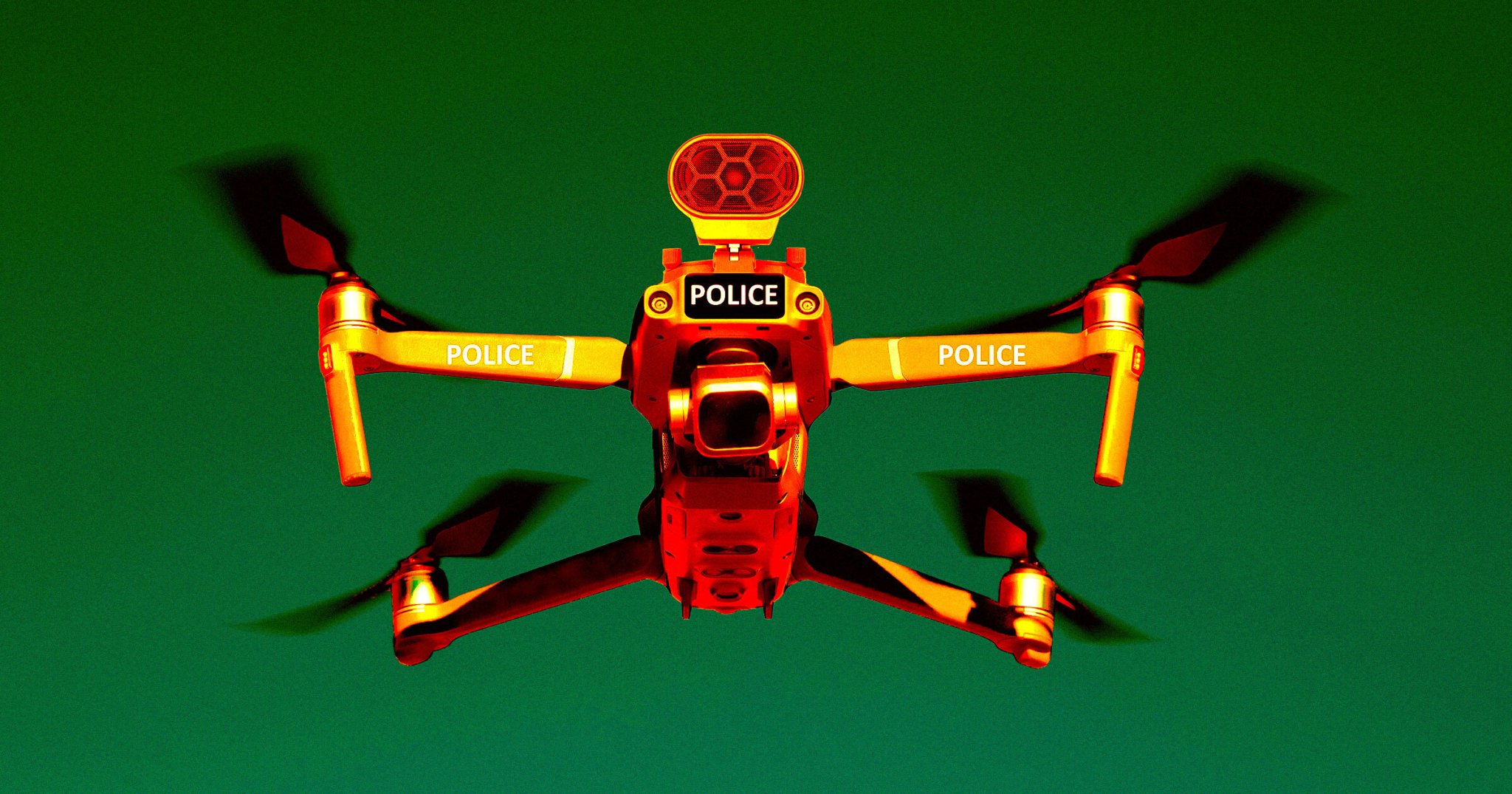
Surveillance-Happy Police In Shambles After Trump Tariffs Makes Drones Absurdly Expensive

The surveillance state costs money, people!

Well, tell that to president Trump. On Thursday, he slapped a 100 percent tariff — he sure loves round numbers and levying imports — on larger foreign-made drones.

Trump claimed that this “bolsters national security.” But, ironically, it could be undermining domestic security — at least according to surveillance-happy police departments who’ve gotten used to overlooking their subjects from above, according to a roundup of commentary from Ars Technica.

Speaking to the New York Times, Scott Mlakar, chief of the Lake County Drone Unit outside Cleveland, called the tariffs financially onerous and lamented that it would prevent many communities from buying them, adding that his unit uses them to hunt crime suspects at night and search for lost children.

“Most of this, in our humble opinion, is lobbying by US manufacturers to eliminate foreign competition,” he said. “This is not national security. It’s protectionism.”

The tariff is explicitly designed to target popular Chinese drones, while making exceptions or imposing much lighter tariffs on drones made from allies like Japan, Taiwan, South Korea, and the EU.  In particular, these steep duties will apply to drones that use thermal imaging or weigh more than 55 pounds. In addition, the Federal Communications Commission is weighing reclassifying some drone technologies like lidar as “military grade,” Ars noted, which would restrict who can access these drones even further.

Drones have a lot of other practical uses beyond law enforcement, obviously, including monitoring wild fires and assisting rescue operations. Amid heightened backlash against Flock, though, they’ve come to be seen as another surveillance apparatus.

But weaning the US off Chinese drone tech is supposed to be good for national security, according to the Trump administration. One small problem: a single Chinese company, DJI, makes more than 70 percent of the world’s commercial drones, according to the NYT. Good luck replacing all those.

Plenty of other cops are bellyaching about the tariffs, too, extolling how irreplaceable that awesome Chinese made drones have become to their operation.

Ars spotted a Texas police officer named Jason Lee, for instance, who complained to the FCC that “there is currently no economically viable domestic replacement” for DJI drones. “More than 80 percent of state and local law-enforcement drone programs surveyed in 2024 used DJI aircraft,” he added.

“The fact that a domestic product exists does not necessarily mean it is a viable substitute,” Lee said. “A replacement must be operationally comparable, economically obtainable, supported by an adequate supply chain, and accepted by pilots who must rely on it during real-world incidents.”

More on drones: Amazon Delivery Drone Drops Package Directly Into Customer’s Swimming Pool

The post Surveillance-Happy Police In Shambles After Trump Tariffs Makes Drones Absurdly Expensive appeared first on Futurism.

  •  

Home-intruding bobcat no match for police drone

What began as a routine police response to a reported break-in turned into a brief standoff between nature and technology. Last week, law enforcement in the city of Kirkland, Washington (just northeast of Seattle) responded to a 911 call from a resident reporting loud banging inside their home. Officers arrived expecting a human intruder, but were instead greeted by a more literal cat burglar: a trapped and confused bobcat. 

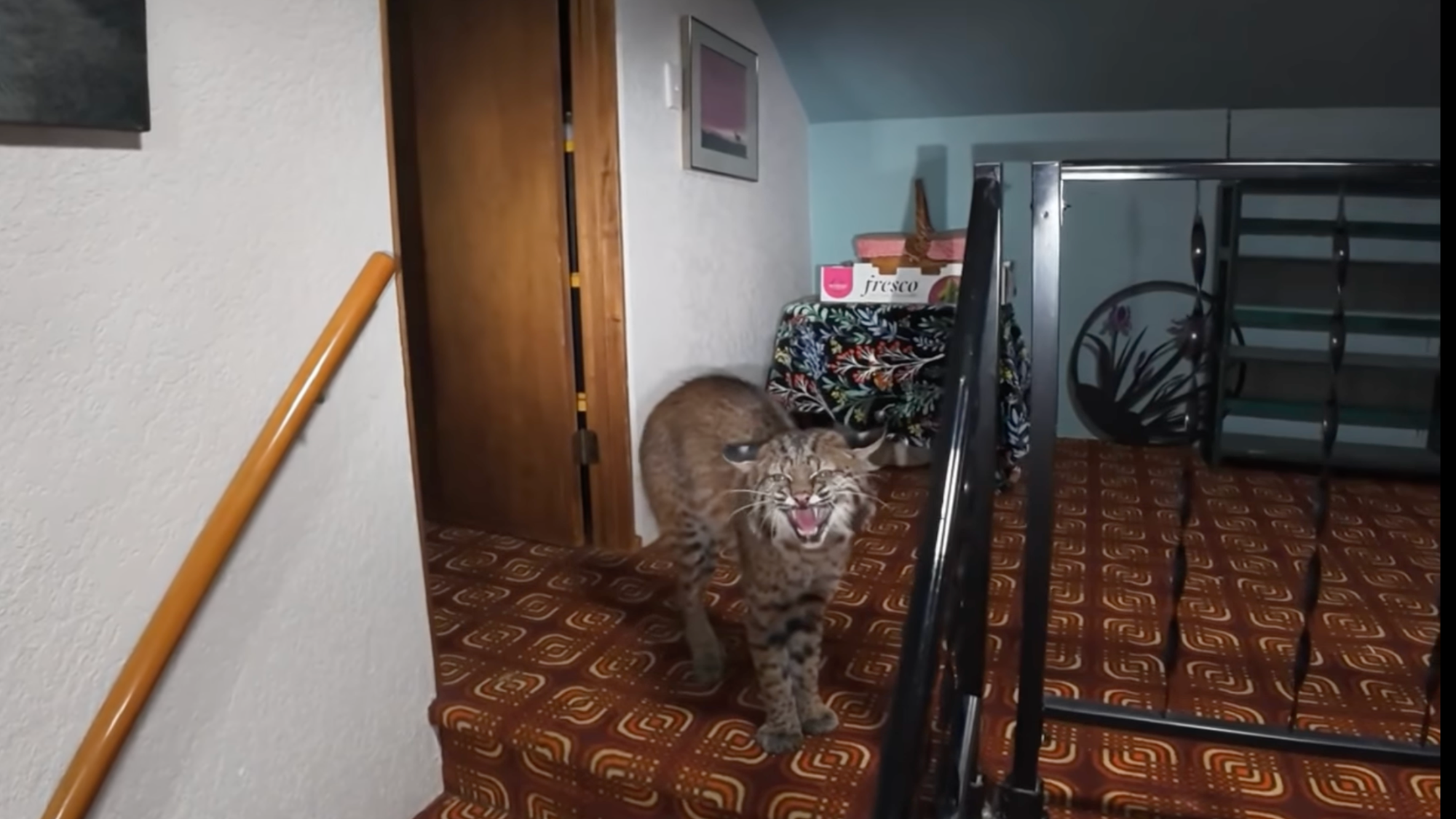
Not wanting to risk a claw to the face, the officers backed out and reassessed the situation. They ultimately decided to deploy a remote-controlled drone into the house, to monitor the feline intruder from a safe distance. Video captured from the drone’s perspective and released on Facebook, shows the frustrated bobcat standing by a staircase, growling and arching its back at the hovering machine. After a brief standoff with the buzzing, metal alien, the bobcat carefully retreated, sidestepping into an adjacent empty room.

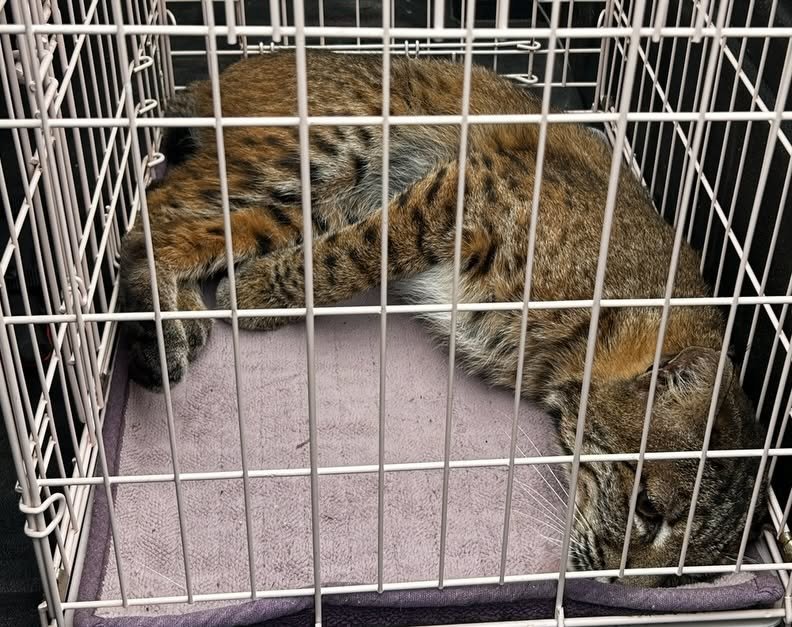
Police were then able to close their door and keep the bobcat isolated until a team from the  Washington Department of Fish and Wildlife arrived. Wildlife officials then sedated the cat, loaded it into a crate, and transported it to nearby Forbes Creek. The feline was then released back into the wild, startled but safe. As for how a bobcat ended up in the house in the first place, Kirkland Police believe the adventurous intruder climbed a tree and jumped through an open window, possibly lured in by the resident’s indoor cat. Both the owner and its likely shocked cat were unharmed, according to the police. Thankfully, curiosity didn’t kill this cat.

The Kirkland Police Department did not immediately respond to Popular Science’s request for comment. 

The aerial deployment was made possible by a public safety drone program the Kirkland Police began in 2022. Today, they reportedly maintain five drones and have 17 FAA-licensed pilots ready to operate them. The typical use cases for those drones include search and rescue, tactical search, scene documentation, and, apparently, bobcat removal. 

a bobcat sleeping in a cage
The bobcat before its release near Forbes Creek. Image: Kirkland Police Department.

Drones are changing the way police surveil wildlife…and people 

Drones and robotic dog-like quadrupeds are reshaping how local communities approach wildlife management. In Japan, authorities deploy a combination of camera-equipped drones and robotic Monster Wolves to locate and deter bears following a record spike in human-bear encounters driven by urban sprawl and declining farmland. In the United States, police in Santa Fe, New Mexico, recently used an aerial drone to track an errant bear wandering near a school. Expanded drone programs are also playing a greater role in locating lost or missing pets. Just last month, firefighters in t Florida used a remotely controlled drone to find an overly adventurous dog trapped in a storm drain. 

But this increased prevalence of drones comes with other, more controversial concerns as well. Police forces around the country are ramping up “drones as first responder” programs, which civil liberty critics say could introduce unreasonable surveillance. Law enforcement around the country has already used these drones to monitor political protesters. Meanwhile, Immigration and Customs Enforcement (ICE), is reportedly interested in using Boston Dynamics’ quadruped robot “Spot”  to aid in immigration operations. Private security companies like Flock and Axon are also investing heavily in aerial surveillance drones. 

The post Home-intruding bobcat no match for police drone appeared first on Popular Science.

  •  

The Army just used a 20-kilowatt laser to take out three drones

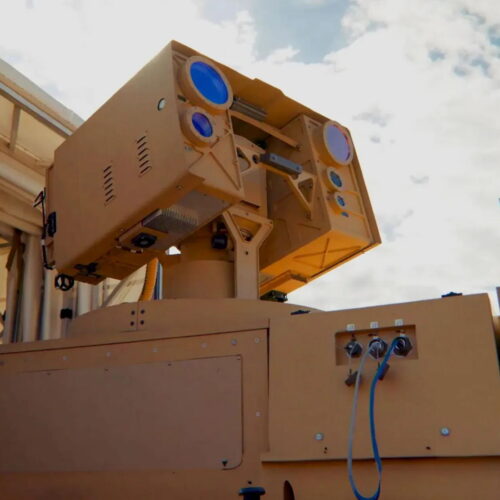
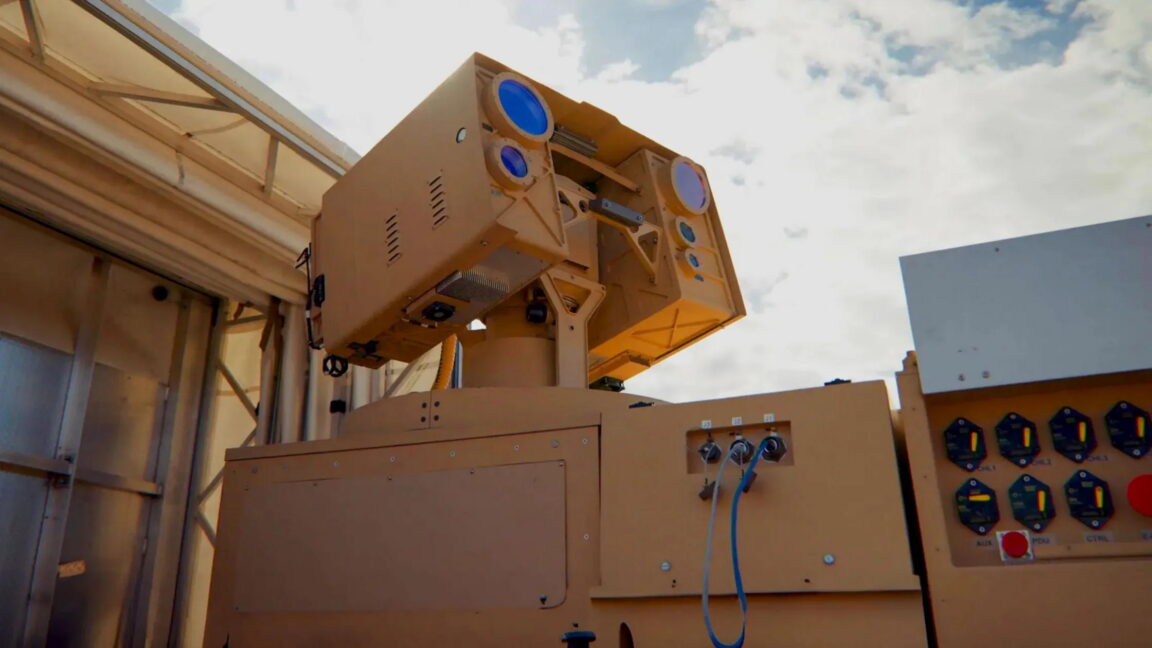
This week, the US Army used a high-energy multipurpose laser to shoot down three drones near the US-Mexico border, which official reports claimed were “posing a physical threat to US military personnel and CBP partners,” referring to Customs and Border Patrol.

The operation took place between the night of August 25 and the early morning of August 26 in the vicinity of the Rio Grande Valley in Texas and was led by the Joint Task Force Southern Border (JTF-SB), which operates under US Northern Command. Authorities confirmed that, during the operation, agents used technology derived from the Army’s High-Energy Multipurpose Laser (AMP-HEL) system, a military program focused on implementing high-energy lasers for new defense capabilities.

Available information suggests that this initiative began in September 2025, when AeroVironment, a company specializing in defense technology, delivered the first two functional prototypes of these laser-based weapons to the US Armed Forces. Two new, improved systems were delivered as the program was expanded in December of the same year. According to the manufacturer, this particular platform, called the Locust Laser Weapon System, is designed to be mounted on military vehicles, as the Army has done with the versions it has received.

Read full article

Comments

© Aerovironment

  •  

Fighter jets help destroy Russian drone boat near European offshore gas platform

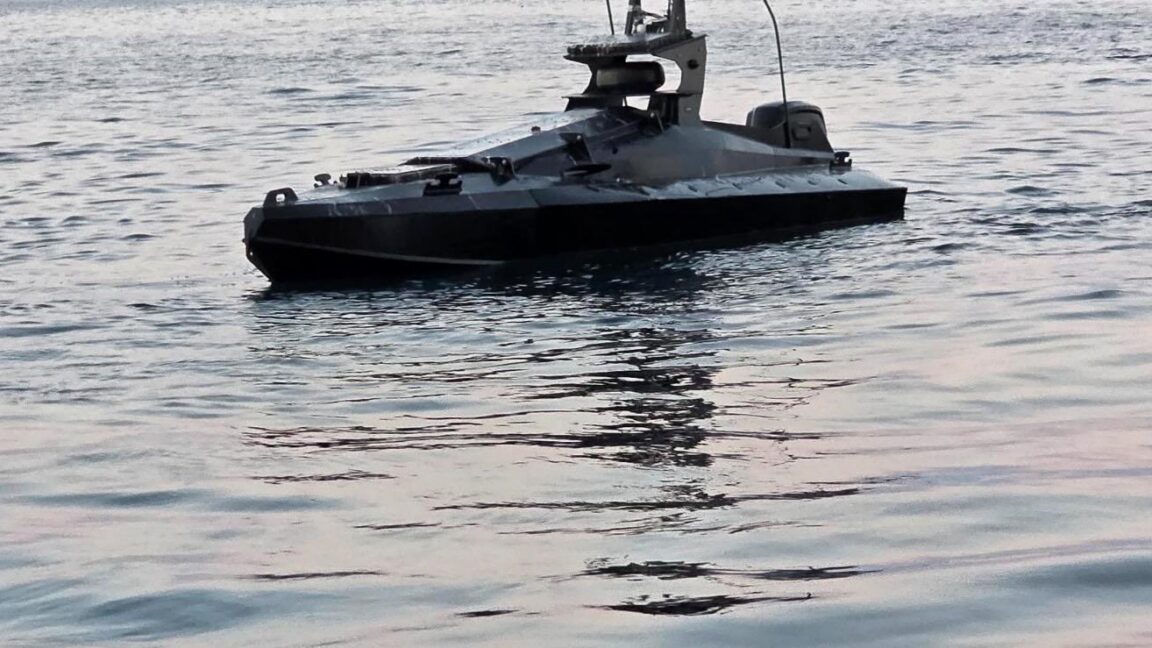
This week, Romania accused Russia of sending a drone boat loaded with explosives to a vital European natural gas platform in the Black Sea. A Romanian F-16 fighter jet used its cannons to disable the surface drone so that explosive ordnance experts could blow it up safely.

On August 20, the Romanian Coast Guard first spotted the maritime drone a few hundred meters away from the Neptun Deep project’s main drilling platform, where several hundred workers were busy with the platform’s ongoing installation, Defense Minister Radu Miruță said in a Facebook post. The offshore gas project would make Romania the largest gas producer in the European Union once it starts full production in 2027.

To protect the lives of the workers and the offshore gas infrastructure, the Romanian military scrambled two F-16 fighter jets to stop the drone with cannon fire, Miruță said. Army specialists later carried out a controlled detonation, as seen in a Facebook video shared by the defense minister.

Read full article

Comments

© Romanian Ministry of Defense

  •  

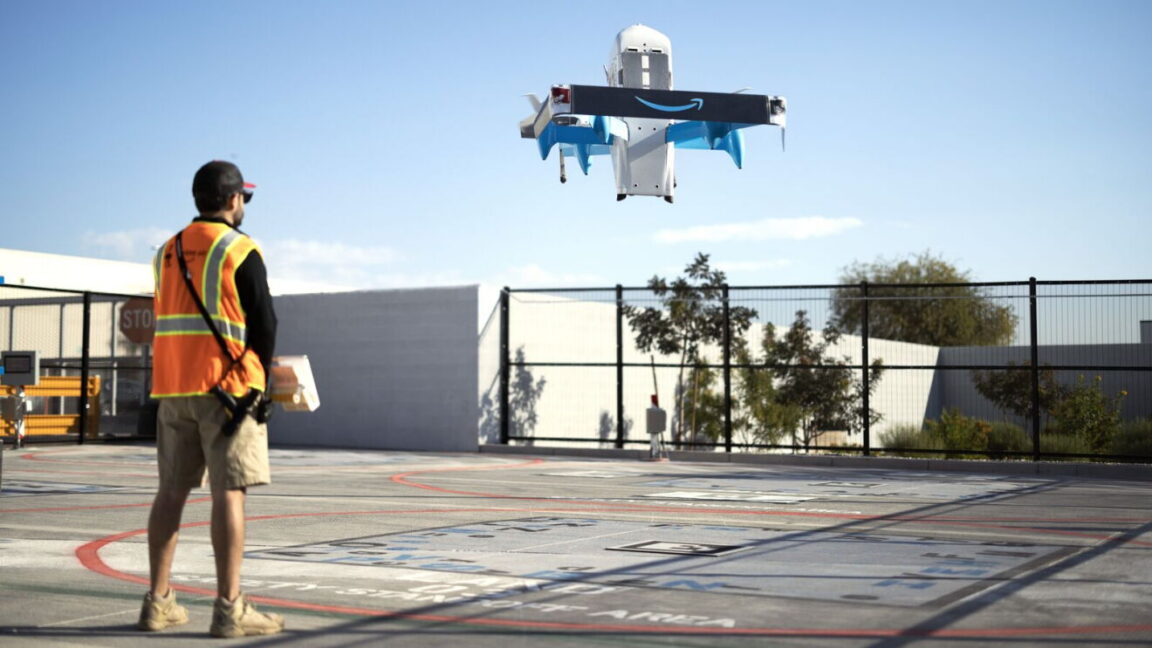
Amazon aims for delivery drones to reach 500 US neighborhoods by end of 2026

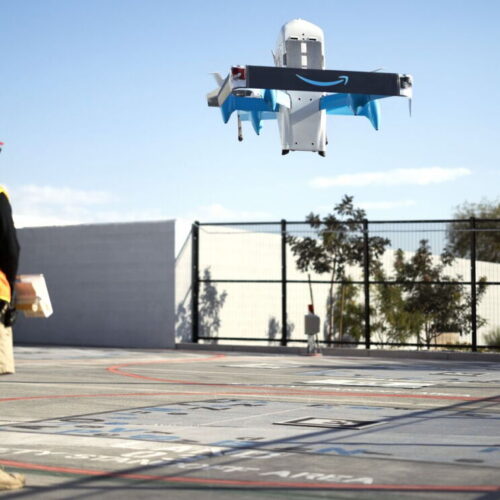
Amazon wants to grow its Prime Air delivery drone service sixfold to reach nearly 500 cities and towns across the United States by the end of 2026. The planned expansions from Amazon and its rivals could make the convenience of delivery drone services available to tens of millions more people in the coming months—but will also test more communities’ tolerance for increased noise from daily drone flights.

On August 19, Amazon announced it would soon launch Prime Air in the metropolitan areas of Chicago; Cleveland; Atlanta; Syracuse, New York; and Boise, Idaho, with more to come later in the year. Each Prime Air site offers delivery drone service within an area of about 175 square miles, with delivery times ranging from half an hour to an hour.

Prime Air already operates out of Amazon warehouses in 10 cities across seven states. Those include primarily suburban neighborhoods of Phoenix; Tampa; Kansas City; Omaha, Nebraska; Baton Rouge, Louisiana; Detroit; Houston; and San Antonio, Dallas, and Waco, Texas.

Read full article

Comments

© Amazon

  •  

Scientists Turn Sound Into a New Propulsion System for Tiny Microrobots

Using the same basic physics based on the familiar hollow tone produced by blowing across an empty bottle, researchers in Switzerland have developed a sound-powered propulsion system that can steer microrobots and even lift tiny machines.

In a new study published in Science Advances, engineers at the Swiss Federal Institute of Technology Lausanne (EPFL) demonstrated that 3D-printed cavities known as Helmholtz resonators can convert sound into directed jets of air and usable thrust.

The researchers built devices ranging from centimeters down to micrometers, used sound to propel and steer tiny boats, and created two microscopic flying machines—one microrobot lifted directly by acoustic thrust and another using rapidly spinning rotor blades. One version generated nearly five times its own weight in thrust, while another spun at up to 13,000 revolutions per minute to produce aerodynamic thrust.

The work points to a new way to power small robots without conventional motors, while also exposing the considerable engineering problems that remain before such machines can operate autonomously.

“While acoustic resonators have been extensively studied in liquids for the realization of untethered microrobots, their implementation in air remains largely unexplored,” researchers write. “The actuation scheme is compatible with even further miniaturization, pushing the boundaries of robotics and aeronautics.”

The idea behind the technology is surprisingly familiar. Blow across the top of an empty bottle and you hear a deep, hollow note created as the air trapped inside begins to vibrate.

Known as Helmholtz resonance, the effect happens because the air inside the bottle and its narrow opening behave somewhat like a mass attached to a spring. When sound at the right frequency excites a specially designed resonator, those vibrations become much stronger, forcing air rapidly through the opening. The resulting airflow can form a directional jet powerful enough to generate thrust.

The researchers set out to harness the same physics behind Helmholtz resonance as an unconventional propulsion method for microrobots.

The researchers designed tiny cavities that take advantage of the same principle. When sound hits one of these resonators at just the right frequency, the air in its narrow neck begins moving rapidly back and forth.

Because that airflow is slightly uneven as it enters and exits, it creates a small but focused jet of air. That jet produces thrust, giving the resonator enough force to help move or even lift a microrobot.

The team 3D-printed resonators ranging from centimeter to micrometer scales, designing them to respond to frequencies between roughly 200 hertz and 40 kilohertz. Experiments showed that larger cavities generally produced greater thrust, while the geometry and thickness of the resonator’s neck played a particularly important role in determining performance.

Importantly, researchers could tune different resonators to different frequencies. That means sound does more than supply power; frequency can effectively serve as a control signal.

The researchers demonstrated the concept using miniature boats equipped with acoustic resonators. One early prototype carried a resonator tuned to 1.2 kilohertz and moved only when exposed to sound at that frequency.

More advanced versions used separate resonators for propulsion and steering, allowing the researchers to guide a boat around obstacles remotely and along a figure-eight course with a mean tracking error of just 5.70 millimeters.

The team also showed that an external speaker is not always necessary. By attaching small vibration transducers directly to resonators, they could send sound through the robot’s structure itself.

This approach allowed the researchers to build a fully integrated boat equipped with its own battery, control electronics, and acoustic transducers. Bluetooth commands activated resonators tuned for propulsion and steering, with a total communication latency of about 30 milliseconds. The boat successfully traced the letters “EPFL,” navigated past obstacles, and could be steered back on course after researchers deliberately disturbed it by blowing air or physically pushing it.

However, shrinking the technology into flying microrobots provided the study’s most striking demonstration.

One microflier consisted of three microscopic resonators operating at 40 kilohertz and weighed only about 150 micrograms. Focused ultrasound caused each resonator to eject a tiny jet of air downward. Together, the three produced a thrust-to-weight ratio of approximately 4.9. The machine accelerated upward, climbed roughly 12 millimeters before settling around seven millimeters above its starting position.

A second design took a different approach. Instead of pointing the acoustic jets downward, the researchers used them to spin a rotor fitted with tiny aerodynamic blades. The entire aircraft weighed 184 micrograms.

Once exposed to ultrasound, the rotor accelerated to approximately 13,000 rpm. Its blades generated enough aerodynamic thrust for takeoff before settling to roughly 6,500 rpm while hovering.

Turning the device upside down prevented it from ascending, helping confirm that aerodynamic thrust, rather than acoustic radiation pressure alone, enabled flight.

Researchers demonstrated unconstrained flight with both microrobot designs. The direct-thrust version climbed rapidly but sometimes flipped in the air. The spinning version was more stable, apparently because its swift rotation provided a gyroscopic stabilizing effect similar to that found in helicopters and spinning discs.

Ultimately, the experiments remain proof-of-concept demonstrations rather than prototypes of free-ranging autonomous microrobots. Airborne propulsion requires external acoustic hardware capable of keeping a sufficiently strong sound field focused on a tiny moving object. That essentially limits the robot’s operating area. Putting the acoustic source onboard offers greater autonomy but might significantly increase the robot’s weight.

The current flying system also operates at a single 40-kilohertz frequency, restricting how independently its resonators can be controlled. The researchers suggest future multifrequency ultrasonic arrays could selectively activate different resonators, allowing small aircraft to steer and coordinate their movement through sound alone.

Further miniaturization is technically possible. Modern 3D nanoprinting can fabricate structures with resolutions around 700 nanometers, possibly allowing resonators only several micrometers across. However, at those scales, viscous forces become increasingly important and may dramatically reduce thrust, meaning simply shrinking the existing design may eventually stop working.

Still, the wider concept could go beyond flying machines. Researchers envision flexible structures containing many differently tuned resonators that can bend, vibrate, or change shape depending on the applied sound frequency, possibly resulting in shape-morphing microrobots and mechanical metamaterials.

“Our work extends the concept of acoustic manipulation toward active propulsion by harnessing cavity resonance to generate directional thrust and controlled motion,” the researchers write. “This approach broadens the scope of airborne acoustic actuation toward small-scale robots capable of autonomous operation in open environments.”

The recent study, “Acoustic Resonators as Wireless Actuators in Air for Small-Scale Robots,” was published in Science Advances. 

Tim McMillan is a retired law enforcement executive, investigative reporter and co-founder of The Debrief. His writing typically focuses on defense, national security, the Intelligence Community and topics related to psychology. You can follow Tim on Twitter: @LtTimMcMillan.  Tim can be reached by email: tim@thedebrief.org or through encrypted email: LtTimMcMillan@protonmail.com 

  •  
❌