The reason for CIA Director John Ratcliffe’s recent surprise visit to Moscow hasn’t been officially revealed. However, indications suggest that at least part of the unusual trip was meant to warn the Kremlin against possible provocations targeting NATO.
Given its current situation, the idea that Russia might deliberately pick a fight with NATO right now seems, on its face, absolutely insane.
Moscow has failed to achieve anything close to its original objectives in Ukraine. Its military remains heavily committed there, and Kyiv is increasingly taking the war inside Russia, creating additional economic and political pressure on the Kremlin.
Why the hell would Putin want to pick a fight with NATO now?
For starters, there’s an important distinction between provoking NATO and actually wanting to start a war with it. The former may very well be the objective. The latter is something Putin almost certainly wants to avoid.
A deliberately murky incident designed to test NATO’s political resolve and widen the growing divide between the United States and Europe, however, is a different story.
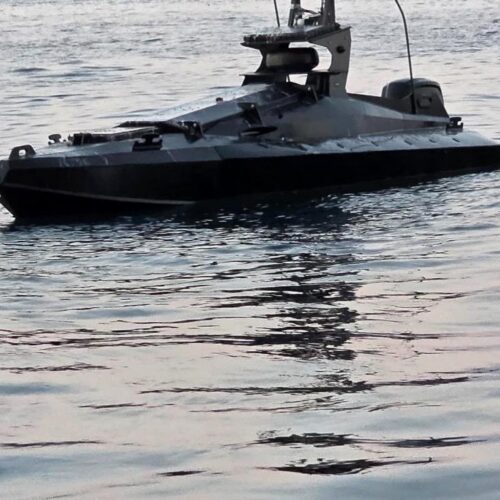
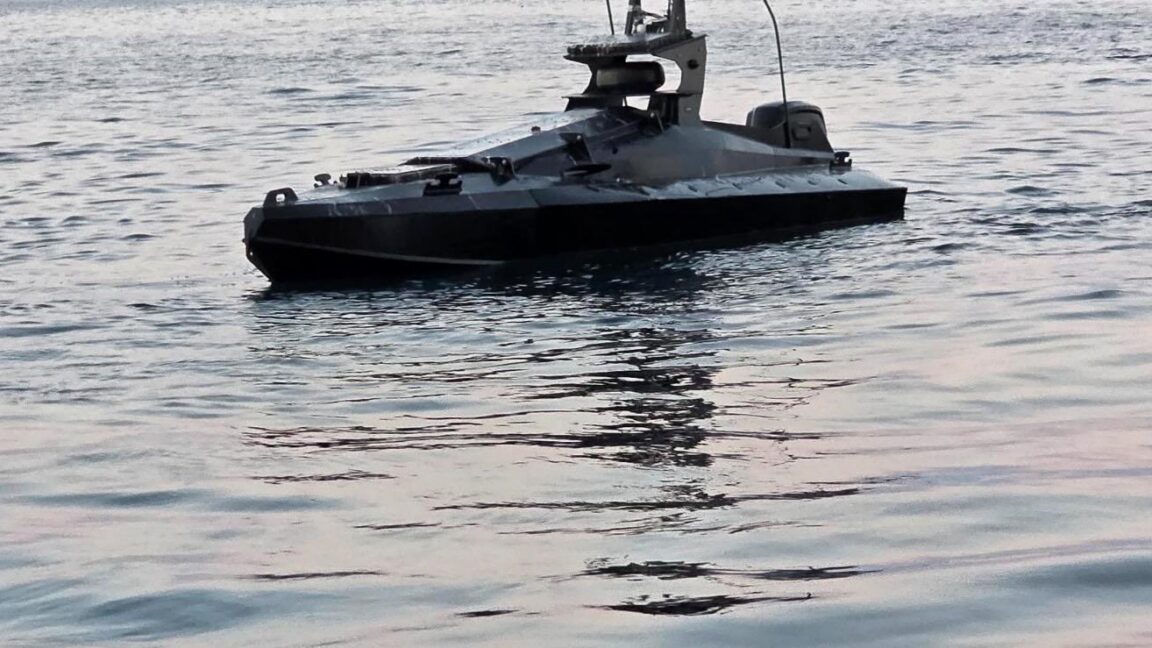
Take, for example, a Ukrainian-made drone, or a convincing Russian copy, that crosses into Lithuania or Latvia and strikes critical infrastructure or a military target. Polish and Baltic intelligence officials have recently warned that Russia could be gearing up for precisely this kind of false-flag operation.
Whatever form the provocation takes, it only needs to be serious enough that NATO cannot ignore it, but ambiguous enough that its members can’t agree on how to respond. And that’s the point.
Article 5 says an armed attack against one NATO member is considered an attack against them all. However, it neither requires every member to respond in the same way nor automatically commits the alliance to war. Each ally ultimately determines what action it considers necessary. Critically, the treaty itself does not explicitly define what constitutes an “armed attack.”
Create enough ambiguity over whether that threshold has even been crossed, and suddenly 32 governments are left debating not only what happened, but what they are willing to do about it.
This type of hybrid attack would put Washington in an especially uncomfortable position.
With the Iran crisis still ongoing and the midterm elections just months away, the Trump administration would likely be deeply reluctant to risk a direct military confrontation with Russia over an ambiguous incident—even if European governments were pushing for a stronger response.
That alone will deepen political divisions at home while simultaneously widening the existing rift between Washington and Europe.
For Moscow, that’s a hell of a payoff from a relatively small provocation. And ultimately, driving the U.S. and Europe further apart would very likely be the larger strategic objective.
U.S.-European relations are already under extraordinary strain. But one thing often gets overlooked is that for nearly 80 years, the U.S. has served as much of the political glue holding NATO, and indirectly, the wider European security order, together. That role has never been based solely on America’s military strength.
The United States occupies a distinct position within NATO as one of only two members—along with Canada—located distinctly outside the European sphere. As an “outside” ally, America is powerful enough to help guarantee European security while remaining geographically removed from the historical rivalries that have repeatedly divided the continent.
Today, Western Europe and the EU can look like a collection of regional best friends. However, historically, they most definitely were not.
For centuries, European powers competed over territory, resources, influence and security, often with disastrous consequences. One of the great achievements of the post-WWII order was finally breaking that cycle.
In fact, NATO expressly notes that preventing renewed destructive competition in Europe—including “the revival of nationalist militarism in Europe through a strong North American presence”—was one of the founding purposes of the post-World War II transatlantic security order.
We shouldn’t assume Europe’s extraordinary period of tranquility and partnership is somehow its natural state or that it would continue indefinitely under radically different security conditions.
That doesn’t mean European countries will suddenly start shooting at each other if the American “glue” substantially weakens. But national interests, regional rivalries and competing security goals could begin to reemerge. And history gives us plenty of reason to take seriously the possibility that renewed political competition in Europe could eventually become military competition.
In the near term, European governments will begin asking whether resources currently devoted to collective security objectives might eventually be needed closer to home.
And that’s where Ukraine comes into the equation.
If European governments become less certain that the United States will guarantee their security, continued support for Ukraine will look very different in their wider strategic calculations.
Britain, France, Germany, Poland, and the Baltic states will still view Russia as a threat. However, they won’t necessarily agree about how limited defense resources should be allocated, which threats are most urgent, or how much risk each country should accept on Ukraine’s behalf.
The more national security becomes national again, the harder it is to preserve a unified European position.
Russia doesn’t have to defeat NATO militarily. It just has to create a situation where NATO cannot agree on what to do.
That strategy exploits a basic reality of international politics that often gets overlooked because we talk about countries as “friends.” Nations don’t have friends in the same way people do. They have allies with shared strategic interests.
Shift those interests, even slightly, and allies can become competitors. Competitors can become rivals. And history has repeatedly shown what can happen when rivalries in Europe are allowed to spiral out of control.
So if Putin believes he can start pulling at the threads holding NATO together without triggering a war, there is every reason to believe he will try.
The most consequential part of any Russian provocation will not be the incident itself, but how NATO chooses to respond.
Moscow may be betting that distance, domestic politics, and competing national interests can pull the alliance apart. The best answer would be to prove otherwise.
The Atlantic may physically separate North America from Europe. Still, in today’s interconnected world, geography provides far less insulation from shared threats than it did 77 years ago when NATO was founded.
Whatever disagreements exist between Washington and European capitals, both sides would do well to remember a fundamental strategic reality. Strong allies make each member stronger, and preserving those relationships remains firmly in everyone’s national interest.
Tim McMillan is a retired law enforcement executive, investigative reporter and co-founder of The Debrief. His writing typically focuses on defense, national security, the Intelligence Community and topics related to psychology. You can follow Tim on Twitter: @LtTimMcMillan. Tim can be reached by email: tim@thedebrief.org or through encrypted email: LtTimMcMillan@protonmail.com

 Login