❌

Reading view

Astrophotographer captures jaw-dropping view of the Crescent Nebula
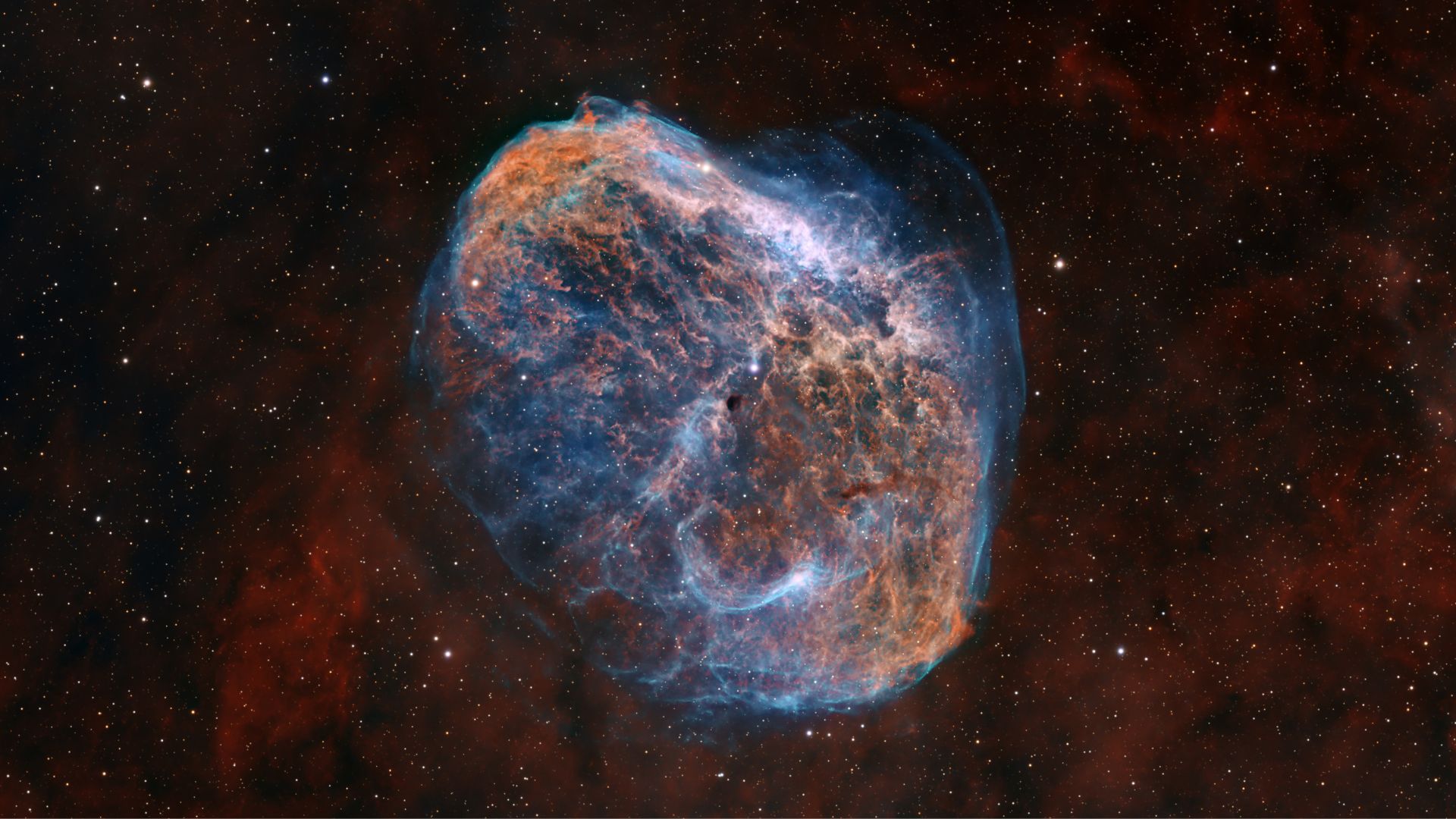
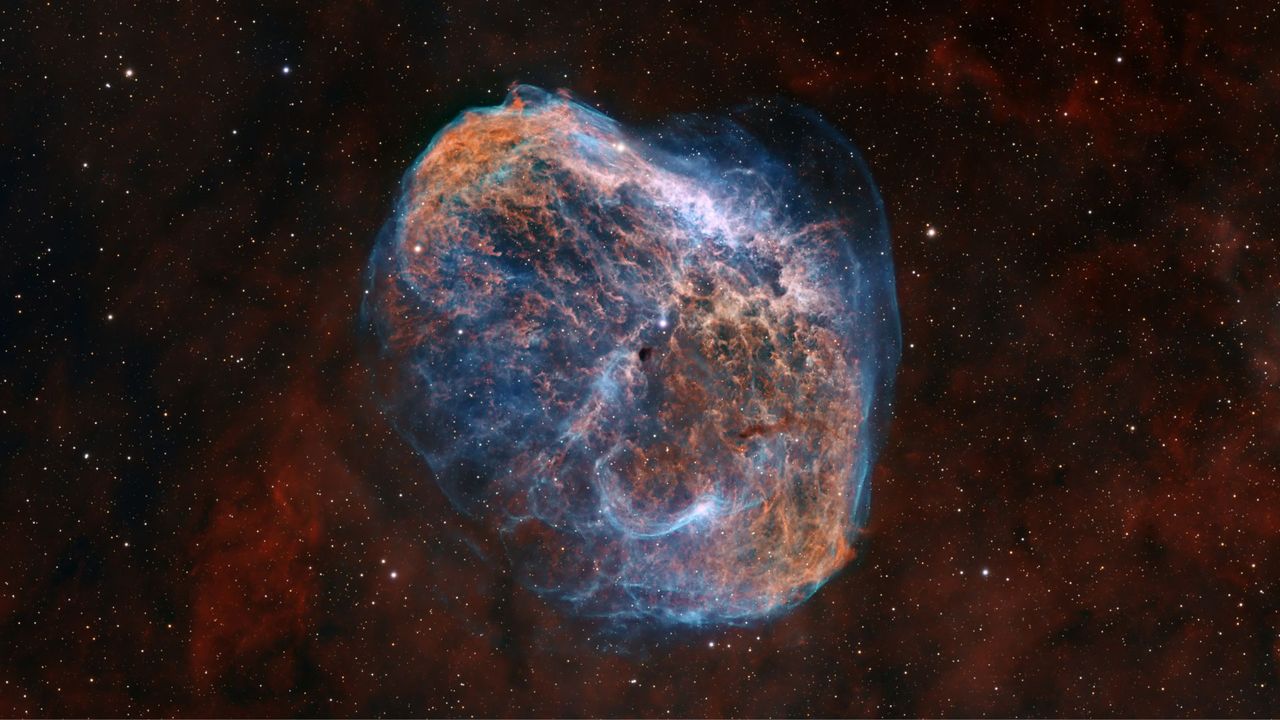
A red and blue nebula glows against distant stars. A bright blue star can be seen glowing in its core.

The Crescent Nebula shines in the constellation Cygnus. (Image credit: Kevin Boardman)

Astrophotographer Kevin Boardman captured this spectacular view of the Crescent Nebula, revealing intricate filaments of gas surrounding a massive star nearing the end of its life some 4,700 light-years from Earth in the constellation Cygnus.

Boardman's image represents a turbulent chapter in the life of the colossal Wolf-Rayet star WR 136 (HD 192163), which, visible as a blue point of light at the center of the image, is expected to end its life in a dramatic supernova explosion in about 100,000 years.

The 25-light-year-wide bubble is formed from stellar material cast off by WR 136 during its transformation into a red giant star, according to NASA. Repeated impacts by fast-moving stellar winds later send shockwaves through the outer shell, creating the complex filaments we see today.
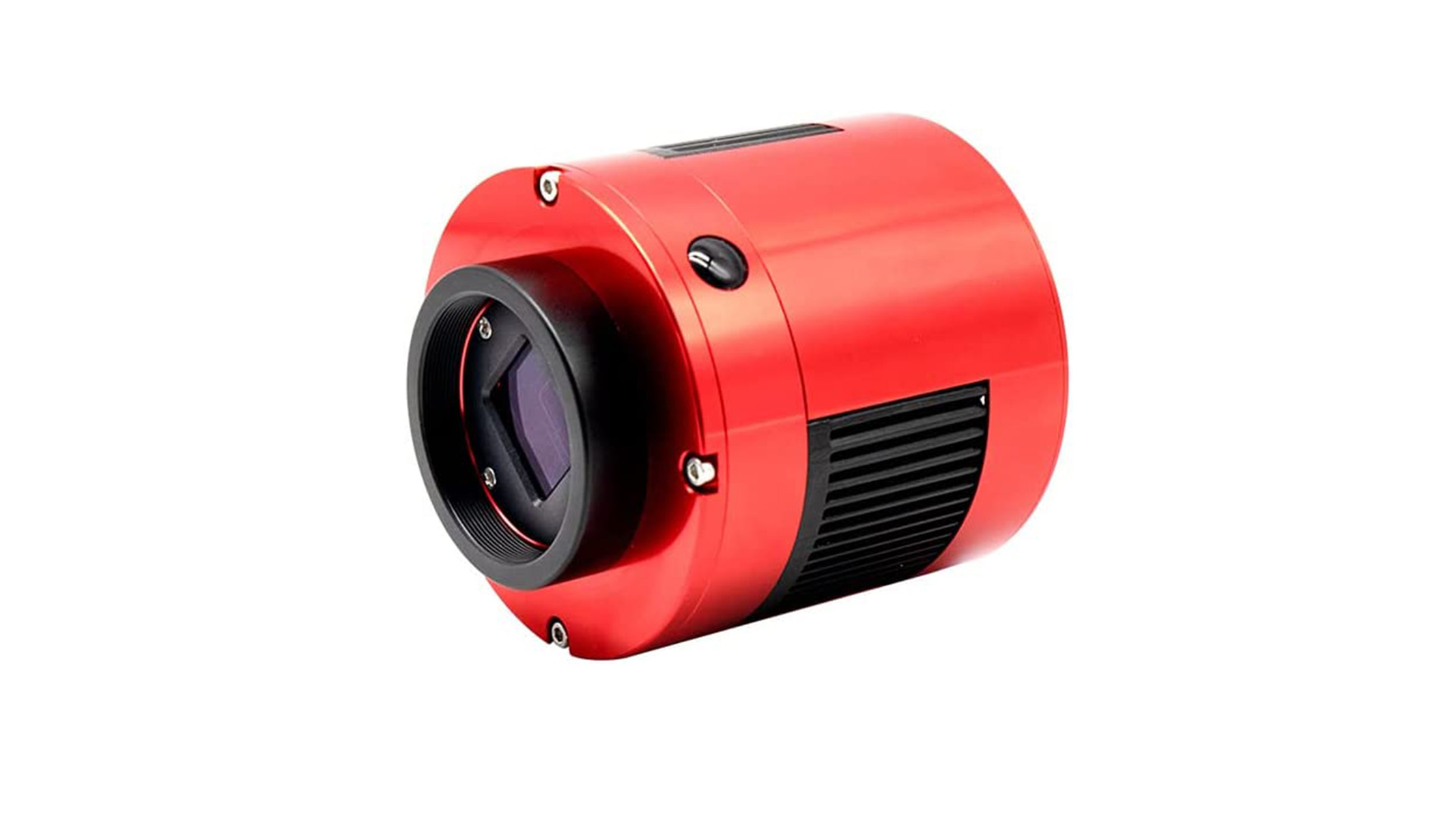
ZWO ASI533MC Pro

A product photo of the ZWO ASI1533MC Pro Camera

(Image credit: Amazon)

The ZWO ASI533MC Pro camera is the best dedicated astro camera out there, in our opinion. It features zero amp glow, 80% quantum efficiency and a 20FPS frame rate. It also features a 9MP sensor and you can check out our ZWO ASI533MC Pro review for a more in-depth look.

Catalogued as NGC 6888, or Caldwell 27, the Crescent Nebula, gets its nickname from its crescent-moon like appearance when observed in certain wavelengths of light. Boardman revealed spectacular detail in the nebula by imaging it with a set of narrowband filters over 16 hours and 18 minutes spread across five nights in late July.

"In the image, orange-red H-alpha reveals the tangled filaments while blue-cyan [O III] outlines emission from doubly ionized oxygen around the shell," Boardman told Space.com in an email. Each filter isolates specific wavelengths of light emitted by ionized gases, allowing different structures within the nebula to stand out.

Boardman collected roughly 12 hours of narrowband data from the nebula itself, along with four hours and 20 minutes of data capturing the surrounding stars, before combining exposures using the astronomy software PixInsight during post-processing.

The Crescent Nebula is too faint to be spotted with the naked eye, but can be seen with a moderate-to-large telescope equipped with a light pollution filter throughout September.

A starchart showing the location of the Crescent Nebula among the stars of the constellation Cygnus.

How to find the Crescent Nebula among the stars of the constellation Cygnus. (Image credit: Inset image: Kevin Boardman, created by Anthony Wood in Canva.)

First, locate the magnitude +2.34 star Sadr at the center of the cross-shaped constellation Cygnus, which appears high overhead for Northern Hemisphere observers in late summer.

Next, locate the dimmer magnitude +4.03 star Eta Cygni using the simplified star chart above, or with the aid of a smartphone astronomy app. The Crescent Nebula lies directly between these two bright stars and is best seen on the dark nights surrounding this month's new moon phase on Sept. 10-11.

Be sure to check out our roundups of the best cameras and lenses for astrophotography if you're looking to upgrade your equipment, along with our picks of the top telescopes for observing the night sky.

Editor's Note: If you would like to share your astrophotography with Space.com's readers, then please send your photo(s), comments, and your name and location to spacephotos@space.com.
  •  

MacVoices #26249: Briefing – The Insta360 Snap Selfie Screen with Light and SmallRig Phone Vlog Selfie Monitor

This MacVoices Briefing compares the Insta360 Snap Selfie Screen with Light and SmallRig Phone Vlog Selfie Monitor, two solutions for framing shots while using an iPhone’s best camera. Factors in choosing include MagSafe mounting, wired versus Wi-Fi connections, screen size, touch controls, lighting, battery life, compatibility, portability, pricing, and flexibility. Chuck talks about how to determine help which monitor is best for your different shooting needs, and  how he solved the choice question. 

💾

  •  

How to Manage Photos Between MacBook Pro & iPhone

Macbook Pro, 15", 2017
Mac OS Monterey, Version 12.6

iPhone 13 Pro Max
IOS 16.0

For managing Pictures in the Photo Application between my MacBook and iPhone - I want to be able to delete pictures from the iPhone but they always come back from the MacBook Pro?
How can I keep pictures from always coming back?

Apologies for not using correct nomenclature / terms - I am not much of a chiphead.

Is there a good resource for using Photo Application for both the Laptop and...

Read more
  •  

16 glistening galaxies shine in new images form NASA’s Chandra X-Ray Observatory

While we have months to wait for the first images from the freshly-launched Nancy Grace Roman Space Telescope, NASA’s other incredible observatories do not disappoint. The agency released a new collection of 16 galactic images taken with the Chandra X-ray Observatory and other telescopes. 

Galaxies are separated into three main categories—spirals, ellipticals, and irregulars. Spirals are like our own Milky Way and appear to spin around a central focus. Ellipticals are older galaxies and likely the results of mergers. Irregulars that can encompass a wide range of galactic phenomena. 

Spirals, ellipticals, and irregulars are all represented in this new collection. Each image hasX-ray data from Chandra, combined with data from other telescopes such as the James Webb Space Telescope (JWST), Hubble, IXPE, Swift, and NuSTAR, and others both in space and on the ground. Gaze into the galaxies in the gallery below. (Click to expand images to full screen.)

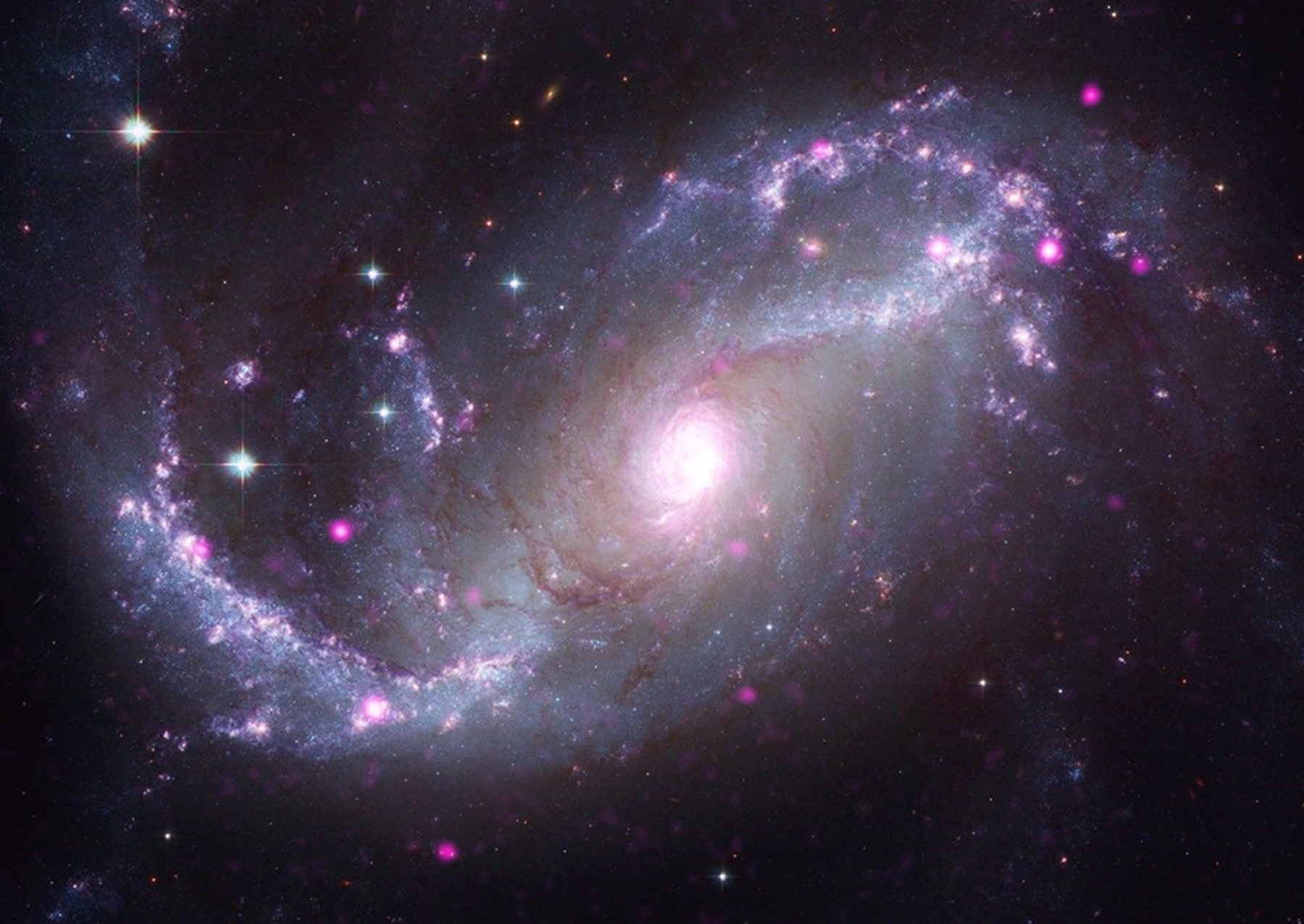
NGC 16-72

A barred spiral galaxy featuring a prominent central bar or bridge of stars that channels gas toward its core. Chandra X-rays (purple) highlight growing black holes along the bar and core, merged with Hubble optical light (white, yellow and soft blue) and JWST infrared dust filaments (red). Studying barred spirals in action can help reveal how gas in our own Milky Way, which is also a barred spiral, feeds its central black hole and forms new stars. Image X-ray: NASA/CXC/SAO; Optical: NASA/ESA/STScI/Hubble Heritage Team; Infrared: NASA/ESA/CSA/STScI/J. Lee and T. Williams; Image Processing: NASA/CXC/SAO/L. Frattare, J. Major, K. Arcand.

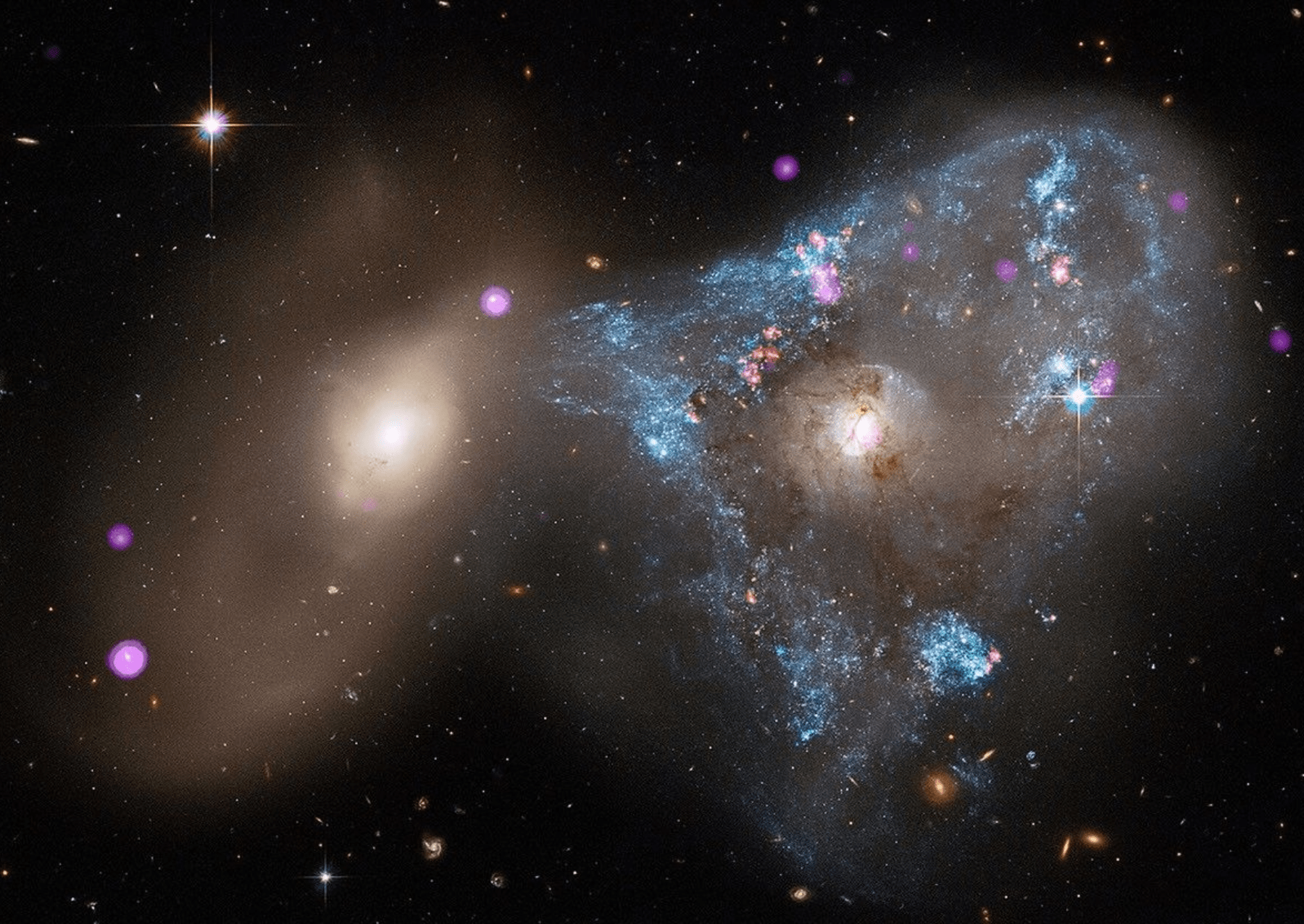
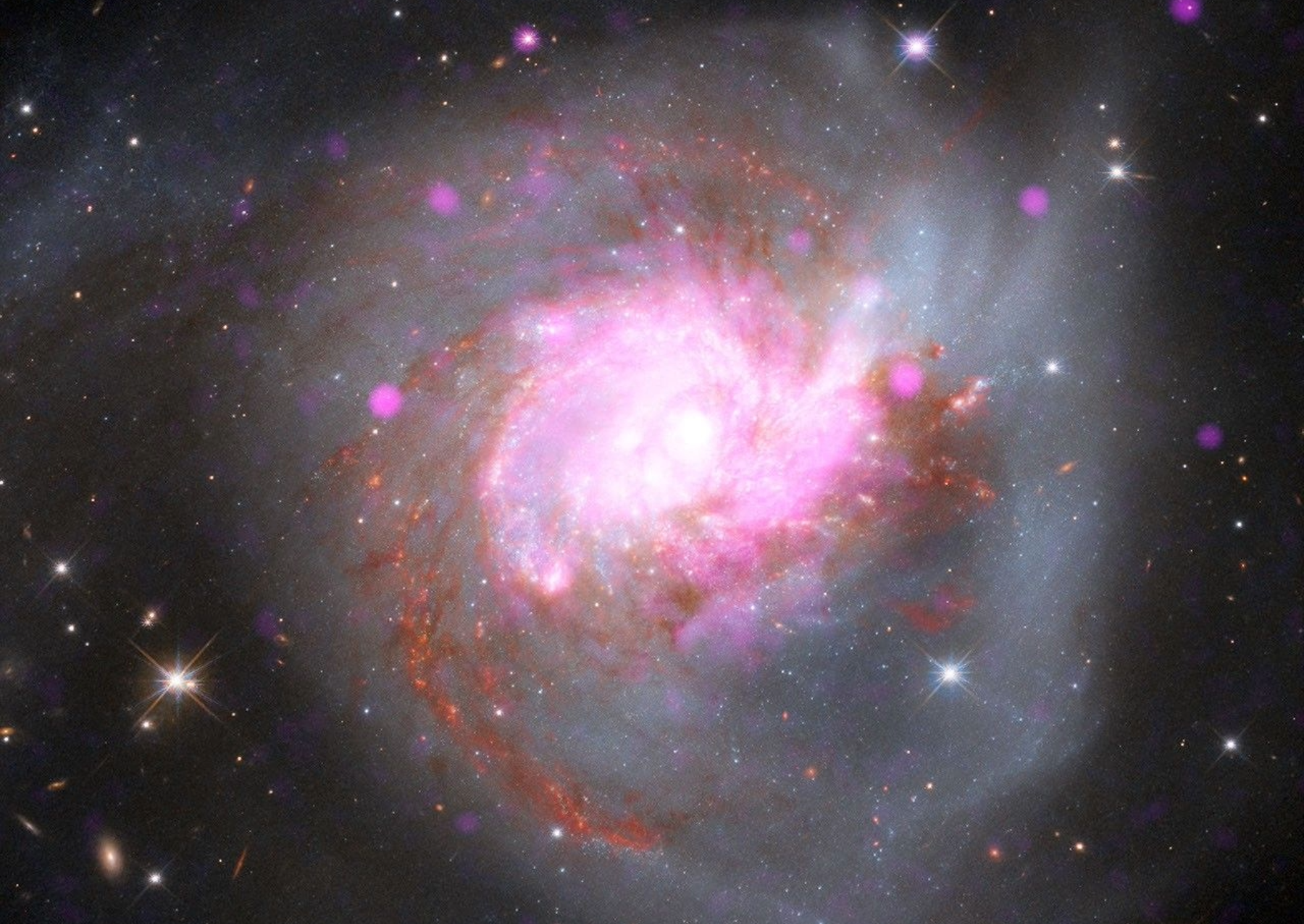
II Zw 096

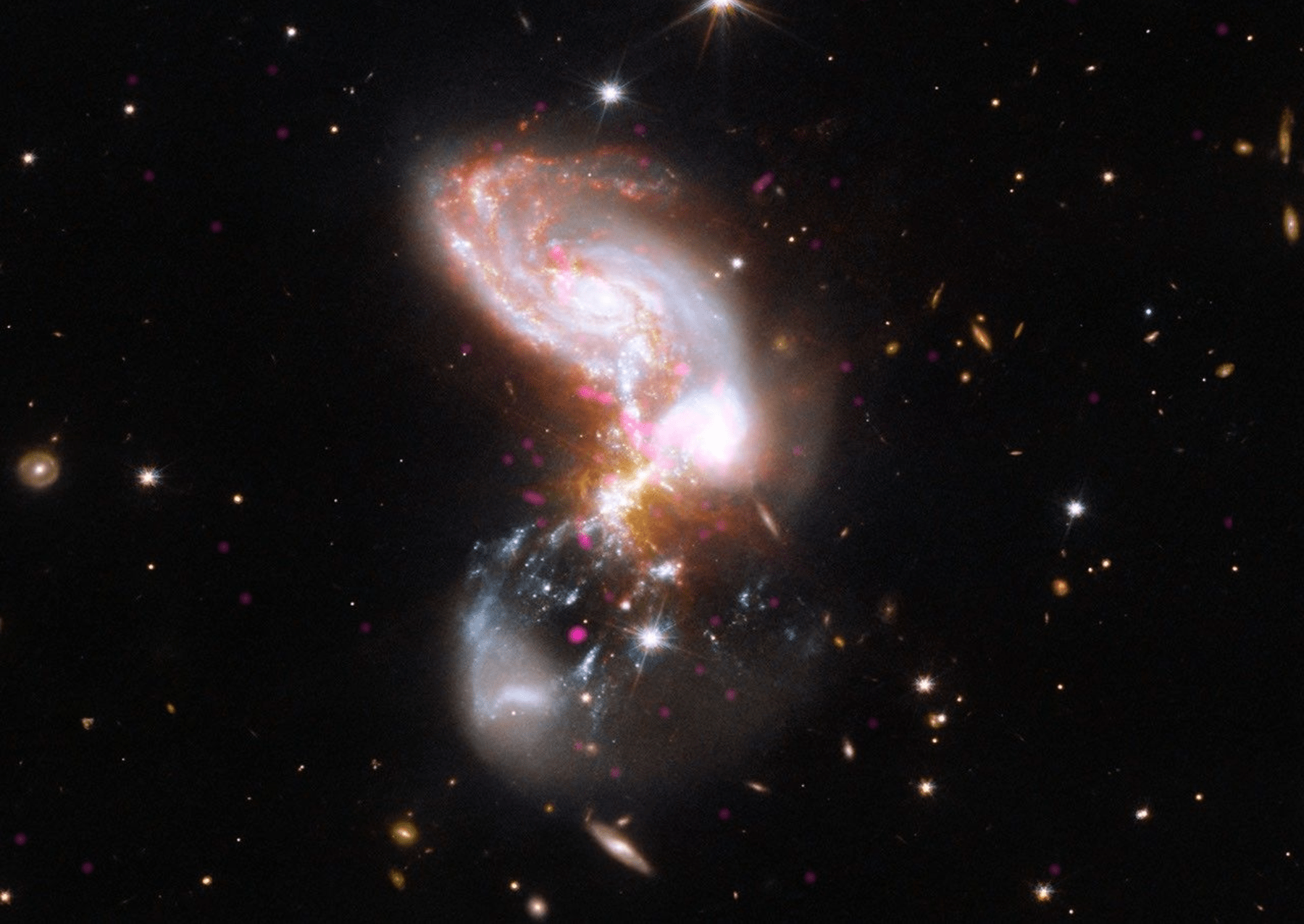
A chaotic, dust-shrouded system of merging galaxies forming stars at a furious rate. Chandra X-ray data (magenta) pinpoint powerful black hole activity and hot gas, while Hubble optical (blue and white) and Webb infrared (red and grey) data illuminate vast stellar nurseries hidden behind interstellar dust. Systems like II Zw 096 show us how powerful galaxy collisions shaped the early universe. Image: X-ray: NASA/CXC/SAO; Optical: NASA/ESA/STScI; Infrared: NASA/ESA/CSA/STScI; Image Processing: NASA/CXC/SAO/L. Frattare and J. Major.

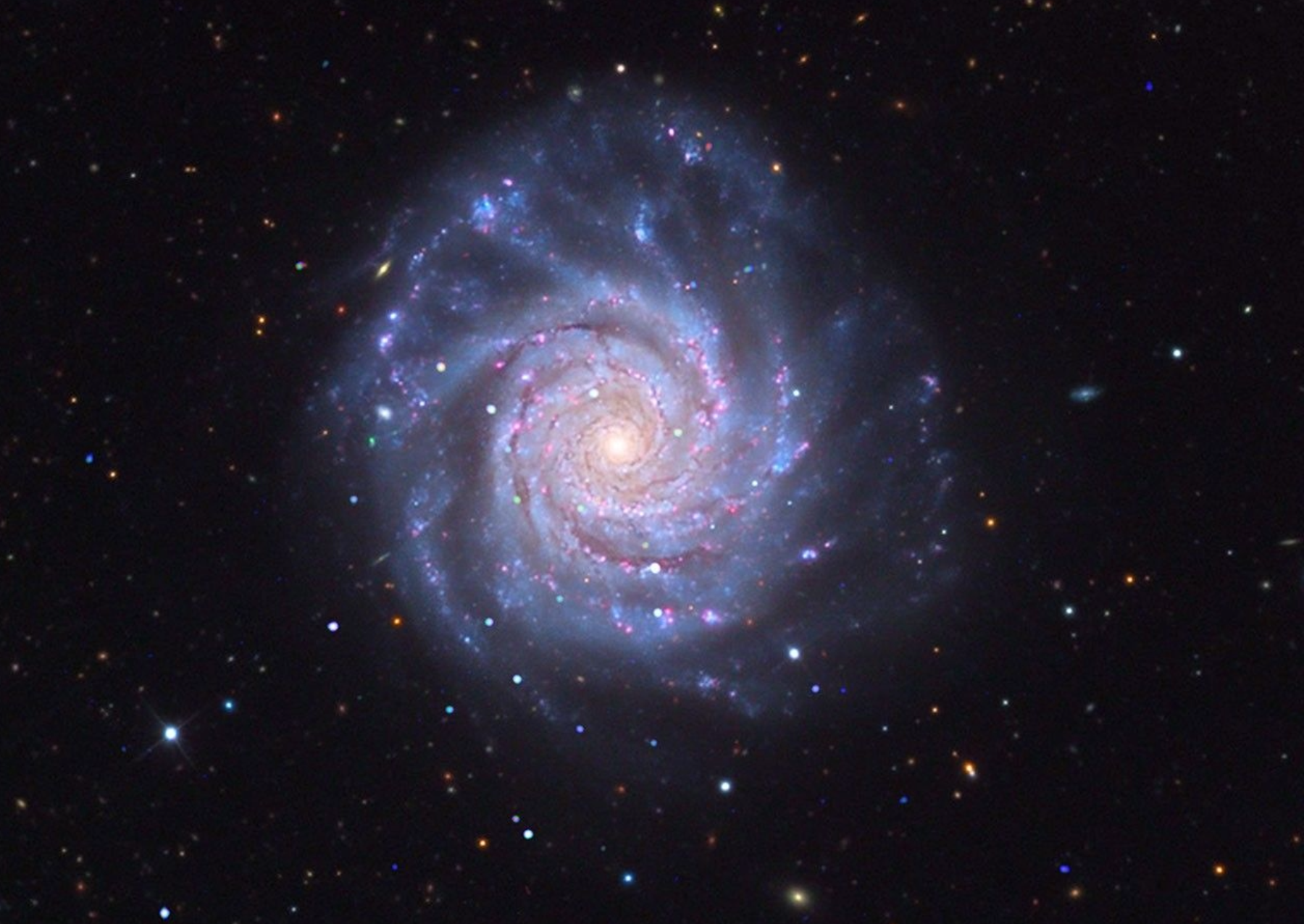
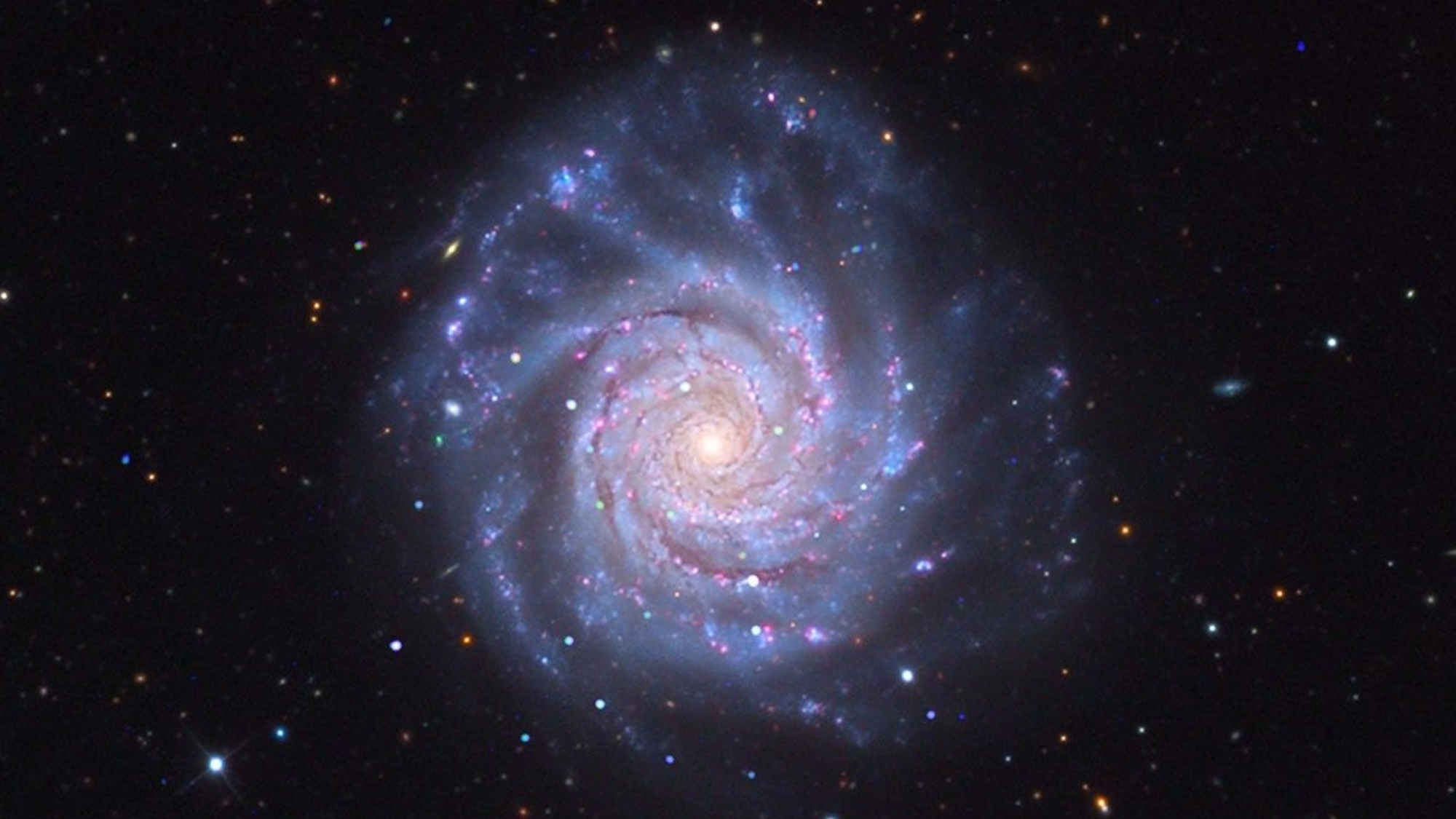
M33

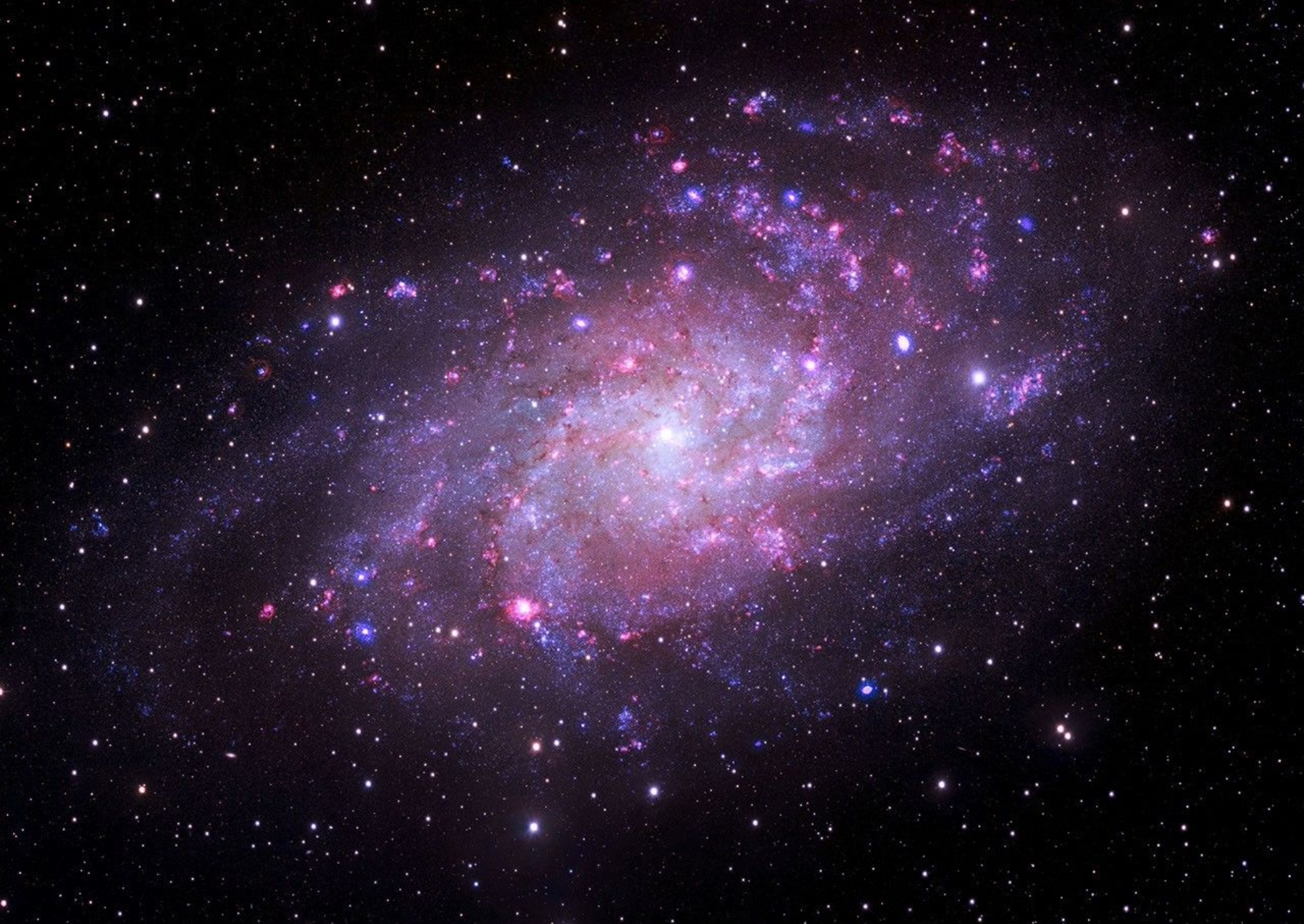
A nearby, face-on spiral galaxy whose clear spiral arms offer an unhindered view of its stellar engine. X-ray data from Chandra (purple) highlights point sources like neutron stars and stellar-mass black holes pulling material off companion stars (systems called X-ray binaries), while optical data from the Very Large Telescope’s MUSE instrument (pink and grey) maps glowing pockets of hydrogen gas. Ultraviolet data from NASA’s Swift telescope (blue) reveals populations of young, massive stars sizzling across the spiral arms. M33’s proximity to us allows astronomers to audit individual high-energy objects and map how stellar feedback affects a galaxy's ecosystem. Image: X-ray: NASA/CXC/SAO; Optical: ESO/VLT; UV: NASA/Swift; Image Processing: NASA/CXC/SAO/L. Frattare.
A nearby, face-on spiral galaxy whose clear spiral arms offer an unhindered view of its stellar engine. X-ray data from Chandra (purple) highlights point sources like neutron stars and stellar-mass black holes pulling material off companion stars (systems called X-ray binaries), while optical data from the Very Large Telescope’s MUSE instrument (pink and grey) maps glowing pockets of hydrogen gas. Ultraviolet data from NASA’s Swift telescope (blue) reveals populations of young, massive stars sizzling across the spiral arms. M33’s proximity to us allows astronomers to audit individual high-energy objects and map how stellar feedback affects a galaxy’s ecosystem. Image: X-ray: NASA/CXC/SAO; Optical: ESO/VLT; UV: NASA/Swift; Image Processing: NASA/CXC/SAO/L. Frattare.

NGC 4258

A spiral galaxy famous for having two extra, "anomalous" spiral arms composed of hot gas. Chandra's X-rays (royal blue) show superheated shockwaves created by central black hole jets, combined with optical light from Hubble (red, yellow and pale blue) and infrared dust filaments from Webb (bright orange). M106 helps show how supermassive black holes can create structural features that mimic star-bearing spiral arms, influencing a galaxy's evolution. Image: X-ray: NASA/CXC/SAO; Optical: NASA/ESA/STScI; Infrared: NASA/ESA/CSA/STScI; Image Processing: NASA/CXC/SAO/L. Frattare.
A spiral galaxy famous for having two extra, “anomalous” spiral arms composed of hot gas. Chandra’s X-rays (royal blue) show superheated shockwaves created by central black hole jets, combined with optical light from Hubble (red, yellow and pale blue) and infrared dust filaments from Webb (bright orange). M106 helps show how supermassive black holes can create structural features that mimic star-bearing spiral arms, influencing a galaxy’s evolution. Image: X-ray: NASA/CXC/SAO; Optical: NASA/ESA/STScI; Infrared: NASA/ESA/CSA/STScI; Image Processing: NASA/CXC/SAO/L. Frattare.

NGC 1569

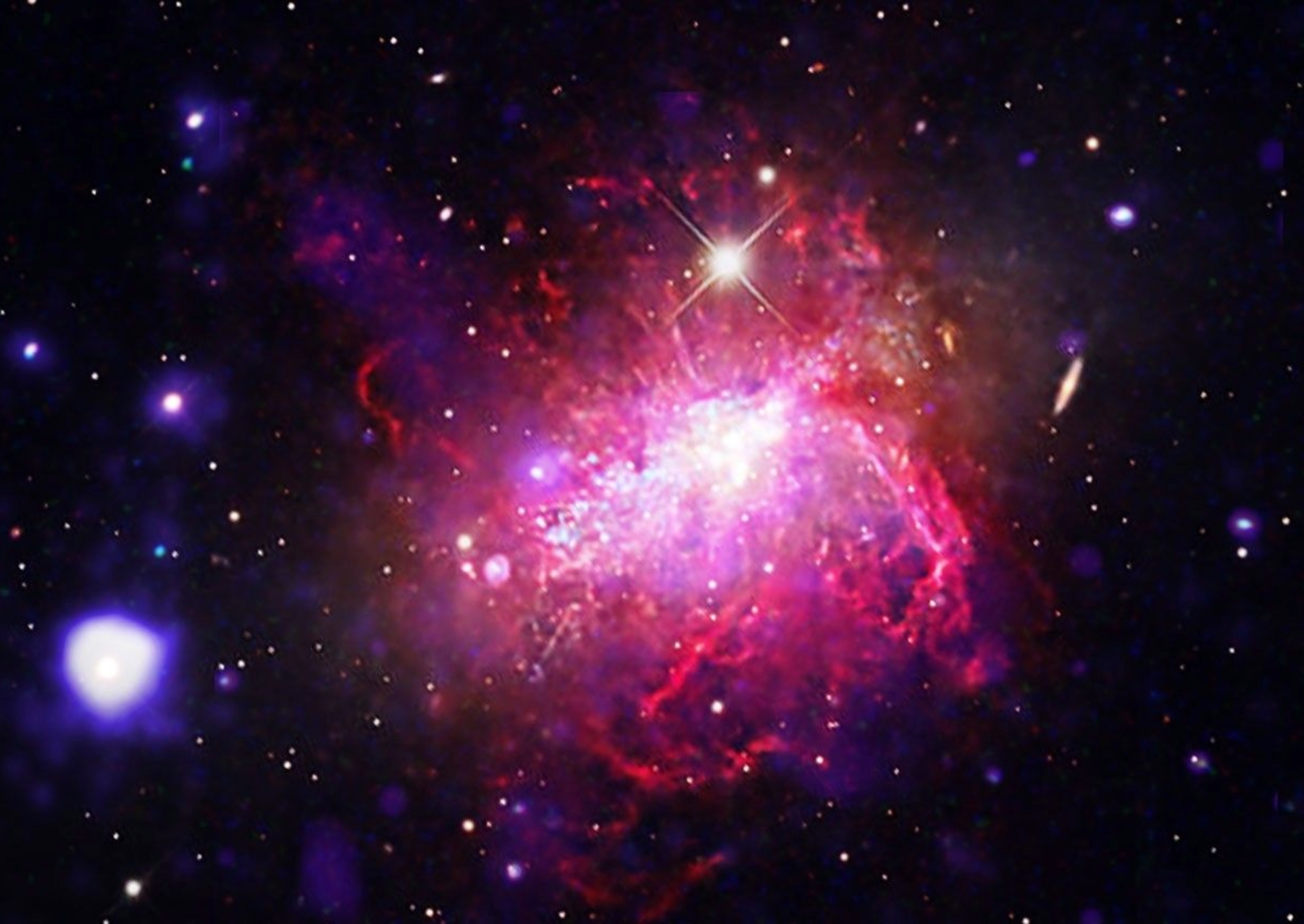
A compact dwarf irregular galaxy undergoing a violent, compact burst of star formation. Chandra and XMM-Newton observations (blue and purple) reveal massive bubbles of million-degree gas inflated by stellar winds, set against a backdrop of optical light (magenta, orange and white) imaged by Adam Block. Dwarf starburst galaxies can serve as local laboratories for studying the conditions of the early universe, where small, primitive galaxies formed stars at frantic rates. Image: X-ray: (XMM):ESA/XMM-Newton, (Chandra): NASA/CXC/SAO; Optical: Univ.of Arizona/Mt Lemmon SkyCenter/Adam Block/Josep Drudis; Image Processing: NASA?CXC/SAO/L. Frattare.

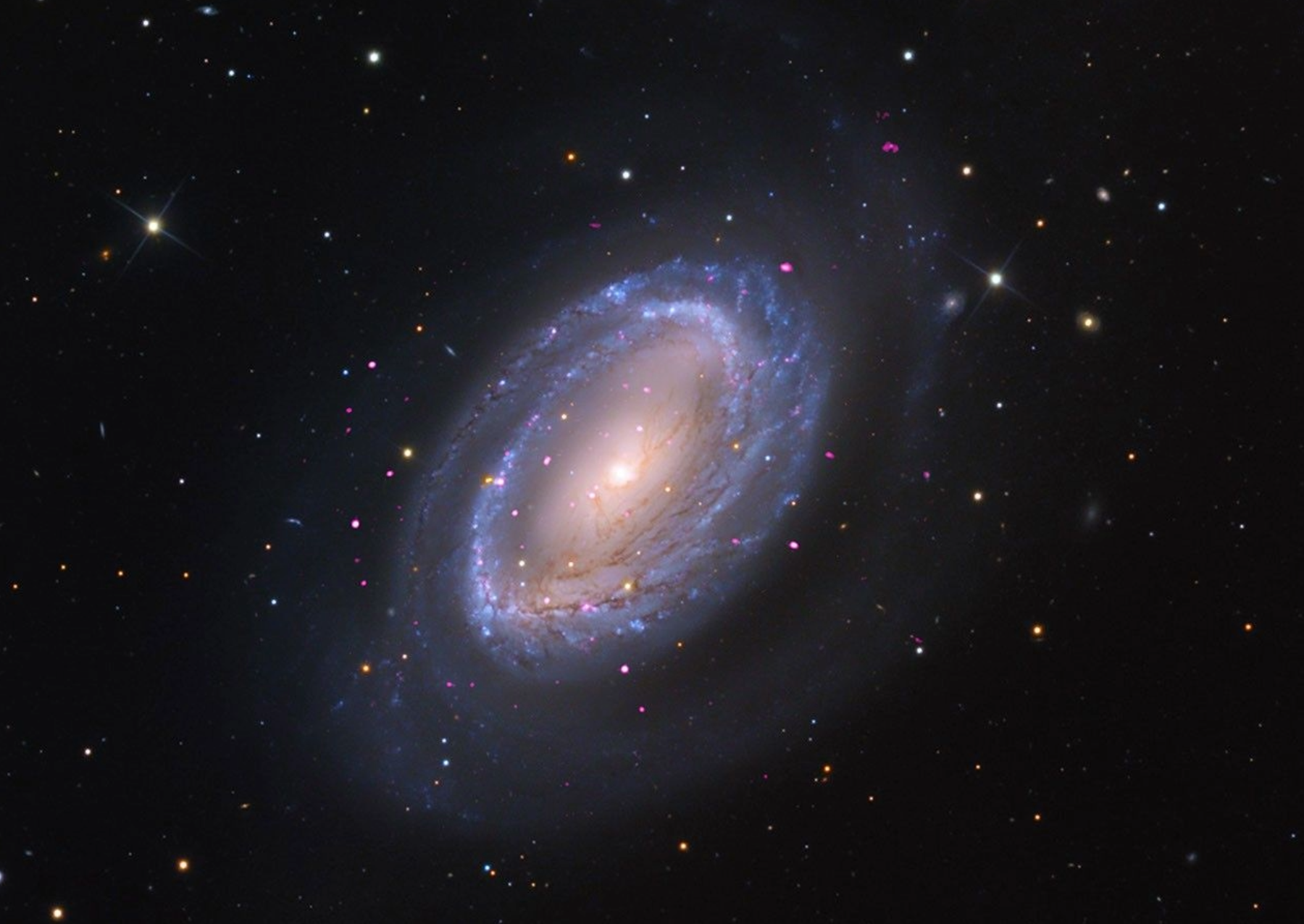
M90

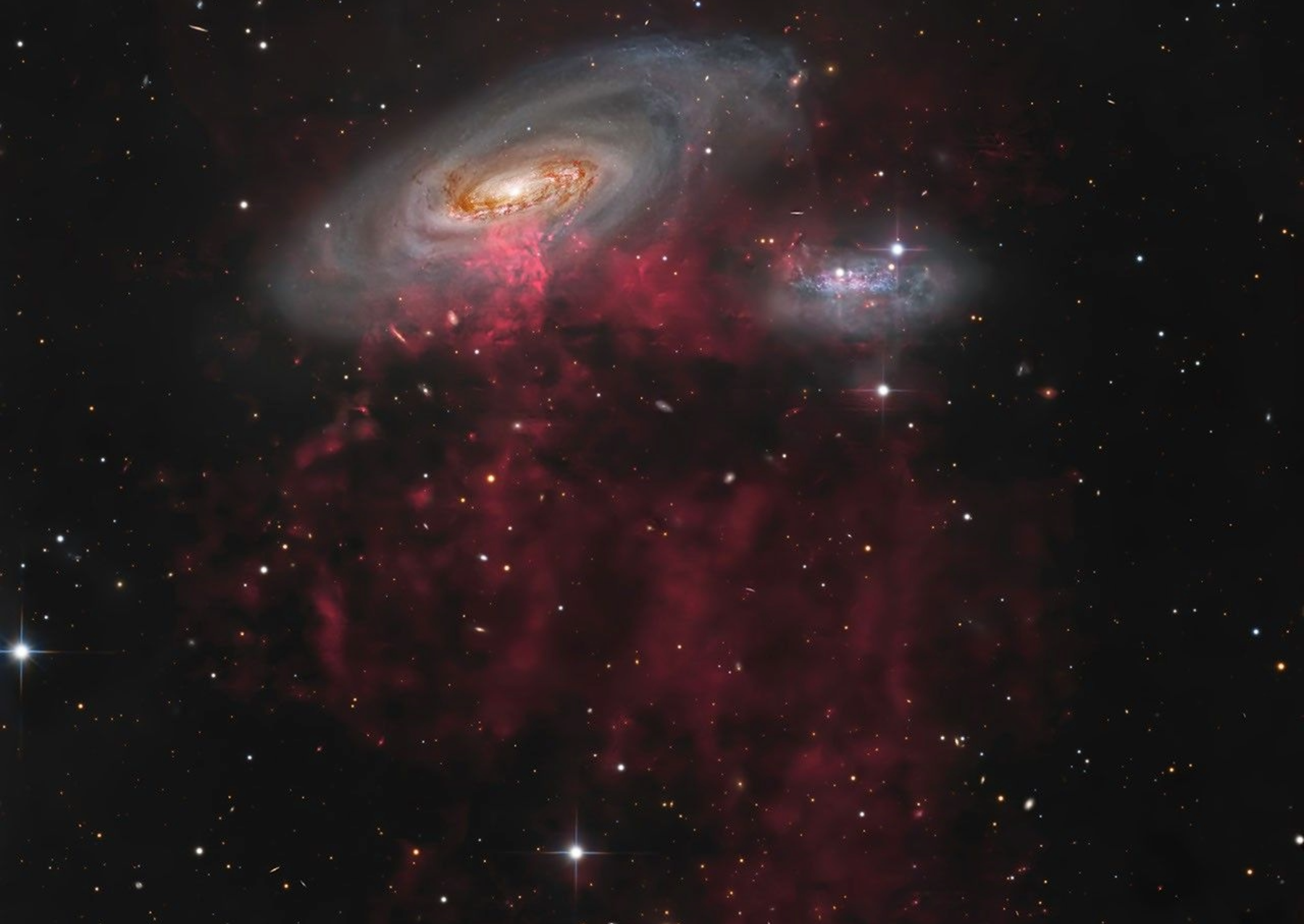
A large spiral galaxy that is being stripped of its gas as it plunges at high speed through hot gas in the Virgo Cluster of galaxies. Chandra’s X-ray data (magenta) pinpoints high-energy point sources—such as X-ray binaries and supernova remnants—and diffuse hot gas nestled within the spiral disk imaged by Hubble (blue, brown and gold). A ground-based optical light image taken from New Mexico by Timothy Martin reveals red filaments of hydrogen gas streaming over 300,000 light-years behind the galaxy as it falls into the Virgo Cluster. Image: Accidental Astronomers. X-ray: NASA/CXC/SAO; Optical: NASA/ESA/D. Thilker/J. Lee/PHANGS-HST Team; Full-field: Tim Martin; Image Processing: NASA/CXC/SAO/L. Frattare.

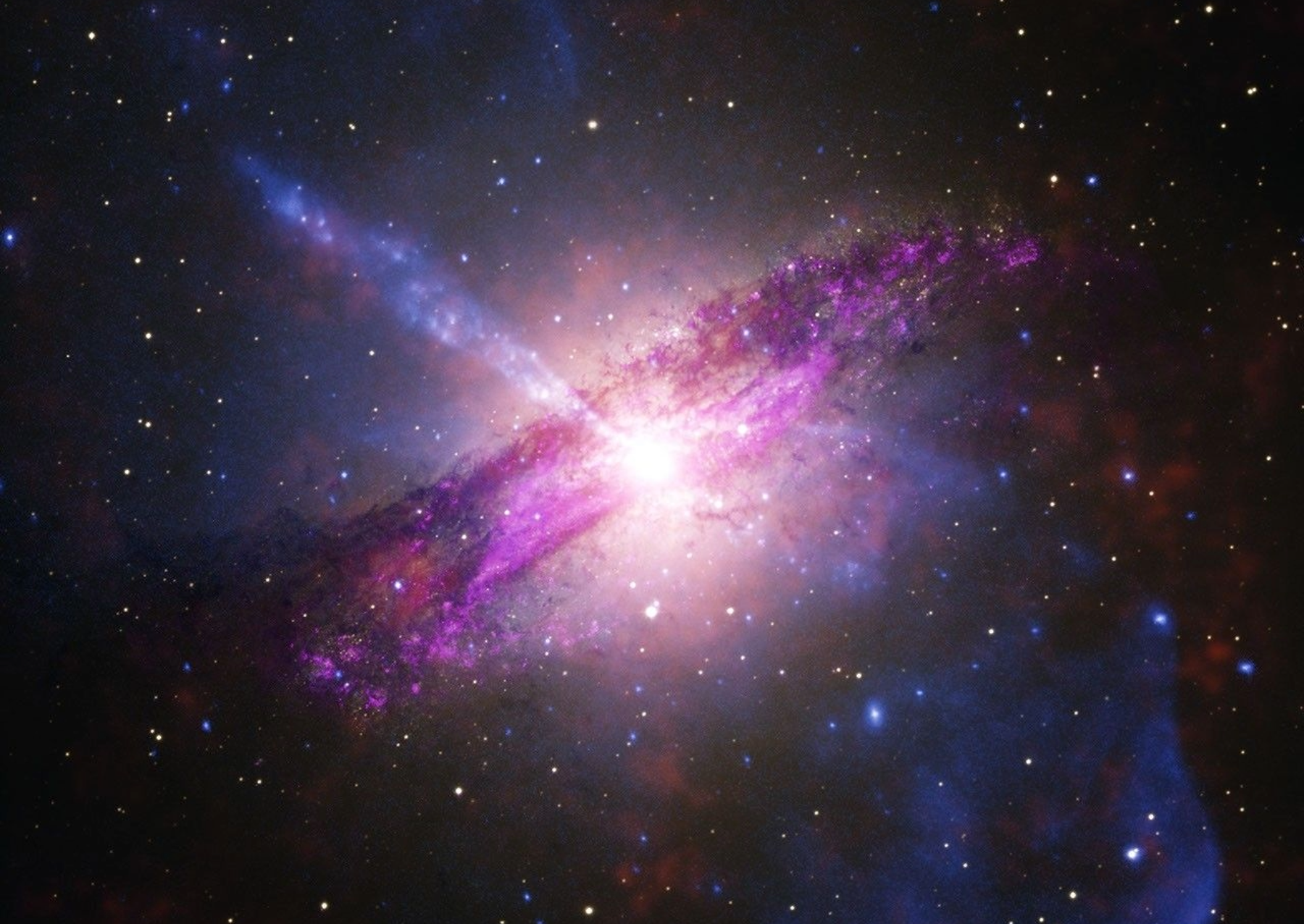
Centaurus A

A giant elliptical galaxy undergoing a dusty merger, featuring a powerful jet of particles blasting tens of thousands of light-years into space. Chandra’s X-rays (blue) showcase the high-energy jet, with additional X-rays from IXPE (orange), while Webb infrared (magenta) and optical light (amber and white) from the European Southern Observatory expose a dark, churning dust lane. As one of the closest active galaxies to Earth, Cen A allows astronomers to study the effects of supermassive black hole jets in extraordinary detail. Image: X-ray: (Chandra) NASA/CXC/SAO, X-ray (IXPE): NASA/MSFC; Optical: ESO; Infrared: NASA/ESA/CSA/STScI; Image Processing: NASA/CXC/SAO/L. Frattare, K. Arcand, and J. Major.

M104

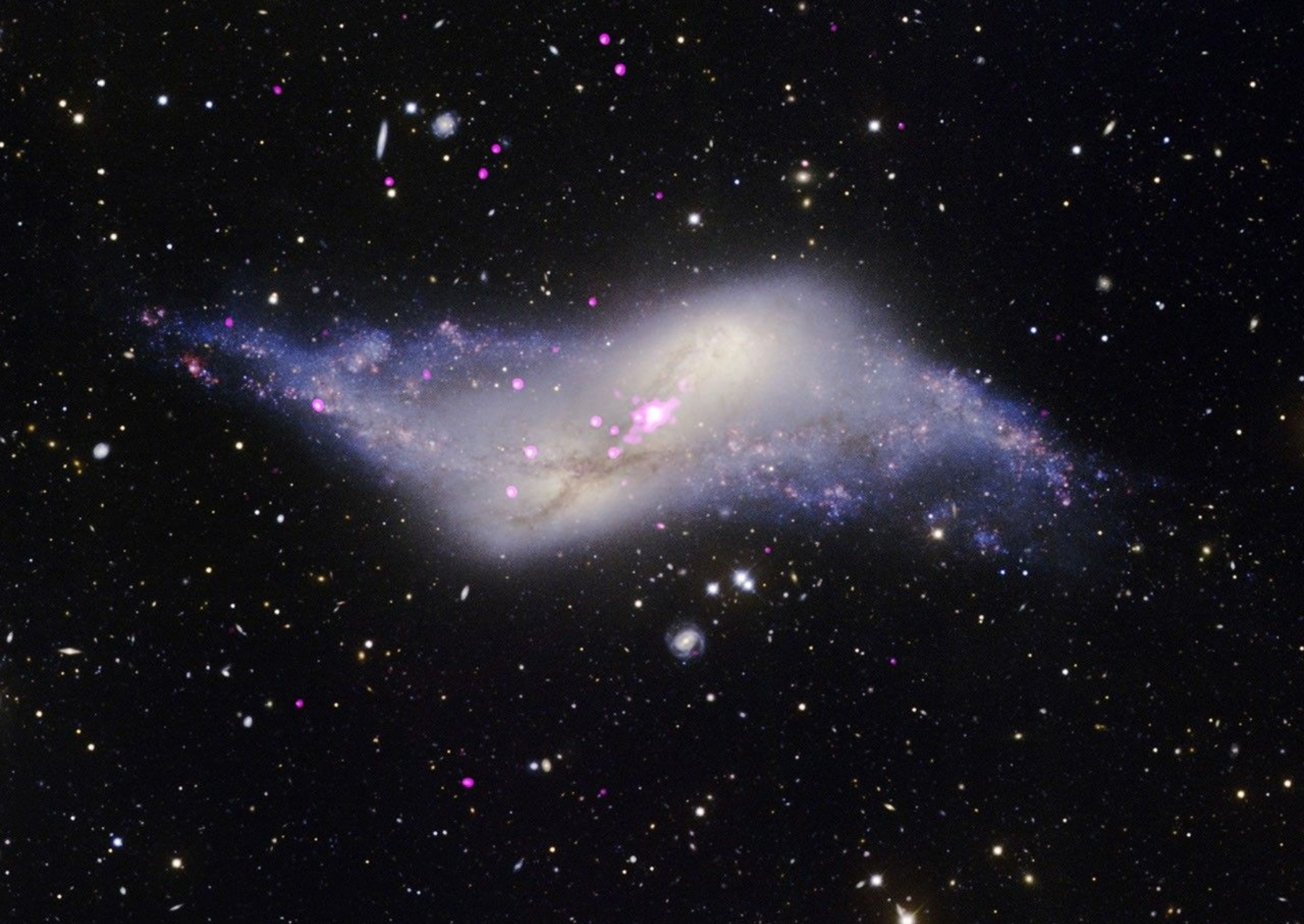
Famous for its broad central bulge and dark outer dust ring, this galaxy sits at a nearly edge-on tilt to Earth. Chandra X-rays (cyan and orange) isolate compact point sources and hot gas in the galaxy's sprawling halo, merged with Hubble optical light (warm white) and Webb infrared vision (purple-red dust lane). Studying M104 may help bridge the gap between spirals and ellipticals, helping astronomers better understand how a galaxy's giant outer cloud of stars grows and ages alongside its inner disk. Image: X-ray: NASA/CXC/SAO; Optical:NASA/Hubble Heritage Team/AURA/STScI; Infrared: NASA/ESA/CSA/STScI; Image Processing: NASA/CXC/SAO/L. Frattare.
Famous for its broad central bulge and dark outer dust ring, this galaxy sits at a nearly edge-on tilt to Earth. Chandra X-rays (cyan and orange) isolate compact point sources and hot gas in the galaxy’s sprawling halo, merged with Hubble optical light (warm white) and Webb infrared vision (purple-red dust lane). Studying M104 may help bridge the gap between spirals and ellipticals, helping astronomers better understand how a galaxy’s giant outer cloud of stars grows and ages alongside its inner disk. Image: X-ray: NASA/CXC/SAO; Optical:NASA/Hubble Heritage Team/AURA/STScI; Infrared: NASA/ESA/CSA/STScI; Image Processing: NASA/CXC/SAO/L. Frattare.

Arp 143

This ring galaxy system formed when a smaller companion galaxy punched straight through its center like a bullseye, creating a powerful cosmic shockwave. Chandra X-rays (purple) uncover bright X-ray binary systems scattered along the collision shock wave, laid over Hubble’s optical image (blue and white) of expanding stellar rings. Such head-on collisions can trigger vast ripple effects, sparking huge waves of star birth across entire galaxies. Image: X-ray: NASA/CXC/SAO; Optical: NASA/ESA/STScI/J. Dalcanton; Image Processing: NASA/CXC/SAO/L. Frattare.

NGC 4725

A "one-armed" barred spiral galaxy surrounded by a prominent star-forming ring. Chandra's X-ray data (magenta) pinpoints several bright X-ray sources, likely caused by growing black holes, embedded within the sweeping optical disk (soft blue and white) captured with the Mt. Lemmon Observatory. Galaxies with unusual single arms can offer a window into how the gravity from a passing galaxy can trigger bursts of star formation. Image: X-ray: NASA/CXC/SAO; Optical: NASA/ESA/STScI/NAOJ/R. Gendler; Image Processing: NASA/CXC/SAO/L. Frattare.
A “one-armed” barred spiral galaxy surrounded by a prominent star-forming ring. Chandra’s X-ray data (magenta) pinpoints several bright X-ray sources, likely caused by growing black holes, embedded within the sweeping optical disk (soft blue and white) captured with the Mt. Lemmon Observatory. Galaxies with unusual single arms can offer a window into how the gravity from a passing galaxy can trigger bursts of star formation. Image: X-ray: NASA/CXC/SAO; Optical: NASA/ESA/STScI/NAOJ/R. Gendler; Image Processing: NASA/CXC/SAO/L. Frattare.

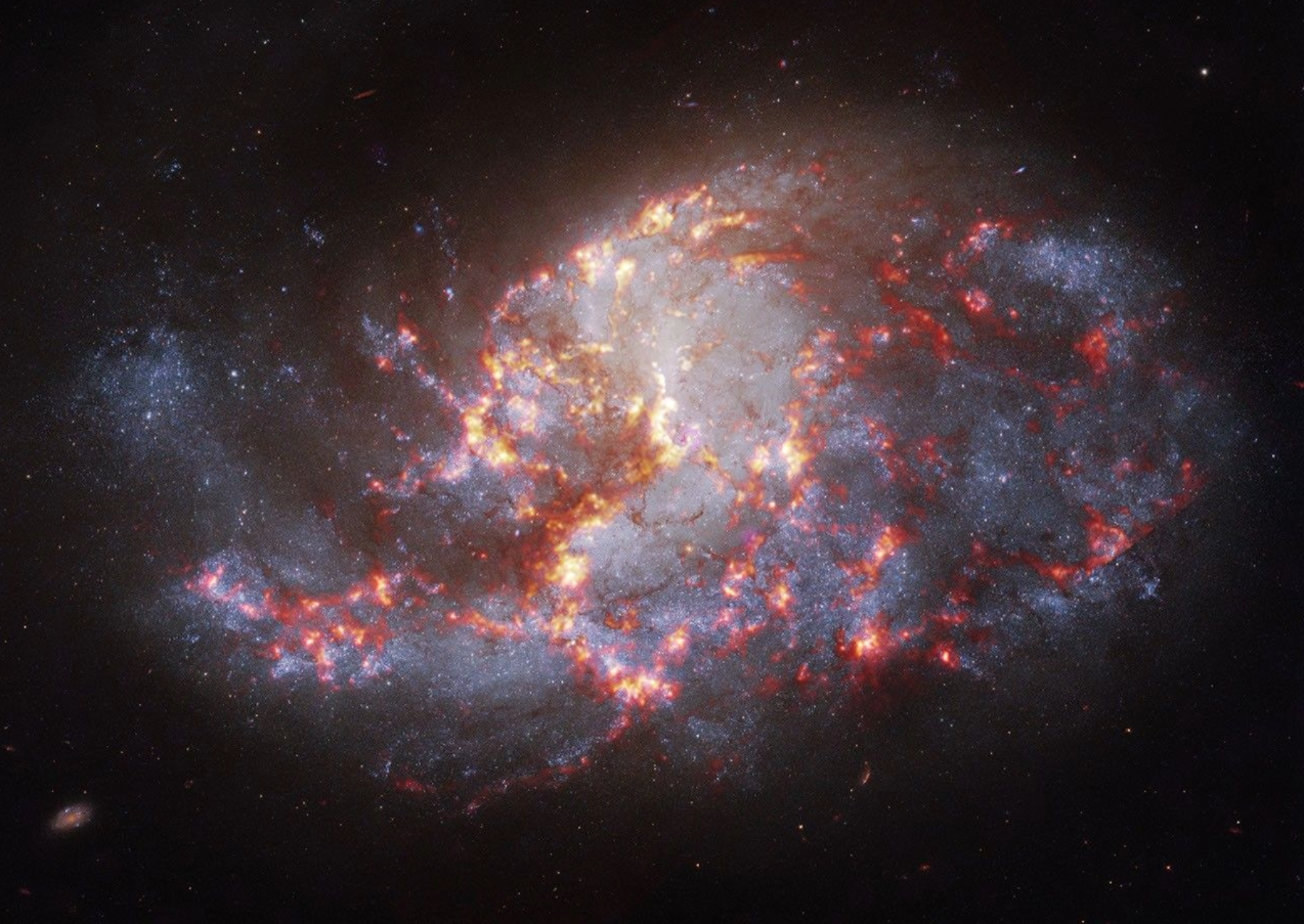
NGC 1385

A barred spiral galaxy packed with regions where stars are actively forming. Chandra X-ray data (magenta) highlights stellar nurseries and X-ray binaries scattered along dusty spiral structures brought to life by Hubble optical (white and grey) and Webb infrared (orange and red) observations. Comparing multiwavelength data of barred spirals containing active star formation helps scientists map how local starbursts build up galactic mass over time. Image: X-ray: NASA/CXC/SAO; Optical: NASA/ESA/STScI; Infrared: NASA/ESA/CSA/STScI; Image Processing: NASA/CXC/SAO/L. Frattare.

NGC 660

A rare "polar ring" galaxy where a tilted outer ring of stars and dust rotates over the galaxy's poles, an unusual structure likely caused by a collision with another galaxy about a billion years ago. Chandra’s X-rays (purple) reveal a possible growing supermassive black hole in the center of the galaxy, plus X-ray binaries nestled within the stars and dust captured by the Gemini Observatory in optical light (gold, blue and white). Studying polar rings teaches us about the diverse effects of stellar collisions on the shapes of galaxies. Image: X-ray: NASA/CXC/SAO; Optical:NSF/International Gemini Observatory/AURA; Image Processing: NASA/CXC/SAO/L. Frattare.
A rare “polar ring” galaxy where a tilted outer ring of stars and dust rotates over the galaxy’s poles, an unusual structure likely caused by a collision with another galaxy about a billion years ago. Chandra’s X-rays (purple) reveal a possible growing supermassive black hole in the center of the galaxy, plus X-ray binaries nestled within the stars and dust captured by the Gemini Observatory in optical light (gold, blue and white). Studying polar rings teaches us about the diverse effects of stellar collisions on the shapes of galaxies. Image: X-ray: NASA/CXC/SAO; Optical:NSF/International Gemini Observatory/AURA; Image Processing: NASA/CXC/SAO/L. Frattare.

M82

An irregular galaxy undergoing intense star formation because of a gravitational interaction with a neighboring galaxy hundreds of millions of years ago. Chandra X-rays (blue), supplemented by NuSTAR data, show towering superwinds of million-degree gas blowing thousands of light-years out of the galactic disk, with Hubble optical light (yellow, orange and white) showing the galaxy shape, and Webb and Spitzer detailing infrared dust emission (red). M82 was nicknamed the Cigar Galaxy mostly because of its edge-on angle to Earth, which makes its central disk look like an elongated, cigar-shaped oval with small optical telescopes. The galaxy illustrates how violent galactic "exhaust systems" can regulate a galaxy's growth by venting gas outwards. Image: X-ray: NASA/CXC/SAO; Optical: NASA/ESA/STScI; Infrared: NASA/ESA/CSA/STScI; Image Processing: NASA/CXC/SAO/L. Frattare, J. Major, and K. Arcand.
An irregular galaxy undergoing intense star formation because of a gravitational interaction with a neighboring galaxy hundreds of millions of years ago. Chandra X-rays (blue), supplemented by NuSTAR data, show towering superwinds of million-degree gas blowing thousands of light-years out of the galactic disk, with Hubble optical light (yellow, orange and white) showing the galaxy shape, and Webb and Spitzer detailing infrared dust emission (red). M82 was nicknamed the Cigar Galaxy mostly because of its edge-on angle to Earth, which makes its central disk look like an elongated, cigar-shaped oval with small optical telescopes. The galaxy illustrates how violent galactic “exhaust systems” can regulate a galaxy’s growth by venting gas outwards. Image: X-ray: NASA/CXC/SAO; Optical: NASA/ESA/STScI; Infrared: NASA/ESA/CSA/STScI; Image Processing: NASA/CXC/SAO/L. Frattare, J. Major, and K. Arcand.

NGC 3256

A pair of colliding, gas-rich spiral galaxies merging into a single massive system. Chandra’s X-ray data (pink) isolates point sources and shock-heated gas, Hubble’s optical light (blue and white) captures tidal tails of stars, and Webb’s infrared vision (red and orange) cuts through the dust to show hidden star formation. Galaxy collisions like this offer a preview of our far future, showing what might happen if our own Milky Way collides and merges with the nearby Andromeda Galaxy. Image: X-ray: NASA/CXC/SAO; Optical: NASA/ESA/STScI; Infrared: NASA/ESA/CSA/STScI; Image Processing: NASA/CXC/SAO/L. Frattare.

NGC 3938

A face-on spiral galaxy whose orientation gives us an unobstructed view of its disk. X-ray emissions from Chandra (magenta) detail energetic X-ray binaries and supernova remnants scattered across dust lanes in an optical image (white, blue and gold) from Adam Block with Mt. Lemmon Observatory. Face-on orientations are important for galactic studies because they provide the most unobstructed views of a galaxy’s stars and gas. Image: X-ray: NASA/CXC/SAO; Optical: Adam Block/Mount Lemmon SkyCenter/University of Arizona; Image Processing: NASA/CXC/SAO/L. Frattare.

NGC 4631

A spiral galaxy viewed from its side, featuring a giant halo of hot gas blowing out of its stellar disk. X-rays from Chandra and ESA’s XMM-Newton (purple and royal blue) trace hot gas driven out by supernovas and black holes and neutron stars pulling gas from their companions, while optical light (light blue, gold and white) from ground-based observer R. Jay GaBany showcases dense dust lanes. Edge-on views of galaxies allow astronomers to study how flat their stellar disks are and provide the clearest views of material located above or below the disk. Image: X-ray: NASA/CXC/SAO; Optical: ©2011-2015 by R Jay GaBany, Cosmotography.com; Image Processing: NASA/CXC/SAO/L. Frattare.

The post 16 glistening galaxies shine in new images form NASA’s Chandra X-Ray Observatory appeared first on Popular Science.

  •  

How do I get my photos from my iPhone to my Mac?

Hi,

I have to send from photos to a friend. I took these photos on my iPhone 5C (about 6 or 7 pics) and I'd like to transfer them to my Mac laptop (OSX 10.7.5) and then send them as attachments to an email to my friend. But I don't know how to do any of this. Sorry, I'm not really a power user and I don't usually take many photos. Of course, I do know how to send an attachment to an email but I don't know how to get the photos from my iPhone to my Mac. I have the latest version of iTunes...

Read more
  •  

Tweet! Here are the winners of the 2026 Audubon Photography Awards

It’s a bird’s world, and we’re just living in it. Today, the National Audubon Society officially announced the winners of the 2026 Audubon Photography Awards. The contest is now in its 17th year and celebrates stunning photos (and even a few videos) that showcase the beauty of birds and the challenges they face. For the second year, the judges awarded prizes to residents of Chile and Colombia, as well as the United States and Canada, highlighting how avians connect us across geographies and ecosystems. 

This year’s Grand Prize winners each received $5,000 and a voyage to Antarctica with HX Expeditions—an expedition cruise company and Audubon’s exclusive cruise partner.

Take a peek at the winners in the gallery below. (Click to expand images to full screen.)

Prizes for United States and Canada Residents

Grand Prize: Jacqueline Burke, roseate spoonbill

a bird with pink feathers glides over the water
A roseate spoonbill (Platalea ajaja) at the St. Augustine Alligator Farm Zoological Park, in St. Augustine, Florida. Image: Jacqueline Burke.

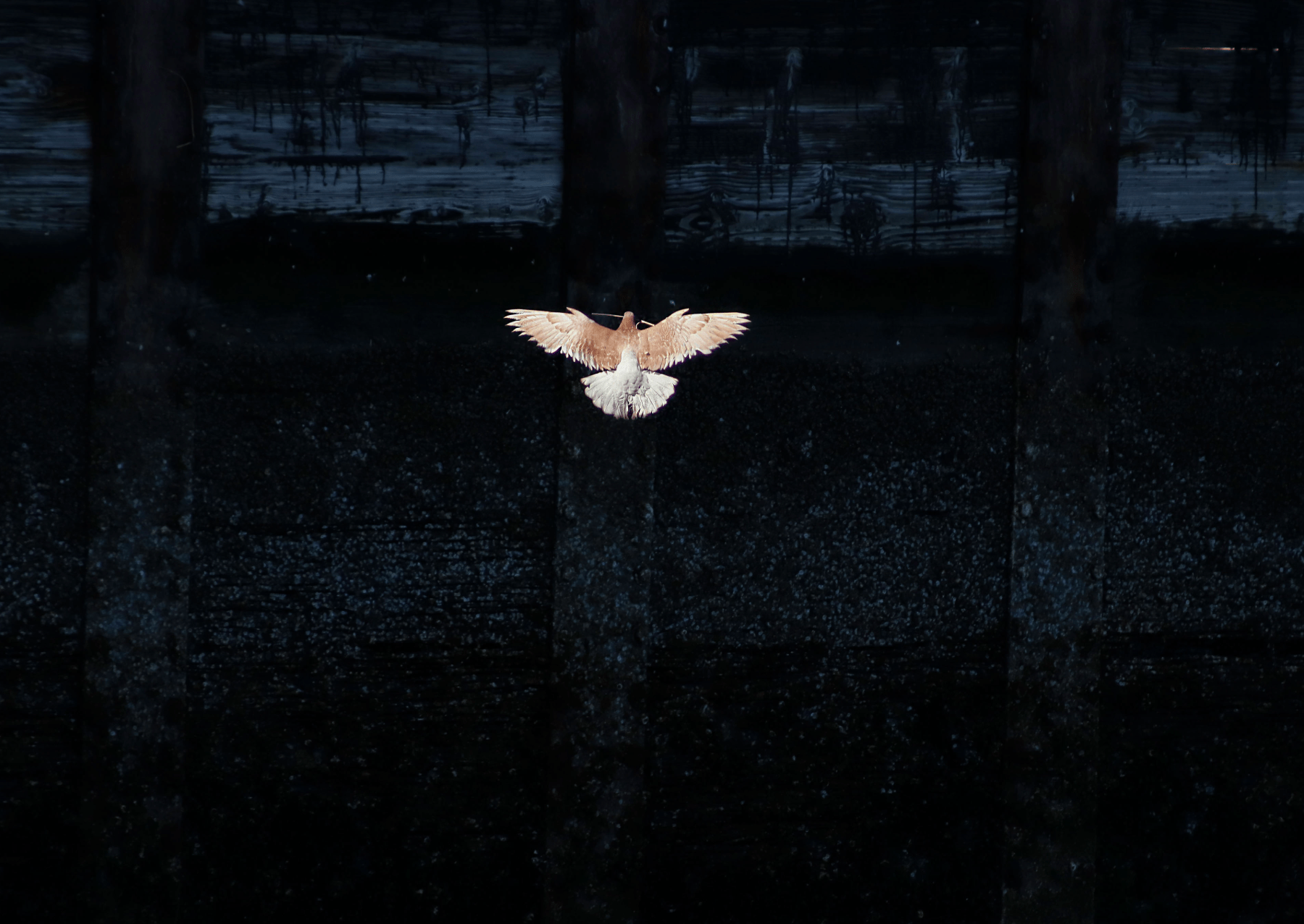
Youth Prize: Ian Shultz, rock pigeon

a pigeon with outstretched wings glides over water
A rock pigeon (Columba livia) in Golden Gardens Park in Seattle, Washington. Image: Ian Shultz.

Video Prize: Piper VanOrd, great blue heron

A great blue heron (Ardea herodias) at Allegheny Islands Wilderness, National Wild & Scenic Allegheny River, in Warren, Pennsylvania. Credit: Piper VanOrd.


Female Bird Prize: Gail Bisson, common merganser

a bird with black, white, and brown feathers flies over water with a fish in its mouth
A common merganser (Mergus merganser) in East Bay Sandbar, Nova Scotia, Canada. Image:  Gail Bisson.

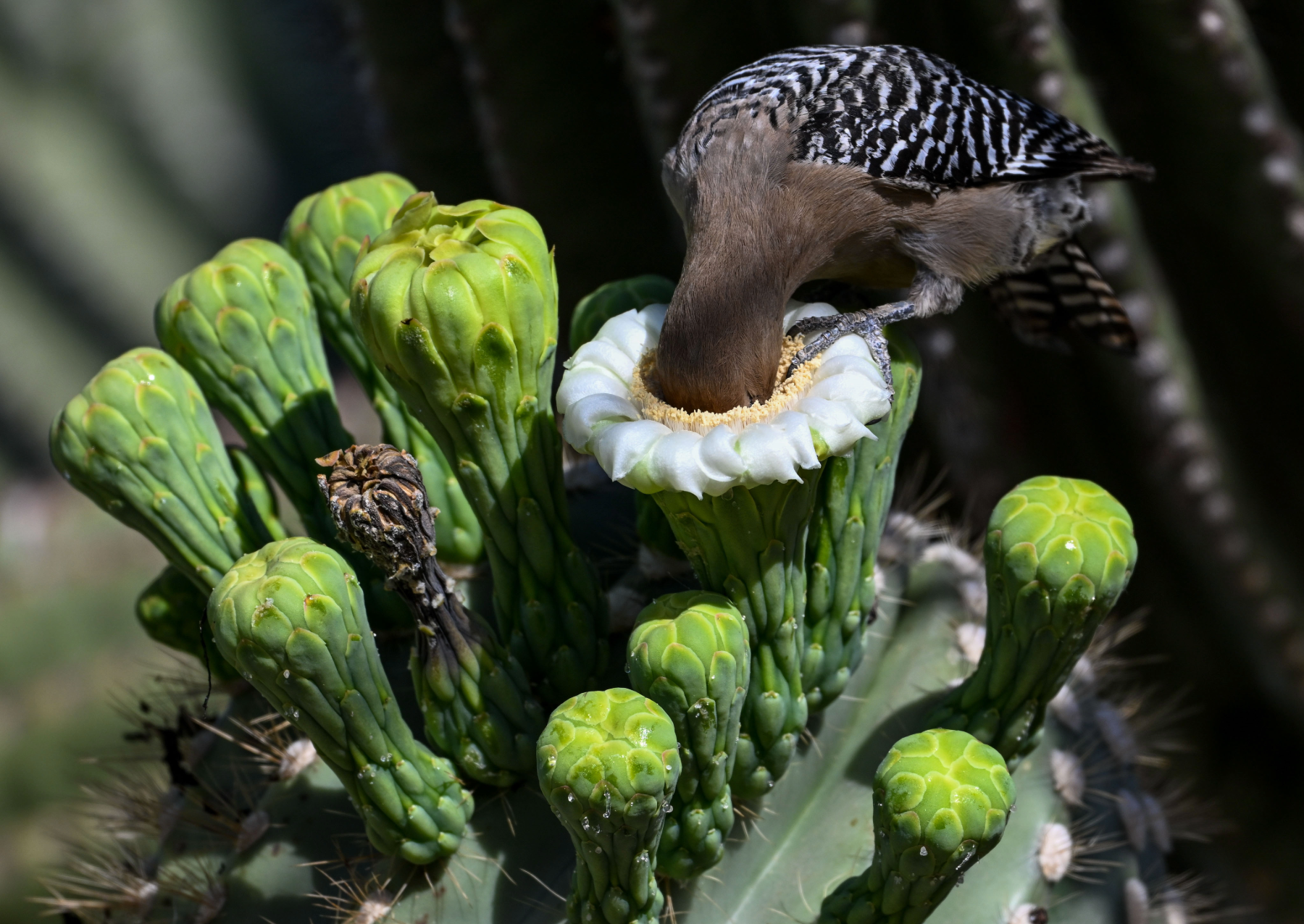
Plants for Birds Prize: Mike Henry, Gila woodpecker and saguaro cactus

a bird with black and white feathers sticks its beak and most of its head into the yellow pollen-filled center of cactus flower
A Gila woodpecker (Melanerpes uropygialis) and saguaro cactus (Carnegiea gigantea) in Tucson, Arizona. Image: Mike Henry.

Birds Without Borders Prize: Nick Parayko, Tennessee warbler

a bird with yellow-green feathers stands on a leaf
A Tennessee warbler (Leiothlypis peregrina) in photographer Nick Parayko’s backyard in St. Albert, Alberta, Canada. Image: Nick Parayko.

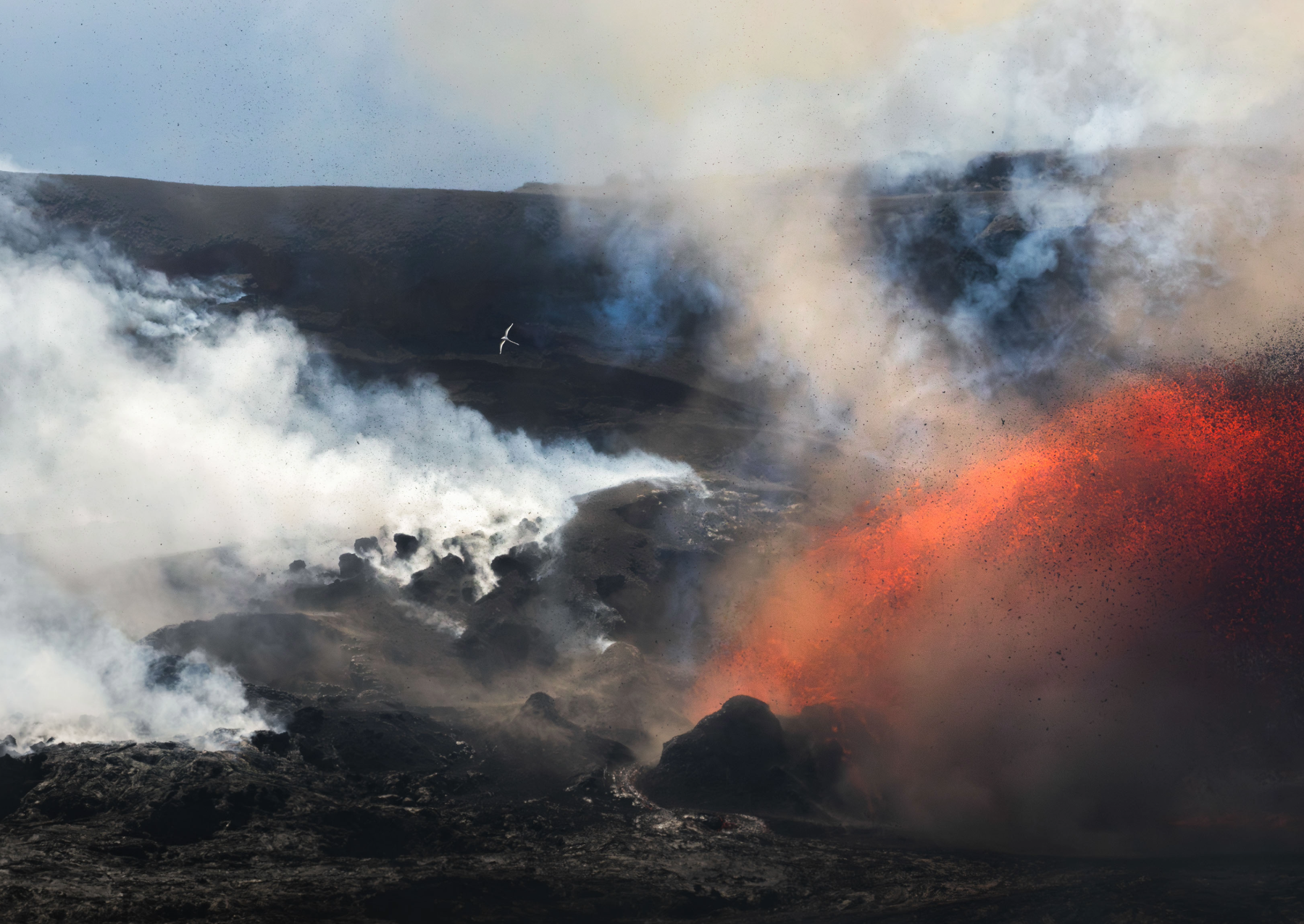
Birds in Landscapes Prize: Liron Gertsman, white-tailed tropicbird

a white bird flies by a volcano with red lava and white smoke spewing out
A white-tailed tropicbird (Phaethon lepturus) in Hawai’i Volcanoes National Park in Hawai’i. Image: Liron Gertsman.

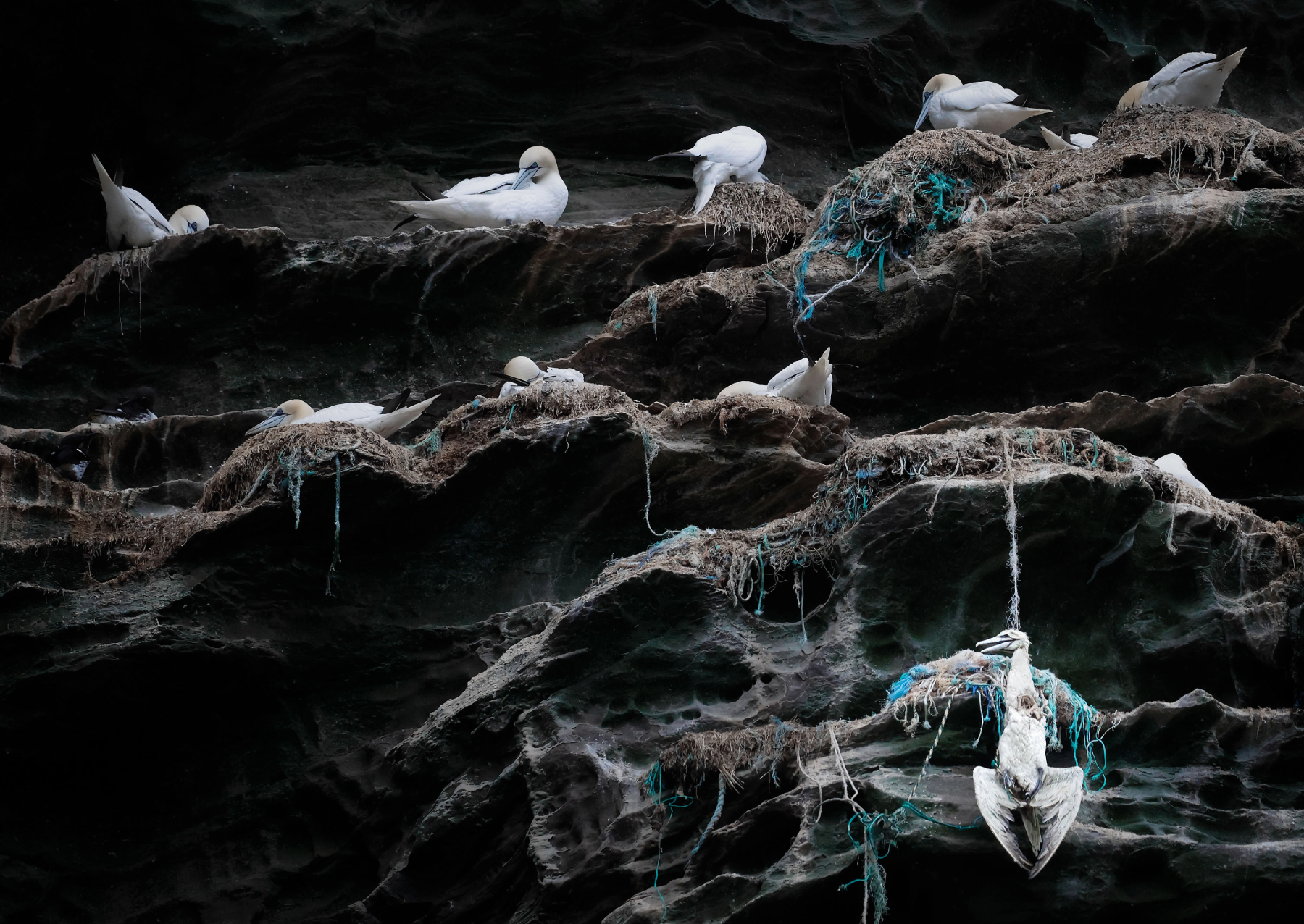
Conservation Prize: Josh Galicki, northern gannets

several white birds on a rock cliff with plastic
Northern gannets (Morus bassanus) on the Isle of Noss in the Shetland Islands, United Kingdom. Image: Josh Galicki.

Prizes for Chile and Colombia Residents

Grand Prize: Francisco Castro Escobar, lesser horned owl

an owl with gray, brown, and white feathers, with prominent black feathers over its eyes sits on a tree branch next to a spiky cactus
A lesser horned owl (Bubo magellanicus) in Antofagasta, Chile. Image: Castro Escobar.

Youth Prize: Juan David Camacho Márquez, Canada warbler

a bird with grey and black feathers with prominent yellow feathers on its belly stands on a branch of a tree with a spider web underneath it
A Canada warbler (Cardellina canadensis) in Doña Dora Birding, El Queremal, Valle del Cauca, Colombia. Image: Juan David Camacho Márquez.

Video Prize: Nicolás Muñoz García, black-browed albatross

A black-browed albatross (Thalassarche melanophris) is on Isla Chañaral Marine Reserve, Huasco Province, Chile. The nearest town is Caleta Chañaral de Aceituno. Credit: Nicolás Muñoz García.

Birds Without Borders Prize: Rodrigo González Pairoa, black-browed albatross

a close-up of the profile of a bird with white feathers, a dark eye, and light orange beak
A black-browed albatross (Thalassarche melanophris) in Almirantazgo Fjord, Chile. Image: Rodrigo González Pairoa.

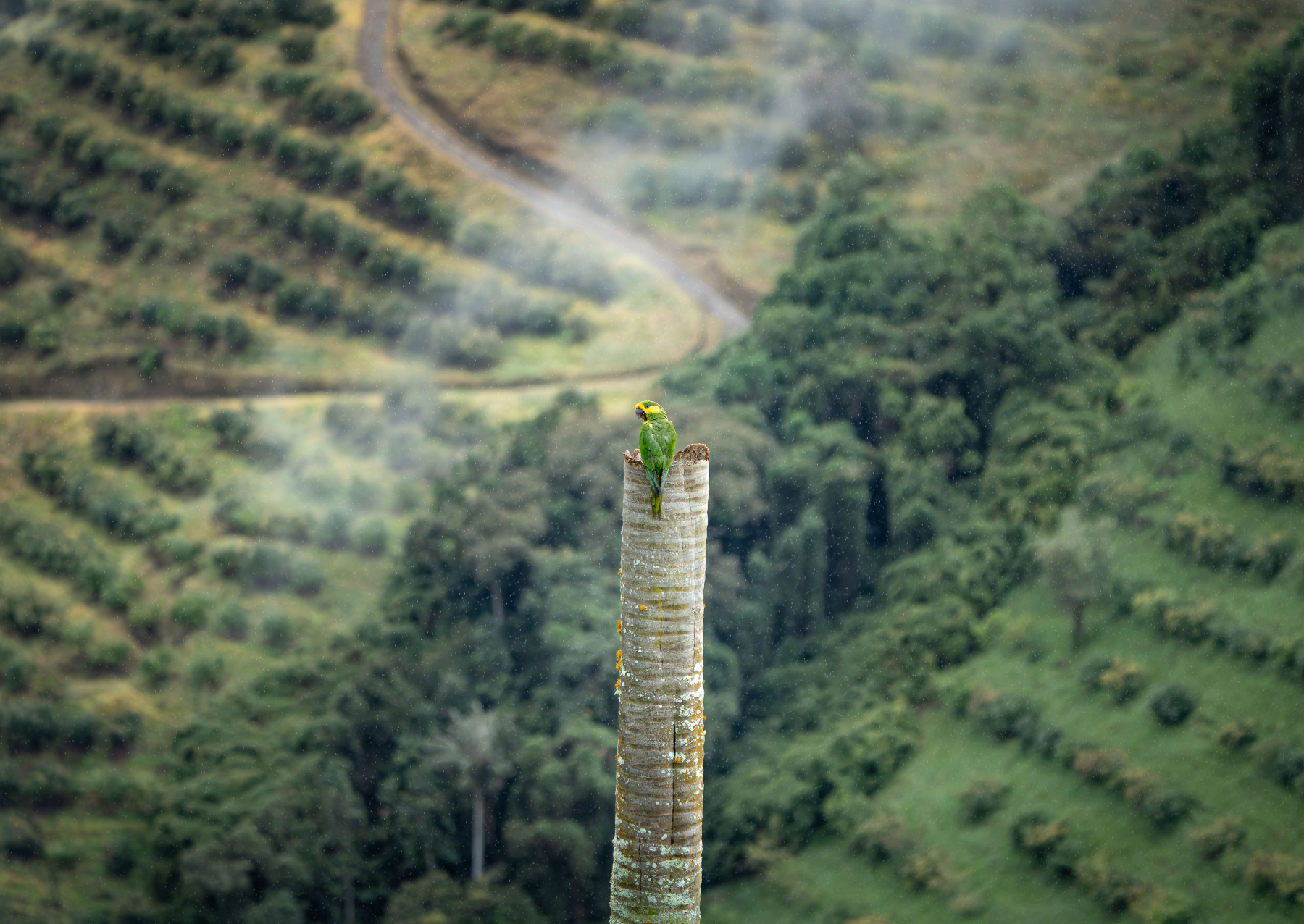
Conservation Prize: Santiago Pérez Rincón, yellow-eared parrot

a parrot sits n top of a palm tree trunk with green feather and yellow feathers on its face
A yellow-eared parrot (Ognorhynchus icterotis) in Anaime River Canyon, Rural District of the Municipality of Cajamarca, Department of Tolima, Colombia. Image: Santiago Pérez Rincón.

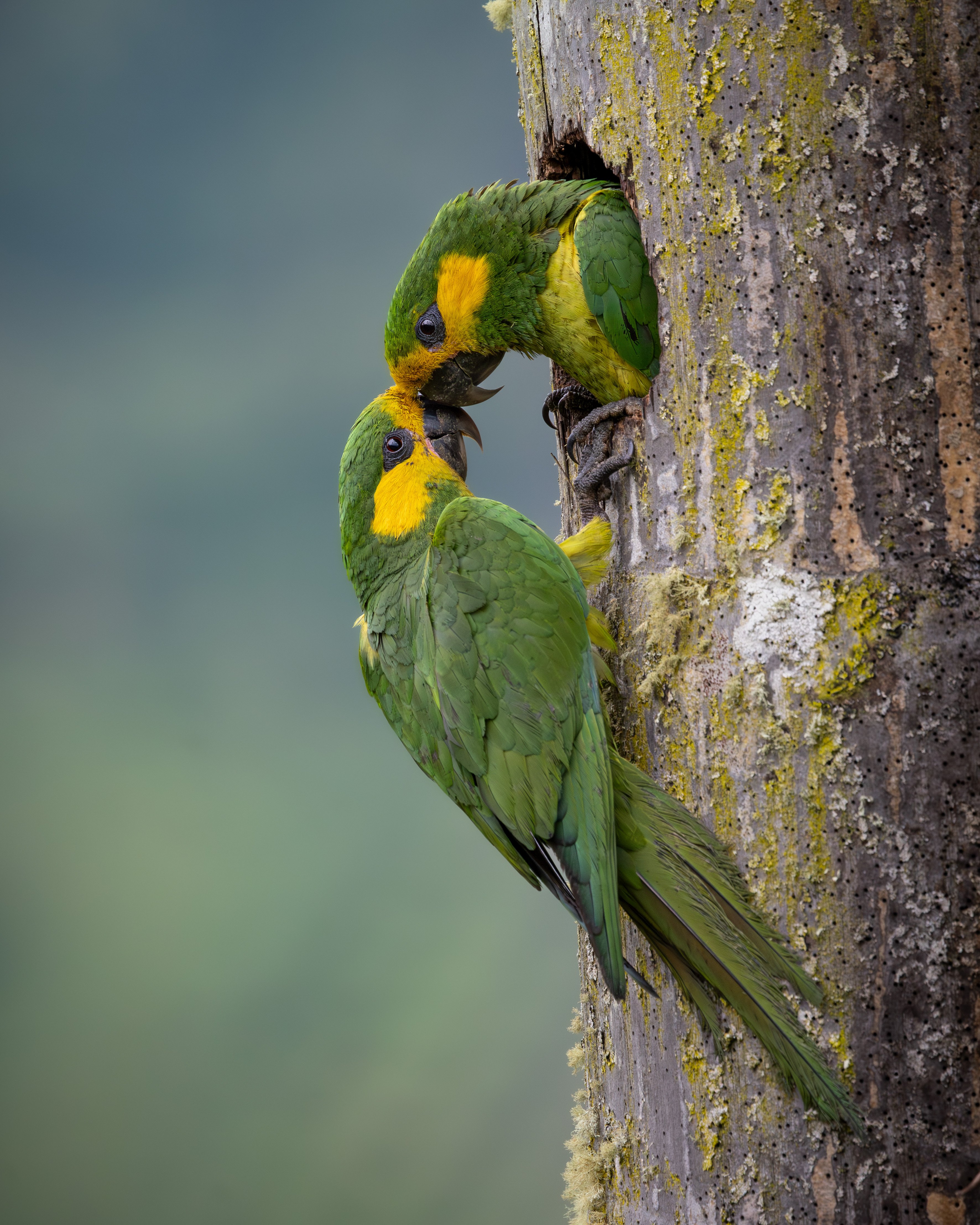
Plants for Birds Prize, Colombia: Santiago Giraldo, yellow-eared parrot and Quindio wax palm

two parrots with green feathers with yellow feathers on their faces touch beaks on the trunk of a palm tree. one of the birds is inside of a hole in the tree, while the other stands below
A yellow-eared parrot (Ognorhynchus icterotis) and Quindio wax palm (Ceroxylon quindiuense) in Anaime, Cajamarca, Tolima, Colombia. Image: Santiago Giraldo.

Birds in Landscapes Prize, Colombia: Faber Mosquera Álvarez, oilbird

a bird with gray and brown feathers flies in the dark night sky
Oilbird (Steatornis caripensis) in the Cañón de los Guácharos, Pijao, Quindío, Colombia. Image: Faber Mosquera Álvarez.

Birds in Landscapes Prize, Chile: Timothy Dhalleine, crested caracara

two birds with brown and white feathers stand by a pond and a lake underneath snow-capped mountains
A crested caracara (Caracara plancus) in Torres del Paine National Park, Magallanes and Chilean Antarctic region, Chile. Image: Timothy Dhalleine.

Coastal Birds Prize, Chile: Gonzalo Bertolotto Quintana, gentoo penguin

a top view of a penguin with white and black gliding through the ocean
A gentoo penguin (Pygoscelis papua) in Fildes Bay, Antarctica, in the vicinity of the Chilean bases. Image: Gonzalo Bertolotto Quintana.
Gonzalo Bertolotto Q

The winners and honorable mentions are published online in Audubon magazine, and winners will be in the Fall 2026 print issue. The annual Top 100 photos will also be announced on September 23, 2026, and additional selections will be featured in digital galleries on Audubon’s website.  

The 2027 Audubon Photography Awards will open for entries on January 13, 2027. 

The post Tweet! Here are the winners of the 2026 Audubon Photography Awards appeared first on Popular Science.

  •  
❌