❌

Reading view

Scientists Find That 96 Percent of Delicious Tuna Is Infected With Parasitic Worms

For seafood lovers, there are few things more appealing than a simple slab of raw tuna — a fish whose fatty, savory, and tender muscle tissue has been a delicacy for thousands of years.

Unfortunately for those foodies, fresh raw fish comes with the distinct possibility of parasitic infection. Off the coasts of southern Brazil, that risk is rising, as hauls of the common skipjack tuna come with the near certainty of parasitic contamination.

That’s not an exaggeration. According to a new report published in the journal Ocean and Costal Research and flagged by ScienceAlert, a whopping 96 percent of a recent load of tuna was infested with gut-busting worms.

Out of 53 skipjack, marine researchers counted over 1,600 worms infesting nearly every organ of every fish hauled in from the ocean. Only the kidneys and hearts of the tuna remained worm-free, the researchers noted. Everything else, including the muscle tissue we humans eat, was festering with flatworms and roundworms.

Though most preparation methods will kill the parasites, the images are pretty off-putting. As the researchers explain, the sheer volume of parasitic infection is alarming.

“These results highlight the importance of sanitary inspection and emphasize the importance of immediate evisceration to avoid the migration of larvae from the viscera to the musculature,” the authors write.

Still, parasitologists say the worms aren’t all bad. Though increased presence of worms also comes with more risk of infection, University of Washington parasitologist Chelsea Wood told ScienceAlert in a prior story that they can actually be a sign that the fish is well-sourced.

“Everyone assumes that worms in your salmon is a sign that things have gone awry,” Wood said. “But the anisakid [roundworm] life cycle integrates many components of the food web. I see their presence as a signal that the fish on your plate came from a healthy ecosystem.”

More on food: Scientists Turn Plastic Waste Into Edible Cookies Because That’s the Future We Deserve

The post Scientists Find That 96 Percent of Delicious Tuna Is Infected With Parasitic Worms appeared first on Futurism.

  •  

The CDC Is Now Denying That Specific Children Died From Measles, in a Scandal Potentially Beyond Anything in Its History

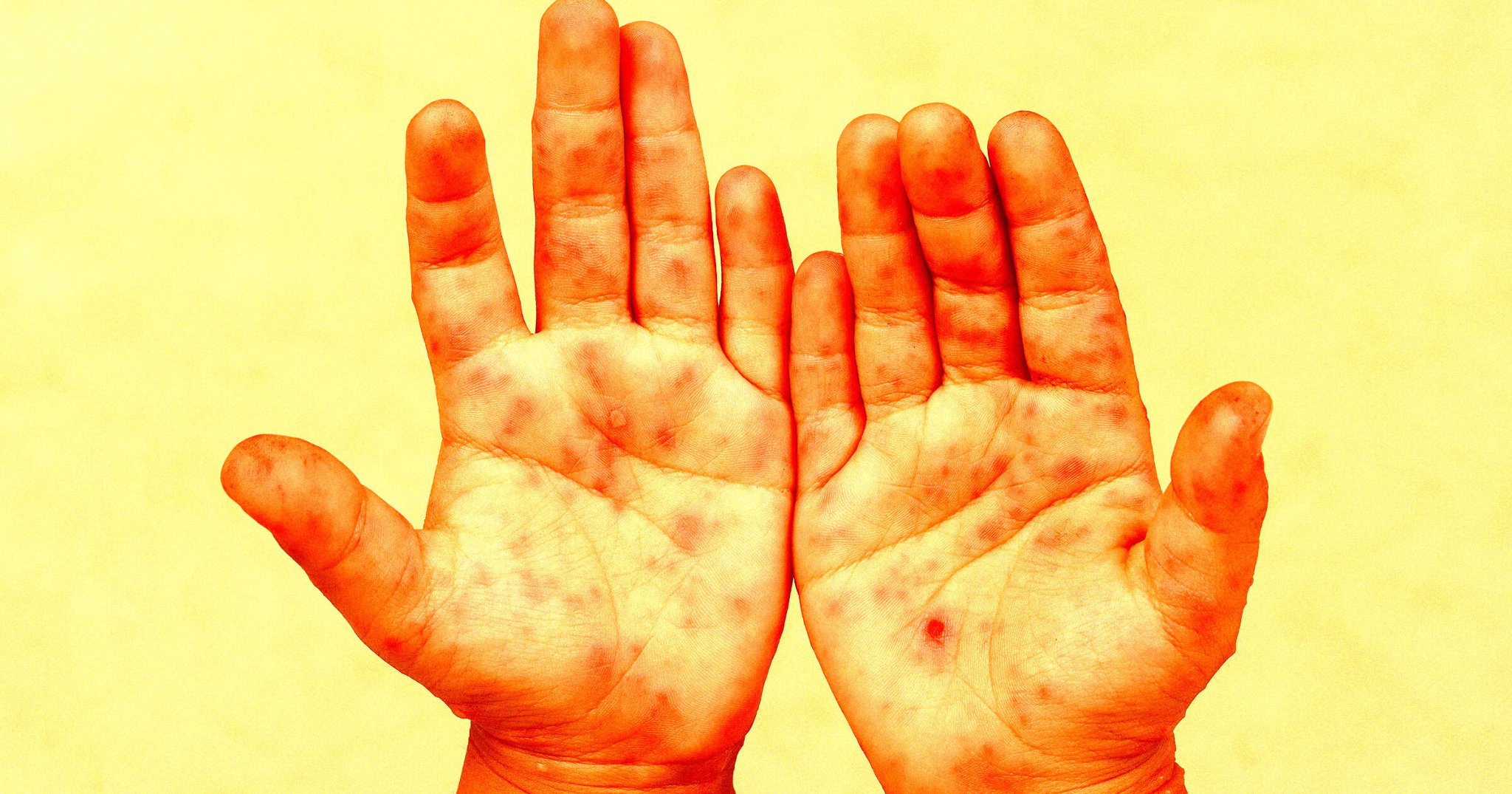
After health officials in Pennsylvania found that two young children died from measles, the Centers for Disease Control and Prevention is refusing to count their deaths as being caused by the deadly virus.

“This week’s measles outbreaks update will not include the two measles-associated deaths reported by the Pennsylvania Department of Health on Aug. 25,” the CDC posted on its website, in a high unusual announcement.

It’s a precedent shattering action. The New York Times called it an “extraordinary move for the CDC,” breaking with the agency’s long-standing procedure of accepting data shared by states.

The challenge by the CDC comes amid a political showdown between health secretary Robert F. Kennedy Jr, who oversees the CDC, and Pennsylvania’s Democratic governor Josh Shapiro.

At a news conference last week, Shapiro announced the deaths of the two children from measles and condemned Kennedy for spreading vaccine misinformation, saying that “there’s real life consequences for spreading misinformation.”

RFK Jr responded on social media by accusing Shapiro of taking “giddy delight” in their deaths and even suggested he may even “fabricated” them. The CDC’s own announcement that it would not be counting the deaths as measles related came just days after the public spat.

According to the latest reporting, one of the deceased was a newborn with a ruptured spleen, and the other was a child of unknown age. Both were unvaccinated and tested positive for measles, the Pennsylvania Health Department said, per the NYT. They came from Lancaster County, the center of a measles outbreak where 242 people have been infected with the disease so far, the most in the state.

Conflicting information over the children’s deaths gave rise to the heated controversy.

Though the state’s health department said both deaths were due to measles, Lancaster County coroner Stephen Diamantoni, a Republican, said that his office’s pathologist determined that the newborn — which was born infected with virus which it inherited from its mother — died of a ruptured spleen, not measles.

But some top medical experts have pushed back against Diamontoni. Measles can enlarge a baby’s spleen and make them prone to rupturing during birth,  wrote Paul Offit, a renowned vaccine and pediatric infectious disease expert at Children’s Hospital of Philadelphia, in a widely reported essay on Substack. Once the spleen ruptures, it’s difficult to determine if it was enlarged after the fact.

Offit called on Diamontoni to provide more details surrounding the newborn’s death — and that, if it wasn’t measles, to offer an alternative explanation for the baby’s ruptured spleen. Since ruptured spleens in newborns is exceedingly rare and can be caused only by a handful of disorders or infections, he said, if one of those conditions wasn’t found in the child, then the “only obvious cause left would be measles.”

None of this explains why the CDC also refused to count the other child’s death, few details on whom have been released ot the public.

The Department of Health and Human Services, which oversees the CDC, defended its decision in a statement.

“The two measles-associated deaths announced by Pennsylvania have not been confirmed based on the information currently available to CDC,” it said, per the NYT.  “The information currently posted reflects the best available information and our commitment to transparency and telling the American people the truth — a foundational principle of the Trump administration.”

More on viruses: Authorities Alarmed When Person With Measles Spends Entire Day Frolicking Around Universal Studios

The post The CDC Is Now Denying That Specific Children Died From Measles, in a Scandal Potentially Beyond Anything in Its History appeared first on Futurism.

  •  

Melatonin Use Linked to Massively Increased Risk of Heart Failure

If you’re one of the many people chowing down on melatonin gummies to help get to sleep, you may want to check out this study.

A new piece of research published by the American Heart Association made an alarming discovery about long-term use of melatonin supplements, an over-the-counter sleep aid used by tens of thousands. Basically, those who use melatonin over a year or more had a 90 percent higher risk of developing congestive heart failure over a five-year period.

Before you go flush your gummies down the toilet, there are a few caveats. For starters, the findings weren’t based on a clinical trial, but on data from a large database of anonymous health records. Researchers drew from data on chronic insomniacs, specifically, splitting them into two groups: those who have dosed the sleep-regulating hormone over a period of 12 months or more, and those who suffer without.

Still, the results are clearly worrisome. Overall, the study found that 4.6 percent of the melatonin group went on to develop heart failure, compared to 2.7 percent for the control group.

That wasn’t the only data point suggesting it may be time to wean off the ‘tone. A secondary analysis performed by the researchers found that melatonin users were nearly 3.5 times more likely to be hospitalized for heart failure than those in the other group, with hospitalization rates of 19.0 and 6.6 percent, respectively.

“Melatonin supplements are widely thought of as a safe and ‘natural’ option to support better sleep, so it was striking to see such consistent and significant increases in serious health outcomes, even after balancing for many other risk factors,” Ekenedilichukwu Nnadi, the study’s lead author and chief resident in internal medicine at SUNY Brooklyn, said in a press release.

While more in-depth research is needed to confirm the study’s results, the early findings indicate that melatonin use comes with some serious risks in the long-term.

“Melatonin supplements may not be as harmless as commonly assumed,” as Nnadi explained. “If our study is confirmed, this could affect how doctors counsel patients about sleep aids.”

More on health studies: The Hectic Modern World Is Shredding Your Little Cave Man Brain, Scientists Confirm

The post Melatonin Use Linked to Massively Increased Risk of Heart Failure appeared first on Futurism.

  •  
❌