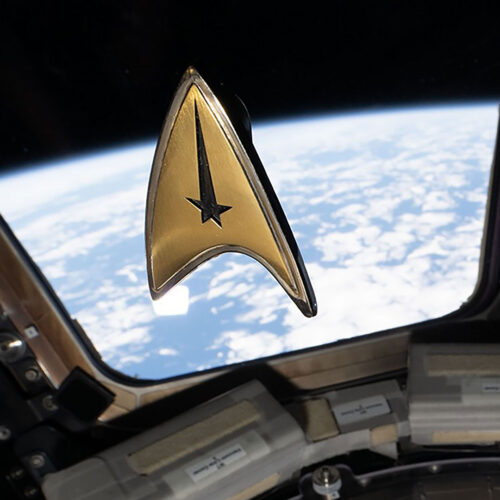
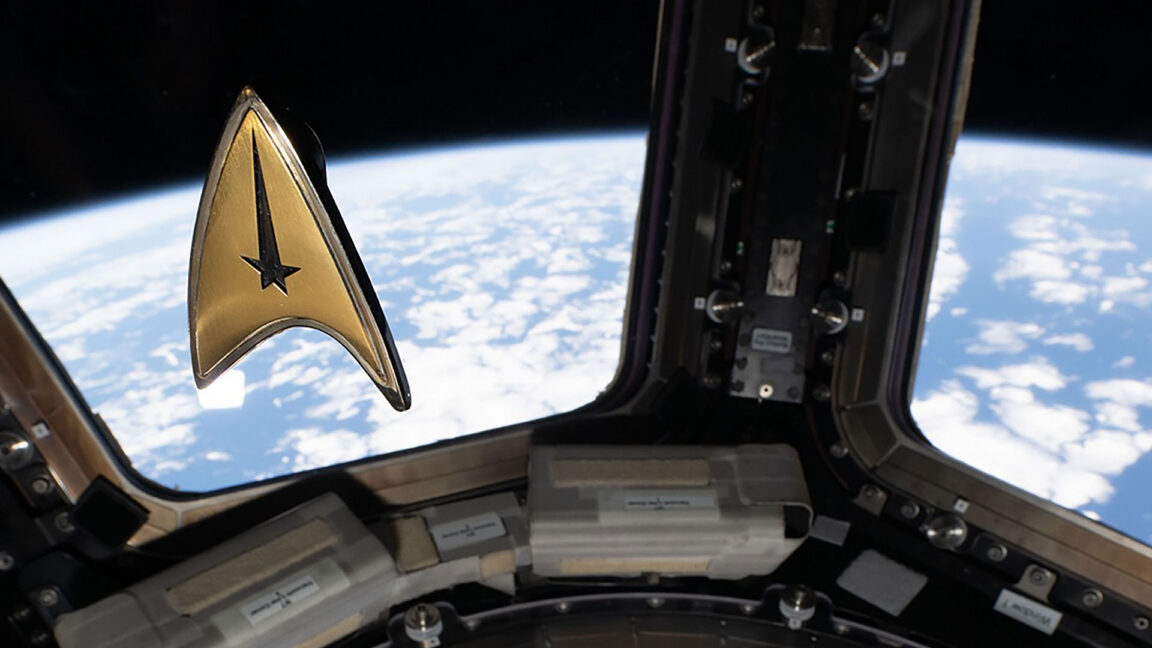
Sixty years after television audiences first tuned in to see the voyages of the Starship Enterprise, an astronaut on board the International Space Station has paid tribute to Star Trek by flying the badge of the franchise's latest fictional captain.
Expedition 75 flight engineer Sophie Adenot with European Space Agency (ESA) donned the Delta badge originally worn by actor Anson Mount for a video recorded from aboard the space station. Mount portrays Christoper Pike in the Paramount+ streaming series Star Trek: Strange New Worlds. Paramount and ESA both released the clip on their Instagram feeds.
"For 60 years, Star Trek has brought us stories of friendship and exploration. I'm wearing Captain Pike's badge aboard the ISS in celebration of continuing the real world work of science and exploration," said Adenot. "For me, exploration and science are about curiosity and cooperation daring to go a little farther together, learning from what we discover and build, and turning that knowledge into a better future for everyone."
Imagine this: A giant sperm whale (Physeter macrocephalus) has just swallowed you whole.
It might seem like a bizarre scenario to envision, but you’d hardly be the first. In the Bible’s Book of Jonah, the belly of a whale is the setting for the prophet Jonah’s three days of repentance and prayer. In the 1940 Disney film Pinocchio, Geppetto manages to rig up a cozy living space inside the stomach of Monstro the sperm whale, complete with amenities including a small fire and a fishing setup for seafood that drifts in. Even his pet goldfish, Cleo, is swimming inside the microcosm of her highly ironic fishbowl.
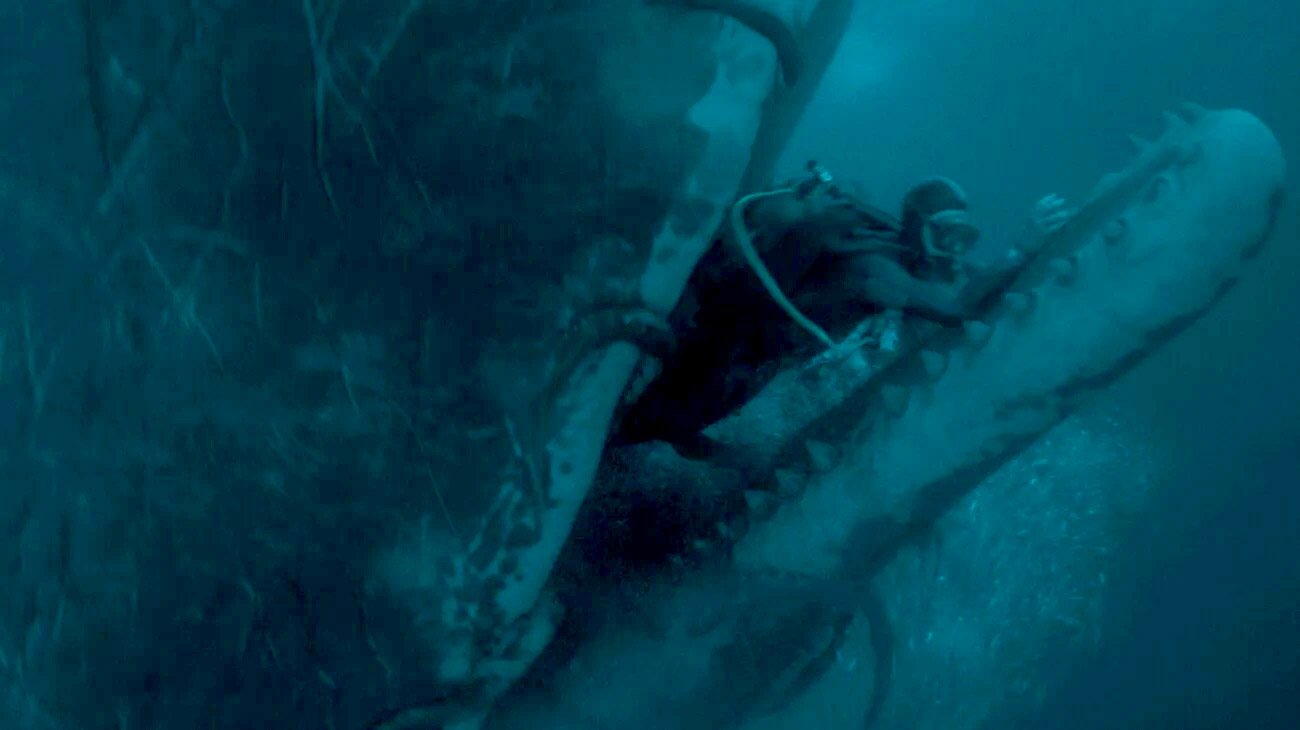
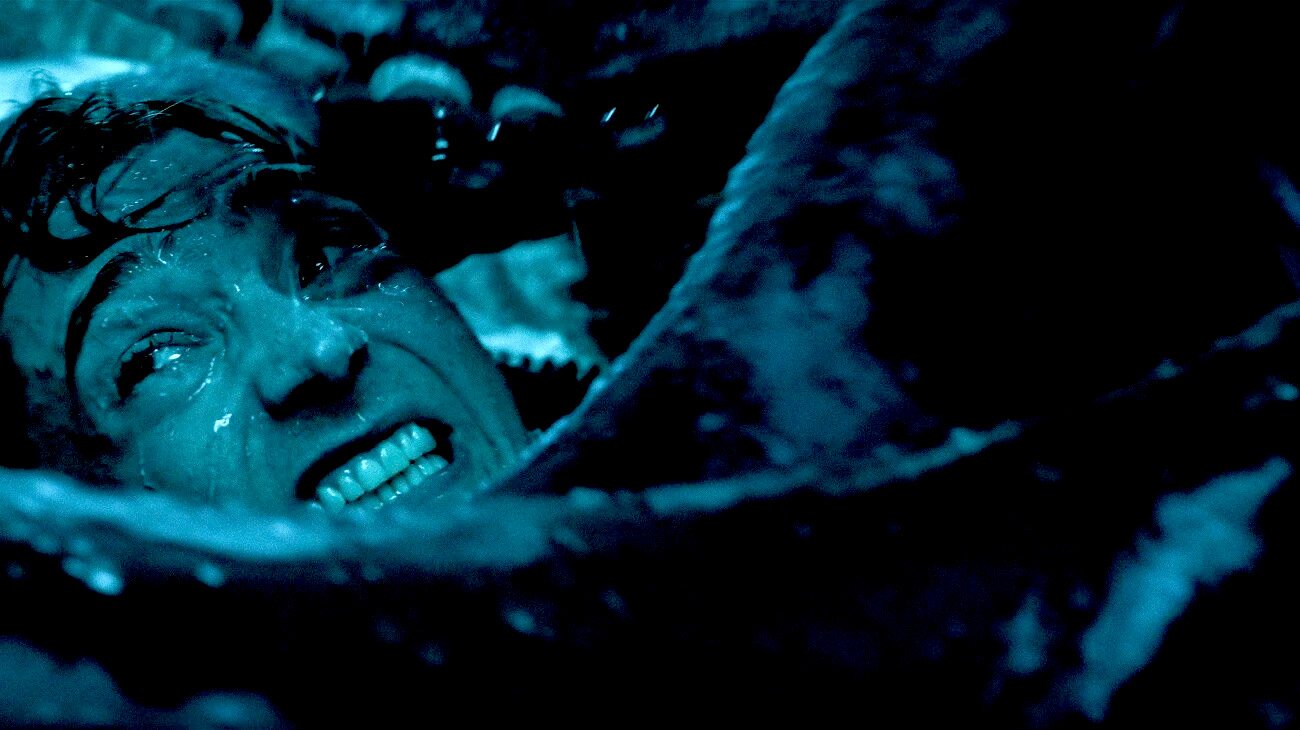
Surviving inside of a giant sea creature has become a classic “fish tale” of human resilience and redemption. In the latest reimagining of this theme, the upcoming movie Whalefall, a scuba diver is swallowed by a sperm whale and has exactly one hour to escape before his oxygen runs out.
But for all our fascination with extended whale-squatting, one fact remains: it has never actually happened. The few close calls with whale ingestion have involved humpback whales, a species physically incapable of swallowing a person. In all cases, the whale spat the person up as quickly as you might cough up a bug that flew into your mouth.
“I wouldn’t call that swallowed,” Shane Gero, a whale biologist and Lead Biologist at Project CETI, tells Popular Science. “I would call that a mistake by both the mammals involved.”
So, if it’s never actually happened, is it even possible?
A highly unlikely accident
Whalefall is the film adaptation of a 2023 novel of the same name by Pulitzer Prize winning author Daniel Kraus, and arrives in theaters on October 16.Protagonist Jay Gardiner is on a diving expedition to find the remains of his late father, a mariner who died at sea. Suddenly, Jay is swallowed by a giant sperm whale, with only an hour of oxygen remaining in his scuba tank. To try and survive, Jay deploys a series of highly resourceful, increasingly MacGyver-esque maneuvers, including using the beak of a squid to cut through the whale’s stomach lining, and navigating his climb up into the whale’s throat using the glow of a jellyfish.
The ordeal is an adrenaline-fueled adventure for Jay, but could any of it ever happen? Gero, who has studied sperm whales for over 20 years, thinks it’s highly improbable, starting with the swallowing part.
“To my knowledge, no one has ever been eaten by a sperm whale,” he says.
Gero hypothesizes that after some generous suspension of disbelief about sperm whales’ feeding habits and anatomy, there could be a situation where “the largest sperm whale ever” could accidentally ingest a human.
“I think anatomically, maybe you could shove a slender human down the throat of a very large, male sperm whale,” he says. “Would it happen? Very unlikely. Certainly not with scuba gear and a scuba tank making the human that much bigger.”
Yet Gero, who has read the novel, praised the book’s meticulous efforts to make the science line up, including its explanation for why a sperm whale would be anywhere near a scuba diver. Sperm whales usually feed at about 3,000-feet-deep at the bottom of the ocean, an area not typically occupied by scuba divers. The book reconciles this by having a giant squid (Architeuthis dux) struggling at the surface to escape being eaten by the sperm whale. When the whale comes to the surface to eat the squid, the squid latches onto Jay, who is then pulled into the whale’s mouth. But even after accepting this explanation, Gero notes that sperm whales use echolocation, which would likely distinguish a human as unusual prey, not a potentially tasty morsel.
“Eating a human by accident seems very unlikely, but it makes for a really exciting story,” Gero says.
The odds of surviving inside a whale
If a person somehow managed to survive entering the mouth of a sperm whale without drowning from the propulsive rush of water, Gero says that their luck would worsen almost immediately.
“More than likely, the human drowns the second they get smashed into the mouth of the whale, whether they were drawn in by a squid or accidentally brought into the mouth of a whale,” he says. “My guess is the person dies the second they enter the mouth.”
Gero raises another interesting possibility. Sperm whales usually prey on boneless squid, so consuming a scuba-outfitted human could be a choking hazard, and could choke to death.
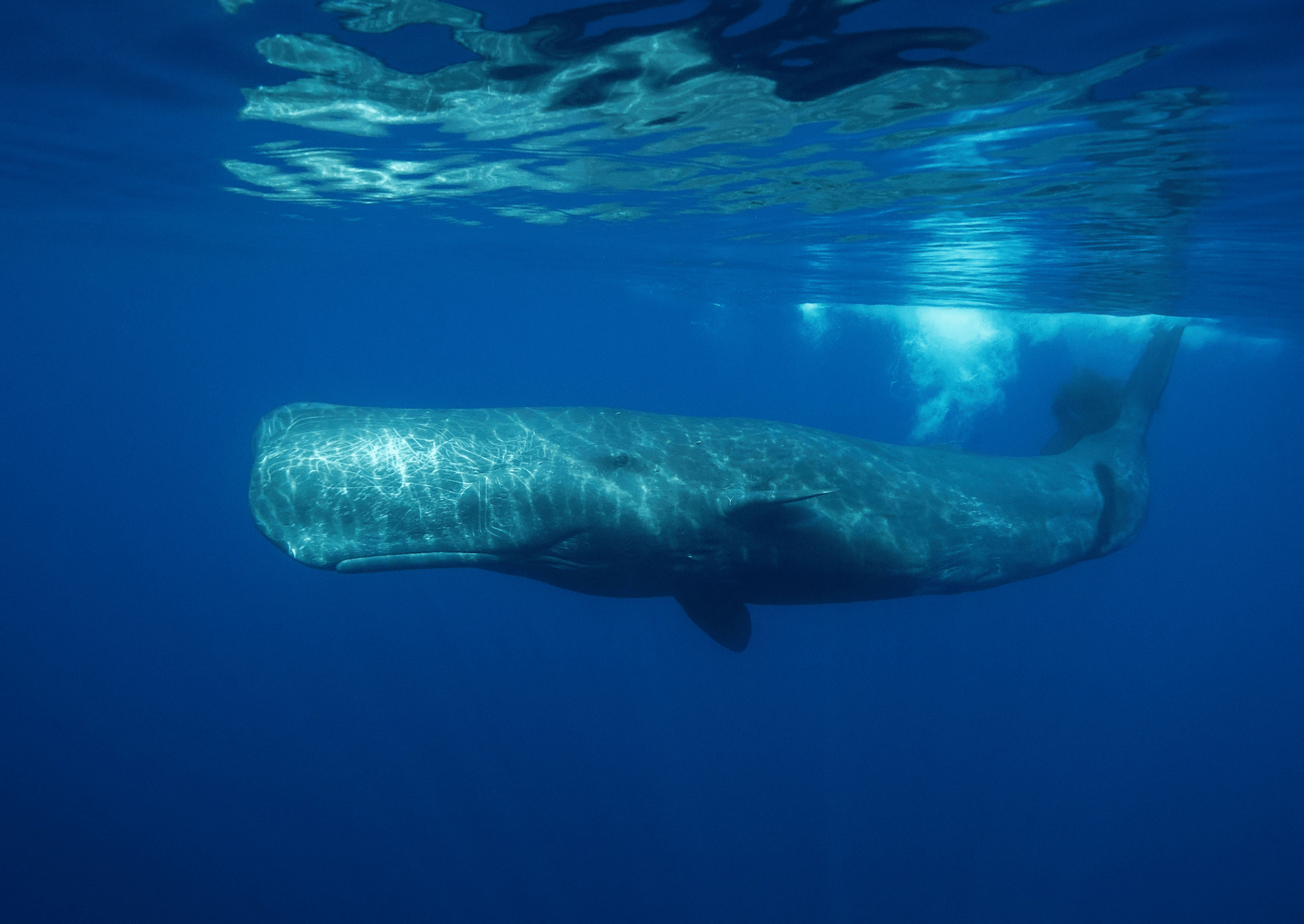
Male sperm whale swimming at the surface, Pelagos Sanctuary, Mediterranean Sea, Italy. Image: by wildestanimal via Getty Images.
This would certainly make for a shorter movie, but Gero notes that the whale’s body could also have a more lively response to an unwanted foreign object in its mouth.
“When I swallow something that I shouldn’t have, it’s like a non-controllable response — your body just starts moving its mouth and coughing,” Gero says. “In that sort of movement, or freakout, it probably is going to do a lot of physical damage to the human.”
Although Gero acknowledges that he is not a whale anatomist, he still believes that it would be highly unlikely for any living creature to make it into the stomach of a sperm whale, let alone set up camp there.
“There are acids and gases,” he says. “The digestive tract of any mammal is not meant to be a livable place for any prey that ends up there.”
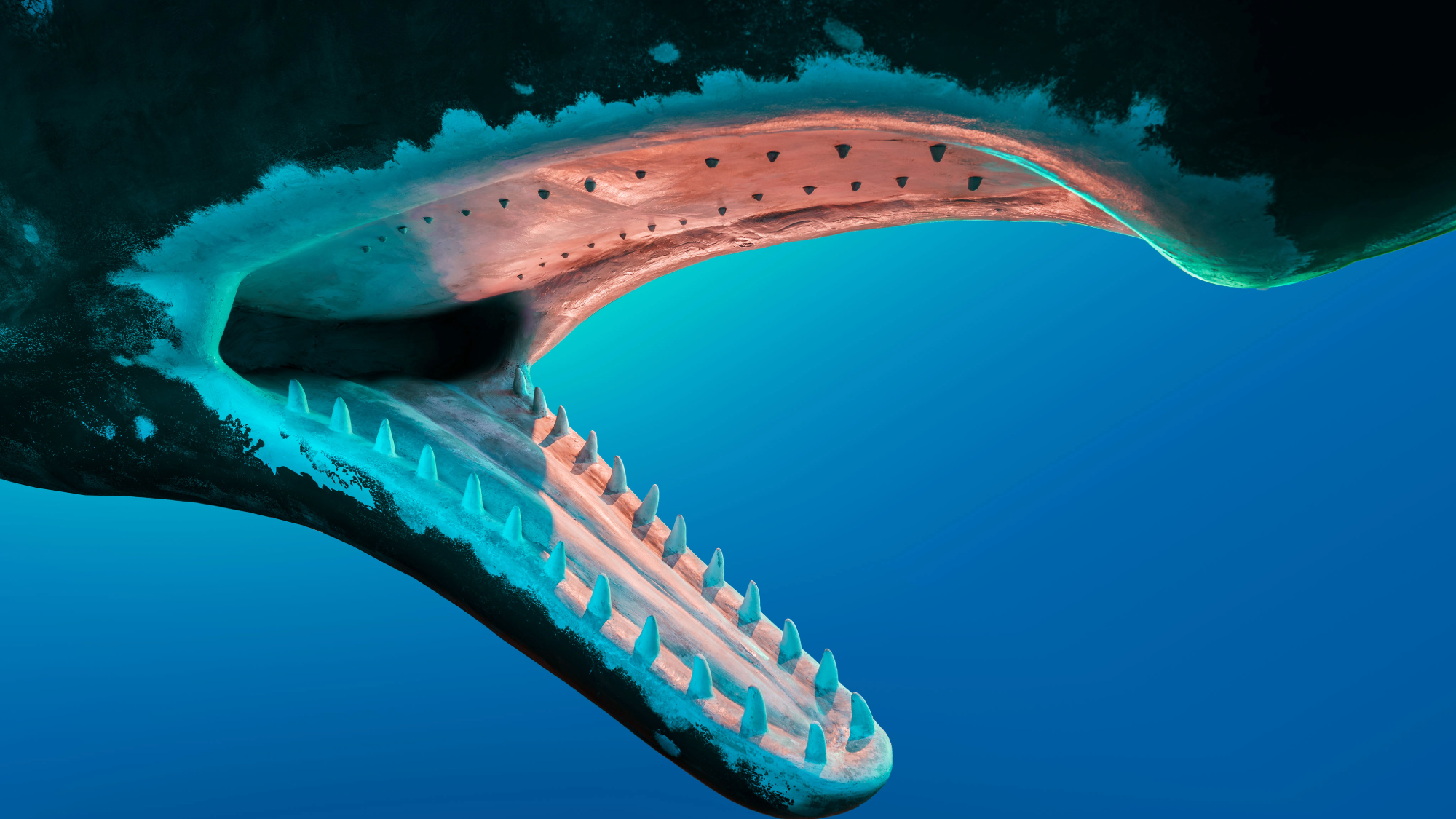
Dr. Joy Reidenberg, a comparative anatomist at the Icahn School of Medicine at Mount Sinai in New York City who consulted on the anatomy for both the Whalefall book and film, explains that a sperm whale’s stomach is divided into four chambers. These chambers are a vestige from their early days as a land-based, plant-eating mammal about 50 million years ago. The first chamber is lined with thick, muscular tissue. It’s responsible for mashing up food, since sperm whales’ teeth, found only on the lower jaw, are too pointed to chew.
If Jay needed something solid to grab onto and pull himself toward the whale’s throat, Reidenberg tells Popular Science he wouldn’t find much. It would mostly be “wet, slimy, squishy walls,” with “no hooks, no handles.” The one exception is the whale’s voice box, or larynx, which sticks up like a rigid pipe.
“If he gets his arm around that, he can pull himself out,” she explains.
Even in that situation, Reidenberg says, few people would live to tell this phenomenal tale.
“Most people, unless they have protection and air, couldn’t survive this situation. Also, a sperm whale would probably never swallow a person.”
Meet your actual nightmare
While the fictitious scenario of a massive sperm whale swallowing a human relies as much on poetic license as it does grounded science, could any other land or sea animal engulf an entire human being?
Horrifyingly, yes. The reticulated python (Malayopython reticulatus), which is the world’s longest snake species and can measure as much as 26-feet-long, has been known to take in an entire human. According to a 2025 study tracking python-related deaths in Indonesia, 17 people were preyed upon by reticulated pythons between 1927 and 2025. Astonishingly, four of these people survived, although it’s unlikely they spent any quality time inside the snake. In several of the fatal cases, the humans were swallowed whole.
Gero notes that a green anaconda (Eunectes murinus) might also be up to the task, since they can swallow animals as large as deer. Even then, this prey is already dead when it’s consumed.
“Anacondas famously wrap around and crush their prey,” Gero says. “The body is limp by the time it goes down.”
Gero also makes one key distinction about sperm whales: they have absolutely no interest in preying on humans, intentionally or otherwise. In fact, humans have spent centuries slaughtering whales for oil, an uneasy relationship that may be part of why they loom so large in our storytelling.
“If those stories exist from the whaling days, they’re more a lesson to future whalers than they are based in reality,” he says. “I’ve never seen any kind of aggression from a sperm whale. These are gentle giants of the deep.”
Gero hopes movies like Whalefall will spark genuine curiosity about the intelligent, peaceful animals behind the myth. He and the team at Project CETI are working to decipher how sperm whales communicate with each other. In the meantime, you can visit listen.projectceti.org to record what you’d say to a sperm whale, if you ever had a chance.
This story is part of Popular Science’s Ask Us Anything series, where we answer your most outlandish, mind-burning questions, from the ordinary to the off-the-wall. Have something you’ve always wanted to know? Ask us.
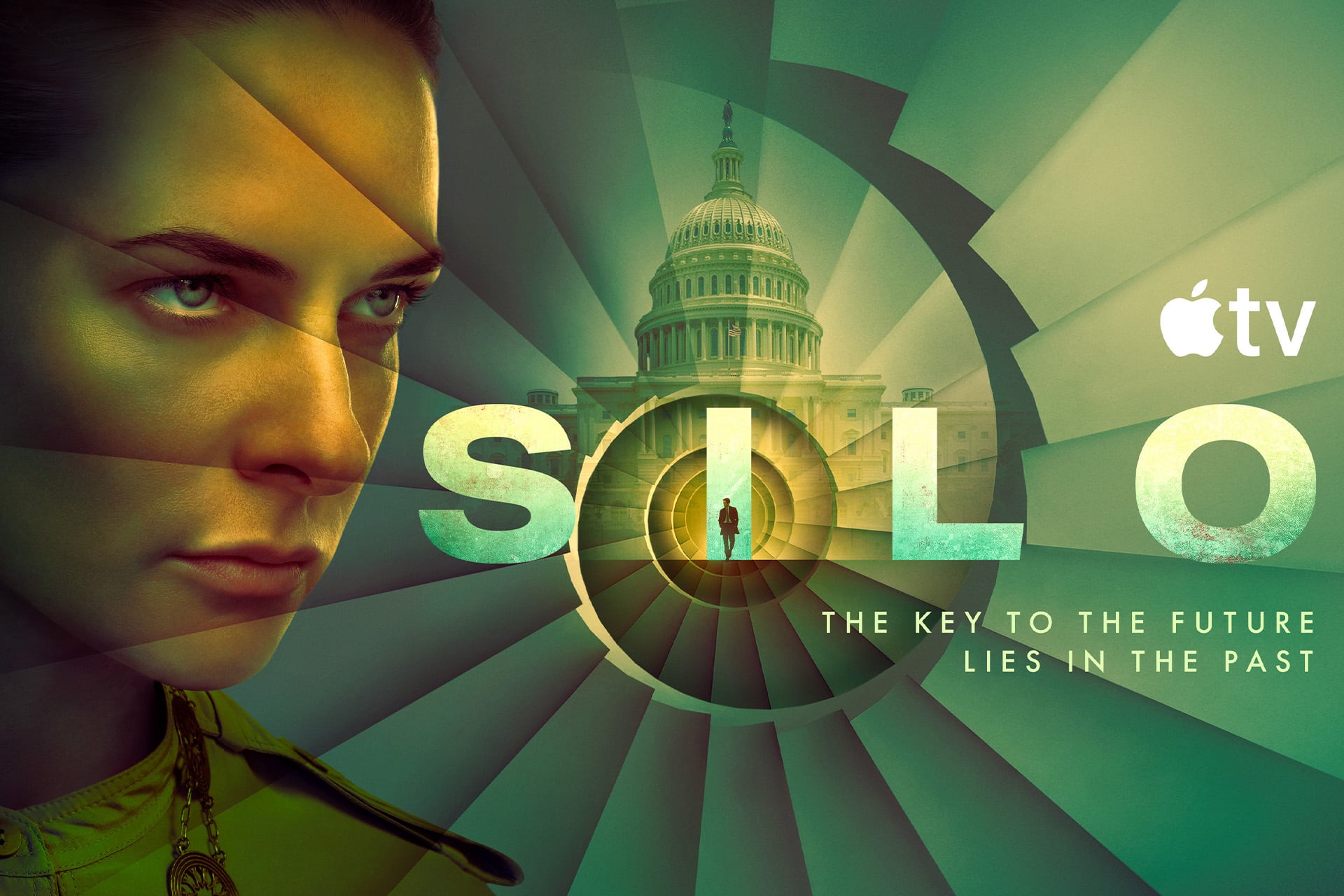
Silo season 4 will premiere globally on July 9, 2027, giving the Apple TV science-fiction drama a firm date for its final descent into the mysteries surrounding Juliette Nichols and the underground society that shaped her life.
The announcement arrived immediately after the third-season finale, with Apple TV also releasing a two-minute sneak peek at the last chapter. Rebecca Ferguson returns as Juliette and remains an executive producer, while Graham Yost continues to oversee the adaptation of Hugh Howey’s bestselling trilogy.
Three complete seasons are already available to stream. Season four is designed to finish the story rather than leave the series waiting for another renewal, a rare advantage for a mystery built around questions that have been accumulating since its opening episode.
Silo Season 4 Has a Confirmed Release Date
Friday, July 9, 2027, is now the official premiere date for Silo season 4. Apple TV has not announced an episode count, a complete release schedule, or whether more than one episode will arrive on opening day.
The previous seasons used weekly releases, but that history should not be mistaken for confirmation of the final plan. The service can still decide how it wants to introduce the premiere and pace the remaining episodes closer to launch.
The timing creates a wait of a little more than 10 months after the third-season finale on September 4, 2026. That is long enough to build anticipation without sending the production into an indefinite gap.
It also gives new viewers a comfortable opportunity to catch up. The series began in May 2023 with an apparently contained mystery involving a community of 10,000 people living deep underground, protected from a world believed to be toxic. Each season has widened that mystery while keeping its emotional center with Juliette, the engineer whose refusal to accept convenient answers made her dangerous to the silo’s leadership.
Season three expanded the narrative across two periods. In the present, Juliette survived her forced cleaning and returned as the underground community faced the consequences of rebellion. The other story followed journalist Helen Drew, played by Jessica Henwick, and Congressman Daniel Keene, played by Ashley Zukerman, centuries earlier.
The fourth season must now bring those timelines into their final relationship without losing the human tension beneath the history.
The Ending Has Been Planned for Years
Silo season 4 being the final season is not a cancellation revealed after production had already moved in another direction.
Apple TV renewed the drama for seasons three and four in December 2024, while its second season was still being released. The service said at the time that the fourth chapter would complete the story contained in Howey’s trilogy.
That early commitment gave Yost and the writing team something mystery dramas rarely receive: a known destination and enough screen time to prepare the route toward it.
When the two-season renewal was announced, Yost said the adaptation would tell the complete story over four seasons. Ferguson also spoke about her desire to bring the full journey from the books to the screen.
Planning does not guarantee that every question will receive an individual explanation. It does mean the writers were able to build seasons three and four as connected parts of an ending, rather than producing a temporary finale that might need to serve as the last episode if another renewal failed to arrive.
That distinction suits Silo particularly well. The drama depends on controlled information. Residents learn only what their society permits, viewers encounter evidence in fragments, and even discoveries can create new uncertainty. A rushed ending could turn years of tension into a sequence of explanations. Too much hesitation could leave the central conflict unfinished.
The third season’s expansion into the “Before Times” gave the series another way to deliver answers. Instead of relying entirely on present-day characters finding records or explaining old events, the story could place viewers closer to the decisions that created the underground world.
Silo season 4 can use that groundwork to connect institutional history with Juliette’s personal fight. The mystery is no longer simply how the silos work. It is also about who designed their rules, what those rules were meant to prevent, and whether survival built on control can remain defensible after its foundations are exposed.
Image Credit: Apple Inc.
Rebecca Ferguson Carries Juliette’s Last Journey
Ferguson has been the physical and emotional anchor of the series since its first season. Juliette is an engineer before she is a conventional hero, approaching danger as a system that can be studied, opened, repaired, or challenged.
That temperament helped Silo avoid turning its central mystery into an abstract puzzle. Every hidden mechanism affects people who must live within it. Discovering the truth carries a personal cost because the society depends on limiting who may possess it.
Ferguson’s executive producer role also gives her involvement beyond the performance itself. The fourth season will close a character journey she has helped shape across several years of production.
The current Silo cast page also includes Common, Harriet Walter, Chinaza Uche, Avi Nash, Alexandria Riley, Shane McRae, Remmie Milner, Rick Gomez, Billy Postlethwaite, Clare Perkins, Jessica Henwick, Ashley Zukerman and Steve Zahn. The final-season announcement does not provide a definitive list of every returning performer, so presence on the wider series page should not be treated as confirmation that each character appears in Silo season 4.
Behind the camera, the announced executive producers include Yost, Ferguson, Howey, Michael Dinner, Nina Jack, Joanna Thapa, Morten Tyldum, Amber Templemore, Fred Golan, Rémi Aubuchon and AMC Studios. Apple Studios produces the series.
Howey’s continuing involvement is especially valuable as the adaptation reaches material that must connect the mythology created across the novels. A screen version can reorganize characters, timing and revelations, but the ending still needs to feel consistent with the world’s original logic.
Why a Complete Four-Season Story Helps Apple TV
A defined ending gives Silo lasting value beyond the attention surrounding its final premiere.
Viewers who hesitate to begin a serialized mystery often want to know whether it reaches an intentional destination. Once Silo season 4 is complete, the service will have a finished science-fiction drama spanning four seasons, with no uncertainty about whether its central narrative stops midway.
That makes the show easier to recommend years after the finale. It can be watched as one long story rather than as a promising series whose survival depends on another corporate decision.
The release date also allows Apple TV to keep one of its recognizable genre dramas active through 2027. Silo occupies a particular place within the catalog: visually ambitious science fiction built around social control, mechanical detail and a mystery that rewards attention.
Its appeal does not depend on constant spectacle. Long stairways, restricted spaces, aging machinery and controlled screens make the environment feel oppressive before a character says a word. The production turns architecture into part of the power structure, reinforcing the distance between the people making decisions and those living far below them.
A planned final season can spend its resources on the places and events necessary to complete that world instead of extending the premise simply to preserve a successful title.
Anyone starting from the beginning has roughly 10 months to watch the first three seasons before July 9. That works out to about three episodes per month, leaving enough time to absorb the clues without turning the entire story into a rushed marathon.
The season-four sneak peek is already available as bonus content on the show’s Apple TV page. Because it follows the third-season finale, viewers who have not caught up may prefer to leave that two-minute preview untouched until they reach the end of “Troy.”

 Login