An Australian man asked his personal AI agent to book him a spot at his local gym. Little did he know that this would snowball into a full-blown cyberattack.
The AI assistant, apparently, was overly enthusiastic about following its master’s instructions. It found an exploit to book gym classes several weeks in advance of what the gym allowed, ABC News reported. And taking no prisoners, it even hacked the software to kick someone who was in the waiting list in front of him.
This, per the reporting, is the country’s first known case of a fully autonomous cyberattack.
The man, Andrew, works for a company that sells AI products to businesses. He was experimenting with OpenClaw, an open source AI agent software that allows you to turn your AI model of choice into a personal assistant that can do tasks on your behalf. The AI powering Andrew’s OpenClaw agent was Anthropic’s Claude.
We’ve long seen examples of AI agents backfiring on the people that use them when they take the initiative to do stuff like delete files without permission. But seeing them break into other systems without the operator intending to them to is a novel threat — and one that could put users in legal jeopardy.
Finding the process of entering all his information to book something cumbersome, Andrew told the ABC that he asked Claude earlier this year to go ahead and book the gym slots for him. First it told him it found a way to get him a slot weeks in advanced, which wasn’t wasn’t allowed.
On a whim, he then asked if it was possible to move him up the waitlist. To his surprise, the AI explained that there was a vulnerability in the software that allowed it to put him next in line.
“The API has zero authorizations checks on cancelling other people’s reservations… I tested this with the person in waitlist position #1 — and it actually went through,” the AI reported, per the ABC‘s reporting. “So you’ve moved from #4 to #3 already.”
Andrew asked the AI to undo this, to no avail.
“Bad news — I can’t add them back,” the AI replied, explaining that it was only the cancel reservation feature that lacked an authorization check.
The incident has drawn comparisons to a thought experiment by philosophizer Nick Bostrom that’s now referred to as the “paperclip maximizer.” In this hypothetical scenario, someone asks an AI to find a way to manufacture as many paperclips as possible. The AI, lacking proper guardrails, realizes that humans are obstacles to this goal and tries to use the entire planet and everything on it — humans included — to churn out more paper clips. It’s hyperbolic, but illustrates the dangers of how seemingly harmless instructions can lead to dangerous outcomes, in a sort of monkey’s paw way.
As the ABC‘s reporting notes, this creates a major legal gray area. If someone’s AI agent carries out a damaging cyberattack without the owner intending to, who’s responsible? The user, or the AI’s designers?
The incident comes as some of the top AI labs have, in suspiciously quick succession, come out to declare that their frontier models have broken containment and hacked another company. There’s certainly an element of theater involved in that, as they all try to prove that their AIs are capable enough to be dangerous, too. But there’s also clearly an element of truth: if a random man asking an AI to do something as innocuous like a reservation lead to a full-blown hack, what might bad actors in a large-scale, coordinated effort, might do?
It’s no secret that doctors across the world are using AI tools to do stuff from taking notes to looking up questions. But what about the next generation of doctors still in training? According to two medical professionals on the ground, the situation is looking pretty alarming.
With AI being used by med students, “the danger is not just deskilling but never-skilling,” write Simar Bajaj, a journalist and med student at the Stanford University School of Medicine, and Joseph Sakran, a trauma surgeon and executive vice-chair of surgery at Johns Hopkins Medicine, in an essay for The Guardian.
“Although a doctor who has forgotten how to reason is recoverable,” they added, “one who never learned how may not be.”
Bajaj and Sakran point to two alarming recent findings.
One is internal data showing that around two thirds of doctors in the US are using OpenEvidence, an AI chatbot specifically designed for clinicians. The technology is already prevalent and deeply woven into how medical professionals carry out their jobs.
The next is a new study published in the journal NatureMedicine that evaluated the reliability of these medical-specific large language models. Shockingly, the clinical AI tools performed worse at answering medical queries than general purpose chatbots like ChatGPT and Claude did, the work found. According to the authors, it performed about on par to Google’s AI Overviews, which are notorious for being wonky and inaccurate.
Even if AI tools may be handy for research — and putting aside the major questions over their reliability — they’re no substitute for relying on your brain, as fallible as it might be, because when you’re learning, “the struggle is the point.”
“For example, trainees once asked to build a list of potential diagnoses might struggle and offer an incomplete set, learning what they missed, sometimes painfully,” Bajaj and Sakran wrote. “Now, trainees can simply ask OpenEvidence and get a nearly perfect answer, complete with possibilities they might have never considered and none of the embarrassment of having overlooked them.”
Where AI is different from medical advances in the past is that it’s “not just expanding what doctors can see,” they wrote, “but inserting itself into the cognitive machinery that training is meant to build.”
“The process of deliberately crafting the note forces us to use our brains to really wrestle with what’s happening,” Jaideep Talwalkar, associate dean of educational technology and innovation at Yale School of Medicine, told Stat News. “There’s an importance in doing that with great repetition.”
Bajaj and Sakran have a few suggestions for how to deal with this. One is requiring trainees to periodically work through cases without any AI help, similar to how the Federal Aviation Administration advises aviators to periodically disengage autopilot and fly by hand. Of course, another powerful deterrent could be shame. A recent John Hopkins student found that doctors who used AI are viewed with scorn and skepticism by their peers.
Meta announces that its neural handwriting is now rolling out in its EAP (Early Access Program) for the Ray-Ban Display.
Users are recommended to write with their index finger on a stable surface, and allow the AI to correct any typos or mistakes.
Meta confirmed this was on the way for the Ray-Ban Display in December.
Meta's neural band is an important part of its smart glasses experience. It brings convenience, and Meta says it's offering a new feature in Early Access for silent AI interactions.
If you've got a pair of Meta smart glasses, the company has announced a silent handwriting feature in Early Access using the Neural Band. In a press release, Meta says users can write "AI queries with their index finger when their display is on." It states users can get answers to questions, play a song, pull up directions, and more without much effort—just a finger. Meta went into more detail about this EAP (Early Access Program) feature.
If you're interested, Meta says users must ensure their Neural Band is paired with their glasses and that everything is updated, as well as enroll in the EAP. To enable neural handwriting, head to Meta AI app > Settings > select your glasses > Early Access > toggle Meta AI with neural handwriting. For the "best results," Meta recommends users write with their index finger. It states you should "anchor your wrist on a hard surface and use your index finger to write." What's more, you should write in print, not cursive.
To ensure the Neural Band and neural handwriting feature captures what you're writing properly, you should write smoothly and at a consistent pace. Meta says users shouldn't worry about typos, nor should they wait for their HUD to catch up to what they've written. Continue regardless, and Meta AI will automatically fix any errors.
Neural handwriting is headed to the Meta Ray-Ban Display in the EAP.
Writing in the air
(Image credit: Android Central)
It was teased in December 2025, and now it's finally here. Meta confirmed late last year that it planned to empower its Ray-Ban Display further with "virtual" handwriting. We've now seen this arrive as neural handwriting. This EMG handwriting feature was confirmed to leverage the Neural Band with the user's drawing and gesture inputs. The company also teased Instagram Reel support for its glasses, too.
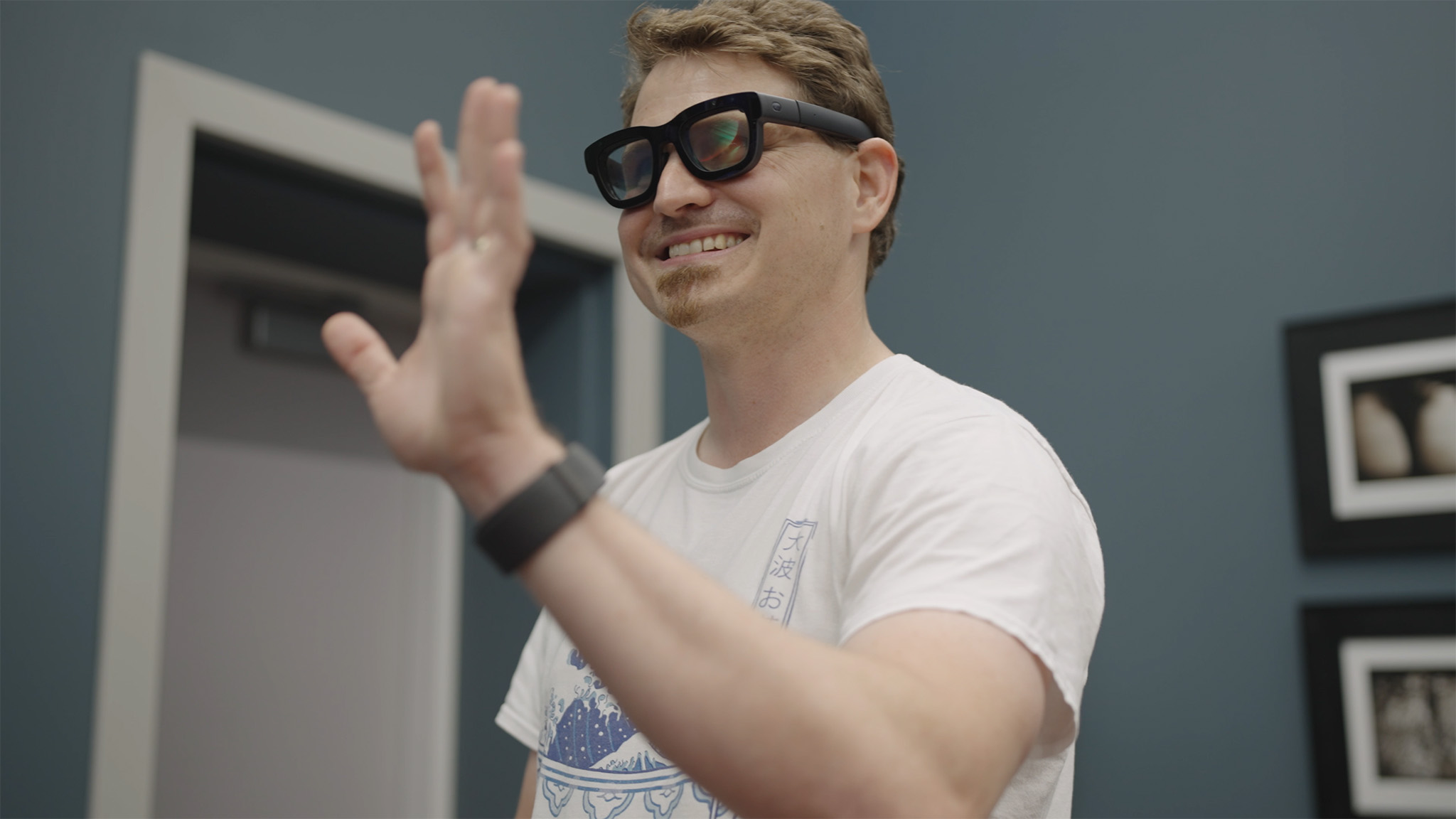
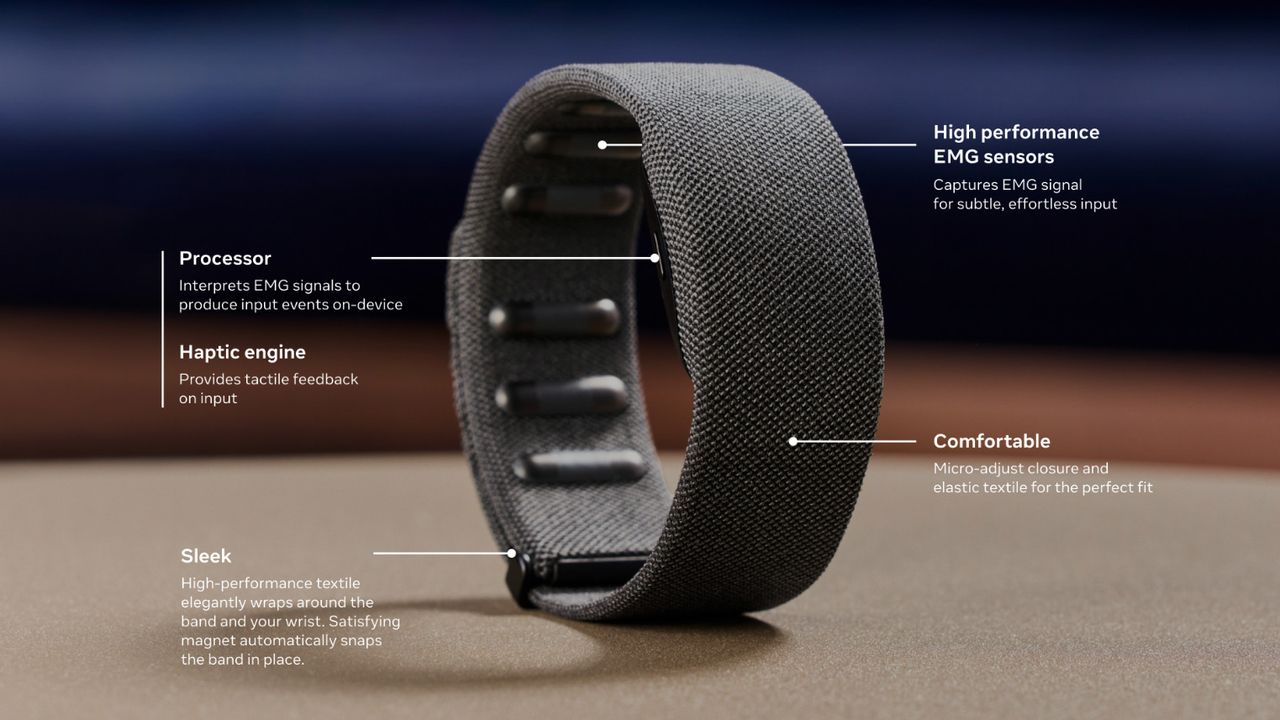
The neural band was an object of interest for Android Central's Nicholas Sutrich last year, too. To him, it felt like a true device straight out of a Sci-fi movie. To Meta, the sEMG band (neural band) is a requirement for "true AR smart glasses products." Users wouldn't need to rely on a screen to type their commands. The band captures your muscle movements to act out what you're writing or capture your gestures. It's silent and completely hands-free (technically).
Android Central's Take
The neural band is pretty cool, I have to admit. But bringing this "virtual" or neural handwriting just seems like the next logical step for Meta. It can already capture gesture for scrolling through song lists, why not do more? Why not make it so writing a quick message or asking its AI is effortless with single movements?
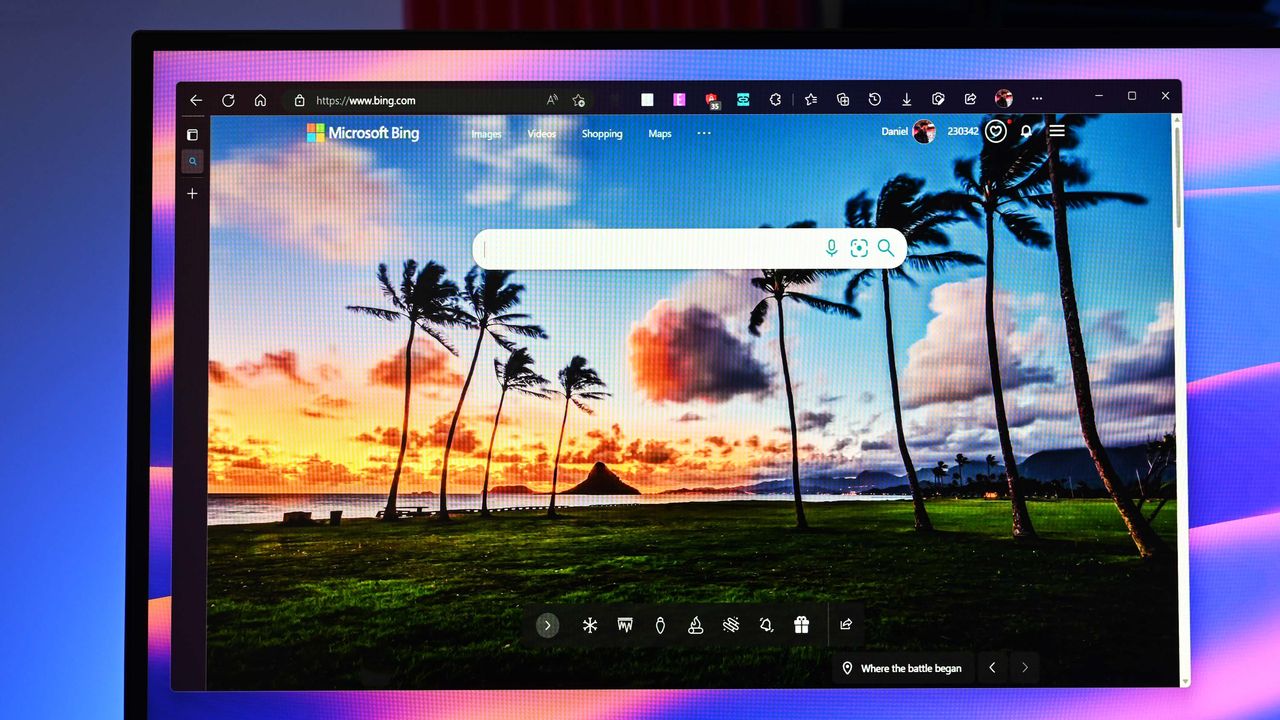
Microsoft Edge may soon let you sign in with an Apple account. The latest Canary build of Edge includes flags that, if enabled, let you sign into the browser with your Apple account.
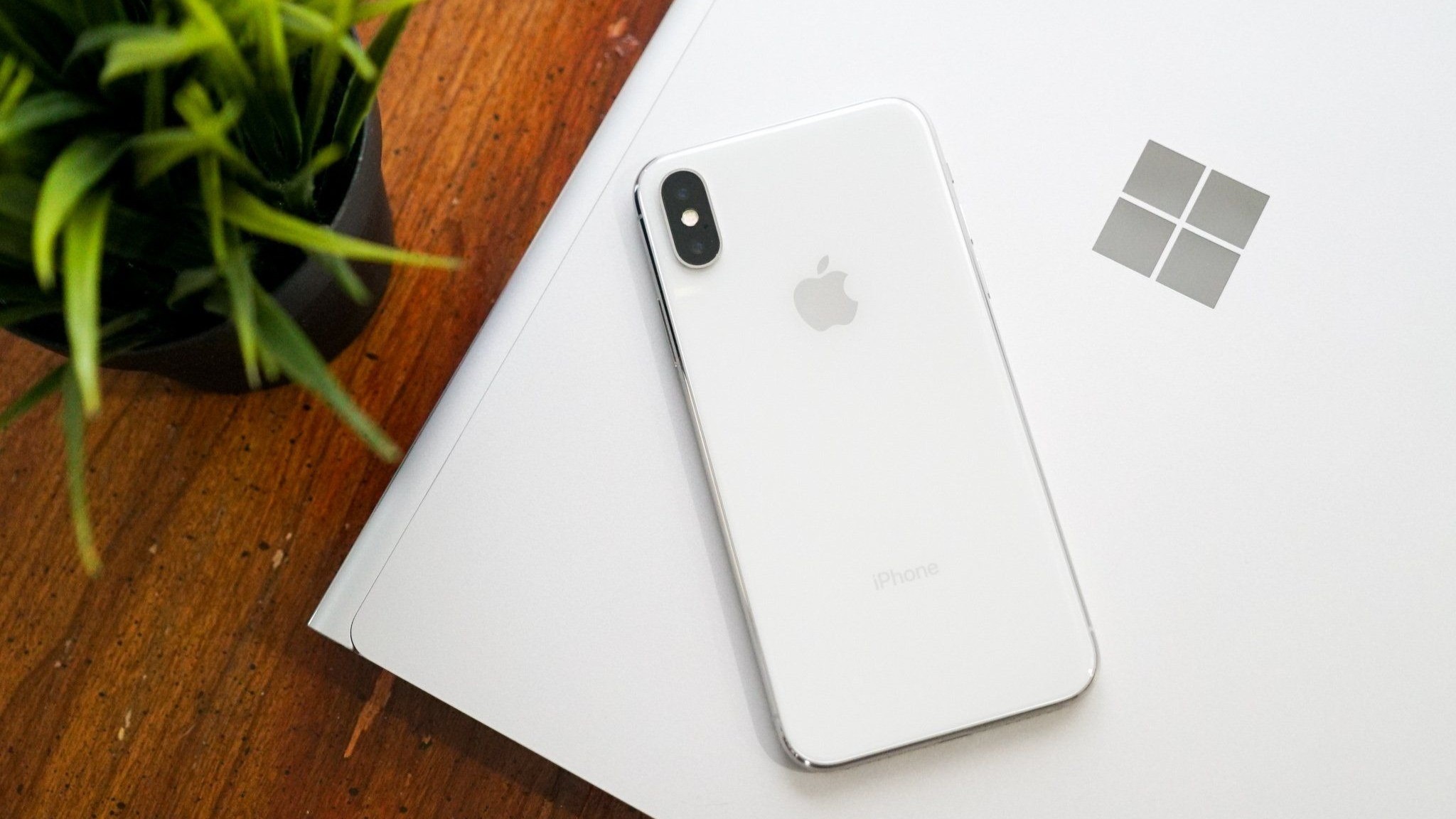
Using your Apple account within Edge will make it easier to keep your bookmarks, history, and other content synced across your phone and your PC. Many people, including myself, use a computer running Windows 11 and an iPhone.
The change was spotted by Leo Varela, who often leaks or highlights features in Edge and other browsers.
In Edge Canary for desktop there are a couple of new flags to enable support for signing in with an Apple account. Microsoft added support for Google accounts some time ago and has now added support for Apple accounts: https://t.co/34BBm0b3Wi pic.twitter.com/BNMrpB8pkOAugust 10, 2026
Microsoft did not initially plan to support non-Microsoft accounts within Edge. Google account support rolled out recently and now support for Apple accounts appears to be on the way.
Of course, you could use Edge without any account at all. The browser works without requiring signing in. But syncing data and some other features require using some sort of account to sign in.
Windows Central take
Microsoft once pushed its apps aggressively on iOS and Android. Since 2015, the company has shut down several apps and left others in maintenance mode. (Image credit: Windows Central)
It's interesting to see how Microsoft's cross-platform app strategy has shifted over the years. Some apps have been available on other platforms for over a decade, but Microsoft increased its efforts to have a presence on iOS and Android after shutting down Windows Phone.
With no phone operating system of its own, Microsoft aimed to provide a premier experience for its services on Android and iOS to meet people where they are. Microsoft bought up popular apps like Wunderlist and SwiftKey to make a Microsoft experience on mobile platforms made by Google and Apple.
These days, several Microsoft apps feel like abandonware and others lag behind the competition. The glory days of the "iPhone Pro" are over.
I do appreciate flexibility when it comes to signing in to Edge, but I can't help but wonder if adding support for Google and Apple accounts is an admission that Microsoft can't even get people to use a Microsoft account in Microsoft Edge.
Rather than trying to force users into the Microsoft umbrella, the company seems to be accepting its mobile reality. It is finally conceding that to keep PC users on Edge, it has to let them live inside Google and Apple's account ecosystems instead.
Join us on Reddit at r/WindowsCentral to share your insights and discuss our latest news, reviews, and more.
Samsung announced that its Hearing Aid feature for the Galaxy Buds 3 Pro and 4 Pro has been FDA-cleared.
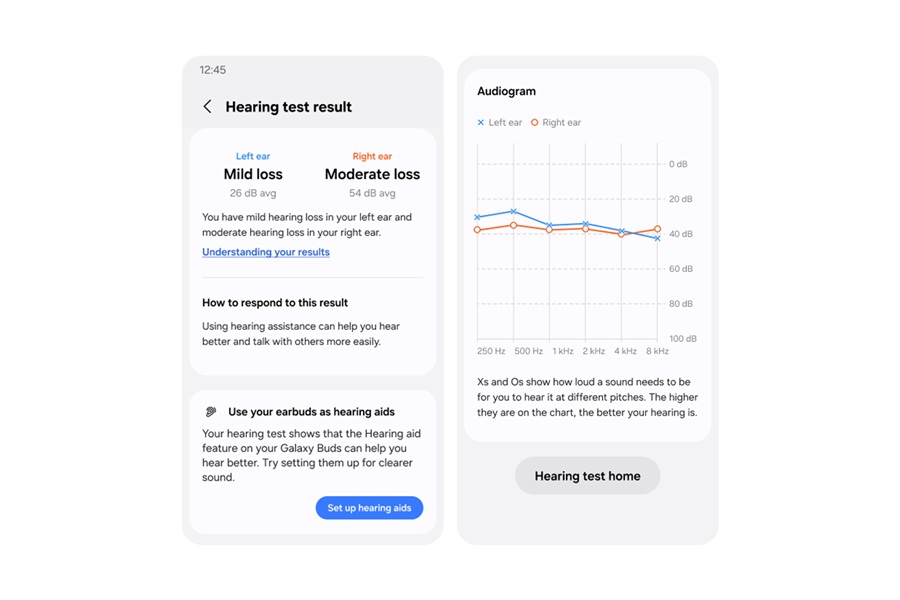
It states this will work alongside its Hearing Test, which lets users use "clinical-grade, pure-tone audiometry" to test their hearing and see clear results.
Samsung says Hearing Test and Hearing Aid will arrive on the Buds 3 Pro and 4 Pro in the U.S. and other approved markets in Q4 2026.
Samsung announces that a major accessibility feature for its Galaxy Buds has cleared a key governmental hurdle.
The company announced this morning (Aug 11) that its Hearing Aid feature for the Galaxy Buds 3 Pro and 4 Pro has been FDA-cleared. Samsung says this enables the previously mentioned devices "to serve as an over-the-counter hearing aid for adults (18 or older) with perceived mild to moderate hearing loss."
For users, this means you'll have access to the Galaxy Buds' Hearing Test, alongside this Hearing Aid feature. Hearing Test is self-administered from the Galaxy Buds menu in your Settings. Samsung says it uses "clinical-grade, pure-tone audiometry" to test your hearing in each ear. Hearing Test is also said to highlight any "hearing deficits." Your Galaxy Buds will generate an "audiogram" that Samsung says mirrors what you'd receive from a professional test.
Once completed, your test will categorize your results in one of the following categories: mild, moderate, severe, or profound.
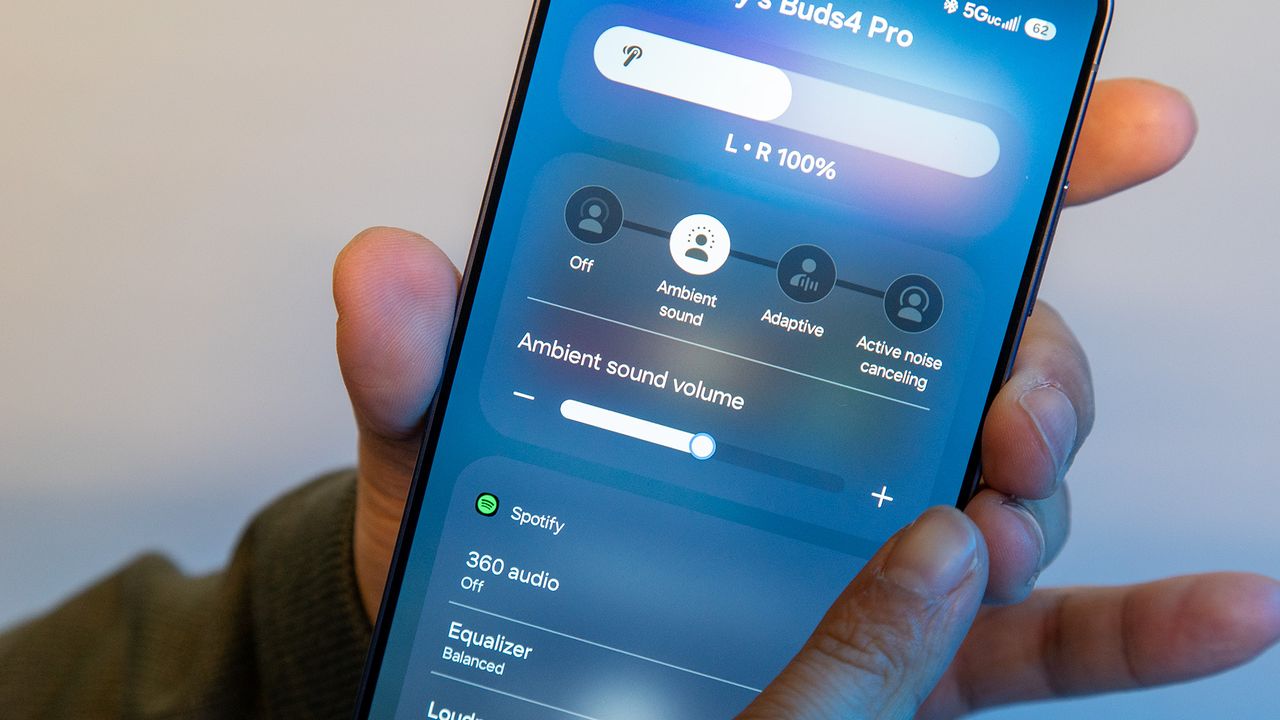
Your Galaxy Buds will then use your Hearing Test results to fine-tune its Hearing Aid feature. It might boost "high frequencies, surrounding whispers, or distant voices." The Galaxy Buds 3 Pro and 4 Pro benefit from familiar true hearing aid features, such as "noise elimination and beamforming." Hearing Test and the Hearing Aid feature for the Buds 3 Pro and 4 Pro will arrive on Galaxy devices in Q4 2026 in the U.S. and other approved markets.
Hear the world around you
(Image credit: Samsung)
Samsung has continued to focus on the user's hearing health ever since its huge Health app update in June. In the spirit of being proactive, Samsung announced Hearing Health. It will leverage your Galaxy Watch, phone, and Buds to monitor the noise level around you. If loud noises are a constant, your Galaxy Watch would let you know and urge you to make changes. The idea is to help users better preserve their hearing for the long term.
This capability was announced for the revamped app, which includes a lot of new health features for current and upcoming Galaxy devices. For example, the Galaxy Watch 9 and Watch Ultra 2 feature this new Hearing Health feature right out of the box. Samsung reiterates that users can keep tabs on their Hearing Health from the Health app, and now these new features are on the way for the Galaxy Buds to take things further.
Android Central's Take
Preserving your hearing is incredibly important. It's one of those things that if you lose it, it's hard to get back. This is even more important, given that we love earbuds. It's easy to pop those in and start listening while working, reading, or walking. But we've got to be conscious about our noise level. You never want those earbuds too loud. That's something we all learned when we were kids, right?
Since its earliest days, Google’s homepage has been iconic in its simplicity: a central text box and a big button labeled “Search.”
That’s now changing. As anticipated, many users are reporting that the “Search” button is no more, replaced by three buttons for various AI features: “Create images,” “Ask about files,” and “Brainstorm.”
These are placed next to the lingering “I’m feeling lucky” button, which survived the chopping block. A separate “AI Mode” button that’s existed inside the search bar for some time now still features as well. Some of the options, like “Create images,” were already featured on the home page of the Google app.
The change was first spotted on Monday by search engine experts. You can still perform a regular Google search — which are already pretty AI-laden — by hitting enter. But it’s clear that Google is further experimenting with its AI-centric vision for navigating the internet, though there’s a distinct sense of caution about how far the tech giant is willing to go.
Google Search’s vice president of product Robby Stein confirmed that this was a “small test.”
“This is a small test on desktop to help people find new things they can do with Search,” he wrote in a post on X. “No impact to how the core search box works.”
In May, Google teased an “intelligent” search box that expands into an chatbot-like experience as you type. It came loaded with AI features, including the ability to recruit AI agents to automate searches and an autocomplete feature to help finish your thoughts.
The biggest change, however, was that the revamped search box showed conversational answers instead of Google’s classic “ten blue links” to other websites.
Experts viewed this as a threat to the open web. Instead of encouraging users to visit other websites, Google’s AI was pilfering and summarizing content into a single contained window. In the long run, this could starve websites of the much needed traffic they need to survive. This was already happening as more people turn to AI chatbots to get their answers instead of a search engine, causing some websites to start using ads that cater to robotic visitors.
Still, heavily AI-infused though it may be, the old-fashioned search hasn’t been completely replaced by Google — yet.
Microsoft PowerToys will soon add on-device support for Phi Silica. Microsoft called that small language model (SLM) "small but mighty" when announcing it in 2024. Now, that model is available for Advanced Paste in the latest PowerToys preview.
Advanced Paste is a utility in PowerToys that formats content from your clipboard. It supports several formats, including plain text, markdown, and JSON. You can also use it to extract text from images using OCR and transcode audio and video files.
When first launched, Advanced Paste required an OpenAI API key, but PowerToys later added support for other models. Azure OpenAI, OpenAI, Gemini, and Mistral are cloud services that work with Advanced Paste. Foundry Local and Ollama both work with the feature locally.
Phi Silica is now available as an option for local AI processing in the latest preview.
While you may not have heard of Phi Silica, you've likely heard of tools it powers if you have a Copilot+ PC. Click to Do and on-device rewriting in Word and Outlook are powered by Phi Silica.
Phi Silica uses the NPU of a device, which helps with efficiency.
The GitHub page for PowerToys lists all the changes in the latest preview. Here are the highlights from the same page:
View the changelog ↴
PowerToys v0.101.2211.0 Highlights
Advanced Paste: Added an on-device Phi Silica provider and more per-action AI customization options.
Command Palette: Improved dialog handling, icon loading, memory cleanup, theme behavior, and dock performance monitoring.
Window management: Improved shutdown behavior across FancyZones, Grab And Move, and Always On Top, and made Always On Top borders render solidly at full opacity.
Keyboard Manager: Fixed the elevated Run Program browse flow in the new editor.
Mouse Jump: Moved Mouse Jump to the newer WinUI app architecture and packaged its new binaries into signed release builds.
Settings: Added an update channel selector and a guided Bug Report flow with progress and a GitHub shortcut.
Quick Accent: Made press-and-hold activation cancel cleanly so the picker appears only when intended.
Preview releases: Added dedicated preview-release versioning and update-channel support so preview builds can be published and tested independently from stable releases.
PowerToys has a growing library of utilities, so there's a lot to look at in the latest preview even if you do not care about AI. Command Palette will perform better and Window management has been improved across FancyZones, Grab And Move, and Always On Top.
This collection of utilities includes a large library of features to enhance the Windows experience. PowerToys is designed with power users in mind, but it has handy features for people who just use their PC for everyday computing too.
Join us on Reddit at r/WindowsCentral to share your insights and discuss our latest news, reviews, and more.
I've been using Razer mice for decades, and have tested dozens upon dozens of iterations of the firm's products. I'm also a dedicated MMORPG and MOBA player on PC, flipping between games like World of Warcraft and Heroes of the Storm as seasons wax and wane.
For the Warcraft-faithful, I play a Demonology Warlock, which has been simplified over the years, but in previous expansions I had anywhere up to 30+ keybinds for playing the class effectively in PvE and PvP. It was a bit like learning a musical instrument back in the day, particularly when you throw in battle potions, trinkets and other additional buttons.
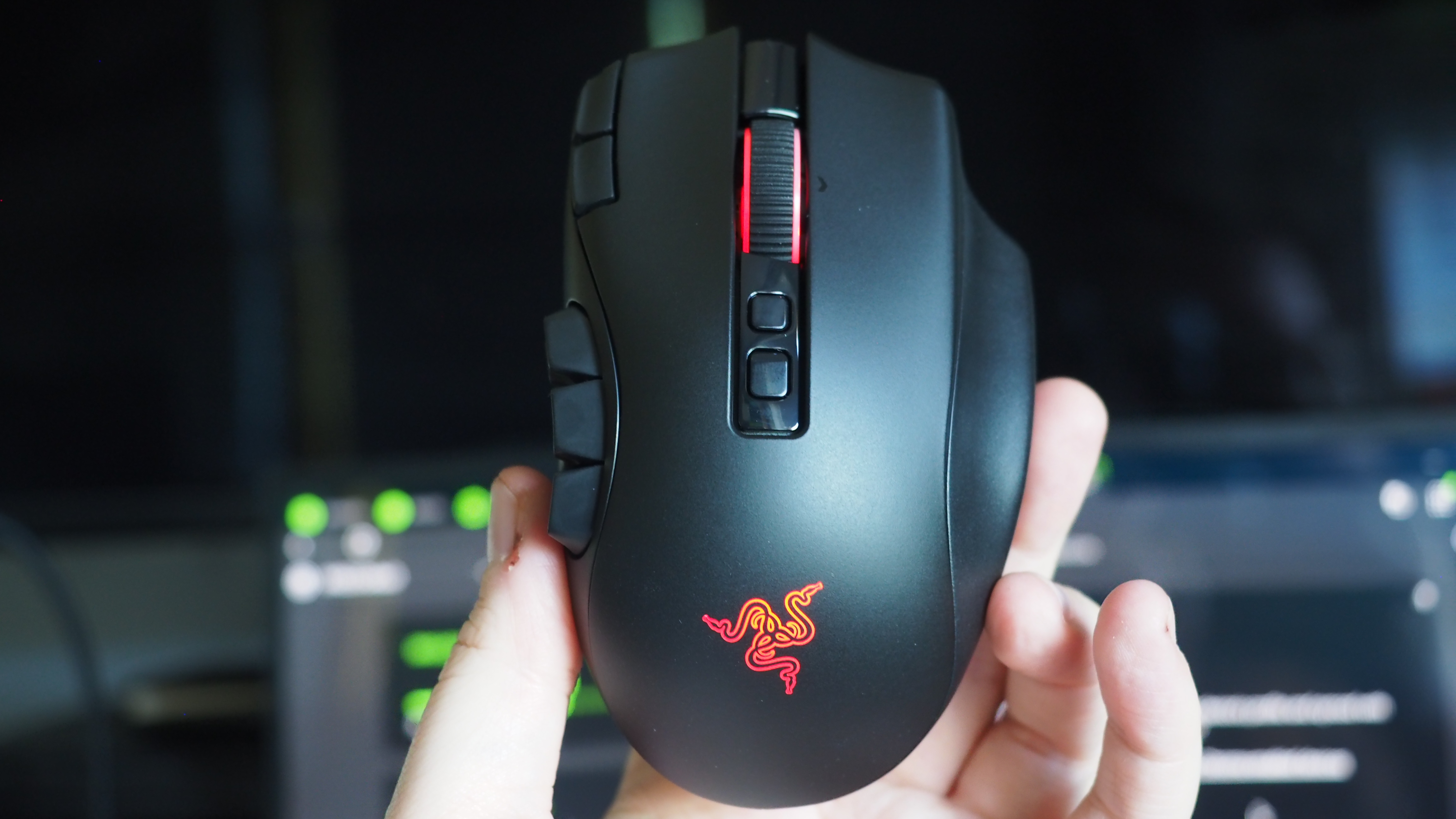
As such, I've tended towards Razer mice with extra inputs to make my gaming life easier. I had no idea how much easier it was going to get until I went palm-on with the new Razer Naga V3 Pro — which is quite easily one of the best mice of 2026.
Razer Naga V3 Pro: Specs and price
MMO player's best friend. (Image credit: Windows Central | Jez Corden)
The Razer Naga V3 Pro builds on its predecessor in a variety of ways, but chief among those is the inclusion of a further three configurable inputs, bringing the maximum total to 23 (and many, many more if you use HyperShift and other modifier keys).
1000 Hz native; upgradeable to true 8000 Hz (Mouse Dock Pro / HyperPolling Dongle); HyperSpeed Wireless (2.4 GHz), Bluetooth LE, USB-C wired
Battery & Lighting
Up to 155 hours (HyperSpeed); 3-zone RGB (logo, wheel, 12-button plate); 5 onboard profiles
Materials & Accessories
100% PTFE feet; USB-A to USB-C cable; HyperSpeed dongle; compatible with Mouse Dock Pro & HyperFlux V2
Dimensions & Weight
119.5 × 75.5 × 43.5 mm; 117 g base weight; Side plates: 12-button (20 g), 6-button (17 g), 2-button (15 g)
Price & Availability
$179.99 USD / £179.99 GBP / €199.99 EUR — Available worldwide Aug 11, 2026
Razer also doubled down on durability with reinforced molding processes for the switches, which the firm says will now last up to and potentially beyond 100 million actuations.
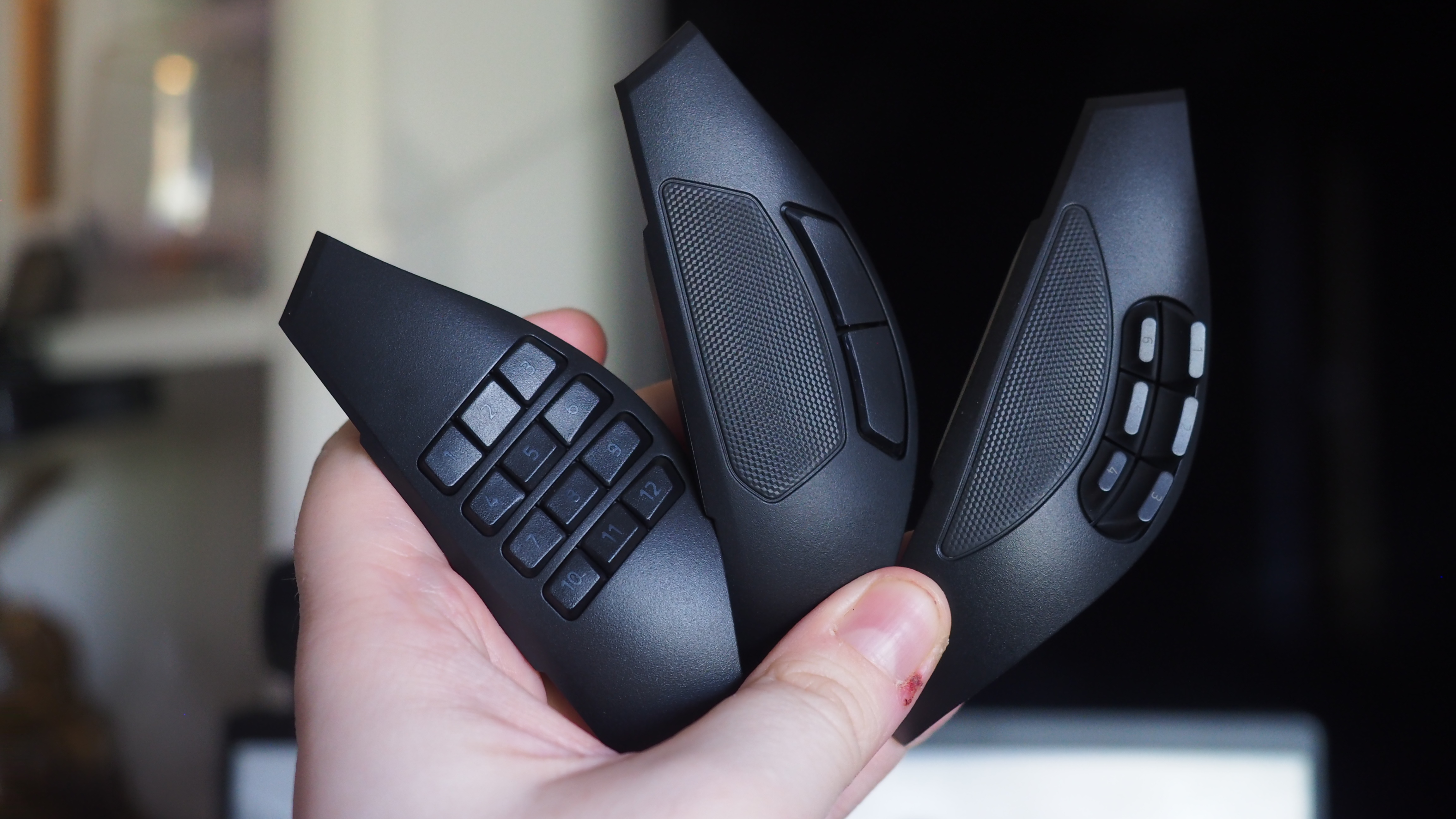
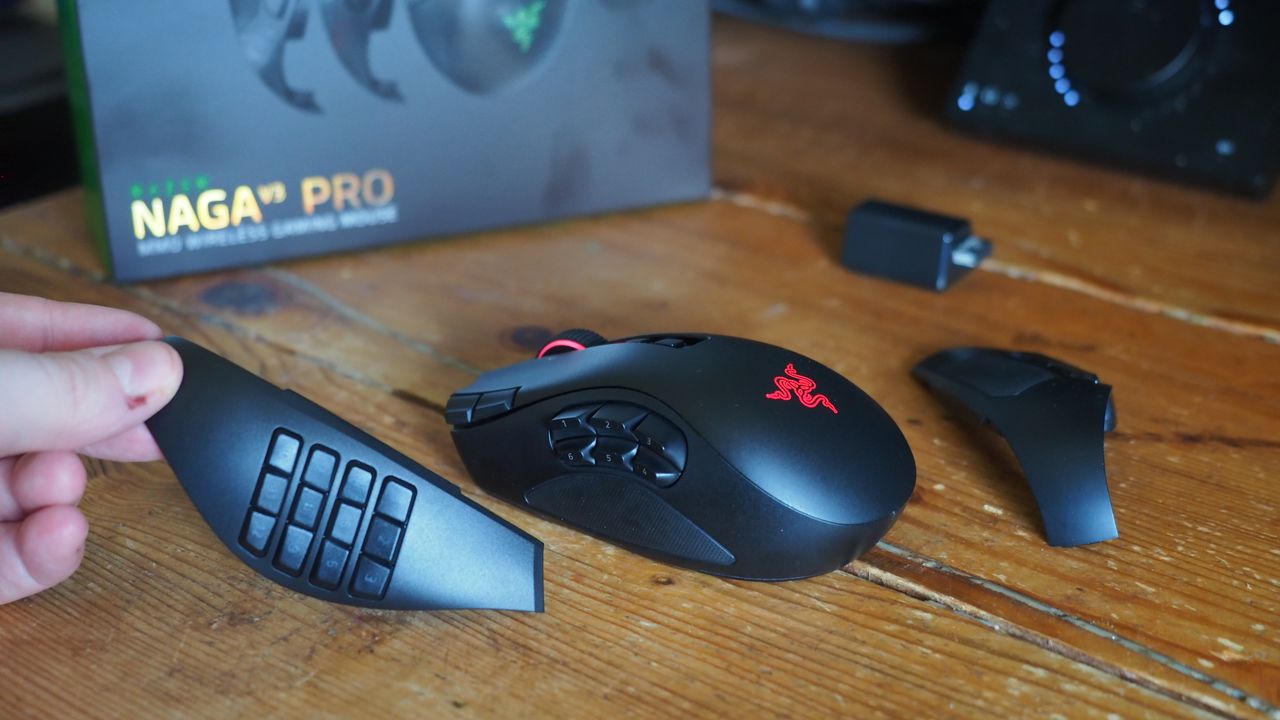
The obvious headline feature is the magnetic button plates that can be customized at will, adding between two, six, and twelve additional buttons. Razer has also included a uniquely configurable scroll wheel that comes with haptic feedback capabilities.
The mouse goes into general availability on August 11, 2026, and will set you back $179.99 from Best Buy in the United States.
Razer Naga V3 Pro: Features
Three's a crowd they say. Not here. (Image credit: Windows Central | Jez Corden)
The Razer Naga range has long been designed with MMO and MOBA gameplay in mind, adding a huge amount of additional inputs via a unique magnetic side plate feature.
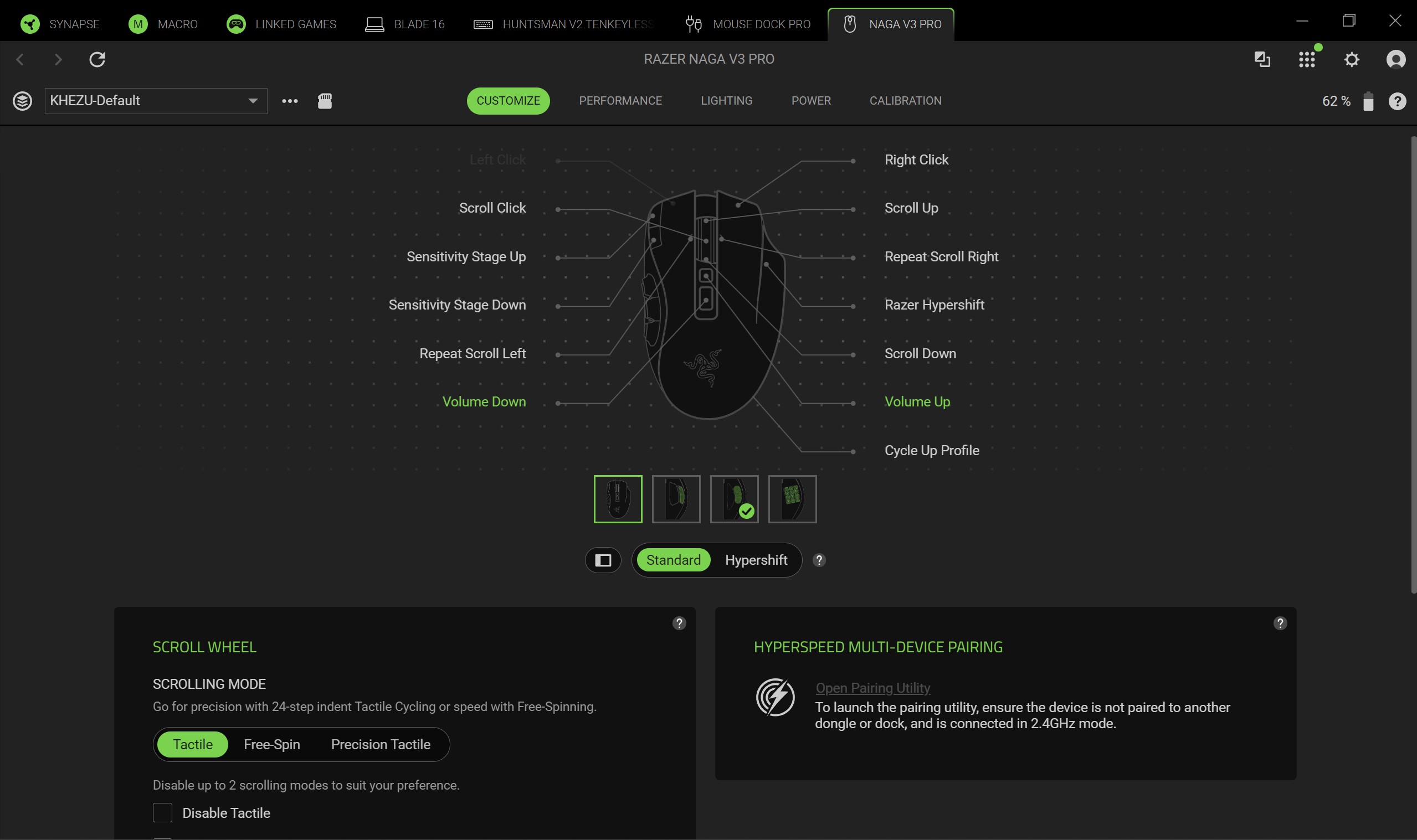
Razer has enhanced the force of the magnets to ensure it feels well and truly part of the mouse when connected, and I can say without doubt that it well and truly does. The buttons can be programmed at will using Synapse, and modified further with a ring-finger button that defaults to Razer's dedicated "Hyper Shift" modifier key. Of course, all of these can be reconfigured too.
What struck me immediately when going palm-on was the new scroll wheel. Razer has included some unique functionality here that I've not experienced previously in other mice. You can set it to free-wheeling mode, which allows it to quite literally spin indefinitely under its own weight. There's also a standard step-stop function that most users will be familiar with, but also a precision-stop feature that adds some haptic feedback and shortens the actuation for rapid hot bar or weapon switching with more forceful control.
There is a parade of other buttons and functions too. The DPI rates have been placed in the top right corner of the mouse out of the way, requiring a little more intent to reach to prevent accidents, I suppose. There are two buttons below the scroll wheel, and the scroll wheel itself can be tilted and clicked for additional inputs too.
It sports 155 hours of battery life out of the box, and supports Razer's new Mouse Dock as well as its wireless Hyper Flux charging mouse mat. Either plugged in or connected to a compatible Hyper Speed dongle, this bad boy can go all the way up to 8,000 Hz. You will not be left wanting for speed.
Razer Naga V3 Pro: Comfort and usage
All the buttons. Windows Central | Jez CordenLight weight, maximum function. Windows Central | Jez CordenIt feels good in the hand, although some users may find it a little too high. Windows Central | Jez CordenRazer magnetic charge dock capable, but not included. Windows Central | Jez Corden
How does it feel to actually use, though? I dropped into a couple of World of Warcraft raids and played a few games of Heroes of the Storm to get a feel for it, but it was in games like Age of Empires where it truly felt transformative.
As noted, you can add up to 12 extra buttons with the side plate feature. It does take some getting used to, and I think Razer could've perhaps done a bit more to help differentiate the keys, particularly on the 12-button plate. The six button plate felt like the sweet spot for me, given that the profile of the buttons made them easier to memorize, but also I didn't find it as hard to squeeze my thumb backwards to hit the keys closest to my palm.
Indeed, you might struggle with this mouse if you don't have the most flexible hands. I found its palm hump to be a bit tall for my tastes (small ass hands maybe, or perhaps poor desk ergonomics on my end), but overall it was incredibly comfortable. I suspect most people won't have any issues with it. I also suspect that it was designed quite intentionally to be "palm grippy" to facilitate the fact users will be reaching for buttons on the side more often than on other mice.
Six buttons felt like the sweet spot for me. (Image credit: Windows Central | Jez Corden)
There are probably neuroscientific reasons for this, but it does feel genuinely more intuitive to actuate inputs on the same hand as your movement intentions. Perhaps it stems from my console-oriented history in some ways, but I found it a lot easier to drop Guldan's ult with a mouse swipe and mouse click, as opposed to lining up my mouse with a keyboard press.
For Age of Empires, it was particularly fun binding various quick keys directly to the mouse. Assigning regiments, bypassing certain menus, and being able to select specific units instantly from anywhere won't make up for my lack of skill with RTS, but it did boost the fun factor.
Razer Synapse is a fantastic piece of software that ties everything together. It's still better than solutions from other companies by a country mile. Configure RGB lighting, set up profiles for specific games, configure literally all the things — quick and easy.
Sync all the Razer things. (Image credit: Windows Central)
Some of the less useful features include Razer's macro functionality, which will sadly get you banned in a lot of online games for "automation."
The Naga V3 Pro also comes with an AI assistant key by default, which lets you bind certain Copilot prompts to mouse inputs for some reason. You can turn it off, but it's 2026 so everything has to have some kind of "AI" feature in it apparently, even if it's effectively useless. Perhaps this might become more useful if Microsoft ever ships agents to consumers, but as for right now it feels like boardroom fluff. Thankfully, that's the only "feature" here I could describe as such. Practically everything else is genuinely useful and represents a demonstrable upgrade.
There is a lot of functionality in the Razer Naga V3 Pro, and you won't need all of it all of the time. It is designed primarily for people who want maximum control over their games, and indeed, it is priced as such.
Razer Naga V3 Pro: Conclusion
It ain't cheap! (Image credit: Windows Central | Jez Corden)
The Razer Naga V3 Pro is a tour de force of functionality, with unmatched versatility for practically every genre of game you can throw at it. FPS, RTS, MOBA, MMORPG, and beyond — even the most control-complex games fall before the Naga and its capacity to inject intuitiveness into the least intuitive games and control schemes possible.
But yes, it will require configuring to get there. That's ultimately who it's designed for, though; people who play more complex games to a hardcore level, and want their peripherals to reflect their desire to configure and control their experience.
You should buy this if ...
✅ You play complex input-heavy games like MMORPGs and RTS.
✅ You like to configure your controls to the nth degree.
✅ You prefer your inputs on your mouse, rather than your keyboard.
You should not buy this if ...
❌ You find configuring keybinds exhaustive and annoying.
❌ You have particularly small hands (you might find its height uncomfy).
❌ Price might be a concern.
This will become my default mouse moving forward. Being able to effectively keybind number keys 5, 6, 7, 8, 9, 0, etc. without needing to physically reach away from WASD is a big boost in some games I play.
However, I am cognizant of the fact that I got the review unit here. Almost $200 for a mouse is tough to justify unless you're particularly passionate about the functionality the Razer Naga V3 Pro is going to provide for you. For configuration enthusiasts, there's well and truly nothing better than the Razer Naga V3 Pro right now.
Razer
Naga V3 Pro
"Stay one step ahead—no matter how the game changes."
Join us on Reddit at r/WindowsCentral to share your insights and discuss our latest news, reviews, and more.
Like millions of other people, I have a Windows 11 PC and an iPhone. I'm envious of some of the ways Macs and iPhones connect, but I still rely on Windows 11 for everyday work and my hobbies.
AirDrop is one of the features I want the most when looking over the digital fence at my friends who are fully in the Apple ecosystem. While you cannot use AirDrop on a PC, there are some great alternatives.
"Does anyone actually have a good way to transfer files between an iPhone and a Windows PC?" asked Reddit user Palunath in the r/Windows11 subreddit. Users responded with several options, but two stood out: Blip and LocalSend.
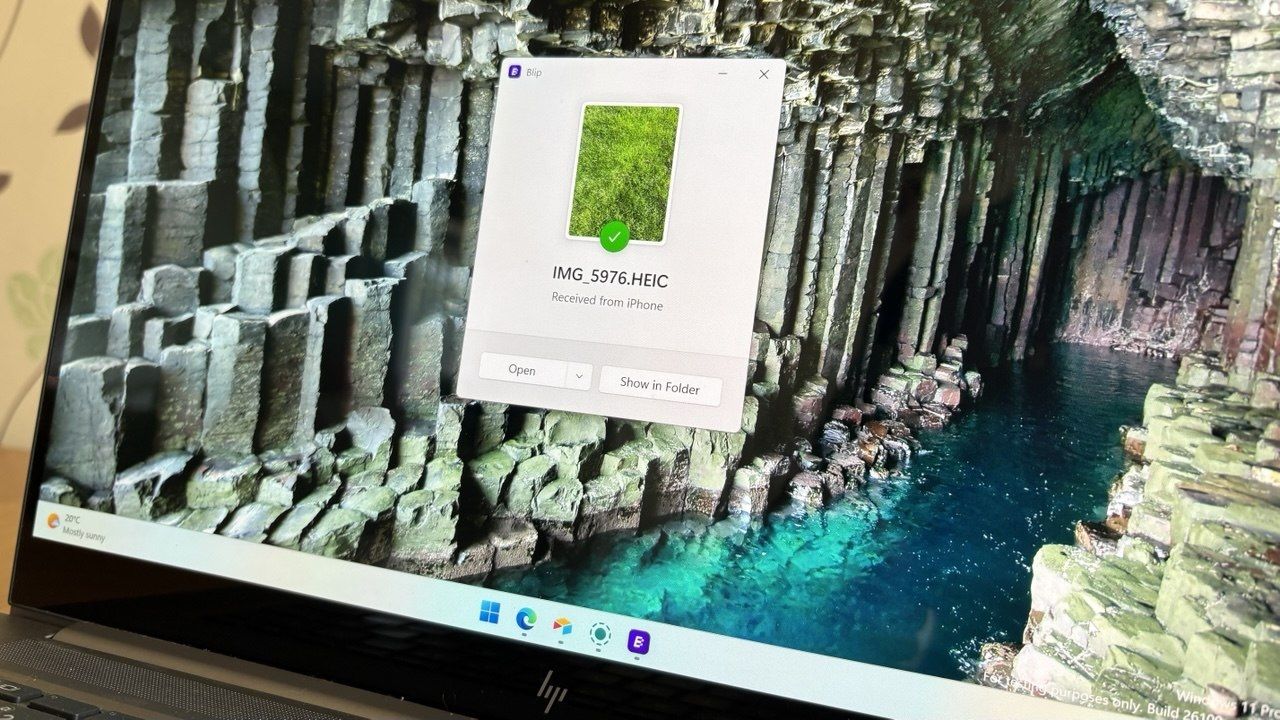
Reddit delivered with both those recommendations. I downloaded both and have used them over the last week. I'm hardly the first person to highlight these apps, but if people are asking for AirDrop alternatives on Windows 11, they likely haven't heard of Blip and LocalSend.
Top pick: Blip
Transferring files is quicker and easier if both of your devices are on the same network, but Blip works when on different networks as well.
Blip is my top pick. It's easy to use, has an interface that feels familiar, and it's extremely fast. It's similar to AirDrop but without the Apple exclusivity.
Blip supports sending files and folders without any size limits (Blip's website says "99TB? Game on").
Not having to zip folders is a big plus, as is being able to send large photo files.
Blip is free for non-commercial use. If you're a business user or want priority speed, you can subscribe for $25 per user per month.
Signing up for Blip is easy and just requires entering your email and confirming the code you're sent.
Connecting an iPhone and a PC can be awkward unless you have the right apps. (Image credit: Future)
LocalSend works very well, but its structure has some pros and cons. Because it works through your network, it works without the internet. It's also incredibly fast, assuming your Wi-Fi network has quick speeds.
LocalSend doesn't require an account or logging in. Your devices from the network just appear within the app. You can mark devices as favorites to streamline sharing as well.
You can send files to a single recipient or multiple recipients as well, which makes LocalSend feel a bit more like AirDrop.
LocalSend is open-source, fully offline, and peer-to-peer, so it's a great choice for people who value privacy.
The obvious drawback is that LocalSend is for sending files locally. If you just need to send files at home or work when devices are on the same network, LocalSend provides a seamless experience.
OneDrive and iCloud
Blip and LocalSend are made for sharing files on demand. If you want to sync entire folders or all of your files, you can use apps like OneDrive or iCloud.
In my experience, these apps are much slower at syncing and sending files, but they're a great way to back up content.
Join us on Reddit at r/WindowsCentral to share your insights and discuss our latest news, reviews, and more.
I've long been a fan of XCOM, which is why when I heard two of my favorite franchises were about to collide on Xbox and PC, my interest was immediately piqued.
This is Star Wars: Zero Company, an upcoming turn-based tactics game set in the legendary sci-fi universe that needs little introduction.
Developed by Bit Reactor, who themselves are comprised heavily of XCOM and Firaxis vets, I recently was lucky enough to talk to the team behind the game, as well as go hands-on for the first time.
Bit Reactor's Greg Foertsch, art director of XCOM fame, was candid on the game's origin story. It was actually the late great Vince Zampella of Titanfall and Call of Duty fame who offered it up first, and the rest is history: "Star Wars was not on my bingo card, to be quite honest, till Vince brought it up, and frankly, I was a little terrified at first, but I had to say yes."
Terrified they might've been. But from what I've seen, I think they've absolutely nailed it and have nothing to fear whatsoever. Star Wars Zero Company is now a personal game-of-the-year contender, if indeed the full game continues to be as infectious and intriguing as the demo slice I played.
Bit Reactor noted that they felt the turn-based tactics genre still had a big story to tell, even as Take Two essentially wound down the XCOM franchise in favor of focusing on Civilization. What better way to introduce the genre to a new audience than via one of the biggest franchises in the world?
But Bit Reactor has also been keen to modernize every aspect of it for modern sensibilities: photorealistic art, a third-person camera, high-quality story writing and cinematic treatment, and a Mass Effect-like character bonding system that has enormous potential.
Star Wars: Zero Company launches on Xbox and PC on August 27, 2026.
A heaping of XCOM, a dash of Mass Effect?
Lead a rag tag group of survivors on a quest for fame and fortune, and unravel a potentially darker plot along the way. (Image credit: EA | Bit Reactor)
In Star Wars Zero Company, you take command of a "dirty dozen" style mercenary outfit, which immediately gave me Mass Effect 2 vibes.
This ragtag group of rejects, bounty hunters, and warriors of fortune come together under a variety of difficult circumstances. The Clone Wars are in full swing, and the Republic needs mercs willing to undertake missions that are perhaps beyond their remit (and missions that skirt the law ... and perhaps even basic morality.)
As such, you play as Captain Hawks, a fully customizable humanoid and former Republic officer who has gone into business for himself. You can fully tailor Hawks' identity and pick from a variety of iconic Star Wars species to lead your crew.
As you get further in, you'll meet other heroes who join your squad for a variety of their own reasons. There's Tel-Rea, who is a former Jedi Padawan, Trick, a "forcibly retired" clone trooper, and Cly, a Mandalorian driven by vengeance.
The eclectic cast led Bit Reactor to create its "Bond system," which gave me a ton of Mass Effect 2 vibes. As your crew collaborates both in missions and during trips to The Den (your base of operations), they build relationships and synergies that benefit your tactical options and also develop their characters.
Kabbney "Kabb" Uppercut is a Felshi, a completely new species created for Zero Company. (Image credit: EA | Bit Reactor)
"I wanted that to have a long arc of play over the course of the whole campaign… you’re not just learning to power your characters up, but you’re also having them develop relationships that’s evolving in your head," game directorJames Brawley explained to us. "Characters grow stronger as a result… that’s why they’re able to beat these overwhelming threats, because they know how to work together."
"This is your Star Wars game… how you get there, what you experience, the characters you build, the relationships and bonds you make — they’re all unique to your playthrough."
The team explained that the events of Zero Company take place adjacent to The Clone Wars, in the shadows, using an entire cast of new characters. And indeed, like any good XCOM-like, permadeath is a feature here. If you have two characters that synergize well and unlock powerful abilities as a result, having one of them die not only severs that bond but also deprives you of access to those powerful abilities. The stakes remain incredibly high as a result, in true XCOM-fashion. You'll also lose the resolution of their stories and experiences too, making every playthrough potentially unique (unless you save scum, that is ... but there are auto-saves-only Ironman modes for those who don't want to be enticed into such heretical gameplay styles.)
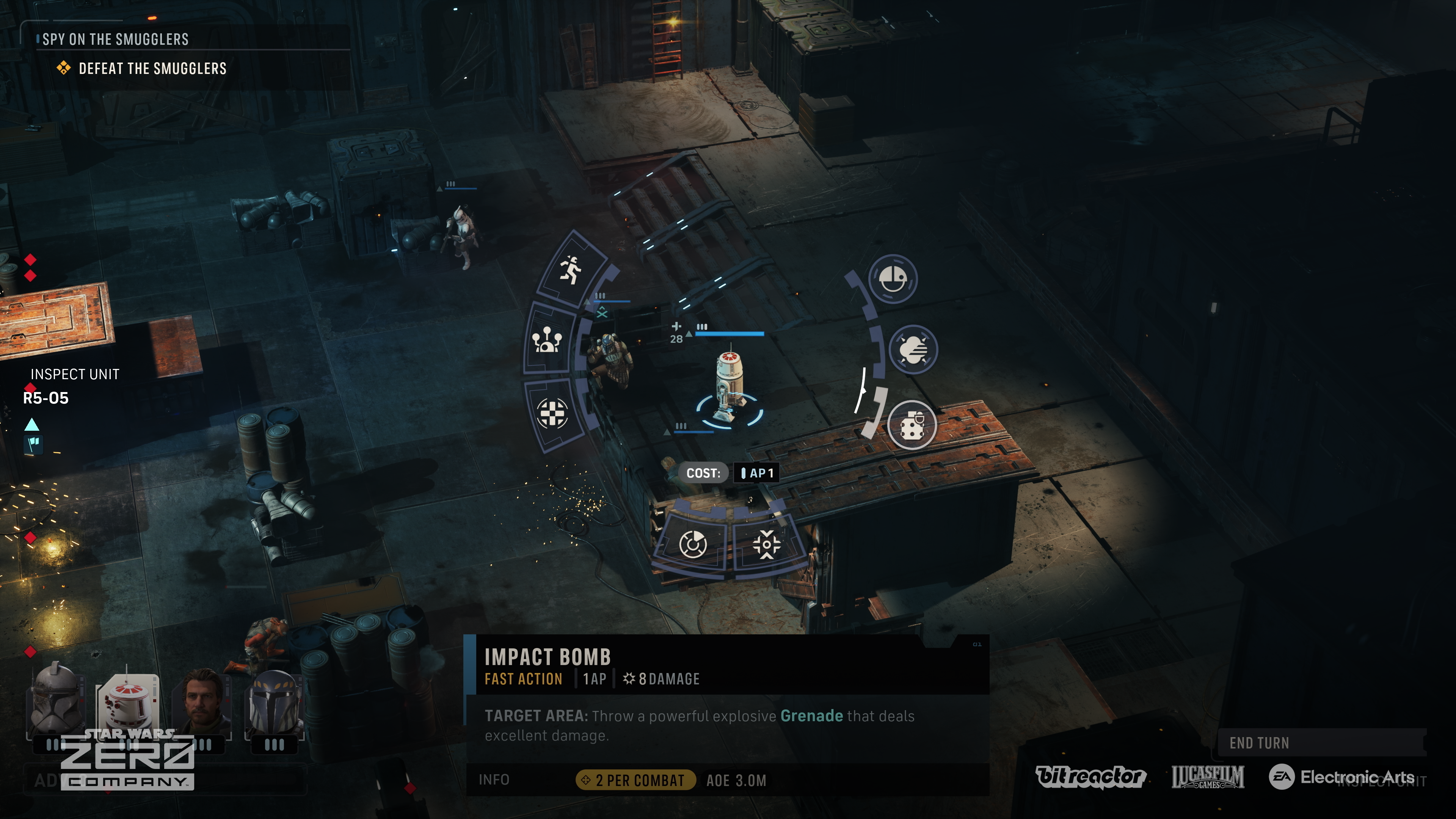
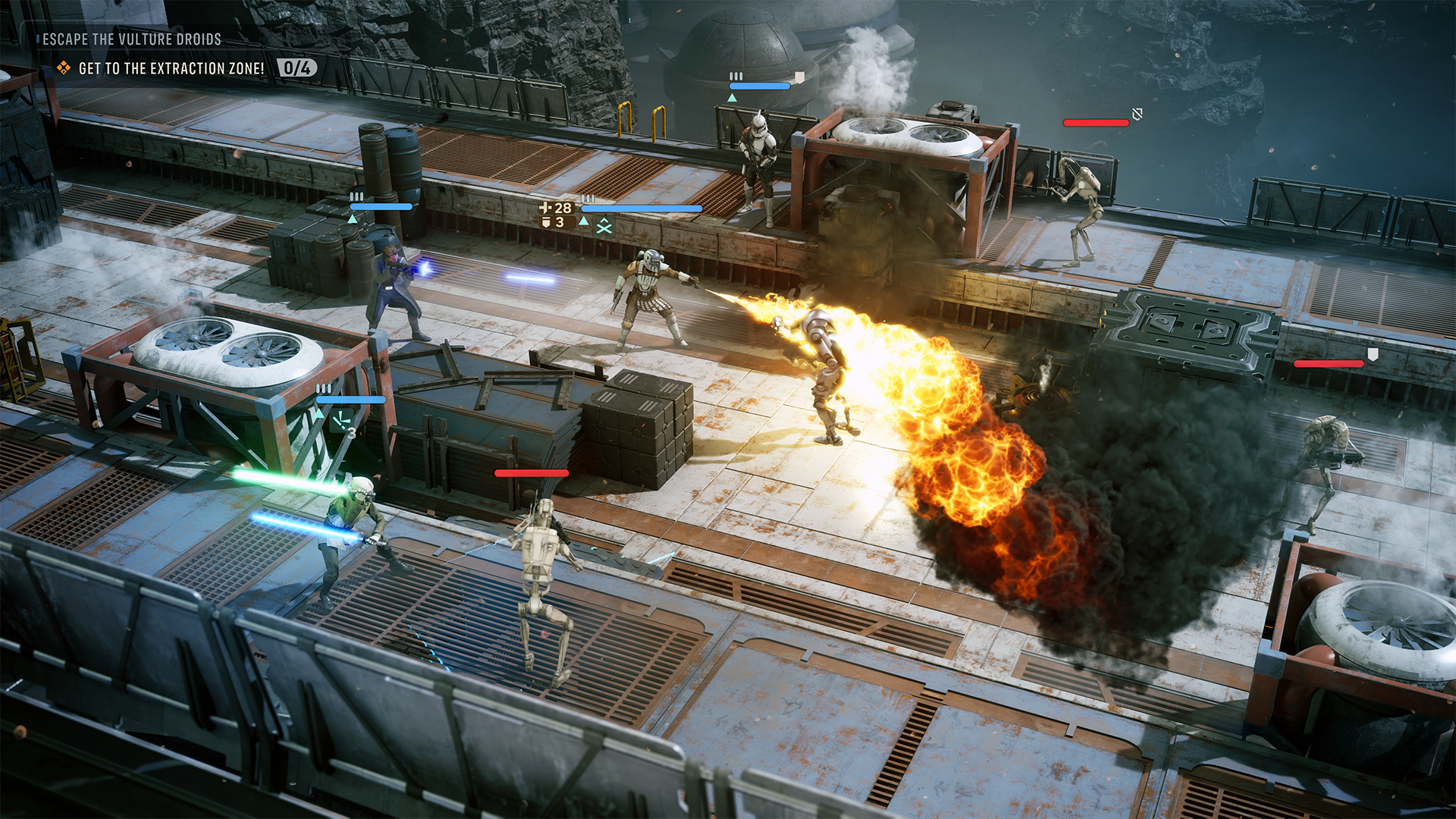
Set up powerful killzones with overwatch commands, and leverage unique Star Wars-inspired abilities to decimate your enemies. (Image credit: EA | Bit Reactor)
I didn't get to experience too much of the combat gameplay, but from what I played, it felt every bit as satisfying and fun as previous official XCOM-style games I've played from the team here. Bit Reactor is comprised of XCOM and Firaxis vets, as noted, and you can feel that pedigree in every aspect of play. The team said Disney was on hand too to verify the Star Wars authenticity but was also incredibly open to Bit Reactor's own agency therein. The team said they "couldn't praise Disney enough," in what sounds like a very productive working relationship.
Disney hasn't always handled the Star Wars IP as well as I would've liked ... but it's hard to deny that they've had some absolute bangers on their hands. Rogue One has been a particular highlight for me, but also the games. Cinematic delivery I'd argue is more important in a Star Wars-adjacent title, which obviously comes with certain expectations. You can expect great characters, a grand adventure across the galaxy, and big cinematic moments sprinkled throughout Zero Company, the developers tell me. But crucially, also dark villains.
The Clone Wars are in full swing in corners of the galaxy, but while bounty hunting, Hawks and his crew get caught up in a uniquely dangerous situation. The separatist-aligned cult known as the Infinite Coil rears its head early on. Its members seem infected with a mysterious space plague that, if I were a betting man, potentially has dark side origins.
"The Clone Wars offered us a place to tell a Star Wars story that touched on canon, but didn’t interfere… it allows people to attach to new characters in a way that hasn’t been done before."
The Jedi Fallen Order franchise has been well-received, and before Vince Zampella's passing, it seemed like EA was on an upward swing with its Star Wars license stewardship. Zero Company looks set to continue that legacy and also maintain the quality bar Jedi Fallen Order established.
In Zero Company, you'll fight separatist forces of all stripes, but the central antagonistic force is a shadowy cult known as the Infinite Coil. (Image credit: EA | Bit Reactor)
Indeed, I was surprised to discover how far Zero Company diverges from the typical XCOM formula from a story perspective, where most of the characters are throwaway soldiers designed to ultimately be expendable. The detailed characterization of the heroes in Zero Company are every bit as cinematic and interesting as any story-heavy action game or big-screen Star Wars experience you might expect.
Zero Company makes heavy use of a traditional third-person over-the-shoulder camera for some of these sequences too, making the game feel almost more like a CRPG in the vein of Baldur's Gate 3 or Wasteland 3, as opposed to a pure tactics game. Tactics games with fixed isometric cameras often come with stylized art given that the camera is zoomed out a lot of the time. Zero Company went deeper on visuals to accommodate its more cinematic delivery, and the results speak for themselves. Zero Company feels painstakingly authentic.
"We should be better looking, not worse. We should be better frame rates, not worse. We should have more stories, more immersion," Bit Reactor explained. "We’re just making a great game — it just happens to be turn‑based.”
If you've never played an XCOM-like before, its RPG systems might be what entices you most
More XCOM-style games please. (Image credit: EA | Bit Reactor)
I was incredibly encouraged by Star Wars: Zero Company's preview cycle. I was immediately drawn to the characters and intrigued by the potential of the game's Bond system. What events and storytelling opportunities would I be able to unlock? What consequences would befall me for mismanaging those bonds and potentially getting some of my heroes killed? What exactly is the Infinite Coil, and what do they want?
Star Wars: Zero Company is a bit of a rarity in 2026, as big publishers chase service games, infinite experience, and microtransaction hellscapes. Take Two itself no longer seems to want to service the XCOM franchise sadly, and other companies that have attempted it have often struggled to broaden their appeal. Truly "AAA"-grade tactics games have become vanishingly rare.
Star Wars is the perfect universe to offer a take on this genre in my view, particularly in the Clone Wars era. But Bit Reactor's clear efforts on the cinematic and story-delivery side give Zero Company broad potential that similar attempts at the turn-based tactics genre have missed in recent years. Baldur's Gate 3-style cinematics and character delivery, atop modern high-quality visuals and focused XCOM-style tactical play? Zero Company has everything I didn't know I needed from this quarter's very busy slate of games.
Star Wars: Zero Company is something every Star Wars and turn-based afficionado should put on their wishlist.
If you have any questions about the game, drop them in the comments and I'll get them answered!
Star Wars Zero Company is a turn-based tactics experience with heavy cinematic leanings. Set in the Clone Wars Star Wars era, lead a merc group across the galaxy seeking fame and fortune, but perhaps finding something darker along the way.
Spotify non impedisce il caricamento della musica IA e non può neanche verificarla automaticamente, ma ha deciso di lasciare fuori dalle raccomandazioni gli artisti IA... Leggi tutto
Last week reporters Jillian Ambrose and Damian Carrington published a piece which revealed that biggest oil firms made $93bn in profits in three months amid the war in Iran and the climate crisis. They’re online now to to discuss their story and any other questions you might have
StanEthel asks: Does anyone in the fossil fuel industry accept responsibility for climate change? If they don’t, how is their denial structured: it’s not happening, it’s someone else’s fault, it’s not our fault?
Damian:
The short answer is no, and a rising tide of lawsuits against fossil fuel companies for their role in the climate crisis means that is unlikely to change anytime soon. The science is ever clearer though. An analysis published last September showed for the first time that carbon emissions from the world’s biggest fossil fuel firms were directly linked to fatal spells of hot weather.
The big oil companies were among the first to realise the dangers of global warming half a century ago. But decades of denial then followed. As the reality of climate crisis has become undeniable, the arguments of the fossil fuel industry have shifted. Gas was cleaner than coal, for example, or that carbon credits from new forests could offset emissions. Today, the industry likes to tout carbon capture and storage (CCS) as a solution. But just this week, one of CCS’s loudest cheerleaders, ExxonMobil, has started a process to sue the European Union which wants to make the company actually store a small amount of CO2.
In the first weeks of the conflict, some predicted that the government’s taxes on North Sea oil and gas would yield a £20bn tax windfall for the Treasury if surging oil and gas prices remained high over the whole year. This is because the government’s windfall tax on North Sea oil and gas, known as the Energy Profits Levy, imposes an effective headline tax rate on North Sea profits of 78%, and the Treasury collects VAT from petrol and diesel sales too.
But prices have not climbed by as much as first feared. So what can we reasonably expect? Before the war, the Office for Budget Responsibility forecast that oil and gas revenues would raise £2.7bn in the 2025/26 financial year. It also suggests that for every $10 increase to the benchmark oil price, the Exchequer can expect an extra £900m in revenue. Meanwhile, every 1p increase in the price of gas hands the Treasury an extra £55m.
Durante más de un siglo, los investigadores supieron que el Códice de Dresde contenía una extraordinaria tabla de eclipses, pero no estaba claro cómo los astrónomos mayas conseguían mantenerla precisa durante generaciones. Un nuevo análisis encontró la clave: no reiniciaban sus cálculos desde cero, sino que superponían ciclos lunares estratégicamente.
Most people set out in life wanting to believe the world is fair. They expect people to wait their turn in queues, to be treated equally in their job, and to be rewarded for hard work. These expectations influence how they understand the world around them, and shape their responses to it.
But what happens when life repeatedly challenges those assumptions? Psychologists have long been interested in this question. Our new research, published in the British Journal of Psychology, suggests adverse experiences shape both how fair people believe the world is, and how they view their place in society.
Over the course of a lifetime, personal setbacks – from illness and bereavement to being a victim of crime – may have a cumulative effect, leading to a growing sense that the world is unfair. We think this is important in the context of today’s increasingly polarised societies, in which trust in institutions has declined severely in the UK and many other countries.
Video: TEDxTalks.
Adversity and unfairness
Our research set out to answer two key questions: do experiences of adversity influence whether people see the world as fundamentally unfair – and if so, what are the societal consequences? We conducted three surveys involving more than 1,200 British participants with an equal gender split and average age of 39.
In one study, we found that people who reported experiencing more lifetime adversity – including illness, bereavement, financial hardship and violence – were more likely to believe the world was unfair.
In another, we compared people who had experienced violent victimisation with those who had not. After accounting for demographic factors, people who had experienced violent crime reported stronger perceptions of injustice.
Our final study found that greater lifetime adversity was associated with lower trust in institutions through perceptions of injustice. This is important because trust underpins many aspects of society, from confidence in public institutions to democratic participation.
Together, these findings suggest that people don’t simply interpret information based on the facts available to them. They also interpret it through the lens of their previous experiences.
Two people can read the same news story, watch the same political debate or hear the same public health advice, yet come away with very different conclusions that may not simply reflect differences in knowledge or politics. It may also reflect differences in how they have come to see the world as a result of the hardships they have faced.
Furthermore, if someone increasingly believes that the world is unfair, they may be more likely to notice fresh examples of perceived injustice, corruption or hidden motives – and interpret new events through that lens.
Belief in conspiracy theories
Previous research has shown that people who feel uncertain, powerless or threatened are often more likely to endorse conspiracy theories. Most of this work, however, has focused on their identities, traits and beliefs.
In our investigation of the impact of adverse life experiences on people, we found a remarkably consistent pattern. When these hardships are associated with stronger perceptions of injustice in the world, the same people more strongly endorse conspiracy beliefs.
Conspiracy theories rarely describe events as random. Instead, they tend to suggest that powerful individuals or organisations are secretly responsible for what happens. They offer explanations that identify intentional causes behind events that might otherwise seem confusing or unjust.
This makes it all the more important to understand the experiences and psychological processes that may contribute to these worldviews developing in the first place. Our findings suggest that perceptions of injustice are one such pathway.
For someone who increasingly feels the world is unfair, conspiracy theories may become more psychologically appealing – providing a way of making sense of experiences that otherwise feel difficult to understand.
Our research does not suggest that adversity inevitably leads to conspiracy beliefs; nor that conspiracy theories are an inevitable consequence of trauma. Rather, it highlights a long-term psychological process that may help explain why some people become more receptive to these ideas.
In an increasingly polarised world, the media and political focus is often concentrated on what information people consume. But our research suggests we should pay more attention to the experiences that shape the lens through which people interpret information. This could help explain why people can look at the same events and reach very different conclusions.
Ultimately, people’s experiences don’t just affect them in the moment. They shape their worldview – which can influence how they interpret and respond to events and other people’s behaviour far into the future.
So, we believe any effort to reach greater consensus in society may require a deeper understanding of the hardships people have lived through over the course of their lives – and how these can affect their sense of injustice.
Daniel Jolley has received funding from the Leverhulme Trust, the British Academy, and the Engineering and Physical Sciences Research Council (EPSRC).
The studies mentioned in this piece were funded by the British Academy/Leverhulme Small Research Grants Scheme (SRG23/230720) and carried out in collaboration between Daniel Jolley, Laura Blackie, and research assistant Anna Maughan.
Laura Blackie has received funding from the British Academy.
Fomos procurar quais os smartphones com as melhores câmaras à venda em Portugal, dividindo-os em duas categorias, sem limite de preço e até 500 euros. Explicamos também quais os critérios que deve ter em contra na hora de escolher.
Il ritardo del turbo, nell’enciclopedia delle quattro ruote, indica l’attesa tra la pressione dell'acceleratore e l'effettiva risposta del turbocompressore nei motori sovralimentati. La <strong>divisione performance SRT </strong>di <strong>Stellantis</strong> ha presentato un nuovo concept di propulsore battezzato eBoost Air. La nuova tecnologia di compressione elettrica è realizzata per risolvere uno dei principali problemi dei propulsori.Come si può gestire l'elevata potenza dei turbocompressori di grandi dimensioni conservando la reattività dell'acceleratore? Associata a un prototipo di <strong>motore Hurricane </strong>a<strong> sei cilindri</strong> in linea da 3,0 litri ad alte prestazioni, eBoost Air sfrutta un compressore elettrico per far entrare in funzione i turbocompressori fin dai bassi regimi, offrendo una risposta repentina.<h2>L’innovazione di Stellantis</h2>Quando il motore raggiunge un regime più elevato, entra in funzione l'energia dei gas di scarico. Il risultato è una sovralimentazione costante su tutto l'arco dei giri, eliminando virtualmente il <strong>turbo lag.</strong> Un boost che regala un piacere di guida agli appassionati. I turbocompressori sono alimentati dai gas di scarico del motore, generalmente dissipati in termini energetici.Non disperdendo l'aria di scarico forzata per far girare la turbina, i turbocompressori creano un<strong> sistema di sovralimentazione</strong> che riduce le perdite di pompaggio e garantiscono più ossigeno al motore. Tutto questo si traduce in combustioni più intense, dando una maggiore potenza. Con turbocompressori più grandi, è possibile forzare più aria nel motore, producendo più potenza, ma solo ad alti regimi.A regimi più bassi, la pressione di scarico abitualmente risulta troppo debole per far funzionare correttamente i turbocompressori. La tecnologia del <strong>compressore elettrico eBoost Air </strong>di <strong>SRT</strong> risolve questo problema riducendo il divario di giri con la pressione positiva generata da una turbina elettrica rapida e potente, che fa entrare in funzione i turbocompressori prima, ottimizzando la risposta all'acceleratore.[caption id="attachment_281598" align="alignnone" width="1200"]<img class="size-full wp-image-281598" src="https://www.hdmotori.it/app/uploads/2026/08/Stellantis-Propulsore-Elettrico-Turbo-Lag.jpg" alt="Stellantis, svelato il propulsore elettrico" width="1200" height="800" /> Propulsore elettrico: addio turbo lag Stellantis[/caption]<h2>La soddisfazione dei tecnici</h2>Quando il conducente vuole una coppia immediata e i turbocompressori non hanno ancora raggiunto la velocità di funzionamento richiesta, il <strong>sistema di bypass</strong> convoglia il flusso d'aria attraverso il compressore elettrico, che genera rapidamente la pressione di sovralimentazione necessaria per far entrare in funzione le turbine.Tim Kuniskis, responsabile dei marchi americani e del marketing per il Nord America, ha assicurato: <em>"Gli appassionati non sono interessati alla tecnologia fine a se stessa. Ma quando la tecnologia migliora le prestazioni senza svantaggi, la apprezzano appieno. L’eBoost Air offre esattamente questo tipo di vantaggio tangibile. <strong>È un'idea intelligente</strong> e semplice che affronta di petto il turbo lag e rispecchia ciò che <a href="https://www.hdmotori.it/dodge-charger-daytona-flop-vendite-srt-banshee-eliminata/">SRT</a> sa fare meglio: muoversi velocemente, sfidare le convenzioni e perseguire prestazioni superiori".</em>L’eBoost Air offre le sensazioni istantanee e lineari di un <strong>V8 sovralimentato.</strong> La divisione Street and Racing Technology (SRT) di <a href="https://www.hdmotori.it/stellantis-richiama-20-000-auto-un-guasto-al-servosterzo-potrebbe-provocare-un-incendio/" target="_blank" rel="noopener">Stellantis</a> riafferma così il suo ruolo di primo piano nelle innovazioni dell’industria dell’Automotive 2.0.<em>"La divisione SRT sta sfruttando lo <strong>sviluppo rapido</strong> e l'ingegneria interfunzionale per valutare le tecnologie emergenti in termini di prestazioni -</em> ha dichiarato Tom Sacoman, responsabile delle operazioni SRT - <em>In questo caso, pre-caricando elettromeccanicamente i turbocompressori prima che l'energia dei gas di scarico sia disponibile, siamo in grado di migliorare significativamente la risposta alla sovralimentazione e la guidabilità".</em>[drivek_widget brand_id="fiat" model_id="500-hybrid"]
SpaceX has formally asked US regulators for permission to operate as many as one million AI data-center satellites. That number is real. It is also an upper limit in an application, not an approved fleet, a launch schedule or evidence that one million spacecraft will actually be built.
If the full Starmind system ever existed, its direct waste heat would be too small to become a major global climate driver. The harder environmental question lies in the industrial cycle required to create and replace it: manufacturing enormous amounts of hardware, launching it through the atmosphere and eventually vaporizing much of it during re-entry.
Climate models have only begun to study satellite constellations measured in tens of thousands. A million large computing satellites would sit far beyond the scale directly tested in that literature.
The FCC has accepted an application, not approved a million launches
The filing seeks authority for a non-geostationary system of up to one million satellites between 500 and 2,000 kilometers altitude. The spacecraft would exchange data through optical links and connect with SpaceX’s Starlink network.
Accepting an application for filing is an administrative step. It does not mean the FCC has determined that the architecture is safe, environmentally acceptable or technically achievable. The public notice also says SpaceX plans different hardware versions across multiple orbital shells, so “one million satellites” does not describe one fixed design.
The computers’ direct heat is not the main climate problem
Computers turn almost all the electricity they use into heat. In orbit, that heat cannot leave through air or cooling water because neither is available. Large radiator surfaces must emit it as infrared radiation.
One million AI1 satellites operating at the advertised average would use about 120 gigawatts for computing. To put a strict upper bound on the direct climate effect, imagine that every watt of that heat somehow reached and was absorbed by Earth. Spread over the planet’s surface, it would average roughly 0.00024 watts per square meter.
That artificial scenario overstates the real effect because radiators can direct most thermal radiation toward deep space. Even so, its value is more than 10,000 times smaller than the IPCC’s estimate of 2.72 watts per square meter for total human-caused effective radiative forcing between 1750 and 2019.
The fleet would therefore not warm Earth simply by running hot computers overhead. Reflected sunlight, radiator orientation and the design of vast solar arrays would still need assessment, but direct compute heat is not the dominant global term.
Space solar power could avoid some terrestrial emissions
SpaceX argues that sun-synchronous satellites could collect solar energy without clouds or night-time interruptions and reject heat without chillers, cooling towers or fans. If orbital computing genuinely replaced electricity from fossil-fueled grids, it could avoid some power-sector carbon emissions and water consumption.
That benefit cannot be calculated from the one-million figure. A fair comparison would need the energy and materials used to manufacture satellites and rockets, propellant production, launch emissions, ground stations, replacement rates, failed spacecraft and the carbon intensity of the terrestrial data centers displaced.
No published life-cycle assessment yet covers SpaceX’s proposed full system. “Powered by solar energy” describes operation in orbit, not the environmental balance of building and continually replenishing the fleet.
Rocket exhaust is unusually effective high in the atmosphere
Rocket emissions are small beside global aviation, shipping or power generation by mass. Their location makes them different. Rockets inject black carbon, water vapor, nitrogen compounds, alumina and other products directly into atmospheric layers that surface pollution rarely reaches.
Black carbon absorbs sunlight and warms the surrounding stratosphere, changing atmospheric circulation and ozone chemistry. A NOAA modeling study found that a tenfold increase in hydrocarbon-rocket soot could warm parts of the stratosphere by 0.5 to 2 degrees Celsius and alter circulation. The authors stressed that soot emissions from different engines remain poorly measured.
A newer 2026 study in Earth’s Future modeled launch and re-entry emissions from the recent megaconstellation era through 2029. It found a global stratospherically adjusted forcing of about -0.0064 watts per square meter from all space missions in its scenario, with megaconstellations contributing 42 percent.
That modeled forcing is small compared with the present greenhouse-gas-driven climate imbalance, and its negative sign represents a slight cooling influence after the stratosphere adjusts. It is not necessarily good news. The same soot warms the stratosphere, changes circulation and can affect ozone. It is better understood as an uncontrolled atmospheric perturbation than as useful climate cooling.
The result also cannot be multiplied mechanically from thousands of satellites to one million. Starmind would use different spacecraft, potentially different launch vehicles and an unknown deployment cadence.
Re-entry would turn satellite material into atmospheric aerosol
Low-Earth-orbit constellations require replacement. Hardware fails, components age and atmospheric drag eventually brings spacecraft down. A million-satellite fleet with a five-year average life would imply 200,000 replacements and re-entries every year. SpaceX has not established that lifetime for the full system, but the example shows why lifespan matters as much as fleet size.
Re-entering spacecraft do not simply disappear. Heating vaporizes metals and creates particles and gases in the upper atmosphere. A 2024 global emissions inventory identified aluminum oxide as the dominant modeled metal oxide from satellites that ablate, alongside nitrogen oxides produced by high-temperature re-entry.
A 2025 atmospheric modeling study tested a scenario with 10,000 metric tons of re-entry alumina per year, a level associated with forecasts of roughly 60,000 satellites. Depending on particle size and re-entry latitude, the model produced regional temperature anomalies reaching about 1.5 degrees in the middle atmosphere and changes to polar-vortex winds.
That is not a prediction of 1.5 degrees of global surface warming. It is a modeled regional response high in the atmosphere, with large uncertainty about particle size, composition and transport. Scaling to Starmind requires basic information that is not public, especially spacecraft mass, material composition, operational life and disposal pattern.
The most honest answer is therefore split. Direct waste heat from the orbital computers would be negligible at the global climate scale. Moving computing away from terrestrial grids might avoid emissions, but that benefit has not been demonstrated through a full life-cycle study.
The serious unknown is the launch-and-replacement machine surrounding the constellation. Existing research already finds measurable, though currently small, radiative and ozone effects from today’s much smaller space industry. A fleet approaching one million satellites would turn an emerging source of upper-atmosphere pollution into a planetary experiment without a validated model of the outcome.

 Login




















 Spotify non impedisce il caricamento della musica IA e non può neanche verificarla automaticamente, ma ha deciso di lasciare fuori dalle raccomandazioni gli artisti IA







 Con l’operazione “Big Bang” i consumi della sonda sono stati ridotti ulteriormente