 Login

Thirty Years of Intelligent Design Predicting the Unexpected Genome
Jonathan Wells’s review was important, but it only scratches the surface of information in biology outside of the DNA.

The idea that academia, despite its massive Left-wing skew, is rife with anti-Black prejudice is absurd, argues Noah Carl: underrepresentation does not equal discrimination.
The post Cambridge Does Not Discriminate Against Black People appeared first on The Daily Sceptic.
Andy Burnham keeps announcing policies that weren't his. Jason Arday passed exams he couldn't write. Steven Tucker spots some astonishing parallels between Britain's two greatest fabulists.
The post Is Jason Arday Andy Burnham in Disguise? appeared first on The Daily Sceptic.
 A shortage of one common nutrient could help cancer cells and viruses hide from the immune system. Researchers at Rockefeller University found that a shortage of arginine, an amino acid obtained from food and produced by the body, can interrupt the cellular machinery needed to make MHC-I proteins. These proteins act as a surveillance system, [...]
 Schizophrenia may leave a distinctive biological footprint across the brain’s communication network. Using specialized PET imaging, researchers have mapped where synaptic connections are most reduced in people with schizophrenia and identified a possible region from which the damage begins to spread. The study, which involved a Rutgers professor, was published in Molecular Psychiatry. Synapses are [...]
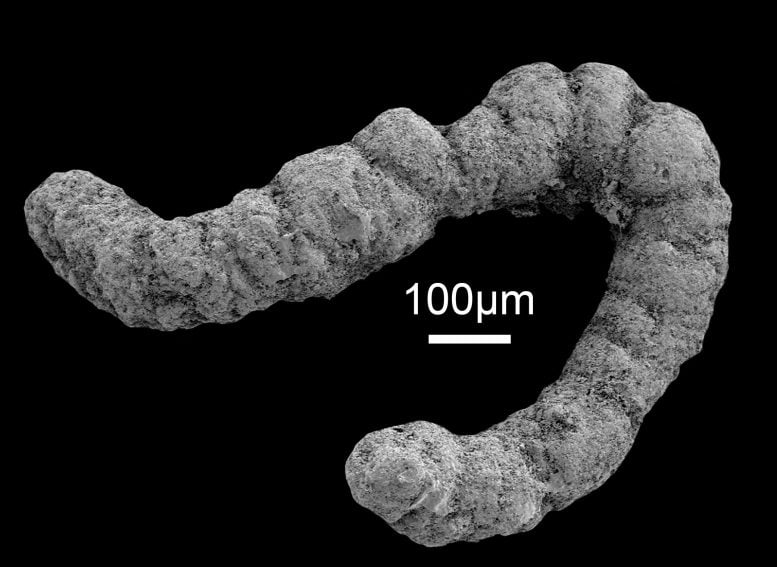 Ancient animal waste may have helped fuel the development and diversification of early marine ecosystems. Tiny pellets of fossilized waste may preserve evidence of a major transformation in early animal life. An international study led by Flinders University proposes that excrement helped reshape ancient oceans during one of evolution’s most important turning points. The researchers [...]
 Satellites designed to provide internet service are now serving an unexpected second purpose: helping scientists map the nearly invisible atmosphere at the edge of space. Researchers at Kyoto University have used orbital changes from about 1,200 Starlink satellites to map Earth’s thermosphere, a thin and difficult-to-observe region of the upper atmosphere. Their analysis produced the [...]
