❌

Reading view

A Nearly 4,000-Year-Old “Giant’s Tomb” Was Accidentally Discovered in Sardinia

Italian archaeologists have discovered a previously unidentified, nearly 4,000-year-old “Tomb of the Giants,” or “Giant’s Tomb,” at Carrarzu Iddia in central-western Sardinia.

The researchers behind the historic discovery said the new structure is part of a larger group of ancient, ‘enigmatic’ burial complexes on the island known as Giant’s Tombs erected by the Nuragic civilization as collective burial sites beginning around 1800 B.C. due to their megalithic structure.

Giant’s Tomb Site Features a Strategic Placement

According to Finestre sull’Arte, the newly discovered Giant’s Tomb had been covered by thick vegetation, helping it to remain hidden for nearly four millennia. However, surveyors from Sardinia’s two Superintendencies of Archaeology, Fine Arts, and Landscape were already involved in the restoration and excavation of the nuraghe located at the same site when they made the unexpected discovery.

Located at an elevation of approximately 800 yards, the newly identified Giant’s Tomb is located on the southern slope of Crastu Littu. The Italian team suspects the site “is of particular interest” due to its strategic location.

For example, the Giant’s Tomb offers a sweeping view of the Macomer plain. The location also includes a clear vantage point to observe the highlands of Abbasanta and Paulilatino, and an unobstructed view as far as the hills of the Nuoro area and the Gulf of Oristano. The team said this view likely conveys the site’s importance within the wider settlement network of Nuragic Sardinia.

Clearing the Dense Vegetation Reveals Striking Details

After identifying and surveying the new Giant’s Tomb’s location, the two project leaders worked with the landowners to clear away the dense overgrowth and earthen debris that had kept it hidden. Ironically, once the site was fully revealed, the team noted that the covering had likely helped to maintain and preserve its excellent condition over the nearly 4,000 years since its construction.

The most prominent features identified on the vast site were two large stone platforms, called protonuraghi, a sacred well, a residential settlement, and an extensive burial ground. A closer examination confirmed that the Giant’s Tomb, which is made from trachyte blocks, retained the expected architectural elements found in similar collective burial sites.

Giant's Tomb
The entrance of the Giant’s Tomb features a rare two-level design.

One identifying feature is the site’s exedra preceding its entrance. According to the Italian team, this architectural component is one of the most representative aspects of previously identified Giant’s Tombs, distinguishing this “monumental” construction type clearly within that of protohistoric Sardinia

Unfortunately, the excavation revealed that some portions of the ancient site had not survived the intervening four millennia completely intact. The authorities suspect that past illegal excavations that have affected many ancient sites could be part of the cause.

Luckily, previous illegal invasions of the site did not remove everything of historical value. For example, the team found ceramic materials inside the structure that document human occupation of the site, in some cases dating back to the earliest stages of the Nuragic civilization.

Site Includes Rarely Documented Dual-Level Construction

Alongside the site’s more familiar features, the team also identified an internal feature they described as ‘rare’ for a Giant’s Tomb: a second level near the entrance. Future studies of this unusual feature may offer insights into this society’s funerary practices and its construction techniques, which the team notes are still poorly understood.

The Italian team also noted the site’s greater significance when within the larger archaeological context of Carrarzu Iddia, noting that the area has yielded traces of human use and occupation covering the times before, during, and after the Roman era.

When discussing the site’s historical significance, the Italian team pointed to the value of so many extraordinary structures and monuments concentrated within one specific area. This overlap allows researchers to chronologically date the new Giant’s Tomb and place its significance within the wider context of the Island’s inhabitants.

Christopher Plain is a Science Fiction and Fantasy novelist and has spent the last six years as Associate News Editor and Head Science Writer at The Debrief. Follow and connect with him on X, learn about his books at plainfiction.com, or email him at christopher@thedebrief.org

  •  

'AI has the potential to fundamentally reshape the role of procurement': Amazon Business tells us why AI could supercharge procurement like never before

As AI continues to help the world of work evolve, more and more roles are increasingly embracing the technology in a bid to improve efficiency and value for money.

Perhaps nowhere is that more important than procurement - often a neglected area of interest, it plays a vital role for businesses across all industries, and has proved ripe for AI innovation so far.

We spoke to Amy Worth, Director Amazon Business UK and Public Sector Customers EU, to find out more.

  • AI is becoming increasingly embedded in procurement. Where are you seeing AI-powered purchasing insights deliver the greatest value for organisations today?

AI is helping procurement teams move beyond simply processing transactions to making faster, more informed decisions. Many organisations face increasing pressure to do more with fewer resources, making data-driven insights more valuable than ever. Yet, a fifth of decision-makers say they lack systems to monitor and manage risk effectively.

AI can help to address that by offering better visibility into purchasing activity to identify spending trends, spot anomalies within the supply chain, and uncover savings opportunities. And by having AI embedded into everyday procurement workflows, teams spend less time searching for information and more time focusing on supplier relationships and strategic decision-making.

  • How can better purchasing visibility help organisations identify savings opportunities while strengthening spend governance?

Organisations can't control what they can't see, so having a clear view of purchasing activity is essential for identifying savings opportunities and maintaining effective spend management. Rather than relying on manual reporting, procurement leaders increasingly need real-time insights that highlight spending patterns and flag unusual purchasing behaviour.

Tools such as Spend Visibility, which provides dashboards and visual analysis to easily track orders, spend and compliance can help organisations get a much clearer understanding of purchasing activity and help uncover savings opportunities.

  • Many organisations are looking to simplify purchasing and reduce supplier complexity. How can this help build more resilient supply chains?

In order to build resilience in supply chains, it’s important to have the right procurement foundations in place before challenges arise, so businesses have the flexibility to respond quickly when disruptions occur. Reducing unnecessary complexity and simplifying purchasing is key and helps create that agility.

We help businesses streamline processes, improve visibility and make it easier to source from trusted suppliers, while also enabling them to maintain access to a broad supplier network which gives organisations greater choice when circumstances change.

  • As business buying continues to evolve, what do you see as the biggest priorities for procurement leaders over the next few years?

Procurement leaders are balancing a wider set of priorities than ever before. That means alongside managing costs and improving operational efficiency, they're also expected to strengthen supply chain resilience, support sustainability goals and provide better insights to help inform wider business decisions.

It’s not as easy to manage all these priorities at once, and having access to reliable data becomes more important than ever, as it allows you to use the technology available to help make the right purchase decisions to meet these competing objectives.

  • Looking ahead, what role do you think AI will play in helping procurement teams move beyond cost control to become more strategic business partners?

AI has the potential to fundamentally reshape the role of procurement by moving the focus to more strategic work. At Amazon Business, we see AI as a tool that removes friction and administration rather than replacing expertise, by helping organisations analyse purchasing data more effectively, identify opportunities more quickly and help make better-informed decisions.

With that friction removed, procurement professionals will be able to focus on building supplier relationships, improving resilience and creating long-term value for their organisations.

Google logo on a black background next to text reading 'Click to follow TechRadar'

  •  

I asked Gemini if my chicken salad was still good: it saved itself and my stomach

What is AI good for? It's a question I get asked and ask myself almost every day. Unlike a wrench, hammer, or screwdriver, which are each good for one or two tasks, AI is amorphous and intimidating in its breadth. It seems capable of almost anything, especially as it changes and grows more intelligent. People pump it up as a do-it-all wonder, and yet, the question remains: what would I do with it?

Often, I find the answer to that question in the moment. For instance, as a partially color-blind person, I struggle to match clothing. Now, I often ask Gemini. I'll take my iPhone 17 Pro Max, open Gemini, turn on Gemini Live, pick out a shirt or pants (or both), and ask if they go together or which option is best. I always get an answer and, honestly, I usually follow the uncomplicated AI-generated advice.

Success in one area of your life with technology usually leads you to try it in another, especially with the ever-fungible AI.

In my house, I'm known as the risk taker, at least when it comes to food. "Best by" is a suggestion. "Use before,' is friendly advice. My family often blanches at my aged food consumption habits. Yes, I'll eat that five-day-old steak. Those English Muffins expired two weeks ago? Slide them over.

Enter the risk-taker

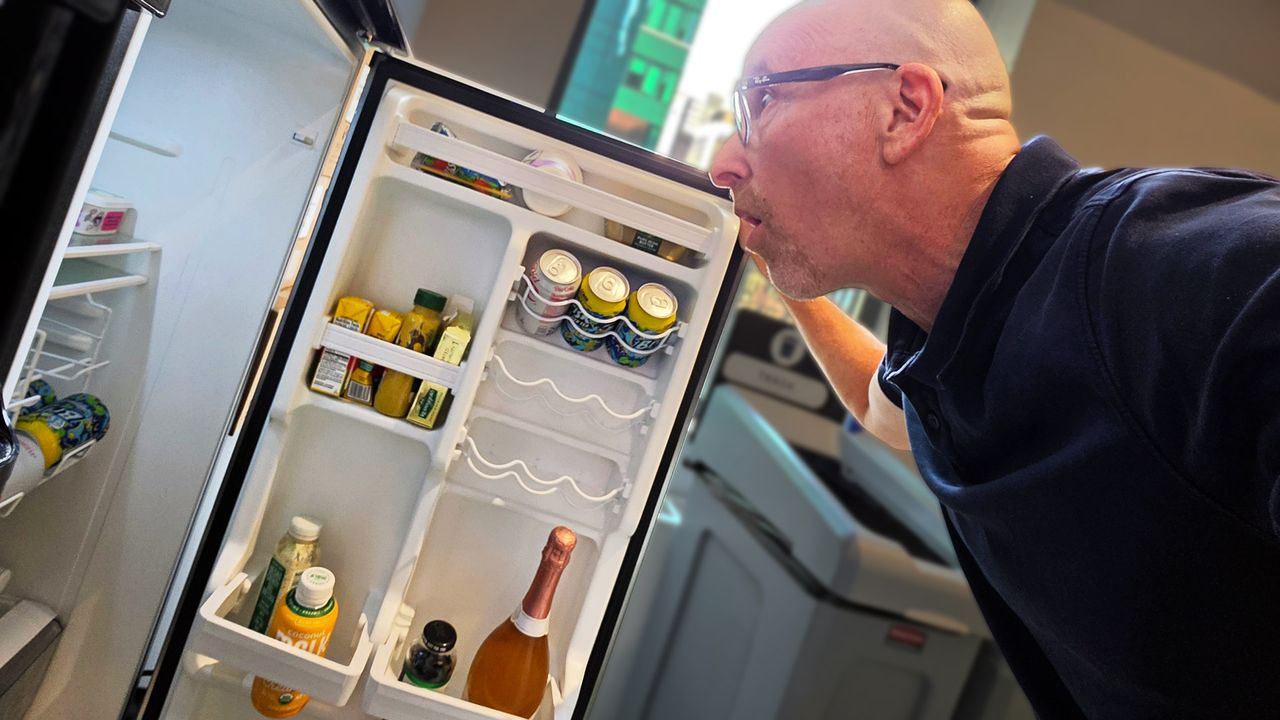
I know, it's not great, and when it was lunchtime this weekend I slid the week-plus-old store-bought-and-made chicken salad from the fridge and considered making a sandwich.

Staring at the "made on" date as if my gaze might rearrange the figures, I realized that I might be taking a risk. So I opened the container and sniffed the still spry-looking salad. It's at moments like this that I wonder, "What am I doing? Does my nose really know the difference between safe and stale or, more importantly, safe and decidedly turned?" I can tell you with some confidence: it does not.

Still, having grown up in a house where money was tight and you rarely threw anything away, I was hesitant to dump this half-a-pound of chicken salad (slightly turned or not).

I stood there in my kitchen for a minute, weighing my options and thinking that slightly sour chicken salad might not, with the right toast, be that bad.

Then I looked at my phone, lying face down on the counter, but surely judging me.

I would ask Gemini.

Putting Gemini on the menu

After launching the app, I turned on Gemini Live and pointed the camera at the open container. "Hey, this chicken salad was made on 8/1. Do you think it's still good?" I asked hopefully.

Gemini thought for a moment and then responded, but not in the way I expected.

Before giving me the answer, Gemini launched into what sounded a bit like one of those disclaimers for an Ozempic TV commercial:

"This information is not intended to be a substitute for professional medical advice, diagnosis, or treatment. Always seek the advice of your physician or other qualified health provider with any questions you may have regarding a medical condition."

Clearly, I struck a nerve. I only asked about the chicken salad, not if I should have a kidney removed.

I get it. If I'd asked this question a couple of years ago, Gemini might've launched right into an analysis, but concerns about AI accuracy and understanding of human needs and context have risen since the emergence of generative AI. Sure, it's way smarter and less likely to give you false or hallucinated information, but it's also, well, not a doctor or even a dietician.

A recent Gallup poll found that more than 25% of Americans are using AI for health info or advice, and of them, more than half query AI for health-related advice and analysis before visiting a doctor. The problem is that AI is not a medical professional, and while it can dig through the billions of health- and medical-related bits stored online, it doesn't have a medical license. It can't understand or treat your various maladies.

In my case, though, Gemini drew a long thin line from my seemingly innocuous question about chicken salad freshness to a potentially incorrect answer, my possible gastric emergency, and a potential lawsuit against Google and Gemini brought on my behalf by my surviving family members.

Look, food poisoning isn't usually fatal, at least according to Healthline, but it is yucky and uncomfortable. I think Gemini was just trying to avoid me taking its word as law on this topic and a potentially bad outcome for both of us.

I'm still hungry

But what about eating this rapidly warming chicken salad?

After the voluminous disclaimer, Gemini got to the heart of the matter:

"According to food safety guidelines, chicken salad should be stored in the refrigerator for only three to four days. Since this chicken salad was made on August 1st and today is August 9th, it is no longer safe to eat and should be discarded."

The answer, based less on the looks of this chicken salad and more on general advice that I often ignore, ultimately had the desired result.

You and my family will be pleased to know I took Gemini's advice, threw out the chicken salad, and made myself a peanut butter and jelly sandwich.

Naturally, I asked Gemini's opinion:

"Yes, absolutely! A PB&J is a much better and safer option right now.

Peanut butter and jelly have a significantly longer shelf life and aren't prone to the rapid bacterial growth that affects meat-based, mayonnaise-heavy dishes like chicken salad. It's a classic, risk-free, and delicious backup plan. Enjoy your lunch!"

Fine. Thanks, Gemini, and bon-appétit.

  •  

A Simple Treatment Could Save Extremely Premature Babies From Blindness

Deep Blue Sad Baby EyesResearchers found that dexamethasone eye drops may reduce the risk that retinopathy of prematurity advances to the treatment stage. For babies born extremely early, abnormal blood vessel growth in the retina can threaten their sight before they leave the hospital. Researchers in Sweden have now completed the world’s first randomized clinical trial testing whether cortisone [...]
  •  

Contrairement à ce qu'on imagine, la fragilité étudiante ne naîtrait pas pendant les études

Plus d'un étudiant sur deux arrive à l'université déjà fragilisé. Une enquête menée auprès de 3 000 primo-entrants dresse trois profils de santé très différents. Et met à mal une idée tenace : celle du programme sportif unique, censé convenir à tout le monde.

  •  
❌