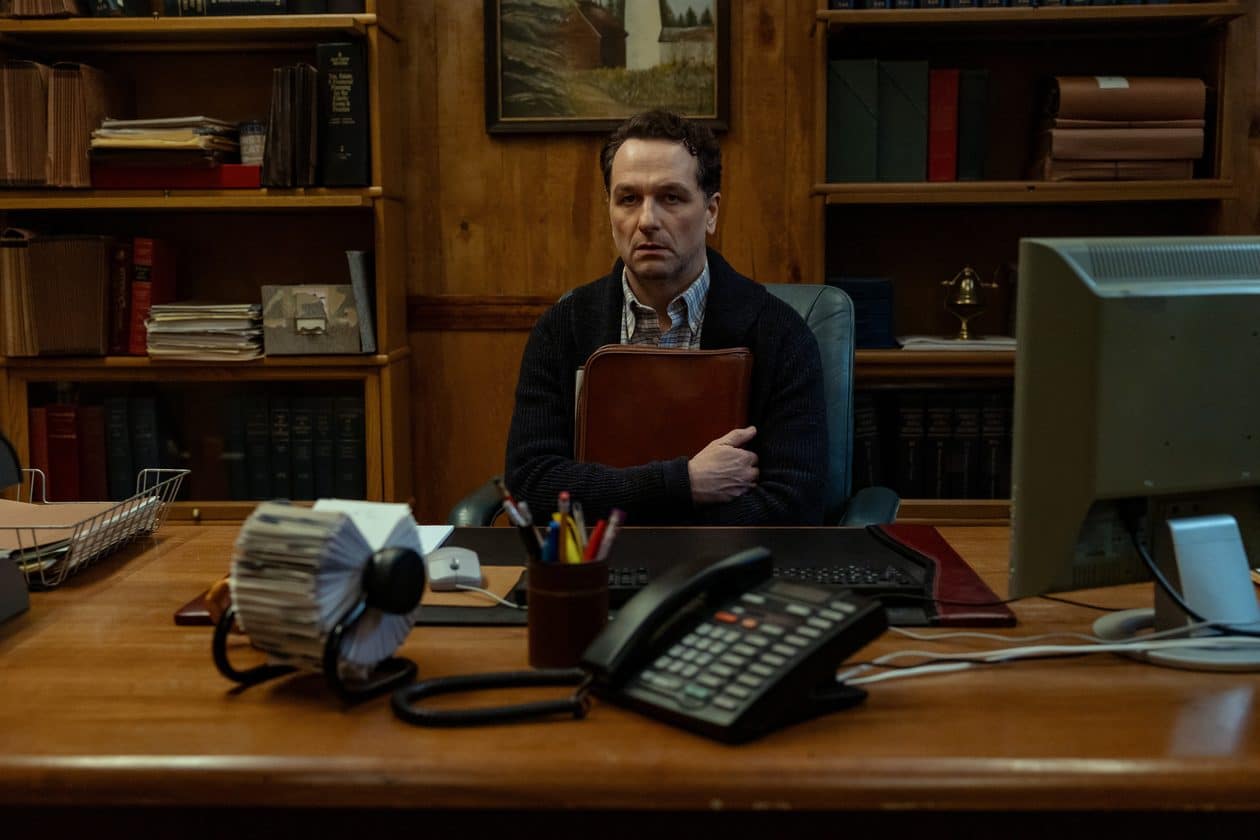
O Apple TV viu algumas de suas produções vencerem os Critics Choice Super Awards, versão do prêmio focada em categorias temáticas, com destaque para duas séries cujas primeiras temporadas chegaram ao serviço neste ano.
O outro destaque foi para “Pluribus”, vencedora nas categorias de “Melhor Série, Minissérie ou Filme feito para a TV” e de “Melhor Atriz” (Rhea Seehorn) em produções com a temática ficção/fantasia.
Tanto “Widow’s Bay” quanto “Pluribus” vêm se destacando bastante em premiações neste ano — inclusive nos prêmios Emmy, nos quais as duas séries receberam 19 e 18 indicações contemplando às categorias mais importantes), respectivamente.
A lista completa de vencedores dos Critics Choice Super Awards pode ser conferida aqui.
O Apple TV está disponível no aplicativo Apple TV em mais de 100 países e regiões, seja em iPhones, iPads, Apple TVs, Macs, dispositivos Android, smart TVs ou online — além de também estar em aparelhos como Roku, Amazon Fire TV, Chromecast com Google TV, consoles PlayStation e Xbox. O serviço custa R$29,90 por mês, com um período de teste gratuito de 7 dias. Por tempo limitado, quem comprar e ativar um novo iPhone, iPad, Apple TV ou Mac ganha 3 meses do Apple TV. Ele também faz parte do pacote de assinaturas da empresa, o Apple One.
NOTA DE TRANSPARÊNCIA: O MacMagazine recebe uma pequena comissão sobre vendas concluídas por meio de links deste post, mas você, como consumidor, não paga nada mais pelos produtos/serviços usando os nossos links de afiliado.
Bonfire series planned for Apple is no longer proceeding at the streaming service, ending the latest attempt to transform Tom Wolfe’s The Bonfire of the Vanities into an episodic television drama.
The project had assembled a notable creative team. David E. Kelley was attached to write and executive produce, while The Batman director Matt Reeves was expected to direct the eight-episode adaptation and serve as an executive producer through his 6th & Idaho Productions company.
Warner Bros. Television was producing the series, with Sarah Geismer representing 6th & Idaho and Matthew Tinker participating through David E. Kelley Productions.
According to industry reports, Apple and the creative team were not aligned on the direction of the adaptation. Kelley was also reportedly dissatisfied with how the development process had been handled. The exact source of the disagreement has not been disclosed.
Apple has not announced the project as a formal cancellation, and it never received a public premiere date or cast. Its departure from Apple instead ends one stage of development while leaving Warner Bros. Television with the possibility of taking the adaptation elsewhere.
Tom Wolfe’s | Image Source: Google
Apple Ends the Project After Four Months
News of the Bonfire series first emerged in April 2026. Kelley was expected to write the adaptation after working with Apple on Presumed Innocent and Margo’s Got Money Troubles, while Reeves would direct after completing his existing film commitments.
The partnership appeared well suited to a complicated literary adaptation. Kelley has extensive experience turning novels into television dramas, including Big Little Lies, The Lincoln Lawyer, Nine Perfect Strangers, Presumed Innocent, and Wolfe’s A Man in Full.
Reeves brought a different set of strengths. His work on The Batman, Dawn of the Planet of the Apes, War for the Planet of the Apes, and Cloverfield demonstrated his ability to handle large casts, morally compromised characters, and cities presented as active elements of the story.
The arrangement also connected Warner Bros. Television with Apple’s preference for recognizable creators and established literary properties. Wolfe’s novel offered a prestigious title, a large ensemble, and a view of New York society that could support a limited-series structure.
The development reportedly lasted only a few months before the creative relationship broke down. No actors had been announced, and there was no indication that cameras were close to rolling.
The absence of production activity makes the development easier to stop than a commissioned series with actors, sets, and crews already under contract. It also means Apple can leave the project without abandoning completed episodes or disrupting a release calendar.
Development Never Reached Production
A television project entering development is not the same as a series receiving a complete production order. Writers can prepare scripts, directors can become attached, and studios can negotiate with a streaming service before a final budget or filming commitment is approved.
The Bonfire of the Vanities was widely discussed as an eight-episode Apple adaptation, but Apple never unveiled it through its official press service. The project did not appear with a cast, production date, first-look image, or planned release window.
That distinction makes “stalled” more accurate than suggesting that Apple canceled a finished series. The adaptation remains intellectual property controlled through its rights and production arrangements, but the version developed for Apple has stopped advancing.
Creative alignment can cover several areas, including tone, period setting, episode structure, budget, casting, and how closely a project follows its source. None of those issues has been identified publicly as the specific cause of the disagreement.
The source material presents difficult choices. Wolfe wrote the novel as a detailed portrait of 1980s New York, with Wall Street, tabloid journalism, city politics, race, class, and personal ambition colliding around a single incident.
An adaptation could preserve that period or move the story into a contemporary financial and media environment. Keeping the 1980s setting would retain the social ecosystem Wolfe observed, while modernization would require substantial changes to technology, journalism, policing, politics, and the financial industry.
Reports of creative differences do not establish which approach Apple, Kelley, Reeves, or Warner Bros. preferred. Until one of the parties discusses the project, the disagreement remains undefined.
Image Credit: AppleMagazine
A Difficult Novel to Translate
Published in 1987 after being serialized in Rolling Stone, The Bonfire of the Vanities follows Sherman McCoy, a wealthy bond trader who considers himself a “Master of the Universe.”
McCoy’s protected life begins collapsing after he and his mistress take a wrong turn into the Bronx. Their encounter with two young Black men ends in a hit-and-run, creating an opportunity for journalists, attorneys, politicians, activists, and social climbers to exploit the case.
The novel spreads its attention across several communities and institutions. Its satire depends on the reader observing how each group manipulates the incident while claiming moral authority. That scope gives television more room than a feature film, but it also requires precise control of perspective and tone.
Brian De Palma directed the previous film adaptation, released by Warner Bros. in 1990. Tom Hanks played Sherman McCoy alongside Melanie Griffith, Bruce Willis, Morgan Freeman, Kim Cattrall, and F. Murray Abraham.
Despite the cast and an estimated production budget of approximately $47 million, the film earned about $15.6 million domestically. Critics objected to its casting, tonal decisions, and changes to Wolfe’s characters.
The difficult production later became the subject of Julie Salamon’s The Devil’s Candy, a detailed account of how an expensive adaptation made by accomplished filmmakers deteriorated through compromises and conflicting decisions.
The film’s reputation has followed every subsequent effort to revisit Wolfe’s novel. A television version has frequently been proposed as a better format because it can preserve more characters, institutional detail, and social context.
Amazon began developing an eight-episode adaptation in 2016 with Chuck Lorre and Warner Bros. Television. That version was intended to update the story while approaching it through themes of race, class, politics, and media. It never entered production.
Apple’s attempt therefore becomes another chapter in a long development history rather than the first revival since De Palma’s film.
The Kelley Relationship May Continue
The collapse of this project does not necessarily end David E. Kelley’s relationship with Apple. His adaptation of Presumed Innocent became a major drama for the service, while Margo’s Got Money Troubles expanded his work with the company into comedy-drama.
Large producers and streaming services regularly continue working together after deciding against an individual project. Each adaptation has its own creative, financial, and scheduling demands.
The reported dissatisfaction does introduce uncertainty around whether Kelley would remain involved if Warner Bros. Television places the series with another distributor. Reeves’ position is similarly unknown, particularly because directing all eight episodes would require a substantial scheduling commitment.
Apple can continue expanding its collection of literary adaptations without Bonfire. Its existing slate includes projects derived from novels, nonfiction books, short stories, podcasts, and magazine reporting, often with established filmmakers receiving considerable creative control.
The decision also illustrates how selective Apple can be before production. Projects in development may attract prominent writers and directors without ever becoming Apple Originals available to subscribers.
Warner Bros. Television remains attached as the studio behind the adaptation, giving it a potential route to another streaming service or network. No new buyer, revised creative team, or timetable has been reported for The Bonfire of the Vanities.

 Login