 Login

Struggle sleeping? These three common sleep habits tied to signs of brain aging, study finds
How we sleep may have lasting impacts for our brain health as we age. A new University of

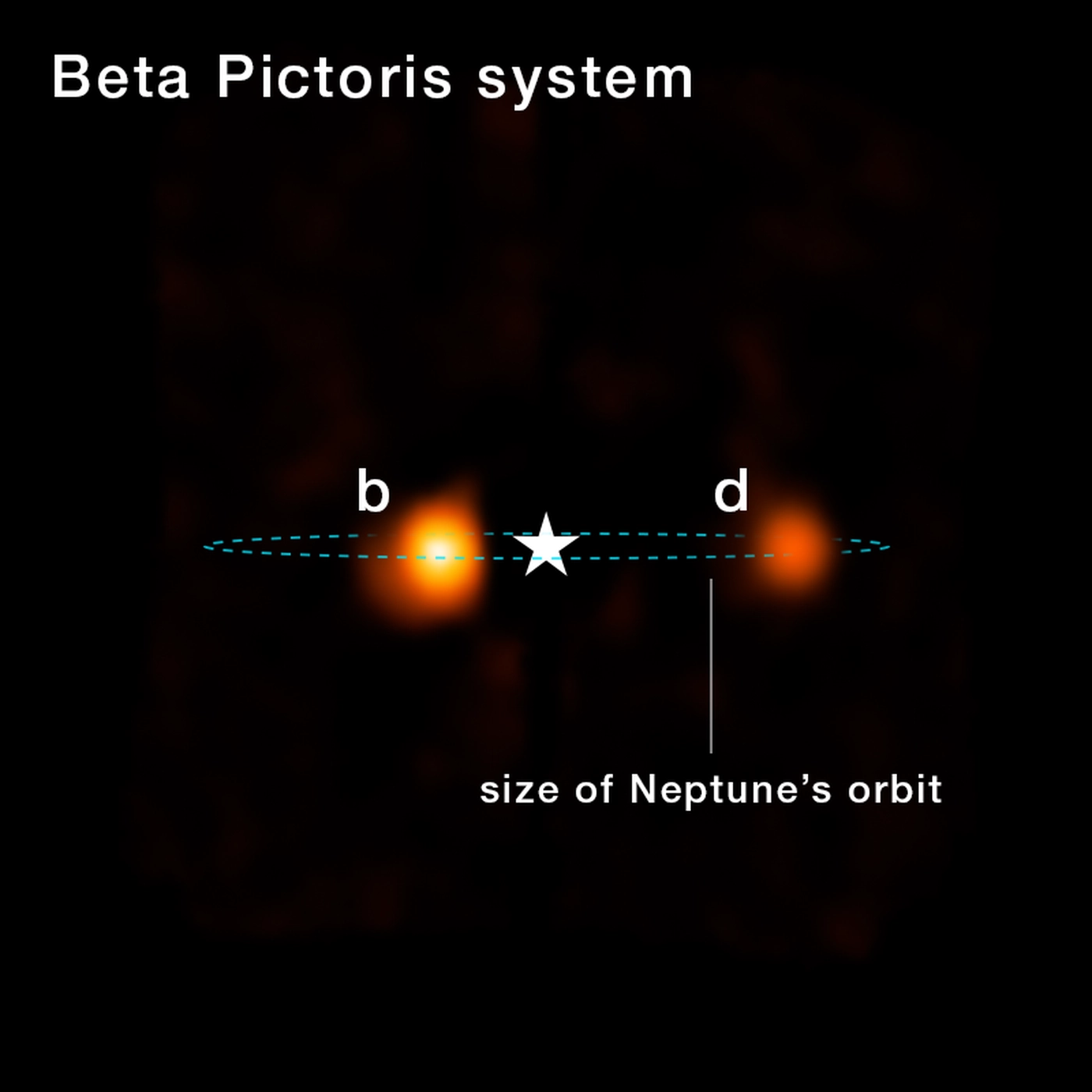
Astronomers have found a third giant planet around Beta Pictoris, one of the best-known young planetary systems near Earth. The discovery is striking because the planet was not first picked out as a bright dot in a telescope image. NASA’s James Webb Space Telescope found it in the spectrum of light coming from the system: […]
The post Webb Found a Hidden Planet in Beta Pictoris By Reading Its Atmosphere appeared first on Curiosmos.
 Reaching 90 without dementia may feel like clearing the final hurdle. But the risk does not necessarily end there. Dementia risk does not disappear after age 90. Even among people who reach their 10th decade without cognitive symptoms, the likelihood of developing the condition can vary substantially by sex, race, ethnicity, and genetics, according to [...]
 The protein boom may be pushing many people to consume far more than their bodies need, and new research suggests that excess could come at a hidden cost. Protein has become one of the food industry’s favorite selling points. It is added to cereal, coffee, snack bars, desserts, and even water, often with the suggestion [...]
If you're of a certain age, you'll remember the frisson of excitement around the launch of Gmail back in 2004. The idea of getting 1GB of storage space completely free of charge seemed wild — and all of your messages could be got at in a simple web browser tab.
As someone who had become accustomed to deleting emails to save space, and painstakingly moving over message archives manually every time I got a computer upgrade, this sounded fantastic. So did being able to get at my emails from any device I wanted, instantly (that seems less appealing these days, somehow).
Something else Gmail has done really well down the years is act as a hub for other email accounts, letting you import and send messages from other accounts inside the Gmail interface — with all the benefits of powerful search, filtering, and spam flagging tools. Now though, most of that functionality is going away.
These are features that I've relied on for decades inside Gmail, and it's going to make my email experience much more frustrating and fragmented.

Charting the gradual dismantling of these features inside Gmail is tricky, because the updates have largely come through emails to users and updates to support documentation — there aren't really any official blog post announcements to point to (it's not surprising Google wants to keep all of this quiet).
The most recent news is that the ability to send emails from other accounts through Gmail is going away, and will be switched off completely from January 2027. If you currently send your Outlook or Yahoo messages through Gmail, as I do, you're going to have to find another solution from the start of next year.
A couple of other features are also being killed off in January 2027 as well, though these changes are ones we've known about for a while. You'll no longer be able to import messages from other accounts via the old POP protocol — something I've relied on for years to get emails from all of my various accounts into the same place — and you won't be able to use the Gmailify feature that essentially adds a few Gmail features (like spam protection) to your third-party accounts.
As someone who primarily uses Gmail on the web, and has several email accounts feeding into it, these are significant changes — and I'm not the only one upset about them. My current setup means I can have separate emails for work, app sign-ups, newsletters, and so on, and keep them all in Gmail for searching, filtering, and labeling, and it's been a simple and reliable setup.
Now I'm going to have to go back to jumping between three or four different email apps to check everything. Different rules, different storage limits, different interfaces. It's an annoying set of changes, which Google hasn't really explained — presumably the idea is to keep users focused on Gmail, and to cut costs.

You do have a few options for trying to cling on to Gmail as a message hub, though none of them are ideal. You can get your third-party email account to auto-forward messages to Gmail — it means you'll have them in your Gmail archive for filtering and searching, though there's no 'send as' functionality.
This might cost you too: It's a paid-for extra for Yahoo Mail for example. That's particularly galling for me, because Yahoo is one of the accounts I feed into Gmail. I rely on it for newsletters, tickets, store accounts, general admin, and the like, and now I'm not going to be able to get at any of that inside Gmail.
Another option is to set up a desktop email client on Windows or macOS, which feels very old school. Gmail still supports the IMAP standard, and so do most other modern email services: all of your email will be together in one place, but you're only going to be able to access everything in one place from whatever desktop computer you set this up on.
Lastly, you can still add third-party accounts inside the Gmail app for Android or iOS. However, while this will let you view all your emails in one unified inbox, it won't actually move anything over to Gmail — if you open up the web app, your other accounts and all the messages inside them won't be there.
It's all a bit of a sorry mess, and I'm not sure exactly what I'm going to do going forward. What's certain is that I'm not going to be able to carry on as I have been, and that Gmail is going to be a significantly less useful email hub for me in the future.

 Changing what you eat may begin reshaping how your genes behave in as little as a few weeks, even though your DNA itself remains unchanged. In a randomized clinical trial, researchers found that healthy adults who followed a vegan diet for one month developed changes in chemical markers attached to their DNA. Compared with participants [...]
 A study of more than 5,500 people suggests that monitoring hormone levels and managing weight may help reduce the risk of premature death. For adults over 50, excess abdominal fat and low vitamin D levels may form a particularly dangerous combination. A study of more than 5,500 people found that participants with both conditions had [...]
The wildfires afflicting communities across the world can now be tracked more easily by anyone using Europe’s free and open satellite imagery service—all thanks to a wildfire visualization script originating from nearly a decade ago.
The Copernicus Browser provides free access to the latest satellite imagery taken by the European Space Agency’s Sentinel satellites for the European Union’s Earth observation program. The three satellites of the Sentinel-2 mission have proven especially useful for wildfire monitoring by providing multi-spectral imaging at resolutions as granular as 10 meters in visible light and near-infrared bands—and the Copernicus Browser previously offered 10 default visualization layers using different combinations of spectral bands.
Now Copernicus Browser has also added a straightforward “wildfires” visualization layer for Sentinel-2 imagery that went live on August 4. Anyone clicking on this layer while looking at a wildfire location can see active fires in white or yellow, burning vegetation in red, and burned landscapes in dark brown or black.


© European Union | Copernicus Sentinel-2
The wildfires afflicting communities across the world can now be tracked more easily by anyone using Europe’s free and open satellite imagery service—all thanks to a wildfire visualization script originating from nearly a decade ago.
The Copernicus Browser provides free access to the latest satellite imagery taken by the European Space Agency’s Sentinel satellites for the European Union’s Earth observation program. The three satellites of the Sentinel-2 mission have proven especially useful for wildfire monitoring by providing multi-spectral imaging at resolutions as granular as 10 meters in visible light and near-infrared bands—and the Copernicus Browser previously offered 10 default visualization layers using different combinations of spectral bands.
Now Copernicus Browser has also added a straightforward “wildfires” visualization layer for Sentinel-2 imagery that went live on August 4. Anyone clicking on this layer while looking at a wildfire location can see active fires in white or yellow, burning vegetation in red, and burned landscapes in dark brown or black.
© European Union | Copernicus Sentinel-2
Women at high risk of breast cancer are more susceptible to developing cancers in the gap between routine screening exams. These so-called “interval cancers” tend to be fast-growing and account for 20% to 30% of all breast cancer cases.
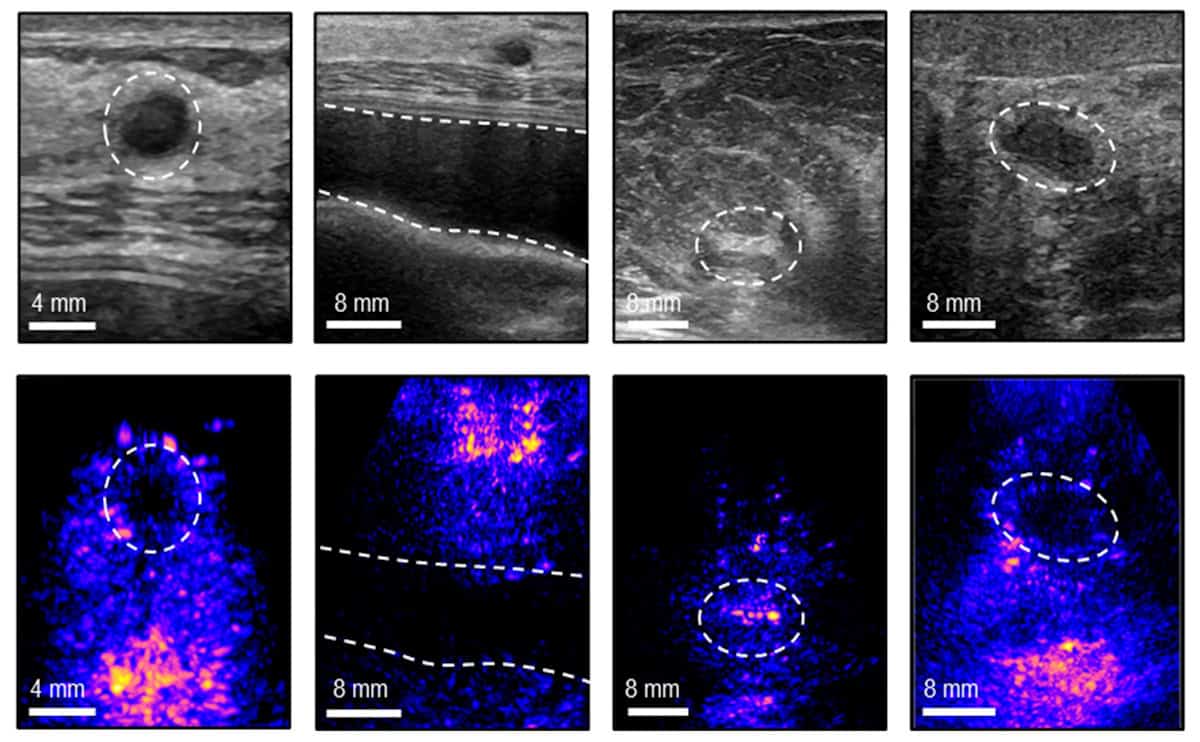
To identify aggressive cancers that develop between scheduled screenings, researchers at Massachusetts Institute of Technology (MIT) have developed a point-of-care ultrasound system that generates high-resolution 3D images of breast tissue. The 3D portable ultrasound system for real-time examination (3D PURE) supplements mammography with its ability to detect anomalies reliably in dense breast tissue (in which mammography is less sensitive).
Guided by an easy-to-use visual interface, 3D PURE enables a nurse, a physician such as a primary care provider or gynaecologist, or even the patient herself to frequently perform longitudinal breast imaging.
Principal investigator Canan Dagdeviren explains that this second-generation prototype overcomes limitations of a prior system designed by the MIT team, through advances in transducer design, acoustic materials and adaptive beamforming. These developments have enabled real-time wide-angle 3D imaging in a portable form factor, with improved image resolution to accurately identify cysts, solid masses, fibroadenomas and microcalcifications.
The ultrasound system comprises a newly designed 128-element box-shaped 2D transducer array incorporating a corner-gap offset geometry, which suppresses peak crosstalk by 3.73 dB at the corner-most element. This design prevents amplifier saturation, and supports operational transmit voltages of up to 24 V. The array is integrated into a compact multilayer electronics stack comprising preamplifiers, transmit electronics and a custom chirp data acquisition system.
There’s also a conductive backing layer (a toluene-diluted polyurethane matrix with a high percentage of tungsten and zirconia filler) that forms a continuous shielding layer around the elements, improving acoustic attenuation and providing electromagnetic shielding. The compliant mechanical nature of the material enhances acoustic damping, reducing ultrasound reverberations more effectively and improving signal fidelity.
“The addition of a backing layer to the ultrasound transducer is a key advantage to the system,” explains co-lead author Md Osman Goni Nayeem. “It provides both better directionality of ultrasound waves and better bandwidth, which improves the resolution and quality of the resulting images.”
The researchers also incorporated layered aberration-correction reconstruction (LACR), an adaptive 3D beamformer, into the 3D PURE design. LACR compensates for the heterogeneous speed-of-sound in the breast, which comprises glandular and fibrous tissues plus a superficial layer of fat. They believe that this represents the first wide-angle 3D ultrasound imaging system to implement aberration-correction beamforming.
“What we are trying to do is predict the speed-of-sound properties of the tissue being imaged, and then use that to reconstruct the image more accurately. We see up to a 10% improvement for the resolution just by applying this [beamforming] technique,” says co-lead author Shrihari Viswanath in a press statement.
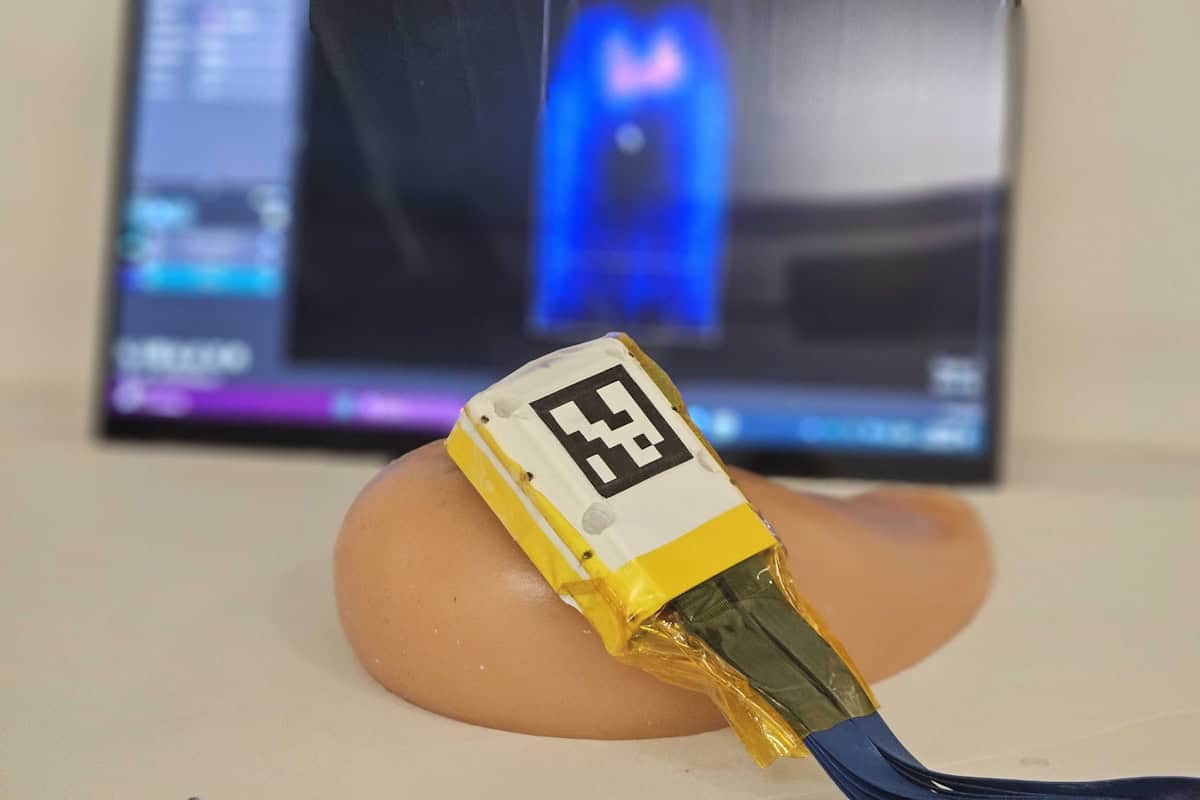
The system is designed for ease of use. A visual user interface called “Mirror my First UltraSound” (MyFUS) guides users to reliably reposition the ultrasound probe at the same anatomical location during repeated imaging and long-term monitoring. Meanwhile, a wide field-of-view minimizes the number of scans needed to cover the entire breast.
The team undertook an in vitro study comparing the performance of the 3D PURE system with that of a conventional 2D handheld ultrasound system (HHUS). Ten study participants imaged a breast-shaped tissue phantom embedded with sub-millimetre targets. Nine of the 10 participants showed improved microtarget detection efficiency with 3D PURE relative to the conventional system – identifying more of the targets using 3D PURE (79.7%, compared with 60.7% for the 2D HHUS), with a higher detection efficiency (14.02% of available targets per minute, compared with 9.58%).
The researchers also worked with radiologists to assess a variety of breast anomalies in vivo. The radiologists verified that the 3D PURE system could accurately visualize calcifications, cysts, implants, fibrous tissues and solid masses within a large volumetric field-of-view. The researchers independently validated the system’s accuracy when imaging dense fibrous breast tissue and rib structures.
Seven volunteers with no prior experience of using an ultrasound system tested the MyFUS visual interface. After initial instruction by an ultrasound technician, they were able to repetitively position the probe at a specific location on their breasts, achieving a 94.10% mean overlap value on frontal projections, and 87.42% on side projections. This test reconfirmed that novice users could achieve reproducible longitudinal monitoring results with the aid of the visual interface.
The researchers now hope to create an interface for use with mobile phones or tablets. This type of system could make breast ultrasound more accessible to patients in economically constrained countries lacking adequate breast cancer scanning and regions with shortages of trained ultrasound technicians.
“The high operator dependence of conventional ultrasound is a barrier to its use in decentralized or home-monitoring settings,” the researchers write. “The MyFUS vision interface transforms longitudinal monitoring from an expert-driven procedure to a self-guided, reproducible process that can be used by novice users. This reproducibility is vital for longitudinal monitoring in limited clinical settings, to regularly track the growth of an anomaly or the response of a tumour to therapies without visiting clinics.”
The 3D PURE system is described in Nature Communications.
The post Portable breast ultrasound enables imaging between cancer screening exams appeared first on Physics World.
