Composing some 85% of the universe's total mass, dark matter betrays its presence only through gravity, unlike ordinary matter. Yet through new research published in Physical Review D, a team led by David Dunsky of New York University has proposed a new way to hunt for the elusive substance. Their approach involves searching for the decay of dark matter particles into gravitons: the hypothetical particles thought to carry the force of gravity itself.
Composing some 85% of the universe's total mass, dark matter betrays its presence only through gravity, unlike ordinary matter. Yet through new research published in Physical Review D, a team led by David Dunsky of New York University has proposed a new way to hunt for the elusive substance. Their approach involves searching for the decay of dark matter particles into gravitons: the hypothetical particles thought to carry the force of gravity itself.
The Soviet Luna program, designed for lunar research and mission planning, ran from 1959 to 1976. On Aug. 9, 1976, Luna 24, the final mission of the program, launched from the Baikonur Cosmodrome in present-day Kazakhstan. The probe landed on the Moon’s surface nine days later, in the Mare Crisium (Sea of Crises), a previouslyContinue reading "Aug. 9, 1976: Luna 24 blasts off"
What it is: Saguaro, a lower-redshift spiral galaxy
Where it is: About 10 billion light-years away in the constellation Ursa Major
When it was shared: July 29, 2026.
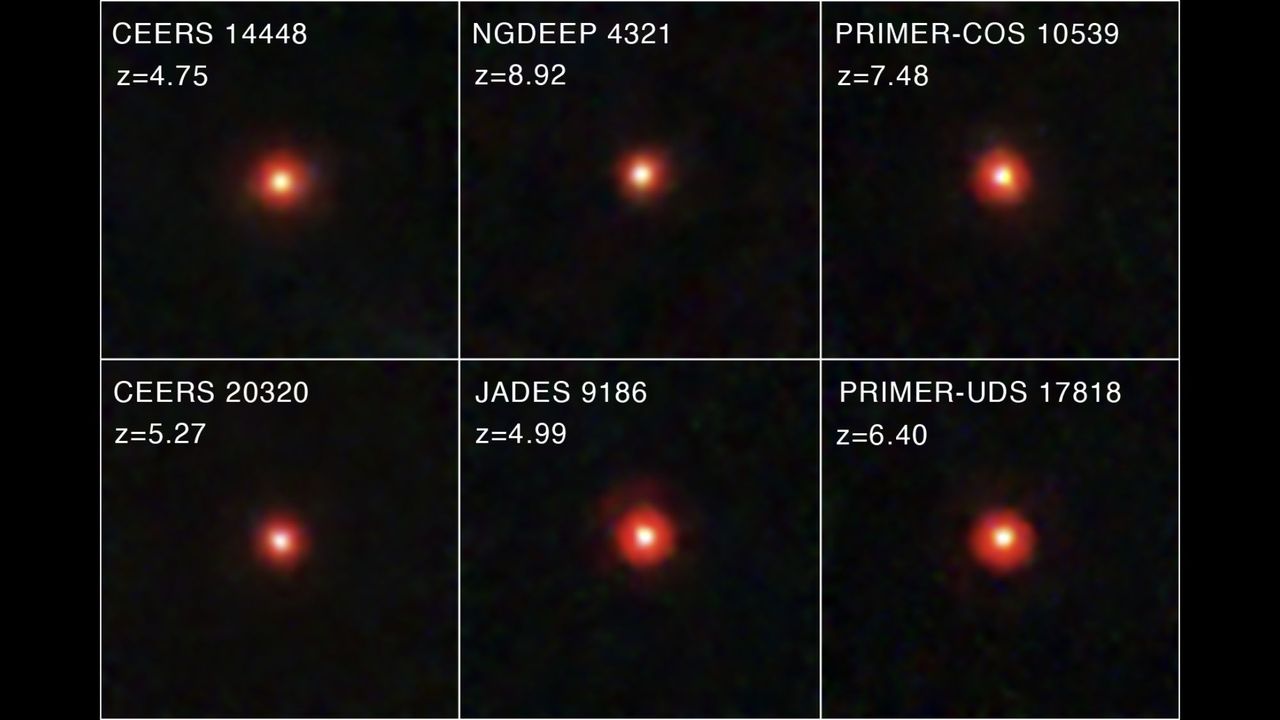
Ever since NASA's James Webb Space Telescope (JWST) began science operations in 2022, something has been bothering astronomers. Scattered across JWST's deepest images of the early cosmos are tiny, crimson-colored smudges that glow brightly in infrared light but appear surprisingly compact, making them difficult to classify. These mysterious objects appear in huge numbers around 600 million years after the Big Bang before seemingly vanishing less than a billion years later.
These odd-looking "little red dots" (LRDs) left astronomers wondering whether they were witnessing an entirely new type of galaxy or something even stranger. But now, fresh observations from JWST, combined with data from the Hubble Space Telescope and NASA's Chandra X-ray Observatory, suggest that LRDs may not have disappeared at all. Instead, they may have simply changed their appearance as the universe grew older.
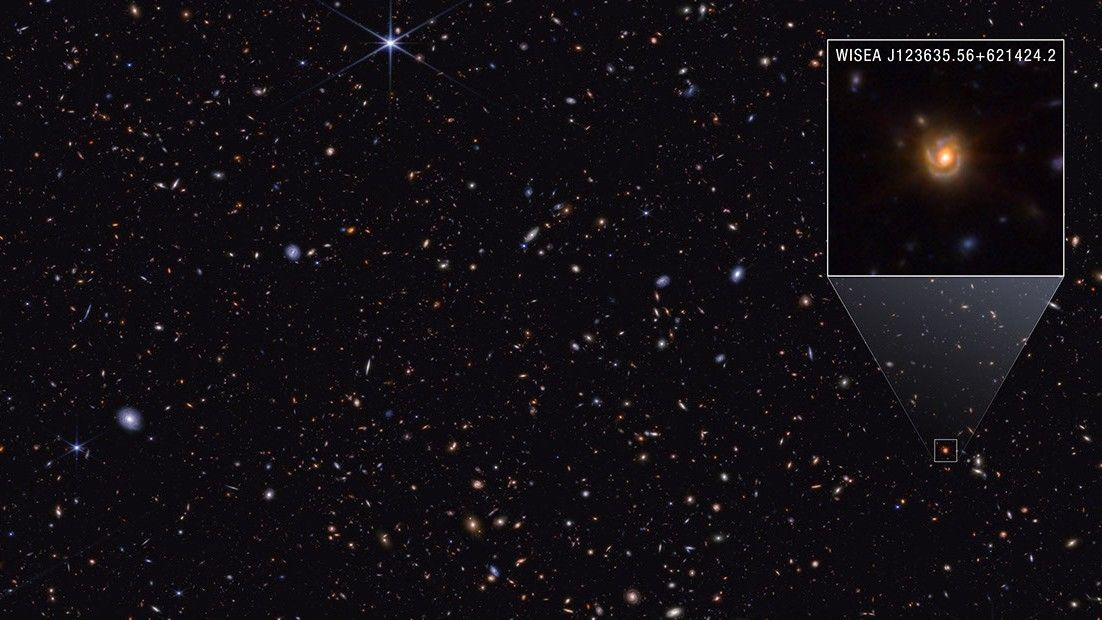
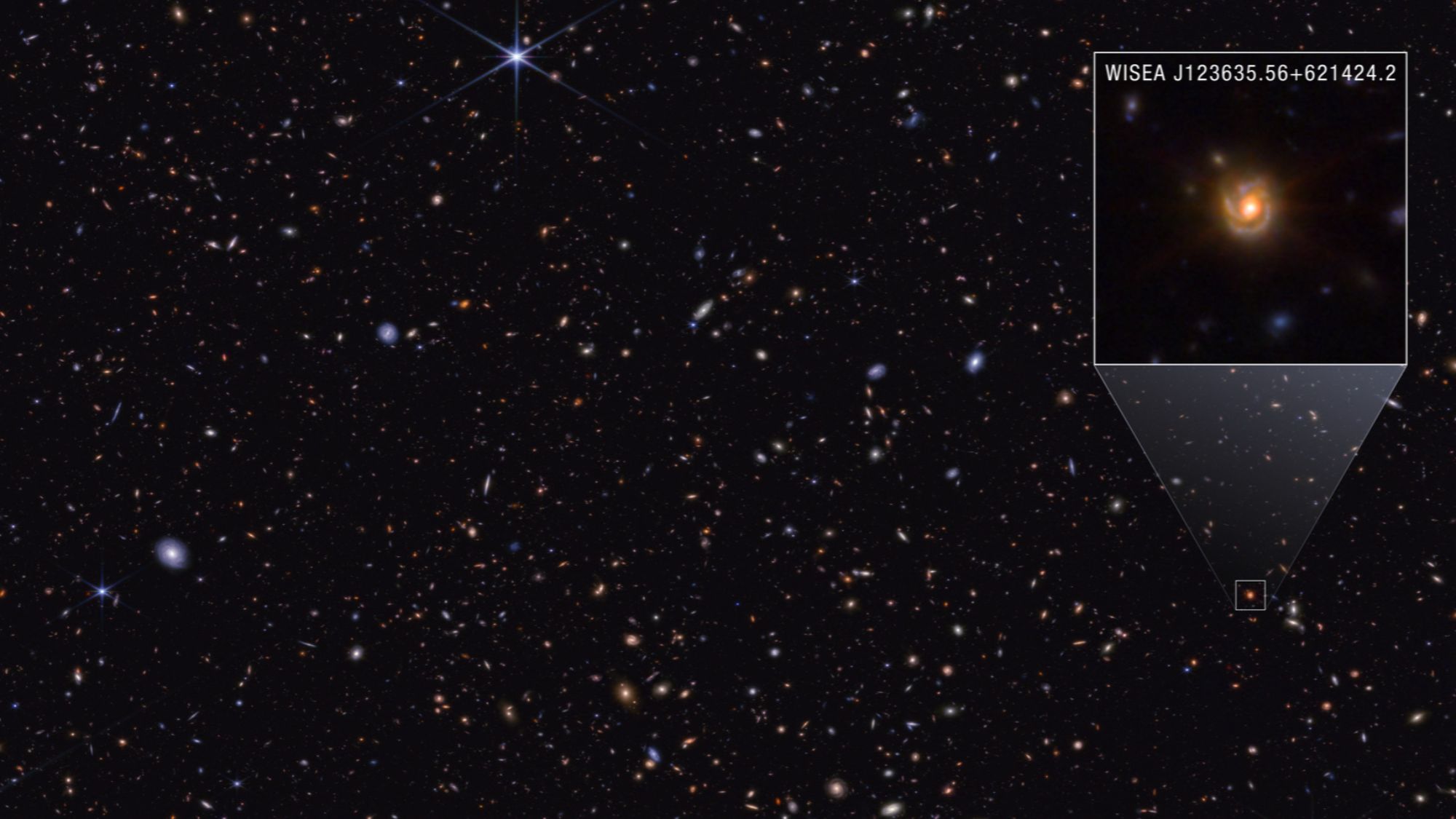
Researchers trained JWST on a relatively close galaxy near the Big Dipper known as WISEA J123635.56+621424.2, nicknamed the Saguaro because its sweeping spiral arms resemble the iconic cactus of the Sonoran Desert, which bears red fruit.
The Saguaro galaxy existed around 3.3 billion years after the Big Bang, long after LRDs were thought to have faded from view. However, at its heart sits a compact, reddish core that ticks nearly every box for an LRD, including unusually weak X-ray emissions. The researchers chose the Saguaro because, unlike the incredibly distant LRDs, it's close enough for the space telescope to spot the galaxy's spiral arms and brilliant central core.
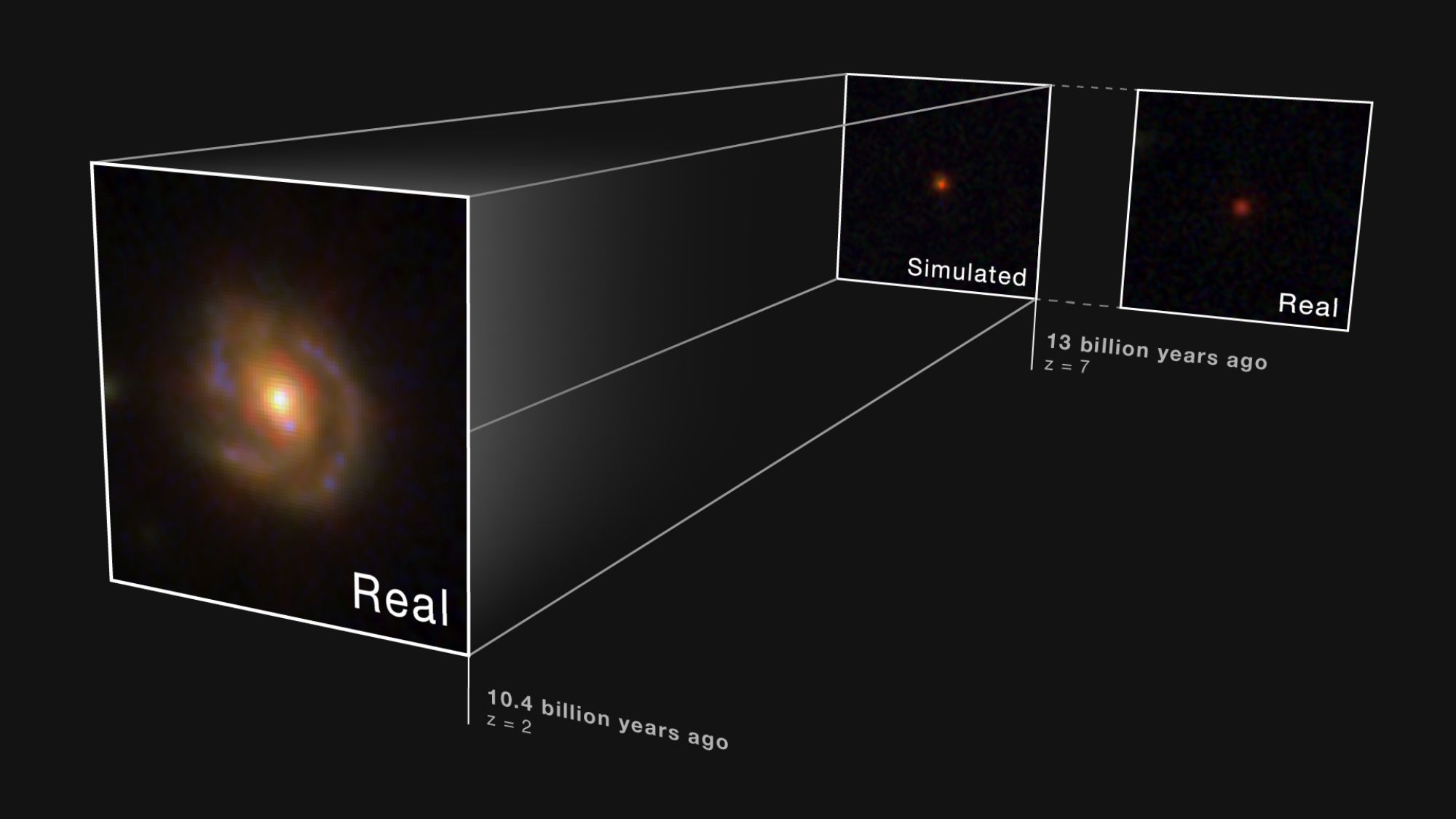
The aim wasn't to study the Saguaro as it is now but to try to calculate what it would look like if it were much farther away. Using computer models, the researchers shifted the galaxy to the enormous distances seen in the early universe. As they did, its elegant spiral arms gradually melted into the darkness until only a tiny glowing red point remained. It looked almost identical to the LRDs littering JWST's farthest deep-field images.
The findings suggest that many LRDs may in fact be ordinary galaxies, but at such vast distances that only their bright, active centers remain visible, while the surrounding galaxies fade beyond even JWST's incredible vision.
Instead of representing a completely new class of cosmic object, then, LRDs may actually be a short-lived phase in the growth of supermassive black holes during the universe's youth.
The hunt is now on for more nearby galaxies like the Saguaro to see whether they follow the same pattern. This will enable scientists to build a catalog of LRDs to understand better how galaxies and their central black holes evolved together across cosmic history.
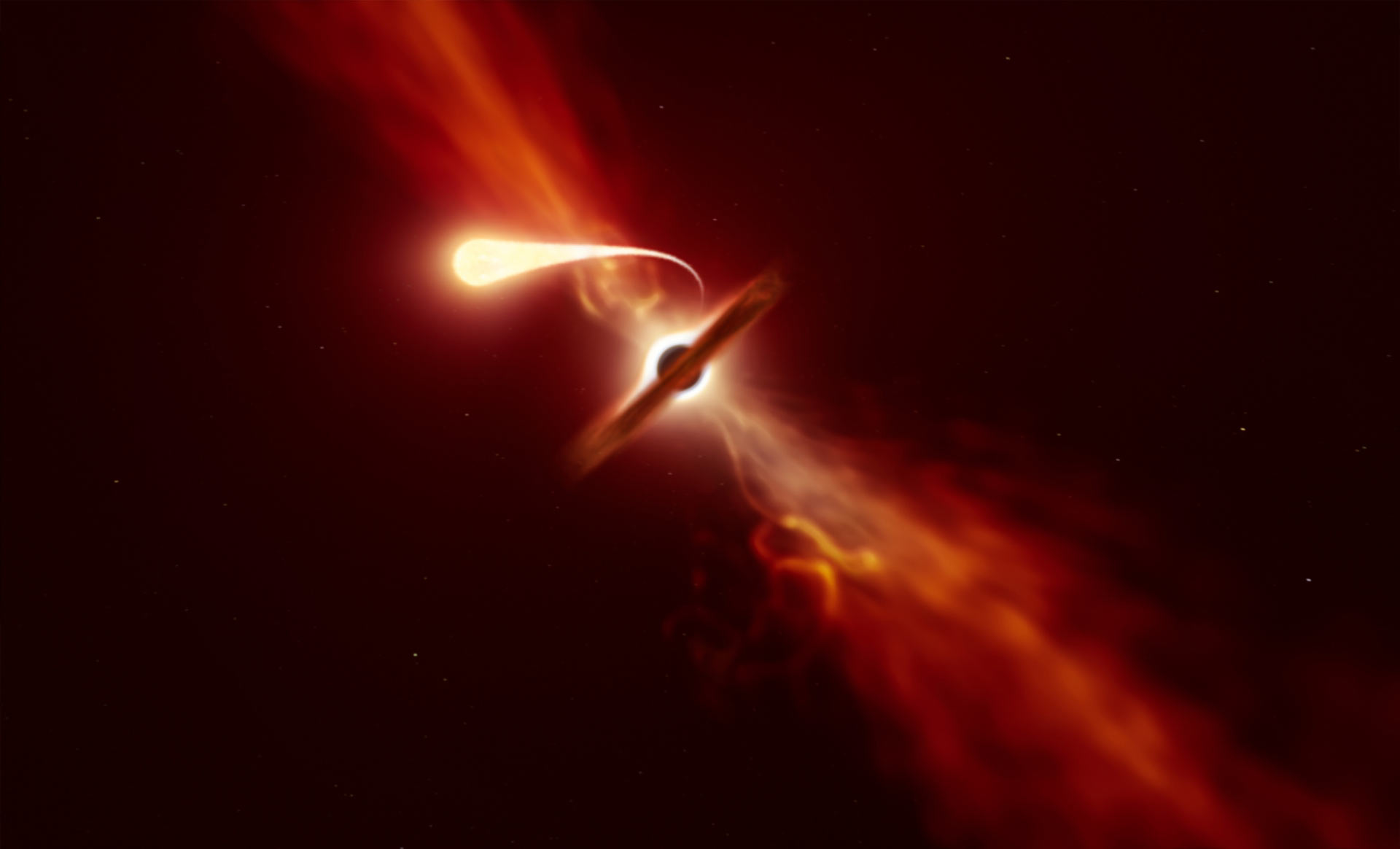
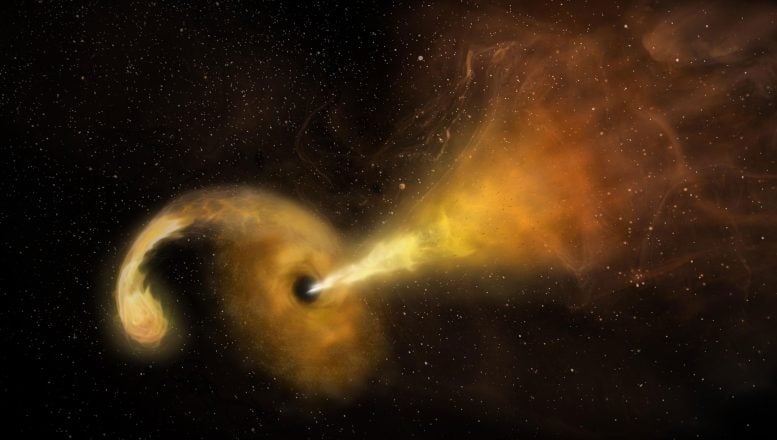
A star being torn apart by a black hole is already an unusual sight. In this case, the black hole was in an even stranger place: more than 30,000 light-years from the center of the galaxy that appears to host it. NASA’s Neil Gehrels Swift Observatory helped confirm the event after an automated survey spotted […]
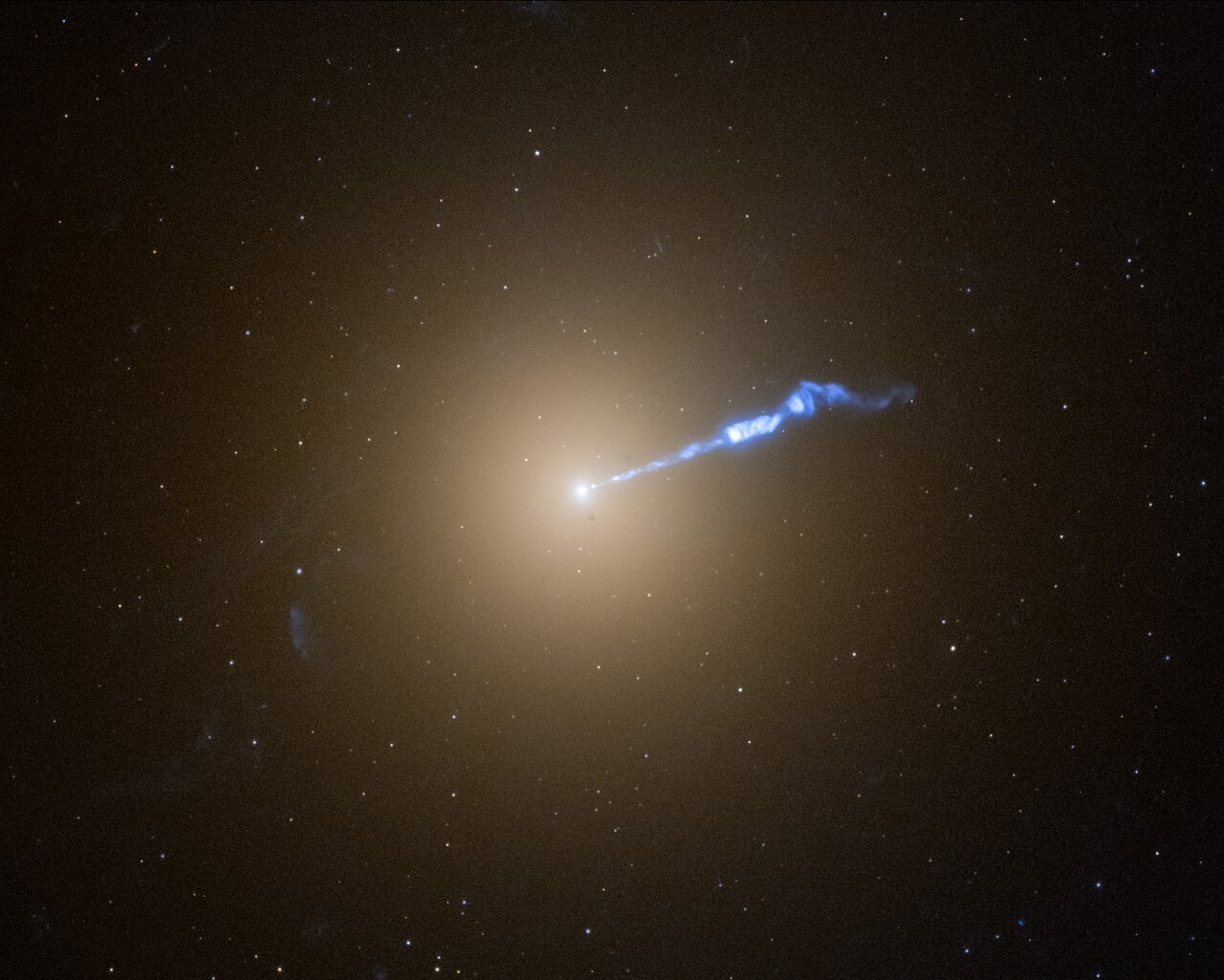
Messier 87 is already famous for a photograph most people have seen: the Event Horizon Telescope image of the black hole at its center. Yet the black hole’s most dramatic feature is not the dark ring at the core. It is a jet of particles that extends thousands of light-years into space. Now, a team […]
A pioneer mission in astrometry – the measurement of the position, distance, motion, brightness, and color of stars – the European Space Agency’s (ESA) High Precision Parallax Collecting Satellite, or Hipparcos, launched on Aug. 8, 1989. There were immediately problems when a rocket-engine failure kept Hipparcos from reaching its planned orbit. However, the satellite wasContinue reading "Aug. 8, 1989: The Hipparcos satellite launches"
A rare tidal disruption event exposed a massive wandering black hole about 30,000 light-years from its galaxy’s center. A star was torn apart nearly 30,000 light-years from the center of a massive nearby galaxy, exposing a black hole where astronomers rarely see one. The unusually distant flare revealed an extremely rare “wandering” black hole and [...]
Millions of people across Europe and North America will witness a solar eclipse on Wednesday, Aug. 12, but the event will vary greatly depending on the location. A narrow corridor stretching from Greenland to northeastern Spain will experience a total solar eclipse, much of Europe will enjoy a deep partial eclipse, and parts of North America will see a smaller partial eclipse.
Want to know what you can expect to see from where you are? Here's an overview of the event from various locations, along with the exact viewing times for the Aug. 12 solar eclipse.
Remember, it's important to wear certified solar eclipse glasses during all partial phases of the eclipse. Totality — when the sun's face is completely blocked by the moon — is the only time it's safe to remove your eclipse glasses. (It’s not too late to order last-minute eclipse glasses if you don’t have a pair on hand.)
If you're in the path of totality
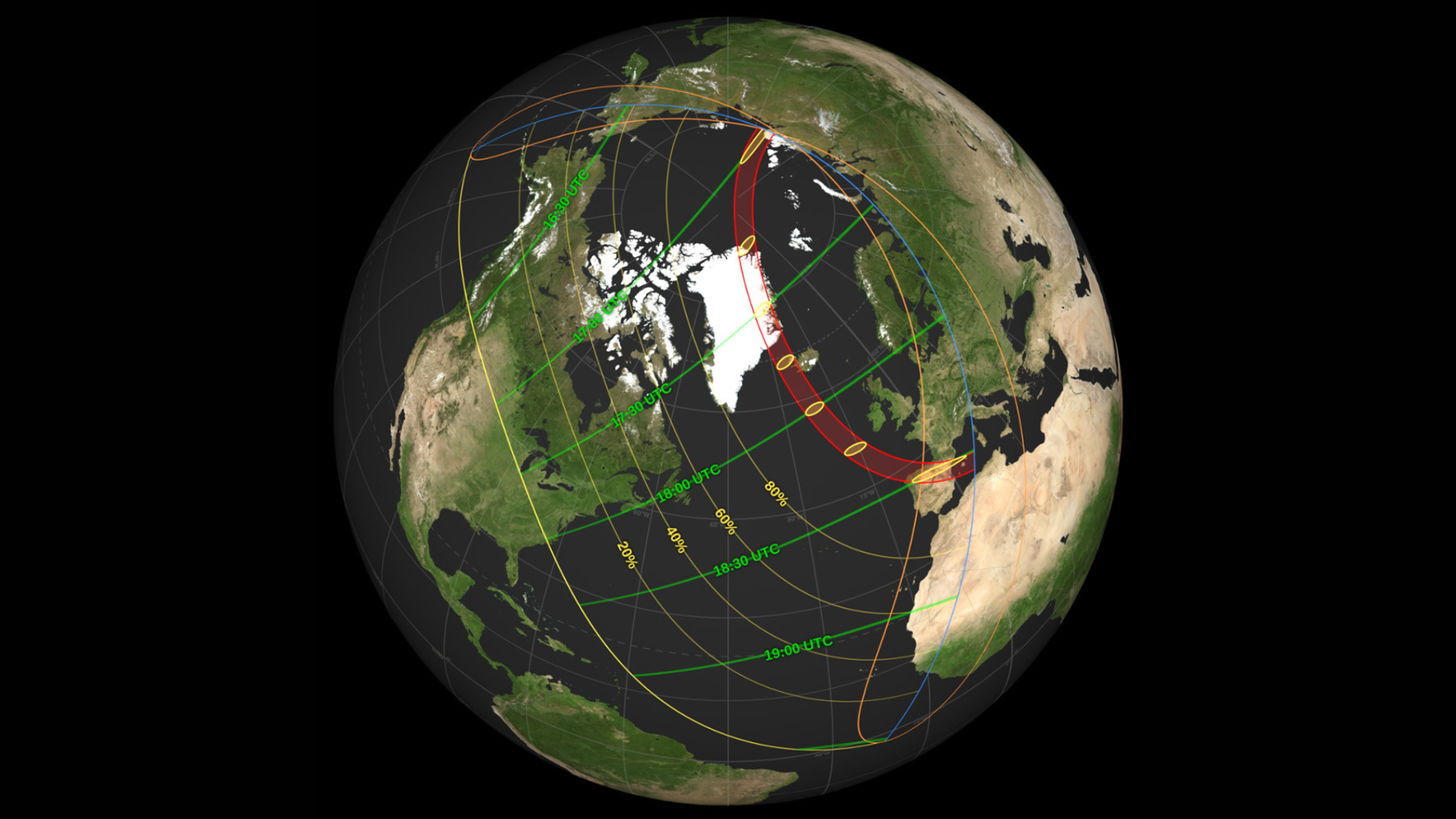
A map of the path of totality (red) for the Aug. 12 solar eclipse. (Image credit: NASA's Scientific Visualization Studio)
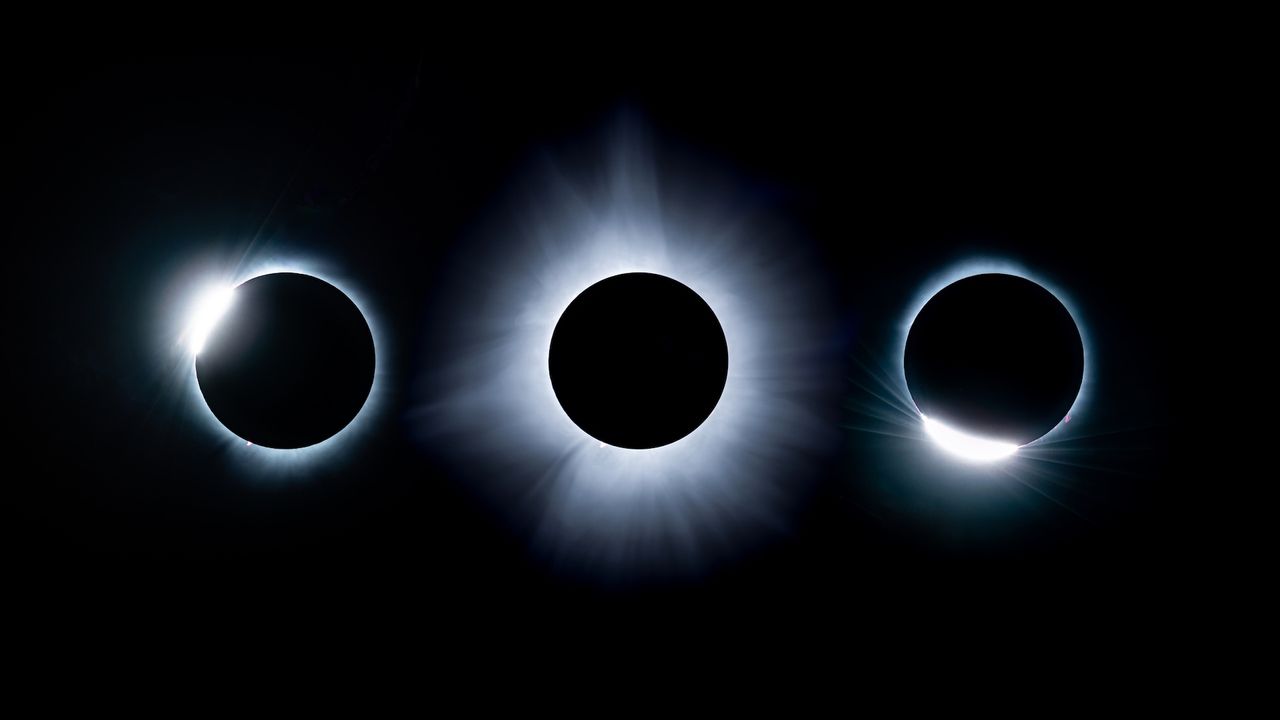
If you're fortunate enough to be inside the 180-mile-wide (290 kilometers) path of totality — the path of the dark shadow of the moon — in eastern Greenland, western Iceland or northeastern Spain, you'll experience the moon completely covering the sun for up to 2 minutes, 18 seconds. The sky will darken to twilight, bright stars and planets may appear in the daytime sky, and the sun's spectacular corona (its wispy outer atmosphere) will become visible. Here’s a handy guide to all the gear you’ll need to get the most out of totality.
The closer you are to the centerline of the path, the longer totality will last. But the most important consideration is to stay within the boundaries of the path, because it has a hard edge. Madrid, for example, is barely outside the path and will see a 99.99% partial eclipse — and no totality whatsoever. The partial phases last an hour on each side of totality.
Here's when totality will occur in various locations for the Aug. 12 total solar eclipse:
León, Spain: 8:28 p.m. CEST (1 minute, 45 seconds)
Soria, Spain: 8:29 p.m. CEST (1 minute, 43 seconds)
S'Arenal, Mallorca, Spain: 8:31 p.m. CEST (1 minute, 36 seconds)
If you're in North America
Viewers in North America will see a modest partial eclipse, with the biggest eclipse seen from northern and eastern Canada, Alaska and the northeastern U.S. The farther northeast you are, the deeper the eclipse will appear. Eclipse glasses are essential at every stage of the two-hour event, because there will be no totality. Here are the times of maximum eclipse in various locations:
Iqaluit, Nunavut: 1:24 p.m. EDT (61% eclipse)
St. John's, Newfoundland and Labrador: 3:00 p.m. NDT (53%)
Fairbanks, Alaska: 8:27 a.m. AKDT (37%)
Anchorage, Alaska: 8:21 a.m. AKDT (28%)
Bangor, Maine: 1:53 p.m. EDT (23%)
Quebec City: 1:46 p.m. EDT (24%)
Montreal: 1:45 p.m. EDT (18%)
Boston: 1:55 p.m. EDT (16%)
New York: 1:54 p.m. EDT (9%)
If you want to watch totality from outside the path, there are many live stream options available, including planned streams from NASA and the European Space Agency.
A deep partial eclipse will be visible in many locations throughout Europe, with a smaller eclipse visible in North America. (Image credit: GAGAN NAYAR via Getty Images)
If you're elsewhere in Europe and North Africa
Most of Europe and far northwestern Africa will see a spectacular deep partial eclipse, with more than 90% of the sun covered in many western cities. Although the eclipse will never become total, it will still be an impressive sight, though solar eclipse glasses will be required throughout the event. Here are the times of maximum eclipse in some major cities:
Madrid: 8:32 p.m. CEST (99.9%)
Barcelona: 8:29 p.m. CEST (99.8%)
Algiers, Algeria: 7:33 p.m. CET (96%)
Nice, France: 8:24 p.m. CEST (95%)
Lisbon, Portugal: 7:36 p.m. WEST (94%)
Dublin, Ireland: 7:10 p.m. BST (94%)
Cardiff, Wales: 7:13 p.m. BST (93%)
Belfast, Northern Ireland: 7:08 p.m. BST (93%)
Paris: 8:17 p.m. CEST (92%)
Tangier, Morocco: 7:40 p.m. WEST (92%)
London: 7:13 p.m. BST (91%)
Edinburgh, Scotland: 7:05 p.m. BST (91% eclipse)
To check exactly what you'll see and when, enter your location on an interactive map of the eclipse, which will give you a schedule for when the eclipse begins, peaks and ends where you are.
The company plans to build factories on the moon, using robots to do much of the heavy lifting, Elon Musk said on Tuesday (Aug. 4) during SpaceX's first-ever quarterly earnings call.
"We are going to land a lot of tonnage on the moon," he said. "We're going to build the factories on the moon. The robots will be helpful with that."
This is not a newly revealed vision; Musk first laid it out in February, in a blog post that announced SpaceX's purchase of xAI, a company that the billionaire entrepreneur founded in 2023. But Musk doubled down on it this week, showing investors that off-Earth manufacturing is very much front-of-mind for SpaceX.
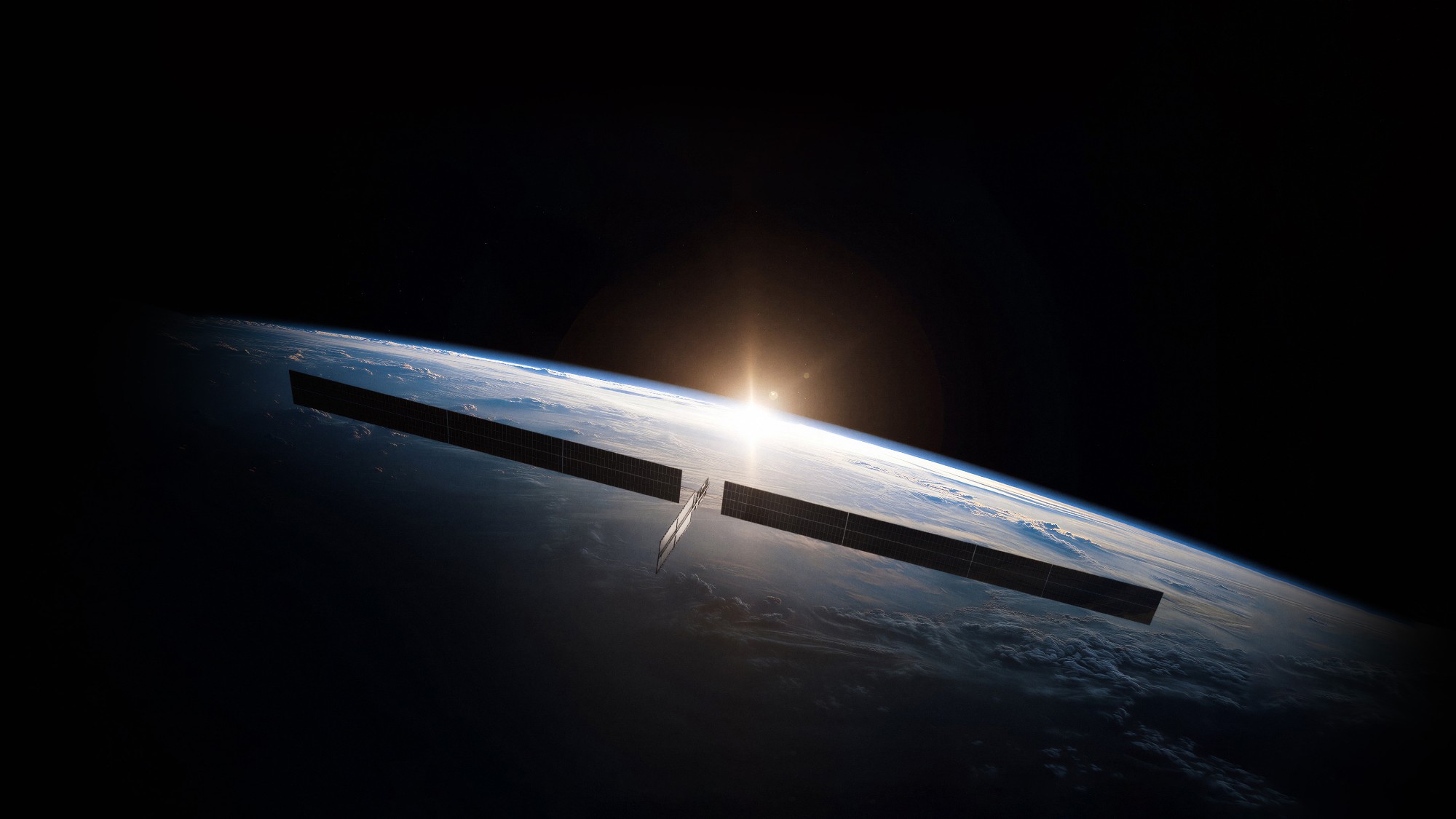
The factories in question will build SpaceX's Starmind AI satellites, if all goes according to plan. The company aims to operate a million-strong Starmind constellation in Earth orbit in the coming years, and then go farther afield with the craft after that.
Eventually, SpaceX wants to launch locally made Starmind satellites off the lunar surface using electromagnetic mass drivers — basically, extremely powerful rail guns.
"Using robots on the moon to scale up manufacturing on the moon — which, I know it sounds, like, super sci-fi right now, but it's going to happen — will enable us to build the mass accelerator on the moon," Musk said.
"And if you have a mass accelerator on the moon, and you have solar and radiator production on the moon, you can — I know this sounds totally nuts — but you can you can probably scale to 1,000 times the economy of Earth in terms of intelligence launched to space, but probably, you know, maybe even a million times," he added.
"Solar and radiator production" refers to the manufacture of key Starmind satellite components: solar panels to power them and radiators to dump the large amounts of heat they'll produce into the vacuum of space.
A rendering of one of SpaceX's planned "Starmind" AI satellites in orbit. (Image credit: SpaceX)
Musk didn't provide details about the robotic lunar labor force. But he's presumably counting on Optimus, a humanoid robot built by another one of his companies, the carmaker Tesla. Musk has previously said that SpaceX will launch some Optimus units to Mars in the near future, to help pave the way for human settlement of the Red Planet.
Those robots will fly on Starship, SpaceX's fully reusable next-gen megarocket, which is currently gearing up for its 14th test flight. Indeed, Starship is key to most of the company's plan's both in Earth orbit and beyond.
"Starship aims to quadruple payload capacity and reduce launch costs by 10 times compared to our Falcon 9 rocket, unlocking significant capabilities across all of our business segments," SpaceX Chief Financial Officer Bret Johnsen said during Tuesday's earnings call.
"We continue to make progress building the infrastructure required to support thousands of Starship launches per year, including accelerating Raptor and launch vehicle production, the buildout of our gigabays, and making significant progress towards activating multiple launch pads at Starbase and in Cape Canaveral at Pad 39A and Pad 37," he added. (Raptor is the engine that powers Starship, and Starbase is SpaceX's South Texas site, which serves as the current hub of Starship manufacturing, testing and launch activities.)
Tuesday's call was a landmark for SpaceX — its first as a publicly traded company. Musk founded SpaceX as a private concern in March 2022 and took it public this past June, via the richest IPO in history.
The IPO raised $86 billion and valued SpaceX at $1.77 trillion. Only six American companies had higher market capitalizations at the time — NVIDIA, Apple, Alphabet (Google), Microsoft, Amazon and the semiconductor manufacturer Broadcom. (Market caps fluctuate all the time, going up and down with companies' stock prices.)
The main point of Tuesday's call was to discuss SpaceX's first-ever earnings report, which covered the second quarter of this year. The company's revenue over that stretch was $7.8 billion, a 92% increase over the same period in 2025, according to the report. SpaceX lost more money than it made during Q2 2026, but the shortfall was considerably smaller than in Q2 2025 — $541 million versus $1.0 billion.
A walk down the tarmac at the National Air and Space Museum of France is guaranteed to thrill aviation enthusiasts. Several civilian and military aircraft of the past and the present are showcased in this museum, located at the Paris-Le Bourget airport. One of them is the legendary Concorde F-WTSS 001 prototype, the sight of which should give goosebumps to science enthusiasts as well.
That’s because right behind its long nose is a painted map that traces the path of a June 1973 total solar eclipse across Africa. It’s there on the Concorde 001 prototype because a group of eight scientists set a new world record of observing a total solar eclipse for 74 minutes by flying this aircraft at more than twice the speed of sound.
To put this figure into context, the maximum duration of totality on the ground is around 7.5 minutes when an eclipse is observed in the equatorial regions. For the upcoming solar eclipse of August 12, which can be seen from parts of Europe, the maximum duration of totality from the ground will be slightly more than two minutes.
New evidence has come to light showing that the mysterious 'little red dots' discovered in the early universe by the James Webb Space Telescope could evolve into the active centers of fully formed galaxies.
"Everything created in the early universe must evolve into something around us," said George Rieke of the University of Arizona in a statement. "We have had little idea of what little red dots become, but these results finally show us how to find their progeny."
Discovered by the James Webb Space Telescope (JWST) almost as soon as it became operational in 2022, little red dots have been a perplexing cosmological mystery. As their name suggests, they appear small, red and surprisingly bright. They are mostly found at redshift values suggesting they existed between 13.2 and 12.2 billion years ago. To shine so brightly at such great distances would usually imply these objects are quasars — which are luminous nuclei of galaxies powered by active supermassive black holes — but the light coming from little red dots is more like that of bloated stars. It looks to be mostly in infrared with some ultraviolet, and none of the X-rays that one would expect from an active black hole chomping down on material.
As such, researchers have come up with the hypothesis that little red dots are "black hole stars," or vast clouds of gas heated from within by a concealed but growing supermassive black hole.
However, the population of little red dots drops off a cliff at redshifts equating to less than 12 billion years ago. Where did they all go? There are two options. Either they all died off, or they developed into objects more familiar to us.
A team led by Pierluigi Rinaldi, who was at the University of Arizona's Steward Observatory when conducting this research but is now at the Space Telescope Science Institute (STScI) in Baltimore, think it has identified a descendent of a little red dot. It appears to be in the form of a distant galaxy, catalogued as WISEA J123635.56+621424.2, which is found at a redshift of 2, meaning that we see it as it was 10.5 billion years ago.
The galaxy displays neat spiral arms around a red core. Rinaldi's team have nicknamed it the Saguaro, after a species of cactus native to the Sonoran desert in the United States' south-west, thanks to the galaxy's arms and how its core resembles the red fruit produced by the cactus.
A field of galaxies in Ursa Major, with the Saguaro galaxy inset. (Image credit: NASA/ESA/CSA/STScI/Pierluigi Rinaldi (Steward Observatory); Image Processing: Alyssa Pagan (STScI))
Saguaro's core has all the hallmarks of a little red dot. It shines bright in infrared as seen by JWST, and also emits in ultraviolet as detected by the Hubble Space Telescope. Yet, NASA's Chandra X-ray Observatory has also detected faint X-rays originating from Saguaro.
"What the X-ray observations show is that this galaxy has an active galactic nucleus, and a very obscured one at that," Carys Gilbert of the University of Cape Town in South Africa, who participated in the study alongside Rinaldi, said in the statement. "It's not only obscured but also X-ray weak. That kind of combination could explain the lack of X-ray emission that we see from all other little red dots. It fits the puzzle of little red dots nicely."
This is not the first time X-rays have been seen coming from a little red dot. Earlier this year it was reported that scattered X-rays were seen breaking through from a little red dot called 3DHST-AEGIS-12014, given credence to the hypothesis that little red dots are black hole stars, where the black hole gradually consumes the "star" from the inside out, eventually carving holes through which X-rays can escape. We see 3DHST-AEGIS-12014 as it was 11.8 billion years ago, meaning that Saguaro, which existed 1.3 billion years later, is a little bit further on in its development.
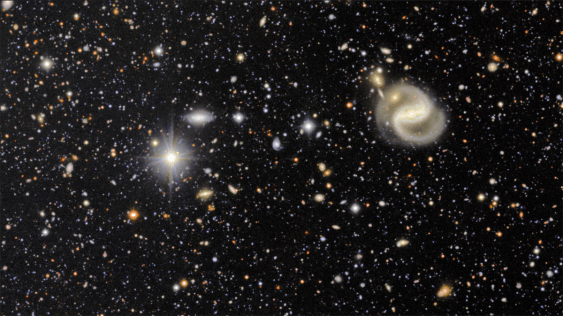
A comparison to how the Saguaro galaxy appears to us now, and how it would appear as a little red dot if it existed at a higher redshift. (Image credit: Alyssa Pagan (STScI); Illustration: Leah Hustak (STScI))
"Because the Saguaro is at lower redshift, we can see the very beautiful and bright host galaxy in high resolution and detail with Webb and Hubble," said Harvard's Zihao Wu, who was also part of Rinaldi's team.
Intrigued, Rinaldi's team simulated how Saguaro would appear to us if it existed a billion years after the big bang. Much of its galactic structure would either be less developed or simply just too faint to be seen at such distance. All that would be visible would be the nucleus, looking very much like all the other little red dots.
This implies that little red dots are not a unique population of their own, but are simply a phase in the development of galaxies with supermassive black holes. Our own Milky Way could have been a little red dot once upon a time.
Saguaro is a crucial link in the story of little red dots and how they connect with modern galaxies. While there is still much to learn, such as the beginning of their story and how they form, the middle and end of their story is now beginning to take shape.
Astronomers using the 4-m Daniel K. Inouye Solar Telescope in Hawaii have detected tiny plasma vortices on the Sun’s surface (photosphere) for the first time, revealing a long-suspected process that could transport energy into the million-degree corona.
Picture it: A swarm of tiny robot helicopters descends through a reddish-brown sky, landing gracefully on the Martian surface. What are they wearing? Tiny capes.
NASA's SkyFall mission will send a trio of mini rotorcraft to Mars equipped with ground penetrating radar technology which happens to look like little capes. These uniquely designed swaths of fabric look decidedly strange or even accidental in new videos from NASA's Jet Propulsion Laboratory (JPL) that show the little drones practice landing. But these capes are actually flexible antennae that will allow the craft to peer beneath the Red Planet's surface in search of water ice.
"The only way to detect shallow subsurface ice remotely is to fly close to the ground," Adrian Tang, SkyFall’s ground-penetrating radar lead instrument scientist at JPL, said in a statement on Thursday (Aug. 6). "By flying low and slow, a SkyFall helicopter could capture radar images that resolve the fine layering where dry soil gives way to ice, detecting its presence and mapping its extent."
Orbiting spacecraft have studied Mars for decades, imaging the planet and mapping it with radar. But from orbit, their radar is unable to see the first few feet of material just below the planet's surface — a zone where scientists expect to find shallow ice deposits mixed in with the rocks and dust. This work could be important for future astronauts who need to better understand the ground below their feet for safety reasons, and for future travelers searching for accessible ice to process for drinking water, oxygen and fuel.
Skyfall will follow in the footsteps of Ingenuity, the first rotorcraft on another world, which hitched a ride to Mars aboard NASA's Perseverance rover. The new choppers are based heavily on Ingenuity, which weighed just 4 pounds (1.8 kilograms) here on Earth. But Skyfall will be more capable than Ingenuity, whose main job was to show that choppers can explore the thin skies of Mars.
SkyFall's tiny cape ground-penetrating radar, which uses a type of flexible antenna called Vivaldi that was invented back in 1978, is designed to survey up to 16 feet (5 meters) below the Martian surface. The radar will be able to reach anywhere from several yards below the planet's surface to the uppermost layers of surface material.
And the antenna's unique design ensures that the SkyFall drones will be able to make these subsurface observations without damaging the equipment during landing.. The antenna is extremely lightweight, and the team miniaturized it to be both the right size and shape to fit the tiny helicopters, which sit just 6 inches (15 centimeters) above the ground at rest. The tricky thing was, the designers had to miniaturize the radar antennae while maintaining functionality. But they did just that, and these tiny radar capes will be able to bend and move out of the way as the rotorcraft do their thing, flying above and landing on the Red Planet.
"Although we managed to shrink the antenna quite a bit, it is about 1.5 times longer than the helicopter’s legs," Christine Gebara, SkyFall ground-penetrating radar mechanical lead at JPL, added in the statement.
"That means during landing, the Vivaldi has to bend out of the way — and if it lands on a rock, it bends even further," she added. "But when the helicopter takes off again, the antenna must spring back into place for data collection. Because SkyFall is expected to make dozens of flights exploring Mars, we needed an antenna that could repeatedly handle those pressures without losing its shape in flight."
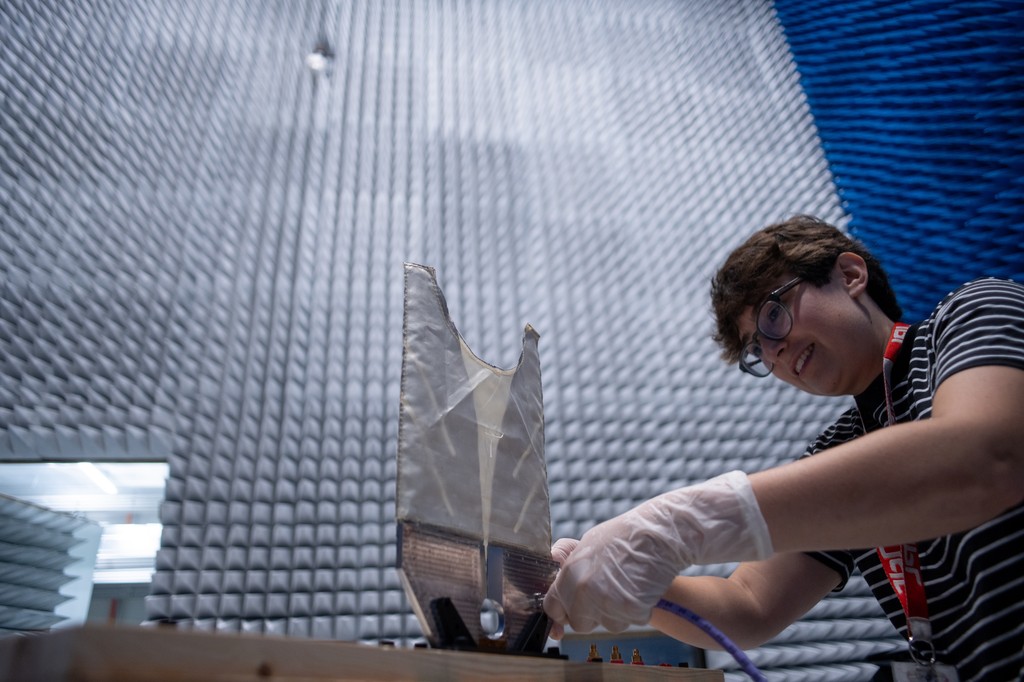
A radar engineer at NASA JPL works to test the antenna on the SkyFall helicopter. (Image credit: NASA/JPL-Caltech)
To make these little capes capable of withstanding incredible feats on another world, the engineers behind the helicopters covered the antenna in layers of polyester and Vectran, a flexible (but incredibly strong) material that was previously used for the airbag that cushioned NASA's Spirit and Opportunity Mars rovers during their touchdowns in 2004. The antenna's shape is also reinforced with flexible fiberglass tape springs and a lightweight structure. In total, each antenna weighs a miniscule 5 ounces (142 grams).
But a crafty design isn't enough. Getting to Mars is no small feat, and NASA needs to be sure that these little helicopters and their gear are up to the challenge. So, in JPL's Environmental Test Laboratory, which recreates different elements of environments beyond Earth, the SkyFall team put the rotorcraft and its little radar antenna to the test. They bent and flexed the antenna over and over, recreating multiple landings on the surface, exposed the craft to extreme temperatures, and continually checked to make sure that, throughout this testing, the helicopter could still transmit and receive radar signals. At the end of this testing, the antenna had endured 200 simulated Mars landings and was still working just fine. That is more than twice the number of landings expected from the mission.
"This test checked every box it was supposed to and answered our biggest technical questions," Tang added. "While we still have work ahead of us before the antenna is fully flight-qualified, this was a major milestone, and the hardware performed exactly as expected."
The trio of SkyFall helicopters will put their radar capes to the ultimate test when they fly to Mars. NASA plans to launch this mission to the Red Planet in 2028 aboard NASA's Space Reactor-1 Freedom, the first nuclear fission-powered interplanetary spacecraft.
The Carina Nebula's "Treasure Chest" stuns in this new image captured by the James Webb Space Telescope. (Image credit: ESA/Webb, NASA & CSA, M. Reiter)
In a nebula far, far away, colossal clouds of dust and gas tower amongst the stars.
What is it?
This spectacular new image from the James Webb Space Telescope showcases the brilliant majesty of the Carina Nebula, a giant cloud of dust and gas found 7,500 light-years away in the constellation Carina.
In this new image, captured by JWST's Near-Infrared Camera (NIRCam), you can see the nebula in a whole new light. This snapshot captures a specific feature that is being dubbed the "Treasure Chest," as it vaguely resembles a glowing coffer overflowing with stellar jewels.
This "Treasure Chest" contains a cluster of young stars, approximately 70 stars in total. While these might be young, growing stars, the most massive of the bunch is a whopping 19 times more massive than our sun.
Why is it incredible?
While JWST has looked at the Carina Nebula before, new observations can reveal completely new details and help scientists uncover new information about the nebula and the strange ways in which the universe works.
Right now, scientists think that the star cluster in the "Treasure Chest" is about 1.3 million years old. However, previous estimates thought the grouping could be just 100,000 years old. So, new observations by powerful telescopes like JWST can significantly change our understanding of the cosmos.
With each new observation or data point, the history and context of the universe around us could completely transform. And, as this star cluster grows over time, its stars will become more brilliant. They may therefore illuminate more of this star cluster, potentially revealing details and secrets of this "treasure" that scientists might never have predicted.
Wherever two fluids slide past each other at different speeds, the boundary between them buckles, then curls, then rolls up into vortexes. It’s called the Kelvin-Helmholtz instability, and the physics behind it was worked out in the late 1860s. We know this instability explains why wind causes ripples on the surface of water and clouds shear into a row of curves.
For decades scientists argued the same thing must be happening with plasma on the surface of the Sun, and yet nobody had been able to confirm it. Now, a team led by David Kuridze and Friedrich Wöger of the National Solar Observatory reports that Kelvin-Helmholtz instabilities are not just visible on the Sun, but they’re ubiquitous. Their new study proposes that this may change the way we think about how heat, mass, and magnetic energy move through the Sun's atmosphere.
Telescope’s test drive
The reason plasma whirlpools on the Sun stayed hidden for so long is rather trivial: They are very small. Their scale sits below what telescopes with mirrors smaller than 2 meters can resolve. For most of the history of solar physics, that has ruled out every telescope on Earth. This changed when the US National Science Foundation opened the Daniel K. Inouye Solar Telescope, a 4-meter instrument in Hawaii and the largest solar telescope in the world. The telescope entered its operational phase back in November 2021.
According to the researchers behind the detection, the liquid nitrogen evidence captured by NASA’s New Horizons Spacecraft is the first evidence of any liquid flowing on Pluto. They also suggest that the discovery could help scientists better understand other solar system features such as the geysers on Neptune’s moon Triton.
New Horizons Mission Gave First Hint of Liquid Nitrogen on Pluto
When New Horizons captured images of Pluto’s surface between 2015 and 2016, it gathered extensive imagery of a massive surface feature called Sputnik Planitia. Larger than Texas and Oklahoma combined, the frozen nitrogen lake has long fascinated planetary scientists.
When examining the spacecraft’s photos, researchers spotted thin, dark, linear features separating the city-sized geologic convection cells on Sputnik Planitia’s northernmost portions. Critically, the thinner, separating features were more diffuse than the larger ones. Although some previous studies suggested that Pluto may have a liquid water ocean beneath its frozen outer shell, the surface temperatures would prevent any of that water from flowing on the surface long enough to cause the features.
Some theories proposed a liquid nitrogen explanation for the thinner features, even though the research team behind the discovery said that Pluto’s atmospheric and thermal conditions make liquid rain physically impossible. Still, the team notes, the surface patterns on Pluto’s northern Sputnik Planitia “have been darkened in ways that resemble glacial features on Earth that have been wetted by water rain or the subsurface emergence of liquids to the surface.”
To better understand the data, SwRI Associate Vice President and principal investigator on the New Horizons mission, Dr. Alan Stern, reexamined the data, focusing on similar features on Earth.
Sputnik Planitia Evidence “Very Similar” to Greenland Ice Sheet Features
To start, Dr. Stern and colleagues compared the New Horizons images with Earth imagery collected by NASA’s Landsat 9. The researchers focused on the Greenland Ice Sheet, since similar surface features caused by liquid water separating ice and snow have been previously observed.
When focusing on topography, the team said the two regions appeared “very similar.” This similarity suggested that subsurface liquids in the form of nitrogen were rising to the surface and wetting areas of Sputnik Planitia’s nitrogen ice.
Pluto’s northern Sputnik Planitia glacier (in the western or left side of Pluto’s brightheart) is shown here in a color mosaic made from New Horizons imagery. The direction of north is shown on the image. The image is ~ 700 x 350 kilometers across. The red box has been added to show most of the region containing dark features attributed to the wetting of the glacier by liquid nitrogen sourced from a “basal melting” process beneath the glacier. (2026). Image Credit: NASA/John Hopkins APL/Southwest Research Institute.
SwRI Principal Scientist Dr. Kelsi Singer, one of the study’s co-authors, said Sputnik Planitia’s surface is “quite young” in geological terms, with most estimates placing it at less than one million years. As a result, the dark, thin surface features must have formed during that short window of time.
“Pluto has many unique terrains seen nowhere else in the solar system, and this area of Sputnik Planitia is one of them,” Dr Singer explained. “Its surface provides a different set of conditions compared to what we are used to on Earth, and exploring that allows us to better understand how materials behave in environments that are difficult to produce on Earth.”
To support the visual evidence of liquid nitrogen on Pluto, Dr. Orkan Umurhan, a senior research scientist at the SETI Institute, oversaw the creation of computer models designed to simulate the dwarf planet’s local environment. According to the study authors, the models “show that nitrogen ice at the base of Pluto’s kilometers-deep Sputnik glacier can melt, forming liquid nitrogen.”
Dark, narrow surface features have been identified here in areas in Greenland where liquid water darkens the ice and snow in a manner analogous to what is now believed to perhaps be occurring on northern Sputnik Planitia on Pluto due to present or recent liquid nitrogen there. Image Credit: NASA/Johns Hopkins /Southwest Research Institute.
The same models also revealed that buoyancy and pressure from underneath can cause liquid nitrogen to migrate to Pluto’s surface via a series of small conduits that resemble lava or geyser tubes. Although the dwarf planet’s distance from the Sun makes it an extremely frigid environment, the models also suggested that once liquid nitrogen reaches Pluto’s surface, it can maintain liquid form long enough to flow down the nitrogen glacier slopes and cause the features seen in the images.
“Pluto Never Stops Surprising Us”
When discussing the significance of the findings, Dr. Umurhan pointed to the study’s “tantalizing picture that it promotes,” including potentially motivating a further examination of solid-state nitrogen physics at very low temperatures.
“Specifically, it’s important to examine the physics taking place in solid nitrogen materials under stress and strain, which can cause them to melt,” the study author explained, adding that these processes “have never been studied in real detail in the laboratory.”
The SwRI-led team also noted that over half of Pluto remains unmapped in high resolution, meaning there is still a lot of room for future discoveries. This includes further mapping of the other Kuiper Belt planets “to determine if similar processes are occurring elsewhere in that region of the solar system.”
Finally, the SwRI-led team said the findings could offer some assistance in explaining other events across the solar system, such as the geysers observed by NASA’s Voyager 2 on Neptune’s moon Triton.
“Pluto never stops surprising us, and this new result certainly does that,” Stern concluded. “In addition to suggesting that liquids have recently expressed themselves on Pluto’s surface, it also suggests a new kind of time-variable feature on Pluto.”
Christopher Plain is a Science Fiction and Fantasy novelist and has spent the last six years as Associate News Editor and Head Science Writer at The Debrief. Follow and connect with him on X, learn about his books at plainfiction.com, or email him at christopher@thedebrief.org

 Login