❌

Reading view

More Than Half of Samsung’s Foldable Preorders Come From Consumers in Their Teens to 30s

Customers browse Samsung Electronics’ Galaxy Z series devices at Samsung Store Hongdae during the preorder period. (Photo: Samsung Electronics)

More than half of the customers preordering Samsung Electronics’ latest foldable smartphones are in their teens, 20s and 30s, with the newly introduced passport-style Galaxy Z Fold8 emerging as the most popular model.

Samsung Electronics said on July 31 that customers in their teens through 30s accounted for more than 50% of preorders placed through Samsung.com for the Galaxy Z Fold8 Ultra, Galaxy Z Fold8 and Galaxy Z Flip8 since reservations opened on July 28. The preorder period runs through Aug. 3.

Among younger customers, the Galaxy Z Fold8 was the most frequently selected model. By color, Cream was the most popular choice, followed by Pistachio and Lavender, both exclusive to Samsung.com.

For the Galaxy Z Fold8 Ultra, Graphite and the Samsung.com-exclusive Green Shadow were the most popular colors. For the Galaxy Z Flip8, Mint, Cream and Pink received the strongest customer preference.

Samsung attributed the higher share of younger buyers to promotional benefits such as storage upgrades and features that simplify transferring data from existing devices to Galaxy smartphones.

Customers who purchase a 256-gigabyte (GB) model during the preorder period will receive a 512GB model. Buyers of the 512GB Galaxy Z Fold8 Ultra and Galaxy Z Fold8 can upgrade to a 1-terabyte (TB) model for an additional 310,700 won.

Preorder customers will also receive a six-month subscription to Google AI Pro, a three-month subscription to audiobook and content platform Welaaa, and discount coupons for Galaxy Watches and accessories. Samsung is also offering its New Galaxy AI Subscription Club program for the new devices, as well as the Flip Youth Subscription program targeted at customers in their teens and 20s.
  •  

Privacy OLED Panels Cost Over 10% More Than Standard LTPO Displays

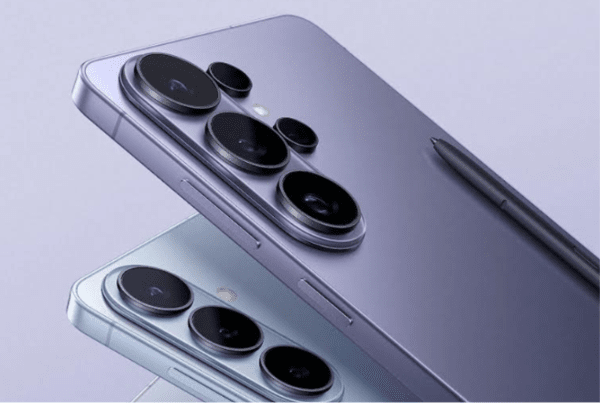
Galaxy S26 series smartphone. (Source: Samsung Electronics)

Samsung Electronics' privacy OLED panel used in the Galaxy S26 Ultra is estimated to cost more than 10% more to manufacture than a conventional low-temperature polycrystalline oxide (LTPO) OLED panel, according to industry sources.

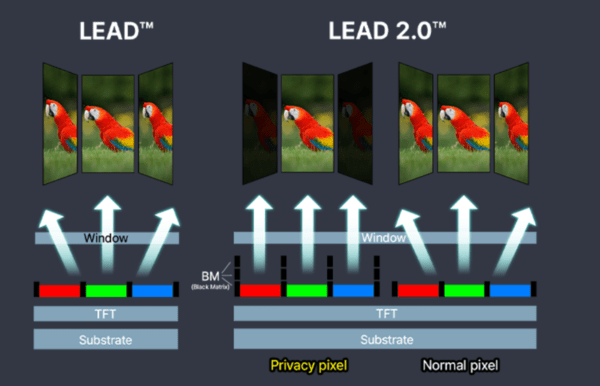
The Galaxy S26 Ultra's OLED panel adopts a dual-pixel architecture, in which each pixel contains separate red, green, and blue (RGB) sub-pixels for wide-viewing-angle mode and narrow-viewing-angle privacy mode. Market research firm Counterpoint Research estimates that the panel's overall production cost is about 10% higher than that of a comparable LTPO OLED panel.

In standard mode, the display operates using the wide-viewing-angle pixels, whereas privacy mode primarily drives the narrow-viewing-angle pixels. The panel achieves its privacy function through a multilayer black matrix (BM) structure formed deeply around the narrow-viewing-angle pixels, allowing light to pass directly toward the user while blocking light emitted at wider angles. Alignment accuracy between the light-emitting area and the black matrix affects brightness, viewing-angle control performance, and manufacturing yield.

Manufacturing complexity has increased further through the use of Color Filter on Encapsulation (CoE) technology, which eliminates the polarizer layer by forming color filters and black matrix structures directly on top of the OLED encapsulation layer. While CoE helps reduce panel thickness and improve light efficiency, the privacy OLED design requires the integration of additional pixels and multilayer black matrix structures, adding to process complexity.

The number of thin-film transistor (TFT) masks required for CoE integration has increased significantly compared with the OLED panel used in the Galaxy S25 Ultra, resulting in higher manufacturing costs. Additional masks also increase exposure, etching, and deposition processes, along with equipment utilization time and material consumption.

Specific panel supply prices have not been disclosed. However, industry estimates place display costs at approximately $84 for the Galaxy S23 Ultra, $88 for the Galaxy S24 Ultra, and $80–87 for the Galaxy S25 Ultra. The Galaxy S26 Ultra's display cost is estimated at approximately $88–96.

Demand for privacy OLED technology is expected to grow. Market research firm Sigmaintell forecasts that smartphone shipments featuring privacy-mode displays will increase from 1 million units in 2025 to 21 million units in 2026, before reaching 29 million units in 2027.

Samsung Electronics is also expected to expand the technology beyond the Galaxy S26 Ultra. Privacy displays are planned for all four Galaxy S27 modelsβ€”Base, Plus, Pro, and Ultraβ€”scheduled for release next year. Meanwhile, privacy displays for foldable devices remain under development and have not yet been implemented in mass-production specifications.

An industry source noted that privacy OLED technology involves more than simply adding a light-blocking layer. β€œIt requires simultaneous changes to pixel layouts, optical structures, and driving circuits,” the source said. β€œAs production volumes increase, simplifying mask processes and improving yields will be critical to reducing cost increases.”

Concept illustration of FMP technology. (Source: Samsung Display Newsroom)

Β 

  •  

Sunic System Earns A+ Credit Rating From State-Owned Bank

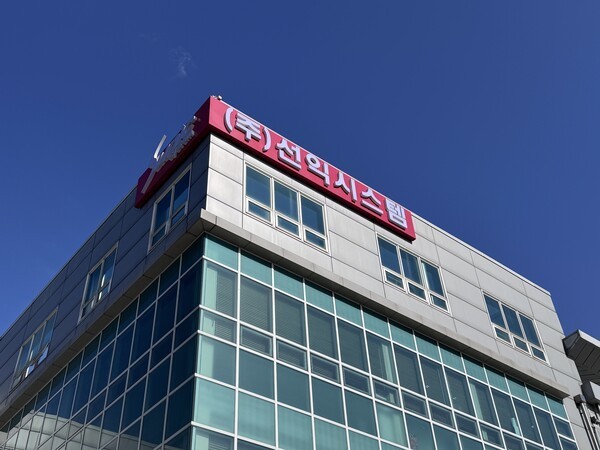
Sunic System's Suwon headquarters. (Photo: THE ELEC)

Sunic System said it will expand financial support for its partner companies following an upgrade to its corporate credit rating.

The company announced on July 31 that it recently received an A+ credit rating from a state-owned bank, a level it described as the highest available for mid-sized companies.

Sunic System said the evaluation reflected its stable financial structure, business performance and competitiveness in the global organic light-emitting diode (OLED) deposition equipment market. The assessment also took into account the company's efforts to develop next-generation businesses, including OLEDoS and perovskite technologies, as well as plans to expand its production infrastructure.

The company added that its ratings from major credit assessment agencies have also improved compared with the previous year.

Based on the upgraded credit profile, Sunic System has launched a financing support program for its suppliers. The company will recommend partner firms requiring facility investment or working capital financing to the Korea Credit Guarantee Fund (KODIT). Recommended firms receive preferential treatment when raising funds from financial institutions through KODIT's preferential guarantee program for partner companies.

Sunic System said it is the first case in which a general mid-sized company, excluding defense firms, has used KODIT's preferential guarantee program for partner companies to arrange financing support for its partners.

  •  
❌