❌

Reading view

'Nozzlegate' erupts as Prusa CORE One 3D printer kits arrive with soft steel nozzles — Bondtech admits machining flaws with no quick fix (Updated)

Bondtech, the inventor of the INDX toolchanger system used to create the highly anticipated Prusa CORE One+ INDX, admitted to a significant mistake. The nozzles, which are nitrocarburized steel, do not meet industry standards for “hardened steel” as advertised.

Prusa Research has pumped the brakes on the INDX project, and has delayed shipping INDX conversion kits until mid-August. They issued a statement on Reddit:

“Bondtech has recently confirmed that the nozzles currently supplied with the INDX system are surface-hardened rather than fully hardened as originally planned, and has not yet finalized the compensation plan for affected customers. We believe it is better to wait until both we and you have clearer information, rather than ship the kits while this important question remains unresolved.”

r/prusa3D

The statement was also emailed directly to everyone with an active INDX order in the system. The company said this delay will also give customers a chance to cancel their orders if they wish. As an olive branch, Prusa Research INDX conversion kits will included extra hardware free of charge. The statement didn’t say what the gift would be, but that specifics would be shared before shipping.

Prusa engineers immediately began testing the INDX nozzles and determined that little wear could be seen after running five kilograms of carbon fiber PETG through the nozzles. However, after just 100g of super-abrasive Ultraglow filament, the protective coating began to fail.

Nitrocarburized steel is tougher than the standard brass nozzles that come with a stock Prusa CORE One+, but not as durable as hardened steel. The real problem is not that they went with a lesser nozzle, but that they kept the “hardened steel” wording in promotional materials. If Bondtech said from the beginning (or before customers locked in their pre-orders) that the INDX shipped with ordinary steel nozzles, no one would have blinked.

Information on the nozzle quality began to surface after a Reddit user posted a support email from Bondtech founder, Martin Bondeus. The email stated that “during production, we encountered manufacturing challenges that prevented us from machining that material reliably – the cutting tools simply did not withstand the process. Rather than releasing a product with inconsistent quality, we decided to supply the nitrocarburized version for the time being.”
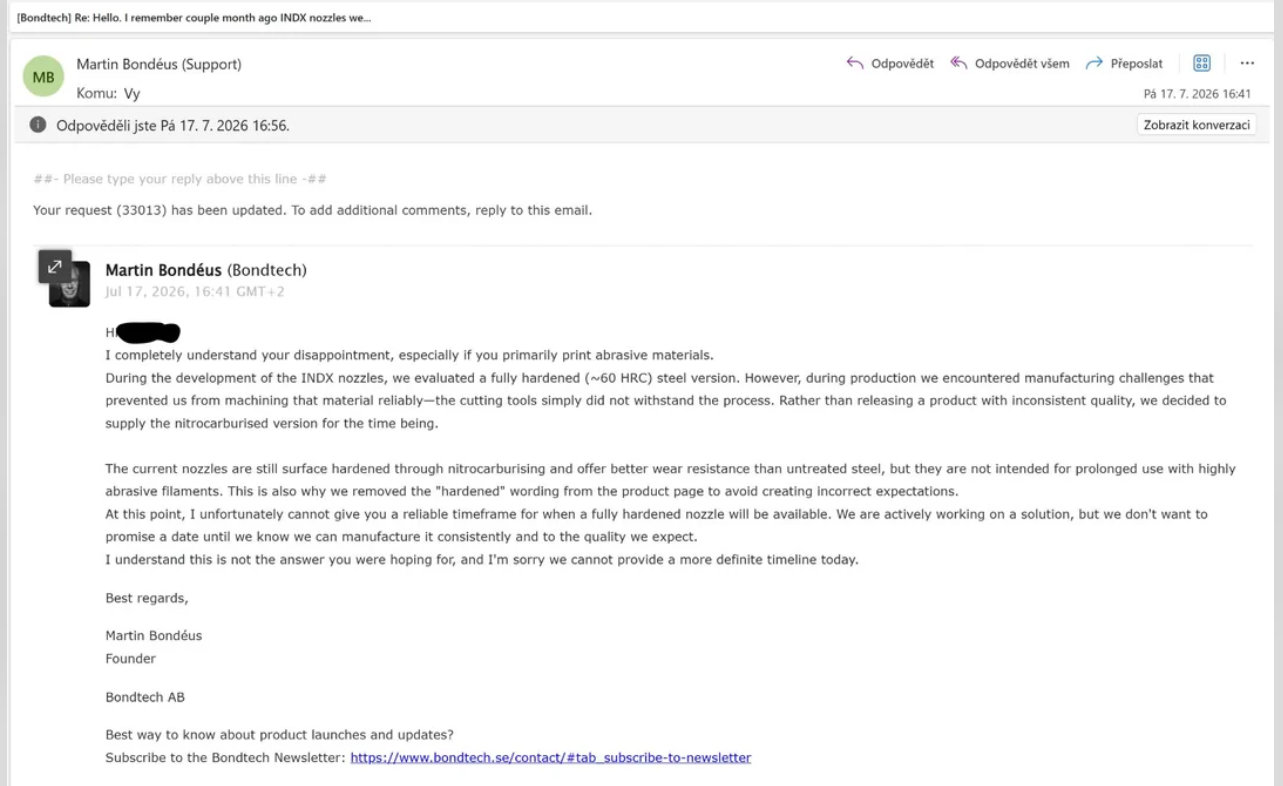
NozzleGate

Reddit (Image credit: Reddit)

These nozzles are not of poor quality, but they fall short of the standards set for hardened steel. According to a statement by Bondtech, the Founders Edition shipped with nitrocarburized steel, which is steel treated to obtain a hard shell. They’ve batch tested the nozzles and found them to be around 30-32 on the Hardness Rockwell C scale (HRC). For comparison, true hardened steel lands at 55-60 while an everyday brass nozzle comes in under 10 HRC.

For most users, and most materials, these mid-tier steel nozzles work exceptionally well and will last for an extremely long time. But once you start to feed your INDX abrasive filaments like glass-fiber, carbon-fiber, glow in the dark and metal filled filaments, things get dicey. The treated steel nozzles will last longer than brass, but Bondtech said they will experience “accelerated wear” when printing abrasives.

Bondtech has stated on its website that a “concrete solution” to the problem is not ready and that manufacturing truly hardened INDX nozzles could take months. They are also not offering any form of compensation before knowing the cost of the replacements. They are requesting that customers hold off on returning the kits and simply enjoy using non-abrasive materials until a solution is found.

The INDX takes a bespoke induction heated nozzle that has no off the shelf replacement at this time.

The news has hit the Founders Edition buyers quite hard, as many have already found difficulty with the kits they so eagerly purchased months ago. Some assembly problems can be expected with such a product, as they are being mounted on CORE One printers already in service. The INDX is a separate upgrade kit, and it requires stripping down a CORE One, removing the Nextruder and replacing it with the INDX carriage, then mounting a rack to hold the eight tool heads.

One “founder” was so upset he vibe coded an entire website in protest: Nozzlegate.com. The website outlines what the perceived problems are with Bondtech, and what consumers can do about it. We contacted the website owner, who asked to go by his handle “Daddie0.”
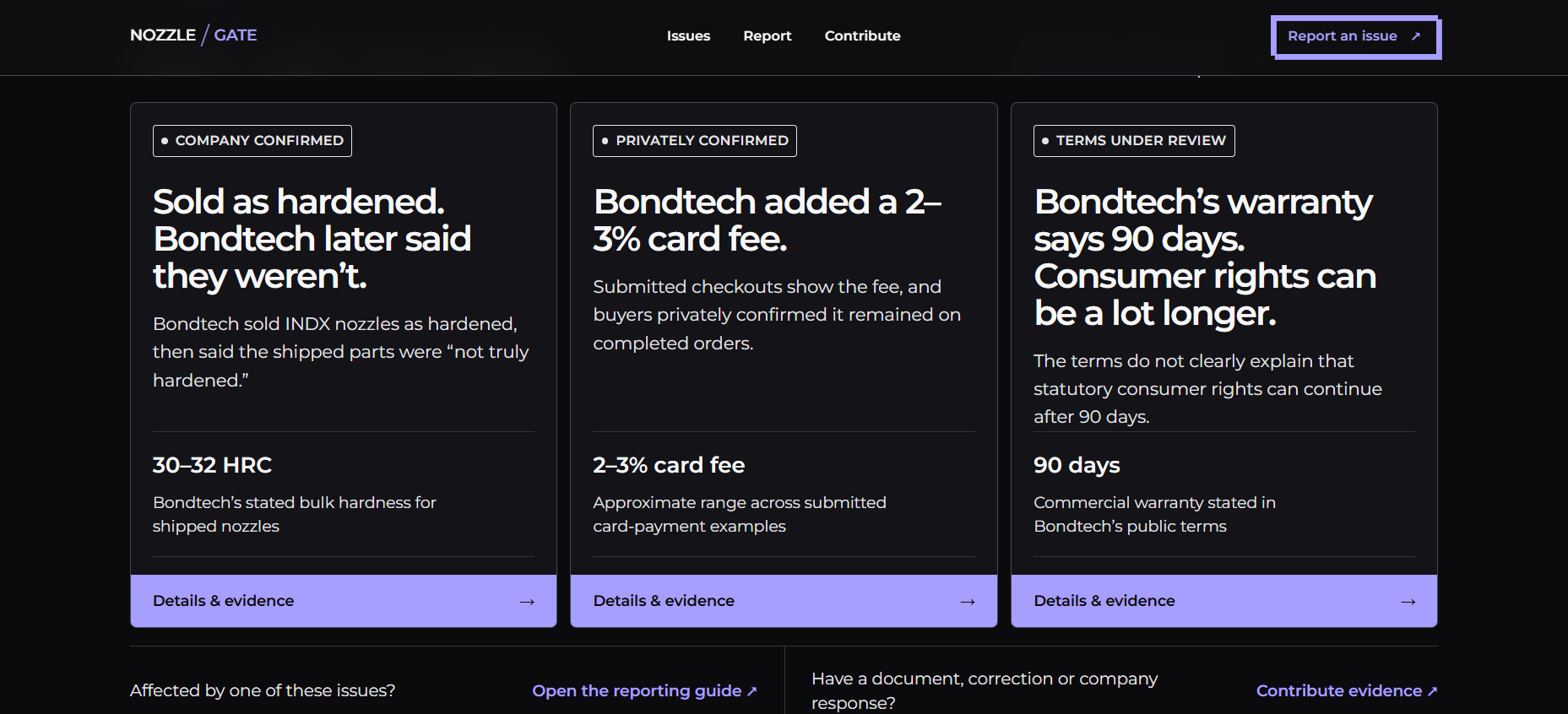
NozzleGate

Nozzlegate.com (Image credit: Tom's Hardware)

He told me that, like others who purchased Founder Edition kits, he’s disappointed in the quality of the product. He said his INDX was suffering from multiple mid-print crashes and layer shifts, and after two weeks of troubleshooting, it was finally fixed with a firmware update from Prusa. “Then nozzlegate hits. My EU right-given two-week return window ends a day after the news breaks.”

Realizing that his window for a standard, hassle-free return had closed on a machine he felt was a lemon, he shifted strategies. He began digging into Bondtech’s official documentation to see what recourse he had for a defective product.

What he found sparked a new battle. Disagreeing with Bondtech’s listed 90-day warranty policy, which he claims misleads consumers by failing to mention Sweden's mandatory multi-year consumer protections, he channeled his frustration into the NozzleGate website.

The INDX kit is a collaboration between Prusa Research and Bondtech, with the first wave of Founders Edition kits a limited edition run going to early adopters.

Tom’s Hardware received a Founders Edition INDX kit, which we installed on a Prusa CORE One we previously reviewed. Though the build took over the kitchen table for an entire weekend, our resulting INDX is printing non-abrasive filaments with excellent quality.
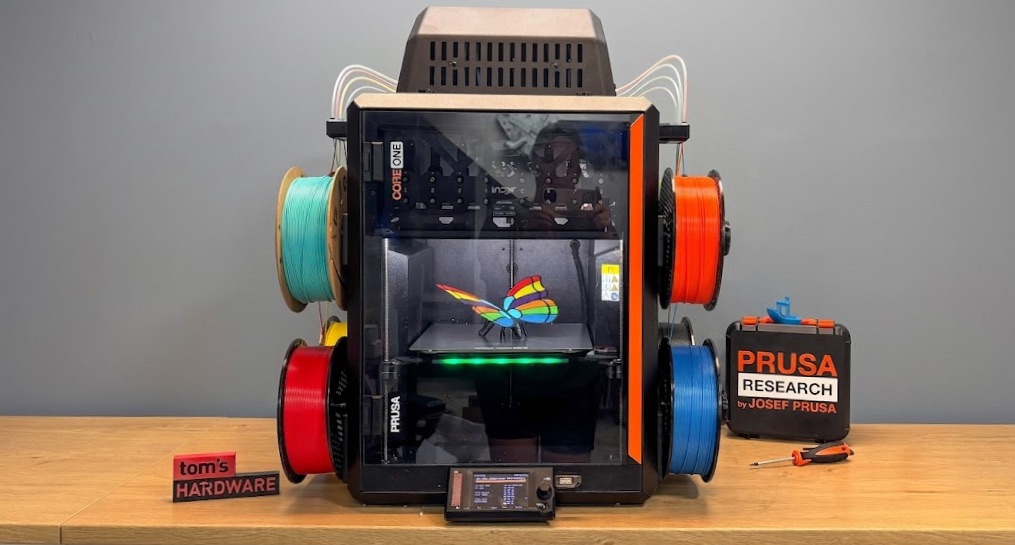
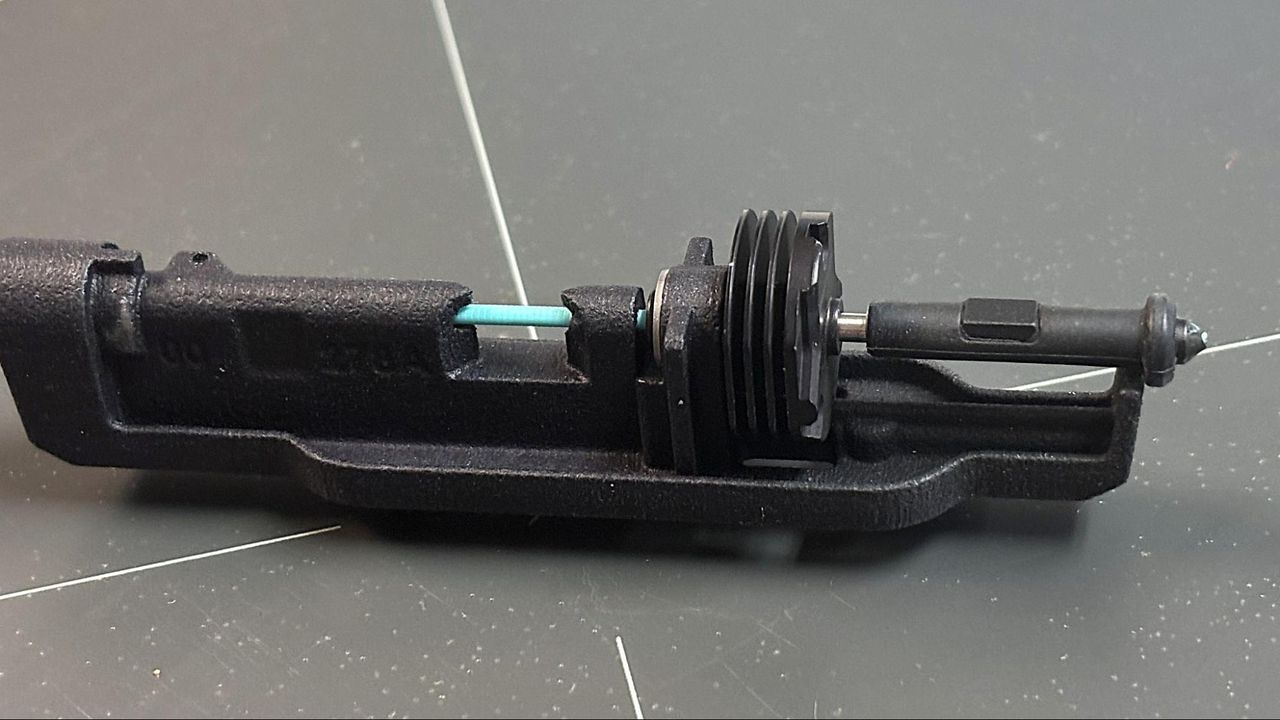
NozzleGate

(Image credit: Tom's Hardware)

  •  

New open source printer has 7 toolheads that swap in 5 seconds for fast, zero-waste multi-color 3D printing — Sovol M1D 3D printer is the first open-source IDEX design with an integrated tool-changer

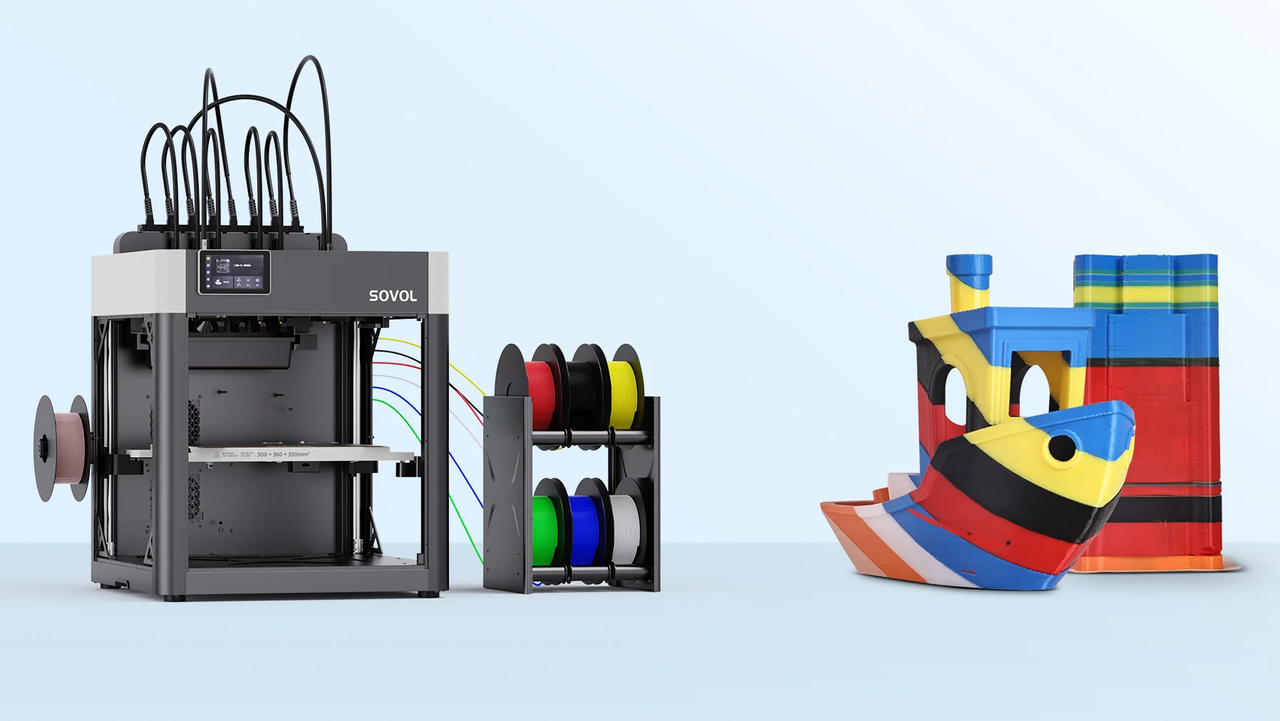
We're quite familiar with Sovol 3D printers around these parts, having reviewed several models over the years and finding that pretty much all of them produce high-quality prints. The company is now stepping up its game with the Sovol M1D, an open-source, independent dual-extruder (IDEX) printer with two nozzles and seven toolheads, a maximum print volume of 300 x 300 x 350 mm (11.81" x 11.81" x 13.78").

This bit o' kit can operate its nozzles in true independent mode (rather than alternating between them), letting users copy prints for easily printing duplicates and mirror them for doing left-right versions. In multi-head mode, each nozzle can output a different material. The first nozzle has a fixed toolhead, while the second can swap between heads independently. The open-source nature of the printer ought to let it be easy to mod, and as expected, it relies on the OrcaSlicer software by default rather than proprietary software such as Bambu's offerings.

The M1D comes in two variants, Essential and Advanced, with the higher-end model having the same basic specs but coming in a heated enclosure that keep inside air at 60°C (140°F). Sovol says each nozzle can print at up to 600 mm/s, and accelerate at 10,000 mm/s². The nozzle-and-toolhead interface seems quite nifty, as the M1D ought to swap toolheads in just five seconds, and keeps the standby heads warm so they're ready for printing the second they attach to the nozzle. One of the heads is fixed, and the other six are interchangeable.

The combination of the speed and tool-swapping technology has Sovol claiming the M1D can perform multi-colored prints five times faster than "others," displaying what appears to be a Bambu P1S in the comparison pictures. Likewise, said multi-color or multi-material prints supposedly produce "almost zero waste."

The M1D has a number of measures to prevent failed prints, including automatic bed leveling with nozzle Z-axis compensation thanks to an eddy current sensor, X/Y nozzle cameras, vibration compensation, and a 720p chamber camera that will have AI obstruction and spaghetti detection in a future firmware update.

The seven toolheads allow for easily integrating water-soluble materials for printing sacrificial supports and molds, movable mechanisms, and hollow parts, while the enclosure of the Advanced version lets the M1D print particularly resistant materials like ASA (acrylonitrile styrene acrylate), PA (polyamide), and PC (polycarbonate).

The Sovol M1D is available through a Kickstarter project that's already pulled in over $2.8 million — many times over the initial $191,254 goal. Buying into a crowdfunded project frequently elicits concern, but Sovol's track record has historically been pretty good. With early bird pricing and not accounting for shipping costs, the M1D Essential goes for $1,299, while the Advanced version with the heated enclosure costs $1,599. The printers are expected to start shipping in November.

  •  

If You Own a 3D Printer, You Absolutely Need to Try Hi3D

In the 3D printing community, there’s a common saying: buying a 3D printer is easy—learning modeling, mesh repair, and slicer settings is the real challenge.

While AI-powered 3D generation has made it possible to create detailed models in minutes, turning those models into successful prints still requires significant technical work. From mesh repair and model splitting to print optimization and multi-color workflow management, many AI-generated models never make it beyond the screen.

Hi3D was built to close that gap between AI creation and physical manufacturing. Over the past year, the company has expanded beyond AI model generation, developing an end-to-end workflow designed specifically for 3D printing.

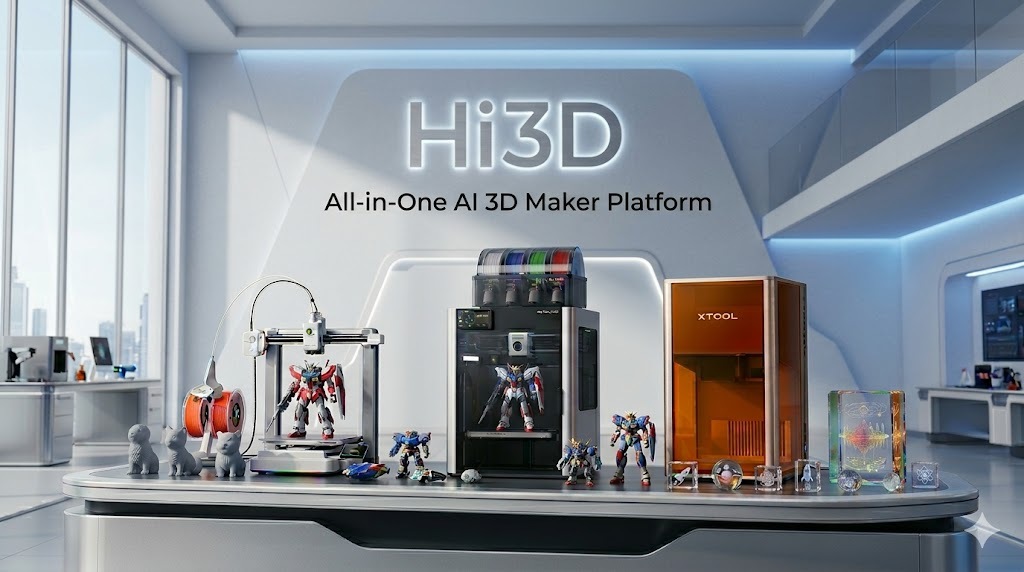
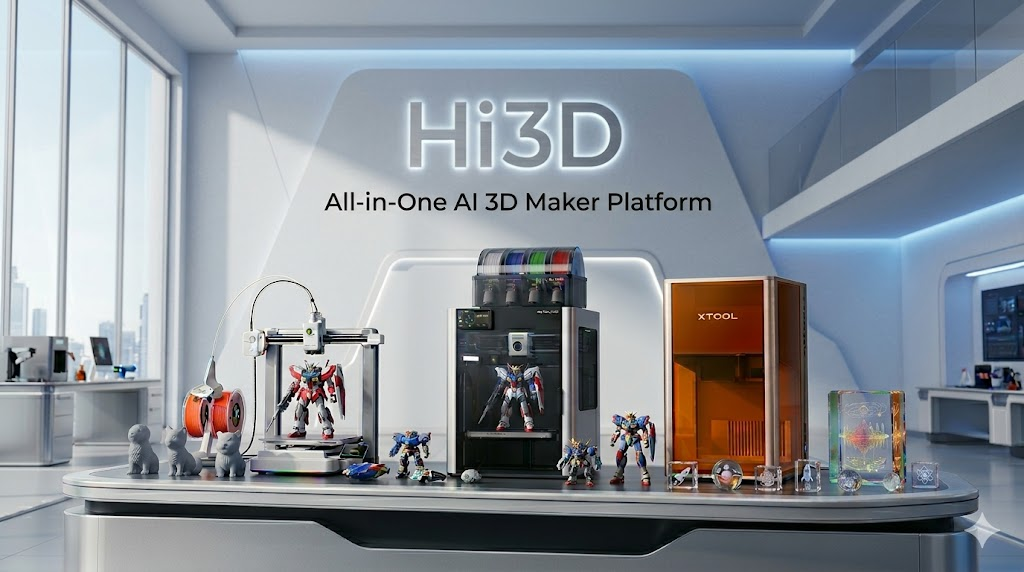
Today, Hi3D has established partnerships across the digital fabrication ecosystem, including Creality, MakerWorld within the Bambu Lab ecosystem, and xTool. These collaborations enable deeper integrations for printable model generation, AMS multi-color workflows, enhanced 3MF output, and broader digital manufacturing applications.

Hi3D

(Image credit: Hi3D)

With its anniversary release, Hi3D takes another step forward. Automated part separation, multi-color optimization, color cleanup, material-saving algorithms, intelligent model orientation, and print parameter generation are now unified into a single AI-driven workflow.

The result is simple: tasks that once required multiple software tools and hours of manual work can now be completed automatically—helping creators move from image to printable object faster than ever before.

Hours to 2 Minutes: Auto Character Split with Built-In Print-Ready Tolerances

For makers printing large models—or working with smaller build volumes such as the A1 mini—model splitting is often one of the most time-consuming steps. Traditional workflows require manually cutting meshes, creating connection structures, and adjusting tolerances, often resulting in assembly issues after printing.

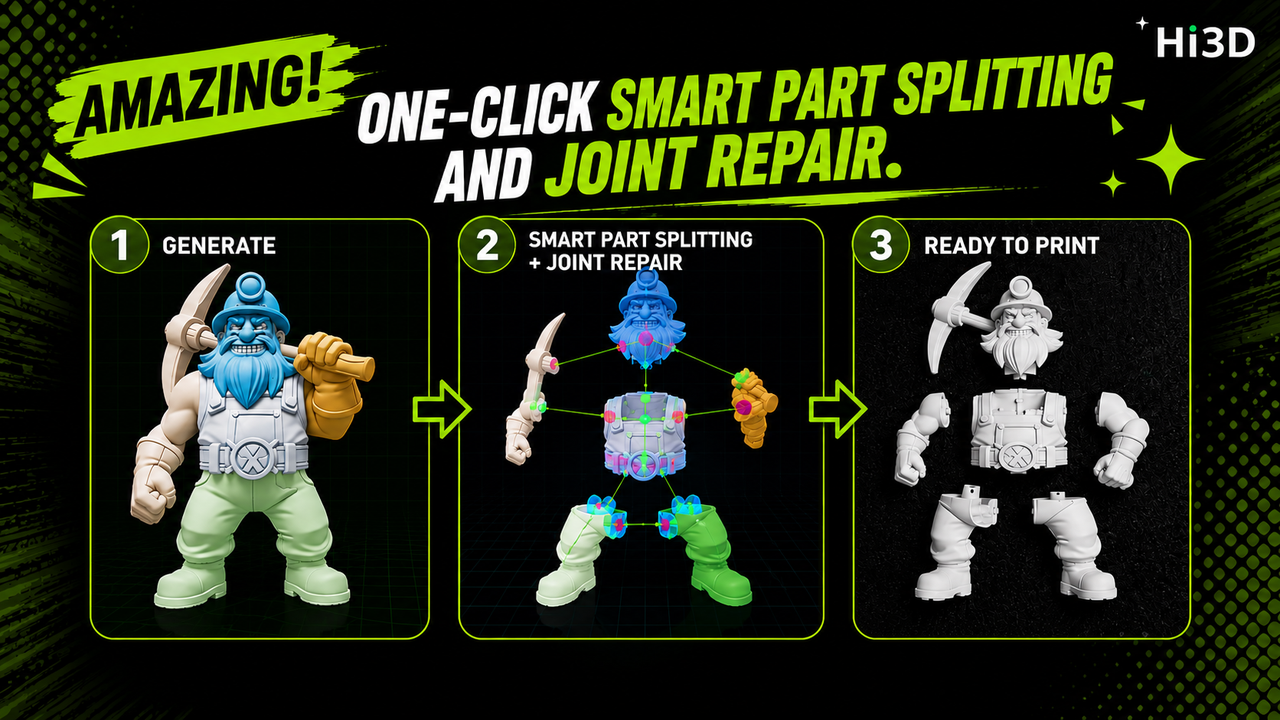
Hi3D’s Auto Character Split automates the entire process:

  1. Intelligent Topology Recognition – Automatically identifies heads, torsos, limbs, and other structural components, generating optimized printable segments.
  2. Watertight Mesh Generation – Every separated part is exported as a closed, watertight mesh ready for slicing and printing.
  3. One-Click Joint Creation – Users can instantly add snap-fit connectors, mortise-and-tenon structures, or articulated ball joints for movable figures.
  4. AI-Optimized Assembly Tolerances – Mechanical clearances are automatically calibrated for FDM printing, enabling reliable assembly directly off the build plate with minimal post-processing.

Tasks that previously required hours of manual modeling and adjustment can now be completed in just a few minutes.

Hi3D

(Image credit: Hi3D)

Deep Integration with the Bambu/AMS Ecosystem: From AI Model to Print-Ready 3MF

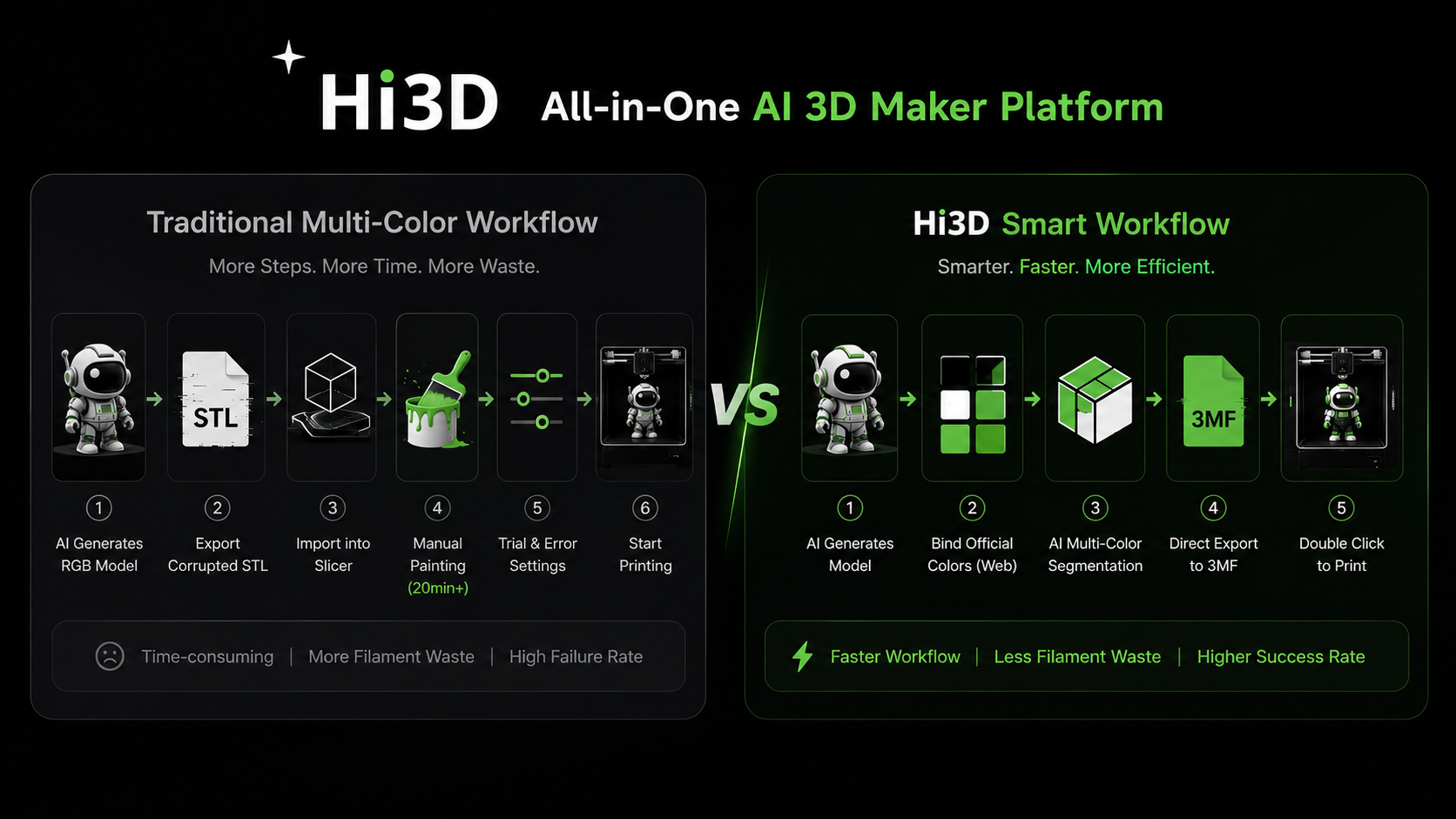
Multi-color printing often requires extensive manual color painting and parameter adjustments, especially for complex AI-generated models. Color data can be lost during export, and preparing a print-ready file typically involves multiple software steps.

Hi3D streamlines this process through deep integration with the Bambu Lab ecosystem, featuring an official filament library, automatic color mapping, and enhanced 3MF generation.

Once a model is created, Hi3D automatically maps on-screen colors to official Bambu Lab filament profiles and exports an optimized 3MF file containing print settings such as temperatures, layer heights, infill density, wall parameters, and support configurations.

Hi3D

(Image credit: Hi3D)

Instead of manually preparing files in a slicer, users can send the generated 3MF directly to Bambu Studio or OrcaSlicer and start printing immediately.

Reduce Multi-Color Waste by Up to 50% with AI Color Cleanup

For users of Bambu AMS and other multi-material systems, excessive filament purging remains one of the biggest challenges in multi-color printing. AI-generated textures often contain tiny color fragments and gradient noise, triggering unnecessary filament swaps that increase print time and material waste.

Hi3D addresses this with its Color Cleanup algorithm:

  • Noise-Aware Color Merging – Automatically detects and removes insignificant color fragments generated by AI textures.
  • Reduced Filament Swaps – Minimizes unnecessary color changes during slicing.
  • Lower Cost, Faster Prints – Reduces purge waste by up to 50% while improving print efficiency by 30–50%.

Smart Build Plate Layout for Higher Print Success Rates

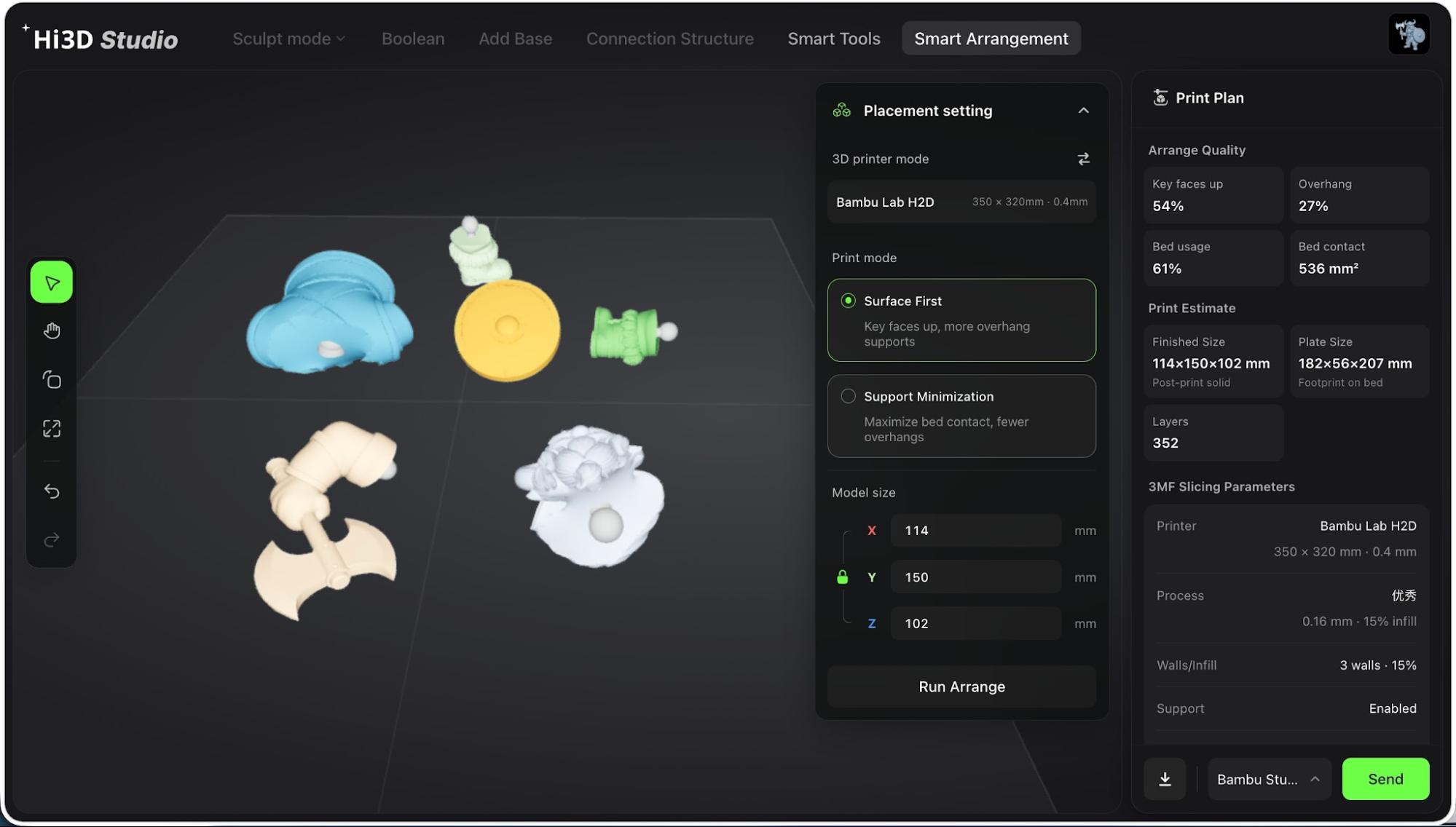
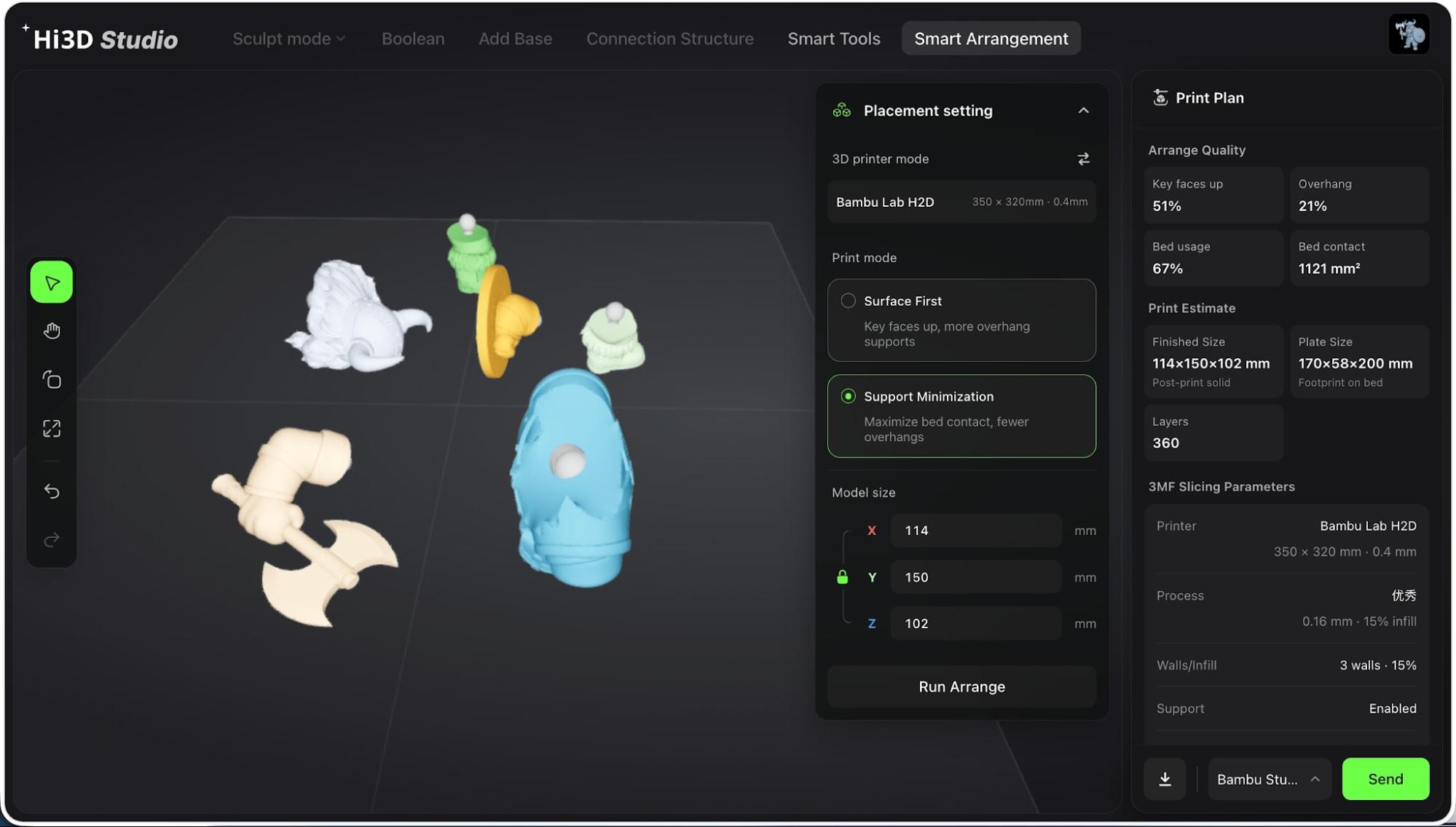
Model orientation is often the deciding factor in print quality and reliability. Hi3D’s Smart Build Plate Layout system automatically analyzes geometry, center of gravity, and support requirements to optimize model placement.

  • Surface-First Mode – Prioritizes visible surfaces to reduce support marks and post-processing.
  • Eco-Support Mode – Minimizes support usage while maximizing bed adhesion and print stability.

By automating decisions that traditionally rely on maker experience, Hi3D helps users achieve better print quality with less trial and error.

Hi3D
Hi3D
Hi3D
Hi3D

Bridging the Gap: From Beginner-Friendly Creation to Advanced Manufacturing

Beyond advanced tools for model splitting, multi-color optimization, and print preparation, Hi3D also lowers the barrier to entry through its Maker Templates. Users can upload a photo to generate printable figurines, pet models, or custom keycaps that are automatically optimized for 3D printing.

With its anniversary release, Hi3D is expanding beyond AI model generation into a complete AI-powered workflow built specifically for physical manufacturing. By combining AI creation, print optimization, and hardware-aware automation in a single platform, Hi3D helps creators move from idea to finished object with significantly less manual work.

As AI 3D technology continues to mature, the industry is shifting from simply generating models to generating manufacturing-ready models. Hi3D’s latest update represents another step toward that future, making 3D printing more accessible for beginners while providing greater efficiency for experienced makers.

Ready to experience a smoother workflow from AI-generated models to successful 3D prints? Visit Hi3D.ai and see how AI-powered creation, optimization, and printing come together in a single platform.

New users can receive 300 free Hi3D credits through the link below and experience the complete AI-to-3D-print workflow for themselves—from concept generation to printable 3MF files.

Get started here:Hi3D.ai

  •  
❌