
❌

Reading view

Apple Supports Japan Earthquake Relief Efforts

Japan earthquake relief efforts will receive financial support from Apple following the powerful earthquake that struck Kumamoto Prefecture on the island of Kyushu.

CEO Tim Cook announced the donation through social media on July 30. He expressed concern for people facing the earthquake and continuing aftershocks while thanking the first responders helping affected communities.

“Japan has a very special place in my heart.”

Cook wrote before confirming that Apple was making a donation to support relief work.

Apple did not disclose the amount, recipient organizations or whether its contribution would support the immediate emergency response, longer-term reconstruction or both. The company frequently keeps disaster donation amounts private, even when Cook publicly confirms its participation.

The announcement came as rescue teams continued searching damaged homes, industrial facilities and the remains of a shopping center. Survivors were dealing with water shortages, disrupted transportation, damaged buildings and dangerous summer temperatures.

A cityscape with mid-rise buildings, a central school with a dirt sports field, and lush green trees in the foreground. In the wake of the Japan earthquake relief efforts, signs of recovery are evident throughout the scene. Distant hills and a hazy sky are visible in the background.
Image Credit: Wikimedia

Japan Earthquake Relief Follows Deadly Kumamoto Disaster

The earthquake struck southwestern Japan on Tuesday, July 28. Japanese reporting and international agencies have described it as a magnitude 7.1 event, while the U.S. Geological Survey measured it at magnitude 6.8. Differences can occur because agencies use different measurement methods and datasets.

The earthquake reached the highest level on Japan’s seismic intensity scale in parts of Kumamoto. Strong shaking damaged roads, houses and public infrastructure across communities near the epicenter.

The confirmed death toll had risen to 34 by Friday, according to Kumamoto prefectural authorities. Additional people were injured or remained missing as emergency workers entered the period when the likelihood of finding survivors beneath collapsed structures begins to decline sharply.

One of the most severe incidents involved an explosion and partial collapse at a shopping center. The earthquake also toppled a large chimney at a paper factory, damaged traditional homes and caused another section of the stone walls at Kumamoto Castle to collapse.

The historic castle was undergoing extensive restoration after the 2016 Kumamoto earthquakes. Damage to rebuilt or partially restored areas illustrates how recovery from one major disaster can remain unfinished when another arrives.

Aftershocks continued during the rescue operation, increasing the danger for emergency personnel entering unstable buildings. They also discouraged residents from returning to damaged homes, even when those structures remained standing.

Thousands of survivors moved into public shelters or slept inside vehicles. Some families chose cars because evacuation centers were crowded, while others feared that another strong tremor could collapse weakened buildings.

Extreme heat added another emergency. High summer temperatures can quickly create dehydration, heat exhaustion and medical complications, particularly for older people, children and residents sleeping in vehicles without reliable cooling.

Apple Donation Joins an Expanding Corporate Response

The Apple donation places the company among several technology and entertainment businesses providing money for Japan earthquake relief and reconstruction.

The Pokémon Company announced a contribution of 100 million yen to Kumamoto Prefecture, the Japanese Red Cross and other support organizations. The funding is intended to assist people affected by the earthquake and support restoration across damaged areas.

Sony committed 50 million yen and began collecting additional employee donations that the company will match. Its contribution is being directed toward the Japanese Red Cross and an emergency fund operated with Save the Children.

Sony has a direct industrial connection to Kumamoto through its semiconductor operations. The company described the prefecture as a community with which it has developed deep ties since establishing the Kumamoto Technology Center in 2001.

Apple also maintains substantial commercial and cultural connections with Japan through its retail stores, developer community, suppliers and customers. Cook has visited the country repeatedly and has met Japanese developers, musicians, educators and manufacturing partners during previous trips.

The amount behind Apple’s latest commitment may never be made public. The absence of a disclosed figure prevents direct comparison with other corporate donations, and it also leaves unanswered which organizations will distribute the money.

Relief contributions can support several different stages of a disaster response. Immediate funding may pay for water, food, temporary shelter, medical care and emergency equipment. Later funding can help repair homes, restore community services and assist families whose employment disappeared with damaged businesses.

The timing of Apple’s donation places it during the immediate emergency rather than after the complete scale of destruction has been calculated. Recovery costs will continue changing as inspectors determine which buildings can be repaired and which must be demolished.

A man in a black shirt smiles while posing next to a large Pikachu mascot, with several smaller Pikachu figures on shelves in the background—capturing a true Tim Cook’s Pikachu Moment. An apple japanese logo is visible in the bottom right corner.

Kumamoto Faces Another Long Recovery

Kumamoto experienced a destructive sequence of earthquakes in April 2016. Those events killed dozens of people, damaged or destroyed more than 100,000 buildings and displaced large numbers of residents.

Apple responded at the time by allowing customers to send donations to the Japanese Red Cross through iTunes. The system offered preset contribution amounts that were transferred without Apple retaining a percentage.

The company has used similar responses after earthquakes, hurricanes, floods and wildfires in several countries. Cook usually announces the commitment publicly while leaving the amount and distribution arrangements private.

Apple has previously contributed directly to relief organizations and has sometimes provided matching programs for employee donations. It has not announced whether employee matching or a customer donation channel will accompany the current Japan earthquake relief commitment.

The 2026 disaster presents different immediate pressures from the 2016 earthquakes because it arrived during intense summer heat. Shelter capacity alone does not solve the problem when buildings lack sufficient cooling, water or private areas for medically vulnerable residents.

Japanese authorities deployed Self-Defense Force personnel and emergency teams to support local rescuers. Prime Minister Sanae Takaichi instructed agencies to prioritize the protection of life, collect information quickly and coordinate assistance across national and local government.

Electricity had been restored by Friday evening, according to the local power company, but water remained a serious concern. Kumamoto authorities said nearly 80,000 homes were still without running water, creating demand for bottled supplies, mobile water stations and sanitation support.

A water interruption affects more than drinking. Hospitals, shelters, restaurants and homes need reliable supplies for hygiene, food preparation and medical care. Restoration can take longer than electricity because ruptured pipes must be located, isolated and repaired across damaged roads and neighborhoods.

Apple Donation Arrives Before the Full Damage Is Known

Apple’s announcement communicates support without defining how the money will be used. The effectiveness of the contribution will depend on the recipient, timing and ability to direct funding toward needs that remain after the first wave of public attention passes.

Immediate rescue work receives the greatest visibility, but rebuilding homes and local businesses can continue for years. Families may need temporary housing long after shelters close, while damaged schools, transportation routes and medical facilities require larger reconstruction programs.

Private donations cannot replace government disaster funding. They can provide additional flexibility for relief groups that need to purchase supplies quickly or reach people whose circumstances do not fit standard assistance programs.

The continuing aftershocks also make damage assessments provisional. A building considered stable after the first inspection may require another examination, while rain or additional shaking can affect weakened slopes and structures.

Apple has not indicated whether it will open a public donation channel through the App Store or another service. Its current response is limited to the corporate contribution confirmed by Cook.

The next stage of Japan earthquake relief will move from search operations toward shelter support, structural inspections and temporary housing. In Kumamoto, the most urgent calculation is already measured beyond financial totals: nearly 80,000 homes need running water restored while residents endure the hottest weeks of the Japanese summer.

The post Apple Supports Japan Earthquake Relief Efforts appeared first on AppleMagazine.
  •  

Future of UK physics threatened by ‘ruinous’ funding cuts, says Institute of Physics

Physicists in the UK have reacted with dismay following the decision by the Science and Technology Facilities Council (STFC) to cancel funding for several high-profile international projects. The Institute of Physics (IOP), which publishes Physics World, says that the axing of support threatens the UK’s international reputation as well as the ability to attract people into the subject.

The STFC cuts come after the council announced late last year that its core annual budget would rise by only £7m to £842m over the four years from 2026 to 2030. One of seven research councils within UK Research and Innovation (UKRI), the STFC runs the UK’s national facilities and supports particle physics, astronomy and nuclear physics (PPAN) research in the UK.

In a strongly worded statement, IOP president Paul Howarth is now urging the government to review “this ruinous set of decisions”, calling the cuts a “terrible blow” that will do “real damage” to the UK’s scientific reputation and put future economic growth at risk.

“Despite reassurances, physics has not been protected, crucial facilities remain under threat and jobs are being lost,” says Howarth. “Scientific capability that has taken years to build up is being put at risk by these decisions – it undermines a number of our most important international collaborations and could put a whole generation of young people off a career in science.”

Balancing the books

Although UKRI has received a record £39bn investment across the four-year period, it said last year that projects at STFC would need to be cut given inflation, rising energy costs as well as “unfavourable movements in foreign exchange rates”. Together, the STFC’s annual costs are projected to rise to over £1bn per year by 2030, forcing it to find ways to balance its books by 2029.

Earlier this year, the STFC said it would have to cut its core science budget by at least 30% over 2024/2025 levels. UKRI also noted it would stop funding two UK facilities – the Relativistic Ultrafast Electron Diffraction and Imaging facility and the C-MASS mass spectrometry centre. A UK-led upgrade to the LHCb experiment at CERN and support for the Electron–Ion Collider at Brookhaven in the US would be axed too.

That announcement caused significant distress within the physics community, prompting the heads of UK university physics departments to publish an open letter to then science minister Patrick Vallance, expressing their “deep concern” about funding changes adding that such cuts cause “reputational risk”.

UKRI then carried out further consultation with researchers and the STFC’s expert advisory bodies, with the results of this “funding prioritisation exercise”now revealed. There is some good news for STFC-funded “discovery-led” PPAN research, which physicists had feared could be cut by a third. Following lobbying, UKRI says this work is being “protected”, although it will still fall by 2.7% over the next four years.

Under attack

While facilities such as Diamond Light Source, the ISIS Neutron and Muon Source, and the Central Laser Facility will not be mothballed, the STFC’s budget for multidisciplinary facilities will reduce by 15% over the next four years to save £28m. As a result, ISIS will have to reduce operational time at the facility.

Yet the STFC warns that if saving and income targets for the programme are not met by 2028 then further action could be taken, which could involve closing a multidisciplinary facility.

STFC’s national laboratories and estates budget fares slightly better, falling by 8% over the four-year period, but individual facilities will be hit harder. The operational budget of the Boulby Underground Mine, for example, will be slashed by 40%.

Particle fever

The STFC insists that subscriptions for international projects, such as CERN and the European Southern Observatory, will remain protected despite their costs expecting to rise by 19% over the next four years. But other projects, including the EIC as well as the LHCb upgrade, will not be funded. The latter is expected to operate until 2033 by which time it would have reached the end of its lifetime after years of intense radiation damage.

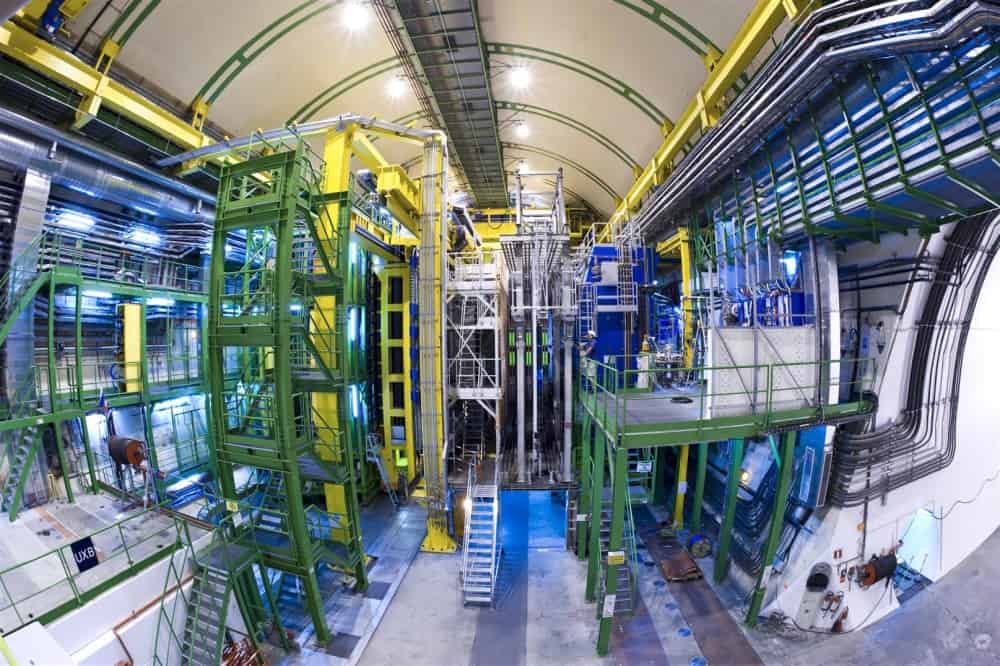
An upgrade was planned so that it could take advantage of the upgrade to the LHC – the High-Luminosity LHC (HL-LHC) – and offer an order of magnitude increase in luminosity over upgrade I.

Inside the LHCb detector
Down and out? UK funding for a major upgrade to LHCb has been cancelled increasing the possibility that it won’t go ahead. (Courtesy: CERN)

Tim Gershon from the University of Warwick, who became international spokesperson for the  collaboration this month, says that the outlook for STFC-funded science is “grim”.

“With a 15% cut last year and an outlook that sees funding shrink further due to inflationary pressure, not even excellent-rated and internationally-leading science like LHCb can be supported,” he adds. “LHCb is the canary in the coalmine for the future sustainability of particle physics and astronomy research.”

Gershon states that the decision to cut UK involvement in LHCb will throw away the leadership it has built up. “Not only is this a tragedy for researchers and engineers who have dedicated their lives to making LHCb one of the most successful experiments in history, it destroys opportunities for current and future students to be involved in world-leading scientific discovery,” he adds.

This is a short-sighted move, to save a tiny fraction of the overall UK science budget

Catherine Haymans

Gershon says it will take some time to understand what the UK’s decision means for the upgrade and how other funding agencies will react but without UK expertise it will be hard to progress given the UK is the largest partner in LHCb with a 20% stake.

“Ultimately, the LHCb Upgrade is an essential part of the full exploitation of the HL-LHC, which is the top priority of the European and CERN strategies for particle physics,” adds Gershon. “We are determined to deliver the best detector that is possible within the available resources. But such a major change to the level of expected resources makes this extremely difficult.”

Peter Millington, a particle physicist from the University of Manchester, says that the outcome is “bad news” for accelerator physics and the applications that it fosters, particularly in medical physics. “It is completely at odds with UK priorities across all industrial strategy growth-driving areas, while also eliminating skills pipelines pivotal to a wide range of sectors and eroding the UK’s long-held position as a global scientific leader.”

Astronomy woes

Astronomy is another area that is bearing the brunt of the cuts. The UK contribution to the e-MERLIN network of seven radio telescopes, which includes the iconic Lovell telescope at Jodrell Bank in northern England, is also ear-marked for cancellation. Its funding will now run out in 2028 and the move not only threatens e-MERLIN but also the future of Jodrell Bank , which the Royal Astronomical Society calls a “deeply troubling development”.

Catherine Haymans, Astronomer Royal for Scotland, says she is “absolutely devastated” for those working on e-MERLIN.  “This is a short-sighted move, to save a tiny fraction of the overall UK science budget,” she says. They are now considering contacting the new Department for Business, Innovation, Science and Trade to reverse the decision.

Other astronomy cuts include the UK withdrawal from the James Clerk Maxwell Telescope located in Hawaii as well as 20% cuts for the UK’s Square Kilometre Array Regional Centre and activities at the Vera C Rubin Observatory in Chile, which recently began a 10-year survey of the universe.

Jim Wild, president of the Royal Astronomical Society, notes the cuts are “devastating news” for UK astronomy. “At a time when technological innovation is crucial to our country’s prospects, discarding unique, globally significant observatories threatens both our scientific future and the inspiration of future generations of astronomers,” adds Wild.

Michele Dougherty, executive chair of the STFC, who is also Astronomer Royal, says that the situation requires “tough, but necessary decisions”.

“After listening to our community we have protected core discovery research within PPAN, through a more focused portfolio that safeguards postdoctoral researchers, protects PhD opportunities and maintains the UK’s international leadership.” adds Dougherty, who stepped down as president of the IOP in January over the conflict of interest with her position at the STFC. “These are never easy choices, but we have made what we feel are the right decisions to bring STFC to a sustainable financial position by 2029/30″.

The post Future of UK physics threatened by ‘ruinous’ funding cuts, says Institute of Physics appeared first on Physics World.

  •  
❌